
How to Stack Earrings: 2026 Guide to Building a Curated Ear
- Scritto da Team Provenza
- Updated on Settembre 14, 2026
Sommario
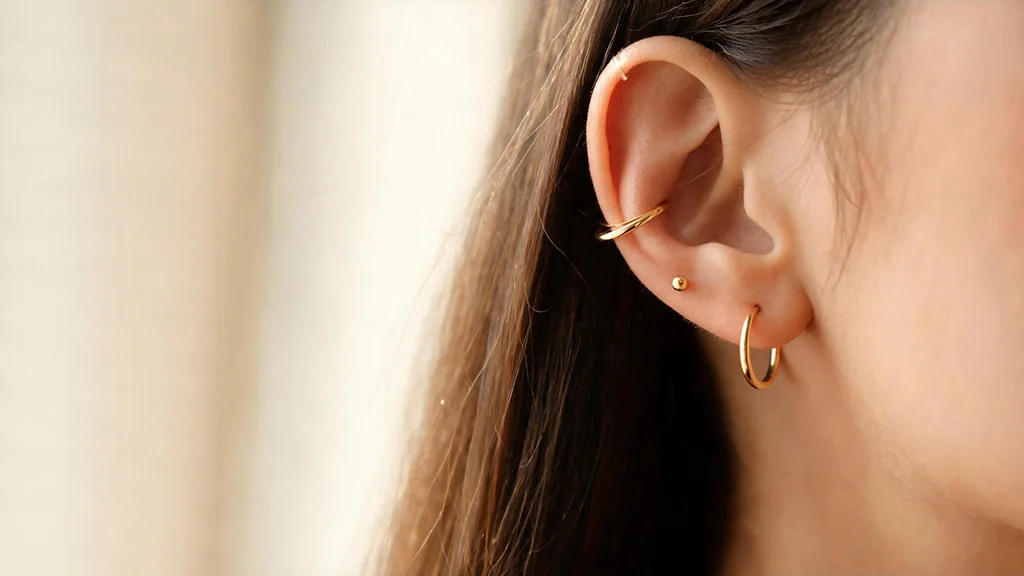
Earring stacking — layering multiple earrings across one or more piercings to create a single, curated look — has moved from niche piercing-studio trend to one of the most searched styling questions in jewelry. But most guides stop at "mix studs and hoops, start small." This guide goes further: it covers ear anatomy and placement, the proportion and balance principles stylists actually use, the material and construction details that determine whether a stack is comfortable for daily wear, and the questions people ask most before committing to a new piece.
Whether you're starting your first stack with a single extra lobe piercing or refining a six-piece ear you've been building for years, the same underlying principles apply.
Understanding Ear Anatomy & Piercing Placements
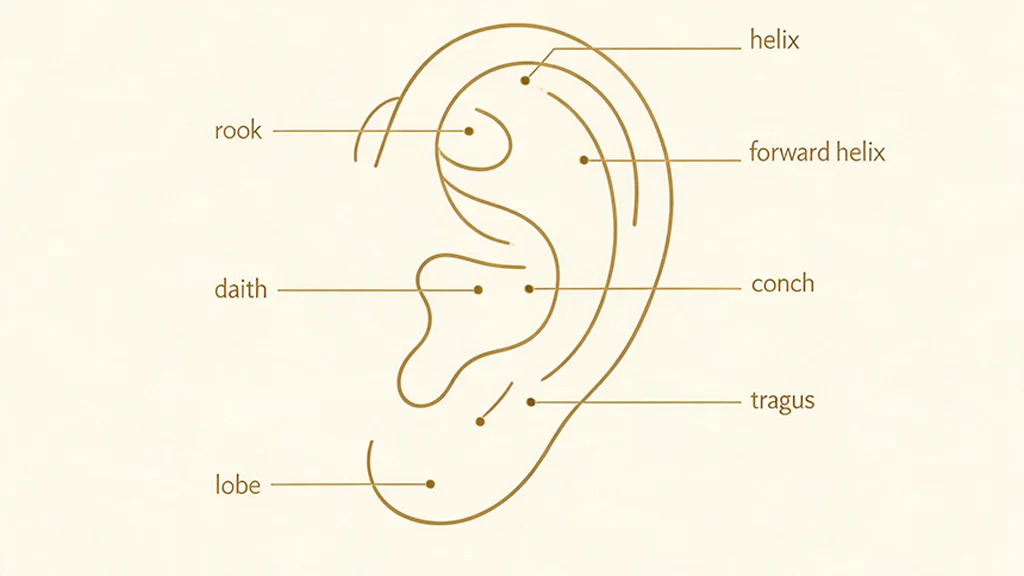
Before choosing earrings, it helps to understand the canvas you're working with. Each piercing location has its own characteristics, and certain earring styles are simply better suited to some placements than others.
- Lobe: The most versatile placement on the ear. It comfortably supports any style, from a delicate stud to a statement drop, and is typically the first piercing most people have.
- Helix: Sits along the upper cartilage rim. Works well with small hoops, studs, or a piercing-specific ring; it's a common second or third piercing for building a stack.
- Forward Helix: Located on the front-facing upper cartilage. Suited to tiny studs or small-diameter hoops, since space here is limited.
- Tragus: The small raised area of cartilage just in front of the ear canal. Minimal, flat-backed studs generally sit most comfortably here.
- Conch: The bowl-shaped inner cartilage area. Can support small hoops or a slightly bolder stud, since there's more surface area to work with.
- Rook: A fold of cartilage at the top of the ear. A more advanced placement, typically paired with a curved barbell or small ring once fully healed.
- Daith: Located in the innermost cartilage fold near the ear canal. Usually accommodates a small hoop and is often chosen specifically to complement a stack.
General guidance only — piercing placement, healing time, and suitability vary by individual anatomy. Anyone considering a new piercing should consult a professional piercer rather than relying on styling content alone.
The Anatomy of a Great Stack: Step-by-Step Method
1. Start With a Centerpiece
Every well-built stack starts with a focal point — usually the largest, boldest, or most distinctive earring in the arrangement. This might be a statement hoop, an ear climber, or a piece with personal meaning like an initial charm. Every other earring in the stack should support this piece rather than compete with it.
2. Follow the Cascading Rule
Arrange earrings from largest to smallest as you move up the ear. Bolder, heavier pieces belong in the lobe; smaller and more delicate pieces belong toward the upper cartilage. This graduated arrangement creates a natural visual flow, often described as a waterfall effect, and prevents the stack from looking top-heavy.
3. Balance Weight and Visual Complexity
A stack needs to balance two kinds of weight: physical weight (comfort) and visual weight (how busy the arrangement looks). A widely used starting ratio is roughly 40% bold, statement pieces to 60% delicate, simple ones. This keeps the stack visually interesting without becoming heavy to wear or cluttered to look at.
4. Mix Metals and Textures With a Plan
Mixing metals is entirely acceptable in a modern stack, but it reads more intentional with a loose ratio: pick one dominant metal tone for roughly 60–70% of the stack, and use a secondary tone for the remainder. The same logic applies to texture — pair smooth, polished surfaces with one or two hammered, twisted, or beaded pieces rather than mixing many textures at once.
5. Decide on Symmetry or Asymmetry
There's no rule requiring both ears to match. A fully symmetrical stack reads more classic and polished; an asymmetrical stack — more earrings on one side, a single statement piece on the other — reads more editorial and modern. Either approach works; the key is choosing one deliberately rather than by accident.
Earring Types Built for Stacking
Studs
Studs are the foundation of nearly every stack. Their small, low-profile shape makes them easy to combine with almost anything else, and they work well both as a subtle base layer and as the sole earring in a minimalist look.
Hoops and Huggies
Hoops add structure and movement. Huggies — small hoops that sit close to the earlobe — are especially popular for stacking because their compact size leaves room for additional pieces around them. Larger hoops tend to work best as the stack's centerpiece.
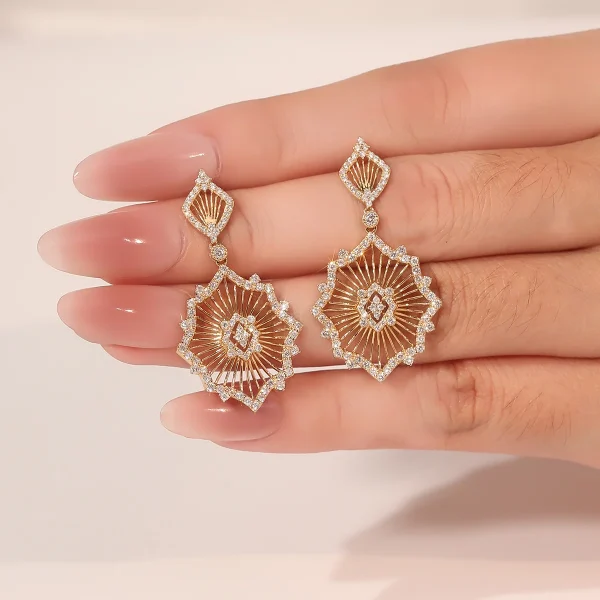
Dangles and Drops
A single dangle or drop earring introduces vertical movement and drama. It typically works best positioned as the lowest, boldest element in the stack, balanced above by simpler studs or huggies.
Orecchie a clip
Ear cuffs wrap or clip onto the ear's rim without requiring a piercing, making them the easiest way to add the appearance of a fuller stack instantly. They pair naturally with studs or hoops and can be swapped in and out to change a look without commitment.
Ear Climbers
Ear climbers (or crawlers) follow the curve of the upper ear, visually mimicking multiple piercings with a single piece. They read as a statement item and generally look best balanced against a simpler arrangement on the opposite ear.
Material Matters: What Your Earrings Are Made Of
Materials affect three things that most styling guides skip entirely: how long a stack holds its finish, how it feels against skin over hours of wear, and whether it's suitable for sensitive ears — all of which matter more in a stack, since several pieces sit close together for extended periods.
Solid Gold vs. Gold-Plated vs. Gold Vermeil
Solid gold (typically 14k or 18k) resists tarnish, holds its color indefinitely, and is generally the safest option for sensitive skin, since it doesn't wear down to expose a base metal underneath. Gold-plated pieces have a thin gold layer over a base metal and will eventually show wear, particularly at points of friction — relevant in a stack, where earrings can brush against each other. Gold vermeil (a thicker gold layer over sterling silver) sits between the two: better longevity than standard plating, though still not as durable as solid gold.
Sterling Silver and Titanium
Sterling silver is a popular, affordable stacking material but will oxidize (darken) with exposure to air, moisture, and skincare products over time — most noticeably with daily wear in a large stack. Titanium is prized in piercing jewelry specifically for being lightweight, extremely durable, and among the most hypoallergenic metals available, making it a strong choice for newer or healing piercings within a stack.
Hypoallergenic Considerations
Nickel is the most common cause of ear irritation and allergic reaction. Solid gold, titanium, and high-grade surgical steel are generally considered safe choices for sensitive ears, and many jewelry markets regulate the maximum nickel content permitted in items intended for prolonged skin contact. When building a stack that will be worn daily, checking the base material — not just the visible finish — matters more than it does for occasional-wear jewelry.
Comfort & Wear Considerations
- Distribute weight deliberately: Physical weight adds up quickly across multiple piercings. Reserve heavier pieces for the lobe, where the ear can best support them, and keep upper cartilage placements lightweight.
- Check the backing and closure: A well-made earring back should hold securely through normal daily movement without pinching or loosening. In a stack, a failing back on one piece can throw off the whole arrangement.
- Hollow vs. solid construction: Choose hollow rather than solid hoops where possible — they look identical but weigh meaningfully less, which matters when several pieces are worn together for a full day.
- Sleeping in a stack: Most solid gold, titanium, and surgical steel earrings can be worn overnight comfortably, but plated pieces are best removed before sleep to reduce wear and skin contact time.
- Showering and swimming: Sterling silver and gold-plated pieces should be dried after showering; solid gold, titanium, and platinum can generally be worn in water without damage.
Manufacturer's Perspective: What Separates Quality Stacking Pieces
Not every earring described as "stack-friendly" is built the same way underneath. A few construction details make a measurable difference once several pieces are worn together:
- Consistent post gauge across a set: A set of studs or huggies made to a consistent post gauge sits and closes more evenly across multiple piercings, so the stack sits level rather than at slightly different angles.
- Hinge and closure quality: A secure hinge or lever-back closure keeps small hoops and huggies from working loose during a full day of wear — an easy detail to overlook until a piece from the stack goes missing.
- Plating thickness and finish durability: A properly applied plating layer (thickness and base-metal preparation) is the single biggest factor in how long a plated piece keeps its color once it's in daily rotation as part of a stack.
These are the kinds of details that come from experience manufacturing earrings at scale rather than from styling alone — which is also why sourcing stacking pieces from a single, quality-consistent source tends to produce a more cohesive, longer-lasting result than combining pieces of very different build quality.
Common Mistakes to Avoid
- Too many statement pieces at once: Layering several bold, high-contrast pieces with no clear focal point makes a stack look cluttered rather than curated.
- Ignoring the cascading rule: Placing a heavy statement earring above delicate cartilage pieces looks unbalanced and puts unnecessary strain on smaller piercings.
- Mixing metals without a ratio: Mixing more than two metal tones without a dominant one tends to look accidental rather than intentional.
- Overloading new piercings too soon: Adding weight to unhealed piercings, or choosing plated pieces for a piercing that's still healing, can cause irritation.
- Not accounting for build-quality consistency: A stack built entirely from different brands and material qualities often looks disjointed; a few pieces from a consistent, well-made source anchor the whole look.
Domande frequenti
There's no fixed limit — some stacks are two pieces, others are six or more. The right number depends on how many piercings you have and how much visual weight you want. Most well-balanced stacks use three to five pieces per ear.
Yes. Mixing gold and silver tones is a popular, modern approach. Choosing one dominant tone for roughly 60–70% of the stack and a secondary tone for the rest tends to look more intentional than an even split.
No. Ear cuffs and climbers can create the visual effect of a fuller stack without any additional piercings, making them a good starting point for anyone not ready to commit to more holes.
Solid gold, titanium, and high-grade surgical steel are generally the safest options, since they don't contain the nickel most commonly responsible for irritation. Always check the base material, not just the visible finish.
Solid gold, titanium, and surgical steel pieces can usually be worn overnight without issue. Plated and vermeil pieces are better removed before sleep to limit wear and prolonged skin contact.
Anchor it with one clear focal point, follow the cascading rule from large to small moving up the ear, and keep roughly 60% of the pieces simple or delicate.