
Bezel vs Prong Setting: Security, Sparkle & Cost
- Escrito por Equipo de Provenza
- Updated on octubre 7, 2026
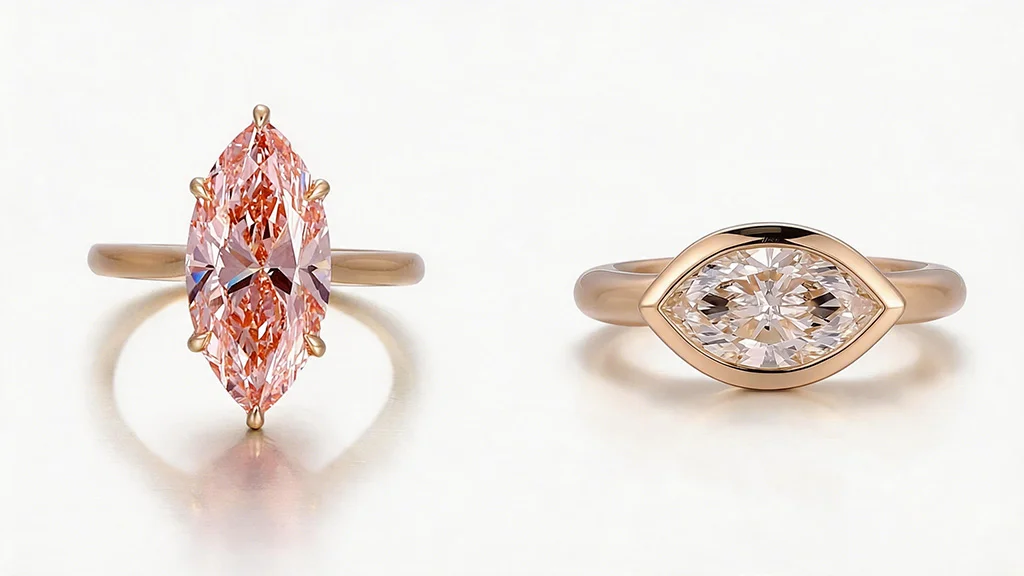
Tabla de contenido
Choosing between a bezel vs prong setting is one of the most important decisions in any ring, pendant or pair of earrings. The setting determines how much of your stone you see, how well it is protected, how often the piece needs servicing and how it feels on your hand every day. It is also where buyers meet the most conflicting advice: some guides say a bezel dulls sparkle, others say the difference is invisible.
This guide settles it. We are a fine jewelry manufacturer, so we see both settings being built, worn, repaired and returned. Below you will find a clear answer, a side-by-side comparison and practical guidance by stone, shape, metal and lifestyle, so you can choose with confidence.
What Is a Prong Setting?
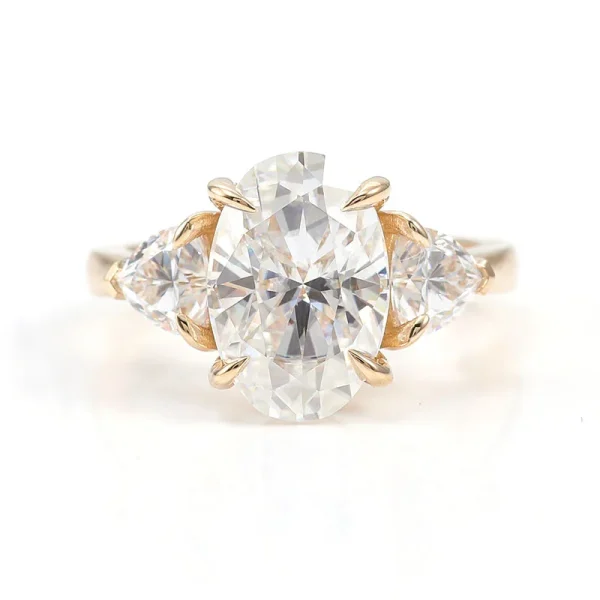
A prong setting holds a stone with small metal arms, called prongs or claws, that rise from the base (the head) and fold over the stone's edge, known as the girdle. Most settings use four or six prongs. Because only small points of metal touch the stone, light can enter from the top and the sides, and almost the entire stone stays visible.
Common prong styles
- Round prongs:the classic, comfortable and widely used choice.
- Claw (pointed) prongs:tapered tips that look delicate and show more of the stone.
- V-prongs:a V-shaped prong that wraps a sharp corner, used on pear, marquise, princess and heart shapes.
- Flat (tab) prongs:wider and lower, for a more modern look.
- Basket heads:prongs joined by a lower gallery rail for extra support, common in earrings and pendants.
Four prongs or six? Four prongs show more of the stone and look more open. Six prongs spread the grip, so if one loosens, the stone is more likely to stay put. Prong count alone does not decide security. Fit, metal, prong thickness and construction quality matter just as much.
What Is a Bezel Setting?
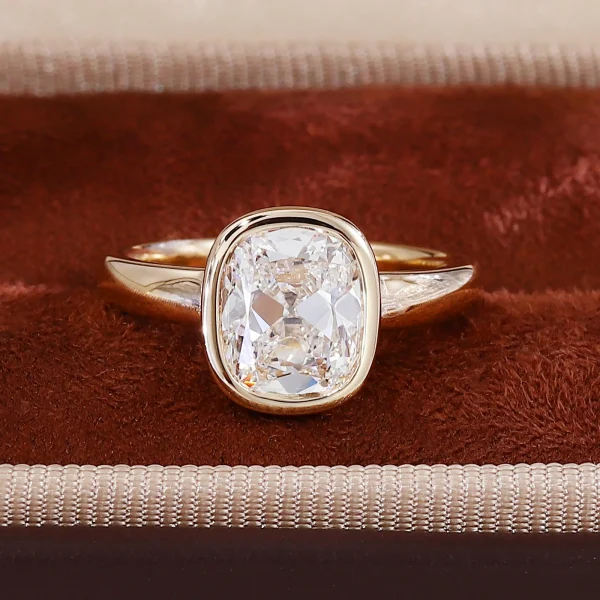
A bezel setting wraps a thin metal rim around the stone's edge. The rim is shaped to the stone, a small seat is cut inside it, and the top edge of the metal is pushed over the girdle (a step called burnishing) to lock the stone in place. A full bezel surrounds the entire stone. A half-bezel, or partial bezel, covers only part of the edge and leaves the rest open.
A common misconception: a bezel is not automatically low-set. Ring height comes from the depth of the stone and the construction underneath it. A tall bezel can sit higher than a low-set prong ring, so always check the side view of the actual piece.
Bezel vs Prong Setting: Side-by-Side Comparison
Característica | Bezel setting | Prong setting |
Seguridad | Highest. The rim covers the girdle, where chips most often start. | Good, but depends on prong condition and wear. |
Snag risk | Very low. A smooth rim has no exposed points. | Moderate. Higher with tall, thin or worn prongs. |
Sparkle | Slightly less side light. Excellent with a well-cut stone. | Maximum light entry from all sides. |
Stone visibility | The edge is framed by metal, so the stone can look a little smaller face-up. | Almost the entire stone is visible. |
Upkeep | Check rim for thinning or dents. Debris can collect behind the stone. | Regular inspection. Prong tips wear and may need retipping. |
Cleaning | Easy on the surface. Underside access varies by design. | Usually easy to reach from below. |
Repair | Rim rebuilt or re-burnished by a skilled setter. | Prongs tightened, retipped or rebuilt. Very common work. |
Resizing | Can be harder if the rim extends along the band. | Generally straightforward on a simple band. |
Stacking | Often sits snug beside bands. Check height and profile. | Prongs can rub neighboring rings. A contour band may help. |
Costo | Often higher for the setting (more metal and fitting labor). | Often lower for the head. Design details can change this. |
Lo mejor para | Active wear, fragile shapes, softer stones, modern style. | Classic style, maximum brilliance, easy resetting. |
Security and Durability: Which Setting Holds a Stone Better?
Why prongs loosen
Prongs are exposed metal. Daily contact slowly wears the tips and sides thinner, a knock can bend a prong, and a snag can lift one away from the stone. Prong failure is usually gradual, and it is very fixable if caught early. Warning signs include:
- A stone that rattles or moves when you tap the ring near your ear.
- Prong tips that look flat, thin or sharp.
- A visible gap between a prong and the stone.
- Repeated snagging on knitwear, hair or gloves.
If a stone moves, stop wearing the piece and have it checked.
Why bezels protect, and where they still fail
The metal rim shields the girdle, the part of a stone most likely to chip, and there are no exposed points to catch on clothing. That is why a bezel is the usual recommendation for hands-on work and daily wear.
But a bezel is not impact-proof. The top of the stone is still exposed, so a hard knock can chip the crown. Over years the rim can thin, dent or deform, which loosens its grip. A poorly fitted bezel can also allow the stone to shift. Quality of fit matters as much as the setting style.
Which setting suits which shape?
Stone shape | Weak points | Best setting choice |
Redondo | Few weak points | Either |
Oval | Rounded ends, fairly sturdy | Either. Bezel for very active hands. |
Almohadón | Softly rounded corners | Either |
Radiante | Clipped corners | Either, with corners protected |
Princesa | Four sharp corners prone to chipping | Bezel, or prongs with corner coverage |
Esmeralda / Asscher | Corners, and a large open table that shows damage | Bezel or half-bezel, or corner prongs |
Pera | Pointed tip | Bezel, or a V-prong on the tip |
Marquesa | Two sharp points | Bezel, or V-prongs on both points |
Corazón | Pointed base and a cleft at the top | V-prongs at both, or a bezel |
Sparkle: Does a Bezel Setting Dull a Diamond?
This is where guides disagree most, so here is the honest answer. Most of a diamond's brilliance enters through the table and crown (the top of the stone) and returns to the eye the same way. A prong setting is marginally brighter when compared side by side, but cut quality, cleanliness and lighting affect the look far more than the setting does.
A bezel has the biggest effect on sparkle when the rim is thick or tall, when the stone is shallow or poorly cut, or when the back is fully closed so little light returns from below. To keep a bezel-set stone lively:
- Choose a thin, well-finished rim.
- Pick a stone with a strong cut grade or good proportions.
- Consider a half-bezel to leave the sides open.
- Ask for an open or vented back where the design allows it.
Does a bezel make a stone look smaller?
A full bezel covers a thin edge of the girdle and frames the stone in metal, so the stone itself can look slightly smaller face-up. At the same time, the rim adds to the overall footprint of the ring, so many wearers find the finished piece reads as substantial. A thin rim, a half-bezel or a white metal that blends with the stone all minimize the effect.
Everyday Wear: Which Setting Fits Your Life?
Choose a bezel if you…
- Work with your hands, lift weights, climb, garden or play sports.
- Wear gloves at work, such as healthcare or food service.
- Wear knitwear often or have long hair that tends to catch.
- Prefer a sleek, minimalist, modern look.
- Are choosing a pointed or brittle stone.
Choose prongs if you…
- Want the stone to take center stage and show as much as possible.
- Love a classic solitaire or a romantic, traditional design.
- Are happy to have the piece inspected once or twice a year.
- Want a stone that is easy to reset or upgrade later.
- Prefer easier underside cleaning.
Whichever you pick, take rings off for heavy lifting, contact sports, strong chemicals and machinery. No setting makes a ring impact-proof.
Does Stone Type Change the Answer?
Yes. Hardness tells you how well a stone resists scratches, but toughness, the resistance to chipping, is what matters most for choosing a setting. Brittle stones, stones with internal fractures and softer stones need more protection.
Piedra | Dureza de Mohs | Setting guidance |
Diamond and lab-grown diamond | 10 | Very hard but can chip along its edges. Either setting works. Choose a bezel for pointed shapes or hard daily wear. |
Moissanita | about 9.25 | Very durable and tough. Prongs show off its strong brilliance. A bezel suits active wearers. |
Sapphire and ruby | 9 | Tough and durable. Either setting works well. |
Cubic zirconia | De 8 a 8,5 | Durable, but facet edges can chip over time. A bezel helps protect them. |
Esmeralda | 7.5 to 8 | Often included and brittle. A bezel or half-bezel is strongly preferred. |
Tanzanita | 6.5 to 7 | Softer and cleaves easily. A bezel is the safer choice. |
Ópalo | 5.5 to 6.5 | Soft and sensitive to knocks. A bezel is strongly preferred, with careful wear. |
Does Metal Matter? Platinum, 18k, 14k and 9k
The metal holding your stone is the part that wears. Softer, purer alloys give a richer color but wear faster at prong tips and bezel edges.
Metal | What it means for prongs and rims |
Platino | Dense and malleable. Wear shows as displacement rather than lost metal, and prongs can be reshaped. Heaviest and usually costliest. Excellent for both settings. |
18k gold (75% gold) | Rich color but softer. Prongs wear faster and bezel rims dent more easily. Best for pieces with lighter daily contact. |
14k gold (58.5% gold) | A popular balance of color and strength. A strong everyday choice for both settings. |
9k gold (37.5% gold) | Very durable, with lower gold content and a paler color. Common where harder wear is expected. |
White gold note: white gold is usually rhodium plated. The plating wears first at prong tips and rim edges, revealing a warmer tone underneath, and it can be re-plated by a jeweler.
Is a Bezel Setting More Expensive Than a Prong Setting?
Often, but not always, and the gap is usually modest compared with the cost of the stone itself. In a ring with a diamond center stone, the stone typically accounts for the largest share of the price.
Why a bezel often costs more: it uses more metal, and the rim must be shaped and fitted to the exact outline of the stone by hand.
Why prongs can cost more: complex heads, six-prong designs, hidden halos and extra high-polish finishing can add labor and cost.
The fair way to compare is like for like: the same stone, the same metal and weight, and the same finishing level. Also ask about future servicing, since retipping, rim repair or resetting are priced differently from one workshop to another.
The Third Option: Half-Bezel and Other Settings
Many buyers searching for bezel vs prong are really choosing between several settings. Here is how the main alternatives compare.
Configuración | How it holds the stone | Lo mejor para | Watch out for |
Half-bezel | A rim around part of the edge, with the sides left open | A balance of protection and light | More edge exposed than a full bezel |
Canal | Stones sit between two metal walls | Anniversary and wedding bands | Replacing one stone can be difficult |
Pavé | Tiny beads of metal grip many small stones | Maximum sparkle on bands and halos | Beads can wear and small stones can be lost |
Flush (gypsy) | Stone sunk into the band | Men's rings and hard daily wear | Less light and a minimal look |
Tensión | Pressure from the band holds the stone | A bold, modern look | Precise engineering and hard to resize |
Can You Change a Prong Setting to a Bezel Later?
Sometimes, but it is rarely a small adjustment. Switching usually means making a new head, or a new ring, and removing and resetting the stone, which carries its own risk, especially for stones with chips or inclusions near the edge. A new bezel also changes the visible outline, the height and how the ring sits beside a wedding band.
Switching from a bezel to prongs is similar: the rim has to be cut away and a new head built. Ask a jeweler to assess the stone first and to show you a drawing or model before you approve any change. Never try to remove a stone yourself.
Preguntas frecuentes
Generally yes. The rim protects the whole edge of the stone and there are no exposed prongs to bend or loosen. A bezel can still wear or deform over time, so regular inspection still applies.
Slightly, because the rim blocks some side light. With a well-cut stone and a thin rim the difference is small. The stone's cut quality has a much bigger effect on brilliance.
It can, because the rim covers a thin edge of the stone. A thin rim, a half-bezel or a white metal reduces the effect, and the rim also adds to the ring's overall presence.
A bezel often costs more because it uses more metal and needs precise fitting. The difference is usually modest compared with the stone's price, so compare quotes like for like.
A bezel is usually the more practical choice for daily wear thanks to its protection and smooth profile. A well-made prong setting with regular checks also works well for most people.
Prongs are usually easier because the underside is open. Bezels can trap oils and lotion behind the stone and need gentle brushing from below.
Prong settings remain the most common, especially for solitaires. Bezel and half-bezel designs have been growing in popularity for contemporary and everyday pieces.