
Maattabel voor armbanden: meet uw pols op en vind de juiste maat.
- Geschreven door Provence Team
- Bijgewerkt op 8 september 2026
Inhoudsopgave
Een armband in de verkeerde maat is nooit zomaar een kleine ergernis — het is een schakelarmband die van je hand glijdt en in het afvoerputje verdwijnt, of een manchet die zo strak zit dat er tegen de lunch al een afdruk op zit. De juiste maat kiezen is net zo belangrijk als het metaal of de edelsteen, maar toch is het de stap die de meeste kopers overslaan.
Deze gids neemt je mee door een complete maattabel voor armbanden in inches, centimeters en millimeters; drie betrouwbare manieren om je pols te meten (zelfs zonder meetlint); hoe de maatvoering verschilt tussen manchetarmbanden, bangles, kettingen, tennisarmbanden en kralenarmbanden; hoe de maatstandaarden verschillen tussen de VS, het VK, de EU, Australië en Azië; en – omdat wij de armbanden waar we het over hebben zelf produceren – hoe giettoleranties en de werking van de sluiting de pasvorm beïnvloeden.
Snel antwoord
De gemiddelde armbandmaat is 16,5–19 cm voor vrouwen en 19–23 cm voor mannen. Meet uw polsomtrek en tel daar 1,25–2,5 cm bij voor een comfortabele pasvorm of 2,5–4 cm voor een lossere pasvorm.
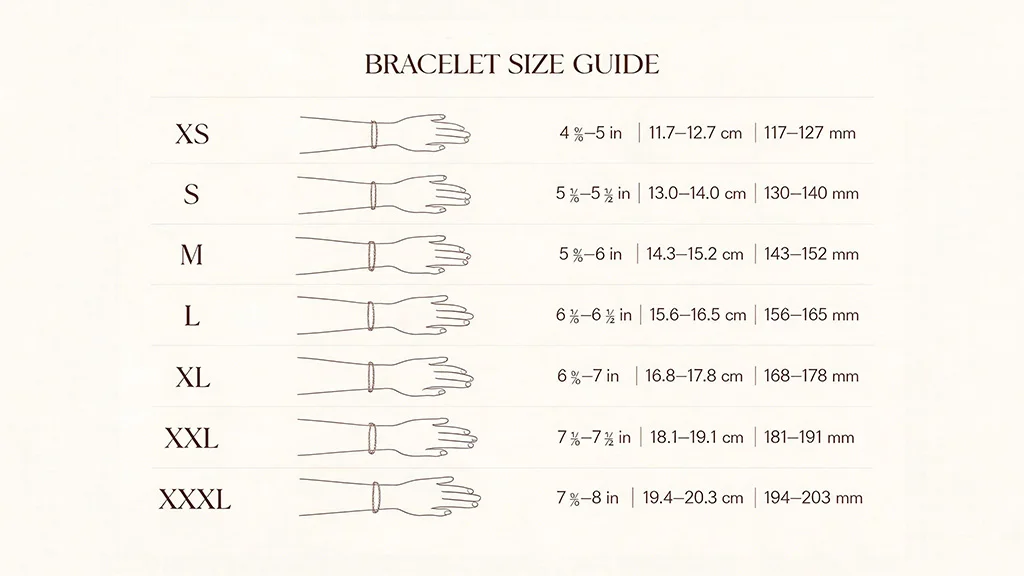
Maattabel voor armbanden
Gebruik onderstaande tabel om uw polsomtrek om te rekenen naar een armbandmaat. Deze maten geven de binnenomtrek van de afgewerkte armband weer (of de lengte, bij open modellen) – niet alleen uw blote polsomtrek – zodat u met een gerust hart verschillende maten kunt kiezen.
|
Armbandmaat |
Pols (in) |
Pols (mm) |
Het beste voor |
|---|---|---|---|
|
XS |
4,75–5,5"" |
121–140 mm |
Smalle polsen, kinder-/tienermaten |
|
S |
5,5–6,0"" |
140–153 mm |
Smalle vrouwenpolsen |
|
M |
6,0–6,5"" |
153–165 mm |
Gemiddelde polsomtrek van vrouwen |
|
L |
6,5–7,0"" |
165–178 mm |
Gemiddelde/grotere damesmaten, kleine herenmaten |
|
XL |
7,0–7,5"" |
178–190 mm |
Gemiddelde polsomtrek van mannen |
|
XXL |
7,5–8,25"" |
190–210 mm |
Grotere polsen bij mannen |
|
XXXL |
8.25"+ |
210 mm+ |
Extra grote / gestapelde kleding |
Hoe meet je je pols voor een armband?
Methode 1: Flexibel meetlint
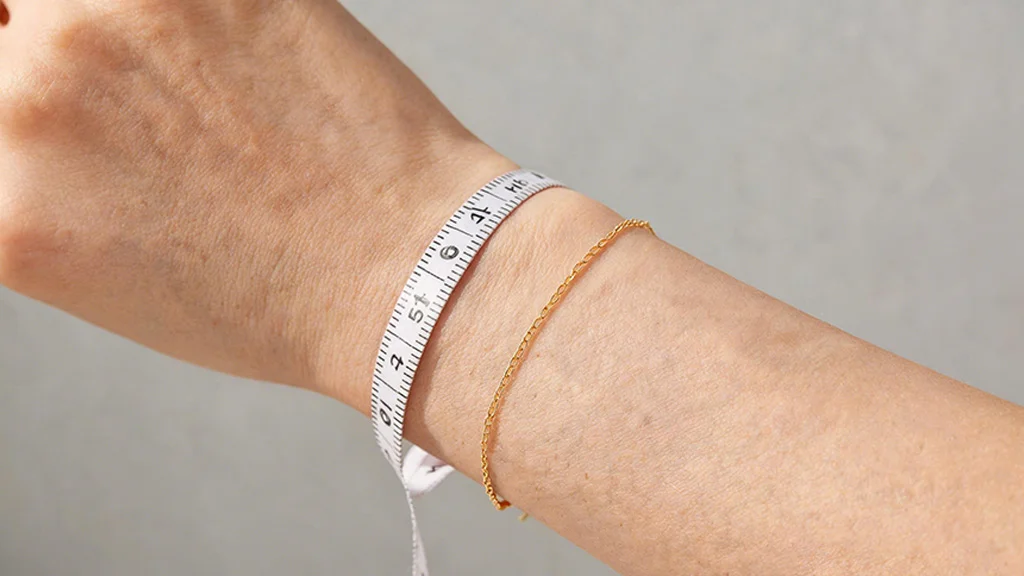
- Wikkel een zacht meetlint om je pols, net onder het polsgewricht (waar een armband normaal gesproken zit).
- Zorg dat het goed aansluit, maar niet te strak zit — je moet er nog een vingertop onder kunnen schuiven.
- Lees de afmeting in inches of centimeters af op de plek waar het meetlint elkaar overlapt.
- Vergelijk het nummer met de maattabel hierboven en voeg extra ruimte toe voor de gewenste pasvorm.
Methode 2: Touw of lint
- Wikkel een stuk touw, lint of koord om je pols op dezelfde plek.
- Markeer met een pen het punt waar de uiteinden samenkomen.
- Leg het touw plat tegen een liniaal en meet de afstand tot de markering.
- Gebruik deze meting in combinatie met de bovenstaande tabel.
Methode 3: Geen gereedschap? Gebruik wat er in je portemonnee zit.
Heb je geen meetlint of touw bij de hand? Twee alledaagse voorwerpen geven een verrassend nauwkeurige meting:
- Creditcardmethode: Een standaard creditcard of identiteitskaart is 8,56 cm lang. Wikkel een strook papier om uw pols, markeer de overlapping, leg het papier vervolgens naast de kaart en tel hoeveel kaartlengtes (en breuken) er nodig zijn om de markering te bereiken.
- Muntmethode: Een Amerikaanse kwartdollar heeft een diameter van 24,26 mm; een euromunt heeft een diameter van 23,25 mm. Leg de munten langs de papieren strook om de lengte in millimeters te schatten en zet deze vervolgens om met behulp van de tabel.
- Methode met een bestaande armband: Leg een armband die u al goed past plat op een liniaal en meet de volledige binnenlengte. Dit is het meest nauwkeurige alternatief als u een armband heeft die perfect past.
Maatvoering op basis van het type armband
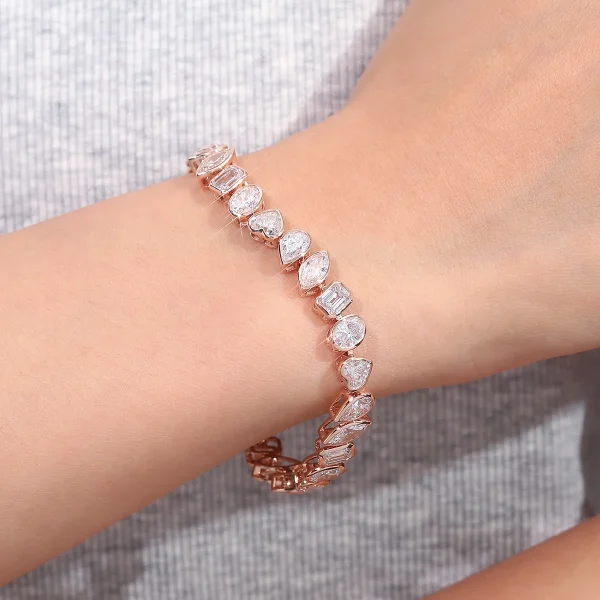
Niet alle armbanden worden op dezelfde manier op maat gemaakt. Manchetarmbanden, bangles, schakelarmbanden, tennisarmbanden en bedelarmbanden verschillen in constructie en pasvorm, dus de maatvoering moet overeenkomen met de stijl van de armband. Zie de website van Jewelers of America voor meer informatie. Stijlgids voor armbanden Voor een overzicht van veelvoorkomende armbandtypen en hun kenmerken.
Manchetarmbanden
De manchetten zijn open en stijf en worden gemeten aan de hand van de binnendiameter en de breedte van de opening, in plaats van de omtrek. De meeste manchetten zijn ontworpen met een kleine opening die iets meebuigt om zich aan te passen aan verschillende polsen – meestal geschikt voor een pols van 15-19 cm zonder aanpassing. Massief gouden manchetten zijn minder flexibel dan sterling zilveren, waardoor de maatvoering bij 14-karaats/18-karaats gouden exemplaren extra belangrijk is.
Armbanden
Armbanden zijn stijf en gesloten (of scharnierend) en worden op maat gemaakt aan de hand van de binnendiameter in plaats van de lengte. Om je armbandmaat te bepalen, meet je de breedte van je hand op het breedste punt (knokkels tegen elkaar, duim in de pols), aangezien de armband over je hand moet schuiven om je pols te bereiken. Gangbare binnendiameters zijn 60-65 mm voor vrouwen en 70-78 mm voor mannen.
Schakelarmbanden
De lengte wordt van begin tot eind gemeten, inclusief de sluiting. Standaardlengtes zijn 6,5"–7,5" voor dames en 7,5"–8,5" voor heren. Kettingen zijn het meest flexibel qua maat, omdat de meeste een verlengstuk van 1"–2" hebben om de lengte aan te passen.
Tennisarmbanden
Een tennisarmband bestaat uit een doorlopende rij stenen in een flexibele band en moet nauwer om de pols zitten dan een schakelarmband: los genoeg om te kunnen draaien, maar strak genoeg zodat de stenen in het midden van de pols blijven en niet eronder glijden. De standaardlengte is 18 cm (7 inch), 16,5 cm (6,5 inch) voor smalle polsen en 19-20 cm (7,5-8 inch) voor bredere polsen.
Bedelarmbanden
Omdat bedeltjes zowel gewicht als volume toevoegen, zijn bedelarmbanden doorgaans 1,25 cm groter dan een eenvoudige schakelarmband met dezelfde polsomtrek. Dit zorgt ervoor dat de armband comfortabel blijft zitten en niet strak trekt naarmate er meer bedeltjes aan hangen.
Edelsteen- en kralenarmbanden
Rekbare kralenarmbanden zijn over het algemeen one-size-fits-most (ongeveer 18 cm in ontspannen toestand, rekbaar om de meeste volwassen polsen), terwijl armbanden met edelstenen en een sluiting de standaardlengte van 16,5-20 cm hebben en nauwkeurig op maat moeten worden gemaakt, omdat elastische rek niet beschikbaar is om dit te compenseren.
Internationale maattabel voor armbanden
De terminologie en eenheden voor armbandmaten variëren per regio. Als u buiten de VS winkelt, gebruik dan deze vergelijkingstabel om de maatvoering om te rekenen:
|
Regio |
Damesmaten |
Maten voor heren |
Gemeenschappelijke conventie |
|---|---|---|---|
|
Verenigde Staten |
6,5" – 7,5"" |
7,5" – 8,5"" |
Inches; lengtegebaseerd voor kettingen/tennis |
|
Verenigd Koninkrijk |
16,5 – 19 cm |
19 – 21,5 cm |
Centimeters; dezelfde op lengte gebaseerde logica als in de VS. |
|
Europese Unie |
16 – 19 cm |
19 – 21 cm |
Centimeters; sommige markten gebruiken millimeters voor armbanden. |
|
Australië |
16,5 – 19 cm |
19 – 21,5 cm |
Centimeters, conform de Britse conventie. |
|
India |
2,4" – 2,6" diam. (57-60 mm) |
2,8" – 3,0" diam. (65-70 mm) |
Armbanden worden op maat gemaakt op basis van de binnendiameter, niet de lengte. |
|
Midden-Oosten |
2,6" – 2,8" diam. (60–65 mm) |
2,9" – 3,1" diam. (70-75 mm) |
Traditionele armbanden komen veel voor; op basis van diameter |
Hoe de productie de pasvorm in de praktijk beïnvloedt
Als fabrikant van fijne sieraden die massief gouden, in het laboratorium gekweekte diamanten, moissanite en edelstenen armbanden produceert voor merken wereldwijd, zien we de kwestie van de juiste maat zowel vanuit het perspectief van de fabrikant als van de klant. Een aantal factoren die de pasvorm beïnvloeden, maar zelden in maattabellen worden opgenomen:
Giet- en kettingtolerantie
Gegoten onderdelen van armbanden (sluitingen, schakels, armbandlichamen) hebben doorgaans een productietolerantie van ±0,3 mm tot 0,5 mm per stuk. Bij een armband met meerdere schakels tellen deze kleine toleranties op over tientallen schakels, waardoor twee armbanden van 7 inch uit verschillende productieseries subtiel anders kunnen aanvoelen om dezelfde pols.
Sluitingstype en effectieve lengte
Een karabijnsluiting, een knevelsluiting en een magneetsluiting voegen elk een andere hoeveelheid toe aan de totale draagbare lengte van de armband – soms wel 5 tot 8 mm verschil. Controleer bij het vergelijken van maten van verschillende merken of de aangegeven lengte inclusief de sluiting is of alleen de schakelketting betreft.
Steenzetting en stijfheid
Bij armbanden met stenen in een rand- of kanaalzetting (vaak gebruikt bij tennisarmbanden en edelstenen) is de flexibiliteit van de band minder groot dan bij armbanden met stenen in een klauwzetting. Hierdoor kan een armband met een randzetting strakker aanvoelen bij dezelfde lengte. Daarom adviseren wij om een iets grotere maat te kiezen voor volledig randgezette of stijve ontwerpen.
De juiste pasvorm kiezen: aansluitend, comfortabel of los.
|
Pasvorm Stijl |
Voeg toe aan de polsmeting. |
Het beste voor |
|---|---|---|
|
Knus |
+ ¼" – ½"" |
Tennisarmbanden, bangles, sportkleding |
|
Comfort |
+ ½" – ¾"" |
Armbanden met schakels, bedeltjes en edelstenen voor dagelijks gebruik |
|
Loszittend |
+ 1" – 1½"" |
Opvallende manchetten, gelaagde oorbellen, ideaal als cadeau wanneer de maat niet zeker is. |
Als je een armband cadeau wilt geven en de exacte polsmaat van de ontvanger niet weet, is een armband met een comfortabele tot losse pasvorm en een verlengketting de veiligste keuze. Deze kan namelijk altijd worden aangepast, terwijl een te kleine armband dat meestal niet kan.
Veelgestelde vragen
Voor vrouwen is de standaardlengte 17,8 cm (7 inch); voor mannen is dat ongeveer 20,3 cm (8 inch). De meeste verstelbare armbanden en armbanden in één maat zijn op deze gemiddelden gebaseerd.
Meet de omtrek van je pols met een meetlint, touwtje of de hierboven beschreven creditcardmethode en tel daar 1,25 tot 2,5 cm bij op, afhankelijk van hoe los je de pasvorm wilt hebben.
De meeste vrouwen dragen een tennisarmband van 7 inch; voor smalle polsen is een armband van 6,5 inch geschikt, en voor bredere polsen is een armband van 7,5-8 inch comfortabeler.
Armbanden zijn stijf en worden op maat gemaakt aan de hand van de binnendiameter (de breedte van de cirkel), gemeten over je knokkels omdat de armband over je hand moet passen. Armbanden met een sluiting worden daarentegen op maat gemaakt aan de hand van de totale lengte.
Kinderarmbandjes beginnen meestal bij 10-11,5 cm voor peuters en worden 14-15 cm voor kinderen in de leeftijd van 10 tot 15 jaar. Kies altijd voor een verstelbare sluiting of verlengstuk voor groeiende polsen en geef prioriteit aan stevige, niet-verplaatsende sluitingen voor de veiligheid.
Kies een maat groter. Een armband die iets te los zit, is comfortabel en verstelbaar met een verlengstuk; een armband die iets te strak zit, is vaak oncomfortabel en lastig te verstellen, vooral bij stijve manchetten en bangles.
Ja. Naast de omrekening van eenheden (inches versus cm versus mm), hanteren sommige markten een maatvoering op basis van diameter (armbanden) in plaats van lengte (kettingen), en de sluiting kan de daadwerkelijke draaglengte tussen merken met enkele millimeters verschillen.
Ja, als fabrikant kan Provence Jewellery armbanden produceren in een specifieke lengte, diameter of maat, met gedocumenteerde toleranties, voor OEM/ODM- en private-labelpartners.