
Teal Gemstones List: 15 Types, Colors & Buying Guide
- Geschreven door Provence Team
- Updated on oktober 9, 2026
Inhoudsopgave
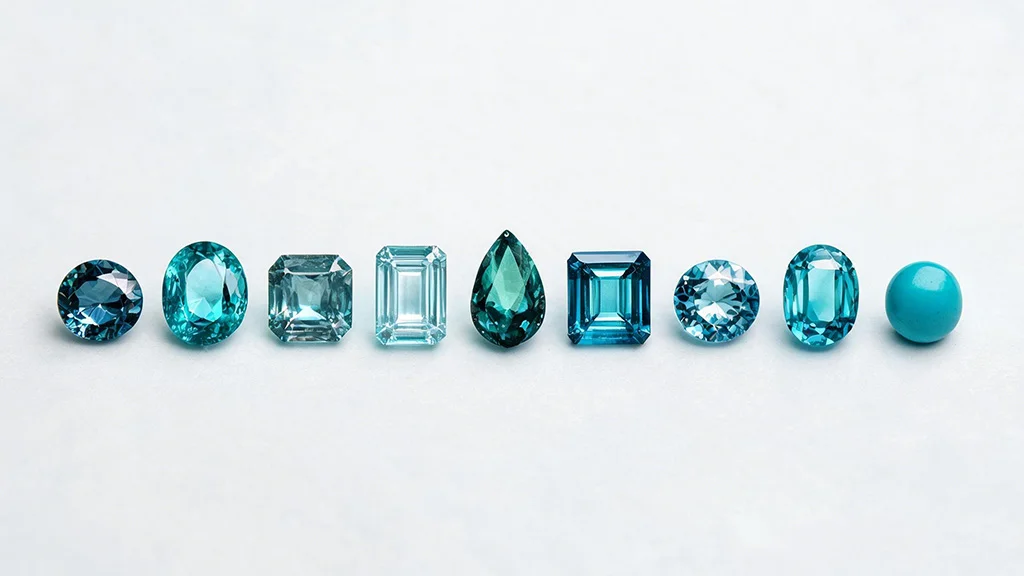
Teal sits exactly between blue and green, which is what makes teal gemstones so beautiful and so confusing to buy. One seller lists a stone as teal sapphire, another calls a near-identical gem blue-green tourmaline, and a third sells dyed glass under the same color name. The word “teal” describes how a stone looks. It does not tell you what the stone is, how hard it is, or whether it will survive daily wear.
This guide covers 15 teal gemstones, from durable teal sapphire to soft, collector-grade fluorite. For each one you will find the typical color, Mohs hardness, best jewelry use and the treatments or imitations to watch for. We have also added price ranges, lab-grown options, metal and setting advice, a disclosure checklist and care instructions, written from the perspective of a fine jewelry manufacturer.
What Makes a Gemstone Teal?
Teal is a blue-green color, and gemology has no official boundary for it. Laboratories identify a stone by species and variety (sapphire, tourmaline, beryl) and then describe its color. A gem one seller calls teal may be described as blue-green, green-blue or greenish blue by another. The balance can lean either way: aquamarine with a green component may look pale and watery, teal sapphire can be darker and more saturated, and Paraíba tourmaline can glow an electric cyan-green that resembles neither.
Four things change how teal looks once a stone is set in jewelry:
- Trace elements.Iron and titanium shape the color of sapphire and aquamarine, while copper is behind the blue-green of Paraíba tourmaline and turquoise.
- Sapphire, tourmaline and grandidierite show different colors in different crystal directions, so a skilled cutter orients the stone to bring out the best teal.
- Daylight tends to emphasize blue, while warm indoor light can reveal green or gray.
- Surrounding metal.Yellow gold can make a stone look greener, and white metals can make it look bluer.
Judge any teal stone in several lights and against both a white and a skin-toned background. Be careful with online photos, which can shift teal noticeably through white balance and editing.
Teal Gemstones Comparison Chart
Use this chart to compare all 15 stones at a glance. Price tiers are indicative per carat for typical loose stones: $ is under about USD 30, $$ is about USD 30 to 250, $$$ is about USD 250 to 1,000, and $$$$ is USD 1,000 or more.
Edelsteen | Teal look | Type | Mohs | Dagelijkse kleding | Price tier | Treatment / key concern |
Teal sapphire | Blue-green to green-blue | Transparent | 9 | Ja | $$$ to $$$$ | Heat, diffusion; lab-grown common |
Paraíba tourmaline | Neon blue-green | Transparent | 7–7,5 | With care | $$$$ | Heat; copper and origin need lab proof |
Grandidierite | Blue-green to green | Transparent to translucent | 7–7,5 | With care | $$$$ | Rare; imitations occur |
Aquamarijn | Pale aqua to green-blue | Transparent | 7.5–8 | Ja | $$ to $$$ | Heat (reduces green); fracture filling |
Teal tourmaline | Blue-green | Transparent | 7–7,5 | Ja | $$ | Heat in some stones; fractures |
Indicolite | Deep blue to green-blue | Transparent | 7–7,5 | Ja | $$ to $$$ | Very dark tones; inclusions |
Blue zircon | Bright blue-green | Transparent | 6–7,5 | With care | $ to $$ | Routine heat; brittle facet edges |
Teal apatite | Neon aqua to blue-green | Transparent | 5 | Occasional | $ to $$ | Soft; cleavage |
Turquoise | Opaque blue to green | Opaque | 5–6 | With care | $ to $$$ | Stabilization, dye, reconstruction |
Amazonite | Pale blue-green | Opaque | 6–6,5 | With care | $ | Cleavage; dye and imitations |
Larimar | Pale sea-blue to teal | Translucent to opaque | 4.5–5 | Occasional | $ to $$ | Scratches easily; imitations |
Variscite | Mint to teal | Opaque | 3.5–4.5 | Occasional | $ to $$ | Soft; backing, stabilization |
Chrysocolla chalcedony | Intense blue-green | Translucent to opaque | Variable | With care | $ to $$$ | Stabilization, dye, composites |
Green-blue fluorite | Aqua to teal | Transparent | 4 | Nee | $ | Perfect cleavage |
Blue-green kyanite | Teal zoning | Transparent to translucent | 4.5–7 | Occasional | $ to $$ | Cleavage; directional hardness |
15 Types of Teal Gemstones
1. Teal Sapphire
Corundum · Mohs 9 · Transparent · Best for: verlovingsringen, wedding bands, daily wear
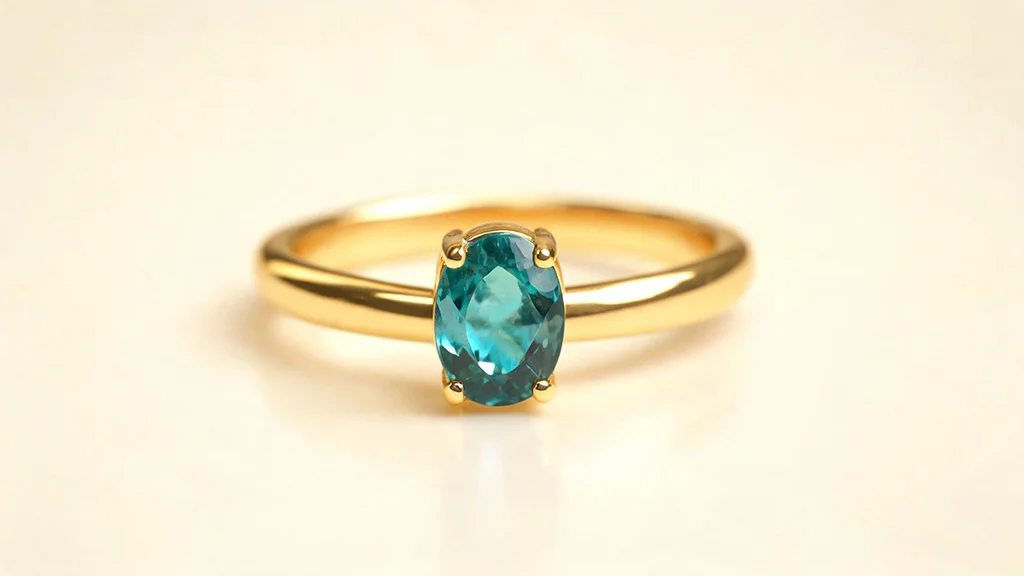
Teal sapphire is the most durable major teal gemstone and the safest choice for a ring worn every day. It is the same mineral as blue sapphire, with a green component that moves the color toward blue-green or green-blue. Many stones are parti-colored, showing blue and green zones in a single crystal, and strong pleochroism means the balance shifts as the stone turns.
Montana, Australia and Madagascar are well-known sources, but attractive material occurs elsewhere, so origin should be documented rather than guessed from color. Heat treatment is common, diffusion treatment exists, and lab-grown teal sapphire is widely available, so disclosure matters.
2. Paraíba Tourmaline
Copper-bearing tourmaline · Mohs 7–7.5 · Transparent · Best for: fine jewelry, accent stones
Paraíba tourmaline is the rarest and most valuable teal gemstone, famous for an electric, neon blue-green that comes from copper. It was first found in Paraíba, Brazil, in 1989, and similar copper-bearing tourmaline was later found in Mozambique and Nigeria.
Color matters far more than clarity, and visible inclusions are accepted in fine stones. The name should not be used just because a gem looks teal: only laboratory analysis can confirm copper content, and origin needs separate testing. Origin can change the price several times over, and heat treatment is common, so insist on a laboratory report for any significant stone.
3. Grandidierite
Borosilicate mineral · Mohs 7–7.5 · Transparent to translucent · Best for: collector jewelry
Grandidierite is a rare mineral first described from Madagascar. Its color runs from blue-green to greenish blue, and strong pleochroism can show blue-green, green and near-colorless directions within one stone.
Transparent, facetable material is scarce, and many available stones are small, included or only translucent. Hardness is good, but rarity makes it a collector’s stone. Because apatite, glass and other blue-green materials can imitate it, identify any valuable grandidierite with a laboratory report.
4. Aquamarine
Beryl · Mohs 7.5–8 · Transparent · Best for: rings, earrings, pendants
Aquamarine is the blue to green-blue variety of beryl. Most stones are pale to medium in tone, which suits anyone who wants an airy, watery teal rather than a deep, saturated one. Natural aquamarine often has a visible green component, and heat treatment is routinely used to reduce it and produce a bluer stone.
Hardness of 7.5 to 8 makes aquamarine durable enough for regular wear in a secure setting, and large, clean crystals are far easier to find than comparable sizes of Paraíba tourmaline. Fracture-filled stones need gentler care, and trade names for deep blue aquamarine are marketing terms, not standardized varieties.
5. Teal (Blue-Green) Tourmaline
Tourmaline · Mohs 7–7.5 · Transparent · Best for: rings, pendants, earrings
Tourmaline comes in more colors than almost any other gemstone, and blue-green stones without the copper-driven neon of Paraíba are an excellent mid-priced route to teal. They offer strong saturation, brilliance and transparency at a fraction of Paraíba prices.
Tourmaline is strongly pleochroic, so cutting orientation can push the same rough toward bluer, greener or darker results. It is hard enough for jewelry, but fractures and its elongated crystal structure mean it should be protected from hard knocks. Ask whether a stone is natural, heated or Paraíba-type, because the name and price change completely.
6. Indicolite
Blue tourmaline · Mohs 7–7.5 · Transparent · Best for: rings, earrings, pendants
Indicolite is blue tourmaline. It moves into teal when a visible green component is present, and its color is generally deeper than aquamarine and less neon than Paraíba-type stones. Some indicolite looks almost black unless it is cut shallow enough to let light through.
Choose indicolite if you prefer a deep, moody peacock teal. Check the stone face-up in strong light, because a dark tone can hide the color indoors, and look closely at inclusions, which are more noticeable in darker stones.
7. Blue Zircon
Zircon · Mohs 6–7.5 · Transparent · Best for: earrings, pendants, occasional-wear rings
Blue zircon is a natural gemstone and has nothing to do with cubic zirconia, which is a lab-made simulant. It offers exceptional brilliance and fire in bright blue to greenish-blue colors. Most vivid blue zircon is created by heating brownish natural material. The treatment is routine but should be disclosed.
Zircon shows strong double refraction, so facet edges can look doubled under magnification, and it is brittle. Facet edges can chip or abrade, especially in rings and bracelets, so protected earrings and pendants keep the polish longest.
8. Teal Apatite
Apatite · Mohs 5 · Transparent · Best for: pendants and earrings
Teal apatite delivers vivid, tropical aqua to blue-green color at a much lower price than Paraíba tourmaline, and a well-cut stone is bright and lively. The limitation is durability: at Mohs 5, with cleavage, it scratches easily.
Pendants and earrings are the safest formats. If you want apatite in a ring, choose a protective setting such as a bezel and keep it for occasional wear. Inclusions can make some stones look hazy, so choose one that stays bright in the center.
9. Turquoise
Hydrated copper aluminum phosphate · Mohs 5–6 · Opaque · Best for: cabochons, beads, pendants, earrings
Turquoise is the best-known opaque teal gemstone and one of the oldest ornamental stones in use. Natural color ranges from blue through greenish blue to green, often crossed by brown, black or golden matrix webbing. It suits artisan and contemporary jewelry alike.
Turquoise is relatively soft and often porous. Stabilization, dye, impregnation and reconstructed (pressed) material are all common, and they change durability and value. Skin oils, perfume and household chemicals can alter the color over time. Dyed howlite is a frequent imitation.
10. Amazonite
Microcline feldspar · Mohs 6–6.5 · Opaque · Best for: cabochons, beads, carvings
Amazonite is a blue-green feldspar whose color runs from pale aqua and mint to deeper turquoise-green, usually crossed by fine white streaks. It is affordable and widely used in beads, cabochons and carvings.
It has moderate hardness but clear cleavage, so pendants, earrings and bezel settings suit it better than exposed rings. Glass, dyed stones and other feldspars are sold under the name, and a very uniform, unnaturally bright color deserves a second look.
11. Larimar
Pectolite · Mohs 4.5–5 · Translucent to opaque · Best for: pendants and earrings
Larimar is a blue variety of pectolite from the Dominican Republic. Its pale blue, white and greenish-blue patterns resemble water and clouds, so every stone looks different.
At about 4.5 to 5 on the Mohs scale it scratches more easily than aquamarine, sapphire or tourmaline, so choose pendants and earrings over daily rings. Some material can be affected by prolonged strong light, and resin, glass and dyed imitations exist.
12. Variscite
Aluminum phosphate · Mohs 3.5–4.5 · Opaque · Best for: protected cabochons and pendants
Variscite is an opaque phosphate in mint, green, aqua and teal shades. It often looks like turquoise, and the two can be hard to separate by eye because their colors and matrix overlap. It is soft and is often backed, stabilized or impregnated for jewelry, so ask whether a piece is solid, backed or composite.
13. Chrysocolla Chalcedony (Gem Silica)
Chrysocolla in chalcedony or quartz · Hardness variable · Translucent to opaque · Best for: cabochons, pendants
Chrysocolla on its own is too soft and variable for demanding jewelry. When blue-green copper material is strongly silicified by chalcedony or quartz, it can take a more durable polish and show an intense, translucent teal. The finest material is sold as gem silica. Stabilization, dye and composite construction are all possible, so ask for a clear statement of what the stone is and how it was treated.
14. Green-Blue Fluorite
Fluorite · Mohs 4 · Transparent · Best for: protected pendants, collector gems
Fluorite can occur in pale aqua, cyan-green and teal zones, and its transparency and color zoning make attractive faceted collector gems. It is not a durable everyday stone: hardness is only 4 and cleavage is perfect, and careful faceting and setting cannot remove those limits. Keep it in protected pendants or earrings, away from heat, acids and harder stones.
15. Blue-Green Kyanite
Kyanite · Mohs 4.5–7 (directional) · Transparent to translucent · Best for: pendants and earrings
Blue kyanite can show teal, greenish-blue and color-zoned areas, and it is often mistaken for sapphire at a glance. Its hardness differs by direction within the same crystal, which makes cutting and polishing difficult, and cleavage makes exposed corners vulnerable. Faceted stones exist, but many commercial pieces are cabochons or polished blades, and pendants and earrings are the sensible choice.
Lab-Grown and Alternative Teal Gemstones
Natural teal gemstones range from affordable to extraordinarily expensive, and the finest stones are not always available in the size or matched pair a design needs. Lab-created materials offer predictable color, supply and price, as long as they are described honestly.
- Lab-grown sapphire.Chemically and physically the same as natural sapphire, so it has the same Mohs 9 durability, and it can be produced in teal, blue-green and parti shades. It must be described as lab-grown or lab-created, never as natural.
- Lab-created spinel.Synthetic spinel is made in a wide range of colors, including blue-green, and is hard enough (around Mohs 8) for rings.
- Cubic zirconia in teal tones.Sparkly, affordable and made in many colors. It is a simulant rather than a copy of any natural gemstone, so it suits fashion and budget designs.
- Moissanite as a companion stone.Moissanite is typically sold colorless or near-colorless, so its best role with teal is as accent stones around a teal center for added sparkle.
- Glass and imitations.Very cheap “Paraíba-colored” stones are usually glass, doped synthetics or other imitations, not tourmaline.
Choosing lab-grown over natural is a legitimate design and budget decision. The line to protect is disclosure: label the material clearly in product titles, descriptions and certificates.
Best Teal Gemstones by Jewelry Type
The same stone can make a great ring and a poor bracelet. Use this table to match the stone to the way the piece is worn.
Jewelry type | Best choices | Good with care | Better avoided |
Ringen | Teal sapphire, aquamarine, sound tourmaline (teal, indicolite, Paraíba) | Blue zircon, grandidierite, turquoise (occasional wear) | Apatite, fluorite, larimar, variscite, kyanite for daily wear |
Oorbellen | Almost every stone, including soft ones such as apatite, larimar and variscite | Paraíba and grandidierite, with secure backs | Very few; matching color across a pair is the main challenge |
Necklaces and pendants | Aquamarine, tourmaline, turquoise, amazonite, larimar, chrysocolla chalcedony | Apatite, fluorite, variscite, kyanite in a bezel | Few; remove long pendants before leaning over hard surfaces |
Armbanden | Teal sapphire, tourmaline, aquamarine | Turquoise and amazonite beads (inspect drill holes and treatments) | Apatite, fluorite, larimar and other soft stones |
Setting style matters as much as the stone. Hard stones such as sapphire suit prongs, which let in light and show off color. Softer or cleavage-prone stones such as apatite, larimar and fluorite are safer in a bezel, which shields the edges. For rings with more delicate stones, a low profile and protective shoulders reduce impact, and rare stones in earrings deserve secure backings.
Best Metals and Settings for Teal Gemstones
Metal changes how teal reads, so choose it before you finalize the stone.
Metaal | Effect on teal |
Geelgoud | Warms the stone, so blue-green can read greener. Gives a rich, vintage contrast. |
White gold, platinum, silver | Cool and crisp. Emphasizes the blue side of teal and suits pale aqua and icy tones. |
Roségoud | Warm pink tones contrast with teal for a modern, complementary look. |
Colorless accent stones such as diamonds, lab-grown diamonds, moissanite or cubic zirconia add sparkle and keep the teal as the focus, especially in halo and three-stone designs.
If the piece will sit against the skin for long periods, ask about nickel. EU REACH rules limit nickel release from jewelry that touches the skin, and many makers therefore use nickel-free white gold alloys.
Treatments, Disclosure and Avoiding Fakes
Teal color can be natural, heat-modified, diffusion-treated, dyed, coated or created in glass. None of these is automatically bad, but all of them affect value and care, and they should be disclosed.
- Sapphire:heat is common, diffusion treatment exists, and lab-grown stones are widely sold.
- Aquamarine:routinely heated to reduce green; fracture filling may occur.
- Blue zircon:commonly heat-treated.
- Paraíba tourmaline:heat is common, and copper content needs laboratory testing.
- Turquoise, variscite, amazonite and other porous stones:stabilization, impregnation, dye, coating or reconstruction.
Common imitations include dyed howlite sold as turquoise, electric-blue glass or doped synthetics sold as Paraíba, and resin, glass or dyed material sold as larimar or amazonite. Dye often shows as color concentrated in cracks and drill holes, color that sits only on the surface, or unnaturally uniform saturation. For any valuable stone, laboratory examination is the safest check.
Disclosure rules differ by market. The following is general information, not legal advice.
- Verenigde Staten:the FTC Jewelry Guides (16 CFR Part 23) say sellers should disclose treatments that are not permanent or that significantly affect value, and should identify laboratory-created stones as such.
- Verenigd Koninkrijk:consumer protection law prohibits misleading descriptions and omissions, so presenting a treated, synthetic or imitation stone as natural can breach it.
- Europese Unie:the Unfair Commercial Practices Directive prohibits misleading actions and omissions across member states in the same way.
What to ask any seller for:
- The mineral or species name, not just “teal”
- Treatments, in writing
- Whether the stone is natural or lab-grown
- Weight and dimensions
- Origin, only if it is documented
- An independent laboratory report for any high-value stone
How to Choose a Teal Gemstone
- Start with how it will be worn.Daily rings call for sapphire, aquamarine or tourmaline. Earrings, pendants and occasional rings open up the softer options.
- Pick a color direction.Pale aqua (aquamarine), deep peacock (indicolite, teal sapphire), neon (Paraíba, apatite) or opaque (turquoise, amazonite, larimar).
- Spend on color and cut first.A lively, well-cut stone beats a larger, dull one. Visible inclusions are accepted in fine Paraíba, but dark, lifeless stones are not worth the money.
- Ask for disclosure.Treatment and origin claims should be written down.
- Certify the valuable ones.An independent laboratory report is the best protection on an expensive stone.
Teal Gemstone Meaning and Symbolism
Modern color symbolism links teal with calm, balance and clear communication, a blend of the steadiness of blue and the renewal of green. Individual stones carry their own traditions: turquoise has centuries of protective and ceremonial use across many cultures, sapphire and tourmaline are associated with commitment, and aquamarine with a calm perspective.
These meanings are cultural and personal, not scientific. They do not change a gemstone’s physical properties and are not a substitute for medical advice, but they can make a teal piece a thoughtful gift or a meaningful personal reminder.
Teal Gemstones FAQ
Natural teal color occurs in sapphire, tourmaline (including Paraíba and indicolite), aquamarine, grandidierite, apatite, zircon, turquoise, amazonite, larimar and variscite, along with less common materials such as fluorite and kyanite.
Fine Paraíba tourmaline is the most valuable, and the best Brazilian stones command the highest prices. High-quality teal sapphire and transparent grandidierite can also be expensive.
Teal sapphire, at Mohs 9, is the hardest and most suitable for daily rings. Aquamarine and tourmaline are the next most practical choices.
There is no single teal birthstone, but several gems that occur in teal appear on modern birthstone lists: aquamarine (March), sapphire (September), tourmaline (October), and turquoise and zircon (December).
Amazonite, common-grade turquoise, variscite and fluorite are among the most affordable. Among faceted transparent stones, blue zircon and teal apatite are usually the most budget-friendly.
They are the same mineral (corundum) with the same hardness. A green component gives teal sapphire its blue-green color, and value depends on color, clarity, size and treatment.
Yes. Lab-grown sapphire and spinel can be produced in teal, and cubic zirconia comes in teal tones. Lab-grown material should be described as such, and simulants should be described as imitations.