Blog
Best Lab Grown Diamond Engagement Rings: A Style Guide
- Escrito por amy
- Updated on novembro 25, 2026
Índice
Quick Style Comparison
Start with the view you care about most. For a single-stone silhouette, compare the solitaire with the emerald-cut example. For detail around the center, compare the halo and three-stone options. If you want detail that shows as the ring turns, start with the hidden halo.
|
Estilo |
Característica visual |
What to Confirm |
Browse Designs |
|---|---|---|---|
|
Solitário |
One center stone on a plain band |
Prong or bezel, band width, basket height |
View solitaire ring |
|
Halo |
A frame of accents visible from above |
Outer dimensions, halo spacing, cleaning access |
View halo ring |
|
Três Pedras |
Center diamond flanked by two side stones |
Side-stone size, alignment, total width |
View three stone ring |
|
Emerald Cut |
A rectangular outline with broad step facets |
Face-up clarity, facet pattern, corner setting |
View emerald cut ring |
|
Oval |
An elongated outline with rounded ends |
Length-to-width ratio, bow tie, shoulder balance |
View oval ring |
|
Halo Oculto |
An accent row tucked beneath the center |
Side visibility, gallery clearance, band fit |
View hidden halo ring |
Six Designs to Compare
We selected six examples from the Provence Jewellery collection to show how the outline, accent placement and side profile affect the finished ring. Oval and emerald cut describe the center diamond, while solitaire, halo, three stone and hidden halo describe how the ring is arranged. You can combine these choices. Our guide to engagement ring styles and setting types covers a wider range of settings.
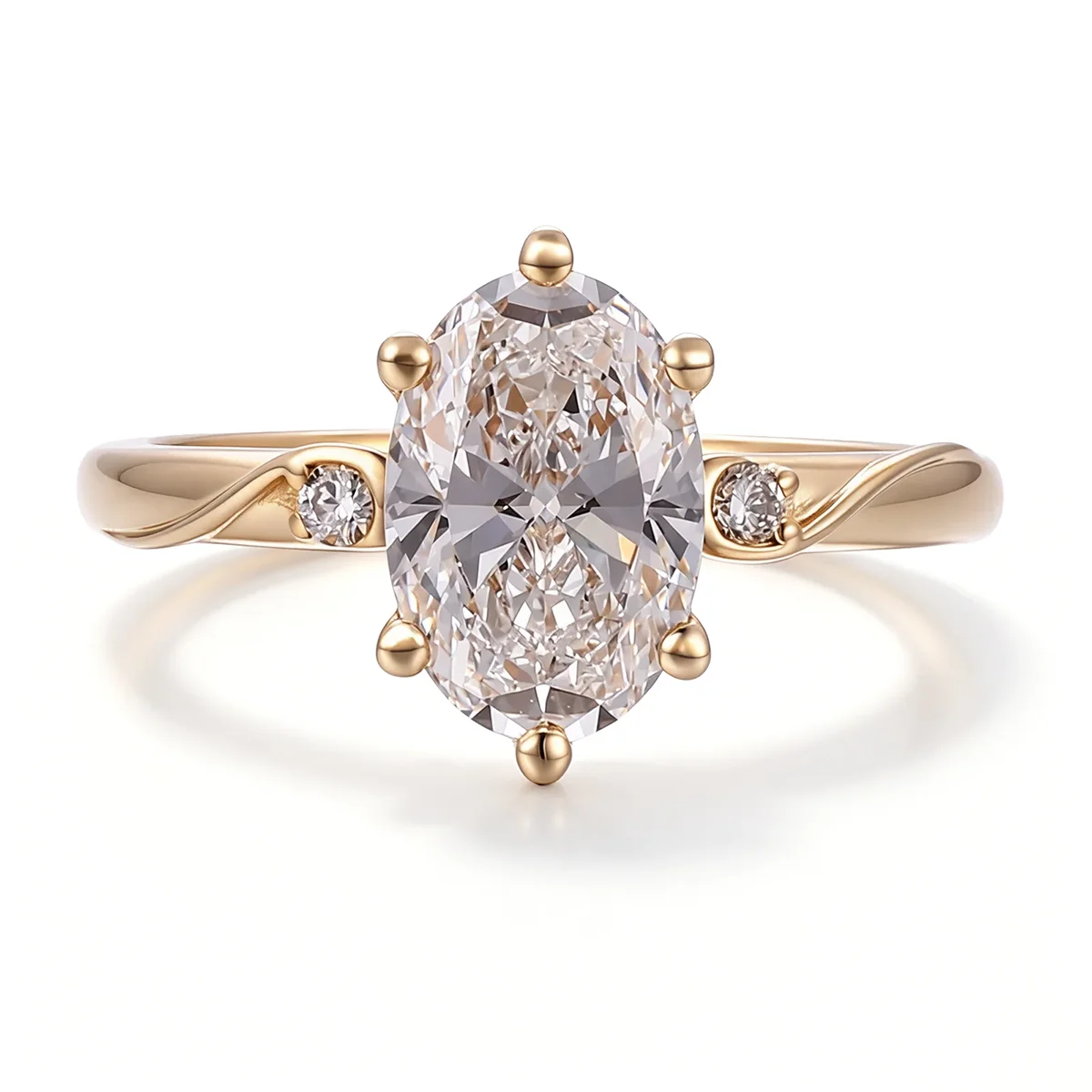
Solitário
Anel de Noivado Solitário em Ouro 14K com Diamante Oval de 1,5 ct Cultivado em Laboratório
A clean focus on the center stone
Start here if you want the diamond’s outline to carry the design. A slim band gives the center more visual space, while a broader band makes the metal part of the look. The Provence example pairs an oval lab grown diamond with a simple gold band, so you can see how an elongated center reads without a halo.
What to confirm. Ask for a straight-on photo and a side view before choosing between prongs and a bezel. Prongs leave more of the outline exposed. A bezel wraps the edge in metal and changes the silhouette. If you plan to wear a straight wedding band, check how far the basket projects at finger level.
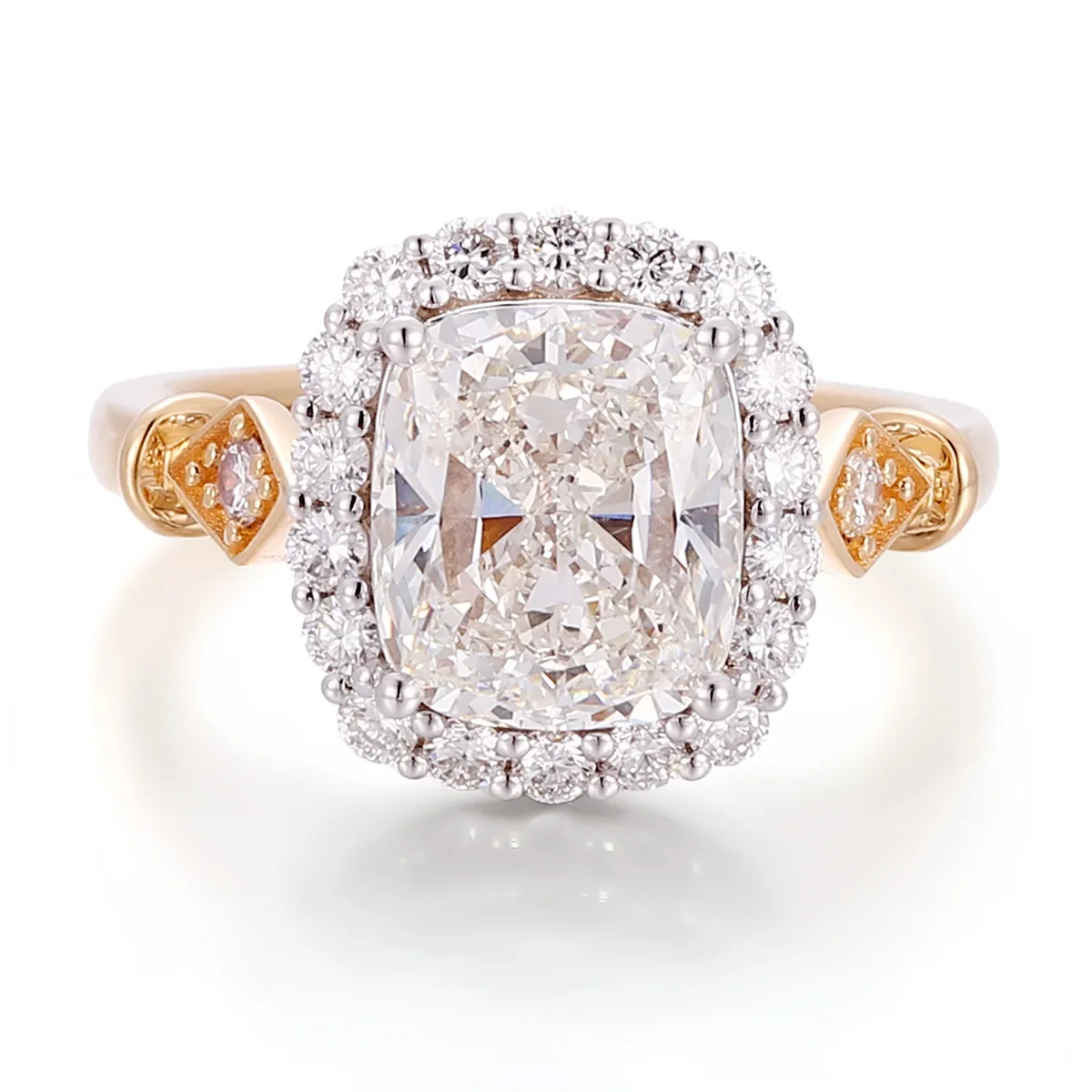
Halo
Anel de Noivado em Ouro 14K com Diamante de 5 quilates em Corte Almofada e Halo
A visible frame around the diamond
A halo changes the entire face-up outline. The accent border can follow the center stone’s shape or create a distinct outline around it. The cushion example shows how the soft corners of the center and the surrounding frame can work together.
What to confirm. Ask for both the center stone dimensions and the outside dimensions of the halo. Compare the distance between the center and its frame in a top view, then check how the halo joins the shoulders in profile. The side view also shows where you would need access for cleaning and whether a neighboring band might touch the accents.
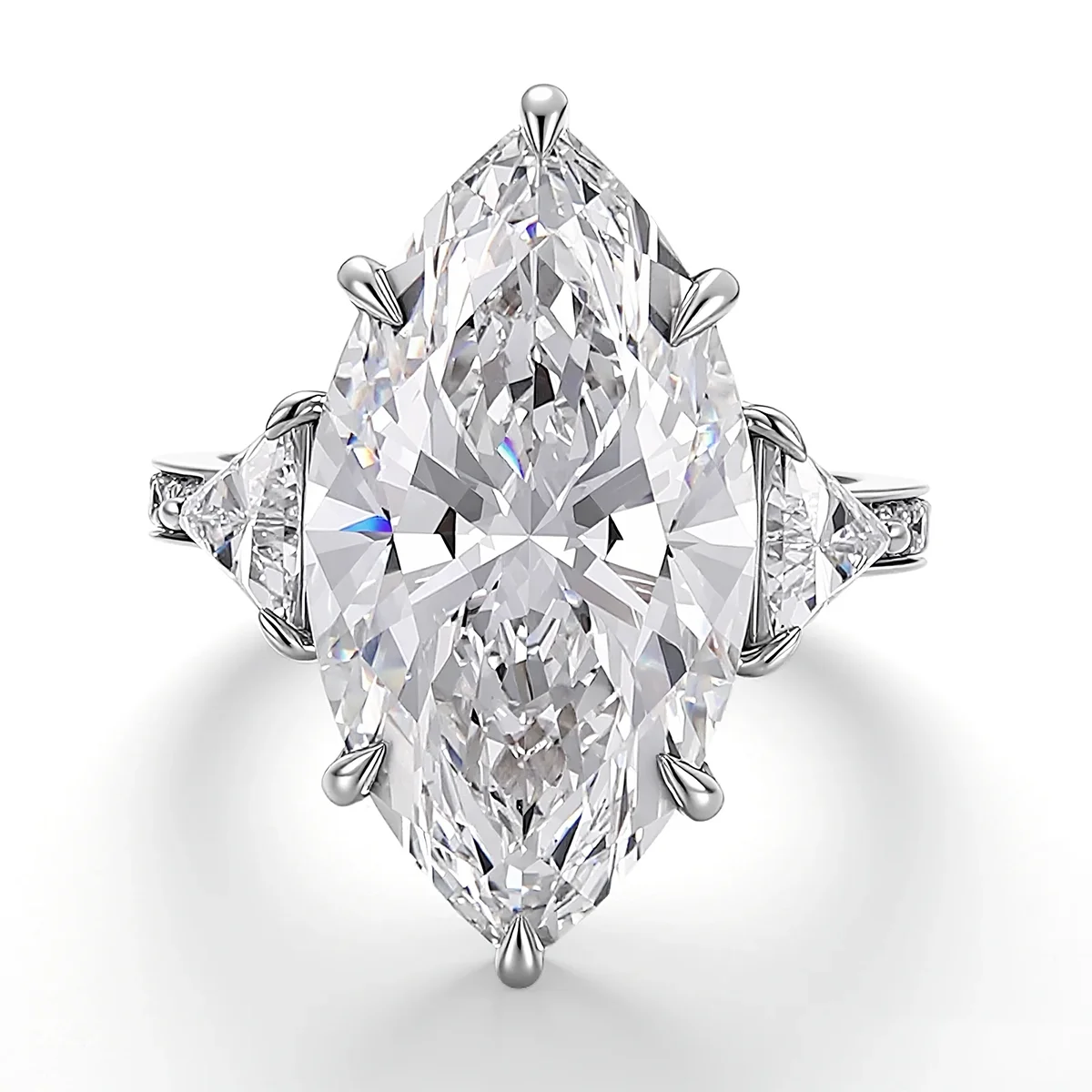
Três Pedras
Anel de Noivado com Três Pedras em Ouro 14K com Diamante Sintético de 1,5ct em Formato Marquise
A wider design with a balanced outline
Three-stone rings spread the design across the finger. Smaller side stones let the center dominate, while more substantial side stones give the ring a broader, more continuous look. This Provence example uses a marquise center, so the long center outline remains distinct within a wider setting.
What to confirm. Compare the center and side stones in millimeters. Confirm the side-stone shape, pair matching and how the stones taper into the band. With a pointed center such as marquise, review the prongs at both ends. Check the total width on the intended ring size and ask which weights refer to the center or the complete ring.
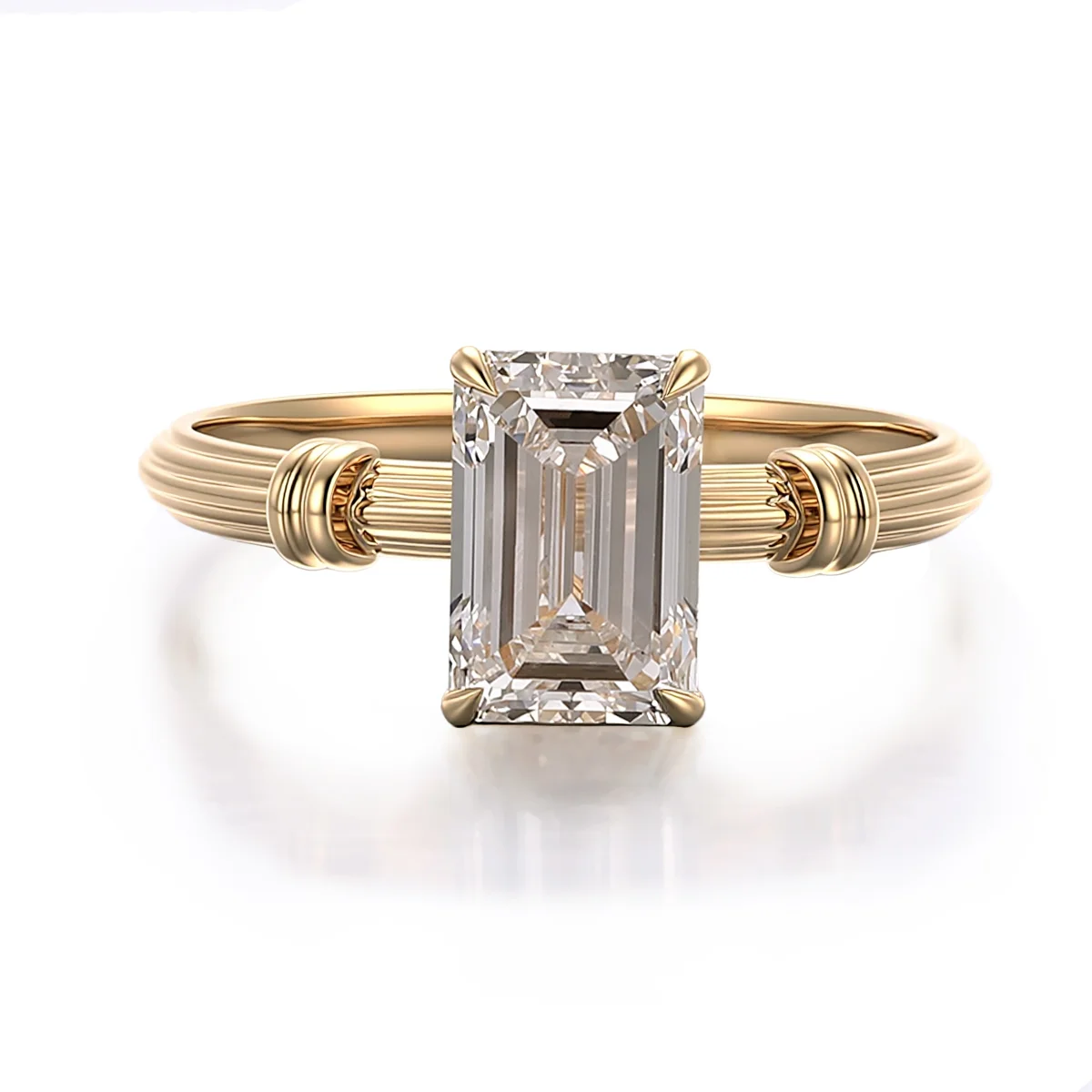
Emerald Cut
Anel de Noivado Solitário em Ouro 18K com Diamante Sintético Lapidado em Esmeralda
Long lines and broad flashes
An emerald cut brings a geometric outline to a solitaire and can also anchor a three-stone design. Its broad step facets make the reflection pattern easy to see. Two stones with the same carat weight can look quite different when their length, width and depth differ.
What to confirm. Compare face-up dimensions and ask for a video that tilts the stone in ordinary lighting. Look for a pattern of reflections you enjoy and check whether any inclusions are visible face up. Review how the setting meets the clipped corners. If you like a broader rectangle, compare the length-to-width ratio alongside the actual measurements.
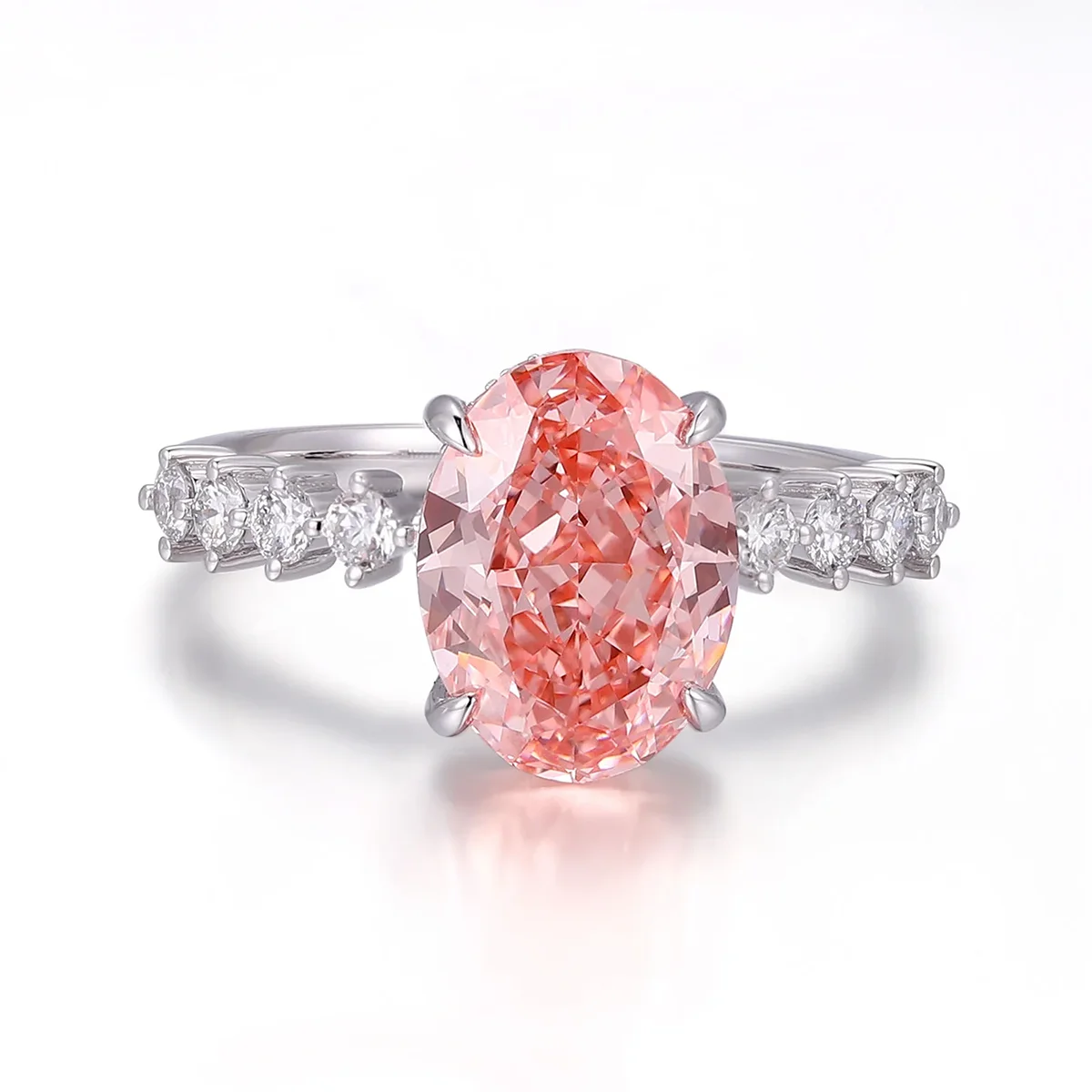
Oval
Anel de Noivado em Ouro 14K com Diamante Oval de 3 quilates Cultivado em Laboratório nas Laterais
An elongated center with flexible styling
An oval can look softly rounded or visibly elongated. Its outline works with a plain band, a visible halo or accents along the shoulders. Our oval side-stone example shows how accent stones can add detail while keeping the outline of the center easy to read.
What to confirm. Compare more than one oval of similar weight using face-up millimeter dimensions and videos. Look at the bow-tie area across the middle as the stone moves and decide how prominent you want that contrast to be. If you choose side stones, check how far they extend, where the band begins to taper and whether that area meets your wedding band.
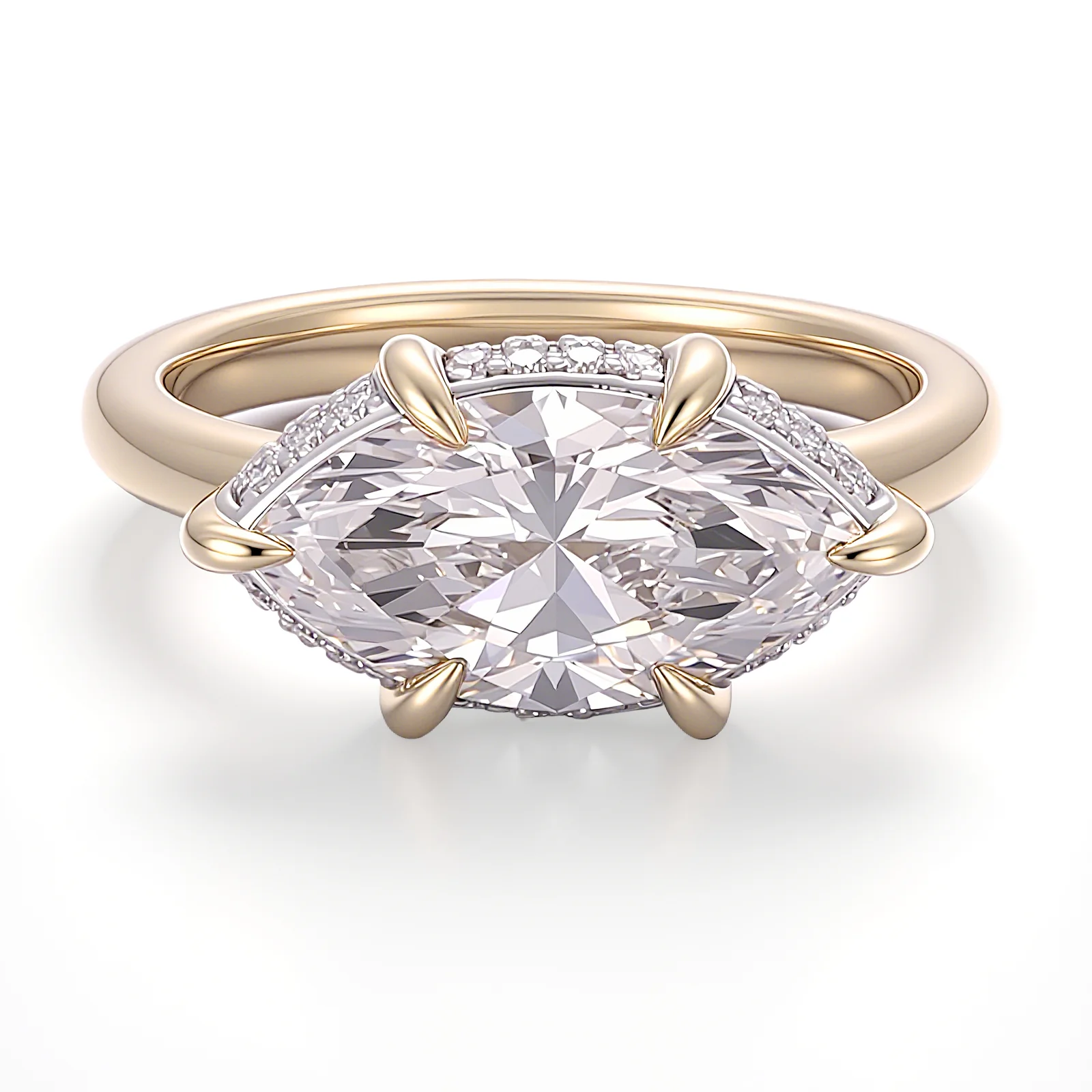
Halo Oculto
Anel de Noivado em Ouro 14K com Diamante Sintético em Formato de Marquise, Cravação em Garras e Halo Oculto
Detail that comes into view from the side
A hidden halo places small accents beneath the center, where they become visible as the ring turns. This marquise example is a reference for combining a defined center outline with detail in the gallery. The effect depends on the height and position of the accent row.
What to confirm. Inspect a side or three-quarter view to see whether the prongs or shoulders cover any of the accents. If you want an especially low profile, ask where the accent row would sit and what clearance remains underneath. Review the design with your intended wedding band in place so you can see any gap or contact.