Best Lab Grown Diamond Engagement Rings: A Style Guide
- Written by amy
- Updated on November 26, 2026
Table of Contents
Quick Style Comparison
Start with the view you care about most. For a single-stone silhouette, compare the solitaire with the emerald-cut example. For detail around the center, compare the halo and three-stone options. If you want detail that shows as the ring turns, start with the hidden halo.
|
Style |
Visual Character |
What to Confirm |
|---|---|---|
|
Solitaire |
One center stone on a plain band |
Prong or bezel, band width, basket height |
|
Halo |
A frame of accents visible from above |
Outer dimensions, halo spacing, cleaning access |
|
Three Stone |
Center diamond flanked by two side stones |
Side-stone size, alignment, total width |
|
Emerald Cut |
A rectangular outline with broad step facets |
Face-up clarity, facet pattern, corner setting |
|
Oval |
An elongated outline with rounded ends |
Length-to-width ratio, bow tie, shoulder balance |
|
Hidden Halo |
An accent row tucked beneath the center |
Side visibility, gallery clearance, band fit |
Six Designs to Compare
We selected six examples from the Provence Jewellery collection to show how the outline, accent placement and side profile affect the finished ring. Oval and emerald cut describe the center diamond, while solitaire, halo, three stone and hidden halo describe how the ring is arranged. You can combine these choices. Our guide to engagement ring styles and setting types covers a wider range of settings.
Solitaire
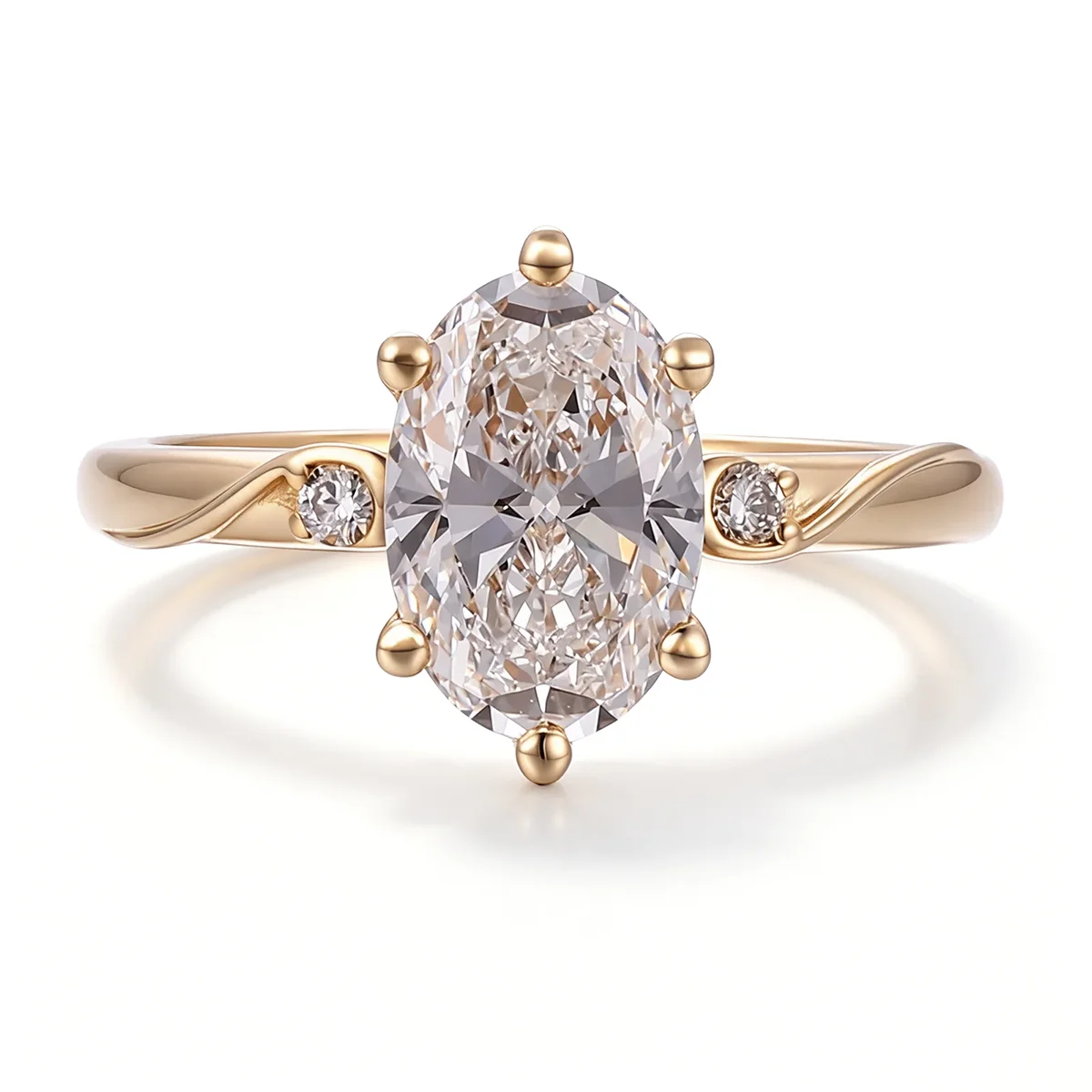
14K Gold 1.5ct Oval Lab Grown Diamond Solitaire Engagement Ring
A clean focus on the center stone
Start here if you want the diamond’s outline to carry the design. A slim band gives the center more visual space, while a broader band makes the metal part of the look. The Provence example pairs an oval lab grown diamond with a simple gold band, so you can see how an elongated center reads without a halo.
What to confirm. Ask for a straight-on photo and a side view before choosing between prongs and a bezel. Prongs leave more of the outline exposed. A bezel wraps the edge in metal and changes the silhouette. If you plan to wear a straight wedding band, check how far the basket projects at finger level.
Halo
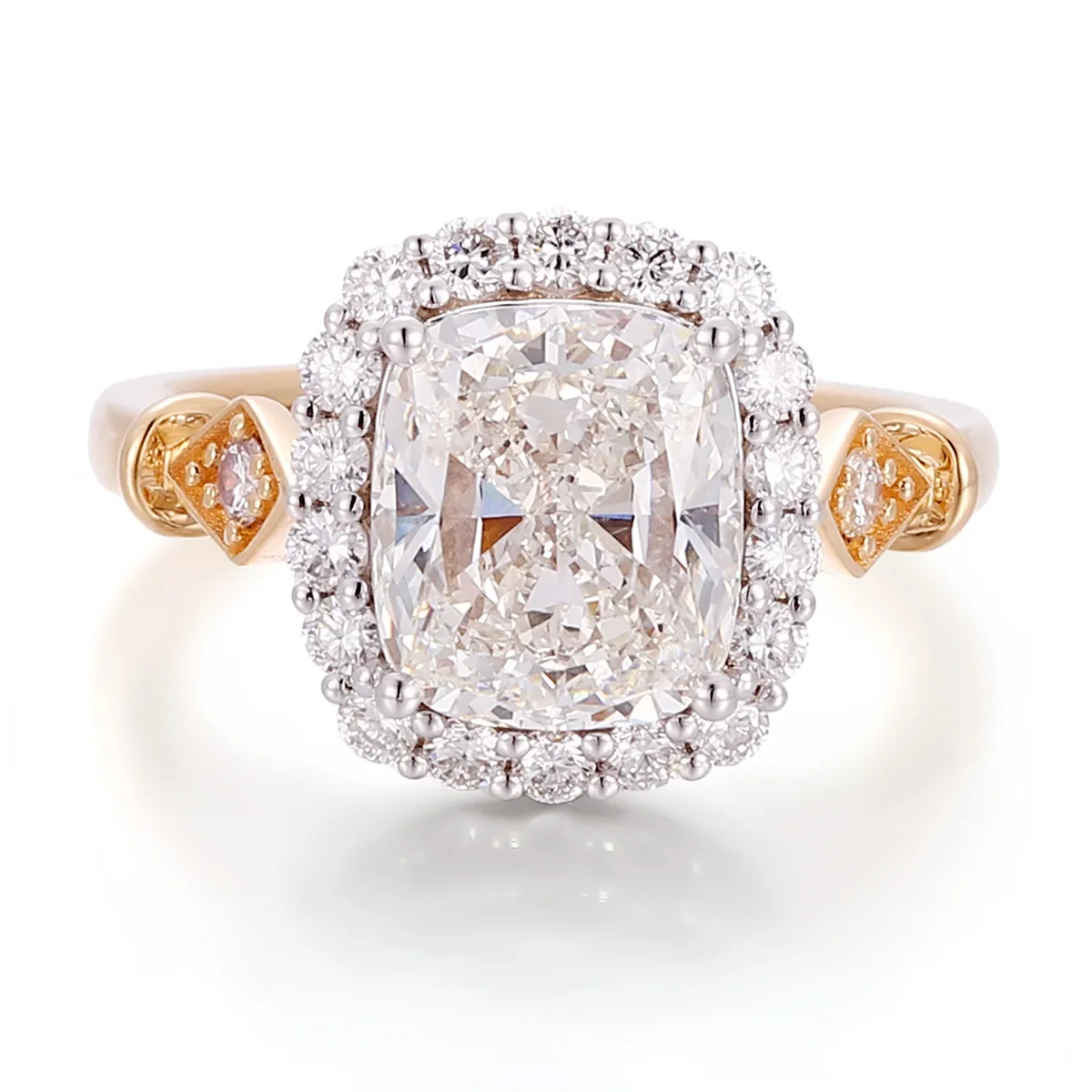
14K Gold 5ct Cushion Lab Grown Diamond Halo Engagement Ring
A visible frame around the diamond
A halo changes the entire face-up outline. The accent border can follow the center stone’s shape or create a distinct outline around it. The cushion example shows how the soft corners of the center and the surrounding frame can work together.
What to confirm. Ask for both the center stone dimensions and the outside dimensions of the halo. Compare the distance between the center and its frame in a top view, then check how the halo joins the shoulders in profile. The side view also shows where you would need access for cleaning and whether a neighboring band might touch the accents.
Three Stone
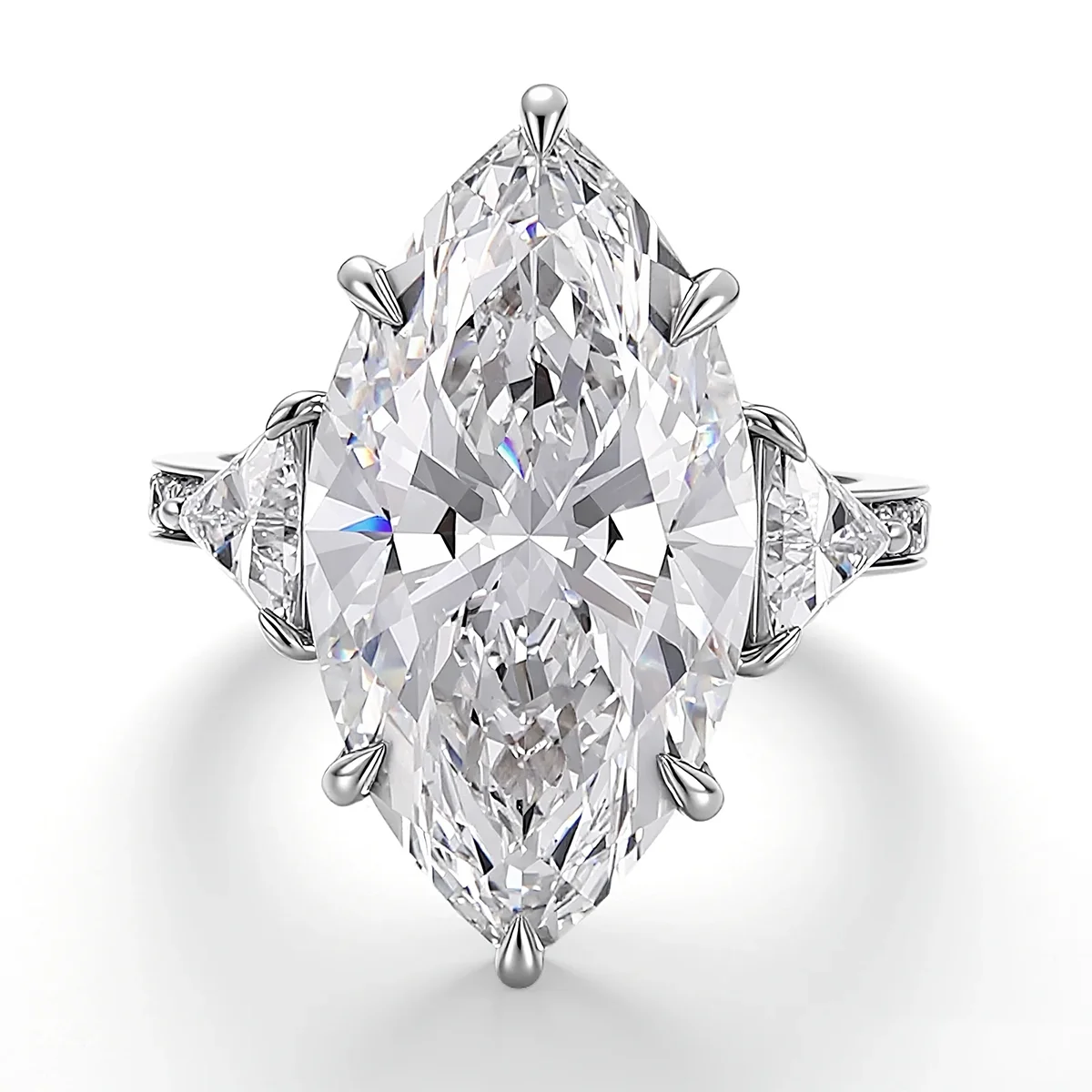
14K Gold 1.5ct Marquise Lab Grown Diamond Three Stone Engagement Ring
A wider design with a balanced outline
Three-stone rings spread the design across the finger. Smaller side stones let the center dominate, while more substantial side stones give the ring a broader, more continuous look. This Provence example uses a marquise center, so the long center outline remains distinct within a wider setting.
What to confirm. Compare the center and side stones in millimeters. Confirm the side-stone shape, pair matching and how the stones taper into the band. With a pointed center such as marquise, review the prongs at both ends. Check the total width on the intended ring size and ask which weights refer to the center or the complete ring.
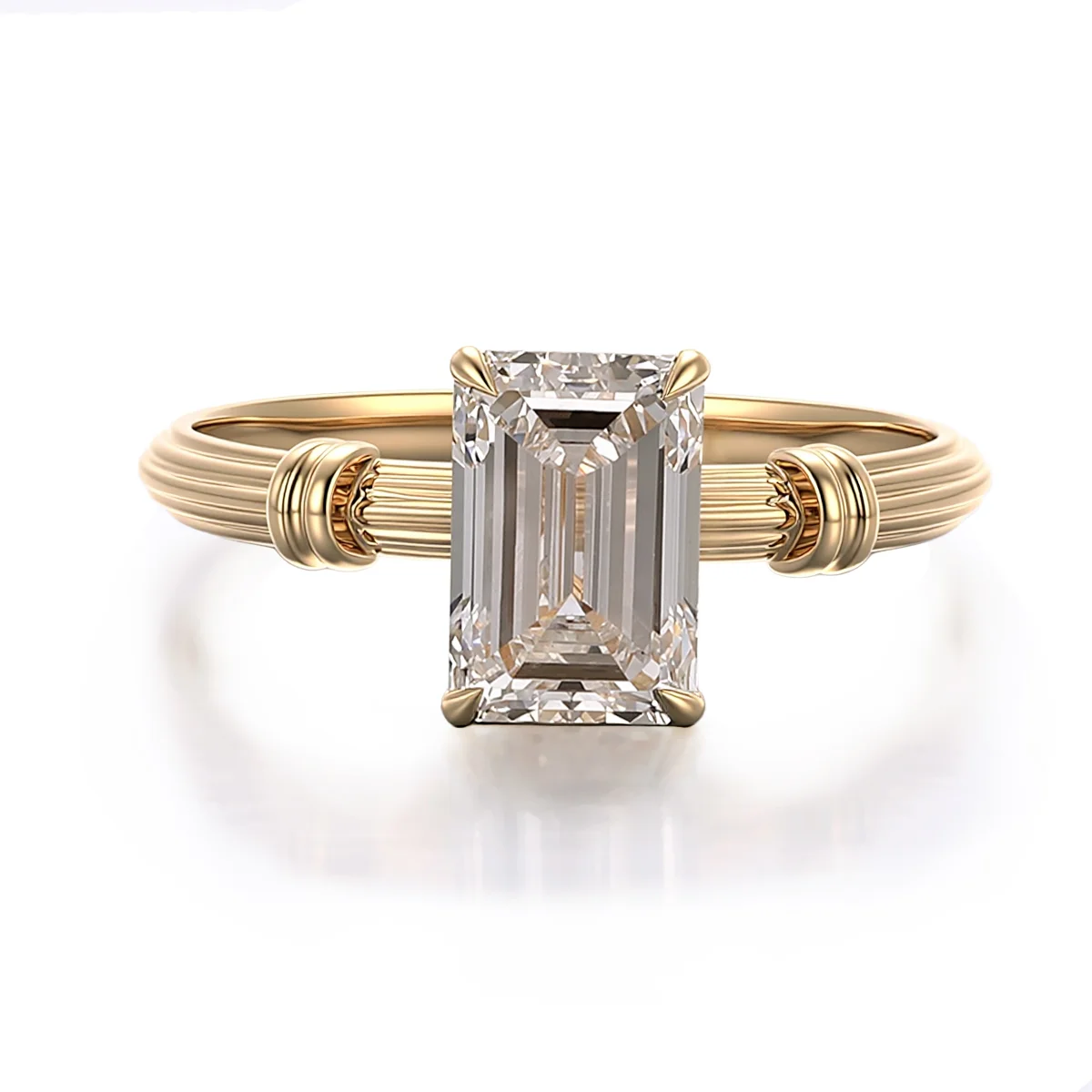
Emerald Cut
18K Gold Emerald Cut Lab Grown Diamond Solitaire Engagement Ring
Long lines and broad flashes
An emerald cut brings a geometric outline to a solitaire and can also anchor a three-stone design. Its broad step facets make the reflection pattern easy to see. Two stones with the same carat weight can look quite different when their length, width and depth differ.
What to confirm. Compare face-up dimensions and ask for a video that tilts the stone in ordinary lighting. Look for a pattern of reflections you enjoy and check whether any inclusions are visible face up. Review how the setting meets the clipped corners. If you like a broader rectangle, compare the length-to-width ratio alongside the actual measurements.
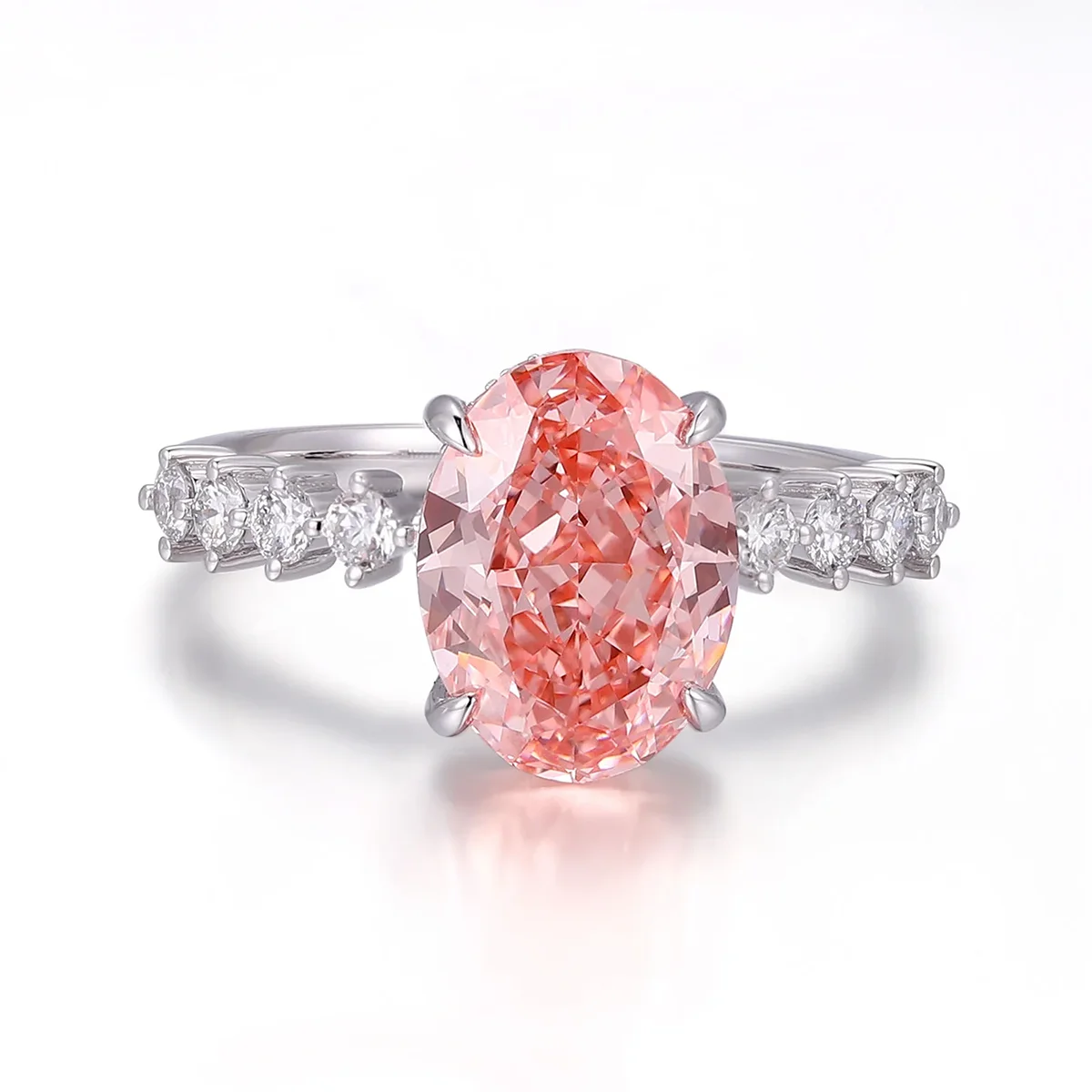
Oval
14K Gold 3ct Oval Lab Grown Diamond Side Stone Engagement Ring
An elongated center with flexible styling
An oval can look softly rounded or visibly elongated. Its outline works with a plain band, a visible halo or accents along the shoulders. Our oval side-stone example shows how accent stones can add detail while keeping the outline of the center easy to read.
What to confirm. Compare more than one oval of similar weight using face-up millimeter dimensions and videos. Look at the bow-tie area across the middle as the stone moves and decide how prominent you want that contrast to be. If you choose side stones, check how far they extend, where the band begins to taper and whether that area meets your wedding band.
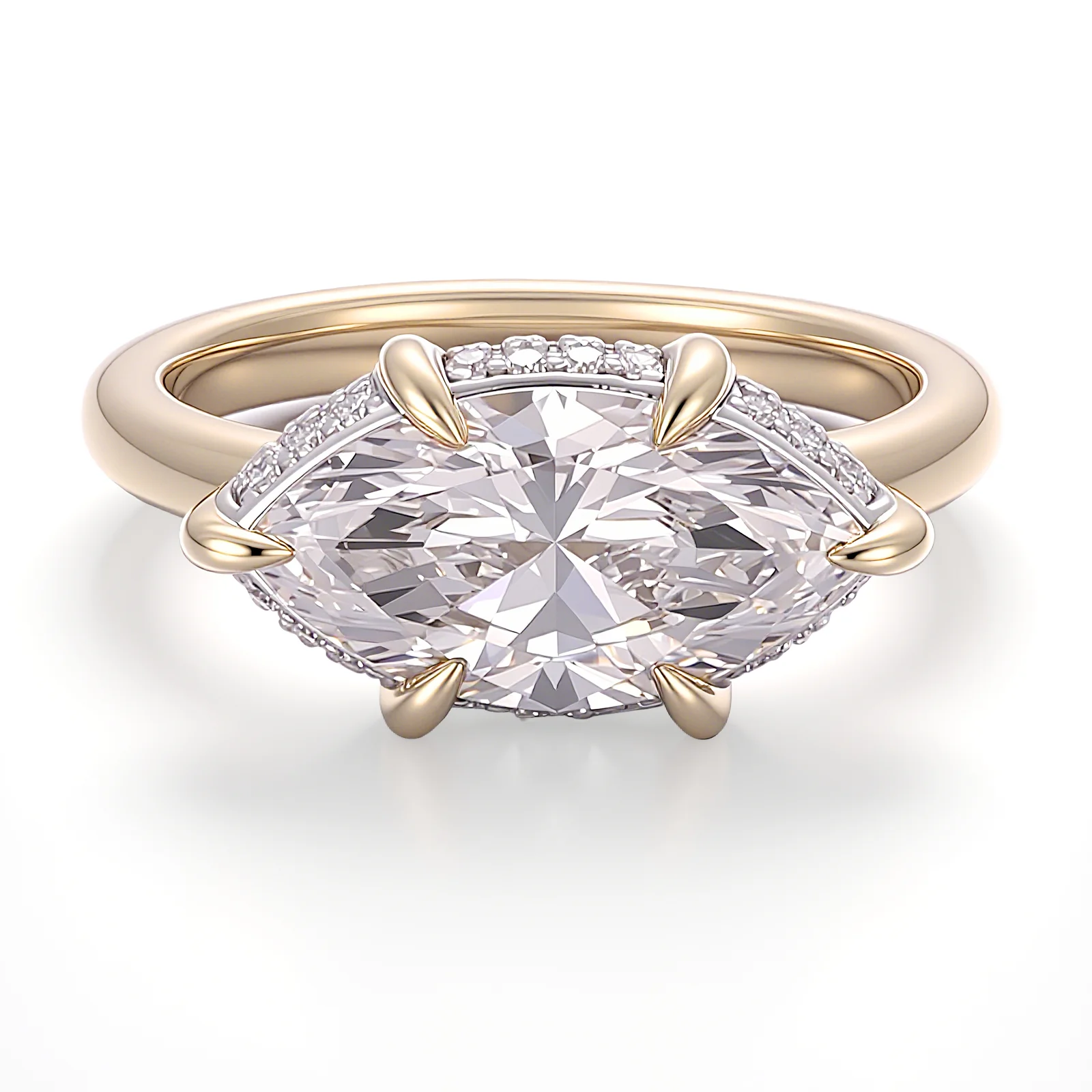
Hidden Halo
14K Gold Marquise Lab Grown Diamond Prong Set Hidden Halo Engagement Ring
Detail that comes into view from the side
A hidden halo places small accents beneath the center, where they become visible as the ring turns. This marquise example is a reference for combining a defined center outline with detail in the gallery. The effect depends on the height and position of the accent row.
What to confirm. Inspect a side or three-quarter view to see whether the prongs or shoulders cover any of the accents. If you want an especially low profile, ask where the accent row would sit and what clearance remains underneath. Review the design with your intended wedding band in place so you can see any gap or contact.
What to Check Before You Choose
Face-up size and appearance
Record the center stone’s length, width and carat weight. Compare video in similar lighting and ask how the whole design measures across the finger, especially for a halo or three-stone ring.
Diamond grading report
Request an IGI or GIA report for your selected center diamond. Compare the report number and the listed specifications with the diamond offered, and check whether quoted weight covers the center or all stones.
Setting, metal and ring size
Specify metal and color, ring size, band width and how the stone is held. If you prefer a low profile, ask for the proposed height and a side view for the exact center-stone dimensions.
Wedding band fit
Bring the intended band’s width, thickness and shape. Ask for a side view of the pair so you can see where the bands meet, whether they leave a gap and if the neighboring band touches the setting.
How to Compare Quotes
Set a budget for the complete ring and choose the two details you care about most. For a center-focused design, compare different diamond dimensions in the same solitaire setting. If the accents are important, keep the center dimensions fixed and compare an accent-free band, a visible halo and a hidden halo. That gives you a clearer view of what each change adds to the design and quote.
Ask for quotes based on the same ring size and metal. Confirm what each includes for the center stone and report, accent stones, setting and any custom work. For a retail collection, compare the single sample and the planned production quantity using the same specifications.
Make a Design Your Own
Start with a design you like or share your own reference. Provence Jewellery can review the setting, help with CAD design and prepare a quote based on your specifications. Jewelry brands and retailers can start with one ring.
- Send a reference link, photo or sketch with the details you want to keep or change.
- Specify the center shape and size range, report preference, metal, ring size and quantity.
- Share your budget, target date and any wedding band measurements so the team can review fit and timing.
Frequently Asked Questions
Start with a comfortable band and a setting profile that fits your routine. Compare basket height, prong placement and whether the design catches on clothing. If you plan to wear a wedding band daily, review both rings together.
A visible halo frames the center stone from above. A hidden halo sits beneath it and is most apparent from the side or at an angle. Compare both views to see where the accents will show.
Yes. Oval and emerald cut describe the diamond’s shape or cutting style. Solitaire describes a design centered on one stone. Both can be made as solitaires or paired with halo or side-stone settings.
Yes. For each design, you can select a center diamond with an IGI or GIA report. Include your preference when you inquire so the team can review options for your chosen shape and size.
Yes. Provence Jewellery accepts orders starting from one ring. Share the design reference, stone specifications and metal, and ask the team to confirm the available configuration, quote and lead time.
It depends on the basket clearance, how far the setting projects and the wedding band’s thickness. Ask for a profile drawing or CAD view of the pair. A curved band may suit a setting that leaves a gap with a straight band.