Blog
Best Lab Grown Diamond Engagement Rings: A Style Guide
- Verfasst von amy
- Updated on November 25, 2026
Inhaltsverzeichnis
Quick Style Comparison
Start with the view you care about most. For a single-stone silhouette, compare the solitaire with the emerald-cut example. For detail around the center, compare the halo and three-stone options. If you want detail that shows as the ring turns, start with the hidden halo.
|
Stil |
Visueller Charakter |
What to Confirm |
Browse Designs |
|---|---|---|---|
|
Solitär |
One center stone on a plain band |
Prong or bezel, band width, basket height |
View solitaire ring |
|
Halo |
A frame of accents visible from above |
Outer dimensions, halo spacing, cleaning access |
View halo ring |
|
Drei Steine |
Center diamond flanked by two side stones |
Side-stone size, alignment, total width |
View three stone ring |
|
Smaragdschliff |
A rectangular outline with broad step facets |
Face-up clarity, facet pattern, corner setting |
View emerald cut ring |
|
Oval |
An elongated outline with rounded ends |
Length-to-width ratio, bow tie, shoulder balance |
View oval ring |
|
Versteckter Halo |
An accent row tucked beneath the center |
Side visibility, gallery clearance, band fit |
View hidden halo ring |
Six Designs to Compare
We selected six examples from the Provence Jewellery collection to show how the outline, accent placement and side profile affect the finished ring. Oval and emerald cut describe the center diamond, while solitaire, halo, three stone and hidden halo describe how the ring is arranged. You can combine these choices. Our guide to engagement ring styles and setting types covers a wider range of settings.
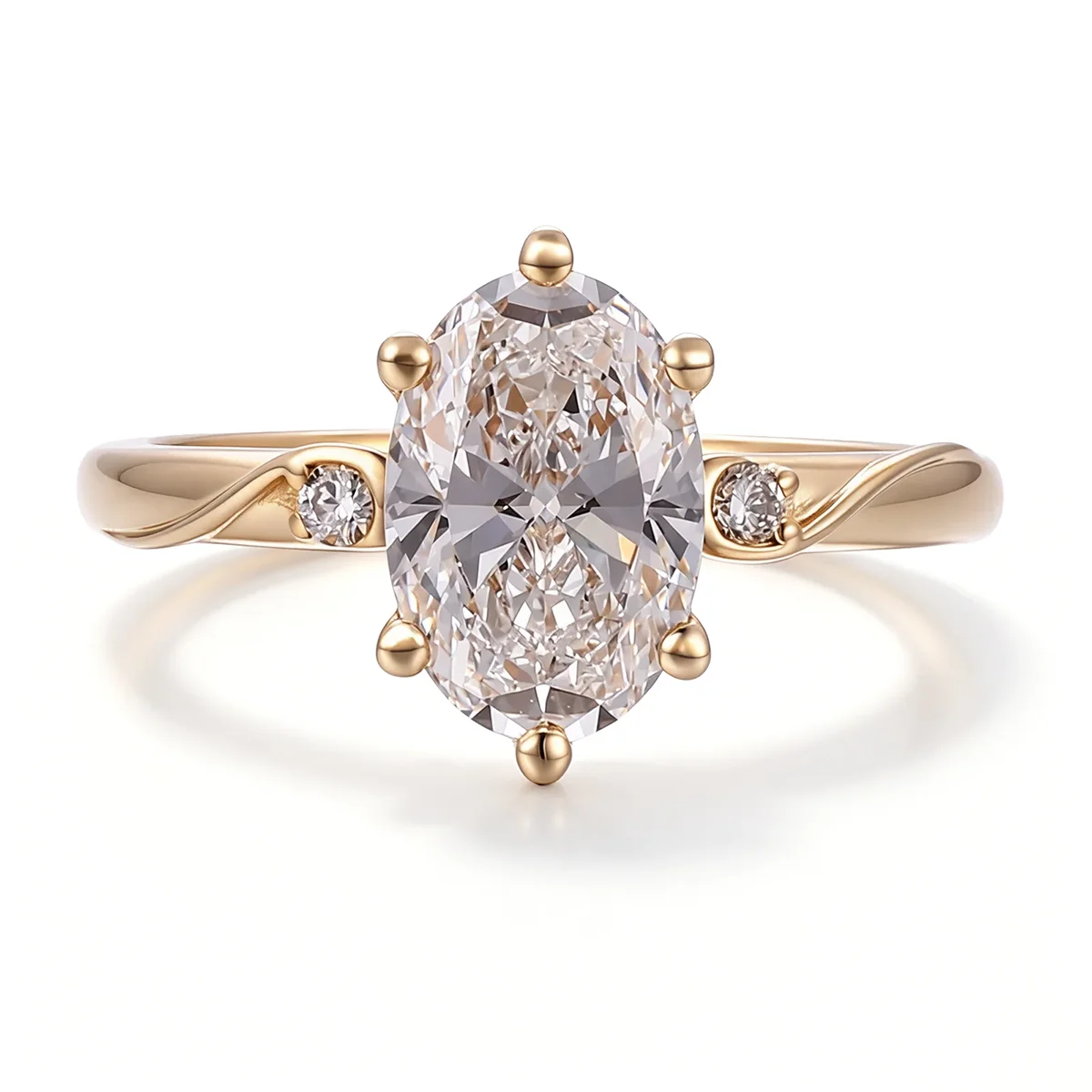
Solitär
Verlobungsring aus 14-karätigem Gold mit ovalem, im Labor gezüchtetem Diamanten (1,5 ct)
A clean focus on the center stone
Start here if you want the diamond’s outline to carry the design. A slim band gives the center more visual space, while a broader band makes the metal part of the look. The Provence example pairs an oval lab grown diamond with a simple gold band, so you can see how an elongated center reads without a halo.
What to confirm. Ask for a straight-on photo and a side view before choosing between prongs and a bezel. Prongs leave more of the outline exposed. A bezel wraps the edge in metal and changes the silhouette. If you plan to wear a straight wedding band, check how far the basket projects at finger level.
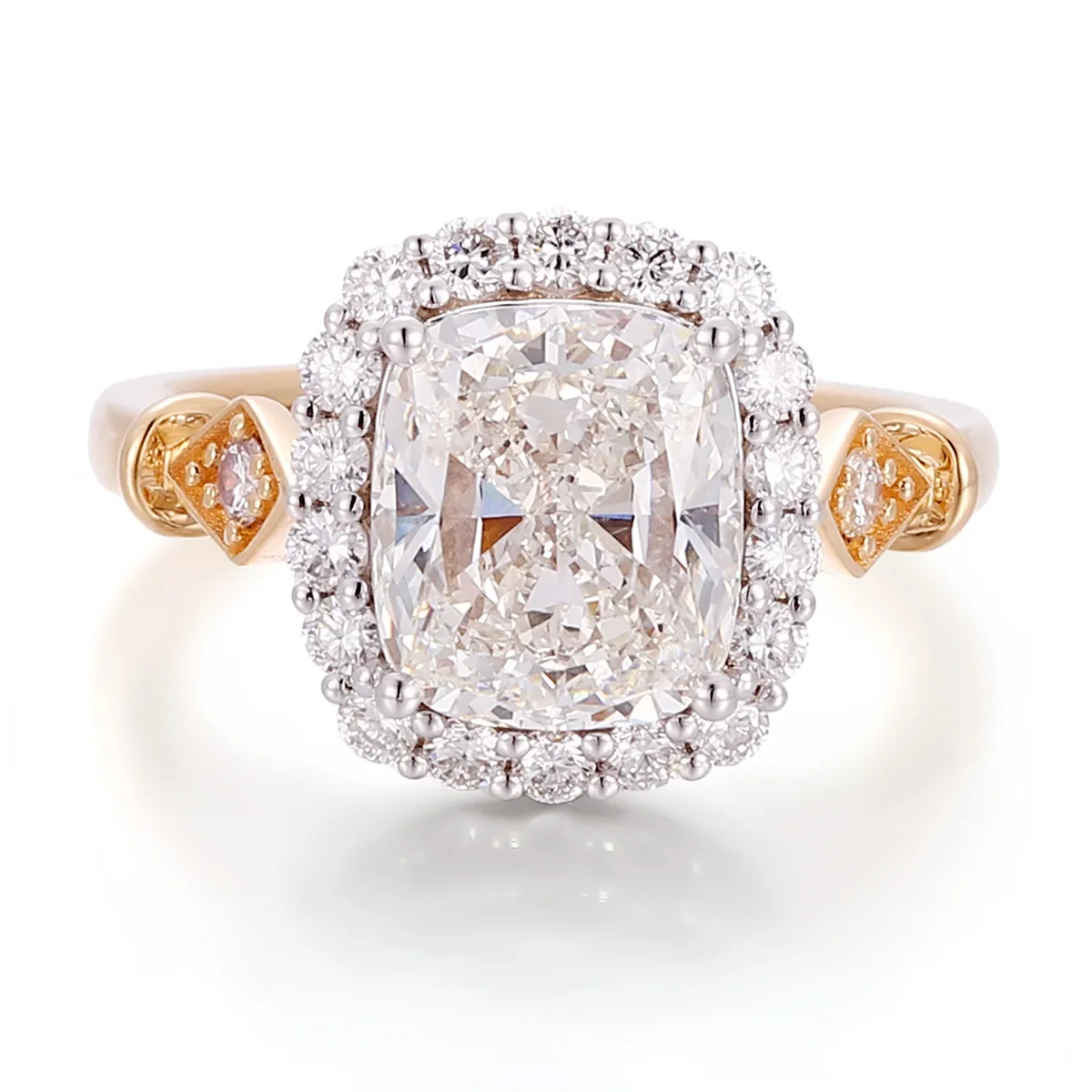
Halo
Verlobungsring aus 14-karätigem Gold mit 5 Karat kissenförmigem, im Labor gezüchtetem Diamanten und Halo-Fassung
A visible frame around the diamond
A halo changes the entire face-up outline. The accent border can follow the center stone’s shape or create a distinct outline around it. The cushion example shows how the soft corners of the center and the surrounding frame can work together.
What to confirm. Ask for both the center stone dimensions and the outside dimensions of the halo. Compare the distance between the center and its frame in a top view, then check how the halo joins the shoulders in profile. The side view also shows where you would need access for cleaning and whether a neighboring band might touch the accents.
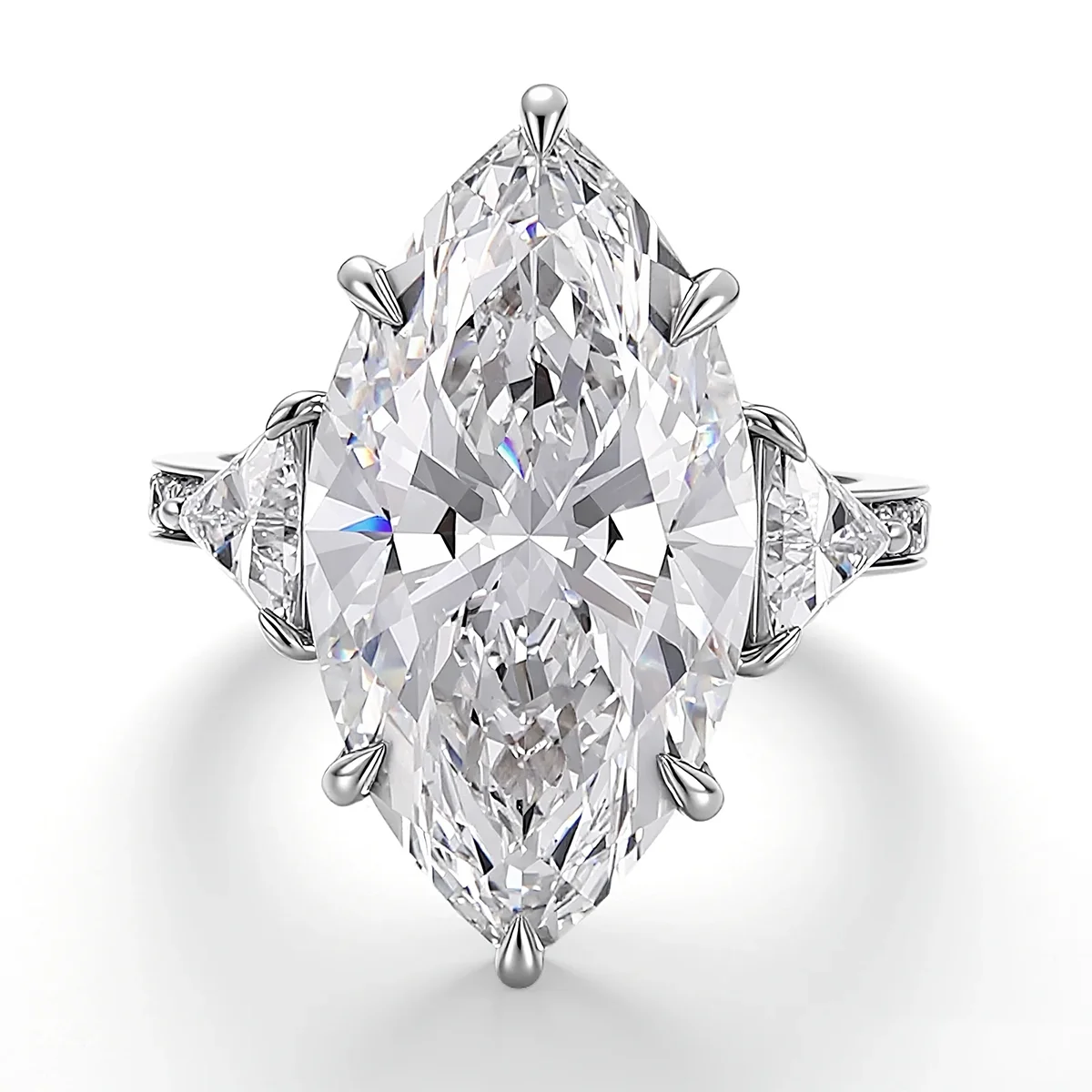
Drei Steine
Verlobungsring aus 14-karätigem Gold mit drei Steinen, besetzt mit einem 1,5-Karat-Marquise-Diamanten aus dem Labor.
A wider design with a balanced outline
Three-stone rings spread the design across the finger. Smaller side stones let the center dominate, while more substantial side stones give the ring a broader, more continuous look. This Provence example uses a marquise center, so the long center outline remains distinct within a wider setting.
What to confirm. Compare the center and side stones in millimeters. Confirm the side-stone shape, pair matching and how the stones taper into the band. With a pointed center such as marquise, review the prongs at both ends. Check the total width on the intended ring size and ask which weights refer to the center or the complete ring.
Solitär
Verlobungsring aus 14-karätigem Gold mit ovalem, im Labor gezüchtetem Diamanten (1,5 ct)
A clean focus on the center stone
Start here if you want the diamond’s outline to carry the design. A slim band gives the center more visual space, while a broader band makes the metal part of the look. The Provence example pairs an oval lab grown diamond with a simple gold band, so you can see how an elongated center reads without a halo.
What to confirm. Ask for a straight-on photo and a side view before choosing between prongs and a bezel. Prongs leave more of the outline exposed. A bezel wraps the edge in metal and changes the silhouette. If you plan to wear a straight wedding band, check how far the basket projects at finger level.