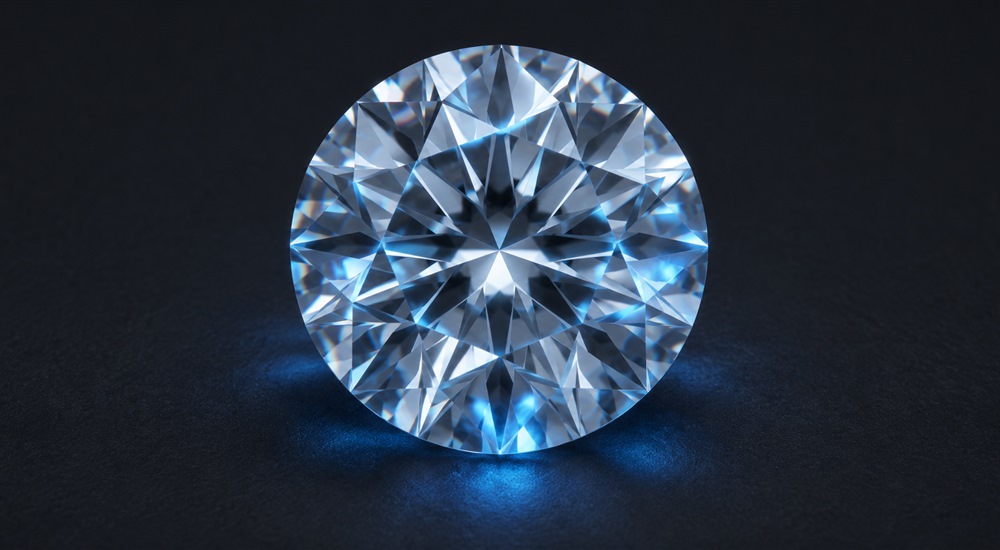
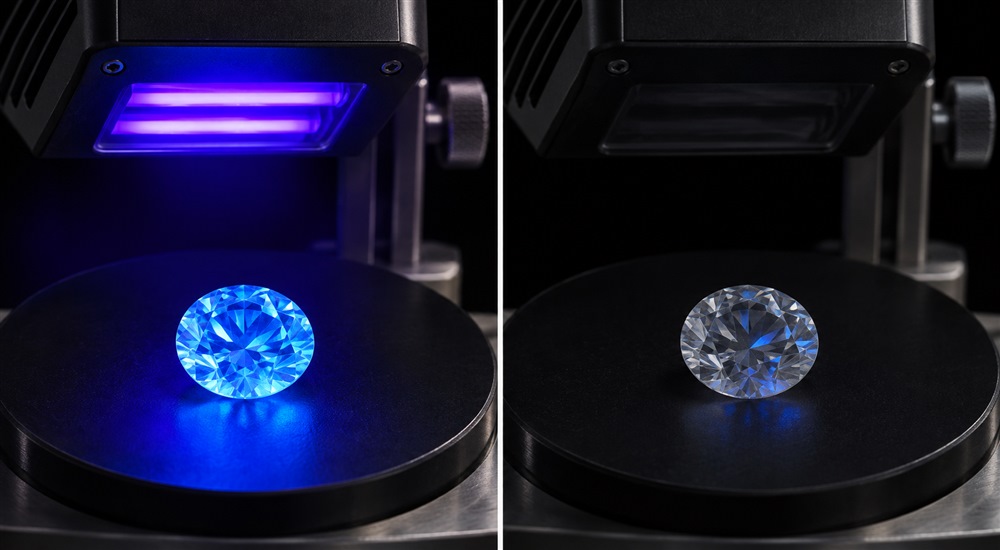
A lab grown diamond under UV light may glow blue, show another color, or have no visible reaction. Some stones continue to glow briefly after the UV source is switched off. Any of these observations can tell you something about how that particular stone responds to light. None can establish the diamond’s origin on its own.
If you are comparing loose diamonds for a ring, matching a pair for earrings, or sourcing a parcel for a jewelry collection, the first question is what you want to verify. A grading report and a physical match to the stone address origin. White-light images help you evaluate everyday appearance. A controlled UV comparison helps you document how stones behave under a specified light source.
What Does a Lab Grown Diamond Look Like Under UV Light?
There is no single look. You might see no visible glow, a faint blue reaction, or a more noticeable yellow, orange, greenish, or other color. The reaction can also vary across the stone. What you see depends on the diamond’s crystal defects and trace elements, the wavelength of the lamp, and the conditions under which you observe it.
| What you see | What it can tell you | What to check next |
|---|---|---|
| No visible glow while the lamp is on | The stone shows no visible reaction under those conditions. | Check the lamp type and report. A different wavelength or professional instrument may reveal a response. |
| A blue or other colored glow while the lamp is on | The stone shows visible fluorescence under that source. | Compare it in white light if you are evaluating appearance. Use origin documentation if you are verifying the stone. |
| A glow that continues after the lamp is switched off | You may be seeing phosphorescence. | Request a continuous clip that shows the lamp switching off. Refer an unresolved origin question to a gemological lab. |
| One stone glows more strongly than its neighbor | The two stones respond differently under that setup. | Compare them in the same frame, then decide whether the difference matters for the finished piece. |
A purple cast across the whole frame can come from visible light emitted by the lamp or reflected off the setting. Camera exposure and white balance can also make the same stone appear brighter or more saturated from one clip to the next. For a side-by-side comparison, a single frame is more useful than two videos recorded with different settings.
Fluorescence, Phosphorescence, and Diamond Color
Fluorescence is visible emission during exposure to the UV source. It ends essentially when the source is removed. Phosphorescence is the emission that persists after the source is switched off. A video showing only the stone under a running lamp cannot tell you whether there is an afterglow.
Body color describes the stone’s color under the lighting conditions used to evaluate it. A diamond that looks colorless in white light can fluoresce blue under UV. If you are choosing between two stones of the same color grade, compare their face-up appearance under the same white light before judging either from a black-light photo.
The rainbow flashes you see as a diamond moves in ordinary lighting are fuego, produced as the diamond separates white light into colors. Those flashes and UV-induced fluorescence describe different optical effects. A vivid UV reaction therefore tells you little about how lively the diamond will look in a setting.
How HPHT, CVD, and Natural Diamonds Can Respond
HPHT stands for high pressure, high temperature. CVD stands for chemical vapor deposition. The two growth processes can leave different features in the crystal. Gemologists can use specialized fluorescence imaging to examine where and how the stone emits light. That information is more detailed than the overall color you see with a handheld black light.
| Diamond origin or growth method | Possible observations | How to interpret them |
|---|---|---|
| HPHT-grown | Some stones show a distinct response under short-wave or deep UV. Under specialized imaging, growth sectors can form a cross-shaped pattern in some specimens. Some stones show an afterglow. | Growth-sector patterns can help a trained examiner. A visible afterglow by itself is insufficient to assign HPHT origin. |
| CVD-grown | Specialized imaging can reveal layered or striated patterns in some specimens. Visible color and intensity vary with the stone and the wavelength used. | A weak reaction under a handheld lamp leaves the growth method unresolved. Gemologists may combine imaging with spectroscopy. |
| Natural | A natural diamond may show no visible reaction, blue fluorescence, or another color. An afterglow is also possible in some natural diamonds. | Color and persistence can overlap with observations made on lab grown stones. Origin requires further evidence. |
The wavelength matters. Long-wave UV around 365 nm is familiar in gemological observation. Short-wave UV around 254 nm and the deep-UV sources used by specialized instruments can reveal different responses. Some lab grown diamonds respond more strongly to shorter wavelengths, while many fluorescent natural diamonds react more strongly to long-wave UV. These are tendencies with exceptions. Leave short-wave and deep-UV examination to trained personnel using suitable equipment.
Identifying Lab Grown Diamonds When Origin Matters
Start by separating two questions. Is the stone diamond? If it is diamond, did it grow in a laboratory or in nature? Some simulants can also react under UV, and a standard thermal diamond tester cannot distinguish natural diamond from lab grown diamond.
- Request the laboratory report for the exact stone. Read its identification and check where the issuing lab lists the report number, measurements, carat weight, and any available growth or treatment information.
- Verify the report record. Look up the number through the issuing laboratory’s report verification service. Compare the returned details with the document and the seller’s listing.
- Match the report to the physical stone. Check the shape and measurements. When a girdle inscription is present and visible, have it read under suitable magnification and compared with the report. A setting can obscure the inscription. For a stone that will be mounted, it is usually easier to document this step while it is loose.
- Escalate discrepancies before approving the stone. If the report and stone do not match, the stone has no usable documentation, or an instrument refers it for further testing, ask for examination by a qualified gemological laboratory. The lab can interpret multiple observations, which may include fluorescence imaging and spectroscopy.
Finding a report record confirms that the record exists. Matching the physical stone to that record is a separate step. The distinction matters when a supplier offers several nearly identical stones or when documentation is forwarded separately from the shipment.
What If the Report Says “None” but the Diamond Glows?
Check three things before drawing a conclusion.
- The report field. Where fluorescence is listed, read the terminology and scope used by the issuing lab for that report type. An explicit Ninguno entry and an omitted field carry different information.
- The light source. A reaction under a different UV wavelength may fall outside the conditions represented by the report entry.
- When the glow appears. Emission visible after the light is switched off is a different observation from fluorescence while the light is on. In mounted jewelry, check which stone or part of the piece is emitting the light.
If the same stone still appears to give a conflicting response under comparable conditions, ask the supplier or issuing laboratory to review the report and the observation together. Send the report number, the known lamp wavelength, and a continuous clip that shows when the source is on and off.
Does Fluorescence Affect Appearance, Quality, or Price?
For most purchases, start with the appearance you will see in daily wear. Compare the stone face-up in neutral white light for transparency, body color, and the way the facets return light. Then look at it under any other lighting that is important to the design. If a stone looks hazy, compare its transparency under the same lighting as comparable stones before attributing the effect to fluorescence.
Fluorescence is a light response. Its presence does not weaken the diamond. A report entry also does not establish a fixed premium or discount. When comparing reports, use diamond fluorescence grades to understand the strength of the recorded reaction, then compare the stones face-up under the same white light. Compare quotes for stones of similar shape, dimensions, carat weight, color, clarity, finish, and report scope. If the project has a specific lighting requirement, include that requirement in the comparison.
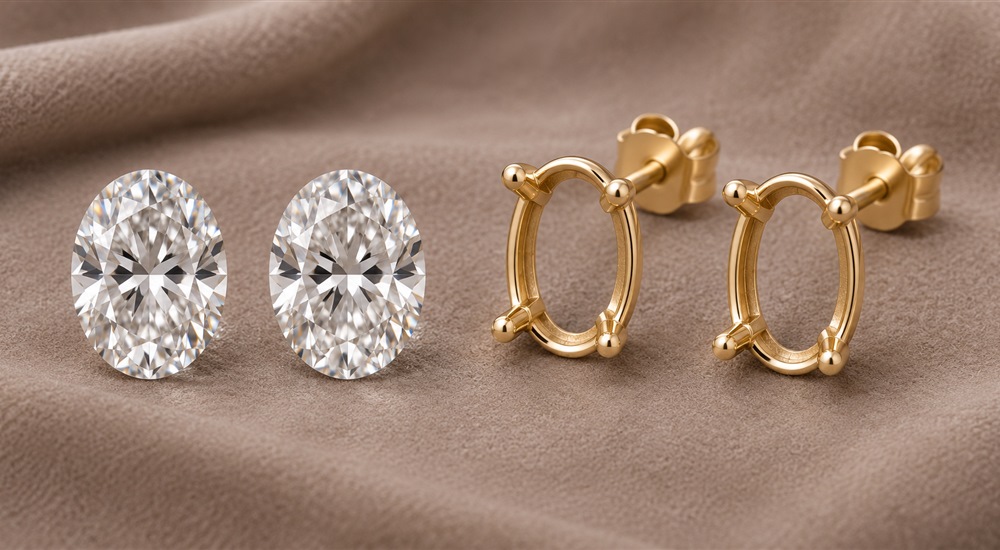
Consider a pair of oval diamonds for earrings. They can look well matched in ordinary white light even if one glows more strongly in a UV-rich venue. For everyday earrings, the white-light match may satisfy the brief. If the pieces will regularly be worn under black lighting or appear together in a UV-lit campaign, request a side-by-side UV clip before final approval. State that expectation while the stones are still being sourced.
What to Request When Sourcing Loose Lab Grown Diamonds
For a single center stone, a matched pair, or a small production parcel, agree on the evidence you need before comparing quotations.
| Request | What to ask for |
|---|---|
| Stone specifications | Shape, carat or millimeter range, color, clarity, finish, quantity, and permitted tolerances. For matched stones, specify the dimensions and face-up appearance you want to match. |
| Report details | Issuing laboratory and report number for each individually documented stone. For a parcel without individual reports, agree in writing on the identification evidence and whether screening covers every stone or a sample. |
| White-light images | Face-up and angled views of the actual stones. For a pair or set, request one shared frame under the same light and camera settings. |
| UV images, when relevant | An image or video of the actual stones under the stated lamp wavelength, if known. Request a continuous switch-off sequence if afterglow is part of the question. |
| Acceptance criteria | Document how to handle a mismatch, an unidentified stone, or an instrument referral before the order is approved. |
For accent stones, such as melee used in a pavé band, define origin screening and visual matching as separate parts of the brief. If the finished piece needs a uniform appearance under a specific UV source, agree on that requirement before setting. Comparing small, closely mounted stones afterward makes it harder to record which stone produced a particular reaction.
Provence Jewellery sources loose lab grown diamonds for jewelry businesses and custom projects, with a minimum order quantity of one. Share your preferred shape, dimensions, grades, quantity, and report requirements when requesting a quotation. If UV appearance matters for a matched pair or a collection, include the lighting scenario and the comparison images you need to review before approval.
Preguntas frecuentes
Do all lab grown diamonds glow under a black light?
No. Some show a visible reaction and others appear dark under the same lamp. A stone that shows no visible glow under one wavelength may respond under a different source or under specialized imaging.
Does blue fluorescence mean the diamond is natural?
No. Blue fluorescence alone cannot establish origin. Use the laboratory identification and verify that the report corresponds to the stone you are buying.
Can a lab grown diamond glow after the light is switched off?
Yes. A visible afterglow can occur in some lab grown diamonds, including some HPHT-grown stones. It can occur in some natural diamonds as well. The afterglow gives a gemologist an observation to investigate.
Does a diamond that stays dark under UV fail a diamond test?
No. The absence of visible fluorescence is not a failure. If you need to establish whether the stone is diamond or confirm how it grew, use the appropriate identification evidence for that question.
Can cut, color, or clarity tell me whether two stones will glow the same way?
No. Two stones with similar grading specifications can react differently because those specifications do not describe all the crystal features involved in fluorescence. If their response under UV is important, compare the actual stones together under the same source.
Should I ask for UV photos for every loose diamond order?
Request them when the project needs a UV appearance match or when you are investigating a particular observation. For an ordinary purchase, prioritize origin documentation, a physical match to the report, and clear images of the actual stone in white light.