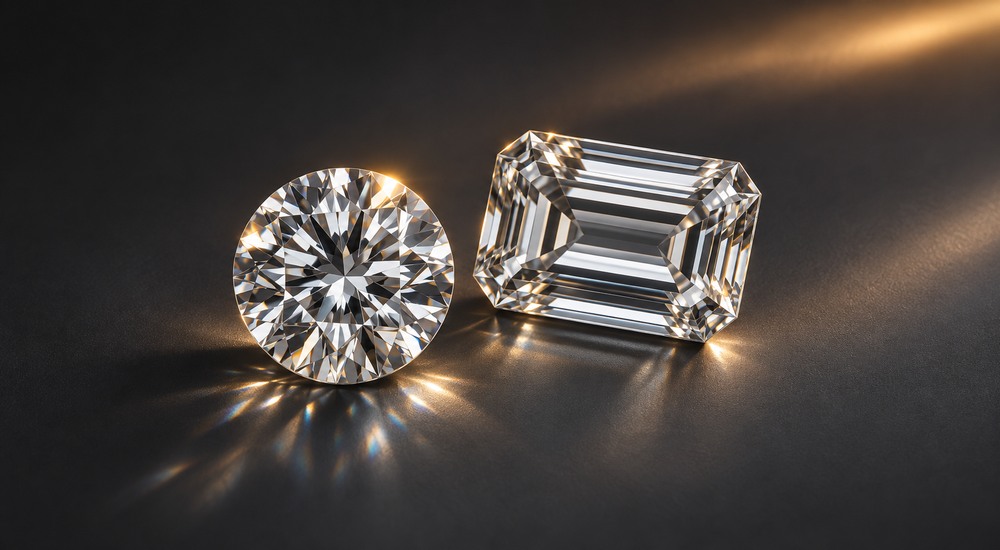
The two main types of lab grown diamonds are HPHT diamonds y CVD diamonds. The names describe how a diamond crystal was grown. HPHT uses high pressure and high temperature to grow diamond from a carbon source. CVD, or chemical vapor deposition, grows diamond from a carbon-containing gas. Both methods produce genuine diamonds suitable for fine jewelry.
When you shop for a loose stone, you may also see terms such as Type IIa, as grown, post-growth treated, D color, y VS1 clarity. Each describes a different aspect of the diamond. A CVD-grown diamond can also be HPHT-treated, for example, because the crystal can be grown by one process and have its color modified by another.
If you are choosing a diamond for a ring, matching a pair of earrings, or sourcing stones for a collection, start with what the jewelry needs. Then use the growth method, report, measurements, and images to narrow down the options.
What Do the Different Lab Grown Diamond Labels Mean?
A single diamond can carry several labels. This is how to read them when they appear in a listing, quotation, or grading document.
| What you want to know | Terms you may see | What the terms describe |
|---|---|---|
| What material is it? | Laboratory-grown diamond, natural diamond, moissanite, cubic zirconia | The identity or origin of the material |
| How was the diamond grown? | HPHT-grown, CVD-grown | The process used to grow the crystal |
| Was it treated after growth? | As grown, post-growth treated, HPHT-treated | Information about processing after the crystal formed |
| What is its material type? | Type Ia, Ib, IIa, IIb | A scientific classification based mainly on detectable nitrogen and, for Type IIb, boron |
| What does the finished stone look like? | Oval, emerald cut, D color, VS1 clarity | Its shape, cutting style, and evaluated quality characteristics |
| Will it fit the design? | 8.5 × 6.0 mm, 1.42 length-to-width ratio, 2.00 ct | Its dimensions, outline proportions, and weight |
For example, consider a CVD-grown, HPHT-treated, E-color, VS1 oval diamond. CVD describes the original growth. HPHT treatment describes a later step. E and VS1 describe the finished stone’s color and clarity. Oval describes its outline. A buyer comparing it with another oval still needs the measurements and a clear view of the stone face up.
HPHT and CVD Diamonds Compared
| HPHT-grown diamond | CVD-grown diamond | |
|---|---|---|
| Full name | High Pressure High Temperature | Chemical Vapor Deposition |
| How growth starts | A diamond seed is placed in a press with a carbon source and a metal solvent-catalyst | A diamond seed plate is placed in a chamber with a carbon-containing gas |
| How the crystal grows | Under high pressure and temperature, carbon moves through the molten metal and crystallizes on the seed | An energized gas supplies carbon that deposits on the seed in layers |
| Features a laboratory may examine | Growth patterns, metallic flux inclusions, and luminescence | Layered growth features, strain patterns, inclusions, and luminescence |
| What a jewelry buyer should compare | The finished stone’s color, transparency, cut, dimensions, and supporting documents | The same finished-stone checks, along with any treatment information required for the order |
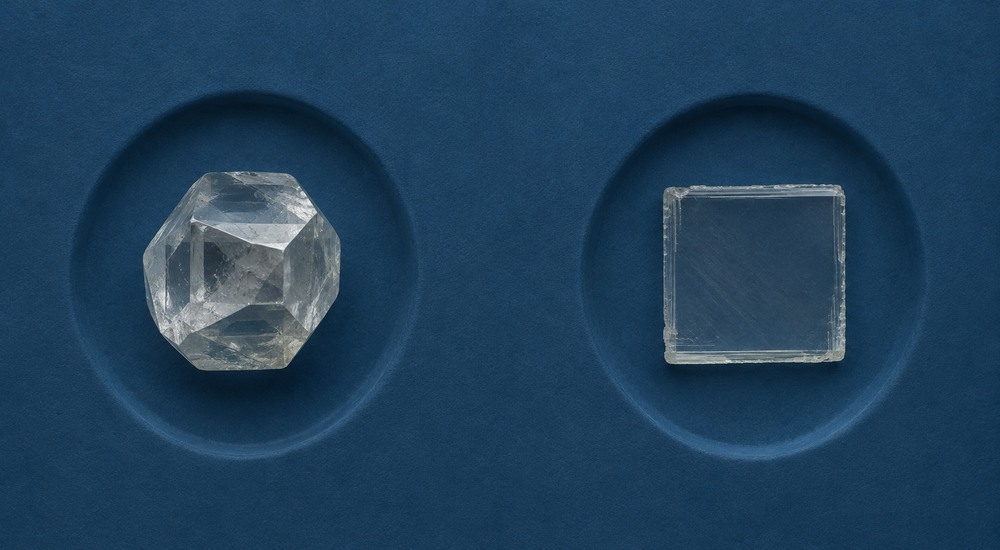
How HPHT Diamonds Are Grown
An HPHT press creates the conditions needed for carbon to crystallize on a diamond seed. The carbon source dissolves in a molten metal solvent-catalyst and is transported to the seed, where the diamond crystal grows.
In some HPHT-grown diamonds, small amounts of the metallic flux become trapped in the crystal. The effect on a polished diamond depends on the inclusion’s size and position. A feature near the edge may be hard to see face up, while a dark feature under a large table facet may be more noticeable. Laboratories can also examine growth and luminescence patterns that are outside the scope of a normal jewelry inspection.
HPHT can produce colorless and fancy-color diamonds. If you are buying an HPHT-grown stone, review its actual color and appearance under the conditions in which the jewelry will be seen.
How CVD Diamonds Are Grown
CVD starts with a thin diamond seed plate in a chamber. The gas in the chamber is energized, commonly using microwaves to create a plasma. Carbon from the gas deposits on the seed, building up a diamond crystal layer by layer.
Some CVD-grown diamonds are suitable for their intended color range as grown. Others undergo post-growth treatment to modify their color. HPHT treatment can reduce brown coloration in some CVD-grown diamonds. After cutting and polishing, the finished stone should be evaluated on its own characteristics, including color, clarity, transparency, and how the facets perform as it moves.
Our guide to how lab grown diamonds are made follows both growth methods from the diamond seed through cutting, polishing, and grading.
Is HPHT or CVD Better?
Both growth methods can produce attractive, durable diamonds for everyday fine jewelry. For a center stone, compare the diamonds face up first, then weigh any documented preference for growth method or treatment.
Suppose two oval diamonds have the same listed carat weight, color, and clarity. One may have a wider face-up outline and a dark band across the center that stays visible as the stone moves. The other may be slightly narrower with a more even pattern of brightness. If the setting has a fixed opening, the best choice may depend on which stone fits. If the setting will be designed around the diamond, the outline and light pattern can carry more weight.
A specific process may matter when a client requests it, when a collection has a defined product specification, or when your product descriptions make a claim about how the stones were grown. In those cases, confirm that the required evidence can be supplied before approving the order.
What Does Post-Growth Treatment Mean?
Post-growth treatment is a separate step carried out after the diamond crystal has formed. It may be used to adjust color. The treatment may aim to reduce an unwanted tint in a stone sold on the D–Z scale or to develop a particular fancy color. Treatment history and final appearance are separate pieces of information.
| Wording you may encounter | How to interpret it |
|---|---|
| HPHT-grown | HPHT identifies the original method of crystal growth. Read any treatment comments separately. |
| CVD-grown and HPHT-treated | The crystal grew by CVD and subsequently underwent an HPHT process. |
| As grown | The wording refers to the diamond’s post-growth treatment status. Check the full statement and who issued it. |
| No treatment statement shown | The document leaves treatment status unspecified. Request explicit confirmation if it is a condition of purchase. |
A useful question to ask is “Does this document identify the original growth method, the post-growth treatment status, or both?” If a client requires a CVD-grown stone with documented as-grown status, put both requirements in the brief. A listing that says only “CVD” confirms the seller’s growth-method claim and leaves the treatment question open.
For a fancy-color order, describe the finished color you want and document any separate treatment restrictions. “Pink” alone can cover stones with visibly different saturation, secondary hues, and color distribution.
What Are Type Ia, Ib, IIa, and IIb Diamonds?
In gemology, diamond type has a specific meaning. It describes aspects of the diamond’s crystal chemistry. Laboratories use techniques such as infrared spectroscopy to detect these features. The same classification system can be applied to natural and laboratory-grown diamonds.
| Diamond type | What the classification describes |
|---|---|
| Type Ia | Detectable nitrogen is present mainly in groups of atoms. |
| Type Ib | Detectable nitrogen occurs mainly as isolated atoms. |
| Type IIa | Nitrogen is below the detection threshold used for this classification, with no detectable boron signature defining it as Type IIb. |
| Type IIb | The diamond has a detectable boron-related signature. Boron can contribute to blue color, although detectable boron does not always produce a visible blue tint. |
Type IIa is a material classification. A Type IIa diamond still needs to be evaluated for color, clarity, transparency, cut, and physical fit. The label alone cannot tell you whether it was grown by CVD or HPHT, whether it was treated after growth, or how it will look in a finished piece.
If a supplier offers a Type IIa diamond for a premium project, ask what evidence supports that classification and review the same finished-stone information you would request for any other candidate.
Lab Grown Diamonds, Synthetic Diamonds, and Simulants
Searches for types of synthetic diamonds o types of man made diamonds often lead to the same two growth methods, HPHT and CVD. In technical contexts, synthetic diamond can mean diamond produced by people. In a jewelry specification, laboratory-grown diamond identifies the material and its origin more clearly.
| Material | Composición | How to describe it in a jewelry brief |
|---|---|---|
| diamante natural | Crystalline carbon | diamante natural |
| Lab grown diamond | Crystalline carbon | Laboratory-grown diamond |
| Moissanita | Silicon carbide | Moissanita |
| zirconia cúbica | Zirconium dioxide | Cubic zirconia or CZ |
Moissanite and cubic zirconia are diamond simulants. They can resemble diamonds in a finished piece and have their own optical and physical properties. If a design calls for laboratory-grown diamond melee, specify that material on the order and confirm how the parcel was screened. For an individual center stone, ask for a grading document that identifies its laboratory-grown origin.
If both materials are being considered for the same design, compare lab grown diamonds and moissanite to see how they differ in sparkle, durability, and documentation.
How Color, Shape, and Cut Affect the Choice
Colorless and Near-Colorless Diamonds
On the familiar D–Z scale, D–F is the colorless range y G–J is the near-colorless range. For a single diamond, evaluate the color in the context of its size, shape, and setting. For a pair or a row of stones, compare them together. Two stones with the same reported grade may still show different hues or have a different visual presence when set side by side.
If a pair must match an existing sample, request images of the sample and candidates under consistent lighting against a neutral background. Review both face-up and side views. Intense spotlighting can make it harder to assess subtle differences in body color.
Fancy-Color Lab Grown Diamonds
For blue, pink, yellow, and other fancy colors, compare hue, saturation, tone, and color distribution. A blue diamond with a grayish appearance can look quite different from a more saturated blue stone in the same outline. If you are matching a center diamond to accent stones, compare the whole group in the intended arrangement.
When commissioning a repeat color for a collection, provide a reference image or an approved sample, define the acceptable visible variation, and ask for confirmation on each new batch.
If you are matching blue or pink stones for earrings or a collection, our lab grown diamond color guide explains how to compare hue, saturation, and color distribution under consistent lighting.
Shape, Cutting Style, and Physical Fit
Shape describes the outline. Cutting style describes the facet arrangement. An emerald cut has a step-cut facet pattern, while an oval brilliant has a different arrangement and appearance in motion. Either can be cut from HPHT-grown or CVD-grown rough.
For an oval, pear, or marquise, use a moving face-up video to evaluate the outline and any bow-tie effect across the center. For an emerald or Asscher cut, look for an even rhythm in the broad reflections and check whether inclusions are visible through the large table. For a setting designed around specific dimensions, compare length, width, depth, and the outline of the stone with the CAD or mounting.
Carat measures weight. Two diamonds of equal carat weight can occupy different amounts of space in a setting. The measurements determine whether the stone fits the design.
How to Read a Lab Grown Diamond Report Before Buying
For a loose diamond supplied with an IGI Laboratory Grown Diamond Report, start with the report number and identification. Then compare the recorded shape, measurements, carat weight, and relevant grades with the quotation. If growth method or treatment status is part of your specification, request a report or supporting documentation that explicitly addresses it. IGI states that growth and treatment information can be noted when requested.
If you compare a stone with a GIA document, check the issue date and document name. GIA introduced a De primera calidad y Standard assessment for eligible colorless to near-colorless laboratory-grown diamonds in October 2025. Older GIA reports can use a different format. Read the assessment or grades as issued. A GIA overall assessment and an individual IGI grade describe different things.
Our comparison of IGI vs. GIA diamond reports explains how the two laboratories present grading information and how to verify the document you receive.
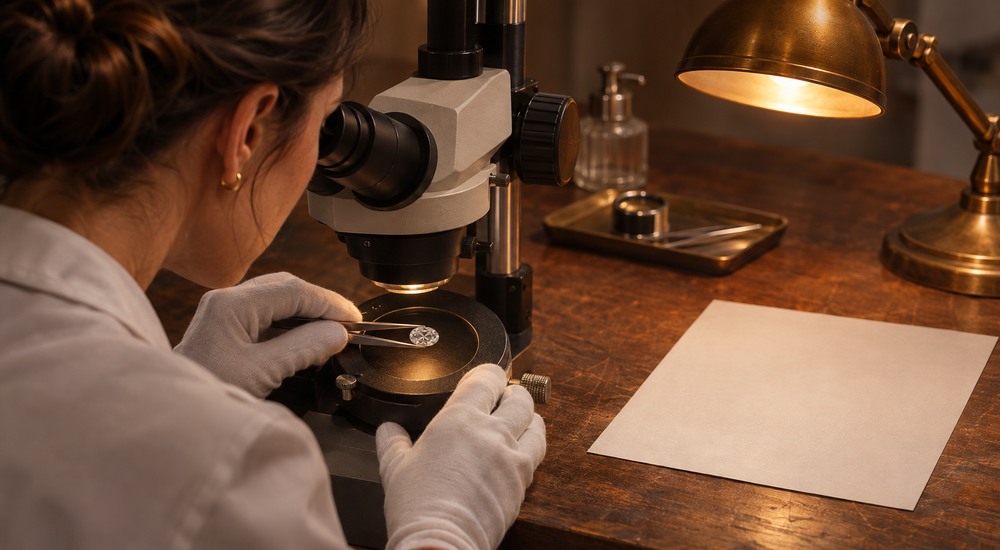
Before approving an individual stone:
- Verify the report number with the issuing laboratory. Check that the online record matches the document supplied.
- Match the document to the diamond. Compare its shape and measurements and, where present and readable, ask to check the laser inscription on the girdle.
- Read the comments and finish details. Confirm what the report says about growth, treatment, polish, and symmetry. For an overall cut grade, check that the lab issued one for the relevant shape and report type.
- Review the specific stone on video. Ask for a slow rotation, a straight face-up view, and a side view under consistent lighting. Check brightness, unwanted tint, transparency, and any inclusions you can see.
- Confirm fit before setting. Compare the dimensions with the design and get approval for any change in outline or tolerance.
How to Specify Lab Grown Diamonds for Different Jewelry Projects
| Project | Specify first | Check before approval |
|---|---|---|
| Solitaire ring or pendant | Shape, face-up dimensions or carat range, color and clarity range, and required report | Individual video, proportions, visible inclusions, and setting fit |
| Matched stud earrings | Quantity of two, diameter or length and width, outline, and target color range | Both stones in one video, visible color match, and comparable size and brightness |
| Three-stone ring | Center-stone dimensions, side-stone shapes, and the proportions required by the design | Side stones as a matched pair and all three stones together in the intended layout |
| Pavé ring or tennis bracelet | Millimeter size range, quantity, acceptable color and clarity range, and parcel screening requirements | Size consistency, sorting, sample match, and replacement terms |
| Repeat jewelry collection | An approved sample, acceptable tolerances, quantity per size, and any restrictions on growth or treatment | Batch consistency, date required, and approval rules for substitutions or repeat orders |
When ordering a 2.1 mm round lab grown diamond for pavé, confirm the acceptable diameter range and specify the number of stones needed at each size. If the CAD uses more than one size, send a size list or marked drawing. Agree on how the parcel will be screened and how shortages or replacements will be handled. For this order, reliable size sorting and a consistent face-up appearance will often matter more than requesting an individual grading report for every small stone.
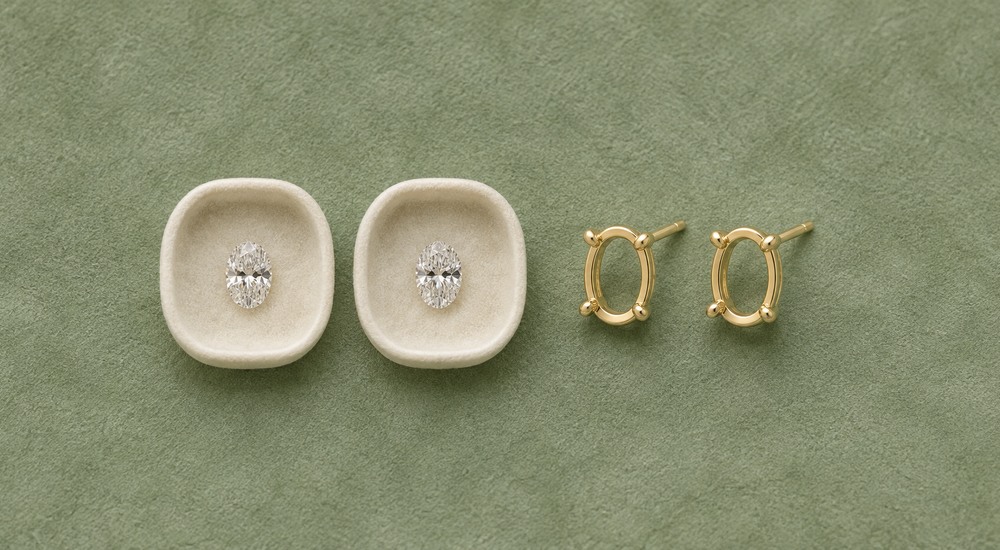
For matched oval studs, an effective brief might read:
Two oval laboratory-grown diamonds, approximately 8.5 × 6.0 mm each, D–F color, VS1–VS2 clarity, with similar outlines and face-up brightness. Either growth method is acceptable. Please provide available individual grading reports and one video showing the pair together under the same lighting. Confirm the actual measurements before approval.
If the design has a fixed setting, replace “approximately” with the jeweler’s approved dimensional tolerance. If the client has specified a particular growth method or treatment status, add that requirement to the same brief.
Preguntas frecuentes
What are the two main types of lab grown diamonds?
The two main types by growth method are HPHT-grown diamonds y CVD-grown diamonds. HPHT grows diamond under high pressure and temperature. CVD builds the crystal from a carbon-containing gas. Other labels can describe the diamond’s material type, treatment status, or finished quality.
Can a CVD diamond also be HPHT?
A diamond can be CVD-grown and subsequently HPHT-treated. In that description, CVD identifies the original growth method and HPHT refers to the later treatment. Look for wording that states which process was used at each stage.
Can you tell HPHT and CVD diamonds apart by eye?
Visual inspection can reveal a tint, a visible inclusion, or a pattern of light and dark facets. Reliable growth-method identification requires suitable gemological testing or documentation. A standard handheld diamond tester can help with some material checks, but it does not establish whether a diamond was grown by HPHT or CVD.
Are all lab grown diamonds Type IIa?
No. Type IIa is one material classification, and some laboratory-grown diamonds fall into other types, including Type IIb. The finished diamond’s color, clarity, and cut still need to be assessed separately.
Does an as-grown diamond always look better?
The term describes treatment status. To judge appearance, compare the finished diamonds for color, transparency, facet pattern, and visible inclusions. If documented as-grown status matters to your client or product line, request that evidence as a separate condition.
Should I ask for an individual report on every small lab grown diamond?
For many pavé and melee orders, buyers and suppliers agree on parcel-level screening, millimeter tolerances, and quality ranges. Ask what documentation is available for the parcel. For individually selected center stones and matched pairs, request the stone-specific documentation required by your project.
Source Loose Lab Grown Diamonds for Your Next Design
Joyería de Provenza helps jewelers and jewelry brands source loose lab grown diamonds for custom pieces and collections. The minimum order quantity is one stone. For an inquiry, send your preferred shape, millimeter dimensions or carat range, color and clarity requirements, quantity, and target delivery date. Include the CAD or an approved reference stone if fit or matching is important.
If you require an IGI report, a specific growth method, or documented treatment status, include it in your request. That gives our team the information needed to quote against your specification and present options you can compare before approving the order.