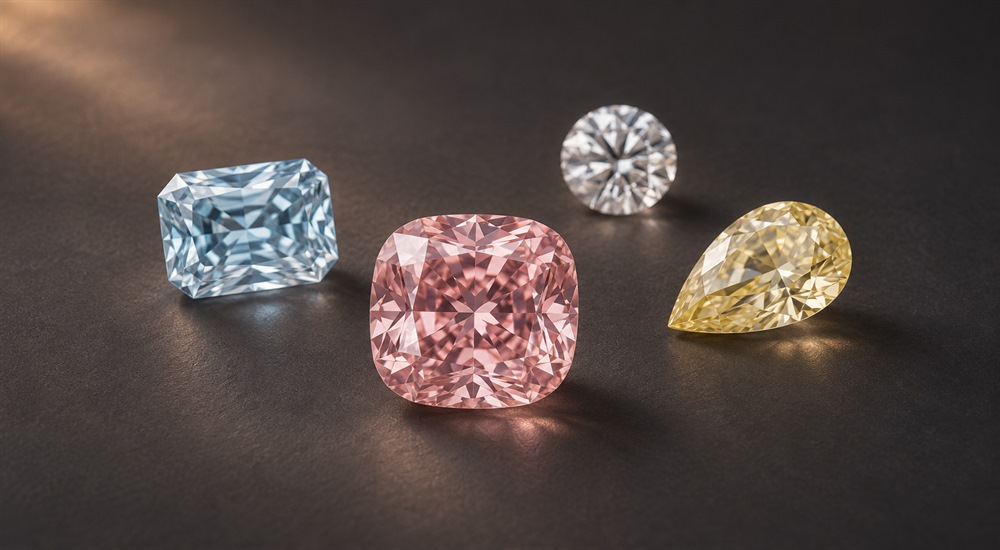
Lab-grown diamonds range from colorless and near-colorless stones to fancy pink, blue, yellow, green, and other hues. If you want a diamond that looks white in a setting, start with its D–Z color grade. If you want a visible color to define the piece, look at how the actual stone presents its hue, how light or dark it appears, and how evenly the color shows across its face.
The difference becomes clear when you shop for a pair of earrings. Two near-colorless diamonds may match on paper but look different side by side. Two stones described as Fancy Pink may both meet the brief individually, yet one can look cooler or darker than the other. This lab grown diamonds color guide explains how to read those differences and specify what you want, whether you’re choosing one center stone or sourcing a collection.
What Colors Do Lab Grown Diamonds Come In?
For diamonds in the conventional D–Z range, the letter grade describes how much body color is present under standardized viewing conditions. D–F is colorless and G–J is near colorless. If your main question is which letter grade to choose, our diamond color chart explains the full scale and how the grades compare.
Für fancy-color lab-grown diamonds, the visible color is a design feature. The grading description can identify the main hue and any modifying hue, while terms such as Fancy Light, Fancy Intense, oder Fancy Vivid describe the overall color appearance. Two stones with the same designation can still look different. When comparing candidates, start with the report wording and use face-up views to decide which stone suits the piece.
How to Choose Pink, Blue, or Yellow Lab Grown Diamonds
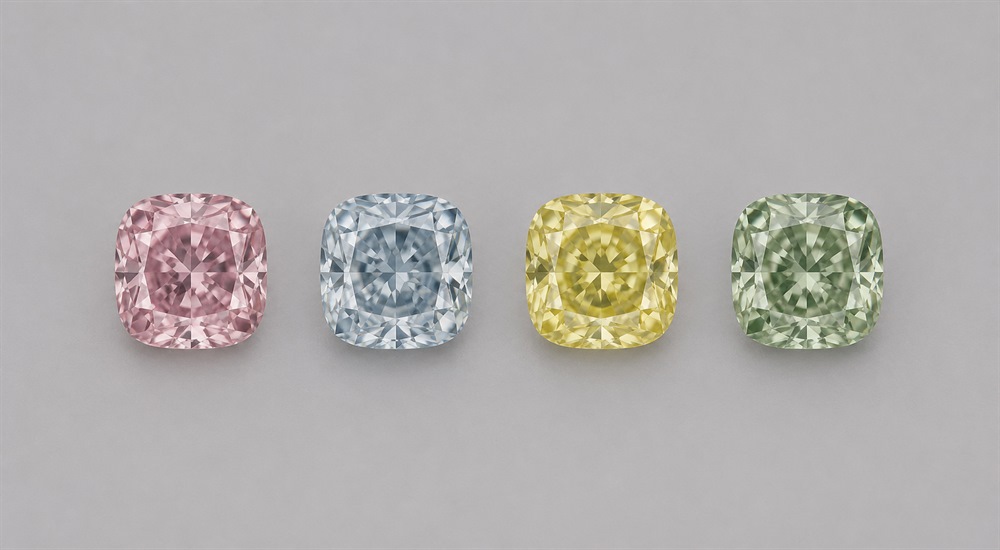
Four characteristics make fancy colors easier to compare: Farbton is the color family, Ton is how light or dark it appears, Sättigung is the strength of the color, and distribution is how evenly the color shows across the stone. A dark blue can have a different presence from a bright, strongly saturated blue. Decide which quality matters before narrowing your search by grade.
| Farbe | What to compare | What to specify when ordering |
|---|---|---|
| Rosa | Compare blush pink with cooler purplish pink and warmer brownish pink. A secondary hue can become much easier to see when two stones sit together. For a pendant, use this pear-shaped lab-grown pink diamond as a design reference and ask to see the stone next to the metal you plan to use. | State whether you want a light blush, clear pink, or deeper rose. Say which modifiers are acceptable, especially for matched earrings or a bridal set. |
| Blau | Compare light blue, saturated blue, and blue with a grayish or greenish cast. Tilt each stone to see whether it keeps its blue appearance in motion. If you’re designing a statement ring, this radiant-cut lab-grown blue diamond gives you a starting point for comparing how the blue reads face-up and as the stone tilts. | Specify whether grayish or greenish blue fits the design. If you want a pale but distinct blue, ask to see it beside the intended metal. |
| Gelb | Compare a bright lemon-like yellow with warmer golden or orangy yellow. Look for areas where the stone appears dark or the color becomes noticeably weaker. For a ring with white side stones, start with a cushion-cut lab-grown yellow diamond and compare the center and accents together before approving the layout. | Send a reference for the shade you want. State whether an orangy or brownish modifier is acceptable and how the stone should look beside white accents. |
| Grün | Compare cooler blue-green with warmer yellow-green. View the stone on a neutral background before assessing it in a setting. | Name the secondary hue you prefer or want to avoid. For a repeat order, use the approved stone or lot as the comparison reference. |
Terms such as blush, ice blue, Und champagne help communicate a design direction. Use the report’s exact wording for product specifications, and use an approved stone or sample to show what those style terms mean for your collection.
When a lighter fancy color works better
A pale pink can suit a delicate pendant where a deeper pink would dominate the design. A stronger yellow can give a ring center more contrast against white side stones. Compare the appearance you want at normal viewing distance, then use the color designation to communicate your selection.
Cut also affects how color reads. A cushion or radiant may concentrate color in a way that suits a fancy-color center stone, but the actual stone can still show dark patches or areas where the color drops away. Ask for a slow rotation and watch how the center, edges, and corners change as the stone tilts. For a pale colored diamond, check that the intended hue stays visible beside the setting and accent stones.
How Lab Grown Diamonds Get Their Color
Lab-grown diamonds are produced using high pressure, high temperature (HPHT) or chemical vapor deposition (CVD). Trace elements and changes in the diamond’s crystal structure can affect which wavelengths of light it absorbs. Nitrogen can contribute to yellow, boron can contribute to blue, and certain defects in the crystal can produce or influence pink, green, or brown color. Understanding how lab-grown diamonds are made makes it easier to see why a CVD-grown stone may also have an HPHT treatment noted on its report.
A stone’s final color can develop during growth or be changed afterward. For example, a diamond can be CVD-grown and later HPHT-treated to reduce brown coloration. Some fancy colors can also be produced or modified by post-growth treatment.
The distinction between CVD growth and HPHT treatment matters when you read a report that lists both terms for the same stone.
When comparing stones or writing product specifications, keep these three details separate:
| Detail | What it tells you |
|---|---|
| Growth method | How the diamond crystal was grown, if the information is documented |
| Post-growth treatment | Whether a process after growth was reported or identified |
| Final color | The color designation or observed appearance of the polished diamond |
If a collection requires diamonds sold as as grown, request documentation that addresses treatment explicitly. A product listing that simply says CVD identifies a growth method and leaves the treatment question open.
How to Read the Color on an IGI or GIA Report
Start with the laboratory, report type, and issue date. An IGI laboratory-grown diamond report can show a letter color grade for a diamond in the conventional range. An IGI fancy-color report uses a color description and records applicable treatment information. Check the actual comments if treatment disclosure is part of your buying specification.
GIA currently uses Prämie or Standard as overall quality designations for eligible laboratory-grown diamonds in the D–Z range. Those designations reflect several quality criteria. GIA also has a separate report service for laboratory-grown colored diamonds. If your order specifies an exact letter grade, confirm that the proposed document gives you the information you need before approving the stone.
For an individual diamond, check the report number, shape, weight, and millimeter measurements against the offer. Where a girdle inscription is present and accessible, check that it matches the document. For a parcel of small stones, agree in advance on what documentation is provided for the lot and whether any stones need individual reports.
How to Judge Color in a Diamond Video
Separate seller videos can make two similar diamonds look different. Camera white balance, exposure, the background, and nearby metal can all affect the appearance. If you’re comparing stones for the same design, ask the supplier to film them side by side in one continuous clip.
- Use a neutral background and the same light. Ask the supplier to keep the camera settings fixed and identify each stone by report number or parcel reference.
- Start face-up, then tilt the stones together. Look for differences in tone and brightness, areas of uneven color, and dark patches that appear as the stones move.
- Check the color beside the proposed metal or accent stones. This matters most for pale pinks and blues, where surrounding colors can shift how the stone reads.
- Use a second light source if the match is critical. A neutral-light clip plus a warm indoor-light clip gives you a better basis for judging a pair or an approved production sample.
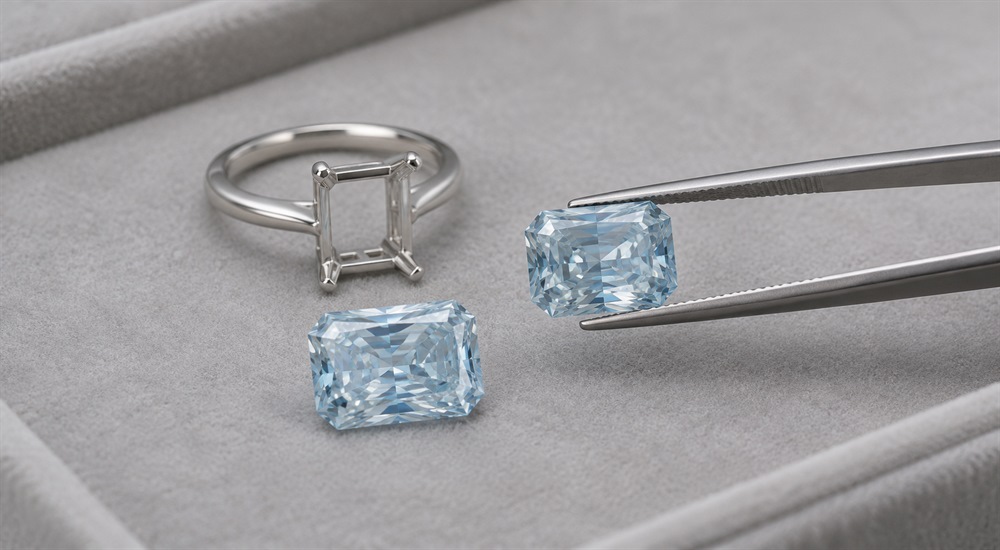
If a diamond looks slightly blue or gray, first compare it under neutral light and away from colored surroundings. Body color and fluorescence are separate observations. Body color contributes to what you see in ordinary viewing, while fluorescence is light emitted in response to excitation such as ultraviolet light. If the cast remains visible under different normal lighting conditions, have the stone assessed before assigning a cause.
Matching Color Across Earrings, Side Stones, and Production Lots
A center stone can be chosen for its individual appearance. A pair or parcel also has to look consistent as a group. The closer the stones sit together, the more useful it is to approve them in the arrangement in which they’ll be worn.
| Application | How to approve the color |
|---|---|
| Ohrstecker | Compare both stones face-up at the same angle. Match their apparent color, size, outline, and brightness. A difference in tone can be visible even when the color names match. |
| Three-stone rings | Review the center and both side stones together. Agree on whether the side stones should blend with the center or create deliberate contrast. |
| Pavé and line bracelets | Review a group of stones at normal viewing distance. Agree on the millimeter size band and acceptable color range, then check whether individual stones create visible warm or dark patches. |
| Repeat orders | Compare the new lot with the original approved sample under the same conditions. Agree in advance on acceptable variation and when substitutions require another approval. |
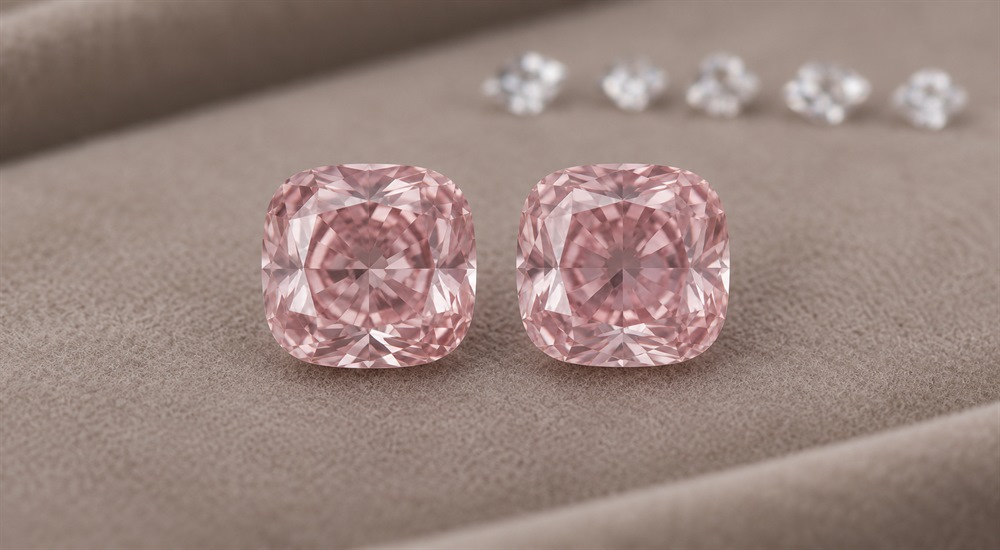
Example sourcing brief for a pink diamond pair
Two cushion-cut lab-grown pink diamonds for stud earrings, approximately 5 × 5 mm each. Target a soft, bright pink. A slight purplish modifier is acceptable if both stones match. Flag a visible brown or gray cast, uneven color, or a noticeable difference in brightness. Please send a continuous side-by-side video under neutral light, confirm the millimeter measurements, and state what documentation accompanies each stone.
For a larger order, add the quantity, size tolerance, sample approval process, and any treatment requirements. Keep the approved sample or comparison record for reorders. That gives the buyer and supplier a shared reference when a new production lot arrives.
Lab Grown Diamond Color FAQs
Are colored lab-grown diamonds real diamonds?
Yes. They are diamonds grown in a laboratory. The visible color can develop during growth or be influenced by treatment after growth. A laboratory report can identify the diamond as laboratory grown and, depending on the report type, provide information about its color or treatment.
Is Fancy Vivid always better than Fancy Light?
Choose the designation that suits the design. Fancy Light can work well when you want a pastel effect. Fancy Vivid can provide a stronger color statement. Compare the stones in motion and beside the intended setting, since darkness, uneven color, or reflections can change the finished look.
Can two Fancy Pink diamonds look different?
Yes. Two diamonds with the same designation can vary in apparent tone, brightness, and color distribution. Shape and facet pattern also affect how the color appears face-up. When buying a matched pair, approve both stones together under the same light.
Do lab-grown diamonds change color over time?
The body color of a typical colorless or near-colorless lab-grown diamond is generally stable during ordinary wear. If a stone starts looking warmer or duller, check it after appropriate cleaning and in neutral light. For treated fancy-color diamonds, ask for any care instructions and tell your jeweler about documented treatments before repair work.
Request a Lab Grown Diamond Color Match From Provence Jewellery
Provence Jewellery sources wholesale lab-grown diamonds and produces custom jewelry for brands, designers, and trade buyers.
Share the shape, millimeter dimensions, quantity, target color, and intended setting metal, along with any report or treatment requirements. If you’re matching an existing piece or repeating an order, include the approved reference and describe the amount of color variation you can accept. That gives us a more precise starting point for sourcing stones that work together in the finished jewelry.