
Solitaire vs Halo Engagement Ring: Key Differences
- Verfasst von Provence-Team
- Updated on September 19, 2026
Inhaltsverzeichnis
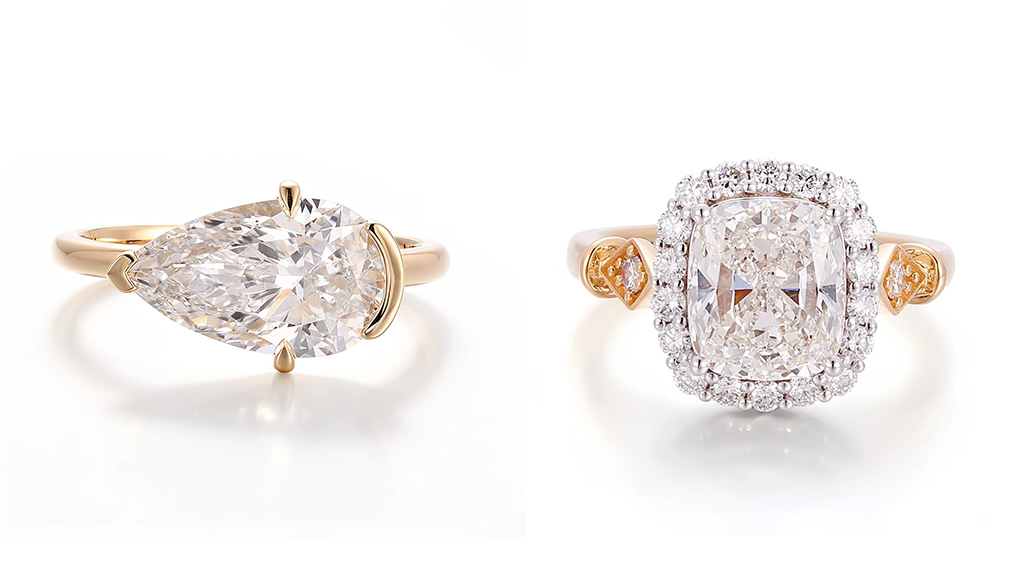
Choosing an engagement ring often comes down to one decision that shapes everything else: solitaire or halo. Both are timeless, both flatter a diamond beautifully, and both have loyal followings — but they behave very differently once you get past the surface comparison.
This guide breaks down exactly how solitaire and halo settings compare on sparkle, apparent size, cost, durability, and long-term value, with real numbers instead of vague style advice, so you can choose with confidence.
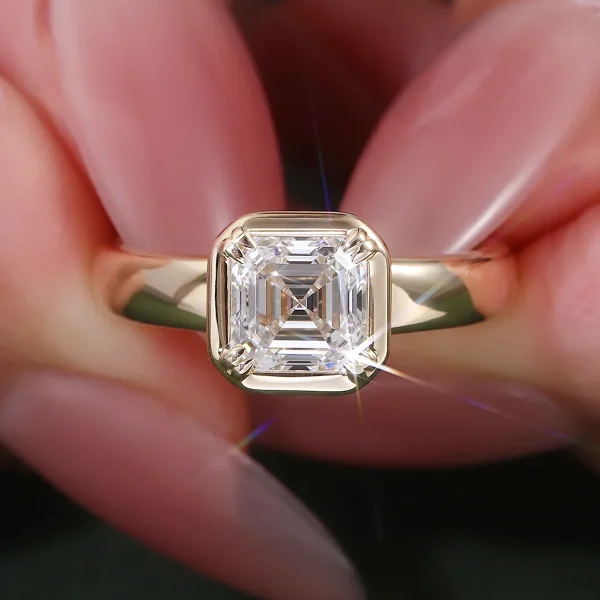
A solitaire setting holds a single diamond on its own, usually secured with four or six prongs, with no accent stones anywhere on the ring. There's nothing to distract from the center stone — its cut, color, and clarity carry the entire design.
This simplicity is exactly why the solitaire has stayed the most popular engagement ring style for over a century. It's the ring equivalent of a perfectly tailored outfit: nothing extra, nothing dated. A four-prong setting shows slightly more of the diamond and lets in more light from the sides; a six-prong setting offers a bit more security for larger or more valuable center stones.
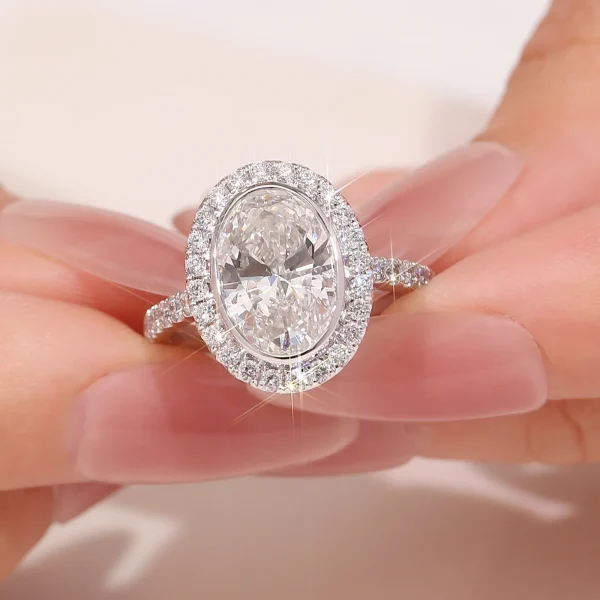
A halo setting surrounds the center diamond with a ring of small accent diamonds, known as melee, set closely together to catch and reflect light back toward the center stone. Some designs use a single row of melee (a classic halo); others use two concentric rings (a double halo) for even more sparkle.
The effect is twofold: the ring reads as noticeably more dazzling from any angle, and the center diamond visually blends with its surrounding stones, making it look larger than its actual carat weight. Halo settings trace back to vintage and Edwardian-era jewelry design, though the modern version has become one of the most requested styles of the last two decades.
Same Diamond, Two Settings: What Actually Changes
Here's the comparison most guides skip. Take the exact same 1-carat round diamond and set it two ways:
- In a solitaire, it reads as a true, honest 1 carat. The eye sees exactly the size and shape of that stone, with no visual assistance.
- In a halo, that same 1-carat stone can appear to be doing the visual work of a 1.3–1.5 carat diamond, because the surrounding melee fills in the space around it and the eye perceives the whole cluster as one larger shape.
This is the single most important practical difference between the two styles, and it's the reason so many buyers on a fixed budget lean toward a halo: it lets you buy a smaller, more affordable center stone while still landing on a ring that looks substantial on the hand.
Solitaire vs Halo: Quick Comparison
| Besonderheit | Solitär | Halo |
|---|---|---|
| Center stone focus | 100% on the center diamond | Shared between center stone and melee |
| Sparkle | Clean, focused brilliance | Maximum sparkle from multiple angles |
| Apparent size | True to actual carat weight | Can appear 20–40% larger |
| Typical setting cost | Lower — simpler metalwork, fewer stones | Higher — added melee and labor |
| Wartung | Fewer prongs, easier to keep clean | More prongs and stones to inspect |
| Band pairing | Pairs with almost any wedding band | Often needs a curved or contoured band |
| Resale/upgrade flexibility | Center stone can be reset easily | Harder to separate value from the setting |
| Am besten geeignet für | Diamond purists, minimalists, low-maintenance lifestyles | Buyers wanting maximum visual size and sparkle |
The Real Cost Breakdown
Price is rarely a simple "which is cheaper" question — it depends on where the money goes.
Solitaire settings are the more budget-efficient of the two because the metalwork is straightforward and there are no accent stones to source or set. The setting itself typically makes up a small fraction of the total ring cost, meaning almost your entire budget goes into the center diamond.
Halo settings add cost in two places: the melee diamonds themselves (typically totaling somewhere between 0.20 and 0.50 total carat weight across the ring) and the additional labor required to set dozens of tiny stones securely. As a rough rule of thumb, a halo setting adds somewhere in the range of 20–40% to the setting cost compared to an equivalent solitaire.
Here's the trade-off that matters most: if your priority is a ring that looks larger for the same total spend, a halo built around a smaller center stone can outperform a solitaire with a bigger stone at the same price point. If your priority is owning the largest, highest-quality center diamond your budget allows, a solitaire puts every dollar toward that stone.
Durability and Maintenance
A solitaire is the lower-maintenance ring by a wide margin. Fewer prongs mean fewer points of failure, fewer places for lotion, dust, or skin oils to build up, and a much lower chance of catching on clothing or hair. Most solitaire owners only need a professional prong check once a year.
A halo setting has more moving parts — literally. Every melee stone has its own tiny prongs, and with dozens of them in a double halo, the odds that at least one needs tightening over time go up. Halos also collect more everyday grime in the gaps between stones. Jewelers generally recommend having a halo setting professionally inspected every six to twelve months to catch a loose stone before it's lost.
Neither is fragile — both styles are designed and worn every day by millions of people — but if low upkeep is a priority, the solitaire wins clearly.
Which Diamond Shapes Pair Best With Each Setting
Best shapes for a solitaire:
- Round brilliant — the classic, maximum-brilliance choice
- Oval — elongates the finger, feels modern
- Emerald cut — sleek, art-deco character, showcases clarity
- Pear — a soft, feminine point of difference
- Princess cut — sharp, contemporary lines
Because a solitaire has nothing to lean on visually, it works best with cuts that already have strong brilliance or a striking silhouette on their own.
Best shapes for a halo:
- Cushion cut — soft, rounded corners that echo the halo's shape beautifully
- Oval — the halo elongates it further and balances its proportions
- Pear — the halo frames the point and rounded end symmetrically
- Round — classic and endlessly sparkly when ringed with melee
Cuts with softer outlines or larger open facets (cushion, oval) tend to benefit the most from a halo, since the surrounding stones fill in and smooth out the overall shape.
Resale and Long-Term Value
This is the angle almost no one talks about, and it's worth knowing before you buy.
A solitaire keeps its value proposition simple: the center diamond is the asset, and it can be reset into a completely new design later — a redesign, an upgrade to a larger stone, or a family heirloom transfer — without touching the value of the original diamond.
A halo setting ties more of the ring's total value into the melee and the labor of setting it, which typically holds less resale value than an equivalent-cost center diamond would. If you ever want to upgrade the center stone down the line, the existing melee and setting usually can't be reused without redesign, since halo settings are built to a specific stone size and shape.
Neither of these is a reason to avoid a halo — most people aren't buying an engagement ring as an investment vehicle — but if resale flexibility or a future upgrade is on your mind, a solitaire offers a cleaner path.
Hidden Halo and Halo Variations
If you love the idea of extra sparkle but want the clean profile of a solitaire from a straight-on view, a hidden halo is worth considering. The accent diamonds sit beneath the center stone rather than around it, so the ring looks like a solitaire from above but reveals a hidden ring of sparkle from the side profile — a popular middle ground between the two styles.
A double halo takes the opposite approach, stacking two rings of melee around the center stone for maximum size and sparkle. It's the boldest version of the halo family and suits buyers who want the biggest possible visual impact.
Which One Fits Your Lifestyle?
Use this quick checklist to narrow it down:
Choose a solitaire if you:
- Want the lowest-maintenance ring possible
- Use your hands often for work, sport, or hobbies
- Prefer a minimalist, timeless aesthetic
- Want to put your full budget into the center stone's size or quality
- Value the flexibility to reset or upgrade the diamond later
Choose a halo if you:
- Want maximum sparkle and visual presence
- Are working with a smaller carat budget but want a bigger look
- Love a more vintage, decorative aesthetic
- Don't mind slightly more frequent jeweler check-ins
- Are drawn to cushion, oval, or pear-shaped center stones
Häufig gestellte Fragen
It depends on the center stone size, but generally a solitaire setting itself costs less to build. A halo adds cost through the melee diamonds and extra labor, though it can let you use a smaller, less expensive center stone while still achieving a larger overall look.
Yes. The ring of melee diamonds visually blends with the center stone, and it's common for a halo to make a diamond look 20 to 40 percent larger than its actual carat weight.
Solitaire remains the most classic and widely chosen style overall, though halo settings have grown significantly in popularity over the past two decades for their sparkle and size-enhancing effect.
In many cases, yes — a jeweler can redesign the setting to add a halo around an existing center stone, though this typically requires remaking the setting rather than simply adding stones to it.
Solitaires are easier to maintain, with fewer prongs and no small stones to check. Halo settings need more frequent professional inspection, generally every six to twelve months.
Yes — a hidden halo is essentially a hybrid, giving you a clean solitaire look from above with a hidden ring of sparkle underneath.
A solitaire generally offers more flexibility for resale or future upgrades, since the entire value sits in one center stone that can be reset. A halo's value is spread across the center stone and the melee, which is harder to reuse if you redesign later.
Round, oval, emerald, pear, and princess cuts all suit a solitaire well. Cushion, oval, pear, and round cuts tend to look especially striking in a halo, since the setting complements their outline.
Final Thought
There's no universally "better" choice between a solitaire and a halo — only the one that fits how you want your ring to look, feel, and live on your hand day to day. If you want understated elegance and long-term flexibility, the solitaire remains hard to beat. If you want maximum sparkle and the biggest possible visual impact for your budget, the halo delivers exactly that.
Whichever setting you choose, understanding how each one is actually constructed — from prong count to melee placement — makes it much easier to judge the quality of the ring in front of you, not just its style.