14 Arten roter Edelsteine: Ein umfassender Leitfaden zu roten Edelsteinen
- Verfasst von Provence-Team
- Aktualisiert am 10. Juni 2026
Inhaltsverzeichnis
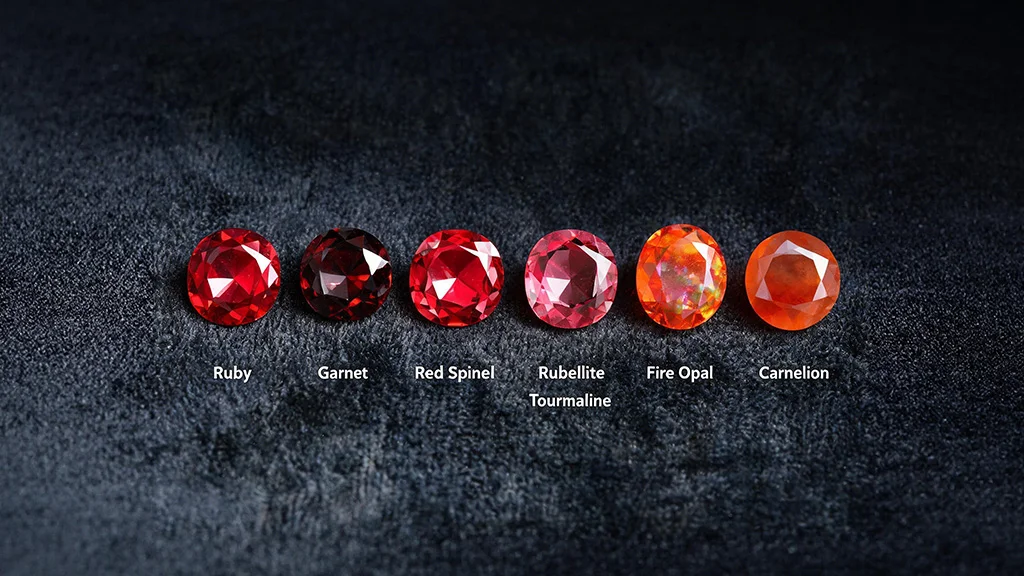
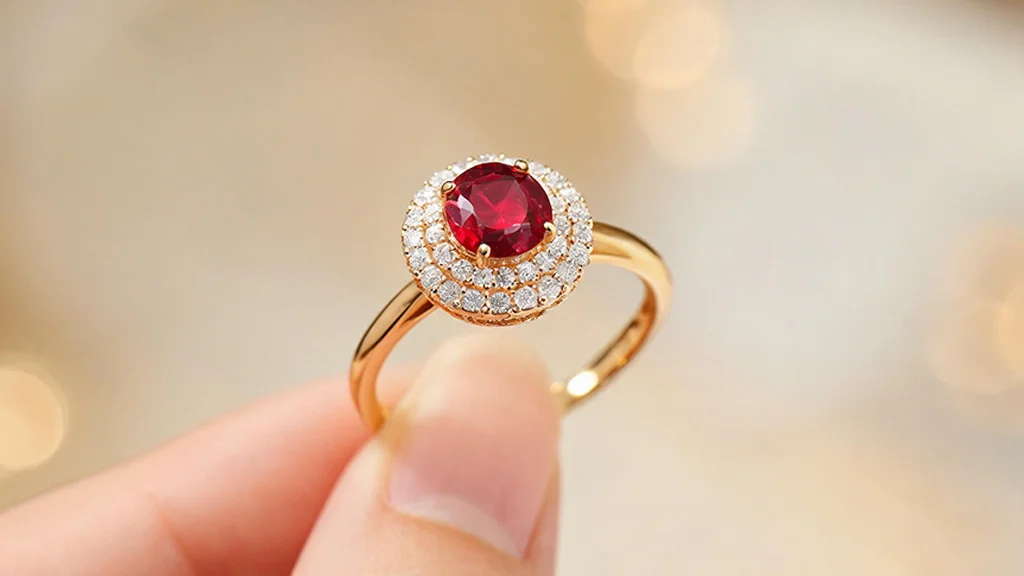
Kaum eine Farbe in der Natur zieht die Blicke so auf sich wie Rot. Es ist die Farbe der Leidenschaft, der Feierlichkeit und der Macht – und nirgendwo wirkt sie atemberaubender als in edlem Schmuck. Ob Sie nun den perfekten roten Edelstein für einen Verlobungsring, eine auffällige Halskette oder ein individuelles Geschenk suchen: Die Welt der roten Edel- und Halbedelsteine bietet eine viel größere Vielfalt, als die meisten Menschen ahnen.
Dieser Ratgeber stellt 14 rote Edelsteine ausführlich vor – vom legendären Rubin und dem unterschätzten roten Spinell bis hin zu seltenen Sammlerstücken wie rotem Beryll und rotem Diamant. Sie finden eine Vergleichstabelle, detaillierte Informationen zu den einzelnen Steinen mit Härtegraden und Preisen in US-Dollar, Hinweise zu Behandlungsmethoden, im Labor gezüchteten Alternativen und eine praktische Anleitung, die Ihnen hilft, den passenden roten Edelstein für Ihre Bedürfnisse zu finden.
Bei Provence Jewellery fertigen wir exklusiven Schmuck und beziehen unsere Edelsteine direkt von erstklassigen Lieferanten. Im Folgenden finden Sie den umfassendsten Online-Ratgeber zu roten Edelsteinen – verfasst aus der Perspektive von Experten, die täglich mit diesen Steinen arbeiten.
Was macht einen Edelstein rot?
Bevor man sich mit den einzelnen Steinen befasst, ist es hilfreich, die Wissenschaft hinter der roten Farbe bei Edelsteinen zu verstehen – denn nicht alle Rottöne sind gleich, und wer weiß, worauf er achten muss, wird ein viel besser informierter Käufer sein.
Die Ursache der roten Farbe
Die rote Farbe von Edelsteinen entsteht durch Spurenelemente, die während ihrer Entstehung vorhanden waren, oder durch die Kristallstruktur selbst. Die wichtigsten Ursachen für die rote Farbe sind:
- Chrom: das Element, das für das tiefe, leuchtende Rot von Rubin und rotem Spinell verantwortlich ist. Ein höherer Chromgehalt bedeutet im Allgemeinen ein helleres, satteres Rot.
- Eisen: verursacht die dunkleren, bräunlich-roten Farbtöne, die man beim Almandin-Granat sieht.
- Mangan: erzeugt die purpurroten bis himbeerfarbenen Farbtöne im Rubellit-Turmalin und Rhodolith-Granat.
- Kristallstruktur: Bei rotem Diamanten entsteht die Farbe durch plastische Verformung des Kristallgitters während der Entstehung – und nicht etwa durch Spurenelemente. Dies ist mit ein Grund für seine Seltenheit.
Wie Gemmologen die rote Farbe bewerten
Gemmologen beurteilen die Farbe anhand von drei Faktoren: Farbton, Helligkeit und Sättigung. Bei roten Edelsteinen bedeutet dies:
- Farbton: Ist es ein reines Rot oder tendiert es eher ins Orange- oder Purpurrot? Reines Rot mit minimalem Farbstich ist in der Regel am wertvollsten. Orangerote und purpurrote Töne können zwar auch schön sein, erzielen aber im Luxussegment niedrigere Preise.
- Farbton: Wie hell oder dunkel ist der Stein? Sehr dunkle Rottöne können bei schwachem Licht fast braun wirken. Sehr helle Rottöne tendieren ins Rosa. Ideal ist ein mittlerer bis dunkler Farbton, etwa 65–80%, bei dem Rot seine maximale Farbsättigung erreicht.
- Sättigung: Wie lebendig und intensiv ist die Farbe? Die feinsten Rubine – bekannt als Taubenblutrubine – werden gerade deshalb so geschätzt, weil sie eine außergewöhnliche Sättigung erreichen: eine helle, ampelartige Qualität, die selbst in Innenräumen leuchtet.
Wichtig zu wissen: Nur sehr wenige Edelsteine erreichen ein reines Rot. Die meisten weisen einen Nebenfarbton auf – und das ist völlig in Ordnung. Ein satter, purpurroter Rhodolith-Granat oder ein orangeroter Feueropal können genauso atemberaubend sein wie ein rein roter Stein und sind oft deutlich günstiger.
Härte und Verschleißfestigkeit
Haltbarkeit ist bei der Auswahl von Edelsteinen für Schmuck, insbesondere für Ringe und Armbänder, die täglich getragen werden, von entscheidender Bedeutung. Die Mohs-Härteskala stuft Mineralien von 1 (weichstes) bis 10 (härtestes) ein. Für Schmuck, der regelmäßig getragen wird, empfiehlt sich in der Regel ein Wert von 7 oder höher. In diesem Ratgeber geben wir den Mohs-Wert jedes Steins an.
14 Arten roter Edelsteine: Ein Vergleich auf einen Blick
Die folgende Tabelle fasst die wichtigsten Fakten zu jedem in diesem Ratgeber behandelten roten Edelstein zusammen. Die Preisstufen geben die ungefähren Einzelhandelspreise pro Karat für qualitativ hochwertige Steine an: $ = unter 50 USD/ct | $$ = 50–300 USD/ct | $$$ = 300–1.000 USD/ct | $$$$ = über 1.000 USD/ct.
|
Edelstein |
Mohs |
Farbpalette |
Preis/ct |
Geburtsstein |
Wichtigste Anmerkungen |
|---|---|---|---|---|---|
|
Rubin |
9 |
Rot bis rosarot |
$$$$ |
Juli |
Chromkorund; härtester roter Edelstein |
|
Roter Spinell |
8 |
Rot, orangerot, rosarot |
$–$$$ |
August (alt) |
Historisch fälschlicherweise für einen Rubin gehalten; hervorragendes Preis-Leistungs-Verhältnis |
|
Almandin-Granat |
7–7,5 |
Tiefrot bis rotbraun |
$–$$ |
Januar |
Häufigster roter Granat; sattes, dunkles Rot |
|
Pyrop-Granat |
7–7,5 |
Blutrot bis dunkelrot |
$–$$ |
Januar |
Leuchtend blutrot; oft augenreinigt |
|
Rhodolith Granat |
7–7,5 |
Purpurrot bis himbeerfarben |
$–$$ |
Januar |
Elegante purpurrote Hybride; sehr beliebt |
|
Rubellit Turmalin |
7–7,5 |
Tiefrot bis rosarot |
$$–$$$ |
Oktober (alternativ) |
Manganfarben; leuchtendes, sattes Rot |
|
Roter Zirkon |
6–7,5 |
Rot, orangerot |
$–$$ |
Dezember (alternativ) |
Hohe Dispersion; natürliches, nicht kubisches Zirkoniumdioxid |
|
Roter Beryll (Bixbit) |
7,5–8 |
Leuchtendes Scharlachrot |
$$$$+ |
– |
Eines der seltensten Juwelen der Erde; nur in Utah, USA. |
|
Feueropal |
5,5–6,5 |
Rot, orangerot, gelbrot |
$–$$ |
Oktober (alternativ) |
Transparenter mexikanischer Vulkanstein |
|
Karneol |
6,5–7 |
Orangerot bis bräunlichrot |
$ |
Juli (alternativ) |
Chalcedon-Familie; antik & erschwinglich |
|
Rote Koralle (Bio) |
3–4 |
Leuchtendes Rot bis Orangerot |
$$–$$$ |
– |
Organischer Edelstein; tiefe kulturelle Bedeutung in Asien |
|
Roter Diamant |
10 |
Hellrosa-Rot bis leuchtendes Rot |
$$$$+ |
April |
Seltenster farbiger Diamant; ein Juwel für Sammler. |
|
Andesin |
6–6,5 |
Honigrot bis fleischrot |
$–$$ |
– |
Seltener Farbwechsel-Feldspat; Farbwechselvarietät |
|
Rhodonit |
5,5–6,5 |
Rosarot mit schwarzen Adern |
$ |
– |
Undurchsichtig; charakteristische Mangansilikatmusterung |
Die angegebenen Preisspannen dienen als Richtwerte für den Einzelhandel hinsichtlich der Qualität der Steine. Preise für Erstausrüster und Großhandelspreise erhalten Sie auf Anfrage bei Provence Jewellery. Preisänderungen und Marktschwankungen vorbehalten.
Die 14 Arten roter Edelsteine: Ausführliche Profile
1. Rubin – Der König der roten Edelsteine
Chemische Zusammensetzung: Korund (Al₂O₃), gefärbt durch Chrom
Mohs-Härte: 9 — hervorragend für den täglichen Gebrauch geeignet
Farbpalette: Rot bis rosarot; feinste Qualität = Taubenblut (leuchtend reines Rot)
Preisklasse: USD 500–30.000+/ct (Fein)
Geburtsstein: Juli
Behandlung: Wärmebehandlung weitgehend akzeptiert; Glasfüllung mindert den Wert – immer Offenlegung verlangen.
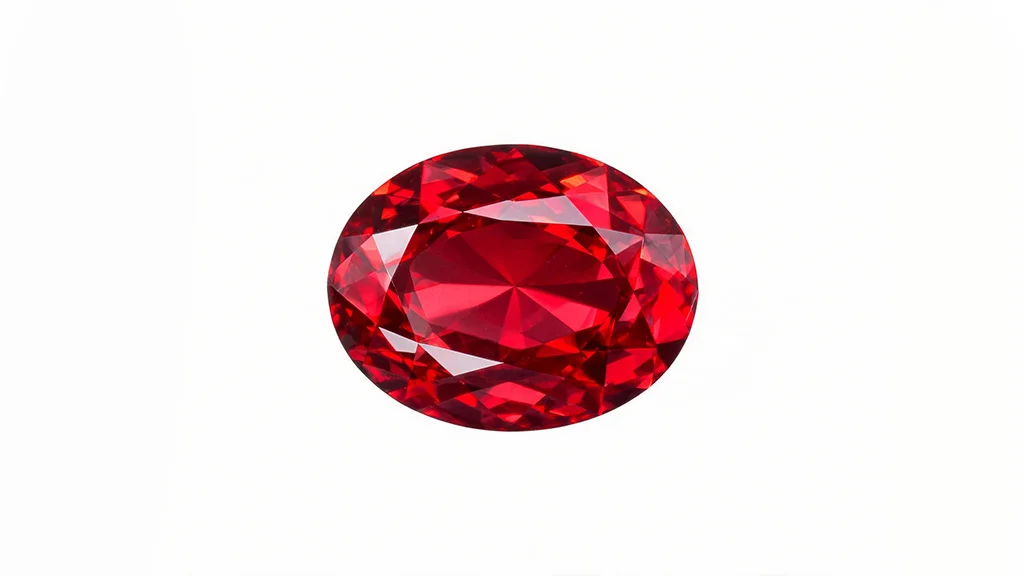
Wenn die meisten Menschen an einen roten Edelstein denken, haben sie einen Rubin vor Augen. Und das aus gutem Grund – Rubine werden seit Jahrtausenden über fast alle anderen Steine geschätzt, finden sich in den Kronjuwelen von Imperien und sind in den bedeutendsten Schmuckstücken der Weltgeschichte verarbeitet.
Rubin ist eine Varietät des Korunds – derselben Mineralfamilie wie Saphir – und erhält seine rote Farbe durch Spuren von Chrom. Je mehr Chrom vorhanden ist, desto intensiver ist das Rot und desto stärker die charakteristische rote Fluoreszenz, die feinen Rubinen unter Tageslicht und Glühlampenlicht ihren fast inneren Glanz verleiht.
Farbe: Die begehrtesten Rubine werden als „Taubenblut“ bezeichnet – ein leuchtendes, sattes Rot mit einem leichten Blaustich, das vor allem mit Steinen aus Mogok in Myanmar in Verbindung gebracht wird. Rubine aus Mosambik und Thailand sind ebenfalls von wirtschaftlicher Bedeutung. Steine, die zu orange oder zu violett, zu hell (eher rosa) oder zu dunkel (eher bräunlich) sind, erzielen deutlich niedrigere Preise.
Härte und Verschleißfestigkeit: Mit einer Mohshärte von 9 ist Rubin der härteste Farbedelstein. Er besitzt keine Spaltflächen und ist daher äußerst widerstandsfähig gegen Absplitterungen. Dies macht ihn zu einem der wenigen Farbedelsteine, die sich wirklich für den täglichen Gebrauch als Ring eignen.
Behandlungen: Die meisten im Handel erhältlichen Rubine werden wärmebehandelt, um Farbe und Reinheit zu verbessern – dies ist im Handel völlig akzeptiert, solange es offengelegt wird. Bleiglasgefüllte Rubine hingegen werden deutlich stärker behandelt und erzielen einen Bruchteil des Preises. Bei Rubinen über 1 Karat sollten Sie immer ein Zertifikat von einem Sachverständigen anfordern. GIA-Rubinbericht, GRS oder Gübelin zur Bestätigung des Behandlungsstatus.
Kulturelle Bedeutung: In der chinesischen Kultur wird der Rubin mit Vitalität und Wohlstand assoziiert und ist daher ein beliebtes Geschenk zum chinesischen Neujahr und als Hochzeitsschmuck. In der vedischen Astrologie zählt der Rubin (Manikya) zu den neun heiligen Navaratna-Steinen, die mit der Sonne in Verbindung gebracht werden und Gesundheit und Kraft verleihen sollen. An den Königshöfen Südostasiens gehörten burmesische Rubine zu den wertvollsten Besitztümern der Monarchen.
Anmerkung zur Provence: Provence Jewellery fertigt individuellen Rubinschmuck in 18-karätigem Gelb-, Weiß- und Roségold. OEM- und Großhandelslieferungen von zertifizierten Rubinen sind für Schmuckmarken und Einzelhändler möglich.
2. Red Garnet – Der erschwingliche Klassiker
Chemische Zusammensetzung: Silikatmineralgruppe; der Eisengehalt verursacht Rottöne
Mohs-Härte: 7–7,5
Farbpalette: Tiefrotbraun (Almandin), blutrot (Pyrop), purpurrot bis himbeerfarben (Rhodolith)
Preisklasse: 5–200 USD/ct je nach Sorte und Qualität
Geburtsstein: Januar
Behandlung: In der Regel keine – die meisten Granate werden unbehandelt verkauft.
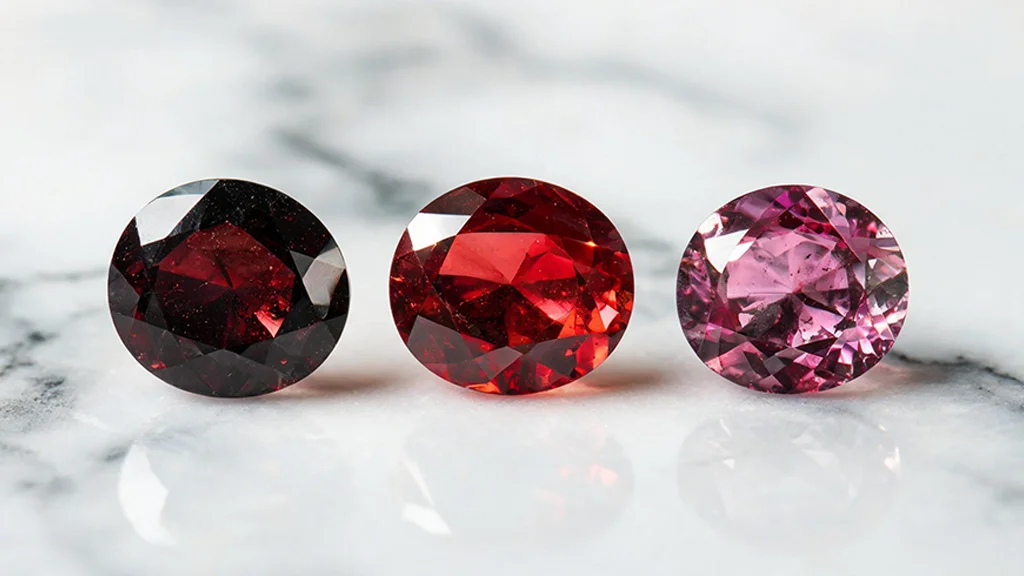
Granat ist kein einzelner Edelstein, sondern eine große Familie verwandter Mineralien, die zwar eine ähnliche Kristallstruktur aufweisen, sich aber in ihrer chemischen Zusammensetzung und Farbe unterscheiden. Die roten Varianten sind mit Abstand die bekanntesten und am weitesten verbreiteten und bieten eine hervorragende Farbe und ein gutes Preis-Leistungs-Verhältnis zu Preisen, die deutlich unter denen von Rubin oder rotem Spinell liegen.
Almandin-Granat: Der häufigste rote Granat. Seine tiefrote bis rötlich-braune Farbe wird durch Eisen verursacht. Oft ist er lupenrein, sodass sein sattes Rot ungetrübt zur Geltung kommt. Almandin ist eine zuverlässige und erschwingliche Wahl für Alltagsschmuck.
Pyrop-Granat: Pyrop, der leuchtendste aller roten Granate, erreicht eine fast blutrote Reinheit wie feiner Rubin, ist aber deutlich günstiger. Er ist in der Regel reiner als Almandin und weist ein helleres, satteres Rot auf. Rhodolith ist streng genommen eine Mischung aus Pyrop und Almandin.
Rhodolith-Granat: Rhodolith ist heute wohl der kommerziell beliebteste rote Granat. Seine purpurrote bis himbeerrote Farbe ist unverwechselbar und wirkt in Rosé- oder Weißgold gefasst besonders schmeichelhaft. Rhodolith benötigt selten eine Behandlung und wird üblicherweise in lupenreiner Qualität angeboten.
Härte und Verschleißfestigkeit: Mit einer Mohshärte von 7–7,5 ist Granat etwas weicher als Rubin oder Spinell. Er eignet sich für Anhänger, Ohrringe und Ringe, die man gelegentlich trägt. Für Verlobungsringe, die man täglich trägt, empfiehlt sich eine schützende Fassung wie eine Lünette oder ein Halo.
Anmerkung zur Provence: Roter Granat zählt zu den vielseitigsten Steinen im Sortiment individueller Schmuckstücke von Provence – insbesondere Rhodolith, der in modernen Designs wunderbar mit Roségold harmoniert. OEM-Lieferung möglich.
3. Roter Spinell – Der unterschätzte Rivale
Chemische Zusammensetzung: Magnesiumaluminiumoxid (MgAl₂O₄)
Mohs-Härte: 8 — hervorragend für den täglichen Gebrauch geeignet
Farbpalette: Leuchtendes Rot, Orangerot, Rosarot; die schönsten Exemplare sind fast rubinrot.
Preisklasse: 200–5.000 USD/ct (feine Steine)
Geburtsstein: August (alternativ)
Behandlung: In der Regel unbehandelt – die meisten roten Spinelle werden unbehandelt verkauft, was ein wichtiges Verkaufsargument darstellt.
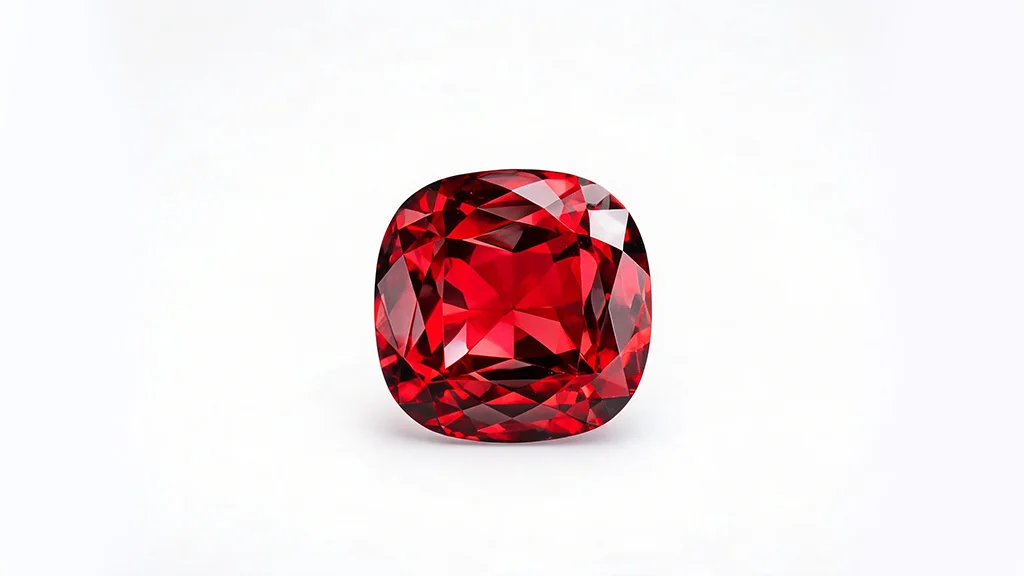
Wenn roter Spinell ein Imageproblem hat, dann nur, weil er jahrhundertelang mit Rubin verwechselt wurde. Einige der berühmtesten 'Rubine' in europäischem Königsschmuck – darunter der 170 Karat schwere Schwarze Prinzenrubin in der englischen Staatskrone – sind tatsächlich roter Spinell. Weit davon entfernt, seinen Status zu schmälern, unterstreicht diese Geschichte, wie sehr roter Spinell dem Rubin in seiner Schönheit ebenbürtig ist.
Warum Spinell immer beliebter wird: Roter Spinell unterscheidet sich chemisch von Rubin, ist ihm aber optisch sehr ähnlich – beide sind transparent, ihre Farbe stammt vom Chrom, und beide zeigen unter UV-Licht das gleiche fluoreszierende Leuchten. Die wichtigsten Unterschiede bestehen darin, dass Spinell tendenziell weniger Einschlüsse aufweist als Rubin, fast nie behandelt wird (ein bedeutender Vorteil für Käufer und gemmologische Labore) und wesentlich günstiger ist.
Härte und Verschleißfestigkeit: Mit einer Mohshärte von 8 zählt roter Spinell zu den widerstandsfähigsten Farbedelsteinen. Er eignet sich hervorragend für Verlobungsringe und Schmuck für den Alltag.
Wertversprechen: Feiner roter Spinell ist zu einem Bruchteil des Preises vergleichbarer Rubine erhältlich – und zählt damit zu den bestgehüteten Geheimnissen der Edelsteinwelt. Mit wachsender Bekanntheit steigen die Preise stetig. Ein Kauf jetzt bietet echten Mehrwert.
Anmerkung zur Provence: Roter Spinell ist bei Provence Jewellery sowohl für individuelle Einzelanfertigungen als auch für OEM-Großhandelsbestellungen erhältlich. Er wird zunehmend von Schmuckdesignern nachgefragt, die eine hochwertige Alternative zu Rubinen suchen.
4. Rubellite Tourmaline — The Vibrant Alternative
Chemische Zusammensetzung: Complex boron silicate coloured by manganese
Mohs-Härte: 7–7,5
Farbpalette: Deep red to purplish-red; named rubellite when saturation remains in daylight and artificial light
Preisklasse: USD 100–1,500/ct (fine rubellite)
Geburtsstein: October (alternative)
Behandlung: May be heated or irradiated; colour stability under different light sources is a key quality factor
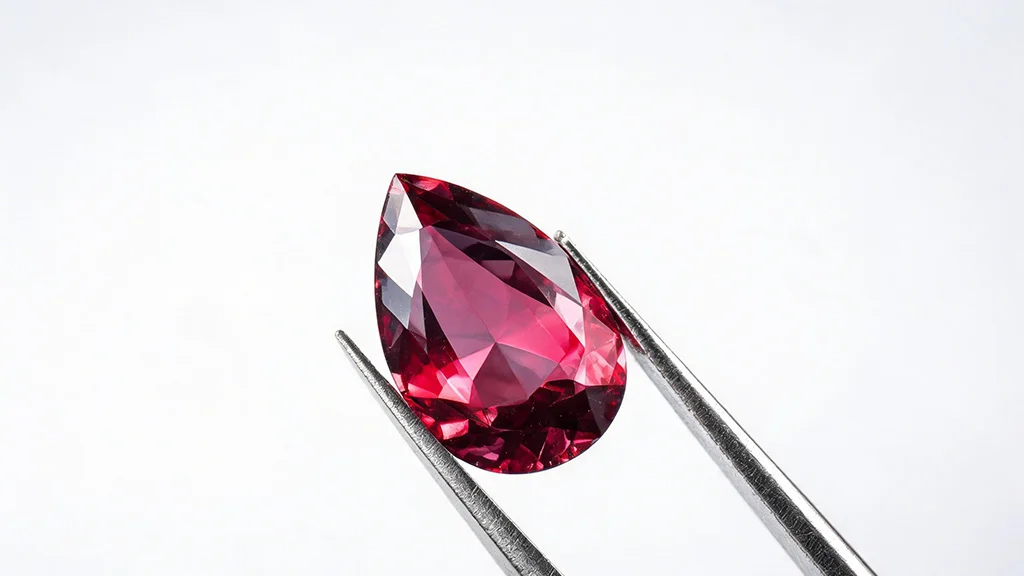
Tourmaline is one of the most colour-diverse minerals on Earth, but the red and purplish-red variety — rubellite — stands apart as a genuine fine gemstone in its own right. The name comes from the Latin rubellus, meaning 'red,' and a stone only earns the rubellite designation if its red colour remains saturated under both daylight and incandescent light — a surprisingly rare quality.
Colour & distinction: The finest rubellite has a deep, vivid red with just a hint of purple that brings a richness and depth to the stone. Lighter, less saturated specimens are simply called pink tourmaline. Rubellite can have inclusions, but this is accepted in the trade and does not significantly reduce value in high-quality specimens.
Historical note: Swedish King Gustavus III famously presented Catherine the Great of Russia with what he described as Caesar's Ruby — a stunning pendant stone later revealed in 1926 to be rubellite tourmaline.
Jewellery use: Rubellite is particularly striking in pendant and earring settings. It pairs beautifully with white gold for a modern look, or with yellow gold for a warmer vintage feel. Its lower hardness means protective settings are recommended for rings.
5. Fire Opal — The Volcanic Showpiece
Chemische Zusammensetzung: Hydrated silicon dioxide; body colour from iron oxide
Mohs-Härte: 5.5–6.5 — requires protective settings
Farbpalette: Vivid red, orange-red, yellow-orange; some exhibit play-of-colour
Preisklasse: USD 10–300/ct (fine red body colour)
Geburtsstein: October (alternative)
Behandlung: Generally not treated; some stones may be stabilised
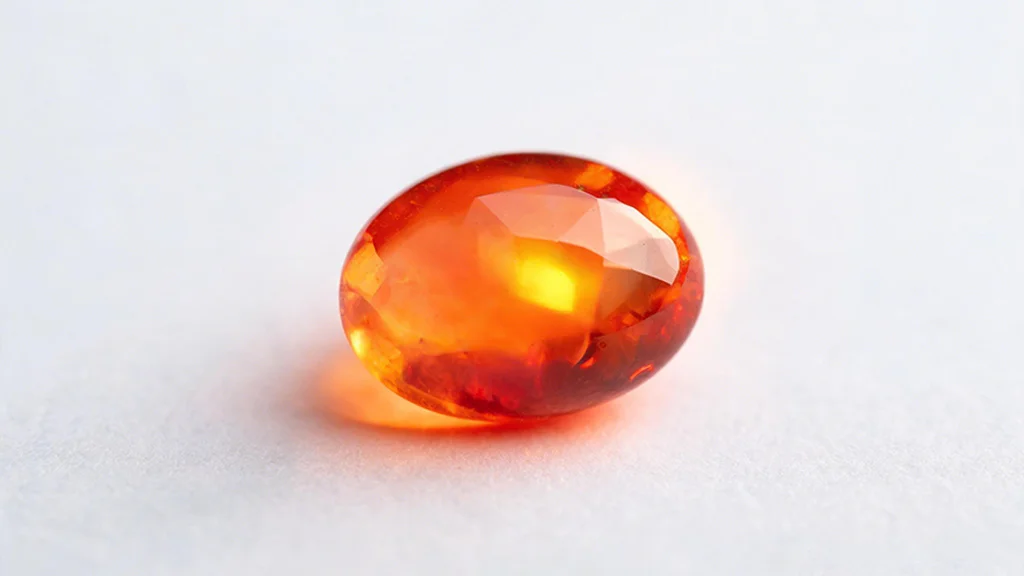
Mexican fire opal is one of the most visually striking gemstones in any colour. Unlike other opals, fire opals are transparent to translucent, forming deep within ancient Mexican volcanoes when silica-rich water seeped into cracks in volcanic rock and slowly evaporated over millions of years. The result is a gem with an almost luminous, glowing body colour that ranges from vivid red through orange to clear.
Colour & varieties: The most prized fire opals have a vivid body colour — deep cherry red or orange-red — and may or may not display a play-of-colour. Those that show both a rich body colour and play-of-colour are the rarest and most valuable. Stones from Jalisco, Querétaro, and Guerrero in Mexico are the most commercially significant.
Hardness & care: At 5.5–6.5 on the Mohs scale, fire opal is relatively soft and can be scratched by common household dust (which contains quartz, rated 7). It is best suited to pendants and earrings. If set in a ring, a protective bezel setting and careful wear habits are essential.
Symbolism: Fire opal has historically been associated with passion, optimism, and transformation. It is an ideal statement gem for someone seeking something bold and unconventional.
6. Carnelian — The Ancient Stone
Chemische Zusammensetzung: Silicon dioxide (chalcedony/quartz family), coloured by iron oxide
Mohs-Härte: 6,5–7
Farbpalette: Orange-red to brownish-red; rarely achieves vivid pure red
Preisklasse: USD 1–20/ct
Geburtsstein: July (alternative)
Behandlung: Often heat-treated or dyed to intensify colour — common and generally accepted
Carnelian has been worn by humans for at least 4,500 years. Found in the tombs of ancient Egyptian pharaohs, carried as protective amulets by Babylonian warriors, and worn in a signet ring by the Prophet Muhammad — carnelian has one of the richest cultural histories of any gemstone on earth.
It belongs to the chalcedony branch of the quartz family and displays an opaque to translucent appearance with a waxy, smooth lustre. Its colour tends toward orange-red and brownish-red rather than vivid pure red, which is why it is not typically used as a ruby substitute — it has a wholly different aesthetic character.
Best use: Carnelian is most popular as a cabochon set in organic or artisan-style jewellery, as well as in beaded jewellery, carvings, and signet rings. Its affordability makes it an excellent entry-level red gemstone. It is also a traditional choice for Islamic jewellery.
Cultural significance in Malaysia/Singapore: Red and orange chalcedony stones including carnelian have historically featured in Malay traditional jewellery and are widely sold throughout Southeast Asian gem markets.
7. Red Zircon — The Forgotten Sparkler
Chemische Zusammensetzung: Zirconium silicate (ZrSiO₄) — natural mineral, unrelated to cubic zirconia
Mohs-Härte: 6–7,5
Farbpalette: Red to orange-red; secondary yellow or brown hues common
Preisklasse: USD 20–200/ct
Geburtsstein: December (alternative)
Behandlung: Heat treatment common to improve colour and remove brown tones
Red zircon is persistently underestimated — largely because of confusion with cubic zirconia, a synthetic diamond simulant with which it shares only a name. Natural zircon is an ancient, naturally occurring mineral with exceptional optical properties. Its refractive index is second only to diamond among natural gemstones, giving it a brilliance and fire that few stones can match.
Red and orange-red zircon is found primarily in Cambodia, Myanmar, and Sri Lanka. When well-cut, it sparkles with an almost diamond-like quality. Its relatively lower hardness means it should be worn with some care in rings, but for pendants and earrings, red zircon is a spectacular and affordable gem.
8. Red Coral (Organic) — Cultural Treasure of Asia
Chemische Zusammensetzung: Calcium carbonate (CaCO₃); organic gem formed by marine polyps
Mohs-Härte: 3–4 — very soft; not suitable for rings
Farbpalette: Vivid orange-red to deep red (oxblood); colour from carotenoid pigments
Preisklasse: USD 20–500+/ct for natural untreated
Geburtsstein: –
Behandlung: Dyeing and bleaching common in lower grades; always seek disclosure. CITES-protected species require legal sourcing documentation.
Red coral — also known as precious coral or Corallium rubrum — occupies a unique position among red gemstones as an organic material, formed not by geological processes but by living marine organisms. For centuries, it has been one of the most culturally significant red gems in Asia.
Kulturelle Bedeutung: In Indian and Vedic astrology, red coral (Moonga or Praval) is associated with Mars (Mangal) and is worn to strengthen willpower and physical vitality. It is one of the nine Navaratna stones used in traditional Hindu jewellery. In traditional Chinese culture, coral features heavily in decorative carvings and amulets associated with prosperity. In Malay royal jewellery traditions, red coral beads appear in ceremonial regalia.
Important note on sourcing: Several species of precious coral are protected under CITES (the Convention on International Trade in Endangered Species). When purchasing red coral jewellery, always request documentation confirming legal, sustainably sourced origin. Reputable suppliers — including Provence Jewellery — provide full sourcing transparency.
Best use: Coral is best suited to beads, cabochons, carvings, and pendants. Its low hardness makes it entirely unsuitable for rings or bracelets in daily wear.
9. Red Topaz — The Overlooked Gem
Chemische Zusammensetzung: Aluminium fluorosilicate; colour from chromium or iron
Mohs-Härte: 8 — very good for jewellery
Farbpalette: Reddish-orange to brownish-red; rarely vivid pure red
Preisklasse: USD 50–500/ct
Geburtsstein: November (alternative)
Behandlung: Heat and irradiation used to alter colour from yellow or brown to red tones
Natural red topaz is genuinely rare. Topaz in its pure form is colourless — the orange-yellow 'imperial topaz' and the reddish-orange varieties get their colour from trace impurities during crystal formation. Naturally occurring red topaz that has not been treated is uncommon enough to command collector interest, particularly from Brazil.
While red topaz rarely achieves the vivid, saturated red of ruby or spinel, it compensates with excellent hardness (Mohs 8) and a bright, glassy brilliance. Its colour tends toward orange-red or brownish-red. For buyers seeking an affordable, durable red gemstone with a warm, sunset-like tone, red topaz is worth considering.
10. Rhodonite — The Patterned Pink-Red
Chemische Zusammensetzung: Manganese inosilicate — one of very few colour-banded red gemstones
Mohs-Härte: 5,5–6,5
Farbpalette: Rosy-red to brownish-red with distinctive black to dark brown veining from manganese oxide
Preisklasse: USD 1–30/ct
Geburtsstein: –
Behandlung: Typically untreated
Rhodonite is easily identified by its rosy-red to pink body colour threaded with dramatic black veining — a pattern caused by manganese oxide inclusions running through the crystal. Named from the Greek rhodos ('rose'), it is one of the only red gemstones with a naturally banded appearance. Russia holds rhodonite in particularly high regard; it was historically presented as diplomatic gifts and used to line the walls of the St. Petersburg metro.
Rhodonite is an opaque to translucent stone best suited to cabochons, carvings, and beads. At 5.5–6.5 Mohs it requires a protective setting if used in rings. It is an excellent affordable option for anyone drawn to its distinctive patterned aesthetic.
11. Red Beryl (Bixbite) — The Rarest Red Gemstone
Chemische Zusammensetzung: Beryllium aluminium silicate, coloured by manganese
Mohs-Härte: 7,5–8
Farbpalette: Vivid scarlet to raspberry-red
Preisklasse: USD 2,000–10,000+/ct for gem-quality
Geburtsstein: –
Behandlung: Heat treatment used; faceted gem-quality material extremely scarce
Red beryl — also called bixbite, or informally 'red emerald' in some markets — is one of the rarest gemstones in the world. Gem-quality red beryl is found in commercially significant quantities in only one place on Earth: the Wah Wah Mountains of Utah, USA. Geology.com, citing Utah Geological Survey data, estimates that one gem-quality red beryl crystal is found for every 150,000 gem-quality diamonds.
Its colour is a vivid, saturated scarlet-to-raspberry red caused by traces of manganese in the beryl crystal structure. The same mineral family includes emerald, aquamarine, and morganite — making red beryl a fascinating outlier in a family better known for greens and blues.
Faceted red beryl rarely exceeds 1 carat in gem-quality material, and stones above 2 carats are extremely unusual. It is almost exclusively a collector's stone and commands prices that reflect its scarcity. That said, its combination of vivid colour, good hardness, and extreme rarity makes it one of the most compelling red gemstones for serious jewellery collectors.
12. Andesine — The Colour-Changing Rarity
Chemische Zusammensetzung: Calcium-sodium aluminium silicate (feldspar group)
Mohs-Härte: 6–6,5
Farbpalette: Honey-red, flesh-red, reddish-orange; colour-change variety shifts green to red
Preisklasse: USD 10–150/ct
Geburtsstein: –
Behandlung: Some controversy over copper diffusion treatment in certain specimens; buy certified stones
Andesine is a relatively obscure feldspar variety named after the Andes Mountains. Most andesine is not gem-quality, but fine specimens — particularly the colour-change variety that shifts between vivid green and red depending on the light source — can be genuinely spectacular. Fine colour-change andesine has been compared to alexandrite in visual effect.
Red andesine has attracted some controversy in the trade due to questions about whether certain specimens have been artificially copper-diffused to produce their colour. Always purchase andesine from reputable dealers with gemological documentation. When sourced correctly, it is an unusual and beautiful gem.
13. Sunstone — The Metallic Red
Chemische Zusammensetzung: Oligoclase or labradorite feldspar with copper or hematite inclusions causing aventurescence
Mohs-Härte: 6–6,5
Farbpalette: Reddish-orange to orange-red; metallic glittering effect (aventurescence)
Preisklasse: USD 5–100/ct
Geburtsstein: July/August (secondary)
Behandlung: Typically untreated
Sunstone belongs to the feldspar family and is immediately recognisable by its aventurescence — a metallic, glittering brilliance caused by platelets of copper, hematite, or goethite aligned within the crystal. Oregon sunstone from the USA is the most prized variety, displaying vivid copper-red to orange-red body colour with dramatic metallic flash.
Sunstone is not a vivid red gemstone in the ruby or spinel sense — its appeal lies in its warm, reddish-orange tones and its unique glittering optical effect. It is an excellent choice for fashion-forward jewellery with an artisan or bohemian aesthetic, and it pairs beautifully with yellow gold.
14. Red Diamond — The Ultimate Rarity
Chemische Zusammensetzung: Carbon — colour caused by plastic deformation of crystal lattice during formation
Mohs-Härte: 10 — hardest natural material on Earth
Farbpalette: Faint purplish-red to vivid red; vivid red is the rarest colour grade in all diamonds
Preisklasse: USD 300,000–1,000,000+/ct for vivid red; most 'red' diamonds are purplish-red
Geburtsstein: April
Behandlung: High-pressure, high-temperature (HPHT) treatment can create/enhance red colour — certification essential
Red diamond is not simply a rare gemstone — it is one of the rarest naturally occurring objects on Earth. Fewer than 30 true vivid red diamonds are known to exist, and most weigh under half a carat. The Moussaieff Red, at 5.11 carats of vivid red, is the largest known natural red diamond in existence.
Red colour in diamonds does not arise from a trace element, as it does in ruby or spinel. Instead, it is caused by a structural anomaly called plastic deformation — a distortion of the diamond's crystal lattice under extreme geological pressure that alters the way it absorbs light. This mechanism is not fully understood by scientists even today.
For the overwhelming majority of buyers, a red diamond is a collector's trophy rather than a jewellery purchase. Purplish-red or brownish-red diamonds do appear occasionally at auction at more accessible price points, but vivid red commands among the highest per-carat prices of any material on Earth.
Lab-Grown Red Gemstones: What Buyers Need to Know
Lab-grown gemstones are one of the fastest-growing segments of the jewellery market — and red gemstones are no exception. If you are considering a red gemstone purchase, it is worth understanding what is available in lab-grown form, how it compares to natural, and what the trade rules are.
Lab-Grown Ruby
Lab-grown ruby is chemically and optically identical to natural ruby. It is composed of the same corundum mineral, coloured by the same chromium, and has the same Mohs 9 hardness. The difference is origin: lab-grown ruby is created in a controlled environment over weeks, rather than forming over millions of years underground.
The price difference is dramatic. A fine 1-carat natural unheated Burmese ruby can cost USD 5,000–30,000 or more. A comparable lab-grown ruby in the same carat weight might sell for USD 50–300. For buyers who prioritise the look and durability of ruby over natural origin, lab-grown ruby offers exceptional value.
Disclosure is mandatory: Reputable jewellers and manufacturers — including Provence Jewellery — always clearly disclose when a stone is lab-grown. A lab-grown ruby must never be sold as a natural ruby without disclosure.
Lab-Grown Red Spinel
Synthetic red spinel is also available and commercially produced. It tends to appear in lower price-point jewellery. As with ruby, full disclosure is required.
Synthetic vs Natural: How to Tell
- A gemological certificate from GIA, GRS, or equivalent will state whether a stone is natural or laboratory-grown.
- Natural rubies typically show characteristic inclusions — silk (rutile needles), fingerprints, growth zoning — that lab-grown stones may lack.
- Lab-grown stones may show curved growth lines or gas bubbles under magnification.
- When in doubt, always ask for certification before purchasing any red gemstone above MYR 500 (approximately USD 100).
At Provence Jewellery, we supply both natural and lab-grown red gemstones for OEM and wholesale orders, with full transparency and documentation. Our B2B clients can specify their preference based on product positioning and target price points.
Gemstone Treatments: What to Ask Before You Buy
Most coloured gemstones on the market have undergone some form of treatment to enhance their colour or clarity. This is not inherently problematic — but transparency is non-negotiable, and different treatments have very different impacts on value.
Common Treatments in Red Gemstones
- Heat treatment (ruby, red spinel, garnet, zircon): The most widely accepted treatment in the trade. Heat can improve colour by dissolving inclusions or enhancing saturation. For ruby especially, heat treatment is the industry norm. It is accepted by all major gemological laboratories provided it is disclosed.
- Lead glass filling (ruby): A more invasive treatment that fills fractures in low-quality ruby with lead glass to dramatically improve transparency and colour. This significantly reduces value — a glass-filled ruby may cost 90% less than an equivalent untreated stone. Always request disclosure.
- Beryllium diffusion (corundum): A surface-penetrating treatment that changes the colour of corundum through heat with beryllium. Controversial in the trade and difficult to detect without advanced testing. Associated mainly with orange-padparadscha sapphire but occasionally with ruby.
- Fracture filling / coating (various stones): Some lower-grade stones are coated with resins or polymers. This is not durable and degrades over time.
- Dyeing (carnelian, coral, jade): Common in semi-precious stones and fashion jewellery. Always ask.
How to Protect Yourself
- For any red gemstone over USD 300 per carat (MYR ~1,320/ct | SGD ~405/ct), request a certificate from GIA, GRS, Gübelin, or AGL.
- Ask specifically: 'Has this stone undergone any treatment beyond heat treatment?'
- For red coral, request CITES documentation and proof of legal sourcing.
Buy from manufacturers or retailers who provide written treatment disclosure — it is your right as a buyer.
Which Metal Pairs Best With Red Gemstones?
The metal you choose has a significant impact on how a red gemstone looks in a finished piece. Here is a practical guide to metal pairing for the most popular red gems.
- Yellow gold (18K): The classic, timeless choice. Yellow gold's warmth enhances orange-red tones, making it ideal for carnelian, fire opal, hessonite garnet, and sunstone. It also works beautifully with vivid pure-red ruby, where it creates a rich, warm fine jewellery look.
- White gold / platinum: The modern, high-contrast choice. White metal makes vivid reds appear even more intense — it is the ideal setting for pigeon's blood ruby, red spinel, and other highly saturated red stones where maximum colour impact is the goal.
- Rose gold (18K): The romantic, contemporary choice. Rose gold's pinkish warmth flatters purplish-red and raspberry-red tones beautifully — rhodolite garnet, rubellite tourmaline, and pinkish-red spinel are outstanding in rose gold settings.
- Sterling silver: A budget-friendly alternative that works well with garnet, carnelian, and red zircon in artisan, bohemian, or vintage-style jewellery. Not suitable for everyday fine jewellery over the long term due to tarnishing.
At Provence Jewellery, we manufacture custom red gemstone jewellery in 18K yellow, white, and rose gold for both retail clients and OEM wholesale partners. Every piece is made to specification with full quality assurance.
Red Gemstones in Asian Culture and Tradition
For buyers and jewellery professionals in Malaysia, Singapore, and broader Southeast Asia, the cultural significance of red gemstones adds a layer of meaning that Western markets rarely address. Red is not just an aesthetic choice in Asian contexts — it carries deep symbolic weight.
Chinese culture: Red is the supreme colour of luck, prosperity, and celebration in Chinese tradition. Ruby and red jadeite are among the most gifted gemstones for Lunar New Year, weddings, and milestone birthdays. A ruby gift is understood to wish the recipient vitality, success, and good fortune. This cultural resonance drives significant demand for red gemstone jewellery across Malaysia and Singapore's Chinese communities.
Indian and Vedic tradition: In Vedic astrology, the nine sacred Navaratna stones each correspond to a celestial body. Ruby (Manikya) represents the sun and is worn to bestow health, confidence, and authority. Red coral (Moonga or Praval) is associated with Mars and is prescribed to strengthen willpower and courage. These stones appear prominently in traditional gold jewellery across the Indian community in Malaysia and Singapore.
Malay tradition: Red gemstones — particularly ruby and garnet — feature in traditional Malay royal regalia and ceremonial jewellery. The kerongsang (a traditional brooch-like fastener) and pending (pendant) designs historically incorporated red stones set in gold as symbols of nobility and prestige.
Southeast Asian royal courts: Burma (Myanmar) was the source of the world's finest rubies — and Burmese royalty retained first claim on the largest and finest stones. The cultural reverence for Mogok ruby permeates Thai, Cambodian, and Malaysian gem trading traditions to this day.
Modern gifting occasions in MY/SG: For jewellery businesses, understanding these cultural triggers is commercially valuable. Ruby and red garnet jewellery consistently see demand spikes around Chinese New Year, Deepavali, Indian wedding season, and Hari Raya, where red jewellery carries specific auspicious meaning.
Frequently Asked Questions About Red Gemstones
Rubin ist der wertvollste rote Edelstein, sowohl hinsichtlich seiner Marktgröße als auch des Preises pro Karat für hochwertige Steine. Insbesondere unbehandelte burmesische Taubenblutrubine aus Mogok erzielen die höchsten Preise in der Welt der farbigen Edelsteine – feine Exemplare ab 2 Karat werden regelmäßig für Zehntausende US-Dollar pro Karat in großen Auktionshäusern verkauft. Rote Diamanten sind zwar absolut gesehen seltener, aber der Markt für hochwertige Rubine ist größer, etablierter und liquider.
Mehrere wunderschöne rote Edelsteine bieten leuchtende Farben zu einem Bruchteil des Preises von Rubinen. Roter Spinell ist die optisch größte Alternative – er kann in einem geschliffenen Schmuckstück fast identisch mit Rubinen aussehen, hat eine Mohshärte von 8 und wird so gut wie nie behandelt. Rhodolith-Granat besticht durch ein sattes Purpurrot zu sehr erschwinglichen Preisen. Rubellit-Turmalin ist eine weitere hochwertige Alternative. Alle drei sind echte Edelsteine mit eigener Schönheit und eigenem Wert, keine Imitationen oder Nachahmungen.
Rubin ist mit einer Mohshärte von 9 der härteste rote Edelstein – nur Diamant mit 10 ist härter. Roter Spinell folgt mit 8 und roter Beryll mit 7,5–8. Alle drei eignen sich für hochwertigen Alltagsschmuck, einschließlich Verlobungsringe. Roter Diamant ist mit 10 auf der Mohshärte zwar technisch gesehen der härteste Edelstein, aber seine extreme Seltenheit macht ihn zu einem Sonderfall.
Roter Beryll (Bixbit) gilt als einer der seltensten Edelsteine der Welt – gemmologischen Schätzungen zufolge etwa 1.000-mal seltener als Smaragd. Er kommt in wirtschaftlich relevanten Mengen nur in den Wah-Wah-Bergen in Utah, USA, vor. Echte, leuchtend rote Diamanten sind in absoluten Zahlen womöglich noch seltener (es sind weniger als 30 Exemplare bekannt), doch roter Beryll ist der seltenste Edelstein, der regelmäßig auf dem Markt angeboten wird.
Rubin ist aufgrund seiner außergewöhnlichen Härte (Mohs 9), seiner leuchtenden Farbe und seiner tiefen kulturellen Symbolik rund um Liebe und Leidenschaft der beliebteste und am meisten empfohlene rote Edelstein für Verlobungsringe. Roter Spinell (Mohs 8) ist eine immer beliebtere Alternative, die vergleichbare Haltbarkeit und Schönheit zu einem deutlich niedrigeren Preis bietet. Beide eignen sich für den täglichen Gebrauch. Andere rote Edelsteine – Granat, Turmalin, Feueropal – sind besser für schützende Fassungen oder zum gelegentlichen Tragen geeignet.
Ja – Granat ist meist rot. Zu den roten Granatvarianten gehören Almandin (tiefrotbraun), Pyrop (leuchtend blutrot) und Rhodolith (purpurrot bis himbeerfarben). Granat kommt auch in Grün (Tsavorit, Demantoid), Orange (Spessartin, Hessonit) und sogar in seltenen blauen Varianten vor, aber Rot ist die klassische und bekannteste Form. Roter Granat ist der Geburtsstein für Januar.
Rubin und roter Spinell sind chemisch unterschiedliche Mineralien, die mit bloßem Auge fast identisch aussehen können. Rubin ist eine Varietät des Korunds (Aluminiumoxid, Al₂O₃) und erhält seine rote Farbe durch Chrom. Roter Spinell ist Magnesiumaluminiumoxid (MgAl₂O₄) und ebenfalls durch Chrom gefärbt. Beide können eine leuchtend rote Farbe mit starker Fluoreszenz aufweisen. Die wichtigsten praktischen Unterschiede: Rubin hat eine Mohshärte von 9 (Spinell 8), Rubin wird häufiger behandelt (Spinell ist in der Regel unbehandelt) und Rubin erzielt deutlich höhere Preise. Berühmte historische 'Rubine' – darunter der Rubin des Schwarzen Prinzen in der britischen Imperial State Crown – wurden später als roter Spinell identifiziert.
Zu den wichtigsten roten Edelsteinen zählen Rubin, roter Granat (Almandin, Pyrop, Rhodolith), roter Spinell, Rubellit-Turmalin, Feueropal, Karneol, roter Zirkon, rote Koralle, roter Topas, Rhodonit, roter Beryll (Bixbit), Andesin, Sonnenstein und roter Diamant. 'Roter Edelstein' bezeichnet eine Farbkategorie, nicht einen einzelnen Stein – jede Varietät zeichnet sich durch ihre eigene Mineralzusammensetzung, Härte, ihren Preis und ihre optischen Eigenschaften aus.
Conclusion: Finding Your Perfect Red Gemstone
The world of red gemstones is far richer than most people realise. Ruby may be the most famous, but red spinel rivals it in beauty while remaining dramatically undervalued. Rhodolite garnet offers an extraordinarily accessible route to rich red jewellery. Rubellite tourmaline brings a depth of colour that can stop a room. And for the collector, red beryl and red diamond represent some of the rarest material on Earth.
The right red gemstone depends on what matters most to you: budget, durability, colour preference, cultural significance, or rarity. Hopefully this guide has given you the foundation to make that choice with confidence.