14 Types of Red Gemstones: Complete Guide to Red Gemstones
- Written by Provence Team
- Updated on June 10, 2026
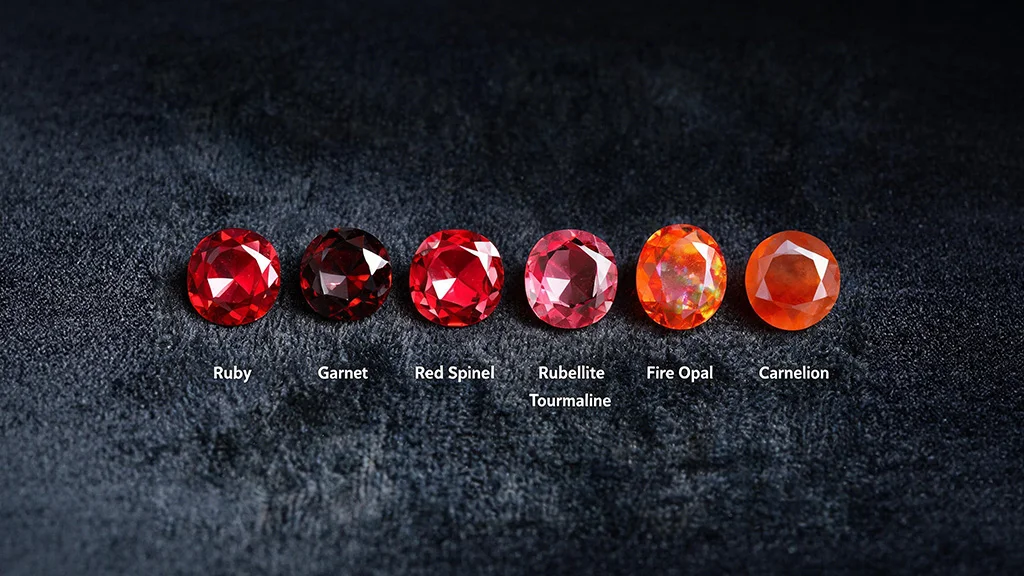
Table of Contents
Few colours in nature command attention the way red does. It is the colour of passion, celebration, and power — and nowhere is it more breathtaking than set in fine jewellery. Whether you are searching for the perfect red gemstone for an engagement ring, a statement necklace, or a bespoke gift, the world of red precious and semi-precious stones offers far more variety than most people realise.
This guide covers 14 types of red gemstones in full — from the legendary ruby and the underrated red spinel, to rare collector finds like red beryl and red diamond. You will find a side-by-side comparison table, individual stone profiles with hardness ratings and pricing in USD, guidance on treatments, lab-grown alternatives, and a practical framework to help you choose the right red gemstone for your needs.
At Provence Jewellery, we manufacture fine jewellery with direct access to premium gemstone sourcing. What follows is the most complete guide to red gemstones you will find online — written from the perspective of people who work with these stones every day.
What Makes a Gemstone Red?
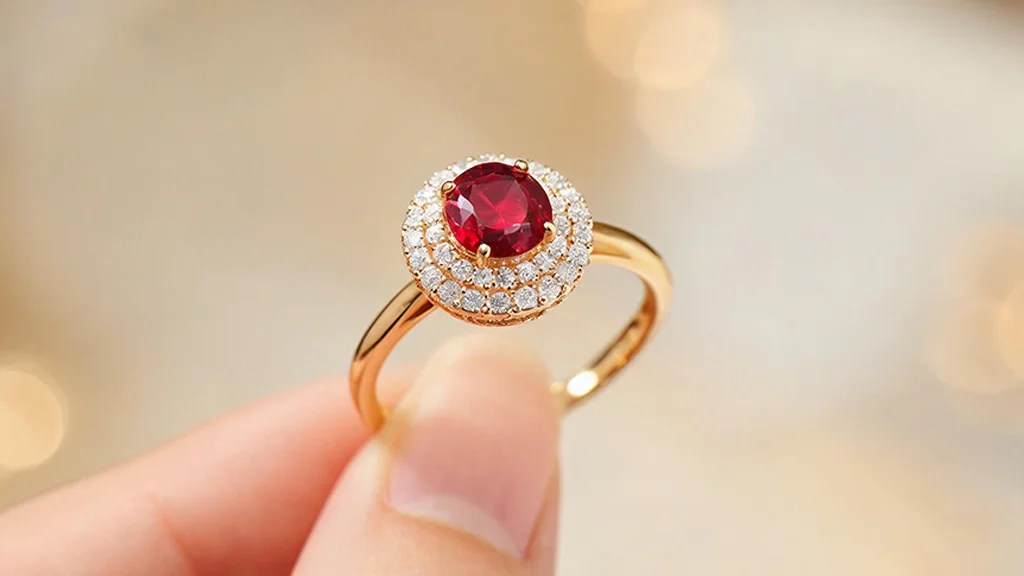
Before diving into the individual stones, it helps to understand the science behind red colour in gemstones — because not all reds are created equal, and knowing what to look for will make you a much more informed buyer.
The Cause of Red Colour
Red occurs in gemstones because of trace elements present during their formation, or because of the crystal structure itself. The most important causes of red colour are:
- Chromium: the element responsible for the deep, vivid red in ruby and red spinel. More chromium generally means a brighter, more saturated red.
- Iron: causes the darker, brownish-red tones seen in almandine garnet.
- Manganese: produces the purplish-red to raspberry hues in rubellite tourmaline and rhodolite garnet.
- Crystal structure: in red diamond, the colour arises from plastic deformation of the crystal lattice during formation — not from a trace element at all, which is part of what makes it so rare.
How Gemologists Evaluate Red Colour
Gemologists assess colour using three factors: hue, tone, and saturation. For red gemstones, this means:
- Hue: Is it a pure red, or does it lean orange-red or purple-red? Pure red with minimal secondary hue is typically the most valuable. Orange-reds and purple-reds can still be beautiful, but they command lower prices in high-end markets.
- Tone: How light or dark is the stone? Very dark reds can appear almost brown in low light. Very light reds tip into pink territory. The ideal sits at a medium-dark tone, roughly 65–80%, where red reaches its maximum saturation.
- Saturation: How vivid and intense is the colour? The finest rubies — known as Pigeon's Blood — are prized precisely because they achieve extraordinary saturation: a bright, traffic-light quality that glows even indoors.
One important note: very few gemstones actually achieve pure red. Most have a secondary hue — and that is perfectly fine. A rich purplish-red rhodolite garnet or an orange-red fire opal can be just as stunning as a pure red stone, and often far more affordable.
Hardness and Wearability
Durability is critical when choosing a gemstone for jewellery, especially rings and bracelets that take daily wear. The Mohs hardness scale rates minerals from 1 (softest) to 10 (hardest). For jewellery that will be worn regularly, a rating of 7 or above is generally recommended. We will note the Mohs rating for every stone in this guide.
14 Types of Red Gemstones: At-a-Glance Comparison
The table below summarises the key facts for each red gemstone covered in this guide. Price tiers are indicative retail ranges per carat for good-quality stones: $ = under USD 50/ct | $$ = USD 50–300/ct | $$$ = USD 300–1,000/ct | $$$$ = USD 1,000+/ct.
|
Gemstone |
Mohs |
Colour Range |
Price/ct |
Birthstone |
Key Notes |
|---|---|---|---|---|---|
|
Ruby |
9 |
Red to pinkish-red |
$$$$ |
July |
Chromium corundum; hardest red gem |
|
Red Spinel |
8 |
Red, orange-red, pink-red |
$–$$$ |
August (alt) |
Historically mistaken for ruby; superb value |
|
Almandine Garnet |
7–7.5 |
Deep red to red-brown |
$–$$ |
January |
Most common red garnet; rich, dark red |
|
Pyrope Garnet |
7–7.5 |
Blood red to dark red |
$–$$ |
January |
Vivid blood-red; often eye-clean |
|
Rhodolite Garnet |
7–7.5 |
Purplish-red to raspberry |
$–$$ |
January |
Elegant purple-red hybrid; very popular |
|
Rubellite Tourmaline |
7–7.5 |
Deep red to pinkish-red |
$$–$$$ |
October (alt) |
Manganese-coloured; vivid, saturated red |
|
Red Zircon |
6–7.5 |
Red, orange-red |
$–$$ |
December (alt) |
High dispersion; natural, not cubic zirconia |
|
Red Beryl (Bixbite) |
7.5–8 |
Vivid scarlet red |
$$$$+ |
– |
One of Earth's rarest gems; Utah, USA only |
|
Fire Opal |
5.5–6.5 |
Red, orange-red, yellow-red |
$–$$ |
October (alt) |
Transparent Mexican volcanic gem |
|
Carnelian |
6.5–7 |
Orange-red to brownish-red |
$ |
July (alt) |
Chalcedony family; ancient & affordable |
|
Red Coral (Organic) |
3–4 |
Vivid red to orange-red |
$$–$$$ |
– |
Organic gem; deep cultural significance in Asia |
|
Red Diamond |
10 |
Light pink-red to vivid red |
$$$$+ |
April |
Rarest coloured diamond; supreme collector gem |
|
Andesine |
6–6.5 |
Honey-red to flesh-red |
$–$$ |
– |
Rare colour-change feldspar; colour-shift variety |
|
Rhodonite |
5.5–6.5 |
Rosy-red with black veining |
$ |
– |
Opaque; distinctive manganese silicate patterning |
Price ranges are indicative retail benchmarks for quality stones. OEM and wholesale pricing is available on request through Provence Jewellery. Prices subject to market fluctuation.
The 14 Types of Red Gemstones: Full Profiles
1. Ruby — The King of Red Gemstones
Chemical Composition: Corundum (Al₂O₃) coloured by chromium
Mohs Hardness: 9 — excellent for daily wear
Colour Range: Red to pinkish-red; finest grade = Pigeon's Blood (vivid pure red)
Price Range: USD 500–30,000+/ct (fine)
Birthstone: July
Treatment: Heat treatment widely accepted; glass-filling lowers value — always request disclosure
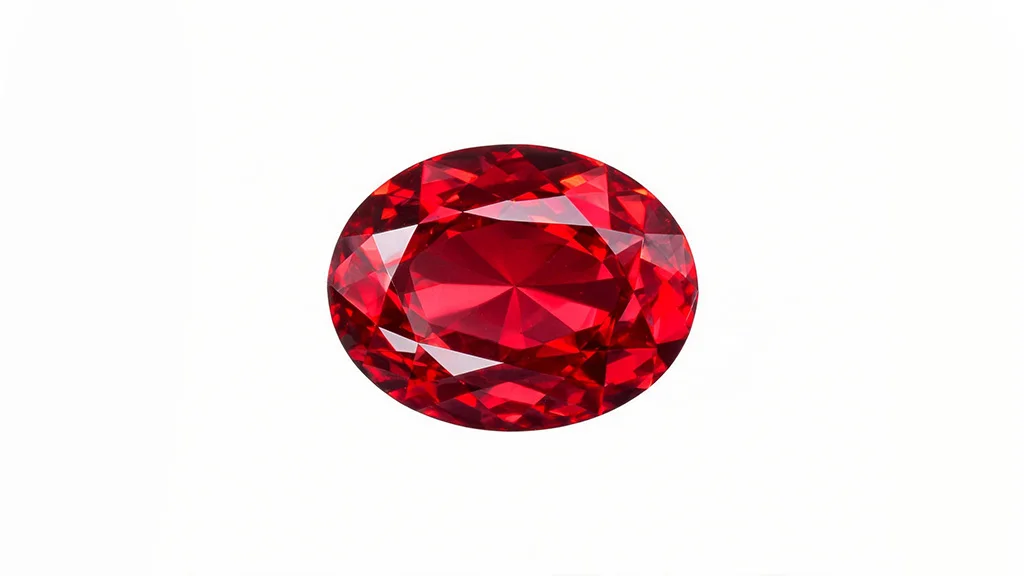
When most people picture a red gemstone, they picture a ruby. And for good reason — ruby has been prized above almost every other stone for thousands of years, found in the crown jewels of empires and set in the most important fine jewellery the world has ever produced.
Ruby is a variety of corundum — the same mineral family as sapphire — coloured red by traces of chromium. The more chromium present, the more vivid the red, and the stronger the characteristic red fluorescence that gives fine rubies their almost inner-glow quality under daylight and incandescent light.
Colour: The most coveted rubies are described as Pigeon's Blood — a vivid, saturated red with a slight blue undertone, most famously associated with stones from Mogok, Myanmar. Rubies from Mozambique and Thailand are also commercially significant. Stones that lean too orange or too purple, or that are too light (trending pink) or too dark (trending brownish), command significantly lower prices.
Hardness & wearability: At Mohs 9, ruby is the hardest coloured gemstone. It has no cleavage planes, meaning it is highly resistant to chipping. This makes it one of the very few coloured stones genuinely suitable for everyday ring wear.
Treatments: The majority of commercial rubies are heat-treated to improve colour and clarity — this is fully accepted in the trade as long as disclosed. However, lead glass-filled rubies are far more heavily treated and sell at a fraction of the price. For any ruby above 1 carat, always request a certificate from a GIA Ruby Report, GRS, or Gübelin confirming treatment status.
Cultural significance: In Chinese culture, ruby is associated with vitality and prosperity, making it a popular choice for CNY gifting and wedding jewellery. In Vedic astrology, ruby (Manikya) is one of the nine sacred Navaratna stones, associated with the sun and worn to bring health and power. In Southeast Asian royal courts, Burmese rubies were among the most prized possessions of monarchs.
Provence note: Provence Jewellery manufactures custom ruby jewellery in 18K yellow, white, and rose gold. OEM and wholesale supply of certified ruby available for jewellery brands and retailers.
2. Red Garnet — The Affordable Classic
Chemical Composition: Silicate mineral group; iron content causes red shades
Mohs Hardness: 7–7.5
Colour Range: Deep red-brown (almandine), blood red (pyrope), purplish-red to raspberry (rhodolite)
Price Range: USD 5–200/ct depending on variety and quality
Birthstone: January
Treatment: Typically none — most garnets are sold untreated
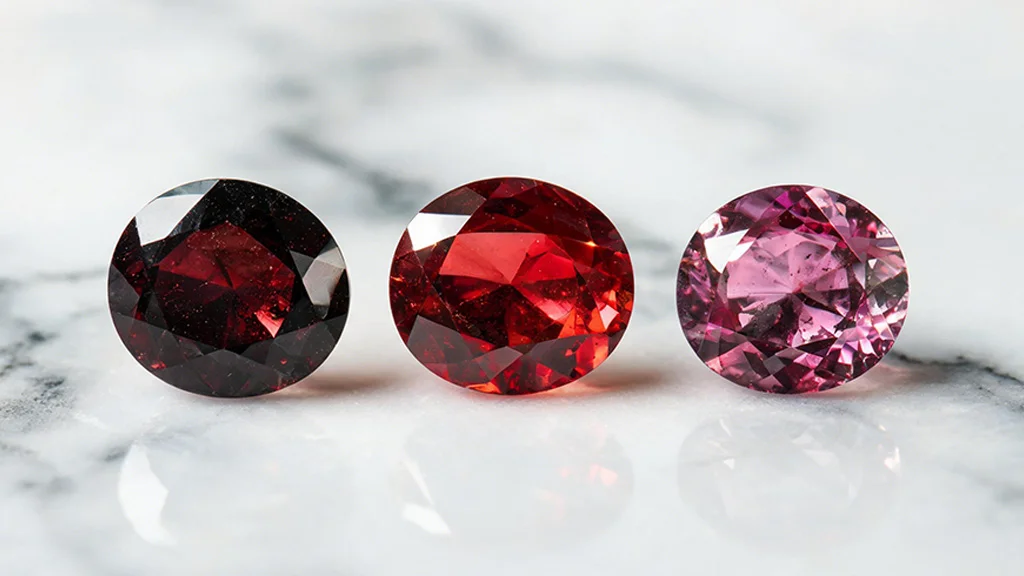
Garnet is not a single gemstone — it is a large family of related minerals that share a crystal structure but differ in chemical composition and colour. The red varieties are by far the most well-known and commercially widespread, and they offer excellent colour and value at prices well below ruby or red spinel.
Almandine garnet: The most common red garnet. It displays a deep red to reddish-brown colour caused by iron and is often found eye-clean, allowing its rich colour to shine without interruption. Almandine is a reliable, affordable option for everyday jewellery.
Pyrope garnet: The most vivid of the red garnets — pyrope approaches the blood-red quality of fine ruby at a fraction of the price. It tends to be cleaner than almandine, with a brighter, more saturated red. Rhodolite is technically a hybrid of pyrope and almandine.
Rhodolite garnet: Perhaps the most commercially popular red garnet today. Its purplish-red to raspberry colour is distinctive and highly flattering set in rose gold or white gold. Rhodolite rarely requires treatment and is typically sold in eye-clean quality.
Hardness & wearability: At 7–7.5 on the Mohs scale, garnet is somewhat softer than ruby or spinel. It is suitable for pendants, earrings, and occasional-wear rings. For everyday engagement ring wear, a protective setting such as a bezel or halo is advisable.
Provence note: Red garnet is one of the most versatile stones in Provence's custom jewellery range — particularly rhodolite, which pairs beautifully with rose gold in modern designs. OEM supply available.
3. Red Spinel — The Undervalued Rival
Chemical Composition: Magnesium aluminium oxide (MgAl₂O₄)
Mohs Hardness: 8 — excellent for daily wear
Colour Range: Vivid red, orange-red, pinkish-red; finest are near-ruby-red
Price Range: USD 200–5,000/ct (fine stones)
Birthstone: August (alternative)
Treatment: Typically none — most red spinels are sold untreated, a significant selling point
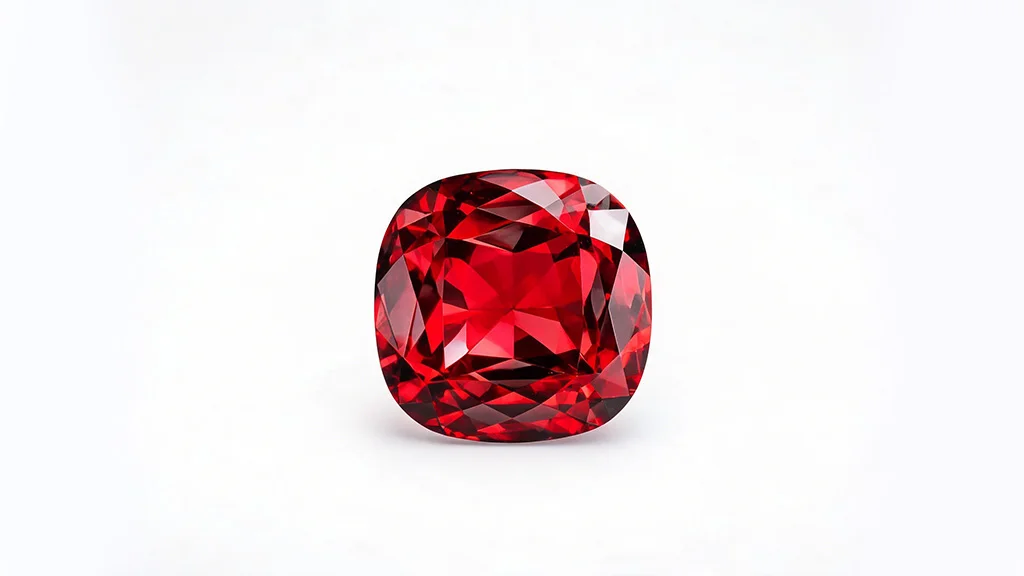
If red spinel has a reputation problem, it is only that it spent centuries being mistaken for ruby. Some of the most famous 'rubies' in European royal jewellery — including the 170-carat Black Prince's Ruby set in the Imperial State Crown of England — are actually red spinel. Far from diminishing its status, this history underscores just how closely red spinel can rival ruby in beauty.
Why spinel is gaining ground: Red spinel is chemically distinct from ruby but optically very similar — both are transparent, both are coloured by chromium, and both exhibit the same fluorescent glow under UV light. The key differences are that spinel tends to have fewer inclusions than ruby, is almost never treated (a significant advantage for buyers and gemological laboratories), and is considerably more affordable.
Hardness & wearability: At Mohs 8, red spinel is one of the most durable coloured gemstones available. It is an excellent choice for engagement rings and daily-wear jewellery.
Value proposition: Fine red spinel commands a fraction of equivalent ruby pricing — making it one of the gemstone world's best-kept secrets. As awareness grows, prices have been rising steadily. Buying now represents genuine value.
Provence note: Red spinel is available through Provence Jewellery for both retail custom pieces and OEM wholesale orders. It is increasingly requested by jewellery designers seeking a premium ruby alternative.
4. Rubellite Tourmaline — The Vibrant Alternative
Chemical Composition: Complex boron silicate coloured by manganese
Mohs Hardness: 7–7.5
Colour Range: Deep red to purplish-red; named rubellite when saturation remains in daylight and artificial light
Price Range: USD 100–1,500/ct (fine rubellite)
Birthstone: October (alternative)
Treatment: May be heated or irradiated; colour stability under different light sources is a key quality factor
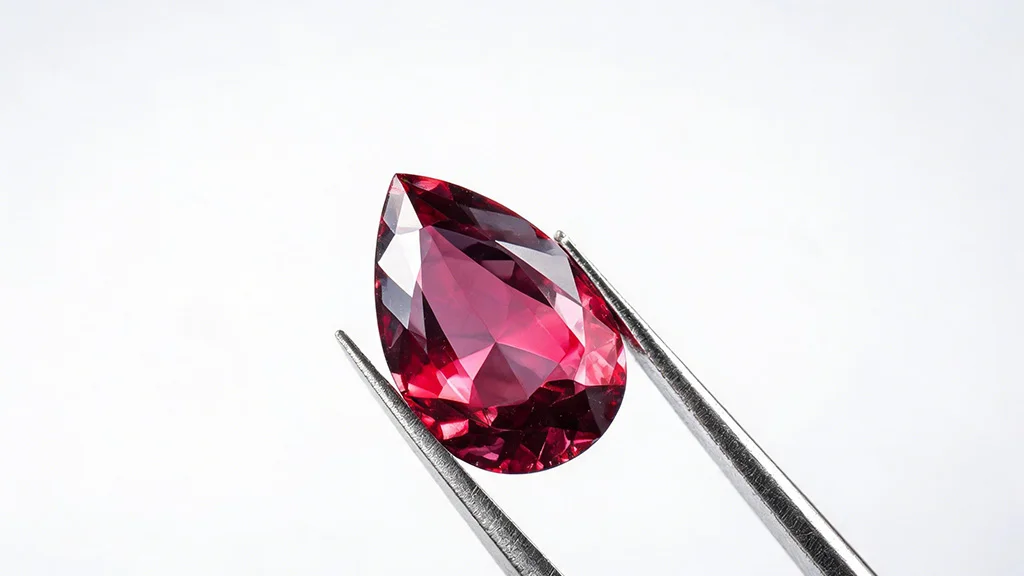
Tourmaline is one of the most colour-diverse minerals on Earth, but the red and purplish-red variety — rubellite — stands apart as a genuine fine gemstone in its own right. The name comes from the Latin rubellus, meaning 'red,' and a stone only earns the rubellite designation if its red colour remains saturated under both daylight and incandescent light — a surprisingly rare quality.
Colour & distinction: The finest rubellite has a deep, vivid red with just a hint of purple that brings a richness and depth to the stone. Lighter, less saturated specimens are simply called pink tourmaline. Rubellite can have inclusions, but this is accepted in the trade and does not significantly reduce value in high-quality specimens.
Historical note: Swedish King Gustavus III famously presented Catherine the Great of Russia with what he described as Caesar's Ruby — a stunning pendant stone later revealed in 1926 to be rubellite tourmaline.
Jewellery use: Rubellite is particularly striking in pendant and earring settings. It pairs beautifully with white gold for a modern look, or with yellow gold for a warmer vintage feel. Its lower hardness means protective settings are recommended for rings.
5. Fire Opal — The Volcanic Showpiece
Chemical Composition: Hydrated silicon dioxide; body colour from iron oxide
Mohs Hardness: 5.5–6.5 — requires protective settings
Colour Range: Vivid red, orange-red, yellow-orange; some exhibit play-of-colour
Price Range: USD 10–300/ct (fine red body colour)
Birthstone: October (alternative)
Treatment: Generally not treated; some stones may be stabilised
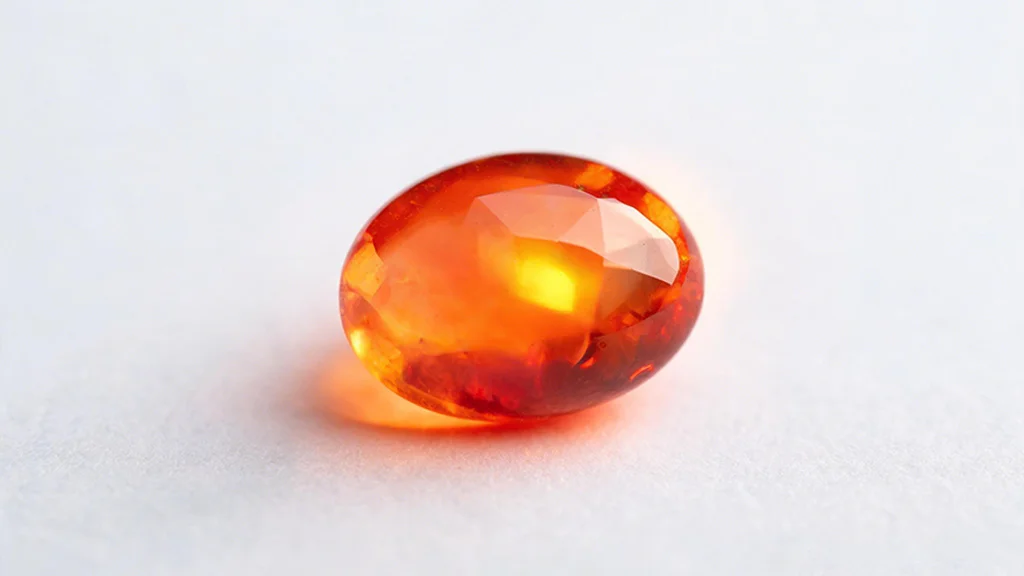
Mexican fire opal is one of the most visually striking gemstones in any colour. Unlike other opals, fire opals are transparent to translucent, forming deep within ancient Mexican volcanoes when silica-rich water seeped into cracks in volcanic rock and slowly evaporated over millions of years. The result is a gem with an almost luminous, glowing body colour that ranges from vivid red through orange to clear.
Colour & varieties: The most prized fire opals have a vivid body colour — deep cherry red or orange-red — and may or may not display a play-of-colour. Those that show both a rich body colour and play-of-colour are the rarest and most valuable. Stones from Jalisco, Querétaro, and Guerrero in Mexico are the most commercially significant.
Hardness & care: At 5.5–6.5 on the Mohs scale, fire opal is relatively soft and can be scratched by common household dust (which contains quartz, rated 7). It is best suited to pendants and earrings. If set in a ring, a protective bezel setting and careful wear habits are essential.
Symbolism: Fire opal has historically been associated with passion, optimism, and transformation. It is an ideal statement gem for someone seeking something bold and unconventional.
6. Carnelian — The Ancient Stone
Chemical Composition: Silicon dioxide (chalcedony/quartz family), coloured by iron oxide
Mohs Hardness: 6.5–7
Colour Range: Orange-red to brownish-red; rarely achieves vivid pure red
Price Range: USD 1–20/ct
Birthstone: July (alternative)
Treatment: Often heat-treated or dyed to intensify colour — common and generally accepted
Carnelian has been worn by humans for at least 4,500 years. Found in the tombs of ancient Egyptian pharaohs, carried as protective amulets by Babylonian warriors, and worn in a signet ring by the Prophet Muhammad — carnelian has one of the richest cultural histories of any gemstone on earth.
It belongs to the chalcedony branch of the quartz family and displays an opaque to translucent appearance with a waxy, smooth lustre. Its colour tends toward orange-red and brownish-red rather than vivid pure red, which is why it is not typically used as a ruby substitute — it has a wholly different aesthetic character.
Best use: Carnelian is most popular as a cabochon set in organic or artisan-style jewellery, as well as in beaded jewellery, carvings, and signet rings. Its affordability makes it an excellent entry-level red gemstone. It is also a traditional choice for Islamic jewellery.
Cultural significance in Malaysia/Singapore: Red and orange chalcedony stones including carnelian have historically featured in Malay traditional jewellery and are widely sold throughout Southeast Asian gem markets.
7. Red Zircon — The Forgotten Sparkler
Chemical Composition: Zirconium silicate (ZrSiO₄) — natural mineral, unrelated to cubic zirconia
Mohs Hardness: 6–7.5
Colour Range: Red to orange-red; secondary yellow or brown hues common
Price Range: USD 20–200/ct
Birthstone: December (alternative)
Treatment: Heat treatment common to improve colour and remove brown tones
Red zircon is persistently underestimated — largely because of confusion with cubic zirconia, a synthetic diamond simulant with which it shares only a name. Natural zircon is an ancient, naturally occurring mineral with exceptional optical properties. Its refractive index is second only to diamond among natural gemstones, giving it a brilliance and fire that few stones can match.
Red and orange-red zircon is found primarily in Cambodia, Myanmar, and Sri Lanka. When well-cut, it sparkles with an almost diamond-like quality. Its relatively lower hardness means it should be worn with some care in rings, but for pendants and earrings, red zircon is a spectacular and affordable gem.
8. Red Coral (Organic) — Cultural Treasure of Asia
Chemical Composition: Calcium carbonate (CaCO₃); organic gem formed by marine polyps
Mohs Hardness: 3–4 — very soft; not suitable for rings
Colour Range: Vivid orange-red to deep red (oxblood); colour from carotenoid pigments
Price Range: USD 20–500+/ct for natural untreated
Birthstone: –
Treatment: Dyeing and bleaching common in lower grades; always seek disclosure. CITES-protected species require legal sourcing documentation.
Red coral — also known as precious coral or Corallium rubrum — occupies a unique position among red gemstones as an organic material, formed not by geological processes but by living marine organisms. For centuries, it has been one of the most culturally significant red gems in Asia.
Cultural significance: In Indian and Vedic astrology, red coral (Moonga or Praval) is associated with Mars (Mangal) and is worn to strengthen willpower and physical vitality. It is one of the nine Navaratna stones used in traditional Hindu jewellery. In traditional Chinese culture, coral features heavily in decorative carvings and amulets associated with prosperity. In Malay royal jewellery traditions, red coral beads appear in ceremonial regalia.
Important note on sourcing: Several species of precious coral are protected under CITES (the Convention on International Trade in Endangered Species). When purchasing red coral jewellery, always request documentation confirming legal, sustainably sourced origin. Reputable suppliers — including Provence Jewellery — provide full sourcing transparency.
Best use: Coral is best suited to beads, cabochons, carvings, and pendants. Its low hardness makes it entirely unsuitable for rings or bracelets in daily wear.
9. Red Topaz — The Overlooked Gem
Chemical Composition: Aluminium fluorosilicate; colour from chromium or iron
Mohs Hardness: 8 — very good for jewellery
Colour Range: Reddish-orange to brownish-red; rarely vivid pure red
Price Range: USD 50–500/ct
Birthstone: November (alternative)
Treatment: Heat and irradiation used to alter colour from yellow or brown to red tones
Natural red topaz is genuinely rare. Topaz in its pure form is colourless — the orange-yellow 'imperial topaz' and the reddish-orange varieties get their colour from trace impurities during crystal formation. Naturally occurring red topaz that has not been treated is uncommon enough to command collector interest, particularly from Brazil.
While red topaz rarely achieves the vivid, saturated red of ruby or spinel, it compensates with excellent hardness (Mohs 8) and a bright, glassy brilliance. Its colour tends toward orange-red or brownish-red. For buyers seeking an affordable, durable red gemstone with a warm, sunset-like tone, red topaz is worth considering.
10. Rhodonite — The Patterned Pink-Red
Chemical Composition: Manganese inosilicate — one of very few colour-banded red gemstones
Mohs Hardness: 5.5–6.5
Colour Range: Rosy-red to brownish-red with distinctive black to dark brown veining from manganese oxide
Price Range: USD 1–30/ct
Birthstone: –
Treatment: Typically untreated
Rhodonite is easily identified by its rosy-red to pink body colour threaded with dramatic black veining — a pattern caused by manganese oxide inclusions running through the crystal. Named from the Greek rhodos ('rose'), it is one of the only red gemstones with a naturally banded appearance. Russia holds rhodonite in particularly high regard; it was historically presented as diplomatic gifts and used to line the walls of the St. Petersburg metro.
Rhodonite is an opaque to translucent stone best suited to cabochons, carvings, and beads. At 5.5–6.5 Mohs it requires a protective setting if used in rings. It is an excellent affordable option for anyone drawn to its distinctive patterned aesthetic.
11. Red Beryl (Bixbite) — The Rarest Red Gemstone
Chemical Composition: Beryllium aluminium silicate, coloured by manganese
Mohs Hardness: 7.5–8
Colour Range: Vivid scarlet to raspberry-red
Price Range: USD 2,000–10,000+/ct for gem-quality
Birthstone: –
Treatment: Heat treatment used; faceted gem-quality material extremely scarce
Red beryl — also called bixbite, or informally 'red emerald' in some markets — is one of the rarest gemstones in the world. Gem-quality red beryl is found in commercially significant quantities in only one place on Earth: the Wah Wah Mountains of Utah, USA. Geology.com, citing Utah Geological Survey data, estimates that one gem-quality red beryl crystal is found for every 150,000 gem-quality diamonds.
Its colour is a vivid, saturated scarlet-to-raspberry red caused by traces of manganese in the beryl crystal structure. The same mineral family includes emerald, aquamarine, and morganite — making red beryl a fascinating outlier in a family better known for greens and blues.
Faceted red beryl rarely exceeds 1 carat in gem-quality material, and stones above 2 carats are extremely unusual. It is almost exclusively a collector's stone and commands prices that reflect its scarcity. That said, its combination of vivid colour, good hardness, and extreme rarity makes it one of the most compelling red gemstones for serious jewellery collectors.
12. Andesine — The Colour-Changing Rarity
Chemical Composition: Calcium-sodium aluminium silicate (feldspar group)
Mohs Hardness: 6–6.5
Colour Range: Honey-red, flesh-red, reddish-orange; colour-change variety shifts green to red
Price Range: USD 10–150/ct
Birthstone: –
Treatment: Some controversy over copper diffusion treatment in certain specimens; buy certified stones
Andesine is a relatively obscure feldspar variety named after the Andes Mountains. Most andesine is not gem-quality, but fine specimens — particularly the colour-change variety that shifts between vivid green and red depending on the light source — can be genuinely spectacular. Fine colour-change andesine has been compared to alexandrite in visual effect.
Red andesine has attracted some controversy in the trade due to questions about whether certain specimens have been artificially copper-diffused to produce their colour. Always purchase andesine from reputable dealers with gemological documentation. When sourced correctly, it is an unusual and beautiful gem.
13. Sunstone — The Metallic Red
Chemical Composition: Oligoclase or labradorite feldspar with copper or hematite inclusions causing aventurescence
Mohs Hardness: 6–6.5
Colour Range: Reddish-orange to orange-red; metallic glittering effect (aventurescence)
Price Range: USD 5–100/ct
Birthstone: July/August (secondary)
Treatment: Typically untreated
Sunstone belongs to the feldspar family and is immediately recognisable by its aventurescence — a metallic, glittering brilliance caused by platelets of copper, hematite, or goethite aligned within the crystal. Oregon sunstone from the USA is the most prized variety, displaying vivid copper-red to orange-red body colour with dramatic metallic flash.
Sunstone is not a vivid red gemstone in the ruby or spinel sense — its appeal lies in its warm, reddish-orange tones and its unique glittering optical effect. It is an excellent choice for fashion-forward jewellery with an artisan or bohemian aesthetic, and it pairs beautifully with yellow gold.
14. Red Diamond — The Ultimate Rarity
Chemical Composition: Carbon — colour caused by plastic deformation of crystal lattice during formation
Mohs Hardness: 10 — hardest natural material on Earth
Colour Range: Faint purplish-red to vivid red; vivid red is the rarest colour grade in all diamonds
Price Range: USD 300,000–1,000,000+/ct for vivid red; most 'red' diamonds are purplish-red
Birthstone: April
Treatment: High-pressure, high-temperature (HPHT) treatment can create/enhance red colour — certification essential
Red diamond is not simply a rare gemstone — it is one of the rarest naturally occurring objects on Earth. Fewer than 30 true vivid red diamonds are known to exist, and most weigh under half a carat. The Moussaieff Red, at 5.11 carats of vivid red, is the largest known natural red diamond in existence.
Red colour in diamonds does not arise from a trace element, as it does in ruby or spinel. Instead, it is caused by a structural anomaly called plastic deformation — a distortion of the diamond's crystal lattice under extreme geological pressure that alters the way it absorbs light. This mechanism is not fully understood by scientists even today.
For the overwhelming majority of buyers, a red diamond is a collector's trophy rather than a jewellery purchase. Purplish-red or brownish-red diamonds do appear occasionally at auction at more accessible price points, but vivid red commands among the highest per-carat prices of any material on Earth.
Lab-Grown Red Gemstones: What Buyers Need to Know
Lab-grown gemstones are one of the fastest-growing segments of the jewellery market — and red gemstones are no exception. If you are considering a red gemstone purchase, it is worth understanding what is available in lab-grown form, how it compares to natural, and what the trade rules are.
Lab-Grown Ruby
Lab-grown ruby is chemically and optically identical to natural ruby. It is composed of the same corundum mineral, coloured by the same chromium, and has the same Mohs 9 hardness. The difference is origin: lab-grown ruby is created in a controlled environment over weeks, rather than forming over millions of years underground.
The price difference is dramatic. A fine 1-carat natural unheated Burmese ruby can cost USD 5,000–30,000 or more. A comparable lab-grown ruby in the same carat weight might sell for USD 50–300. For buyers who prioritise the look and durability of ruby over natural origin, lab-grown ruby offers exceptional value.
Disclosure is mandatory: Reputable jewellers and manufacturers — including Provence Jewellery — always clearly disclose when a stone is lab-grown. A lab-grown ruby must never be sold as a natural ruby without disclosure.
Lab-Grown Red Spinel
Synthetic red spinel is also available and commercially produced. It tends to appear in lower price-point jewellery. As with ruby, full disclosure is required.
Synthetic vs Natural: How to Tell
- A gemological certificate from GIA, GRS, or equivalent will state whether a stone is natural or laboratory-grown.
- Natural rubies typically show characteristic inclusions — silk (rutile needles), fingerprints, growth zoning — that lab-grown stones may lack.
- Lab-grown stones may show curved growth lines or gas bubbles under magnification.
- When in doubt, always ask for certification before purchasing any red gemstone above MYR 500 (approximately USD 100).
At Provence Jewellery, we supply both natural and lab-grown red gemstones for OEM and wholesale orders, with full transparency and documentation. Our B2B clients can specify their preference based on product positioning and target price points.
Gemstone Treatments: What to Ask Before You Buy
Most coloured gemstones on the market have undergone some form of treatment to enhance their colour or clarity. This is not inherently problematic — but transparency is non-negotiable, and different treatments have very different impacts on value.
Common Treatments in Red Gemstones
- Heat treatment (ruby, red spinel, garnet, zircon): The most widely accepted treatment in the trade. Heat can improve colour by dissolving inclusions or enhancing saturation. For ruby especially, heat treatment is the industry norm. It is accepted by all major gemological laboratories provided it is disclosed.
- Lead glass filling (ruby): A more invasive treatment that fills fractures in low-quality ruby with lead glass to dramatically improve transparency and colour. This significantly reduces value — a glass-filled ruby may cost 90% less than an equivalent untreated stone. Always request disclosure.
- Beryllium diffusion (corundum): A surface-penetrating treatment that changes the colour of corundum through heat with beryllium. Controversial in the trade and difficult to detect without advanced testing. Associated mainly with orange-padparadscha sapphire but occasionally with ruby.
- Fracture filling / coating (various stones): Some lower-grade stones are coated with resins or polymers. This is not durable and degrades over time.
- Dyeing (carnelian, coral, jade): Common in semi-precious stones and fashion jewellery. Always ask.
How to Protect Yourself
- For any red gemstone over USD 300 per carat (MYR ~1,320/ct | SGD ~405/ct), request a certificate from GIA, GRS, Gübelin, or AGL.
- Ask specifically: 'Has this stone undergone any treatment beyond heat treatment?'
- For red coral, request CITES documentation and proof of legal sourcing.
Buy from manufacturers or retailers who provide written treatment disclosure — it is your right as a buyer.
Which Metal Pairs Best With Red Gemstones?
The metal you choose has a significant impact on how a red gemstone looks in a finished piece. Here is a practical guide to metal pairing for the most popular red gems.
- Yellow gold (18K): The classic, timeless choice. Yellow gold's warmth enhances orange-red tones, making it ideal for carnelian, fire opal, hessonite garnet, and sunstone. It also works beautifully with vivid pure-red ruby, where it creates a rich, warm fine jewellery look.
- White gold / platinum: The modern, high-contrast choice. White metal makes vivid reds appear even more intense — it is the ideal setting for pigeon's blood ruby, red spinel, and other highly saturated red stones where maximum colour impact is the goal.
- Rose gold (18K): The romantic, contemporary choice. Rose gold's pinkish warmth flatters purplish-red and raspberry-red tones beautifully — rhodolite garnet, rubellite tourmaline, and pinkish-red spinel are outstanding in rose gold settings.
- Sterling silver: A budget-friendly alternative that works well with garnet, carnelian, and red zircon in artisan, bohemian, or vintage-style jewellery. Not suitable for everyday fine jewellery over the long term due to tarnishing.
At Provence Jewellery, we manufacture custom red gemstone jewellery in 18K yellow, white, and rose gold for both retail clients and OEM wholesale partners. Every piece is made to specification with full quality assurance.
Red Gemstones in Asian Culture and Tradition
For buyers and jewellery professionals in Malaysia, Singapore, and broader Southeast Asia, the cultural significance of red gemstones adds a layer of meaning that Western markets rarely address. Red is not just an aesthetic choice in Asian contexts — it carries deep symbolic weight.
Chinese culture: Red is the supreme colour of luck, prosperity, and celebration in Chinese tradition. Ruby and red jadeite are among the most gifted gemstones for Lunar New Year, weddings, and milestone birthdays. A ruby gift is understood to wish the recipient vitality, success, and good fortune. This cultural resonance drives significant demand for red gemstone jewellery across Malaysia and Singapore's Chinese communities.
Indian and Vedic tradition: In Vedic astrology, the nine sacred Navaratna stones each correspond to a celestial body. Ruby (Manikya) represents the sun and is worn to bestow health, confidence, and authority. Red coral (Moonga or Praval) is associated with Mars and is prescribed to strengthen willpower and courage. These stones appear prominently in traditional gold jewellery across the Indian community in Malaysia and Singapore.
Malay tradition: Red gemstones — particularly ruby and garnet — feature in traditional Malay royal regalia and ceremonial jewellery. The kerongsang (a traditional brooch-like fastener) and pending (pendant) designs historically incorporated red stones set in gold as symbols of nobility and prestige.
Southeast Asian royal courts: Burma (Myanmar) was the source of the world's finest rubies — and Burmese royalty retained first claim on the largest and finest stones. The cultural reverence for Mogok ruby permeates Thai, Cambodian, and Malaysian gem trading traditions to this day.
Modern gifting occasions in MY/SG: For jewellery businesses, understanding these cultural triggers is commercially valuable. Ruby and red garnet jewellery consistently see demand spikes around Chinese New Year, Deepavali, Indian wedding season, and Hari Raya, where red jewellery carries specific auspicious meaning.
Frequently Asked Questions About Red Gemstones
Ruby is the most valuable red gemstone by market size and per-carat pricing for fine stones. Specifically, unheated Burmese Pigeon's Blood ruby from Mogok commands the highest prices in the coloured gemstone world — fine specimens of 2 carats or above regularly sell for tens of thousands of USD per carat at major auction houses. Red diamond is rarer in absolute terms, but the fine ruby market is larger, more established, and more liquid.
Several beautiful red gemstones offer vivid colour at a fraction of ruby's price. Red spinel is the closest visual match — it can look almost identical to ruby in a finished piece, carries Mohs 8 hardness, and is almost never treated. Rhodolite garnet offers a rich purplish-red for very accessible prices. Rubellite tourmaline is another high-quality alternative. All three are genuine precious gemstones with their own beauty and value, not simulants or imitations.
Ruby is the hardest red gemstone at Mohs 9 — second only to diamond at 10. Red spinel follows at Mohs 8, and red beryl at 7.5–8. All three are recommended for daily-wear fine jewellery, including engagement rings. Red diamond, at Mohs 10, is technically the hardest, but its extreme rarity puts it in a different category.
Red beryl (bixbite) is considered one of the rarest gemstones on Earth — approximately 1,000 times rarer than emerald, according to gemological estimates. It is found in commercially significant quantities only in the Wah Wah Mountains of Utah, USA. True vivid red diamond may be even rarer in absolute numbers (fewer than 30 are known to exist), but red beryl is the rarest gem that appears regularly in the market.
Ruby is the most popular and most recommended red gemstone for engagement rings, owing to its extraordinary hardness (Mohs 9), vivid colour, and deep cultural symbolism around love and passion. Red spinel (Mohs 8) is an increasingly popular alternative that offers comparable durability and beauty at a significantly lower price. Both are suitable for everyday ring wear. Other red gems — garnet, tourmaline, fire opal — are better reserved for protective settings or occasional wear.
Yes — garnet is most commonly red. The red varieties of garnet include almandine (deep red-brown), pyrope (vivid blood red), and rhodolite (purplish-red to raspberry). Garnet does also occur in green (tsavorite, demantoid), orange (spessartite, hessonite), and even rare blue varieties, but red is the classic and most widely recognised form. Red garnet is January's birthstone.
Ruby and red spinel are chemically different minerals that can look almost identical to the naked eye. Ruby is a variety of corundum (aluminium oxide, Al₂O₃) coloured red by chromium. Red spinel is magnesium aluminium oxide (MgAl₂O₄), also coloured by chromium. Both can achieve vivid red colour with strong fluorescence. The key practical differences: ruby is rated Mohs 9 (spinel is 8), ruby is more frequently treated (spinel is usually untreated), and ruby commands significantly higher prices. Famous historical 'rubies' — including the Black Prince's Ruby in the British Imperial State Crown — were later identified as red spinel.
The main types of red gemstones include: ruby, red garnet (almandine, pyrope, rhodolite), red spinel, rubellite tourmaline, fire opal, carnelian, red zircon, red coral, red topaz, rhodonite, red beryl (bixbite), andesine, sunstone, and red diamond. 'Red gemstone' is a colour category, not a single stone — each variety has its own mineral identity, hardness, price point, and optical character.
Conclusion: Finding Your Perfect Red Gemstone
The world of red gemstones is far richer than most people realise. Ruby may be the most famous, but red spinel rivals it in beauty while remaining dramatically undervalued. Rhodolite garnet offers an extraordinarily accessible route to rich red jewellery. Rubellite tourmaline brings a depth of colour that can stop a room. And for the collector, red beryl and red diamond represent some of the rarest material on Earth.
The right red gemstone depends on what matters most to you: budget, durability, colour preference, cultural significance, or rarity. Hopefully this guide has given you the foundation to make that choice with confidence.