
12 Best Diamond Alternatives, Compared by Price & Durability
- Written by Provence Team
- Updated on July 18, 2026
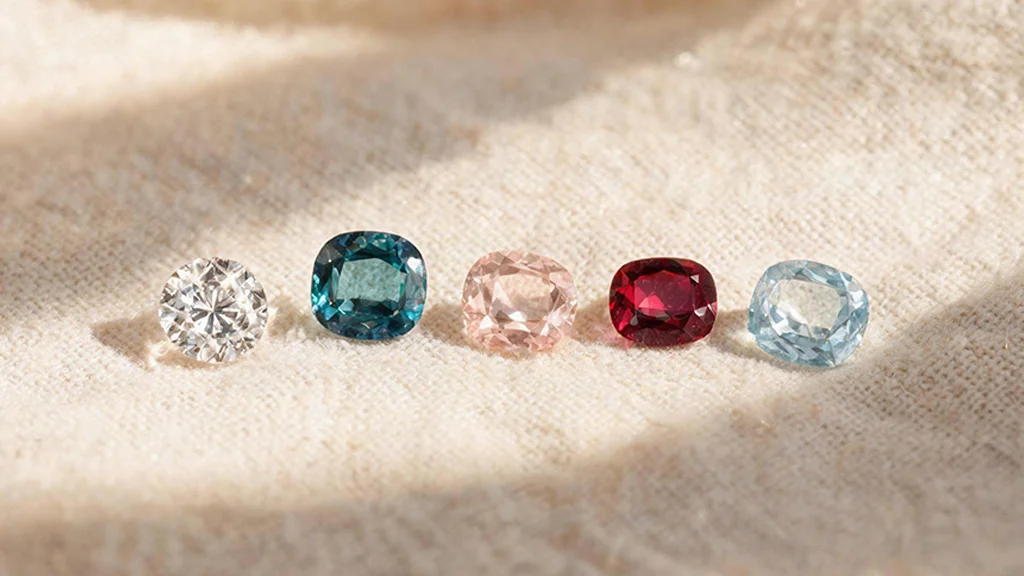
Table of Contents
A diamond alternative is any gemstone or material worn in place of a natural diamond — most often in an engagement ring, but increasingly in earrings, pendants, and tennis bracelets too. Some alternatives, like lab-grown diamonds, are chemically identical to mined diamonds. Others, like moissanite or cubic zirconia, are different materials that simply mimic a diamond's brilliance. A third group — sapphire, ruby, emerald, morganite — aren't trying to look like a diamond at all; they're chosen for their own color and character.
The right choice comes down to three questions: how the piece will be worn, what it costs in your currency, and how it holds up over years of daily use. This guide compares every major option side by side on hardness, price in USD, GBP, and EUR, origin, and best use case, then offers a decision framework so you can match a stone to what matters most to you rather than guessing.
Diamond Alternatives vs. Diamond Simulant vs. Lab-Grown Diamond
These three terms get used interchangeably, but they describe different things — and the distinction affects both price and how a retailer is legally required to describe the stone.
Diamond alternative
An umbrella term for any gem or material worn instead of a diamond. It includes lab-grown diamonds, simulants, and colored gemstones alike.
Diamond simulant
A material designed to imitate a diamond's appearance without sharing its chemical structure — moissanite, cubic zirconia, and white sapphire are all cut and set specifically to mimic a diamond's look.
Lab-grown diamond
Like a mined stone, a lab-grown diamond shares the same carbon crystal structure and nearly identical chemical, optical, and physical properties, which is why GIA notes the two can be indistinguishable to the eye without specialized instrumentation.
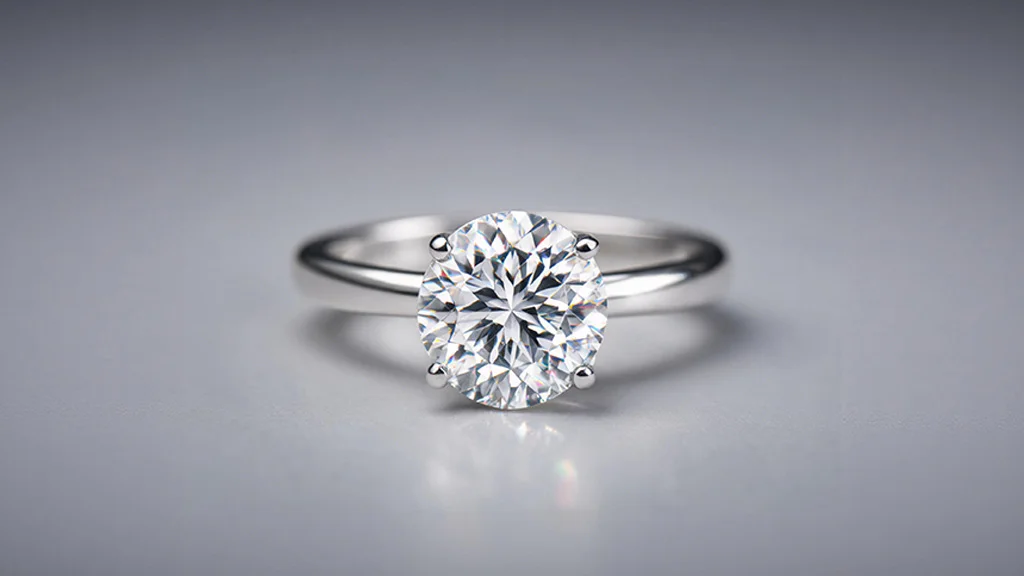
Diamond Alternatives Compared: Hardness, Price & Origin
The table below covers the ten most commonly requested diamond alternatives, compared on the factors that actually matter for everyday wear. Prices are indicative for a well-cut, 1-carat, near-colorless stone of commercial quality — natural colored gemstone prices vary far more widely by clarity and treatment than the lab-grown and simulant categories.
|
Stone |
Mohs Hardness |
Origin |
Approx. USD |
Best For |
|
|---|---|---|---|---|---|
|
Lab-Grown Diamond |
10 |
Lab |
$800–1,500 |
Closest match to a mined diamond |
|
|
Moissanite |
9.25 |
Lab |
$300–600 |
Everyday durability on a budget |
|
|
Sapphire (colored) |
9 |
Natural/Lab |
$400–2,000+ |
Color with real durability |
|
|
White Sapphire |
9 |
Natural/Lab |
$200–500 |
Understated sparkle, natural stone |
|
|
Ruby |
9 |
Natural |
$500–3,000+ |
Bold color, heirloom quality |
|
|
Alexandrite (lab) |
8.5 |
Lab |
$300–900 |
£235–710 |
Color-change novelty |
|
Spinel |
8 |
Natural |
$300–1,200 |
Underrated, durable color |
|
|
White/Blue Topaz |
8 |
Natural |
$50–200 |
Budget-friendly color or clarity |
|
|
Morganite / Aquamarine |
7.5–8 |
Natural |
$150–600 |
Soft romantic tones |
|
|
Cubic Zirconia (CZ) |
8–8.5 |
Lab |
$10–50 |
Placeholder or occasional-wear pieces |
A rule of thumb worth repeating to customers: gems rated 8 or above on the Mohs scale are considered suitable for daily wear in a ring; anything softer is better suited to earrings, pendants, or occasional-wear pieces where it won't be knocked against hard surfaces.
Colorless Diamond Alternatives
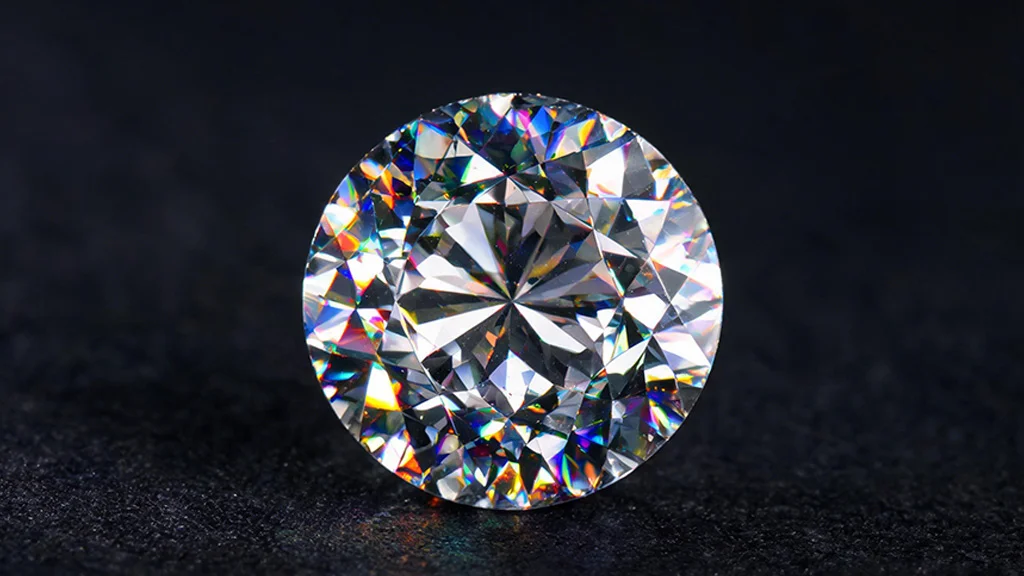
These are the stones customers reach for when they want a diamond's classic white sparkle without a diamond's price.
Lab-Grown Diamond
A lab-grown diamond is grown from a diamond seed under the same extreme heat and pressure conditions that form a natural diamond, compressed into weeks rather than a billion years. The result shares identical chemical composition, hardness, and optical performance with a mined stone — even trained gemologists cannot tell the two apart without specialized equipment, and grading follows the same 4Cs (cut, color, clarity, carat) used for natural diamonds. Because production isn't limited by geology, lab-grown diamonds typically cost 60–85% less than a comparable mined stone.
Moissanite
Moissanite is composed of silicon carbide and was first identified in a meteorite crater in 1893; because natural moissanite is vanishingly rare, virtually all moissanite sold today is lab-grown. At 9.25 on the Mohs scale it is the second-hardest gem material after diamond, making it an excellent choice for rings worn daily. Its refractive index is higher than diamond's, which gives it noticeably more rainbow-colored fire — a look some buyers love and others find too bright, especially in larger stones above 1.5 carats.
White Sapphire
White sapphire is colorless corundum — the same mineral family as blue sapphire and ruby — available in both natural and lab-grown form. At 9 on the Mohs scale it is extremely durable, though its brilliance is noticeably softer than a diamond's or moissanite's; buyers who want an understated, quieter sparkle at a lower price point tend to prefer it over harder-sparkling alternatives.
Cubic Zirconia (CZ)
Cubic zirconia is a synthetic zirconium dioxide crystal and remains the most affordable diamond look-alike on the market — a well-cut 1-carat CZ can cost a small fraction of even a modest moissanite. It displays strong fire and brilliance when new, but at 8–8.5 on the Mohs scale it scratches more easily than harder alternatives and is somewhat porous, meaning it absorbs oils and can dull with regular wear. CZ is best suited to fashion jewelry, placeholder rings, or pieces worn occasionally rather than an everyday engagement ring.
White Topaz
White topaz is a naturally colorless gemstone with a soft, glassy luster rather than a diamond's fiery brilliance. At 8 on the Mohs scale it is durable enough for regular wear but softer than sapphire or moissanite, and its facet edges can wear down over years of daily contact. It remains a popular pick for buyers who want a natural, budget-friendly colorless stone rather than a lab-grown simulant.
White Zircon
Often confused with cubic zirconia, white zircon is an entirely different, naturally occurring mineral with genuinely diamond-like dispersion — in fact, of all mined colorless gems, zircon comes closest to a diamond's fire. Its drawback is durability: at 6–7.5 on the Mohs scale, it chips and abrades more readily than harder alternatives, so it suits pendants and earrings better than a ring worn every day.
Colored Diamond Alternatives
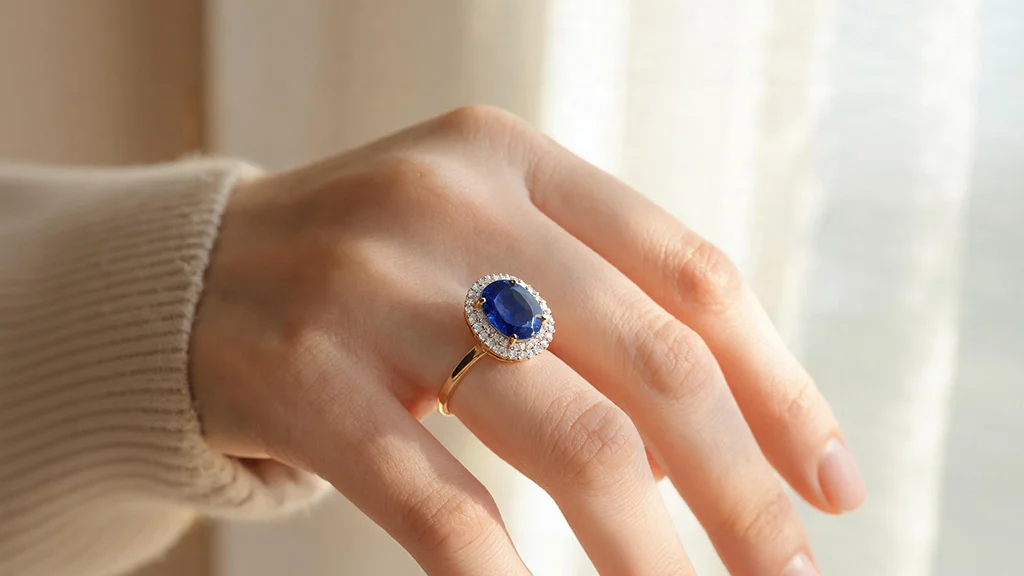
Not every buyer wants a diamond look-alike. These natural gemstones are chosen for their own color, history, and symbolism.
Sapphire
Beyond its familiar royal blue, sapphire occurs in nearly every color except red (which is classified as ruby). At 9 on the Mohs scale it is one of the hardest gems available after diamond and moissanite, and large, unheated blue sapphires can rival or exceed diamond prices — though most commercial-quality stones are considerably more affordable. As September's birthstone, sapphire also carries personal, gift-giving appeal beyond the engagement ring market.
Ruby
Ruby is the red variety of corundum, prized historically as one of the most valuable gems in the world. Fine, untreated Burmese rubies with strong "pigeon's blood" color can exceed diamond prices at comparable carat weight, while more common heat-treated stones are considerably more accessible. At 9 on the Mohs scale, ruby is highly durable and well suited to daily wear.
Emerald
Emerald's deep green comes from trace chromium and vanadium within the beryl crystal structure. It is noticeably softer than the other precious colored stones — 7.5 to 8 on the Mohs scale — and most emeralds are treated with oil or resin to improve clarity, a widely accepted industry practice. Because of natural inclusions and lower durability, emerald suits protective settings and gentler wear patterns better than everyday knocks.
Morganite
Morganite is the soft pink-to-peach variety of beryl, discovered in the early twentieth century and named for financier J.P. Morgan. At 7.5–8 on the Mohs scale it holds up reasonably well but benefits from a protective setting, and its warm tones are especially flattering set in rose gold.
Aquamarine
Aquamarine, March's birthstone, is a serene blue-to-blue-green variety of beryl valued for its clarity and calm color. At 7.5–8 on the Mohs scale it suits most jewelry types when properly set, and while generally more affordable than sapphire, fine examples with saturated color — particularly Santa Maria-type stones from Brazil — can command premium prices.
Alexandrite
Alexandrite is famous for shifting from green in daylight to reddish-purple under incandescent light. Natural alexandrite is exceptionally rare and expensive in larger sizes, but lab-grown alexandrite offers the same color-change phenomenon at a far more accessible price point, with a hardness of 8.5 that holds up well in daily wear.
Spinel
Spinel comes in nearly every color and was historically mistaken for ruby — the 14th-century "Black Prince's Ruby" set in the British Imperial State Crown is, in fact, a red spinel. At 8 on the Mohs scale it is durable and increasingly recognized in its own right, with soft grey and violet tones in particular offering an affordable, understated alternative to traditional gemstones.
How to Choose: A Decision Framework
Rather than comparing every stone from scratch, start from what matters most to you. Each path below points to a small set of stones worth focusing on.
Priority: Durability for Daily Wear
If the piece will be worn every day without exception, stay at 8 or above on the Mohs scale. Lab-grown diamond, moissanite, sapphire, and ruby are the strongest performers here; CZ, emerald, morganite, and aquamarine are better suited to occasional wear or protective settings.
Priority: Budget
Cubic zirconia offers the lowest cost by a wide margin, followed by white topaz and morganite. Moissanite delivers meaningfully more durability and brilliance for a modest step up in price, and is generally the best value-for-durability pick in this category.
Priority: Ethical & Environmental Sourcing
Lab-grown diamonds, moissanite, lab sapphire, and lab alexandrite avoid the land disturbance and labor questions associated with mining. Natural colored gemstones can also be sourced responsibly, but this depends on traceable supply chains and should be confirmed with your supplier rather than assumed.
Priority: Closest Possible Match to a Mined Diamond
Lab-grown diamond is the only alternative that is chemically, optically, and physically identical to a natural diamond. Moissanite is the closest visual substitute among true simulants, though its extra fire is noticeable to a trained eye, particularly above 1.5 carats.
From the Manufacturer's Bench: How Alternatives Are Actually Sourced
Most guides to diamond alternatives are written from the retail counter looking out. As an OEM manufacturer producing fine jewelry for retail and wholesale partners across the US, UK, and EU, we see the sourcing side of these decisions daily, and a few things are worth knowing before you buy or specify a stone.
- Lab-grown moissanite and CZ are manufactured to consistent, repeatable quality grades — batch-to-batch consistency is a genuine advantage over natural stones, where clarity and color vary piece to piece.
- Natural colored gemstones (sapphire, ruby, emerald, morganite, aquamarine) should be requested with documentation of treatment status — heat treatment, oiling, and fracture-filling are all standard industry practices, but should be disclosed, not discovered later.
- Setting choice should match hardness: prong settings suit harder stones (moissanite, sapphire, ruby) that can tolerate exposed edges, while bezel settings better protect softer stones (morganite, aquamarine, emerald) from chipping.
- For wholesale buyers, requesting third-party lab certification — GIA or equivalent — on any colored stone above 0.5 carats materially reduces dispute risk down the supply chain.
Frequently Asked Questions
For most buyers, yes — lab-grown diamond and moissanite in particular deliver durability and brilliance close to a mined diamond at a fraction of the price. The trade-off is resale value and the traditional prestige some buyers still associate with a natural mined stone.
Lab-grown diamond, at 10 on the Mohs scale, is identical in hardness to a mined diamond. Moissanite, at 9.25, is the hardest true simulant and the most practical choice for a daily-wear ring among non-diamond options.
Lab-grown options generally carry a smaller environmental and labor footprint than mined stones, since they avoid large-scale extraction. Natural gemstone alternatives can also be sourced responsibly, but this depends on the specific supply chain and should be confirmed with documentation rather than assumed from the stone type alone.
A trained gemologist can distinguish moissanite, CZ, and most simulants from a diamond using standard equipment such as a thermal/electrical conductivity tester, since these materials behave differently under testing even though they may look similar to the eye. Lab-grown diamonds are the exception — they require specialized screening equipment because they share a diamond's physical and optical properties.
Cubic zirconia is the least expensive option by a wide margin, often costing only a few dollars per carat for commercial quality. It trades affordability for durability, making it better suited to occasional-wear pieces than an everyday engagement ring.
Lab-grown diamond is not just a look-alike — it is chemically identical to a mined diamond. Among true simulants, moissanite is the closest visual match, though its higher dispersion gives it a distinctly more colorful sparkle in larger sizes.
 English