
19 Types of Chains: The Complete Guide to Chain Styles
- Written by Provence Team
- Updated on July 28, 2026
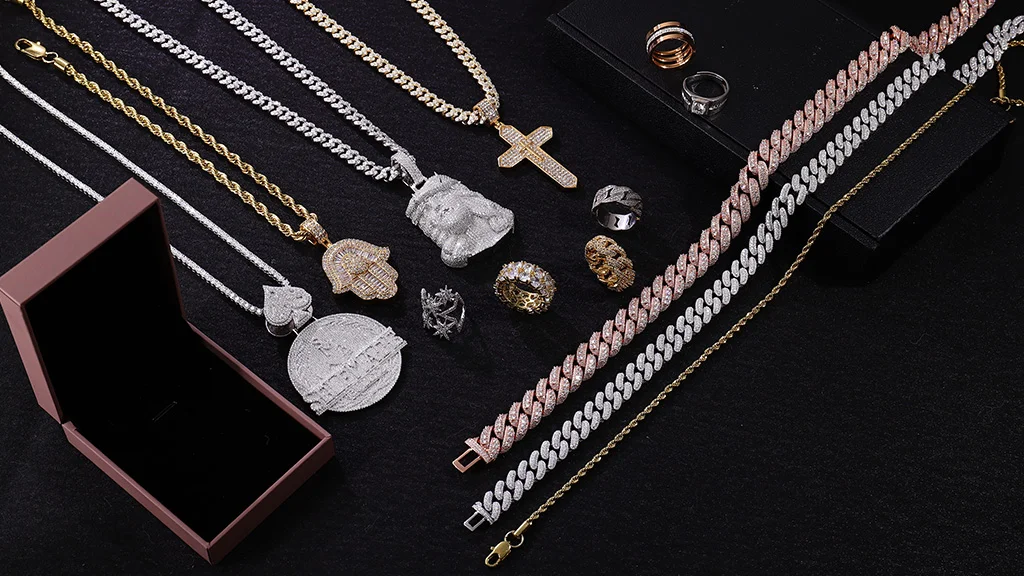
Table of Contents
Few pieces of jewelry carry as much quiet responsibility as a chain. It sits at the base of nearly every pendant, holds together every charm bracelet, and — worn alone — can be the whole outfit. Yet with more than two dozen distinct styles in circulation, each with its own construction, strength profile, and best use case, choosing the right one is rarely as simple as picking whatever looks nicest on a hanger.
This guide breaks down every major chain type in use today: how each one is actually made, how strong it is, what it pairs well with, and what it costs across US, UK, and EU markets. We've also pulled back the curtain on the manufacturing side — something most buying guides skip entirely — because understanding how a chain is built is the best way to judge whether it will actually hold up.
Quick-Reference Chain Comparison
Use this table to narrow your options fast, then jump to the full entry for details on construction and care.
|
Chain |
Best For |
Pendant Capacity |
Strength |
Kink-Resistance |
Price Tier |
Standalone? |
|---|---|---|---|---|---|---|
|
Cable Chain |
Everyday pendants |
Light–Med |
High |
Very High |
$ |
Yes |
|
Curb Chain |
Everyday wear, layering |
Medium |
Very High |
High |
$$ |
Yes |
|
Cuban Link |
Statement, men's jewelry |
Heavy |
Very High |
High |
$$$ |
Yes |
|
Rope Chain |
Heavier pendants, sparkle |
Medium–Heavy |
Very High |
Medium |
$$ |
Yes |
|
Franco Chain |
Heavy pendants |
Heavy |
Very High |
High |
$$$ |
Yes |
|
Figaro Chain |
Medallions, unisex |
Medium |
High |
High |
$$ |
Yes |
|
Box Chain |
Pendants, minimalist look |
Light–Med |
High |
High |
$$ |
Somewhat |
|
Wheat Chain |
Everyday pendants |
Light–Med |
High |
High |
$$ |
Somewhat |
|
Mariner Chain |
Pendants, layering |
Medium |
High |
High |
$$ |
Yes |
|
Paperclip Chain |
Layering, charms |
Light |
Medium |
Medium |
$ |
Somewhat |
|
Singapore Chain |
Light pendants |
Light |
Low-Med |
Medium |
$ |
Somewhat |
|
Omega Chain |
Standalone, evening wear |
N/A |
Med-High |
Low |
$$$ |
Yes |
|
Herringbone Chain |
Standalone statement |
N/A |
Low |
Low |
$$$ |
Yes |
|
Snake Chain |
Slide pendants |
Light |
Medium |
Low-Med |
$$ |
Somewhat |
|
Byzantine Chain |
Standalone statement |
N/A |
Med-High |
Medium |
$$$ |
Yes |
|
Popcorn Chain |
Standalone, texture |
Light |
Medium |
Medium |
$$ |
Yes |
|
Bead Chain |
Casual, light pendants |
Very Light |
Low |
Medium |
$ |
Somewhat |
|
Satellite Chain |
Layering |
Very Light |
Low-Med |
High |
$ |
Somewhat |
How Chains Are Actually Made
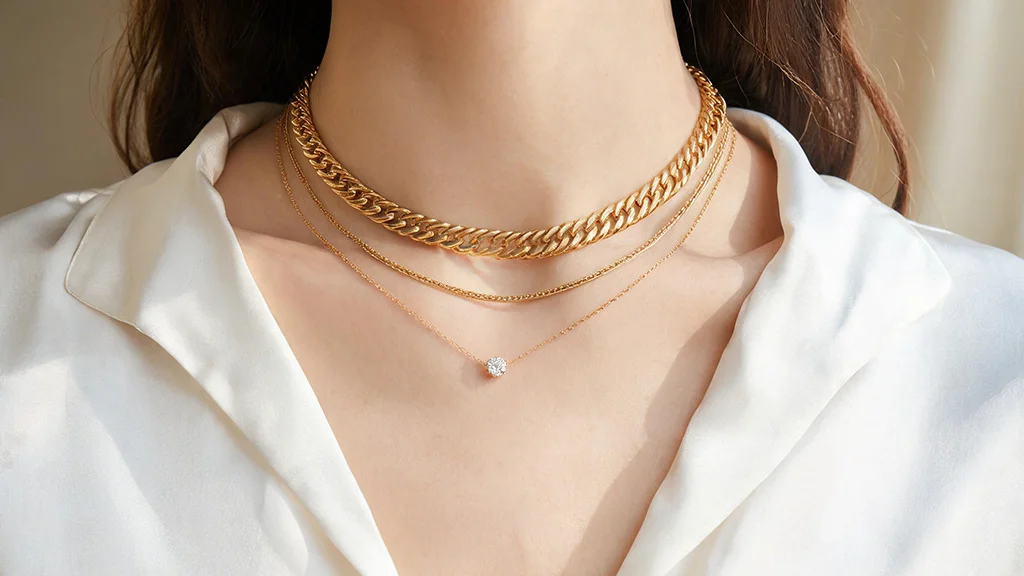
Every chain on the market starts as either wire or flat stock metal, and the method used to shape and join that metal determines almost everything about how the finished chain performs.
Stamped vs. Cast vs. Hand-Formed Links
Most fine chain — cable, curb, figaro, box — is machine-stamped from drawn wire, then link-formed and joined on high-speed chain-making machinery. This produces highly consistent, cost-efficient chain at scale. Heavier statement pieces, like dense Cuban links or Byzantine weaves, are more often cast or assembled by hand because the link geometry is too complex for standard stamping lines.
Soldered vs. Open Links
A soldered link is fused shut at the seam; an open (or "unsoldered") link is simply bent closed without fusing. Soldered construction is standard on quality chain because it prevents the chain from separating under tension. Open-link chain is cheaper to produce but far more prone to failure — a detail rarely disclosed on listing pages, but one that separates durable chain from chain that won't survive a year of daily wear.
Hollow vs. Solid Construction
Hollow chain uses less metal and therefore costs less and weighs less — appealing for larger-look pieces at accessible price points. The tradeoff is durability: hollow links dent, crush, and are difficult to repair invisibly. Solid chain costs more per gram but resists denting and holds its shape over years of wear. For heirloom-grade or heavy-pendant pieces, solid construction is worth the premium.
Diamond-Cutting
"Diamond-cut" doesn't refer to diamonds — it describes a faceting process where small notches are cut and polished into the links using a rotating diamond-tipped cutting tool. This adds sparkle by creating additional light-reflecting surfaces, but it also removes a small amount of metal from each link, which can slightly reduce a chain's strength at that point. Cable, rope, curb, box, and Singapore chains are the styles most commonly diamond-cut.
The Complete Types of Chains
Every entry below covers what the chain is, how it's built, its honest pros and cons, and what it's best suited for — so you can match construction to purpose rather than just style.
Cable Chain
Uniform oval or round links joined end-over-end at alternating angles — the design most people picture when they hear the word "chain."
Construction: Stamped or wire-formed links, typically soldered closed on quality pieces.
Pros
- Nearly impossible to kink
- Easiest chain style to repair or resize
- Pairs with virtually any pendant
Cons
- Common — won't make a piece stand out on its own
- Open-link versions can pull apart under stress
Best for: Pendants, everyday layering
Strength tier: High
Rolo Chain (Belcher)
A heavier cousin of the cable chain, with wider, rounded links that are flat on the inside and rounded on the outside.
Construction: Same alternating-link construction as cable, but with thicker wire gauge.
Pros
- Added strength over standard cable
- Reliable base for charm bracelets
Cons
- Costs more than a comparable cable chain due to extra metal
Best for: Charms, pendants, everyday wear
Strength tier: High
Box Chain (Venetian)
Flat wire folded into small cubes and linked together for a smooth, geometric, light-catching profile.
Construction: Square-profile wire folded and closed at each link.
Pros
- Strong relative to its slim appearance
- Resistant to kinking
- Clean, modern look
Cons
- Can pull hair
- Can stretch and stiffen if pulled hard
Best for: Pendants, modern minimalist styling
Strength tier: High
Rope Chain
Multiple strands of small links twisted together in a spiral, mimicking a length of rope.
Construction: Two or more interwoven link strands twisted under tension.
Pros
- One of the most durable constructions — redundant link paths
- Excellent sparkle from every angle
Cons
- Hollow versions are fragile and hard to repair
- Can pull hair if worn tightly
Best for: Statement pieces, heavier pendants
Strength tier: Very High
Singapore Chain
Flat, diamond-cut links twisted into a light, springy spiral for extra shimmer.
Construction: Twisted flat-link weave, usually diamond-cut for sparkle.
Pros
- Very lightweight and sparkly
- Distinctive, less common look
Cons
- Not suited to heavier pendants
- Can be difficult to repair invisibly
Best for: Delicate layering, light pendants
Strength tier: Low-Medium
Wheat Chain (Spiga)
Oval links braided together in one direction, resembling a stalk of wheat.
Construction: Multiple twisted oval links interlocked and woven.
Pros
- Flexible and resistant to kinking
- Strong, interlocking construction
Cons
- Uses more metal than comparably sized simple chains
- Grooves can trap dirt
Best for: Pendants, everyday wear
Strength tier: High
Paperclip Chain
Long, flat, elongated oval links resembling an office paperclip — a modern, minimalist staple.
Construction: Flat wire formed into elongated open links.
Pros
- Big look for relatively little metal (cost-efficient)
- Open links make attaching charms effortless
Cons
- Less structurally strong than a same-size cable chain
Best for: Layering, charm attachment, trend pieces
Strength tier: Medium
Curb Chain
Uniform links twisted and flattened to lie smooth against the skin — one of the most enduring chain styles worldwide.
Construction: Cable-style links twisted flat, often diamond-cut for shine.
Pros
- Very strong — flat links resist kinking
- Comfortable, low profile
- Easy to repair
Cons
- Heavier gauges get expensive fast
Best for: Everyday wear, pendants, layering
Strength tier: Very High
Cuban Link Chain
A tightly packed, rounded variant of the curb chain with a bold, weighty drape.
Construction: Densely grouped curb-style links, often cast rather than stamped for weight.
Pros
- Very strong, substantial feel
- Iconic, high-impact standalone look
Cons
- Heavy — can feel bulky with smaller pendants
- Among the more expensive styles due to metal volume
Best for: Statement pieces, men's jewelry
Strength tier: Very High
Figaro Chain
An Italian classic alternating one elongated link with several shorter round links for visual rhythm.
Construction: Curb-style twisted links in a repeating long-short pattern.
Pros
- Strong and kink-resistant like other curb variants
- Distinctive pattern reads as a statement piece alone
Cons
- Losing an individual link can be hard to replace exactly
Best for: Solo wear, medallions, unisex styling
Strength tier: High
Franco Chain
Densely interwoven V-shaped links forming a nearly solid, squared tube — engineered for heavy pendants.
Construction: Multiple curb-style links interwoven across planes.
Pros
- Excellent strength-to-weight ratio for heavy pendants
- Resists kinking and tangling
Cons
- Among the pricier styles due to dense construction
- Slightly less flexible than cable or curb
Best for: Heavy pendants, statement pieces
Strength tier: Very High
Mariner Chain (Anchor/Gucci Link)
Oval links each reinforced with a center bar, inspired by the chains used to moor ships.
Construction: Flat oval links with a soldered vertical bar through the center.
Pros
- Added strength from the center bar
- Versatile — works alone or with pendants
Cons
- Busy pattern can overpower delicate pendants
- Costs more than plain curb of the same gauge
Best for: Pendants, layering, nautical styling
Strength tier: High
Herringbone Chain
Short V-shaped links tightly overlapped into a wide, mirror-flat, light-catching band.
Construction: Flat links laid in an offset chevron pattern.
Pros
- Unmatched flat, reflective visual impact
- Big look for the amount of metal used
Cons
- Kinks easily and is difficult to fully repair
- Not designed to carry pendant weight
Best for: Standalone statement wear
Strength tier: Low
Omega Chain
Small metal plates crimped tightly to a mesh substructure for a smooth, structured, collar-like shape.
Construction: Metal plates installed over a wire mesh core, often with a slight curve to hold shape.
Pros
- Strongest of the flat-style chains
- Holds its shape well
Cons
- Limited flexibility — needs careful storage
- Only certain slide pendants work with it
Best for: Standalone or evening wear
Strength tier: Medium-High
Snake Chain
Tightly fitted curved plates forming a smooth, seamless tube resembling snakeskin.
Construction: Interlocking curved metal segments with no visible individual links.
Pros
- Very sleek, fluid drape
- Pendants slide and self-center easily
Cons
- Can kink and is hard to repair invisibly
- Not ideal for heavier pendants
Best for: Slide pendants, minimalist necklaces
Strength tier: Medium
Byzantine Chain
Oval and round links folded and interwoven into a thick, rope-like, richly textured pattern dating to antiquity.
Construction: Multiple interlocking jump rings woven in a repeating pattern.
Pros
- Striking, one-of-a-kind visual texture
- Surprisingly flexible despite density
Cons
- More costly and time-consuming to repair
- Heavier than its width suggests
Best for: Standalone statement necklaces and bracelets
Strength tier: Medium-High
Byzantine Chain
Oval and round links folded and interwoven into a thick, rope-like, richly textured pattern dating to antiquity.
Construction: Multiple interlocking jump rings woven in a repeating pattern.
Pros
- Striking, one-of-a-kind visual texture
- Surprisingly flexible despite density
Cons
- More costly and time-consuming to repair
- Heavier than its width suggests
Best for: Standalone statement necklaces and bracelets
Strength tier: Medium-High
Popcorn Chain
Small, tightly packed links that puff outward for a soft, bubbled, light-catching texture.
Construction: Rounded, hollow or semi-hollow links connected into a tubular strand.
Pros
- Looks more substantial than its actual weight
- High shimmer at narrow widths
Cons
- Hollow construction can dent under pressure
Best for: Standalone wear, texture layering
Strength tier: Medium
Bead Chain (Ball Chain)
Small metal spheres connected by short bars or bands — a casual, industrial-leaning style.
Construction: Spherical beads (hollow or solid) joined by connecting bars.
Pros
- Simple, distinctive, casual aesthetic
- Semi-flexible drape resists twisting
Cons
- One of the weaker chain constructions
- Difficult to repair if a bead is damaged
Best for: Light pendants, casual and layered looks
Strength tier: Low
Satellite Chain
Small beads spaced at intervals along a fine cable or link chain, giving a delicate, celestial look.
Construction: Fine base chain with beads fixed at regular intervals.
Pros
- Adds texture without bulk
- Excellent for layering
Cons
- Delicate — not built for heavier pendants
Best for: Layering, minimalist everyday wear
Strength tier: Low-Medium
Strength & Durability, Ranked
No other guide on the market ranks chains head-to-head on strength — most only describe individual styles in isolation. Here's how the major chain types stack up against one another, based on link construction and known failure points.
|
Strength Tier |
Chains |
|---|---|
|
Very High |
Cuban Link, Rope, Franco, Curb, Cable (solid link) |
|
High |
Figaro, Mariner, Wheat, Box, Byzantine |
|
Medium |
Paperclip, Omega, Snake, Popcorn |
|
Low–Medium |
Singapore, Bead, Satellite |
|
Low |
Herringbone |
How to Choose the Right Chain
By Pendant Weight
Light pendants (under 1 gram, small charms): cable, box, satellite, Singapore, or bead chain all work comfortably. Medium pendants (1–3 grams, standard solitaire or small medallion): curb, wheat, mariner, or rolo chain. Heavy pendants (3+ grams, large medallions, chunky gemstone pieces): rope, Franco, or Cuban link — anything with redundant or densely interlocked link paths.
By Neckline and Outfit
Deep V-necks and open collars suit longer, fluid chains like rope or wheat. Crewnecks and boat necks pair well with structured, closer-fitting styles like omega or paperclip. Off-shoulder and scoop necklines flatter flat, wide chains like herringbone or omega worn as a collar.
By Skin Sensitivity
Anyone with nickel sensitivity should look for chains explicitly marked nickel-free or made in 14k+ gold, sterling silver, or platinum rather than base-metal alloys. This matters more than chain style — any construction can be made in a nickel-releasing alloy if not properly specified.
By Budget and Metal Type
10k gold offers the lowest gold cost per gram but the palest color and softest wear resistance among golds. 14k balances durability, color, and price for everyday chains. 18k delivers the richest color at a meaningfully higher price. Sterling silver is the most budget-friendly precious metal option but requires more frequent polishing to manage tarnish.
Chain Length & Sizing (US, UK & EU)
Chain length conventions are usually quoted in inches in the US and UK, but EU buyers often expect centimeters. Use this quick conversion for common lengths: 16" (choker) = 40.5cm · 18" (princess) = 45.5cm · 20" (matinee) = 51cm · 24" (opera) = 61cm · 30"+ (rope length) = 76cm+.
As a general styling rule: choker-length chains (14–16") sit at the base of the neck and suit high necklines; princess length (17–19") is the most universally flattering and versatile; matinee (20–24") works well for layering or business wear; and opera length (28"+) is designed to be worn long or doubled.
Regulatory & Compliance Notes for Chain Buyers
Chain purity and safety claims are governed by different rules depending on market:
- United States — gold and silver quality marks (e.g. "14K," "925") are regulated under FTC 16 CFR Part 23, which sets tolerances for how closely a marked purity must match actual metal content.
- United Kingdom — items over set weight thresholds must carry an approved hallmark under the Hallmarking Act 1973, applied by one of the UK's assay offices.
- European Union — nickel release from any part of jewelry intended for prolonged skin contact is restricted under EU REACH Annex XVII, which is why nickel-free construction matters for chains sold into EU markets.
Manufacturing Chains at Scale: A Note From Provence Jewellery
Provence Jewellery designs and manufactures solid gold, lab-grown diamond, moissanite, and gemstone jewelry as an OEM/ODM partner to brands across the US, UK, and EU. On the chain side, that means direct control over link construction, solder quality, and hollow-vs-solid specification — the exact variables covered in this guide that most retail buying guides gloss over. Whether you're a consumer choosing a chain that will hold up to daily wear, or a brand sourcing chain necklaces at volume, construction quality is the difference between a piece that lasts and one that doesn't.
For retail buyers: explore our chain necklace collections in solid gold and gold-plated finishes. For brands and wholesalers: our manufacturing team can produce custom chain styles, gauges, and finishes to your specification, with full compliance documentation for US, UK, and EU markets.
Frequently Asked Questions
Cuban link, rope, and Franco chains are generally considered the strongest constructions, thanks to dense or redundant link paths that distribute stress across multiple points rather than a single weak link.
Rope, Franco, curb, and Cuban link chains all handle heavier pendants well. Avoid flat, delicate styles like herringbone, snake, or Singapore chain for anything beyond a light charm.
Cable, curb, box, wheat, and Franco chains are among the most kink-resistant because their link structures distribute bending stress evenly. Herringbone, snake, and omega chains are the most prone to kinking and need careful storage.
14k gold is the most common choice for everyday chains — it balances durability and color better than 10k, at a lower price point than 18k. 18k is worth the premium for pieces meant to be worn less frequently or for their richer color.
Both use the same alternating oval-link construction, but rolo (belcher) chains use thicker, wider links, giving a heavier look and added strength compared to a standard cable chain of the same length.
Slightly. The faceting process removes a small amount of metal from each link, which can marginally reduce strength at that point — though on well-made chain in a durable construction like curb or cable, the difference is negligible for normal wear.
 English