Jewelry Certifications Explained: 2026 Buyer’s Guide
- Written by Provence Team
- Updated on July 29, 2026
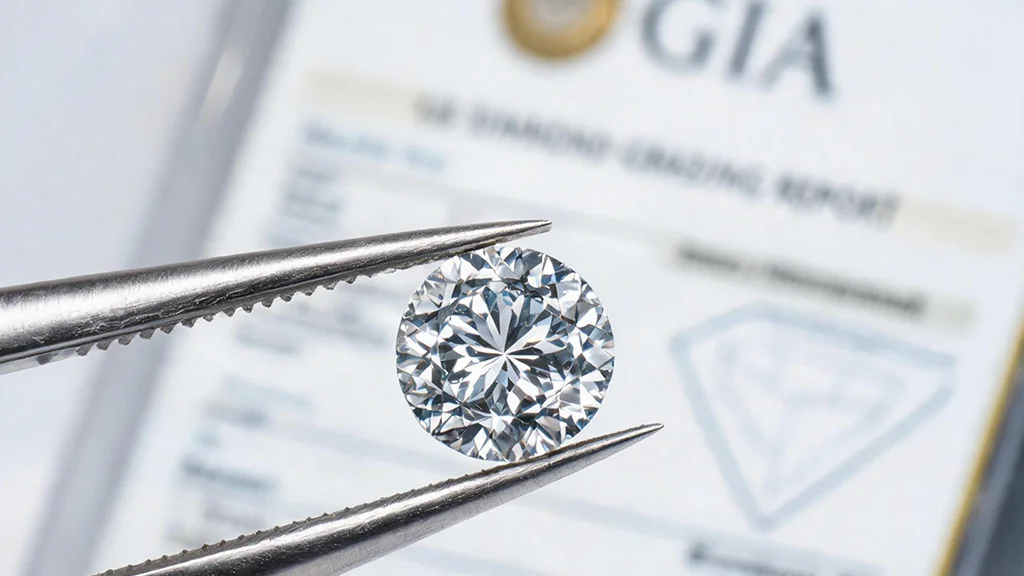
Table of Contents
Every year, buyers pay for a diamond that turns out to grade lower than promised, or a "solid gold" piece that is really a thin plate over brass. The gap between what a listing says and what a piece actually is gets closed by one thing: independent, third-party verification. That's what a jewelry certification is — and it's the single most reliable tool a buyer or a brand has for converting a seller's claim into a checkable fact.
For manufacturers like Provence Jewellery, certifications work the same way in reverse. A brand sourcing solid gold, lab-grown diamonds, moissanite, or natural gemstones from an OEM/ODM partner needs the same independent proof — not just for the finished piece, but for the factory that made it.
This guide breaks certifications into three categories that map to the rest of the article. Keep them in mind as a mental model:
- Gemstone certificate — what the stone IS (grading: cut, color, clarity, carat)
- Metal hallmark — what the metal IS MADE OF (purity: gold karat, sterling silver, platinum)
- Ethical / factory certification — HOW and WHERE it was sourced and made (RJC, SEDEX, ISO, Kimberley Process)
Gemstone Grading Labs: Which Certification Actually Holds Its Value
The laboratory behind a certificate determines almost everything about how much that certificate is worth — its resale trust, insurance utility, and resistance to fraud. Not all labs grade to the same standard, and the differences are large enough to change what you should pay.
GIA — The Benchmark for Natural Diamonds
The Gemological Institute of America (GIA) is a nonprofit founded in 1931 and the creator of the 4Cs grading system (cut, color, clarity, carat) still used across the industry today. Because GIA is nonprofit, it has no financial incentive to inflate a grade to please a paying retailer — which is a large part of why its certificates carry a meaningful resale premium over comparable grades from other labs. For a natural diamond bought for investment, insurance, or a significant gift, GIA is the reference standard.
IGI — The Standard for Lab-Grown Diamonds
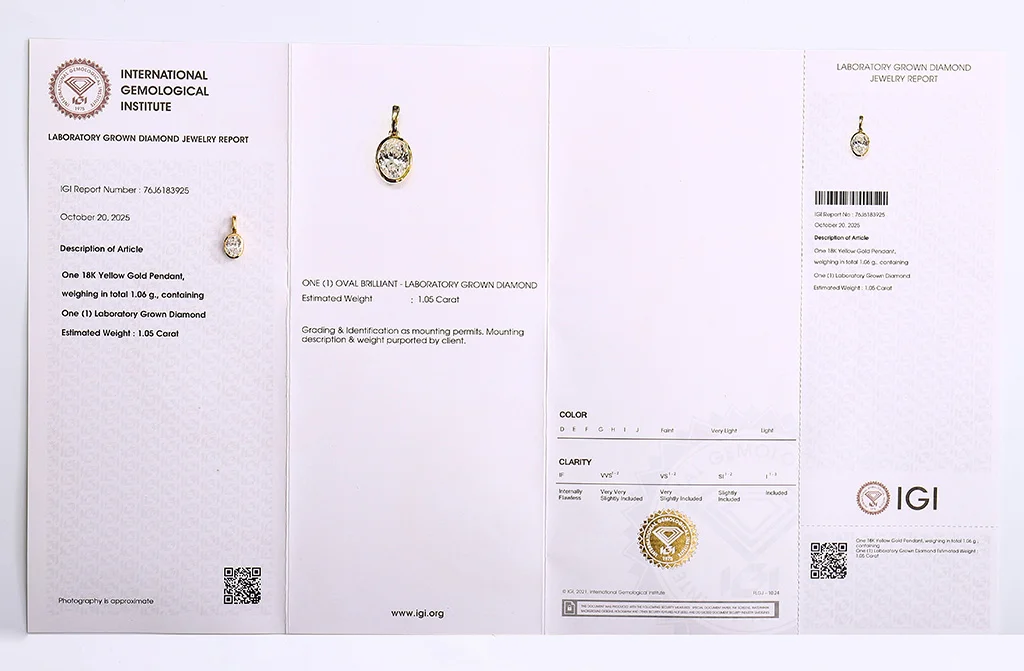
The International Gemological Institute (IGI), a for-profit lab founded in 1975, is not a lesser GIA — it serves a different segment of the market and has become the dominant certification body for lab-grown diamonds specifically. IGI grading tends to run slightly more generous than GIA on color and clarity for comparable natural stones, which typically shows up as a modest cost advantage for buyers. For lab-grown diamonds and mid-range engagement rings, IGI is now the market's working standard.
AGS — The Precision Choice for Cut and Light Performance
The American Gem Society (AGS), a US-based nonprofit, consolidated its grading operations with GIA in 2024; existing AGS certificates remain valid and recognized. AGS's distinguishing strength is cut precision — its 0–10 numerical cut scale (0 being Ideal) is more granular than the letter-grade systems most labs use, and its ASET light-performance analysis evaluates brilliance and light leakage directly. Buyers prioritizing visual fire and brilliance over carat weight alone should look for an AGS report.
GSI, EGL, and Other Labs — Where to Apply Caution
Grading standards outside the GIA/IGI/AGS tier vary widely. GSI is affordable and common in retail settings but grades less rigorously than the top tier. EGL grading has a well-documented history of running looser than independent appraisals confirm, sometimes by a full grade or more. The practical screening rule: if a lab has no public, searchable online verification database, treat any certificate it issues as unverifiable and price accordingly.
|
Lab |
Type |
Best For |
Grading Strictness |
Market Recognition |
|---|---|---|---|---|
|
GIA |
Nonprofit |
Natural diamonds |
Strictest |
Highest, global |
|
IGI |
For-profit |
Lab-grown diamonds |
Slightly lenient |
Strong, global |
|
AGS |
Nonprofit (GIA-affiliated) |
Cut / light performance |
Precision-focused |
High, primarily US |
|
GSI |
For-profit |
Budget retail |
Moderate |
Moderate |
|
EGL |
For-profit |
Use with caution |
Inconsistent |
Low |
Metal Hallmarks: Decoding the Stamp Inside Your Jewelry
The stamp inside a ring or on a clasp isn't decorative — in most jurisdictions it's a legal statement about the metal content of the piece. As a manufacturer, this is where Provence Jewellery has the most direct, first-hand expertise: every hallmark below is stamped and XRF-tested on our own production floor before a piece ships.
Gold Hallmarks and Purity Grades
Gold purity is expressed as a karat (K) fraction or, internationally, as a three-digit numeric equivalent — both are legally recognized:
|
Karat Stamp |
Numeric Stamp |
Gold Purity |
|---|---|---|
|
10K |
417 |
41.7% |
|
14K |
585 |
58.3% |
|
18K |
750 |
75.0% |
|
22K |
916 |
91.6% |
|
24K |
999 |
99.9% |
One distinction buyers and wholesale partners frequently get wrong: Gold Plated, Gold Filled, and Gold Vermeil are three legally separate categories under US FTC rules, not interchangeable marketing terms.
- Gold Plated — a thin electroplated layer over any base metal; no minimum thickness or purity is required
- Gold Filled — marked "1/20 14K GF"; at least 5% of the item's total weight must be solid gold mechanically bonded to the base metal
- Gold Vermeil — a sterling silver base plated with a minimum 10K gold layer at least 2.5 microns thick; this is the FTC-compliant option for the vermeil label
Silver, Platinum, and Stainless Steel Hallmarks
Sterling silver is 92.5% pure silver alloyed with 7.5% copper — the copper isn't a shortcut, it's what gives the metal enough hardness to hold a stone setting securely. Every Provence Jewellery piece is stamped 925 and XRF-tested by batch before it leaves our Wuzhou facility.
|
Metal |
Hallmark Stamp |
Purity Guaranteed |
How to Verify |
|---|---|---|---|
|
Sterling Silver |
925 |
92.5% silver (Ag) |
XRF test or assay certificate |
|
Fine Silver |
999 |
99.9% silver (Ag) |
XRF test |
|
18K Gold |
750 |
75% gold (Au) |
Hallmark + independent assay |
|
Gold Vermeil |
925 + karat mark |
Silver base, ≥2.5μm gold |
FTC-compliant disclosure required |
|
Platinum |
PT950 / PT900 |
95% / 90% platinum (Pt) |
Weight test + hallmark |
|
Stainless Steel |
316L / 304 |
Hypoallergenic (316L) |
Grade stamp on clasp/finding |
A piece with no recognizable hallmark carries no verifiable purity guarantee, regardless of what the seller states verbally. For independent confirmation beyond a visual stamp check, XRF (X-Ray Fluorescence) testing is the professional standard — and should be performed by an independent appraiser, not the seller's own device.
Factory & Supply Chain Certifications — The Manufacturer's View
This is the layer most consumer buying guides skip, and it's the one that matters most if you're a brand sourcing from an OEM/ODM partner. A gemstone certificate and a metal hallmark tell you what a specific piece is. A factory certification tells you whether the business that made it operates responsibly, consistently, and legally — across every piece it produces, not just the one in front of you.
Responsible Jewelry Council (RJC)
RJC certification is the broadest ethical credential available to a jewelry business. It covers human rights, labor conditions, environmental impact, and business ethics across the full supply chain, and it requires a mandatory independent third-party audit — it cannot be self-declared. For brands selling into the US and EU, RJC membership from a manufacturing partner is increasingly a baseline expectation rather than a differentiator.
SEDEX
SEDEX (Supplier Ethical Data Exchange) is a global, not-for-profit data-sharing platform used by major retailers to assess a supplier's labor standards, health and safety practices, and environmental performance. Many large US and UK retailers have required SEDEX membership from their suppliers since 2024. If a manufacturer can't produce SEDEX documentation on request, that's worth raising before signing a sourcing agreement.
BSCI
The Business Social Compliance Initiative (BSCI) is a supply-chain code of conduct covering fair wages, safe working hours, and the prohibition of child labor and discrimination, verified through regular factory audits.
ISO 9001 and ISO 14001
ISO 9001 certifies a quality management system — consistency in process and product output, independently audited. ISO 14001 certifies environmental management — waste reduction, resource efficiency, and regulatory compliance — and is increasingly requested by EU retail buyers specifically.
What to Ask a Manufacturing Partner
If you're a brand vetting an OEM/ODM supplier for private-label or wholesale production, these are the credentials worth confirming before you commit volume:
- RJC membership status and audit date
- SEDEX registration number (if selling to UK/US large-format retail)
- ISO 9001 / ISO 14001 certificates, with issue and expiry dates
- Traceable material sourcing — recycled vs. newly mined content, and supplier documentation
- In-house QC process — specifically, is metal purity XRF-tested by batch, or only spot-checked?
Ethical Sourcing Certifications: Kimberley Process, Fairmined, and Beyond
The Kimberley Process
The Kimberley Process Certification Scheme (KPCS) is a government-administered system established in 2003 to keep conflict diamonds out of the mainstream rough diamond market. It's genuinely effective within its scope — but that scope is narrow: Kimberley Process certifies rough diamonds only. It does not cover colored gemstones, metals, or cut and polished stones. Many buying guides gloss over that limitation; it's worth knowing before you assume a "conflict-free" label covers an entire piece of jewelry.
Fairmined and Fair Trade Gold
Fairmined Gold is a third-party certification for artisanal and small-scale gold mining, covering fair wages to miners, environmental protection standards, and a zero child labor requirement. Fairtrade Certified Gold operates on similar principles and was the first ethical certification system created specifically for gold. Together with Kimberley Process, these two credentials cover the stone and the metal side of ethical sourcing respectively — they're complementary, not competing.
The EU Conflict Minerals Regulation
EU enforcement of conflict-minerals due diligence has tightened in recent years. EU importers of tin, tantalum, tungsten, and gold now face documented supply-chain due diligence requirements. For a brand selling into European markets, this is a compliance obligation, not an optional differentiator — and it's a question worth putting directly to any manufacturing partner.
Regional Compliance: What Changes by Market
A jewelry certification guide aimed at a genuinely global audience has to account for the fact that metal-safety and hallmarking rules differ by region. Here's what applies where, in brief:
|
Region |
Regulation |
What It Covers |
|---|---|---|
|
United States |
FTC 16 CFR Part 23 (Jewelry Guides) |
Legal definitions of gold plated, gold filled, and vermeil; karat marking rules |
|
United States |
California Proposition 65 |
Nickel content disclosure and exposure limits |
|
United Kingdom |
Hallmarking Act 1973 |
Mandatory hallmarking for gold, silver, and platinum items above set weight thresholds |
|
European Union |
REACH Annex XVII (Nickel Directive) |
Nickel release limit of ≤0.5 µg/cm²/week for items in direct, prolonged skin contact |
|
European Union |
EN 1811 |
Reference test method for nickel release from post assemblies and body-contact jewelry |
|
India |
BIS Hallmark |
Mandatory purity hallmarking for gold and silver jewelry sold domestically |
If you're a brand selling across more than one of these markets, the hallmark and disclosure requirements don't automatically transfer — a piece compliant for US sale isn't automatically compliant for EU sale. Confirm with your manufacturer which regional standard your production run is being finished to.
How to Verify a Jewelry Certificate Before You Buy
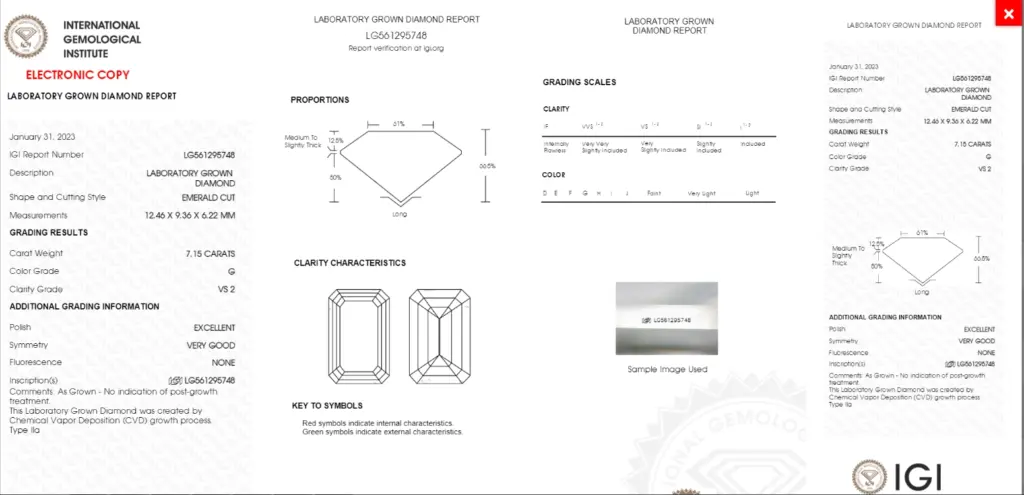
A certificate is only useful if it's genuine. In 2026, that check matters more than it used to — convincing AI-generated certificate images are circulating on resale marketplaces, and they only fail one test: checking the report number directly on the issuing lab's own portal.
- Locate the certificate number printed on the physical document — typically top right or in the header
- Go directly to the lab's own website, not a third-party link — GIA: gia.edu/report-check · IGI: igi.org/verify · AGS: americangemsociety.org/verify
- Enter the report number in the lab's official verification tool — full grading data should appear on screen
- Ask to examine the stone under 10x loupe or microscope — the laser inscription on a diamond's girdle should match the certificate number exactly
- Compare the stated grades (color, clarity, carat) against the physical stone with the seller present
- If the certificate includes a QR code, scan it yourself — never let the seller scan it on your behalf
If the seller declines any of the above, treat that refusal as disqualifying
Red Flags: When a "Certified" Claim Isn't What It Seems
Ordered from most to least serious:
- Certificate issued by the selling retailer itself, not an independent lab
- The lab's name returns no results in any public verification database
- The report number doesn't resolve on the lab's own portal
- A diamond's laser inscription doesn't match the certificate number under magnification
- "Certified" is used with no lab name or report number attached
- An EGL certificate is presented as equivalent to a GIA or IGI report — it isn't
- The seller won't allow time or independent access to verify the document
- An AI-generated certificate image — convincing on screen, but the report number is fabricated or belongs to a different stone entirely
What Certification Means for Resale, Insurance, and Appraisal
The Correct Order: Certificate First
Buyers commonly get this sequence backward, seeking an appraisal first and treating a certificate as optional. It works the other way:
- Obtain a lab certificate (GIA / IGI / AGS) for the gemstone
- Present that certificate to an independent certified appraiser — not the seller
- The appraiser issues a replacement-value report based on the verified grade
- Submit the appraisal to your insurer; the policy is issued at the verified value
Why It Affects Resale Value
Independently certified stones consistently resell for more than uncertified equivalents of the same claimed grade, because a buyer on the secondary market can verify the claim instead of trusting it. Without a certificate, an insurer can dispute a quality claim at the moment of loss; with one, you hold independent proof they can't argue against.
What a Certificate Cannot Tell You
- It grades the stone — not the setting craftsmanship, prong integrity, or metalwork quality
- It doesn't confirm the asking price is fair — compare the same grade across several vendors
- It doesn't cover physical damage, wear, or loss after purchase — that requires insurance
- It doesn't guarantee a stone hasn't been swapped after grading — laser inscription matching addresses this
It reflects the stone's condition at the time of grading — later treatments may not appear on the original report
Checklists
Buyer's Pre-Purchase Checklist
- Gemstone has a certificate from GIA, IGI, or AGS — not issued by the retailer
- Certificate number verifies successfully on the lab's own portal
- Diamond laser inscription matches the report number under a loupe
- Metal carries a recognized hallmark: 925 / 750 / PT950 / 316L
- Seller or brand holds at least one ethical sourcing credential: RJC, Kimberley Process, or Fairmined
- A current-year independent appraisal exists for insurance purposes
- None of the Section 8 red flags are present
Brand / Wholesale Sourcing Checklist
- Manufacturer holds RJC membership and can provide the audit date
- SEDEX registration is available if selling into large-format US/UK retail
- ISO 9001 and ISO 14001 certificates are current, not expired
- Material sourcing is traceable — recycled content ratio and supplier documentation on file
- Metal purity is XRF-tested by production batch, not only spot-checked
- Manufacturer can confirm which regional hallmarking standard (US FTC / UK Hallmarking Act / EU REACH) a given production run is finished to
Frequently Asked Questions
No. A certificate verifies quality grades, not market pricing. Compare the same grade across at least three independent vendors before committing.
GIA certificates don't expire, but re-examination is recommended if a stone has been re-set, altered, or damaged since the original grading — the grade may have changed.
Yes. Independent labs accept loose or mounted stones after purchase; cost typically runs from about $50 to $150 depending on stone type and lab.
IGI is the recognized standard for lab-grown resale and insurance, given its dominant share of lab-grown certification. GIA remains the reference standard for natural diamonds.
A certificate grades intrinsic quality — color, clarity, cut, carat. An appraisal estimates current retail replacement value. Both are needed for insurance; neither substitutes for the other.
It means the stone was sourced under Kimberley Process compliance, verified not to have financed armed conflict. The limitation: Kimberley Process covers rough diamonds only, not colored stones or metals.
At minimum: RJC membership, Kimberley Process documentation for diamond products, and 925/750 hallmarking backed by batch XRF testing. For EU retail specifically, SEDEX registration and ISO 14001 are increasingly requested.
Kimberley Process is government-issued and certifies rough diamond origin only. Fairmined certifies the artisanal gold mining process. One covers diamonds, the other covers gold — they're complementary, not competing credentials.
Certification isn't bureaucracy — it's the mechanism that converts a seller's word into independently verified fact before money changes hands. Whether you're buying a single engagement ring or sourcing a full private-label collection from an OEM partner, the underlying discipline is the same: check the lab, check the hallmark, check the audit trail, and don't proceed on a claim you can't independently confirm.
 English