
Platinum vs Palladium: The Complete Comparison Guide
- Written by Provence Team
- Updated on August 14, 2026
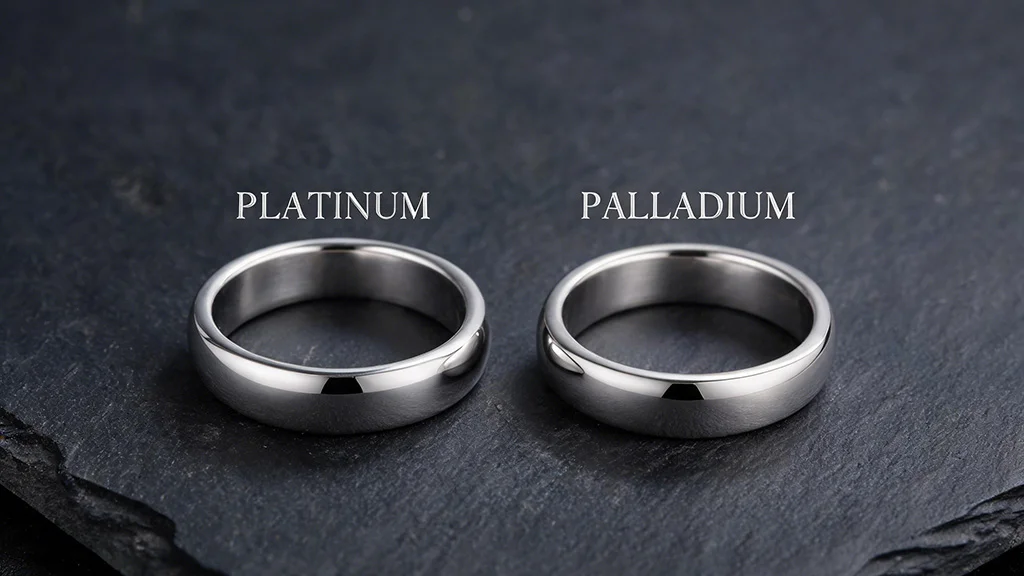
Table of Contents
Platinum and palladium are both naturally white, hypoallergenic precious metals from the same platinum group — which is exactly why they're so often confused. But once you look past the surface, the two metals diverge in density, hardness, price, and how they perform in a piece of jewelry worn every day for decades.
Quick answer: Platinum is denser, heavier, and has a longer track record in fine jewelry, making it the safer choice for engagement rings, diamond settings, and heirloom pieces. Palladium is lighter, more affordable to manufacture in most years, and a strong choice for those who want a naturally white metal without platinum's weight or price. Neither tarnishes, and both are genuinely hypoallergenic.
Below, we break down exactly how they compare — with the kind of detail you can only get from people who actually cast, alloy, and set these metals for a living.
Platinum vs Palladium at a Glance
|
Property |
Platinum |
Palladium |
|---|---|---|
|
Density |
~21.4 g/cm³ |
~12.0 g/cm³ (about 45% lighter) |
|
Hardness (Vickers) |
~90–100 HV (pure); alloyed jewelry-grade higher |
~140–170 HV (pure); harder than platinum |
|
Melting point |
1,768°C (3,214°F) |
1,555°C (2,831°F) |
|
Common jewelry purity |
950 Pt (95%), sometimes 900 Pt |
950 Pd (95%), 500 Pd in some markets |
|
Color |
Bright white, slightly whiter/brighter |
White with a faint grey undertone |
|
Hypoallergenic |
Yes |
Yes |
|
Tarnish resistance |
Excellent — develops a patina, doesn't corrode |
Excellent — same patina behavior |
|
Typical weight vs 14K gold ring of same design |
~75% heavier |
Comparable to 14K gold |
|
Global hallmarking |
Mandatory in UK/EU above minimum weight; no federal requirement in the US |
Recognized as a precious metal for hallmarking since 2010 in the UK |
|
Relative rarity |
Rare — annual mine supply is small |
Rarer than platinum, but priced similarly due to lower jewelry demand |
Figures are typical ranges for jewelry-grade alloys; exact values vary by alloy composition and manufacturer.
What Is Platinum?
Platinum is a dense, naturally white precious metal that has been used in jewelry for centuries — pre-Columbian artisans in Central America worked with platinum-gold alloys long before it was formally documented in Europe in the 1500s. Today it's prized for three things: its weight (which reads as quality and durability), its resistance to tarnish and corrosion, and its status as the traditional benchmark for fine white-metal jewelry.
Roughly a third of the platinum mined each year goes into jewelry, with most of the rest used in automotive catalytic converters and industrial applications — a factor that has a real effect on price, as we'll cover below.
What Is Palladium?
Palladium is also a platinum-group metal, but it's a distinct element — not an alloy of platinum. It was first isolated in 1803 and didn't see meaningful use in jewelry until 1939, when it was used to help alloy white gold. Palladium wasn't formally recognized as a precious metal for hallmarking purposes in the UK until January 2010, which is part of why it still feels like a "newer" option to many buyers, even though the metal itself has been known for over two centuries.
Palladium is roughly 45% less dense than platinum, which is the single biggest factor separating the two metals in both weight and price behavior.
Key Differences Between Platinum and Palladium
1. Weight and Density
This is the most noticeable physical difference. Platinum is one of the densest metals used in jewelry; palladium is one of the lightest of the naturally white metals. A palladium ring in the same design as a platinum ring will feel noticeably lighter in the hand — closer to the heft of a 14K gold ring — while platinum runs about 75% heavier than 14K gold in the same design.
Once a ring is actually on the finger, most wearers stop noticing the weight difference within days. But if you're choosing between a bold, chunky design and want that reassuring heft, platinum delivers it. If you prefer a piece that disappears on the hand, palladium's lighter feel is an advantage rather than a drawback.
2. Hardness and Scratch Resistance
Palladium is harder than platinum on standard hardness scales, which means it resists surface scratching slightly better in day-to-day wear. Platinum, however, is more malleable — easier to work, more forgiving during setting and resizing, and less prone to cracking under stress.
In practice, both metals develop a patina rather than losing material when scratched: the metal displaces rather than flaking off, which is why jewelers polish rather than "repair" scratched platinum or palladium jewelry. Many people come to like the soft, matte patina finish; both can be re-polished to a mirror shine at any point.
3. Color and Shine
Both metals are naturally white and never require rhodium plating, unlike white gold. Platinum typically reads as marginally brighter and whiter; palladium has a very faint grey undertone that's virtually undetectable to the untrained eye unless placed side-by-side with platinum under strong light. For a global buyer choosing based on photos alone, this difference is negligible.
4. Price and Market Behavior
Pricing is where platinum and palladium have genuinely swapped positions over the past decade, and it's worth understanding why.
For most of the 20th century, platinum was the more expensive, higher-status metal, and palladium was the budget alternative — often costing roughly half as much per finished ring. That changed after 2014. Tightening emissions regulations increased industrial demand for palladium in catalytic converters (used more heavily in gasoline engines), while platinum demand (used more in diesel engines) softened as diesel vehicle sales declined in key markets. Palladium's price climbed from the $850/oz range toward — and at times above — $2,000–$3,400/oz during periods of supply concern, including a sharp spike after 2022 tied to geopolitical disruption in Russia, one of the largest palladium producers. Platinum, meanwhile, spent years trading well below its historical highs.
The practical effect for jewelry buyers: because platinum is much denser, a platinum ring requires significantly more metal by weight than the same design in palladium. So even in years when palladium's per-ounce price is higher than platinum's, a finished palladium ring can still cost less — or about the same — as the equivalent platinum piece, because so much less metal is needed to make it.
As with any precious metal, spot prices shift regularly — check current platinum and palladium spot prices before making a purchase decision, and ask your jeweler how that translates to finished-piece pricing for the specific design you're considering.
5. Hypoallergenic Properties
Both platinum and palladium are genuinely hypoallergenic and nickel-free, making them excellent choices for buyers with sensitive skin or known metal allergies. Platinum has the longer clinical and jewelry-industry track record simply because it's been used for longer; if you have a documented severe metal allergy, it's still worth a quick conversation with your doctor or allergist regardless of which metal you choose.
6. Purity Standards and Hallmarking (What Global Buyers Should Know)
Purity marking conventions differ by market, which matters if you're shopping — or manufacturing — for a global audience:
- United States: No federal hallmarking requirement, but jewelry-grade platinum is typically sold as 950 (95% pure) or 900, and palladium as 950.
- United Kingdom: Hallmarking is a legal requirement for platinum and palladium jewelry above a minimum weight threshold, assayed at one of the UK's official assay offices. Palladium has been an officially hallmarked precious metal in the UK since January 2010.
- European Union: Standards vary by member state, but 950 purity is the common jewelry-grade standard for both metals across the EU.
If you're buying — or sourcing — internationally, always confirm the purity mark and ask for documentation, particularly for palladium, since it's a newer entrant to formal hallmarking systems in some regions.
Which Is Better for Jewelry? A Manufacturer's Perspective
From a production standpoint, the two metals behave differently enough that the "right" choice depends on the piece:
- Engagement rings and diamond settings: Platinum's malleability makes it easier to work into secure prongs and settings that hold stones firmly over decades of wear, which is why it remains the default choice for fine diamond engagement rings worldwide. It's also more forgiving during resizing.
- Wedding bands and everyday pieces: Palladium's lighter weight and harder surface make it a practical, comfortable option for simple bands worn daily, especially for buyers who find platinum's weight noticeable or who want a lower-cost naturally white metal without white gold's plating maintenance.
- Men's jewelry: Platinum's density is often marketed toward men's rings specifically because the added heft reads as more substantial, though this is purely a matter of preference.
- Statement and cocktail pieces with pavé or intricate stone-setting: Platinum's workability generally makes it the more reliable choice for detailed, labor-intensive designs.
- Casting and fabrication: Both metals are cast or die-struck rather than hand-formed, unlike gold or silver — both are relatively brittle to work by hand and require CAD/CAM modeling or wax-carving for custom pieces. Palladium requires specific casting expertise and equipment; not every workshop is equipped to cast it well, which is worth confirming with your manufacturer or jeweler before committing to a design.
Sustainability and Sourcing
Neither platinum nor palladium currently has a widely available, certified Fairtrade supply chain comparable to what exists for gold — small-scale fairtrade platinum sources have historically been limited and are not consistently available. Recycled platinum and palladium are increasingly common alternatives that reduce demand for newly mined metal, and buyers who prioritize ethical sourcing should ask their jeweler directly about the origin and recycled content of the metal used in a specific piece, rather than assuming any platinum-group metal is automatically low-impact.
Platinum vs Palladium: Pros and Cons
Platinum
- ✅ Denser, heavier feel that reads as premium
- ✅ More malleable — better for detailed settings and easier resizing
- ✅ Longest track record in fine jewelry; universally recognized
- ❌ More expensive per finished piece in most design categories
- ❌ Heavier — can feel substantial on smaller frames or delicate designs
Palladium
- ✅ Lighter, comfortable for everyday wear
- ✅ Harder — slightly better scratch resistance
- ✅ Often more affordable per finished ring due to lower density
- ❌ Requires specialized casting expertise — not every workshop can work with it well
- ❌ Less widely recognized by buyers; hallmarking still newer in some markets
Frequently Asked Questions
Per troy ounce, palladium's spot price has been higher than platinum's for extended periods since the mid-2010s. But because platinum is roughly 75% denser, a finished platinum ring needs more metal by weight — so palladium jewelry is often priced similarly to, or lower than, an equivalent platinum piece.
No. Like platinum, palladium is a noble metal that resists oxidation and corrosion and will not tarnish or discolor. It develops a matte "patina" from light surface scratching over time, which can be polished back to a shine at any point.
Yes, but it requires a jeweler experienced specifically with palladium, since it behaves differently under heat than platinum or gold and demands the right equipment. Always confirm your jeweler or manufacturer has palladium-specific casting and resizing capability before ordering.
Palladium is not an inferior metal — it's a genuine platinum-group metal with excellent hardness, tarnish resistance, and hypoallergenic properties. Its lower historical profile in jewelry is due to more recent adoption (formal hallmarking only since 2010 in the UK) and limited workshop expertise, not any deficiency in the metal itself.
Platinum is the more common choice for engagement rings because its malleability makes it easier to set stones securely and resize over time. Palladium is a solid alternative for buyers who prioritize a lighter feel or budget, particularly for simpler settings.
The Final Thought
Platinum and palladium are both excellent, genuinely white, hypoallergenic precious metals — the right choice comes down to weight preference, budget, and the specific design you have in mind. Platinum remains the standard for fine diamond settings and heirloom pieces thanks to its malleability and long track record. Palladium is a smart, lighter-weight alternative, particularly for simpler bands and buyers who want a naturally white metal without platinum's density or price.
Working with a manufacturer that has hands-on casting experience in both metals — rather than one that only stocks whichever is currently cheaper — is the real differentiator when it comes to a piece that holds up for decades.
 English