
Types of Diamond Inclusions: The Complete Guide
- Written by Provence Team
- Updated on August 17, 2026
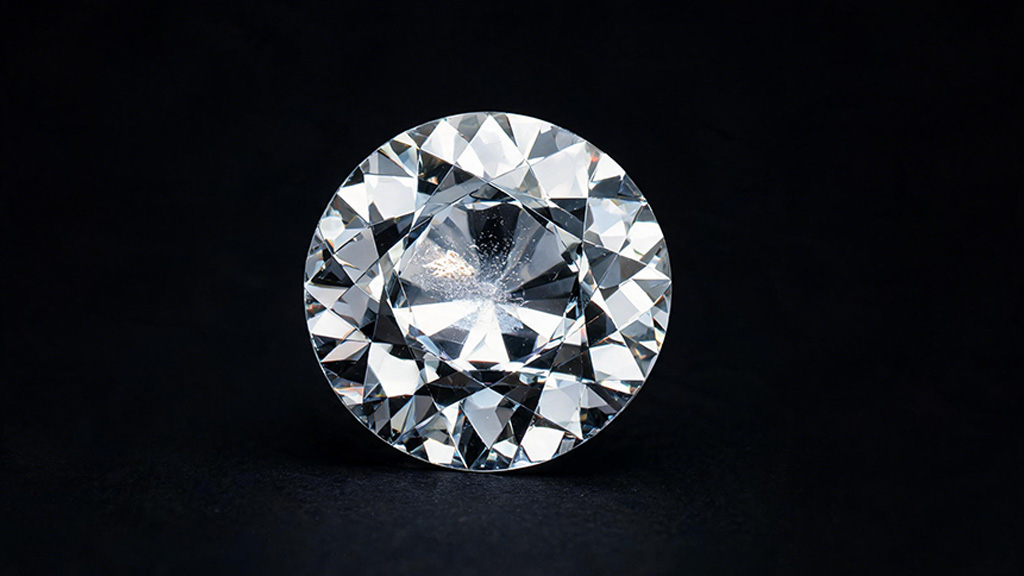
Table of Contents
Look closely at almost any diamond under magnification and you'll find something inside it: a tiny crystal, a wisp of cloud, a hairline feather. These are inclusions, and rather than being flaws to fear, they are the natural fingerprint of how a diamond formed billions of years ago, or in a matter of weeks inside a growth chamber.
Understanding the different types of diamond inclusions helps you read a grading report with confidence, avoid the inclusions that actually matter, and stop overpaying to eliminate the ones that don't. This guide covers all major inclusion types, how each affects appearance and durability, how inclusions are graded, and what buyers and jewelry businesses alike should know before choosing a stone.
What Are Diamond Inclusions?
A diamond inclusion is an internal characteristic, a crystal, fracture, or growth irregularity, that becomes trapped inside the stone as it forms. Diamonds are roughly 99.95% pure carbon; the remaining trace elements and structural imperfections are what create inclusions.
Inclusions form under the same intense heat and pressure whether a diamond grows in the earth's mantle over a billion years or inside a lab-grown CVD or HPHT reactor over several weeks. Because the physical and chemical process is nearly identical, both mined and lab-grown diamonds develop inclusions, and neither type is inherently more or less included than the other.
Inclusions vs. Blemishes
Inclusions and blemishes are often used interchangeably, but they describe different things:
|
Feature |
Location |
Examples |
|---|---|---|
|
Inclusion |
Internal — inside the stone |
Feather, crystal, cloud, pinpoint |
|
Blemish |
External — on the surface |
Scratch, nick, polish line, extra facet |
Both factor into a diamond's overall clarity grade, one of the 4Cs, but only inclusions are covered in depth in this guide.
Complete Chart of Diamond Inclusion Types
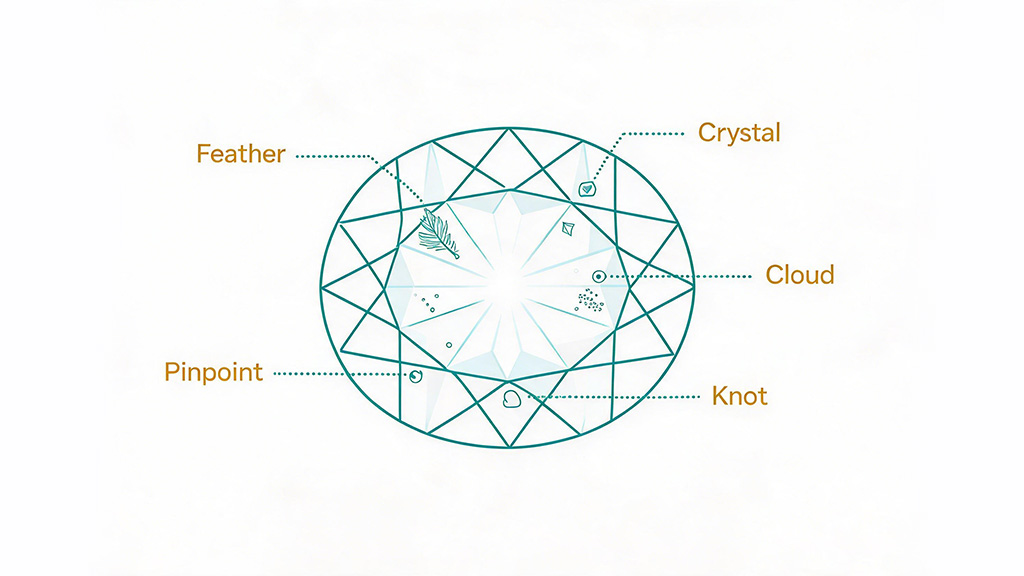
Diamond grading reports recognize 16+ distinct clarity characteristics. The table below summarizes each one before the detailed breakdown further down.
|
Inclusion Type |
Appearance |
Visibility Risk |
Durability Risk |
|---|---|---|---|
|
Bearding |
Hair-like lines from the girdle |
Medium |
Low–Medium |
|
Bruise |
Tiny impact mark with root-like feathers |
Low–Medium |
Medium |
|
Cavity |
Small surface hole or pit |
Medium |
Medium–High |
|
Chip |
Small break at an edge or point |
Low–Medium |
High |
|
Cloud |
Cluster of pinpoints, hazy area |
Depends on size |
Low |
|
Crystal |
Embedded mineral crystal |
Medium–High |
Low |
|
Etch Channel |
Hollow, tunnel-like groove |
Low |
Low |
|
Feather |
Fracture, white and wispy |
Medium–High |
High if surface-reaching |
|
Grain Center |
Small area of crystal distortion |
Low–Medium |
Low |
|
Indented Natural |
Original rough surface dipping below the polish |
Low |
Low |
|
Internal Graining |
Faint lines, angles, or haze |
Low–High (varies) |
Low |
|
Knot |
Crystal reaching the surface |
Medium–High |
Medium |
|
Laser Drill Hole |
Man-made microscopic tunnel |
Medium |
Low–Medium |
|
Needle |
Thin, rod-shaped crystal |
Low |
Low |
|
Pinpoint |
Tiny white or black dot |
Low |
None |
|
Twinning Wisp |
Ribbon of pinpoints, clouds, and crystals |
Medium |
Low |
Diamond Inclusion Types Explained
Bearding
Bearding consists of fine, hair-like lines that extend from the girdle into the stone. It typically results from too much speed or pressure during the cutting and bruting process. Light bearding is essentially invisible once set; heavy bearding gives the girdle a fuzzy, cloudy look.
Bruise
A bruise is a tiny area of impact, often surrounded by very small root-like feathers, usually occurring at a facet junction. Under magnification it can resemble a small starburst. Minor bruises are cosmetic; larger ones near an edge can affect structural integrity.
Cavity
A cavity is a small hole or opening at the surface, often created when an included crystal falls out during polishing. Cavities near the girdle rarely matter, but ones near the table or pavilion can trap dirt and oil, making them more visible and more likely to affect sparkle over time.
Chip
A chip is a shallow surface break, usually from wear or an accidental knock rather than the formation process itself. Chips near the girdle or a pointed corner (as in princess or marquise cuts) are the ones to watch, since they can worsen with everyday impact.
Cloud
A cloud is a tight grouping of three or more pinpoints that together create a hazy, milky appearance rather than being individually distinguishable. Small, off-center clouds are harmless. Large or centrally located clouds can visibly reduce brilliance and are one of the more common reasons a diamond fails to look eye-clean.
Crystal
A crystal is simply another mineral trapped inside the diamond during formation. It can be colorless (another diamond crystal), black (carbon), reddish (garnet), or greenish (peridot). Dark crystals positioned under the table are the most visible and have the greatest impact on clarity.
Etch Channel
Etch channels are hollow, tunnel-like inclusions formed when corrosive fluids interact with the diamond during its growth. They read as thin grooves under magnification, are usually small and internal, and rarely affect appearance, durability, or price.
Feather
A feather is trade terminology for an internal fracture or crack, named for its wispy, feather-like look. Feathers are one of the most common inclusions and are usually invisible to the naked eye. The exception is a feather that reaches the surface or sits near an edge or point, which can make the diamond more prone to chipping.
Grain Center / Internal Graining
Graining results from irregular crystal growth and appears as faint lines, angles, or curves, sometimes with a milky or reflective quality. Most graining is minor and has no visible effect; heavier graining in a prominent position can soften a diamond's transparency and brilliance.
Indented Natural
An indented natural is a small portion of the original rough diamond's surface that was deliberately left in place, dipping below the polished surface, to preserve carat weight during cutting. These are almost always near the girdle and disappear once the stone is set.
Knot
A knot is an included crystal that extends all the way to the polished surface. Unlike a fully internal crystal, a knot can disrupt the finish and, depending on size and position, is one of the few inclusion types usually visible to the unaided eye.
Laser Drill Hole
This is a man-made inclusion, not a natural one. Technicians use a laser to reach and lighten a dark internal crystal, leaving behind a microscopically thin tunnel. Laser drilling is an accepted industry practice but must be disclosed on the grading report and at point of sale.
Needle
A needle is a thin, rod-shaped crystal inclusion. A single needle is essentially imperceptible; a dense cluster of needles can create a faint haze, similar in effect to a cloud.
Pinpoint
Pinpoints are the smallest and most common inclusion, tiny white or black dots only a few micrometers across. Individually they carry no durability risk and are nearly impossible to see without 10x magnification. Grouped together, they become a cloud.
Twinning Wisp
Twinning wisps are ribbon-like features formed during crystal growth, combining pinpoints, clouds, needles, and crystals along a twinning plane. They're more common in fancy shapes such as marquise and pear cuts and can range from purely cosmetic to a mild reduction in light performance depending on density and placement.
Are Diamond Inclusions Visible to the Naked Eye?
Most inclusions are only detectable under 10x magnification, the standard used by gemologists and grading labs. A stone with inclusions that don't disrupt its appearance to the unaided eye is described as "eye-clean," and eye-clean diamonds are commonly found well below the top clarity grades.
Visibility depends on three factors working together:
- Size — larger inclusions catch more light and are easier to spot.
- Color and contrast — dark or high-contrast inclusions stand out more than colorless ones.
- Location — inclusions under the table are far more visible than those near the girdle or pavilion.
- Carat weight — larger diamonds have larger facets, which can make the same relative inclusion more visible.
Inclusion Visibility by Diamond Shape and Cut
The way a diamond is faceted changes how easily inclusions can be spotted. Brilliant cuts scatter light in a way that helps conceal inclusions; step cuts, with their long, open facets, make them easier to see.
|
Diamond Shape |
Facet Style |
Inclusion Visibility |
|---|---|---|
|
Round |
Brilliant |
Low |
|
Princess |
Brilliant |
Low–Medium |
|
Cushion |
Brilliant |
Low–Medium |
|
Oval |
Brilliant |
Low–Medium |
|
Radiant |
Modified brilliant |
Low–Medium |
|
Emerald |
Step |
High |
|
Asscher |
Step |
High |
For step-cut diamonds, prioritize clarity grade over the other 4Cs; for brilliant cuts, a lower clarity grade can still look completely clean.
How Inclusions Affect the Clarity Grade
Clarity grading evaluates the size, number, position, nature, and color of inclusions (and blemishes) under 10x magnification. Fewer and less noticeable inclusions produce a higher grade.
|
Grade |
Meaning |
Typical Inclusions |
|---|---|---|
|
FL |
Flawless |
None visible under 10x magnification, internally or externally |
|
IF |
Internally Flawless |
No inclusions; minor blemishes only |
|
VVS1 / VVS2 |
Very, Very Slightly Included |
Minute inclusions, extremely difficult to see even for a trained grader |
|
VS1 / VS2 |
Very Slightly Included |
Minor inclusions, typically not visible without magnification |
|
SI1 / SI2 |
Slightly Included |
Noticeable under magnification; often still eye-clean |
|
I1 / I2 / I3 |
Included |
Visible to the naked eye; may affect transparency or durability |
Flawless diamonds are extremely rare in both mined and lab-grown material. For most buyers, the VS to SI range offers the best balance of visual quality and value, since the majority of inclusions in that range simply aren't visible without a loupe.
How a Manufacturer Grades and Selects Inclusions
Retail buying guides describe clarity from the perspective of a single purchase. Sourcing at manufacturing scale is a different exercise. When Provence Jewellery's QC team screens parcels of lab-grown diamonds for a wholesale or OEM production run, grading has to be consistent across dozens or hundreds of stones destined for matching pieces, not just "does this one stone look clean."
In practice, that means:
- Screening for eye-clean appearance at the SI1–VS2 range, which delivers the best cost-to-appearance ratio for both branded retail lines and private-label programs.
- Rejecting stones with surface-reaching feathers, cavities, or knots regardless of clarity grade, since these pose a durability risk during setting and stone-by-stone tumbling in production.
- Matching inclusion character (not just grade) across melee and side stones so a finished piece reads as visually consistent under normal lighting.
- Verifying laser-drilling or other treatment disclosure on incoming parcels before stones enter production, to stay compliant with retail disclosure requirements in destination markets.
This is the kind of quality control layer a factory-direct manufacturer can offer that a pure retailer typically cannot, because it happens before the stone is ever set.
Inclusions in Lab-Grown Diamonds and Moissanite
Lab-Grown Diamonds
Lab-grown diamonds form under the same heat-and-pressure principles as mined diamonds and therefore develop the same range of natural inclusion types: clouds, pinpoints, feathers, crystals, and the rest. One difference is specific to growth method: diamonds grown via HPHT can contain trace metallic inclusions from the metal flux used in the process, which can make the stone slightly magnetic. This does not occur in mined diamonds or in CVD-grown lab diamonds.
Moissanite and Cubic Zirconia
Moissanite, a lab-created silicon carbide, can contain small internal characteristics of its own, though the grading language differs from diamond clarity grading and moissanite is typically sold at consistently high clarity. Cubic zirconia is lab-grown from start to finish under tightly controlled conditions and essentially never contains natural-style inclusions, which is one reason CZ can be produced at a uniformly flawless appearance.
Which Inclusions to Avoid
Most inclusions have no meaningful effect on beauty or durability. A smaller number are worth paying closer attention to.
|
Consideration |
What to Watch For |
Why It Matters |
|---|---|---|
|
Surface-reaching |
Feathers, chips, or cavities that break the surface |
Can lead to chipping or cleaving under impact |
|
Central position |
Inclusions under the table |
Most visible position on the stone |
|
Color and contrast |
Dark or black inclusions |
Stand out more against the diamond's brilliance |
|
Clustering |
Multiple inclusions grouped together |
Can create a hazy, less brilliant look even if individually minor |
|
Shape sensitivity |
Feathers near points on marquise, pear, or princess cuts |
Elevated chipping risk at the vulnerable tip |
A Growing Trend: Salt & Pepper and Included Diamonds
Not every buyer wants an inclusion-free stone. Salt and pepper diamonds, prized for a heavy, evenly distributed mix of black and white inclusions, have become a popular choice for buyers seeking a one-of-a-kind, low-fuss alternative to a traditional white diamond. No two salt and pepper diamonds look alike, which is precisely the appeal: the inclusions are the design feature, not a compromise.
How Ring Settings Can Hide Inclusions
The right setting does real work in concealing minor inclusions:
- Bezel settings encircle the stone and can hide inclusions near the girdle or pavilion edge.
- Halo settings surround the center stone with smaller accent diamonds, adding sparkle that distracts the eye from minor clarity characteristics.
- Prong settings can be angled to cover a specific inclusion near the girdle without needing a full bezel.
Frequently Asked Questions
Nearly all do. Only flawless (FL) diamonds have no visible inclusions or blemishes under 10x magnification, and they are extremely rare in both mined and lab-grown material.
Most do not. Fully internal inclusions like pinpoints, clouds, and needles have no effect on durability. Surface-reaching inclusions such as certain feathers, cavities, or chips are the exception and can make a stone more vulnerable to chipping.
No. Inclusions form only during the diamond's growth and do not grow, spread, or change after the stone is cut and polished.
Not inherently. Both form under comparable heat-and-pressure conditions, so both develop a similar range of inclusion types and frequency.
Inclusions themselves can't be removed, only concealed. Laser drilling and fracture filling can reduce the visibility of certain inclusions, but both must be disclosed at sale.
Only in some cases. Large or centrally located inclusions, especially clouds or dark crystals under the table, can reduce brilliance. Most inclusions are too small or too well-positioned to have any visible effect.
Pinpoints and feathers are the two most frequently seen inclusion types across both mined and lab-grown diamonds.
No. Since virtually every diamond has them, the goal is choosing a stone where the inclusions present are small, well-positioned, and not surface-reaching, not finding one with none at all.
 English