
White Gold vs Rhodium Plating: The Complete Guide in 2026
- Written by Provence Team
- Updated on August 21, 2026
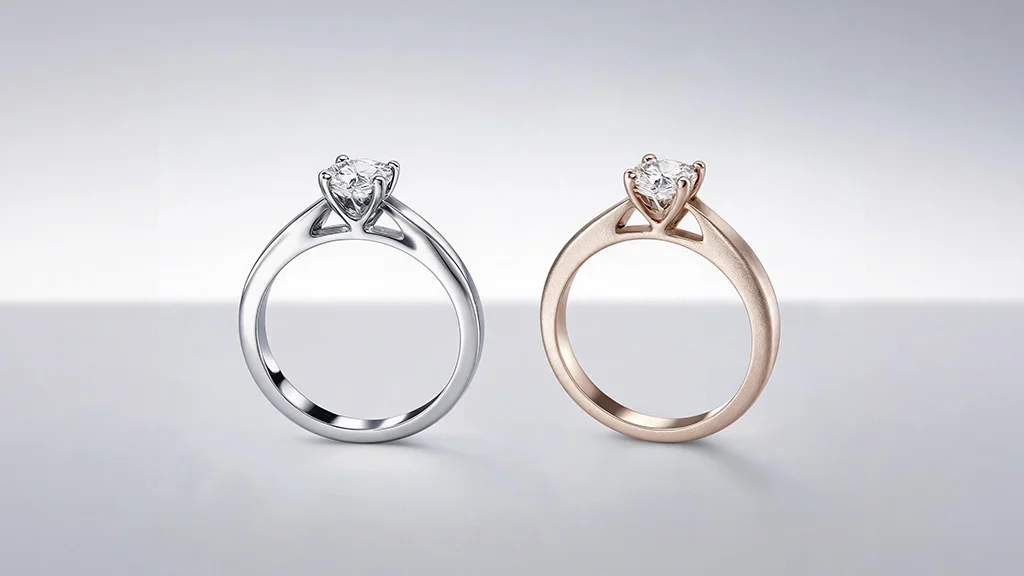
Table of Contents
If you've ever shopped for a white gold engagement ring, you've probably run into a surprising fact: white gold isn't naturally white. That bright, mirror-like shine you see on most white gold jewelry actually comes from a separate metal — rhodium — plated over the top. Understanding the difference between white gold and rhodium isn't just trivia; it affects how your jewelry looks over time, how much maintenance it needs, and even whether it's a safe choice if you have sensitive skin.
In this guide, we'll break down exactly what white gold and rhodium are, how they work together, what your jewelry looks like with and without plating, and how to decide which option is right for you — wherever in the world you're shopping.
What Is White Gold, Really?
Pure gold is yellow. There's no such thing as naturally white gold — it's always an alloy, meaning pure gold is melted together with other white metals to shift its color and improve its strength. Depending on the manufacturer, white gold alloys typically use one of two approaches:
- Palladium-white alloys: gold mixed with palladium and silver. These tend to be naturally whiter and are nickel-free, making them a safer choice for people with metal sensitivities.
- Nickel-white alloys: gold mixed with nickel, zinc, and copper. These are more affordable and slightly harder, but nickel can trigger allergic reactions in sensitive individuals.
The karat of the gold also affects the final color. Since karat measures the percentage of pure gold in the alloy, a higher karat means more yellow gold content — and a stronger yellow undertone before plating:
- 10K white gold (41.7% gold): palest, most silvery-white before plating
- 14K white gold (58.5% gold): light champagne or warm gray tone before plating
- 18K white gold (75% gold): noticeably warmer, creamier tone before plating
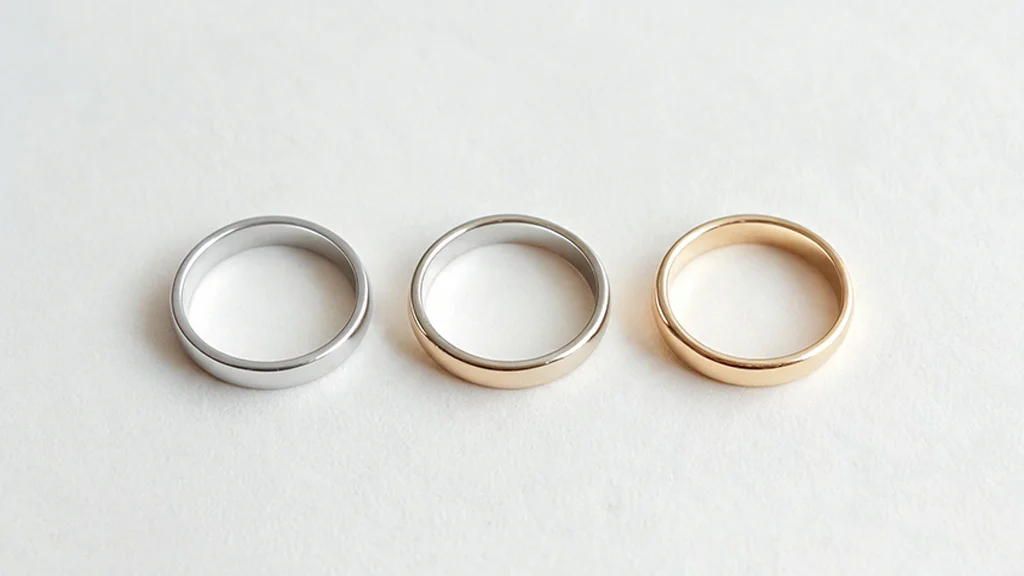
This is a detail many buyers never hear about until their rhodium plating starts to wear off — the "yellow" that peeks through isn't a defect, it's simply the true color of the gold alloy underneath.
What Is Rhodium and Rhodium Plating?
Rhodium is a rare, silvery-white metal in the platinum group. It's actually rarer — and often more expensive per ounce — than gold or platinum itself. Rhodium's properties make it uniquely suited for plating jewelry:
- Extremely reflective, giving jewelry a bright, mirror-like shine
- Highly resistant to scratching, corrosion, and tarnish
- Naturally hypoallergenic, since it contains no nickel or common allergens
Because rhodium is too hard and brittle to be shaped into jewelry on its own, it's applied as an ultra-thin plating layer instead — typically between 0.75 and 2.0 microns thick, applied through an electroplating process. The jewelry piece is submerged in a rhodium solution, and an electric current bonds a fine layer of rhodium molecules to the surface. Despite being thinner than a human hair, this layer is what gives white gold jewelry its crisp, icy-white finish.
Does White Gold Have to Be Rhodium Plated?
Technically, no. White gold jewelry can be worn and sold without any rhodium plating at all. To understand why plating became the industry standard, it helps to know a bit of history: white gold was developed in the early 20th century as a more affordable alternative to platinum, largely to meet wartime demand when platinum was reserved for industrial use. At that point, rhodium electroplating for jewelry didn't exist yet — it wasn't adopted by the jewelry industry until later in the 20th century.
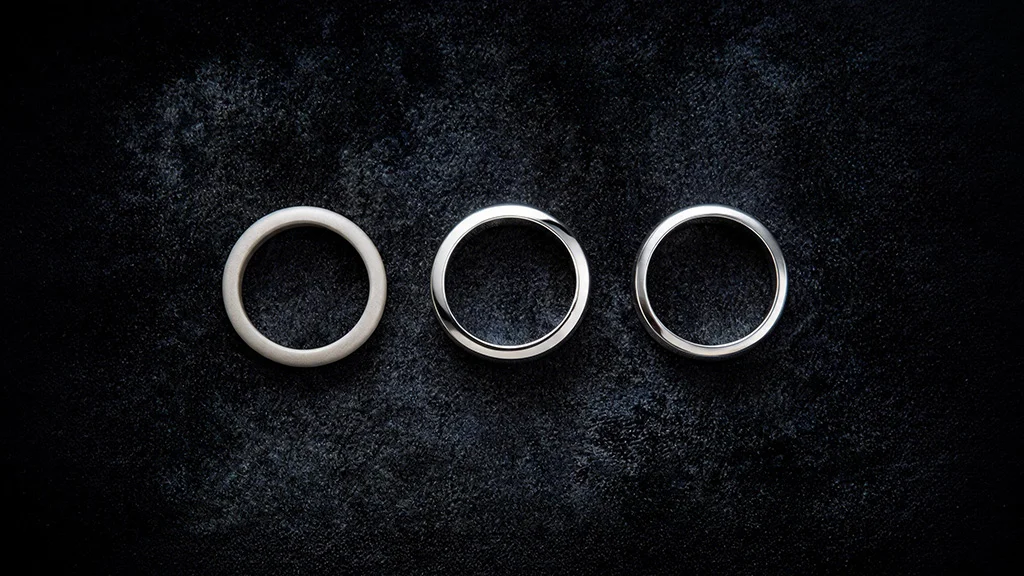
Rhodium plating became popular for a simple reason: it makes white gold look more like platinum. Unplated white gold has a warmer, softer tone, while rhodium plating delivers the crisp, bright white that most buyers associate with "white gold" today. Because that bright white look is what most consumers now expect, the vast majority of white gold jewelry sold today — whether by large retailers or independent jewelers — comes rhodium plated as standard.
That said, unplated white gold hasn't disappeared. Manufacturers who handcraft jewelry to order (like Provence Jewellery) can produce unplated white gold pieces on request, for buyers who prefer a more natural, vintage-inspired tone or want to avoid the ongoing cost of replating.
White Gold vs Rhodium-Plated vs. Platinum: Side-by-Side Comparison
|
Feature |
Unplated White Gold |
Rhodium-Plated White Gold |
Platinum |
|---|---|---|---|
|
Color |
Pale creamy yellow to soft gray |
Bright silvery white |
Naturally white with a soft gray tone |
|
Luster |
Matte / satin |
Mirror-bright |
Naturally lustrous, slightly less bright than fresh rhodium |
|
Durability |
Lower — more prone to scratching |
Higher, thanks to the rhodium layer |
Very high — platinum is dense and scratch-resistant |
|
Maintenance |
Frequent cleaning/polishing |
Replating needed periodically |
Occasional polishing; develops a natural patina |
|
Allergy risk |
Higher if alloy contains nickel |
Low — rhodium layer blocks skin contact |
Very low — naturally hypoallergenic |
|
Relative cost |
Lowest |
Mid-range |
Highest |
|
Best for |
Vintage/organic look, lower budget |
Bright modern look, most popular choice |
Long-term low-maintenance luxury |
Pros and Cons of Rhodium-Plated White Gold
Pros:
- Delivers the bright, icy-white finish most buyers picture when they think "white gold"
- Adds a protective layer against scratches and everyday wear
- Naturally hypoallergenic, shielding skin from nickel or other alloy metals underneath
- Requires less frequent day-to-day cleaning to stay bright
Cons:
- The rhodium layer wears down over time and needs replating, typically every 1–3 years depending on wear
- Adds to the upfront cost of the piece
- As plating wears unevenly, some areas may look brighter than others until it's replated
Pros and Cons of Unplated White Gold
Pros:
- Lower upfront cost, since it skips the plating step
- No recurring replating needed
- Offers a soft, understated tone that suits vintage or nature-inspired designs
Cons:
- Duller, less reflective finish than rhodium-plated pieces
- Needs more frequent cleaning and polishing to stay looking its best
- Higher allergy risk if the alloy contains nickel, since there's no barrier layer
- More prone to scratching and dulling over time
How Long Does Rhodium Plating Actually Last?
This is where a lot of buyers get inconsistent answers, because the honest truth is: it depends heavily on wear patterns. A few realistic benchmarks:
- Rings (worn daily, exposed to friction, hand washing, gym use): typically need replating every 6 months to 2 years
- Necklaces and earrings (less friction, less direct contact): can often go 2–3 years or longer before needing attention
- Heavier plating thickness applied during manufacturing tends to last longer than a thin "flash" plate
You'll know it's time to replate when you notice a warmer or yellowish tint starting to show through, especially compared to a newer piece worn alongside it — a common giveaway when stacking rings.
Rhodium Plating Cost & Replating
Rhodium plating costs vary by jeweler, region, and the size/complexity of the piece. As a general global guide:
- Small pieces (rings, earrings): roughly $20–$80 USD (≈ £16–£65 / €19–€75)
- Larger pieces (bracelets, necklaces): roughly $50–$150 USD (≈ £40–£120 / €47–€140)
- Full polish + rhodium replate: often bundled together by jewelers, typically $80–$150 USD total
Since rhodium's market price fluctuates and jeweler labor rates vary widely by country, always confirm current pricing with a local jeweler or your original retailer before booking a replate.
Can You Buy Unplated White Gold?
Yes — though it's not always easy to find through mainstream retailers, since most stock only pre-plated pieces. Because Provence Jewellery manufactures jewelry to order rather than selling from pre-made retail stock, we're able to offer genuinely unplated white gold as an option for buyers who want that natural tone or want to avoid ongoing replating costs. If this is something you're interested in, it's worth discussing directly with your jeweler or manufacturer before ordering, since not everyone offers it by default.
Which Should You Choose?
There's no universally "right" answer — it depends on your priorities:
- Choose rhodium-plated white gold if: you want the brightest possible white finish, you don't mind occasional replating, or you have sensitive skin and want the extra hypoallergenic barrier.
- Choose unplated white gold if: you prefer a softer, more vintage-inspired tone, want to minimize long-term maintenance costs, or simply like the idea of your jewelry showing its true, natural color.
- Consider platinum instead if: you want a naturally white metal with no plating to maintain at all, and budget isn't the primary concern.
FAQs
Yes. The rhodium layer wears thin with friction and everyday wear, gradually revealing the warmer tone of the white gold alloy underneath. This is normal and doesn't mean anything is wrong with your jewelry — it simply means it's due for replating.
Not exactly — unplated white gold already has a slight yellow or gray tint depending on its alloy. It won't turn more yellow, but it may dull slightly through oxidation and everyday wear, which polishing can restore.
Yes. Rhodium itself contains no nickel or common allergens. However, if the plating wears through completely, the alloy underneath (which may contain nickel) can come into direct contact with skin again.
Yes, rhodium plating can be reapplied repeatedly over the life of a piece. It's a routine, relatively quick service most jewelers offer.
No, rhodium itself won't turn green. If discoloration appears, it's usually because the plating has worn through to an underlying alloy containing copper, which can react with skin.
They can look very similar at a glance, but platinum has a naturally cooler, denser white tone and doesn't require plating at all. Rhodium-plated white gold has a slightly brighter, more reflective shine when freshly plated, but that shine fades over time as the layer wears.
Yes — a jeweler can strip the rhodium layer through polishing, though this will expose the natural color of the white gold underneath, and you should expect more frequent maintenance afterward.
For most buyers, yes — the combination of a brighter finish, added scratch protection, and hypoallergenic benefits outweighs the modest ongoing replating cost. But if you value low maintenance and a natural look over maximum brightness, unplated white gold is a perfectly reasonable choice.
 English