
AGS vs GIA: Which Diamond Certification Should You Trust in 2026?
- Written by Provence Team
- Updated on August 24, 2026
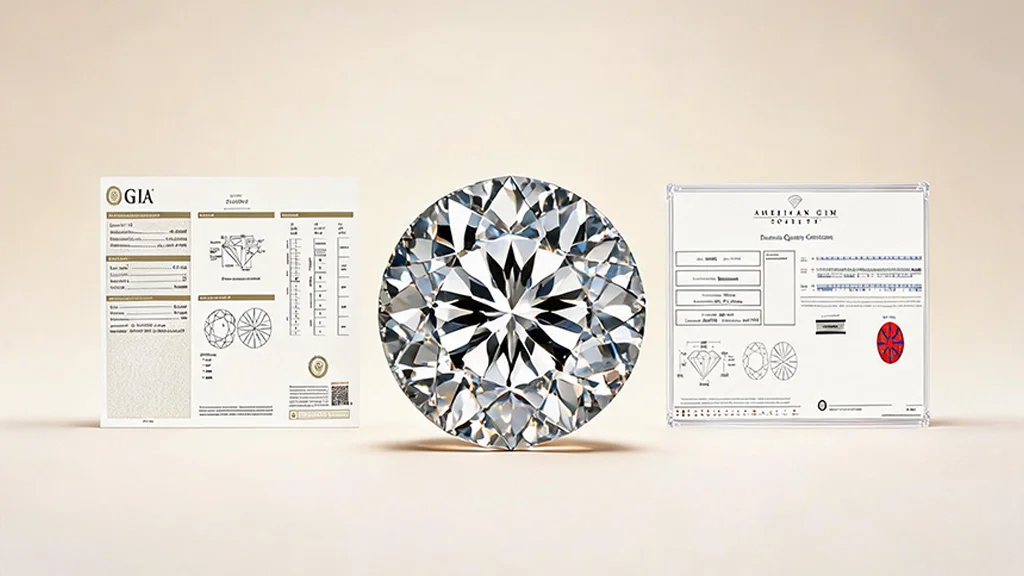
Table of Contents
When you're comparing loose diamonds or finished jewelry from two different sources, the grading report attached to each stone is often more important than the stone's price tag. Two names dominate that conversation: the GIA (Gemological Institute of America) and the AGS (American Gem Society). Both are respected. Both were, in fact, founded by the same man. And as of 2022, their relationship changed in a way most buying guides still haven't caught up with. This guide breaks down exactly how GIA and AGS compare — and where IGI fits in — so you can read any certificate with confidence, whether you're buying one engagement ring or sourcing certified stones for a jewelry line.
What Is GIA Certification?
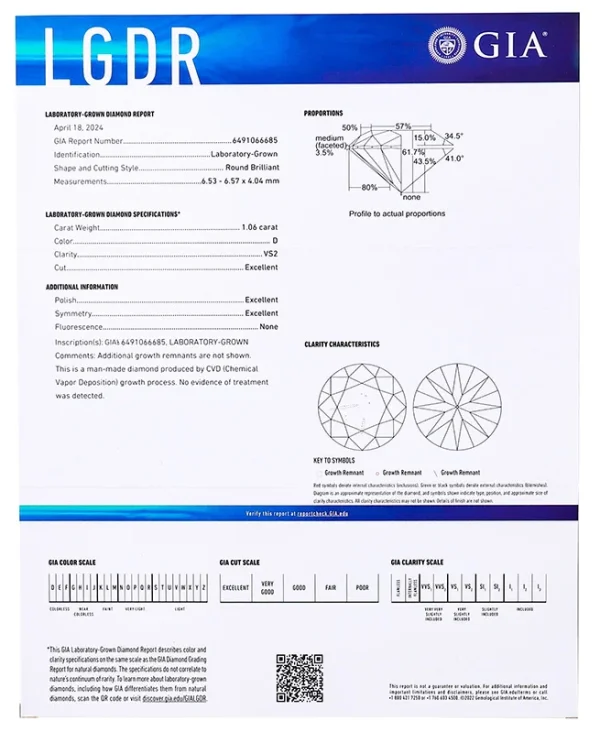
The Gemological Institute of America was founded in 1931 by Robert M. Shipley. GIA created the 4Cs framework — cut, color, clarity, and carat weight — and the D-to-Z color scale used industry-wide today. It remains the largest and most widely recognized diamond grading laboratory in the world, with offices across major trading centers, and it holds no commercial interest in buying or selling diamonds, which supports its reputation for unbiased, conservative grading.
- Cut: Excellent, Very Good, Good, Fair, Poor
- Color: D (colorless) through Z (light yellow/brown)
- Clarity: FL (Flawless) through I3 (Included)
A GIA report is the certification most consumers, appraisers, and insurers recognize on sight, which makes it the safest default for resale and cross-border transactions.
What Is AGS Certification?
The American Gem Society was also founded by Robert M. Shipley, in 1934, originally as a professional organization of jewelers bound by a strict code of ethics — not as a grading lab. AGS Laboratories, the grading arm, wasn't established until the mid-1990s, when gemologist Peter Yantzer (formerly of GIA) built a scientifically rigorous, light-performance-based system for grading diamond cut. That system used a 0–10 numerical scale, with 0 (“Ideal”) representing the top grade — a sharper, more technical alternative to GIA's descriptor-based grades.
- Cut: 0 (Ideal) through 10 (Poor), numerical scale
- Color: 0.0 (colorless) through 10.0 (light yellow), mirroring GIA's D–Z
- Clarity: 0 (Flawless) through 10 (I3), mirroring GIA's FL–I3
AGS built its reputation on being the first lab to rigorously quantify light performance — brightness, contrast, and light leakage — rather than relying on proportion tables alone. That expertise is exactly what GIA absorbed in the 2022 acquisition.
GIA vs AGS vs IGI: Full Comparison Table
A third lab, the International Gemological Institute (IGI), founded in Belgium in 1975, comes up constantly in the same searches — particularly for lab-grown diamonds, where IGI was first to market with dedicated certification. Here's how all three compare side by side.
|
Feature |
GIA |
AGS |
IGI |
|---|---|---|---|
|
Founded |
1931, USA |
1934 (society); grading lab est. 1996, USA |
1975, Belgium |
|
Cut grade scale |
Excellent → Poor (5 tiers) |
0 (Ideal) → 10 (Poor), numerical |
Excellent → Poor (5 tiers) |
|
Color scale |
D – Z (letters) |
0.0 – 10.0 (numerical, mirrors D–Z) |
D – Z (letters) |
|
Clarity scale |
FL – I3 |
0 – 10 (mirrors FL–I3) |
FL – I3 |
|
Cut analysis depth |
Proportion-based, rounded to nearest 0.5%/0.5° |
Precise light-performance modeling (brightness, contrast, leakage) |
Proportion-based, similar to GIA |
|
Fancy-shape cut grading |
Symmetry/polish only |
Round, princess, oval, Asscher + proprietary shapes |
Symmetry/polish only |
|
Lab-grown diamond reports |
Yes, since 2007 |
Historically limited (AGS Labs discontinued in 2022) |
Yes — first lab to certify lab-grown, market leader |
|
Global recognition |
Highest — accepted everywhere |
Strong in USA, especially among cut-focused buyers |
Fast-growing, strong across USA, Asia, and Europe |
|
Typical turnaround |
Slower during peak season |
N/A (AGS Labs closed in 2022) |
Generally fast |
|
Best suited for |
Buyers who want maximum resale recognition |
Historically the top choice for light-performance precision |
Budget-conscious buyers and lab-grown diamond shoppers |
Cut Grading: Where the Real Differences Show Up
Color and clarity grading are broadly comparable across GIA, AGS, and IGI — all three use trained gemologists, calibrated master stone sets, and similar scoring logic, and any two labs can land a single grade apart on the same stone simply because grading involves human judgment. Cut grading is where the labs genuinely diverge.
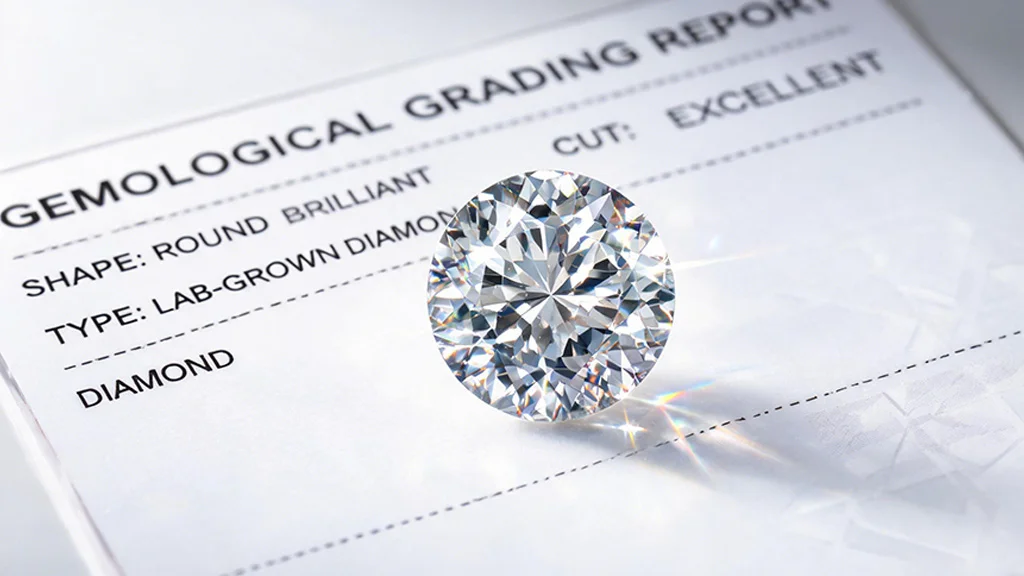
How AGS Graded Cut
AGS's methodology assessed three factors: light performance (brightness, contrast, light leakage, and dispersion), proportions (weight distribution, girdle thickness, culet), and finish (polish and symmetry). Because it measured proportions to a finer degree of precision than GIA — rather than rounding to the nearest half-percent or half-degree — an AGS Ideal grade represented a narrower, more exacting quality band.
How GIA Grades Cut
GIA's cut grade also considers three factors: face-up appearance (brightness, fire, scintillation), design (weight ratio and durability), and craftsmanship (polish and facet alignment precision). GIA currently offers a full cut grade only for round brilliant diamonds; fancy shapes (oval, cushion, pear, and others) receive polish and symmetry grades but not an overall cut grade — a gap AGS's system was built to fill for several fancy shapes before AGS Labs closed.
The Practical Upshot
An AGS Ideal (0) and a GIA Excellent are very closely aligned in practice, but they aren't identical: AGS effectively split GIA's single “Excellent” tier into two finer bands, so some GIA Excellent stones would not have qualified for AGS's top Ideal grade, while others would. For most buyers under normal lighting, the visual difference between a strong GIA Excellent and an AGS Ideal is imperceptible — the gap matters most to buyers chasing the very top percentile of light performance.
Regardless of which lab graded a round brilliant diamond, these proportion ranges are a reliable quality benchmark to check on the report itself:
- Table: 54% – 60%
- Depth: 59% – 63%
- Crown angle: 33° – 35°
Trade Value and Resale: What the Data Shows
Certification quality also affects how a diamond trades on the wholesale market. Rapaport's own trading network surveys have shown AGS-graded diamonds trading at a premium to GIA-graded diamonds on RapNet, reflecting the trade's confidence in AGS's cut-grading rigor — while lower-tier labs with looser grading standards, such as EGL-affiliated labs banned from RapNet in 2015, trade at a discount. GIA nonetheless remains the report buyers and appraisers recognize most readily at the point of resale, which matters just as much as trade-desk pricing when you're the one selling.
Buying and Sourcing Internationally: UK, EU, and Beyond
Most AGS-vs-GIA comparisons are written for a US retail audience and stop there. If you're buying, appraising, or sourcing diamonds outside the United States, a few additional points matter:
- GIA reports are recognized by jewelers, appraisers, and insurers across the UK and EU, and are the most common report requested by European retail partners.
- IGI, headquartered in Belgium with labs across Europe and Asia, is often the fastest and most widely available option for buyers and manufacturers sourcing outside North America.
- AGS-graded stones already certified before 2022 remain valid worldwide, but new AGS-labeled reports are no longer being issued, so international buyers should not expect to source newly AGS-certified stones going forward.
- UK buyers should note that diamond certification (GIA/AGS/IGI) is separate from UK hallmarking requirements under the Hallmarking Act 1973, which applies to the precious metal of a ring's setting, not the stone itself.
- EU-based buyers and retailers sourcing mounted jewelry should also confirm the metal alloy's compliance with EU REACH Annex XVII nickel-release restrictions — a separate but equally important compliance layer alongside the diamond's grading report.
A Manufacturer's Perspective: How Certification Fits Into Sourcing
As an OEM/ODM manufacturer producing solid gold jewelry set with natural diamonds, lab-grown diamonds, moissanite, and cubic zirconia for brand partners across the US, UK, and EU, we see certification from the other side of the counter: as a specification on a purchase order, not just a consumer decision. A few things we recommend to brand partners and retail buyers alike:
- Specify the certifying lab (GIA, AGS-graded pre-2022 stock, or IGI) explicitly in your sourcing documentation — don't assume “certified” means the same lab across suppliers.
- Request the certificate number and verify it directly on the issuing lab's website before finalizing a purchase, especially for older AGS reports.
- Pair third-party lab certification with your manufacturer's in-house quality control — bench inspection, weight verification, and setting quality — since a grading report certifies the loose stone, not the finished piece.
- For lab-grown diamond programs, confirm whether GIA or IGI reports are being issued, since disclosure language for lab-grown stones differs slightly between labs and matters for regulatory compliance in the US (FTC 16 CFR Part 23) and abroad.
AGS vs GIA: Which Should You Choose?
There's no universally “better” lab — only a better fit for your priorities. Use this framework:
|
Priority |
Recommended certification |
|---|---|
|
Maximum resale value & universal recognition |
GIA — the most widely trusted name with buyers, appraisers, and insurers worldwide |
|
Best possible light performance & cut precision |
AGS Ideal-graded stock (limited supply now that AGS Labs has closed — GIA has since absorbed the light-performance methodology) |
|
Lab-grown diamonds specifically |
IGI or GIA — both issue dedicated lab-grown reports; IGI pioneered this category |
|
Budget-conscious purchase with solid documentation |
IGI — fast turnaround, respected, often priced more accessibly |
|
Buying for a UK or EU market / retail partner |
GIA or IGI — both are recognized by UK and EU jewelers, appraisers, and customs/import documentation processes |
|
Sourcing as a retailer or brand (B2B/OEM) |
Specify GIA or IGI on your purchase order; confirm your manufacturer's in-house QC process supplements lab paperwork with independent verification |
Frequently Asked Questions
Not as a newly issued, independent report. AGS Laboratories stopped grading diamonds after GIA's 2022 acquisition of its light-performance technology and now functions as a GIA research campus. Diamonds certified by AGS before that transition remain valid and are still traded and recognized.
They're very closely matched. AGS measured proportions with finer precision and split GIA's single Excellent tier into two bands, so some — but not all — GIA Excellent stones would have also qualified as AGS Ideal. For most buyers, the visual difference is not noticeable without gemological training.
Yes. Both labs use comparable methodologies and calibrated master stone sets for color and clarity grading. No conclusive study shows either lab being consistently more lenient than the other; a one-grade difference between any two labs on the same stone is considered a normal, industry-recognized deviation.
IGI is a strong option, especially for lab-grown diamonds, where it was the first lab to offer dedicated certification and remains an industry leader. Its reports are widely accepted internationally and typically processed quickly, though its overall cut analysis is closer to GIA's descriptor-based approach than to AGS's numerical, light-performance-based system.
Yes. GIA-certified diamonds are the most universally recognized at resale. Historically, AGS-certified diamonds have traded at a premium to GIA on wholesale networks like RapNet due to their cut-grading rigor, while reports from lower-tier labs can trade at a discount.
 English