
What is September’s Birthstone? Sapphire Meaning & Colors
- Written by Provence Team
- Updated on August 25, 2026
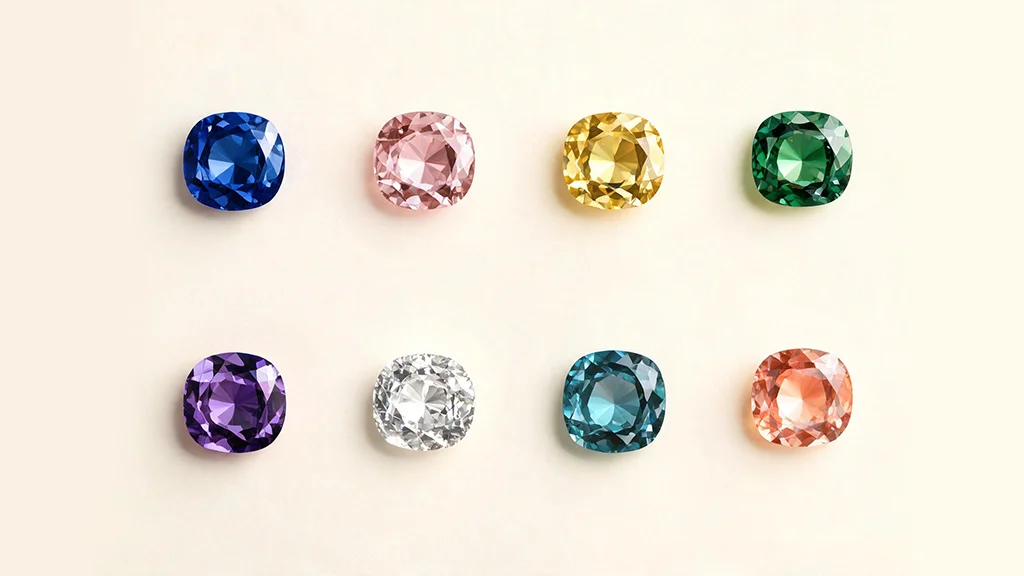
Table of Contents
September's birthstone is the sapphire — a durable, richly symbolic gemstone best known for its deep blue color, though it occurs naturally in almost every hue except red. Prized for over two thousand years and worn by royalty from ancient Persia to Princess Diana, sapphire represents wisdom, loyalty, and nobility, and ranks 9 on the Mohs hardness scale, making it an excellent choice for daily wear.
At a Glance: September Birthstone Facts
|
Attribute |
Details |
|---|---|
|
Gemstone |
Sapphire (a variety of corundum, aluminum oxide) |
|
Zodiac tie-in |
Virgo (Aug 23–Sep 22) and Libra (Sep 23–Oct 22) |
|
Color range |
Best known for royal blue; also found in pink, yellow, green, purple, white, teal, and the rare padparadscha |
|
Symbolism |
Wisdom, loyalty, nobility, truth, and protection |
|
Hardness |
9 on the Mohs scale — second only to diamond |
|
Anniversary gem |
5th and 45th wedding anniversaries |
|
Historic sources |
Kashmir, Myanmar (Mogok), Sri Lanka, Madagascar, Thailand, Montana (USA) |
|
Typical treatment |
~90% of sapphires on the market are heat-treated to improve color and clarity |
The History and Origins of Sapphire
Sapphire's story stretches across four continents and more than two thousand years of recorded history. Ancient Persians believed the earth rested on a giant sapphire, and that the stone's reflection colored the sky blue. In ancient Greece and Rome, the elite wore sapphire to seek protection from harm and envy, and to receive guidance from oracles. During the Middle Ages, European clergy adopted sapphire as a symbol of Heaven, setting it into ecclesiastical rings and church treasures, while medieval physicians believed it could cure eye disease and even neutralize poison.
Sri Lanka — historically called Ceylon, and referred to by ancient Greek writers as the birthplace of sapphire — has produced fine blue and fancy-color stones from its alluvial gravels for more than two thousand years, and remains an important source today. Myanmar's Mogok Valley became renowned for intensely saturated "Burmese" blue sapphire, typically recovered alongside ruby deposits in the same mining region.
The most legendary chapter in sapphire's history began in 1881, when a landslide high in the Himalayas exposed a pocket of velvety cornflower-blue crystals in the Kashmir region. Between 1882 and 1887, a short but extraordinary period of mining produced the crystals that established "Kashmir sapphire" as the most coveted origin in the gem trade — a reputation the source still holds today, despite production having been sporadic ever since.
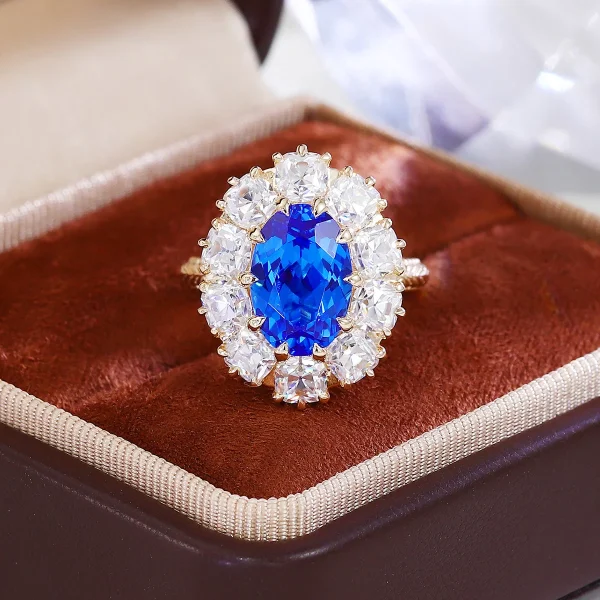
In more recent history, sapphire has repeatedly captured the public imagination through royal jewelry. Princess Diana's 12-carat oval Ceylon sapphire engagement ring, chosen from a Garrard catalog rather than custom-commissioned, became one of the most recognized pieces of jewelry in the modern era, and now belongs to Catherine, Princess of Wales — linking two generations of royal history to a single September birthstone.
September Birthstone Meaning and Symbolism
Across cultures and centuries, sapphire has consistently symbolized four qualities: wisdom, loyalty, nobility, and truth.
- Wisdom and clarity of thought — philosophers and scholars in antiquity wore sapphire believing it sharpened the mind.
- Loyalty and fidelity — sapphire's association with faithful love has made it a lasting choice for engagement and anniversary jewelry.
- Protection — ancient Greek and Roman elites believed sapphire shielded its wearer from envy and harm; medieval kings wore it for protection from enemies.
- Nobility and spiritual favor — clergy and royalty alike saw sapphire as a link between the earthly and the divine.
Sapphire is also the gemstone traditionally given to mark the 5th and 45th wedding anniversaries, extending its symbolism of loyalty well beyond a September birth month.
The Science Behind Sapphire's Colors
Sapphire is a variety of corundum, a crystalline form of aluminum oxide that, in its pure state, is completely colorless. What turns colorless corundum into a rainbow of sapphires is the presence of trace elements within its crystal structure:
- Titanium and iron produce the classic blue sapphire.
- Chromium produces pink sapphire — and, at higher concentrations in corundum, ruby rather than sapphire.
- Vanadium is responsible for purple sapphire and for the light-dependent shift seen in color-change sapphire.
- Iron alone typically produces yellow and green sapphires.
This is also why ruby and sapphire are, mineralogically, the same gem: red corundum is classified as ruby, while every other color of gem-quality corundum — including blue — is classified as sapphire.
The Complete September Birthstone Color Guide
While blue remains the definitive September birthstone color, sapphire's full spectrum gives buyers far more choice than most guides suggest.
|
Sapphire Color |
What Gives It Color |
Best Known For |
|---|---|---|
|
Blue |
Titanium and iron trace elements |
The classic, most prized variety; deep royal to cornflower blue |
|
Padparadscha |
Trace chromium + iron in a delicate balance |
Rare pink-orange hue named for the lotus blossom |
|
Pink |
Chromium |
Romantic tone popular in engagement and stacking rings |
|
Yellow |
Iron |
Associated with optimism; linked to prosperity in Vedic tradition |
|
Green |
Iron |
Earthy, durable alternative to emerald |
|
Purple/Violet |
Vanadium |
Rare and often linked with imagination and higher consciousness |
|
White/Colorless |
No trace elements (pure corundum) |
Diamond-like brilliance at a lower price point |
|
Teal/Parti (blue-green) |
Combined iron and titanium influence |
Modern, in-demand alternative engagement stone |
|
Black |
Iron, titanium, and graphite inclusions |
Bold, opaque to translucent statement stones |
|
Star sapphire |
Rutile inclusions aligned in the crystal (asterism) |
Cabochon cut reveals a 6-rayed star |
|
Color-change |
High vanadium content |
Shifts blue in daylight to violet/purple under incandescent light |
Padparadscha: The Rarest Sapphire
Named after the Sinhalese word for lotus blossom, padparadscha sapphire displays a delicate, precise balance of pink and orange. Stones that lean too far toward pink are classified as pink sapphire; too far toward orange, and they fall into another category entirely. Because that balance is so narrow — and because the finest examples still come primarily from Sri Lanka — padparadscha routinely commands some of the highest per-carat prices in the sapphire family.
Famous Sapphires Through History
- The Star of India — a 563-carat star sapphire from Sri Lanka, prized for its six-rayed asterism and now housed at the American Museum of Natural History.
- The Logan Sapphire — a 423-carat Sri Lankan sapphire held in the Smithsonian Institution's gem collection.
- The Stuart Sapphire — a 104-carat stone set in the British Imperial State Crown.
- The Rockefeller Sapphire — a 62.02-carat Burmese sapphire acquired by John D. Rockefeller Jr. in 1934, later reset in a platinum ring by Tiffany & Co.
- Princess Diana's engagement ring — a 12-carat oval Ceylon sapphire surrounded by diamonds, now worn by Catherine, Princess of Wales.
- The Blue Belle of Asia — a 392-carat Ceylon sapphire that sold at auction for roughly $17 million in 2014.
Unlike diamonds, sapphires don't follow a single universal grading scale, but the same four factors drive their value.
Color
Color is the single largest driver of a sapphire's value. The most desirable blue sapphires show a vivid, velvety medium-to-medium-dark tone that is neither washed out nor nearly black. Fancy colors — pink, yellow, green, and padparadscha — are judged on saturation and evenness of hue.
Cut
Because sapphire has no standardized cut-grading system like diamond, quality is judged by how well the finished stone returns light and displays its color. An oval or cushion cut is often chosen to maximize apparent saturation, while a poorly proportioned cut can leave a fine rough stone looking dull.
Clarity
Most sapphires contain natural inclusions, sometimes called "silk." Fine, evenly distributed silk can enhance a stone's velvety glow, while heavy inclusions or surface-reaching fractures reduce both beauty and durability.
Carat
Large, well-colored sapphires are rare, so value rises disproportionately with size — a fine 3-carat stone is typically worth far more than three 1-carat stones of similar quality. Because sapphire is denser than diamond, it also appears slightly smaller than a diamond of equal weight.
Heat-Treated vs. Natural Sapphire
Roughly 90% of sapphires sold today are heat-treated — a stable, permanent, and trade-accepted process that improves color and clarity while keeping prices accessible. Untreated natural sapphires are considerably rarer and typically carry a significant premium, especially when accompanied by a gemological report confirming no treatment. Less common treatments, such as lattice diffusion, fracture filling, and dyeing, should always be disclosed by the seller, since they can affect long-term care requirements.
Natural, Lab-Grown, and Alternative September Birthstones
Buyers increasingly compare natural sapphire against lab-grown sapphire and other blue gemstones. Lab-grown sapphire shares the identical chemical composition and hardness of natural sapphire — it is grown, not mined — making it a durable, budget-conscious, and traceable option for buyers who prioritize value or sustainability over rarity.
|
Option |
Origin |
Typical Price vs. Natural |
Best For |
|---|---|---|---|
|
Natural sapphire |
Mined (Sri Lanka, Madagascar, Myanmar, Montana, etc.) |
Baseline |
Buyers prioritizing rarity, provenance, and long-term value |
|
Lab-grown sapphire |
Grown in a controlled lab environment; identical chemistry to natural |
10–30% of natural price |
Budget-conscious and sustainability-focused buyers |
|
Blue spinel |
Natural gemstone, different mineral family |
Comparable or lower |
Buyers who want a genuine gemstone alternative |
|
Blue topaz |
Natural, softer (8 Mohs) |
Significantly lower |
Fashion jewelry, less everyday durability needed |
|
Cubic zirconia (blue) |
Synthetic |
Lowest cost |
Trend pieces or trial designs before a fine jewelry purchase |
Historically, lapis lazuli was also associated with September before sapphire became the modern official birthstone — a detail collectors sometimes reference when seeking an alternate connection to the month.
Natural, Lab-Grown, and Alternative September Birthstones
Buyers increasingly compare natural sapphire against lab-grown sapphire and other blue gemstones. Lab-grown sapphire shares the identical chemical composition and hardness of natural sapphire — it is grown, not mined — making it a durable, budget-conscious, and traceable option for buyers who prioritize value or sustainability over rarity.
|
Option |
Origin |
Typical Price vs. Natural |
Best For |
|---|---|---|---|
|
Natural sapphire |
Mined (Sri Lanka, Madagascar, Myanmar, Montana, etc.) |
Baseline |
Buyers prioritizing rarity, provenance, and long-term value |
|
Lab-grown sapphire |
Grown in a controlled lab environment; identical chemistry to natural |
10–30% of natural price |
Budget-conscious and sustainability-focused buyers |
|
Blue spinel |
Natural gemstone, different mineral family |
Comparable or lower |
Buyers who want a genuine gemstone alternative |
|
Blue topaz |
Natural, softer (8 Mohs) |
Significantly lower |
Fashion jewelry, less everyday durability needed |
|
Cubic zirconia (blue) |
Synthetic |
Lowest cost |
Trend pieces or trial designs before a fine jewelry purchase |
Historically, lapis lazuli was also associated with September before sapphire became the modern official birthstone — a detail collectors sometimes reference when seeking an alternate connection to the month.
A Manufacturer's Perspective: How September Birthstone Jewelry Is Actually Made
Most birthstone guides are written from a retail point of view. As an OEM/ODM fine jewelry manufacturer, Provence Jewellery sees the sapphire supply chain from the other side — sourcing rough and cut stones, setting them in solid gold, and running the quality control that determines whether a finished piece holds up to decades of daily wear.
- Stone sourcing and grading: incoming sapphire parcels are sorted by color consistency, clarity, and treatment disclosure before a single stone is set.
- Setting integrity: because sapphire's hardness (9 Mohs) exceeds that of the gold or silver holding it, prong and bezel settings are engineered to secure the stone without stressing softer metal over time.
- Lab-grown sapphire at scale: manufacturers can offer consistent, traceable lab-grown sapphire in volume — useful for brands building a September birthstone collection without the supply variability of natural stones.
- Quality control checkpoints: bench inspection, stone security testing, and metal purity verification happen before any piece ships, supporting the hallmarking and disclosure requirements outlined above.
Buyers and retail partners evaluating a September birthstone collection are welcome to request documentation on stone origin, treatment disclosure, and metal certification directly from our manufacturing team.
September's Birthstone: Frequently Asked Questions
September's birthstone is sapphire, a variety of corundum best known for its deep blue color but found in nearly every hue except red.
September has one official modern birthstone: sapphire. Historically, lapis lazuli was also associated with the month before sapphire became the standardized birthstone.
Yes. Sapphire occurs in nearly every color, and pink sapphire is simply a fancy-color variety of the same September birthstone as classic blue sapphire.
Price varies enormously by treatment, origin, and quality — from budget-friendly heat-treated stones to museum-grade natural sapphires worth millions.
Yes. At 9 on the Mohs scale, sapphire is the second-hardest natural gemstone after diamond, making it well suited to engagement rings and daily-wear jewelry.
Padparadscha — a delicate pink-orange hue — is widely considered the rarest and most valuable sapphire color, followed by fine untreated Kashmir blue.
Both share identical chemical composition and hardness. Natural sapphire is mined and prized for rarity and provenance; lab-grown sapphire is grown under controlled conditions and offers a more affordable, traceable, and consistent alternative.
 English