
Lab Grown vs Natural Diamonds: An Honest Guide for 2026
- Written by Provence Team
- Updated on June 1, 2026
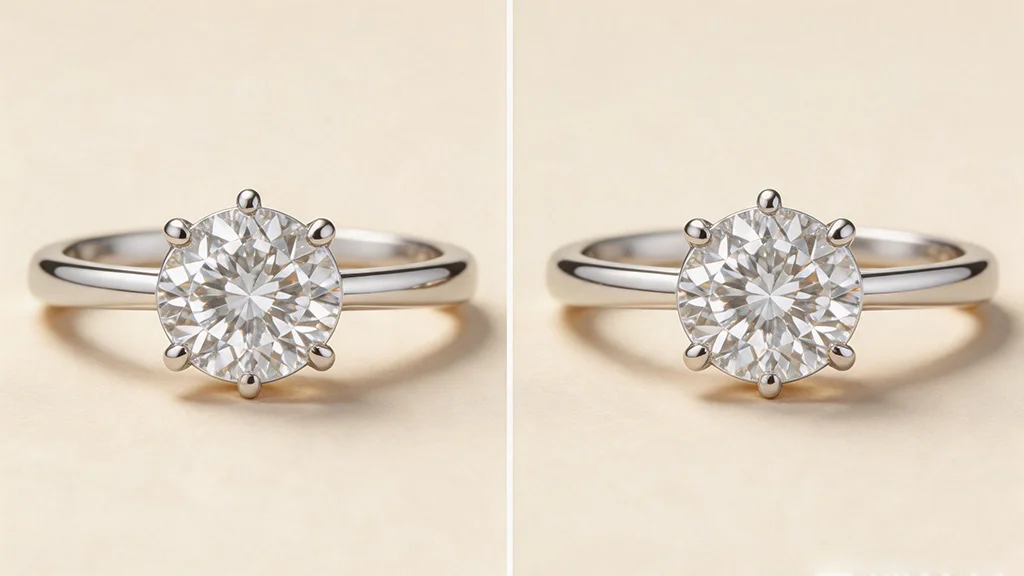
Table of Contents
You've found the ring. Then the jeweller says you can get twice the diamond for the same price — if you go lab grown. Is that too good to be true?
It's a question we hear every week at Provence. And the honest answer is: it depends on what matters to you. Lab grown diamonds are real diamonds in every scientific sense. Natural diamonds are geologically irreplaceable. Neither is objectively better — but one is likely better for you, and this lab grown vs natural diamonds guide will help you find out which.
We'll walk you through the chemistry, the costs, the ethics, the resale myths, and — most importantly — how to match the decision to your values and budget.
What actually is a lab grown diamond?
A lab grown diamond is a real diamond. It is not a simulant (like cubic zirconia or moissanite), and it is not a fake. It is crystallised carbon — the same mineral, the same structure — produced in a controlled laboratory environment rather than extracted from the earth.
Two methods are used to grow them:
- High Pressure High Temperature (HPHT): replicates the intense pressure and heat of the earth's mantle. A carbon source is compressed around a diamond seed until new diamond crystal forms.
- Chemical Vapour Deposition (CVD): a carbon-rich gas (typically methane) is broken down inside a vacuum chamber, and carbon atoms are deposited layer by layer onto a diamond seed plate.
Both processes take between two and six weeks to produce a gem-quality stone. The result is chemically and physically identical to a natural diamond — same hardness (10 on the Mohs scale), same refractive index, same brilliance.
In 2018, the US Federal Trade Commission formally revised its definition of 'diamond' to include laboratory-grown diamonds. The Gemological Institute of America (GIA) has been issuing grading reports for lab grown diamonds since 2007. So yes — they are graded, certified, and legally recognised as diamonds.
"Lab grown diamonds have essentially the same chemical, physical and optical properties as natural diamonds." — GIA (Gemological Institute of America)
Lab grown vs natural diamonds: key differences at a glance
|
Natural Diamond |
Lab Grown Diamond |
|
|---|---|---|
|
Origin |
Formed deep in the Earth over 1–3 billion years |
Grown in a laboratory in 2–6 weeks |
|
Composition |
Pure carbon (trace nitrogen common) |
Pure carbon (no nitrogen) |
|
Hardness |
10 on Mohs scale |
10 on Mohs scale — identical |
|
Price |
Higher — reflects rarity and mining costs |
50–70% less than equivalent natural diamond |
|
Certification |
GIA, IGI, AGS grading available |
GIA, IGI grading available — same 4Cs scale |
|
Rarity |
Finite — each stone is geologically unique |
Unlimited — can be produced on demand |
|
Resale value |
Retains ~20–50% of retail value at resale |
Generally lower resale; market still maturing |
|
Eco impact |
Land disruption, significant water and energy use |
High energy use; no land mining required |
Price: how much cheaper are lab grown diamonds really?
Lab grown diamonds typically cost 50–75% less than equivalent natural diamonds — and prices have been falling fast. In 2020, the price gap between lab and natural was around 30–40%. By 2026, it has widened considerably, driven by rapid improvements in growing technology and increased production capacity globally.
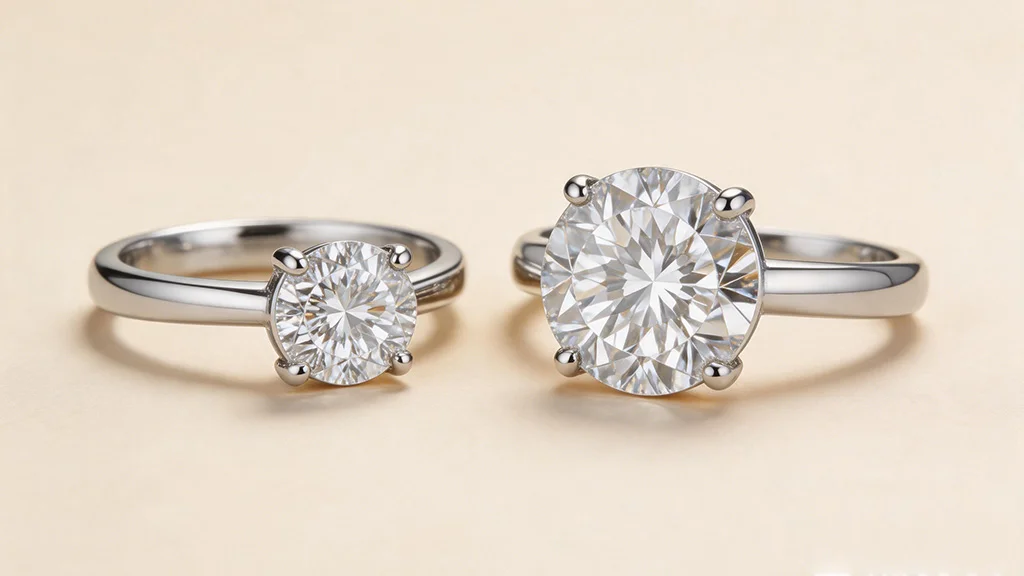
Here's a real-world price comparison for round brilliant cut diamonds, F colour, VS1 clarity — the kind of quality most engagement ring buyers target:
|
Diamond |
Natural price |
Lab grown price |
Saving |
|---|---|---|---|
|
0.5 ct |
$1,500 |
$250 |
83% |
|
1.00 ct |
$6,000 |
$700 |
88% |
|
1.50 ct |
$12,000 |
$1,200 |
90% |
|
2.00 ct |
$22,000 |
$1,800 |
92% |
The practical implication: a budget of $6000 that buys a 1ct natural diamond could buy a 2–2.5ct lab grown diamond of the same quality grade. For buyers who prioritise size and visual impact, the maths is compelling.
An important caveat: lab grown diamond prices have been dropping year on year. This means a lab diamond purchased today may be worth significantly less in resale five years from now — not because it is a lesser stone, but because newer production has continued to push prices down. This does not affect how the diamond looks or performs, but it is a factor for buyers who treat jewellery as an investment.
Do they look different? Sparkle, cut, and the 4Cs
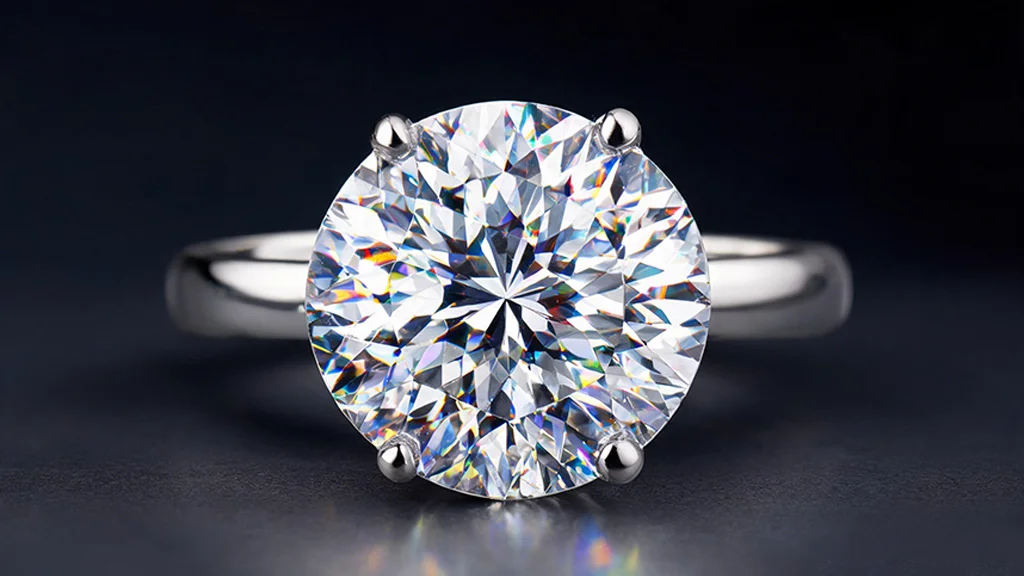
No jeweller, gemologist, or person on the street can look at a lab grown and natural diamond side by side — with the naked eye — and tell them apart. The only reliable way to distinguish them is with sophisticated spectroscopic equipment. Even trained gemologists cannot do it by eye alone.
Both are graded using exactly the same 4Cs framework:
- Cut: the most important factor for brilliance and sparkle — affects how light travels through the stone. Applies equally to lab and natural.
- Colour: graded D (colourless) to Z (light yellow). Lab grown diamonds are available across the full spectrum, including rare fancy colours.
- Clarity: the presence or absence of inclusions. Lab diamonds can actually achieve higher clarity grades more consistently, since the growth environment is controlled.
- Carat: the weight of the stone. Lab grown diamonds are available in all sizes.
One subtle difference: most natural diamonds contain trace amounts of nitrogen (which can impart a faint yellow tint), while lab grown diamonds typically contain none. This is one of the markers gemologists use when testing stones with specialised equipment — but it is invisible to the eye.
The resale value myth — what no one says out loud
The standard line you'll hear is: "Natural diamonds hold their value; lab grown diamonds don't." The reality is more nuanced — and more honest.
Natural diamonds do depreciate. A diamond ring purchased at retail for $10,000 will typically fetch $2,000–5,000 if resold through a jeweller, or potentially more through private sale or auction for rare, high-quality stones. That is a 50–80% loss on a standard retail purchase. The "diamonds are forever" marketing was, in part, designed to discourage resale and maintain the perception of retained value.
Lab grown diamonds depreciate more steeply, particularly given the ongoing fall in production costs. A lab diamond purchased today for $1500 may be worth $400–600 in five years.
The real question is not 'which diamond holds value better?' — it is 'are you buying this diamond as an investment, or as a symbol of a moment in your life?'
For the vast majority of engagement ring buyers, the answer is the latter. Very few people actually resell their engagement diamond. If you are buying a stone to hold and appreciate financially, natural diamonds — particularly rare or unusual stones — are the better bet. If you are buying a diamond to wear, love, and pass on, the resale difference matters far less than the size, quality, and meaning of the stone itself.
Ethics and environment: the real picture
This is perhaps the area with the most mythology on both sides, and we think you deserve a straight answer.
Natural diamond mining — the concerns
Diamond mining has historically been associated with serious ethical concerns, including conflict diamonds (so-called 'blood diamonds') used to fund armed conflicts. The Kimberley Process Certification Scheme, introduced in 2003, was designed to prevent this — and has significantly reduced the trade in conflict diamonds, though critics argue it does not go far enough.
Beyond conflict, mining has genuine environmental impacts: land disruption, significant water usage, and carbon emissions from extraction and processing. Open-pit mines, in particular, leave lasting scars on landscapes.
However, the diamond mining industry also supports millions of livelihoods in countries like Botswana, Namibia, and South Africa, where it is a major pillar of the economy. A blanket "mining is bad" position ignores this complexity.
Lab grown diamonds — the concerns
Lab grown diamonds are often marketed as the 'sustainable' choice. This deserves scrutiny. Growing diamonds requires enormous amounts of energy — HPHT presses in particular are highly energy-intensive. A lab grown diamond is only truly low-carbon if the electricity powering it comes from renewable sources. Some producers are making genuine strides here; others are not.
The lack of land mining is a real advantage. But the 'eco-friendly' label should be taken with nuance — and it is worth asking any retailer about the sourcing and energy profile of their lab grown diamonds.
Which is right for you? A guide by buyer type
The Maximiser — you want the biggest, most brilliant diamond your budget allows
Size and visual impact matter to you. You want your partner to gasp. You are less focused on the provenance of the stone and more focused on what it looks like on the finger. A 2ct lab diamond at the same price as a 1ct natural diamond is, to you, the obvious choice.
Our recommendation: Lab grown diamond. The quality is identical, the sparkle is identical, and the saving is real. Allocate what you save to a more intricate setting or a meaningful honeymoon.
The Traditionalist — rarity and heritage matter to you
You want a stone that was formed by the earth itself, billions of years ago. The geological story is part of the meaning. You may also be concerned about the long-term perceived value of a lab grown stone in a world where they are increasingly common. You see a natural diamond as something genuinely rare and irreplaceable.
Our recommendation: Natural diamond. Go with what resonates. A diamond's meaning is not just chemical — and if the natural origin matters to you, that is a completely legitimate reason to choose it.
The Conscious Buyer — ethics and environmental impact are your priority
You have researched conflict diamonds and want to make a responsible choice. You are drawn to lab grown for environmental reasons, but you have also read about energy use. You want the most transparent option available.
Our recommendation: Ask questions before you buy — of us, or any jeweller. Ask where the stone was grown, what energy source powered it, and what certification it carries. Both natural and lab grown can be ethical choices when properly sourced. We will give you straight answers.
Frequently Asked Questions
Not with the naked eye — and not with standard gemological tools. Even trained gemologists cannot reliably distinguish them visually. Identification requires sophisticated spectroscopic equipment like those developed by GIA. A reputable jeweller will test any stone they sell you; always ask for the grading certificate, which will state whether the diamond is natural or laboratory-grown.
Yes. Standard handheld diamond testers measure thermal conductivity or electrical conductivity to distinguish diamond from simulants like cubic zirconia and moissanite. Lab grown diamonds test positive as real diamonds on these devices — because they are real diamonds.
The general trend since the mid-2010s has been downward, driven by improving technology and growing production capacity. Most industry observers expect lab grown diamond prices to continue declining, though the rate may slow as the market matures. This is worth factoring in if resale value is a priority for you.
Yes — the same 4Cs framework (cut, colour, clarity, carat) applies to both. GIA, IGI, and AGS all grade lab grown diamonds. One difference: GIA uses slightly broader category descriptions for lab diamond colour grades rather than the precise D-to-Z scale used for natural stones, though this is a reporting convention rather than a quality difference.
They are identical in durability. Both score 10 on the Mohs hardness scale — the highest rating possible. A lab grown diamond will last just as long as a natural one; both are extremely resistant to scratching and are designed to last a lifetime and beyond.
Yes — by every scientific and legal definition. The US Federal Trade Commission recognises lab grown diamonds as real diamonds. GIA grades them. They are chemically, physically and optically identical to natural diamonds. The only difference is origin: one formed in the earth over billions of years, the other in a laboratory over a few weeks.
Ready to find your diamond?
At Provence, we carry a curated selection of lab grown diamonds — and we do not have a preference for which you choose. Our only interest is in helping you find the stone that is right for your relationship, your values, and your budget.
Every diamond we sell comes with a grading certificate from GIA or IGI, and every purchase includes a complimentary consultation with one of our gemologists.
 English