
Promise Ring vs Engagement Ring: What’s the Real Difference?
- Written by Provence Team
- Updated on June 3, 2026
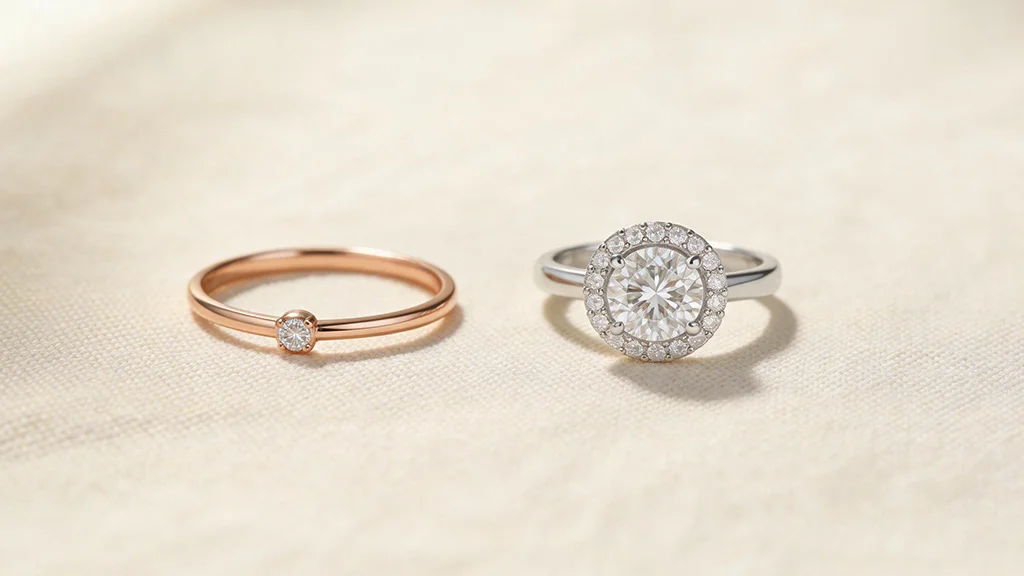
Table of Contents
You're ready to say "this is serious" — but you're not quite ready to say "will you marry me?"
Or maybe you've been together long enough to know this person is your forever, but life — career, studies, finances, distance — means the timing for a proposal just isn't right yet. What do you do?
That feeling, that space between deep love and formal commitment, is exactly where the promise ring lives. And knowing the difference between a promise ring and an engagement ring isn't just about jewellery — it's about choosing the right gesture for the right moment in your story.
The short answer: A promise ring is a symbol of commitment and future intentions — it says "I choose you" without a formal marriage proposal. An engagement ring is a formal declaration of your intention to marry, marking the beginning of your wedding journey together.
But there's much more to understand before you choose. This guide covers everything — meaning, design, cost, history, and the conversations no one tells you to have.
At a Glance: Promise Ring vs Engagement Ring
|
Promise Ring |
Engagement Ring |
|
|---|---|---|
|
Meaning |
Commitment, loyalty, future intentions |
Formal proposal to marry |
|
Typical Design |
Simple, minimalist, small stones or symbols |
Prominent centre stone, elaborate setting |
|
Average Cost |
$150 – $2000 |
$2000 – $15000+ |
|
Finger |
Any finger (often right hand) |
Left ring finger (traditionally) |
|
Occasion |
Any meaningful moment |
Formal proposal |
|
What follows |
Continued relationship growth |
Wedding planning begins |
What Is a Promise Ring?
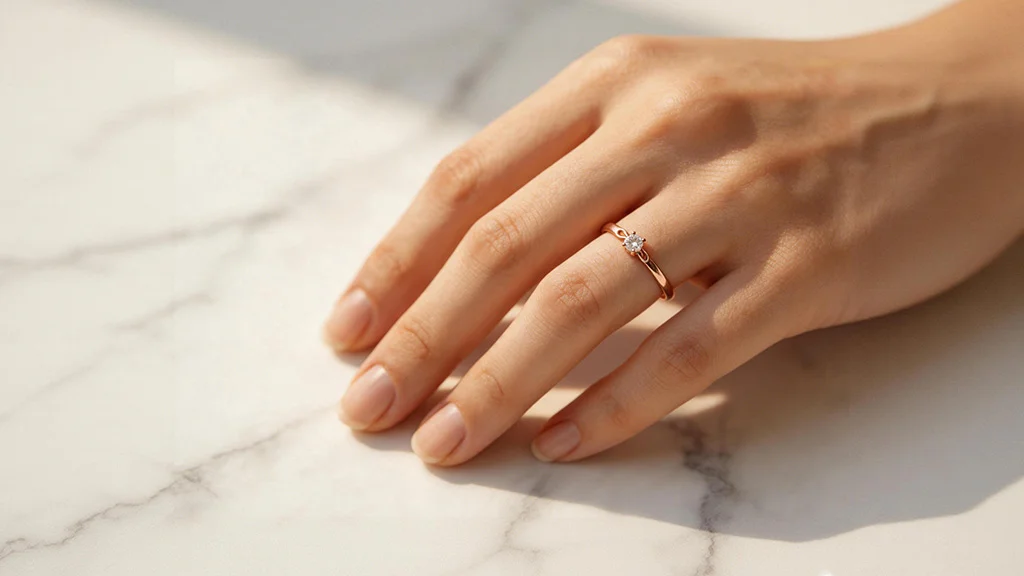
A promise ring is a piece of jewellery given to express a serious, heartfelt commitment — one that says "I am fully invested in us" without the formal weight of a marriage proposal.
Think of it as a wearable vow. It tells your partner: you matter to me, our future matters to me, and I want you to have something tangible to carry that feeling every day.
What Does a Promise Ring Symbolise?
The meaning of a promise ring is intentionally flexible, which is part of its beauty. Depending on the couple, it can represent:
- Pre-engagement commitment — you plan to get engaged eventually, but the timing isn't right yet (due to finances, education, career, or family circumstances)
- Exclusivity and loyalty — a declaration that you are fully committed to one another, even without immediate plans to marry
- Long-distance fidelity — a tangible reminder of your bond when you're physically apart
- A personal vow — some couples use a promise ring to mark a milestone in their relationship, like surviving a difficult period together or beginning a new chapter
One thing a promise ring does not automatically mean is that an engagement is imminent. This is the most important thing to understand — and to communicate clearly when you give one (more on that in a moment).
Who Gives a Promise Ring?
Promise rings are most commonly exchanged between romantic partners, but there are no strict rules about who gives them. Some couples exchange them mutually. In other relationships, one partner gives the ring to the other as a gesture of devotion.
Promise rings are especially popular among:
- Younger couples (late teens to mid-twenties) who are serious but not yet ready for engagement
- Couples navigating long-distance relationships
- Partners who are committed but waiting for a specific milestone before proposing
- Couples who want to honour their relationship without the social pressure that comes with engagement
According to wedding experts at TheKnot promise rings are especially common among younger couples and those in long-distance relationships — and their meaning can vary as widely as the couples who exchange them.
What Is an Engagement Ring?
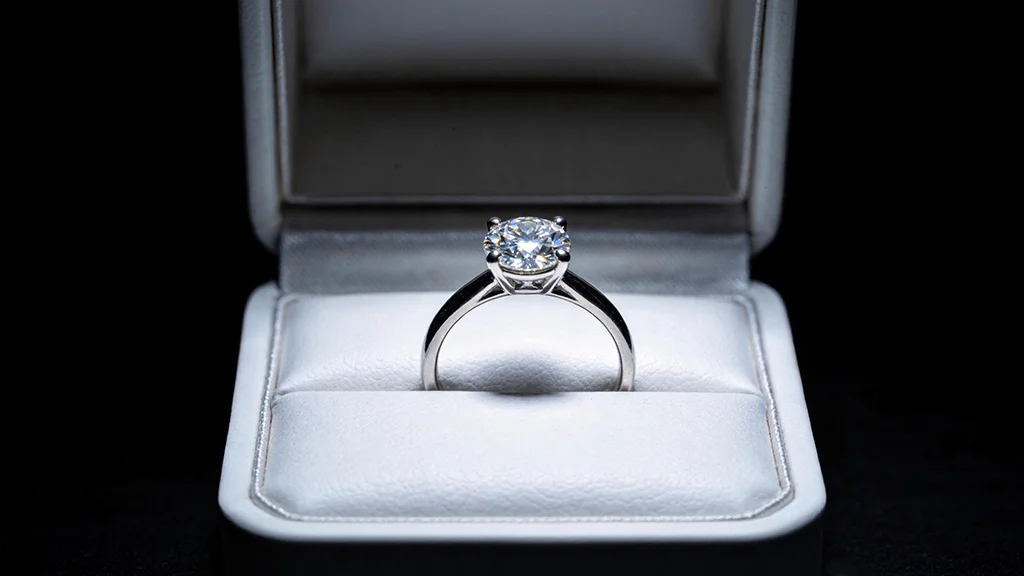
An engagement ring is a formal declaration of intention to marry. It is the centrepiece of a marriage proposal — the moment when one partner (or both, in mutual proposals) asks: will you be my spouse?
Unlike a promise ring, the meaning of an engagement ring is singular and unambiguous: I want to spend the rest of my life with you, and I am ready to begin the journey toward making that official.
What Does an Engagement Ring Symbolise?
An engagement ring carries significant social, emotional, and in many cultures, legal-adjacent weight. When someone accepts an engagement ring, it signals:
- A mutual decision to marry has been made
- The relationship has moved into a public, declared phase
- Wedding planning can now begin
- Family and friends are about to be told
The ring itself becomes a symbol worn daily as a visible statement of that commitment — a conversation piece, a source of joy, and a constant reminder of the promise made.
The Tradition Behind the Left Ring Finger
The engagement ring is traditionally worn on the ring finger of the left hand — the fourth finger. This tradition traces back to the ancient Roman belief in the vena amoris, meaning "vein of love" — a vein thought to run directly from that finger to the heart. While modern anatomy tells us this isn't literally true, the symbolism endures beautifully.
This Western tradition has been widely adopted. Many couples also observe their own cultural or religious customs alongside the ring exchange, creating a meaningful blend of personal and traditional significance.
Promise Ring vs Engagement Ring: 6 Key Differences
1. Meaning and Level of Commitment
This is the defining gap: a promise ring suggests a future possibility, while an engagement ring confirms a decision.
A promise ring says: "I am serious about us, and I see a future together." An engagement ring says: "I want to marry you. The decision is made."
One is a soft declaration. The other is a formal one. Neither is lesser — they simply belong to different chapters of a relationship.
2. Design and Style
Design is usually the most immediately visible difference between the two.
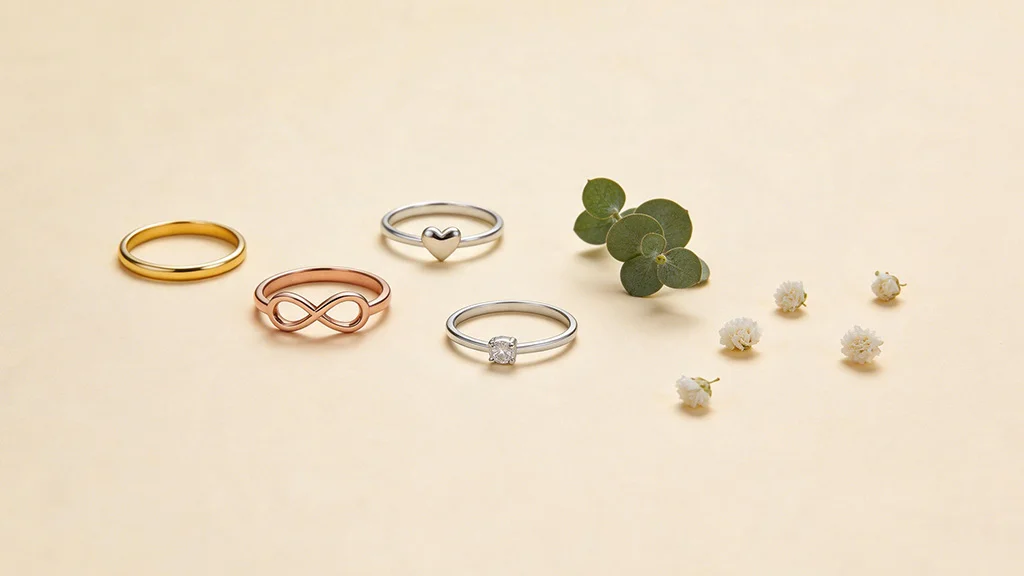
Promise rings tend to be understated and personal. Common styles include:
- Simple solitaire with a small gemstone or diamond
- Infinity bands or interlocking designs
- Heart-shaped settings
- Birthstone rings (a deeply personal choice)
- Engraved bands with meaningful words or dates
- Stackable, minimalist bands
The goal is elegance without grandeur — a ring that feels meaningful without looking like a proposal.
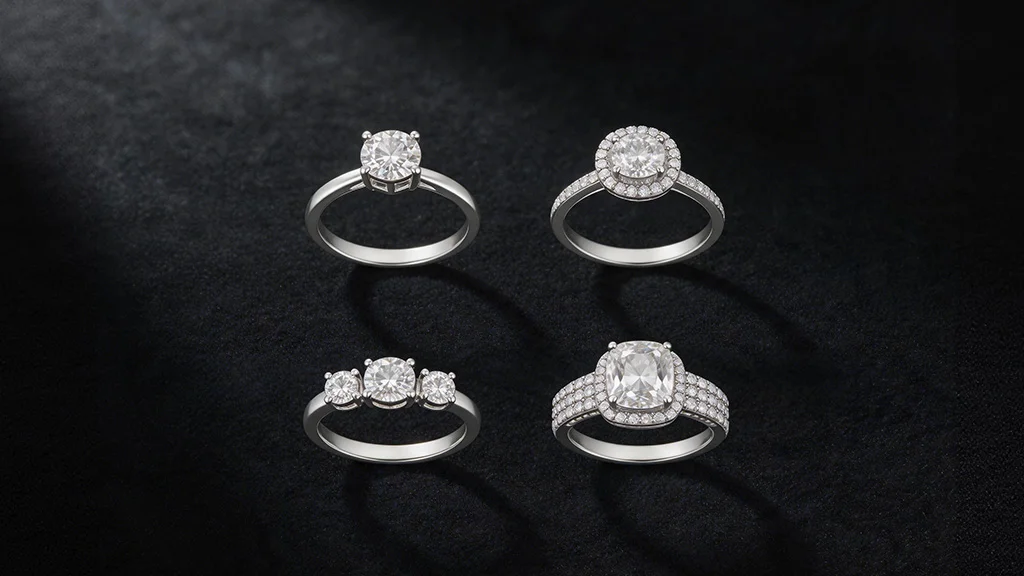
Engagement rings are typically the most significant piece of jewellery a person will receive. They feature:
- A prominent centre stone — most commonly a diamond (round brilliant, oval, pear, emerald cut, or cushion cut)
- A halo, pavé, three-stone, or solitaire setting in gold or platinum
- More elaborate metalwork and craftsmanship
- Intentionally designed to be worn daily for a lifetime
At Provence Jewellery, our engagement rings are crafted to be as individual as the love story behind them — from classic solitaires to bespoke designs that reflect your partner's unique style.
3. Cost
Cost typically reflects the level of commitment each ring represents.
Promise rings are more accessible by design, you can find a beautiful, meaningful promise ring starting from around $150, with premium designs featuring real diamonds or fine gemstones ranging up to $2000. The point is never to overspend — a promise ring's value lies in its sentiment, not its price.
Engagement rings represent a more significant investment, which is appropriate given what they symbolise. the average engagement ring typically ranges from $2000 to 15000$, with bespoke or high-carat diamond rings extending well beyond that. Industry guidance often suggests a spend of two to three months' salary, though the right budget is ultimately what you and your partner are comfortable with.
A helpful reminder: a more expensive ring does not make the love greater. What matters is that the ring is chosen with care and intention.
4. Which Finger to Wear It On
Promise rings have no universal rule. Many wearers choose the right hand's ring finger to keep the left hand free for an eventual engagement ring. Others wear it on the left ring finger if they're not yet engaged. Some wear it on the middle finger or even as a pendant on a necklace.
The freedom is part of the appeal — the promise ring belongs wherever it feels right.
Engagement rings are traditionally worn on the left ring finger. If a promise ring has been worn on that finger, it's customary to move it to the right hand after the proposal — honouring both symbols without confusion.
5. How and When It Is Given
Promise rings are typically given on a meaningful but informal occasion: a birthday, anniversary, Valentine's Day, or a quietly significant moment in your relationship. There is no expectation of getting down on one knee, though the gesture should still feel considered and heartfelt. A handwritten note explaining the ring's meaning is one of the most powerful accompaniments.
Engagement rings accompany a formal proposal — usually planned, often at a meaningful location, sometimes with family or close friends nearby. The proposal is the moment; the ring is the symbol of that moment.
6. What Comes Next
After a promise ring: the relationship continues to grow, the ring serves as a daily reminder of your commitment, and engagement may or may not follow depending on your journey together.
After an engagement ring: wedding planning begins. The social and logistical process of getting married — venues, dates, guest lists, ceremonies — typically starts within weeks or months of the proposal.
A Brief History of Promise Rings and Engagement Rings
The Ancient Origins of Promise Rings
The tradition of exchanging rings as symbols of love and commitment stretches back millennia. In ancient Rome as early as the 2nd century BC, rings were given as public symbols of a commitment to marry — not the proposal itself, but a declaration of serious intent.
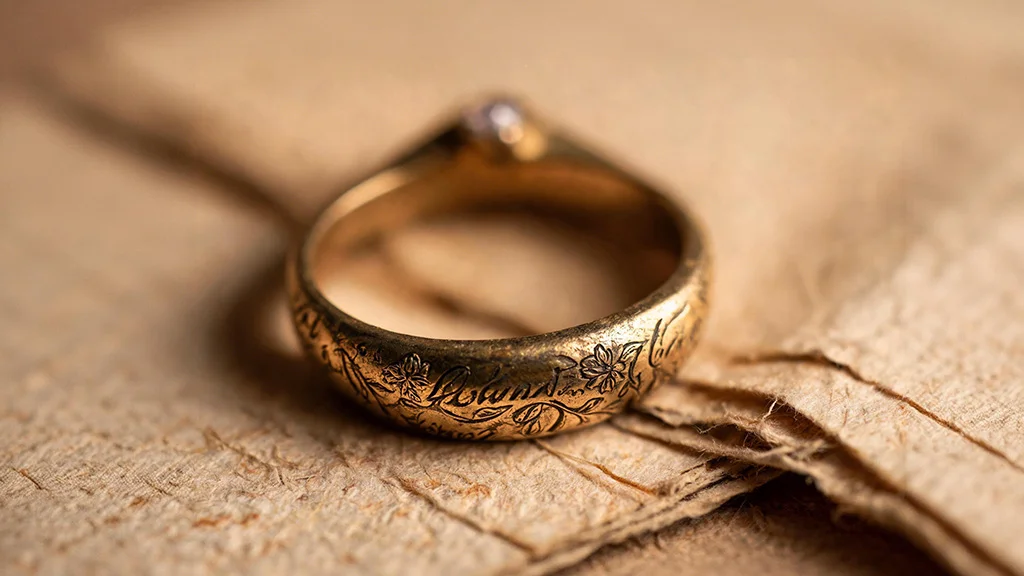
In 16th and 17th century England, posy rings became enormously popular. These were simple bands engraved on the inside with short romantic poems or phrases — intimate, private declarations of devotion. The word "posy" derives from "poesy," meaning poetry. These rings were exchanged between lovers, friends, and family members as tokens of deep affection.
Later, during the Georgian and Victorian eras, acrostic rings captured the romantic imagination. These featured a row of carefully chosen gemstones whose first letters spelled out meaningful words — a Ruby, Emerald, Garnet, Amethyst, Ruby, and Diamond might spell R-E-G-A-R-D. The encoding of a secret message in gemstones was considered the height of romantic sophistication.
From these poetic traditions, the modern promise ring emerged: a ring given to express a commitment that is real and serious, but not yet a formal proposal.
How the Engagement Ring Became a Diamond Tradition
The first recorded diamond engagement ring in history was given in 1477, when Archduke Maximilian of Austria presented one to Mary of Burgundy upon their betrothal. The gesture caught the attention of European nobility and began a slow tradition among the aristocracy.
For centuries, engagement rings featured a variety of stones — sapphires, rubies, emeralds, and pearls were all fashionable choices. It was not until 1947 that diamonds became synonymous with engagement, when De Beers launched one of the most successful advertising campaigns in history: "A Diamond is Forever." later named the most memorable advertising slogan of the twentieth century by Ad Age — linked diamond engagement rings to permanence, love, and status in the popular imagination. It worked.
Today, couples have more choices than ever — from natural diamonds to lab-grown diamonds, sapphires, moissanite, and coloured gemstones — all of which make for stunning engagement rings. What endures is not the specific stone, but the intention behind it.
Which Ring Is Right for Your Relationship?
Here is something competitors rarely tell you: there is no universally right answer. The right ring is the one that matches where you both actually are — not where you think you should be.
Signs a Promise Ring Is the Right Choice
Consider a promise ring if:
- You are deeply committed to each other, but marriage is not on the immediate horizon for practical reasons — finishing a degree, establishing your career, saving money, or supporting family
- You are in a long-distance relationship and want a tangible symbol of your bond across the distance
- You want to express the seriousness of your relationship without creating the expectation of a proposal
- You're younger, and marriage feels like the right eventual destination but the wrong immediate step
- Your partner has expressed that they would feel more secure with a visible symbol of commitment before engagement is possible
Signs an Engagement Ring Is the Right Choice
Consider an engagement ring if:
- You have openly discussed marriage together and you're both genuinely ready
- The practical circumstances that once stood in the way have resolved
- You want to make a formal, public declaration of your intent to marry
- You're ready to begin planning the next chapter — not just talking about it, but doing it
- Giving a promise ring would feel like a way of delaying a conversation you've both been ready to have
A promise ring given when an engagement is already overdue can feel like a deferral. An engagement ring given before both partners are truly ready can create unnecessary pressure. The most meaningful ring is always the honest one.
How to Choose a Promise Ring or Engagement Ring Design
Popular Promise Ring Styles
The best promise ring is one that reflects your partner's personality and your relationship's character. Popular styles include:
Simple solitaire: A single small diamond or gemstone set in a delicate band. Elegant, timeless, and unmistakably intentional without looking like an engagement ring.
Infinity band: A band incorporating the infinity symbol — ∞ — representing endlessness and eternal commitment. One of the most popular promise ring designs.
Birthstone ring: Featuring your partner's birthstone, or a combination of both partners' stones. Deeply personal and immediately meaningful.
Engraved band: A plain or minimalist band engraved with a date, initials, a phrase, or coordinates of a meaningful place. The simplest rings often carry the most weight.
Heart-shaped setting: Classic romanticism. A heart-shaped stone or heart motif in the setting conveys love directly and without ambiguity.
Popular Engagement Ring Styles
Round brilliant solitaire: The most classic and enduring choice. A single round diamond in a four or six-prong setting. Timeless, universally flattering, and always right.
Halo setting: A central stone surrounded by a ring of smaller diamonds. Creates exceptional brilliance and makes the centre stone appear larger. Romantic and glamorous.
Three-stone: A centre stone flanked by two smaller stones, traditionally representing the past, present, and future of a relationship. One of the most emotionally resonant designs.
Oval cut: Elongates the finger and offers exceptional fire. Oval diamonds have become one of the most sought-after shapes in recent years.
Pavé band: Small diamonds set along the band, creating a continuous shimmer that complements any centre stone.
Vintage / Art Deco: Intricate milgrain detailing, filigree work, and geometric patterns inspired by early 20th-century design. For the partner who loves history and craftsmanship.
A Note on Metals
Both promise rings and engagement rings are available in:
- Yellow gold (18K or 9K): Warm, classic, and increasingly fashionable again. Pairs beautifully with warmer skin tones.
- White gold: Bright and modern, it enhances the brilliance of diamonds. Requires occasional rhodium plating to maintain its colour.
- Rose gold: Romantic, warm, and distinctive. Extremely popular for promise rings in particular.
- Platinum: The most durable and prestigious choice. Naturally white, hypoallergenic, and builds a beautiful patina over time. The standard for fine engagement rings.
Can a Promise Ring Become an Engagement Ring?
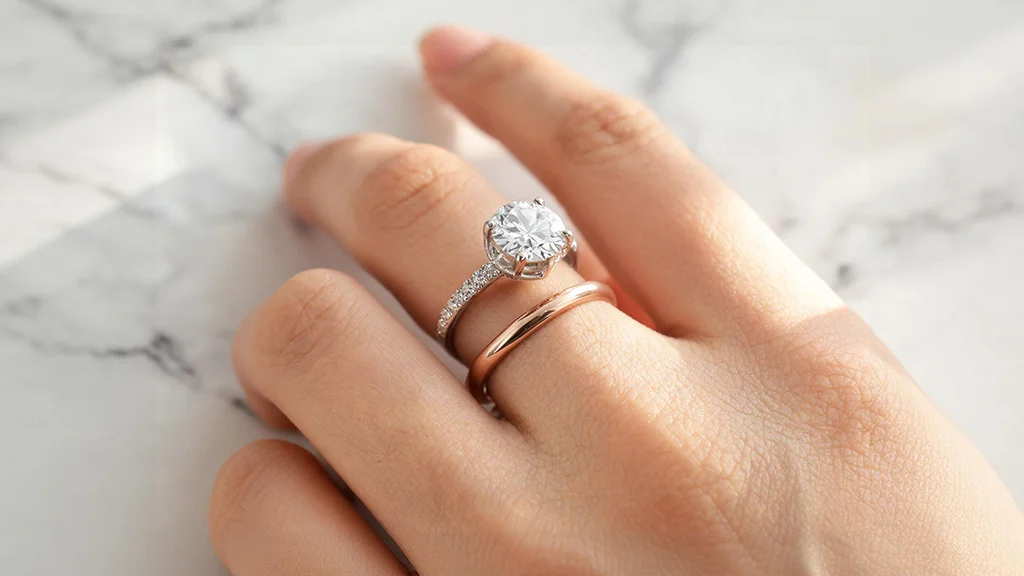
Yes — and for many couples, it does.
If a promise ring carries significant sentimental value, there is absolutely no rule that prevents it from becoming an engagement ring at a later proposal. Some options couples choose:
- Keep it as-is — propose with the same ring, letting its history add meaning to the new chapter
- Add a halo setting — a jeweller can add a ring of smaller diamonds around the original stone, transforming the ring's visual presence
- Upgrade the centre stone — replace the original stone with a larger or more prominent one while keeping the band
- Repurpose it as a wedding band — wear the promise ring alongside a new engagement ring, turning it into part of the bridal set
More commonly, couples choose to buy a new engagement ring and keep the promise ring as a separate, cherished piece — often moving it to the right hand or adding it to a ring stack.
How to Give a Promise Ring — and What to Say
This is the step that almost every guide skips, and it may be the most important one.
The promise ring's meaning is not inherent — it is created by the conversation you have when you give it. Without that conversation, a thoughtfully chosen ring can be misread as a proposal, or dismissed as a casual gift. Neither serves you or your partner.
Before You Give It
Have a genuine conversation — not necessarily at the moment of giving, but ideally before — about where your relationship is and what you both want. This is not a difficult conversation; it's actually a beautiful one. You're telling someone that they matter enough to you to mark it with a ring.
What to Say When You Give It
Your words don't need to be elaborate. They need to be honest. Here are a few approaches:
If you're giving it as a pre-engagement promise: "I'm not ready to propose yet — there are things I want to have in place first. But I want you to know that you are the person I'm building toward. This is my promise that I'm serious about our future."
If you're giving it as a symbol of commitment in a long-distance relationship: "I know the distance is hard. I want you to have something to carry with you — a reminder that I'm yours, and you're mine, wherever we are."
If you're giving it simply because the relationship has become something real: "I don't want to wait until I'm proposing to tell you how much you mean to me. This is me saying: I choose you, today, and every day after this."
What to Avoid
- Getting down on one knee unless you've already made clear this is not an engagement — the visual cue is too strong and can create confusion or disappointment
- Giving the ring in a setting so elaborate it mimics a proposal (the intention is to be meaningful, not overwhelming)
- Leaving the meaning undefined — the ring should come with words, even if those words are simple
Frequently Asked Questions
A promise ring represents love and commitment without a formal marriage proposal — it signals that the relationship is serious and the future is considered. An engagement ring is a formal proposal of marriage, marking the beginning of a couple's wedding journey. The key difference is the level and formality of the commitment they represent.
Yes. There is no rule against wearing a promise ring on the left ring finger. However, many people choose to wear it on the right hand to avoid confusion with an engagement ring. If you later become engaged, it's customary to move the promise ring to the right ring finger.
Not necessarily. A promise ring can represent many kinds of commitment — exclusivity, long-term devotion, a pre-engagement intention, or simply a meaningful personal vow. Some couples who exchange promise rings go on to become engaged; others do not. The meaning is defined by the couple, not the ring itself.
A promise ring can be worn on any finger of either hand. There are no strict rules. The most common choices are the ring finger of the right hand (to distinguish it from an eventual engagement ring) or the ring finger of the left hand (for couples who are not yet engaged and prefer the traditional finger).
Often, yes — but not always. When given with the explicit understanding that an engagement is planned but not yet happening, a promise ring functions as a pre-engagement ring. However, promise rings can also carry other meanings unrelated to engagement, such as exclusivity or personal commitment. The distinction depends on what the couple communicates it to mean.
Most commonly, the promise ring is moved to the right ring finger once an engagement ring is given on the left. Some couples continue to wear both on the same hand as a ring stack. Others store the promise ring as a sentimental keepsake. And some couples choose to repurpose the promise ring — incorporating it into the bridal set or transforming it into a wedding band.
Absolutely. Promise rings are not exclusive to any gender. Men's promise rings typically feature cleaner, more minimalist designs — flat bands in gold, silver, or platinum, sometimes with a subtle stone or engraving. The gesture and meaning are identical regardless of who is wearing the ring.
Yes. A promise ring can simply mean "I am committed to you and this relationship" without any implication of future marriage. What matters most is that you communicate clearly what the ring means when you give it — so your partner understands and shares that meaning with you.
Every Love Story Has Its Own Timeline
At Provence Jewellery, we believe there is no single right way to love someone — only the way that is true to you and your partner.
A promise ring is for the chapter before forever. An engagement ring is the declaration of forever itself. Both are beautiful. Both deserve to be chosen with care, worn with pride, and given with words that match their meaning.
Whether you are ready to say "I promise" or "I will" — we are here to help you find the ring that says it perfectly.
[Explore our Promise Ring Collection →]
[Explore our Engagement Ring Collection →]
 English