
12 Birthstones by Month: Meanings, History & What to Wear
- Written by Provence Team
- Updated on June 4, 2026
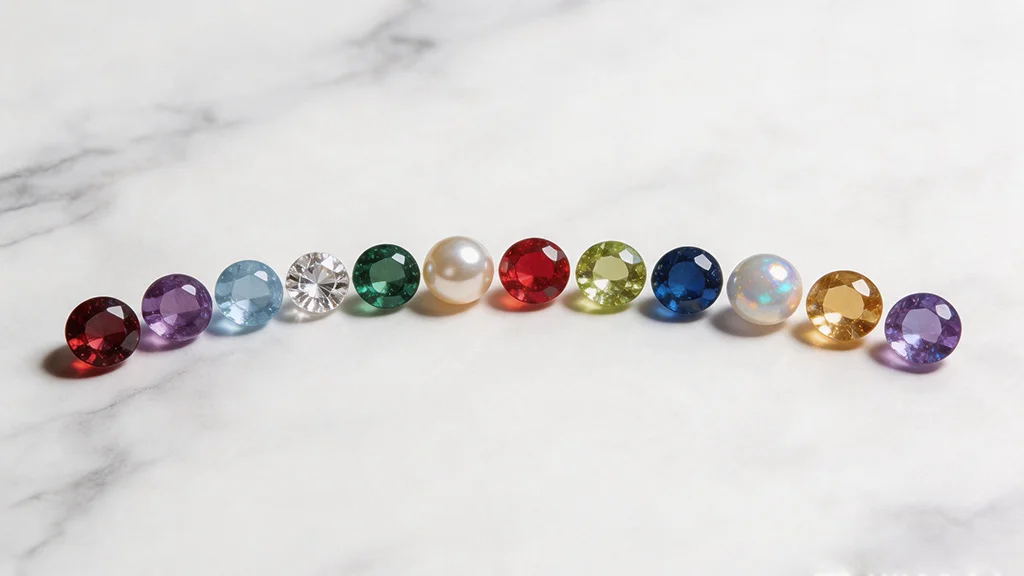
Table of Contents
Your birthstone is more than a colour on a chart. It is a stone chosen over centuries to represent the month you were born — carrying meaning, history, and a beauty that is uniquely yours. Whether you are buying birthstone jewellery for yourself or searching for the perfect gift for someone special, understanding your stone transforms a purchase into something personal.
In this guide, we cover all 12 birthstones by month: their meanings, their fascinating histories, the modern and traditional options for each month, and — because we are jewellers, not just gemologists — practical advice on how to wear each stone beautifully. We also include a full care and styling table so you can choose pieces that last a lifetime.
Quick Reference: All 12 Birthstones by Month
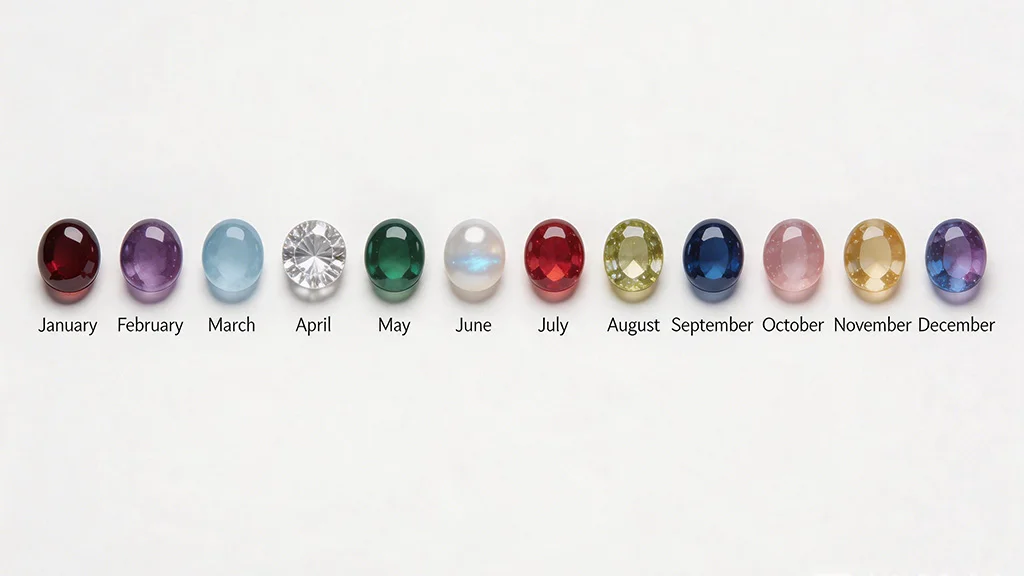
Use this table for a fast overview. Scroll down for the full story on each stone.
|
Month |
Modern Stone |
Traditional Stone |
Color |
Meaning |
|---|---|---|---|---|
|
January |
Garnet |
Garnet |
Deep red |
Protection & trust |
|
February |
Amethyst |
Amethyst |
Purple |
Calm & clarity |
|
March |
Aquamarine |
Bloodstone |
Blue-green / Red-green |
Courage & healing |
|
April |
Diamond |
Diamond |
Clear / white |
Strength & eternal love |
|
May |
Emerald |
Emerald |
Rich green |
Rebirth & wisdom |
|
June |
Alexandrite / Pearl |
Pearl / Moonstone |
Colour-change / White |
Balance & new beginnings |
|
July |
Ruby |
Ruby |
Red |
Passion & vitality |
|
August |
Peridot / Spine |
Sardonyx |
Lime green |
Strength & healing |
|
September |
Sapphire |
Sapphire |
Deep blue |
Wisdom & royalty |
|
October |
Opal / Tourmaline |
Opal |
Multi-colour / Pink |
Creativity & hope |
|
November |
Topaz / Citrine |
Topaz |
Golden yellow |
Abundance & joy |
|
December |
Blue Topaz / Tanzanite |
Turquoise / Zircon |
Blue |
Good fortune & calm |
* Asterisk on emerald hardness: emeralds are almost always treated with oil or resin to fill natural fissures, which means they require gentler care than their Mohs rating suggests.
Modern vs Traditional Birthstones — What Is the Difference?
You may have noticed that some months have two (or even three) birthstones listed. This is because there are two widely recognised birthstone lists: the traditional list, which dates to gemstone traditions in Poland from the 16th to 18th centuries, and the modern list, standardised in 1912 by the National Association of Jewelers in the United States — the organisation now known as Jewelers of America — whose official list remains the industry standard today.
The modern list was created partly to make jewellery more commercially accessible. It prioritised transparent, faceted gemstones that were easier to set alongside each other in rings and pendants — removing opaque stones like bloodstone and turquoise in favour of brighter, clearer alternatives.
Since 1912, the modern list has continued to evolve. Spinel was officially added as an August birthstone in 2016. Tanzanite joined December in 2002. Citrine has become a widely accepted November alternative to blue topaz.
January Birthstone: Garnet
Stone & Colour
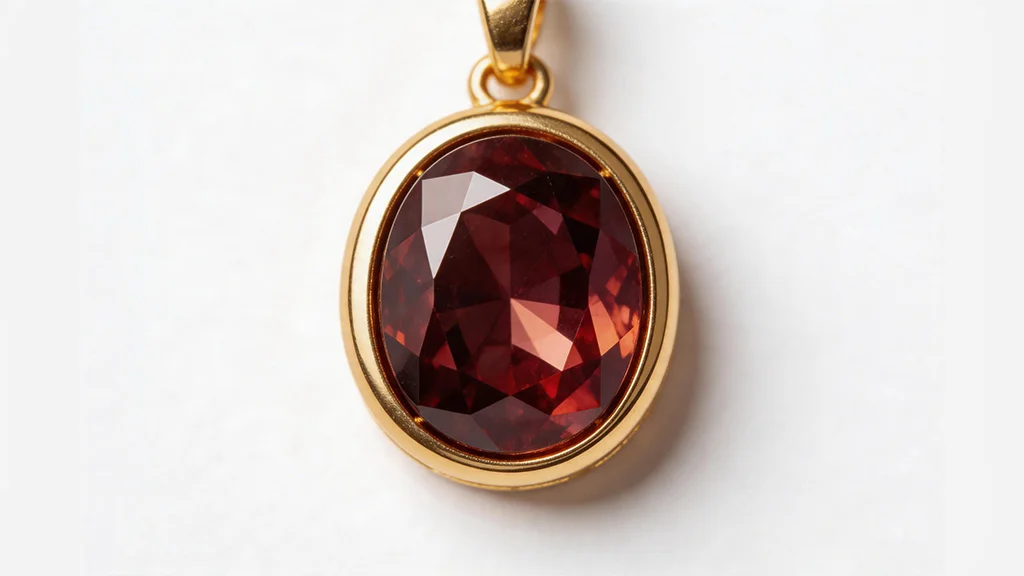
Garnet is one of the oldest and most beloved birthstones, and January is lucky to have it. While most people picture the deep, wine-red variety known as pyrope or almandine, garnet actually exists in nearly every colour — including rare green demantoid and orange spessartine. The classic January garnet is a rich, warm red that ranges from burgundy to a vivid cherry hue.
Meaning & Symbolism
Throughout history, garnet has been a stone of protection, loyalty, and trust. Medieval knights wore garnet into battle believing it would keep them safe. In relationships, garnet is said to symbolise devotion and commitment — making it a meaningful stone not just for January birthdays, but for anniversaries too. It is also associated with energy, passion, and the revitalising warmth of a new year.
History & Lore
The name garnet comes from the Latin "granatum," meaning pomegranate — a nod to the stone's resemblance to the bright red seeds of the fruit. Garnets have been found in jewellery from Ancient Egypt dating back more than 5,000 years, and were prized throughout the Roman Empire as seal stones and decorative gems. During the Victorian era, clusters of small garnets set in gold became one of the most fashionable jewellery styles in Europe.
How to Wear Garnet
Garnet's deep red warmth pairs beautifully with yellow gold and rose gold — both metals amplify the stone's richness. White gold and silver can work well with cooler-toned garnets, such as rhodolite (which leans purplish-pink). With a Mohs hardness of 6.5 to 7.5, garnet is suitable for rings with some care, but shines particularly well in necklaces and earrings where it catches the light freely.
Styling tip from our workshop: A single garnet set in a simple yellow gold bezel makes an understated but deeply elegant everyday necklace — one of our most popular birthstone pieces.
February Birthstone: Amethyst
Stone & Colour
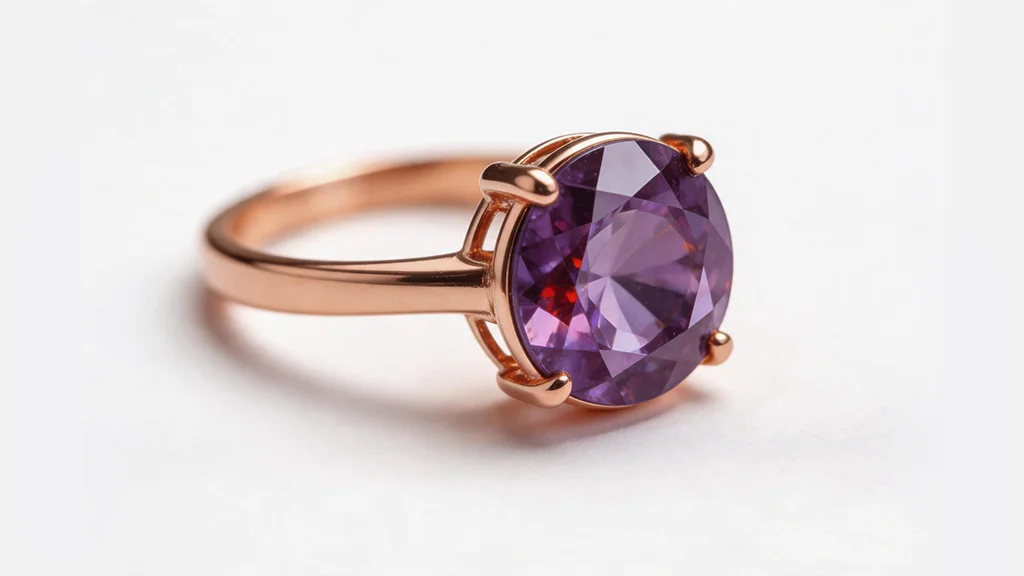
Amethyst is the purple variety of quartz, and its colour range spans from the palest lilac to a deep, saturated violet. The finest amethysts — known as "Deep Russian" — display a rich, bluish-purple with red flashes. February babies have the most regal of all the birthstones.
Meaning & Symbolism
Amethyst has long been associated with clarity of mind, inner peace, and spiritual protection. The ancient Greeks believed the stone could prevent intoxication — the word "amethyst" derives from the Greek "amethystos," meaning not drunk. Today it is connected with calm, intuition, and the ability to make clear-headed decisions. It is gifted to those navigating difficult transitions or embarking on new chapters.
History & Lore
For much of history, amethyst was considered as precious as ruby and emerald — a stone fit only for royalty. The British Crown Jewels contain numerous amethysts, and the stone was a favourite of Catherine the Great. Its value dropped significantly in the 19th century when vast deposits were discovered in Brazil, but this democratisation made it accessible to everyone without diminishing its beauty.
How to Wear Amethyst
Amethyst is one of the most versatile birthstones. Silver and white gold enhance its cooler purple tones; rose gold creates a romantic, complementary contrast. At Mohs 7, it is a solid choice for rings worn regularly, though we recommend a protective setting style such as bezel or halo for everyday pieces. Amethyst looks stunning in statement earrings and cocktail rings, where its colour can be appreciated fully.
Styling tip: For a modern look, pair a deep amethyst with brushed sterling silver and a minimalist setting. For something more traditional, a rose gold cluster ring lets the stone's warmth shine.
March Birthstone: Aquamarine (Modern) & Bloodstone (Traditional)
Stone & Colour
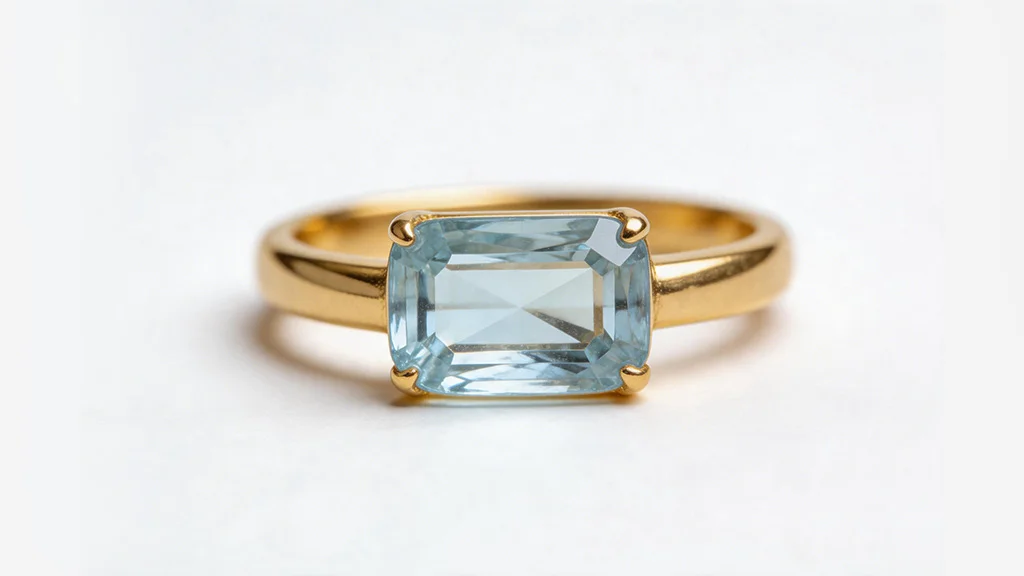
March has two very different birthstones. The modern stone, aquamarine, is a pale to medium blue variety of beryl — the same mineral family as emerald — and ranges from the lightest sky blue to a rich teal. The traditional stone, bloodstone, could not be more different: a dark green chalcedony flecked with red spots of iron oxide, which gives it its striking, ancient appearance.
Meaning & Symbolism
Aquamarine is the stone of the sea — its name literally means "water of the sea" in Latin. It is associated with clarity, calm, and clear communication. Sailors historically carried aquamarine as a talisman for protection on ocean voyages. Bloodstone carries older, deeper symbolism: strength, courage, and sacrifice. It was highly revered in the ancient world and features prominently in Christian iconography.
History & Lore
The finest aquamarines come from Brazil, though notable deposits also exist in Nigeria, Madagascar, and Pakistan. A single aquamarine crystal found in Brazil in 1910 weighed over 110 kilograms. Bloodstone's history stretches back to ancient Babylon, where it was used to make seals and amulets. Medieval crusaders carried bloodstone believing it could stop bleeding from wounds.
How to Wear Aquamarine
Aquamarine's cool, clear blue is made for white gold and platinum, which mirror its icy, luminous quality. It has excellent hardness (7.5 to 8 on the Mohs scale) and is suitable for all jewellery types including everyday rings. Large aquamarines are particularly impressive in pendant settings, where their transparency and clarity can be seen against the skin. Bloodstone, if you prefer the traditional choice, is best appreciated in pendants and men's signet rings.
Styling tip: An elongated aquamarine set east-west in a gold bar ring is one of the most contemporary and wearable aquamarine designs we create. The horizontal orientation catches light beautifully throughout the day.
April Birthstone: Diamond
Stone & Colour
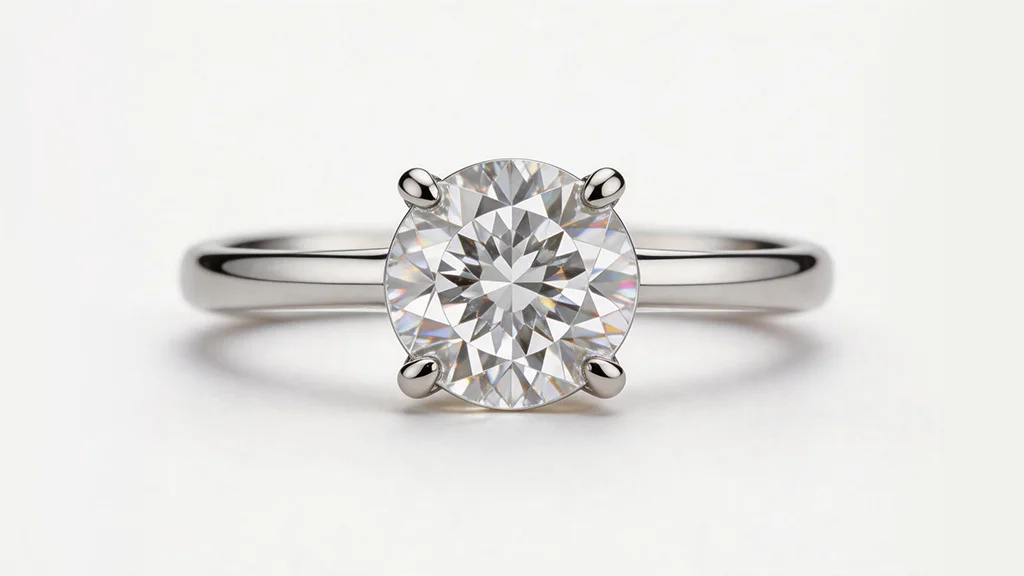
April birthdays have the most coveted birthstone of all. Diamond is the hardest natural substance on earth, scoring a perfect 10 on the Mohs scale, and it exists in every colour — though the colourless, near-colourless, and fancy coloured varieties are most prized in jewellery. Coloured diamonds in yellow, pink, blue, and green offer April babies a stunning range of options beyond the classic white stone.
Meaning & Symbolism
Diamond symbolises eternal love, strength, and clarity. Its indestructibility made it a symbol of invincibility in ancient times — Roman soldiers wore diamonds in battle, believing they carried the power of their enemies' hearts. Today, diamond is synonymous with commitment and permanence, which is why it remains the overwhelmingly popular choice for engagement rings worldwide.
History & Lore
Diamonds were first mined in India, where they were gathered from riverbeds and traded as far back as the 4th century BC. For more than a thousand years, India was the world's only source of diamonds. The discovery of South African deposits in 1866 transformed the market entirely. The famous Cullinan diamond — found in South Africa in 1905 and weighing 3,106 carats rough — was cut into several stones that now form part of the British Crown Jewels.
How to Wear Diamond
Diamond suits every metal and every jewellery type — it is the ultimate versatile stone. White gold and platinum create a seamless, icy look; yellow gold creates a classic, warm contrast that has been fashionable for centuries and is experiencing a major revival. Rose gold gives diamond a romantic, contemporary feel. For April birthdays, a diamond pendant, eternity ring, or pair of diamond studs makes the most timeless gift.
Styling tip: Don't overlook fancy coloured diamonds for a distinctive birthstone piece. A pale yellow or champagne diamond set in yellow gold is a warm, unique alternative to the traditional colourless stone.
May Birthstone: Emerald
Stone & Colour
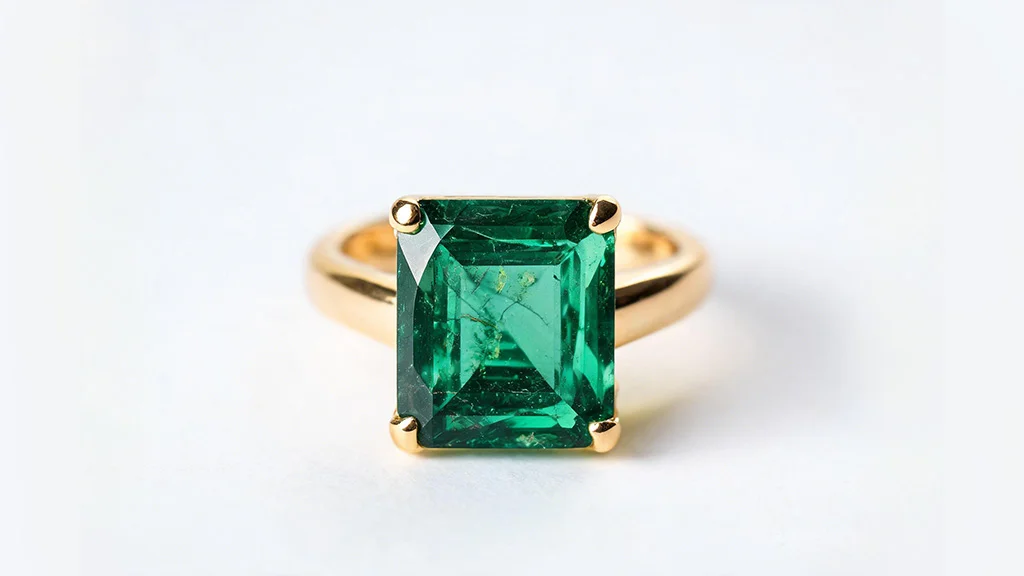
Emerald is the green variety of beryl, coloured by chromium and vanadium. Its colour ranges from light green to the deep, velvety "Colombian green" that is considered the finest in the world. Unlike most other gemstones, emeralds almost always contain natural inclusions — called a "jardin" (French for garden) — and these are considered part of the stone's character rather than flaws.
Meaning & Symbolism
Emerald has been associated with spring, rebirth, fertility, and wisdom since ancient times. The Egyptians believed emerald symbolised eternal life. The Romans dedicated emerald to Venus, goddess of love and beauty. In more modern symbolism, emerald represents growth, hope, and the renewal of nature — befitting a stone born in the heart of spring.
History & Lore
Cleopatra was famously obsessed with emeralds and claimed Egyptian mines as her own personal property. The Spanish conquistadors encountered extraordinary emeralds when they arrived in the Americas — the Muzo mines in Colombia, still active today, have been producing the world's finest emeralds for over 500 years. The Mogul Mughal emerald, carved with Islamic inscriptions and floral motifs in the 17th century, is one of the most extraordinary gemstone artefacts ever created.
How to Wear Emerald
Emerald is almost universally paired with yellow gold — the combination is a classic for good reason. The warm richness of gold enhances the green perfectly. Because emeralds are routinely oiled or resin-treated, they require more careful handling than their 7.5–8 Mohs hardness suggests: avoid ultrasonic cleaners and harsh chemicals. For everyday wear, we recommend emerald in earrings or pendants rather than rings, unless the stone is set in a protective bezel or channel setting.
Styling tip: A rectangular emerald-cut emerald (fittingly, this cut was designed specifically to showcase this stone) in a simple four-claw yellow gold ring is one of the most elegant and enduring birthstone pieces you can own.
June Birthstones: Alexandrite, Pearl & Moonstone
Stone & Colour
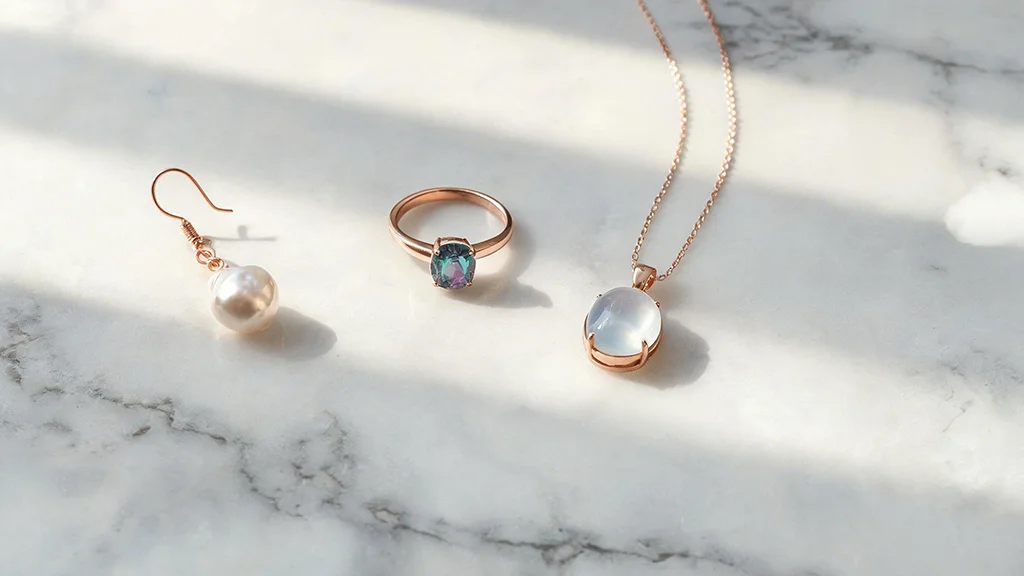
June is one of three months with three officially recognised birthstones, giving June birthdays a remarkable range of options. Alexandrite is perhaps the most extraordinary: a colour-changing chrysoberyl that appears green in daylight and transforms to red or purple under incandescent light. Pearl is the only birthstone created by a living creature — the luminous, creamy orb formed within molluscs. Moonstone is a feldspar with a glowing, internal shimmer called adularescence — it appears to have moonlight moving beneath its surface.
Meaning & Symbolism
Alexandrite is said to bring good luck and balance between the physical and spiritual worlds. In Russia, where it was first discovered, it was considered a stone of good omen. Pearl symbolises purity, wisdom, and femininity — it has been a symbol of bridal beauty for centuries. Moonstone is connected to intuition, new beginnings, and the cycles of the moon; it is particularly associated with feminine energy and emotional balance.
History & Lore
Alexandrite was discovered in the Ural Mountains of Russia in 1830, reportedly on the birthday of Tsar Alexander II — hence its name. Its colours — red and green — happened to be the national colours of Imperial Russia, which contributed to its immediate popularity. Natural alexandrite with strong colour change is extraordinarily rare and commands very high prices. Pearl has been prized since antiquity; the oldest known piece of pearl jewellery, the Susa necklace, dates to around 400 BC.
How to Wear June Birthstones
The choice between June's three stones depends entirely on your personal style. Alexandrite suits rose gold beautifully, which complements both its green and red hues. Pearl is classic in white gold, silver, or rose gold — avoid yellow gold for modern styling unless going for a vintage look. Moonstone's ethereal glow is magical in silver or rose gold. Pearl is delicate (Mohs 2.5–4.5) and should never be stored with other gems; clean only with a soft damp cloth.
Styling tip: A baroque pearl drop earring in rose gold is one of the most romantic and contemporary ways to wear this ancient stone. The irregular shape of a baroque pearl makes each piece completely unique.
July Birthstone: Ruby
Stone & Colour
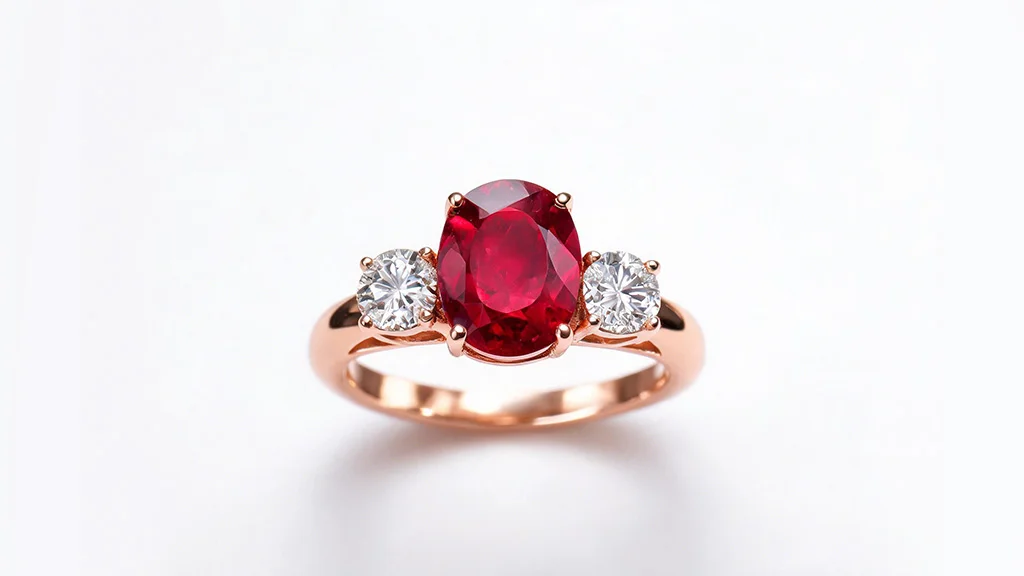
Ruby is the red variety of corundum — the same mineral as sapphire — coloured by chromium. The finest rubies display a vivid, saturated red known as "pigeon's blood," a term from the Burmese (Mogok) tradition. Colour is everything with ruby: the finest stones have a pure, strong red with a slight bluish overtone and strong fluorescence that makes them seem to glow from within.
Meaning & Symbolism
Ruby is the stone of passion, vitality, and life force. In Sanskrit, ruby is "ratnaraj" — the king of precious stones. It has been associated with love, courage, and the power of the sun throughout history. Wearing ruby was believed to protect the wearer from harm and bring good fortune. In the language of love, ruby represents deep, enduring romantic devotion — making it a powerful anniversary stone as well as a birthday gem.
History & Lore
The Mogok Valley in Burma (Myanmar) has produced the world's finest rubies for over 800 years, and Burmese rubies still command the highest prices at auction. In 2015, a Burmese ruby known as the Sunrise Ruby sold at Sotheby's for over $30 million — at the time, the highest price ever paid for a coloured gemstone. Rubies have featured in the crown jewels of virtually every major European monarchy, and a single line of rubies in the Crown of England is believed to contain stones gifted to the Black Prince in 1367.
How to Wear Ruby
Ruby is one of the hardest gemstones (Mohs 9) and is excellent for all types of jewellery including everyday rings. Yellow gold and rose gold are the classic pairings — both amplify ruby's warmth. White gold and platinum create a striking modern contrast. A ruby ring is one of the boldest, most confident birthstone choices available, and a fine ruby solitaire ring is among the most valuable pieces of jewellery a person can own.
Styling tip: A three-stone ring with a central ruby flanked by two diamonds is a timelessly elegant design that celebrates July birthdays in style — the diamonds amplify the ruby's colour while keeping the overall look polished and wearable.
August Birthstones: Peridot (Modern), Spinel (Modern) & Sardonyx (Traditional)
Stone & Colour
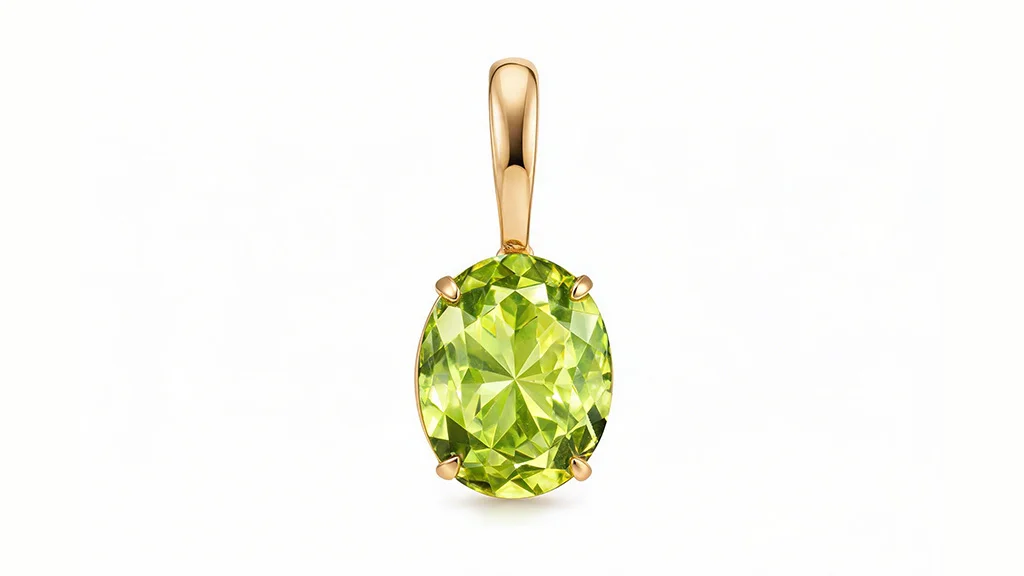
August is one of the few months with three modern options. Peridot is the most distinctive — a vivid lime or olive green that is unlike any other gemstone. It is one of only two gemstones (the other is diamond) that forms not in the earth's crust, but in the mantle, delivered to the surface by volcanic activity. Spinel, added as a modern August stone in 2016, comes in a wide range of colours, with red and hot pink being the most sought-after. Traditional sardonyx is a layered stone of reddish-brown and white bands, used historically for carved cameos.
Meaning & Symbolism
Peridot is associated with strength, positive energy, and healing. Ancient Egyptians called it the "gem of the sun" and believed it protected the wearer from terrors of the night. Spinel shares many of ruby's associations with vitality and energy — it was even confused with ruby for centuries, leading to some famous misidentifications (the so-called "Black Prince's Ruby" in the Imperial State Crown is actually a spinel). Sardonyx, the traditional stone, represents strength of character and courage.
History & Lore
The island of Zabargad in the Red Sea was the primary source of peridot for ancient Egypt, and Egyptian miners worked the island for over 3,500 years. NASA has confirmed that peridot crystals exist on Mars and have been found in meteorites — making it literally a stone from outer space. The largest cut peridot in the world, a 310-carat stone, is in the Smithsonian Institution in Washington DC.
How to Wear Peridot
Peridot's vivid, slightly acidic green looks most vibrant set in yellow gold, which echoes its sunny warmth. Silver also works well for a cooler, more contemporary look. At Mohs 6.5 to 7, peridot is best reserved for earrings, necklaces, and occasional-wear rings — it is not the most durable choice for a daily-wear ring. Spinel, by contrast, with its hardness of 8, is suitable for all jewellery types.
Styling tip: Peridot is one of the most underappreciated birthstones — its vivid, unusual green stands out in a crowd and looks particularly striking in a simple gold drop earring that allows its colour to speak for itself.
September Birthstone: Sapphire
Stone & Colour
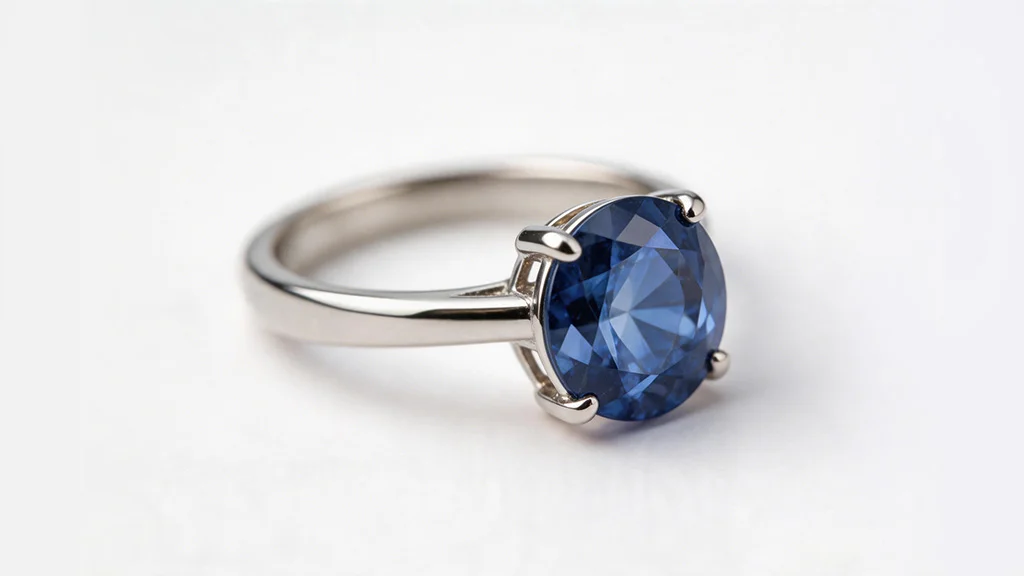
Sapphire is the blue variety of corundum — though it actually occurs in every colour except red (which is ruby). The classic September sapphire is a rich, velvety cornflower blue or the deeper royal blue associated with the finest Ceylon and Burmese stones. "Fancy" sapphires in pink, yellow, orange, green, and the extraordinary bi-coloured "padparadscha" (a blend of pink and orange named for the lotus flower) offer extraordinary options for those who want something different.
Meaning & Symbolism
Sapphire has been associated with wisdom, royalty, and divine favour since antiquity. Medieval clergy wore sapphires as a symbol of heaven. Kings believed sapphire would protect them from harm and attract good fortune. In the modern world, sapphire retains its association with loyalty, honesty, and trust — which is why Prince Charles chose a sapphire for Princess Diana's engagement ring in 1981, and why Prince William presented the same ring to Catherine Middleton in 2010.
History & Lore
The Kashmir Valley of northern India produced what are considered the finest sapphires ever found — intensely blue, velvety stones with a quality of light unlike anything from other sources. Kashmir sapphire production largely ended in the early 20th century, which makes stones with Kashmir provenance extraordinarily rare and valuable today. The Star of Adam, a 1,404.49-carat blue star sapphire from Sri Lanka, is the largest known blue star sapphire in the world.
How to Wear Sapphire
At Mohs 9, sapphire is second only to diamond in hardness and is ideal for all jewellery, including everyday rings. White gold and platinum are the modern, classic pairing — they enhance sapphire's cool blue tones. Yellow gold creates a warmer, more traditional look that is currently very fashionable for sapphire engagement rings. For pink or yellow sapphires, rose gold and yellow gold respectively are stunning choices.
Styling tip: Sapphire is the birthstone that works for almost any occasion. A simple sapphire solitaire ring in platinum is one of the most elegant, enduring pieces of jewellery money can buy — timeless in a way that transcends trends.
October Birthstones: Opal (Traditional) & Tourmaline (Modern)
Stone & Colour
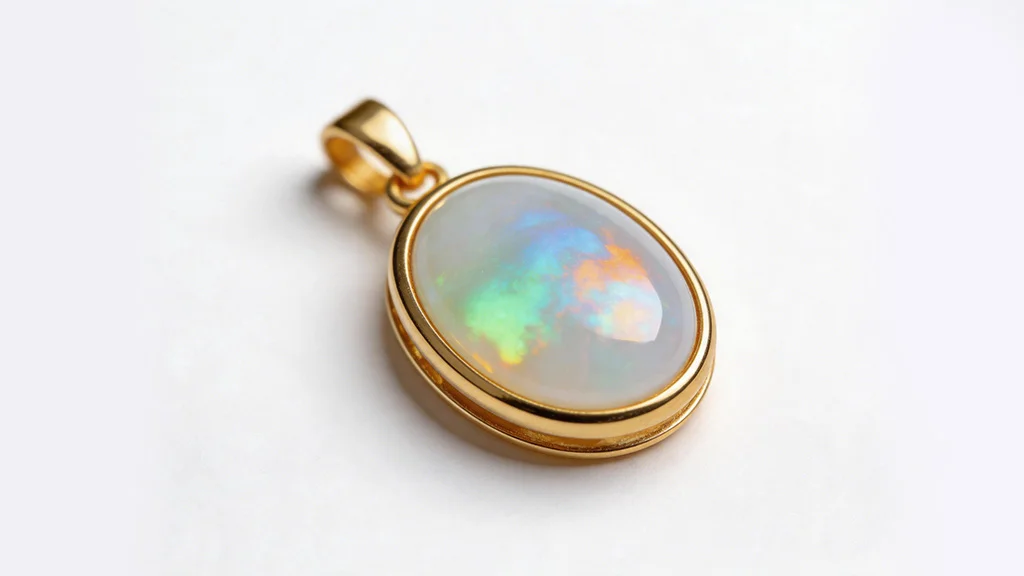
October has two birthstones of extraordinary character. Opal is unique in the gem world — it diffracts light internally to produce a shifting rainbow of colours called "play-of-colour," and no two opals are ever identical. White opals have a pale body tone; black opals (from Lightning Ridge in Australia) have a dark body tone that makes their colour play explode with vivid contrast. Tourmaline rivals opal for variety: it occurs in virtually every colour, with pink, watermelon (pink core with green rind), and Paraíba (neon blue-green) being particularly prized.
Meaning & Symbolism
Opal is associated with creativity, inspiration, and emotional amplification. Shakespeare called it the "Queen of Gems." In ancient Rome, opal was considered the luckiest of all stones, representing hope and purity. A 19th-century novel by Sir Walter Scott created a superstition that opal was unlucky — a misreading that damaged its reputation for decades but has largely been forgotten. Tourmaline is associated with compassion, healing, and the ability to see the good in all situations.
History & Lore
Australia produces around 95% of the world's commercial opals, with major sources in Coober Pedy (South Australia), Lightning Ridge (New South Wales), and Boulder opal fields in Queensland. The Andamooka Opal, presented to Queen Elizabeth II in 1954, weighs 203 carats and is among the most famous opals in the world. Paraíba tourmaline, discovered in Brazil in the 1980s and later found in Mozambique and Nigeria, became one of the most valuable gemstones per carat in the world due to its extraordinary neon colour, caused by copper.
How to Wear Opal & Tourmaline
Opal is delicate (Mohs 5.5 to 6.5) and sensitive to dehydration — avoid prolonged sun exposure and ultrasonic cleaners. It is best worn in earrings, pendants, and occasional-wear rings with protective settings. Rose gold and silver complement opal's iridescence beautifully. Tourmaline, at Mohs 7 to 7.5, is more robust and works well in all jewellery types. Pink tourmaline in rose gold is one of the most romantic birthstone combinations available.
Styling tip: An opal set in a simple yellow gold bezel pendant is one of the most wearable opal designs — the bezel protects the stone's edges while the open setting allows light to enter from all sides and maximise the colour play.
November Birthstones: Topaz (Modern) & Citrine (Alternative)
Stone & Colour
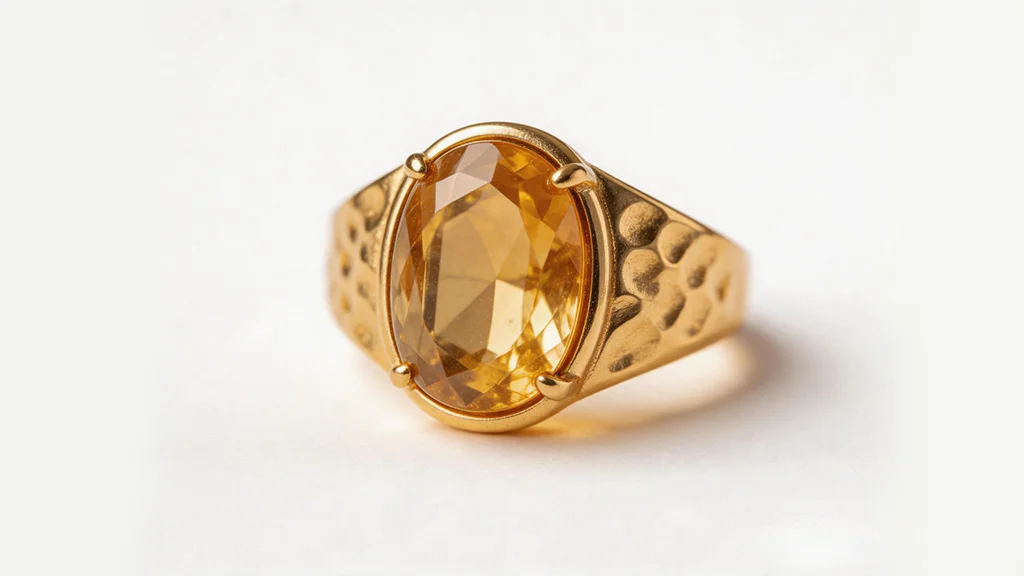
November's modern birthstone is imperial topaz or blue topaz, and its widely accepted alternative is citrine. Imperial topaz — warm golden-orange to sherry-red — is the most valuable variety of topaz. Blue topaz, which ranges from a pale sky blue to the deep "London Blue," is the most commercially popular and widely available. Citrine is a warm yellow to amber variety of quartz, with a sunny cheerfulness that suits November perfectly as the days shorten and warmth becomes precious.
Meaning & Symbolism
Topaz is associated with abundance, joy, and good health. The ancient Romans believed topaz could improve eyesight. In the Middle Ages, it was thought to cool anger and cure madness. Citrine shares topaz's associations with positivity and abundance — it is often called the "Merchant's Stone" because it was believed to attract wealth and success. Both stones are connected with the warmth, generosity, and gratitude of the autumn season.
History & Lore
The Braganza, a 1,680-carat stone in the Portuguese Crown Jewels, was long thought to be the world's largest diamond. It was later identified as a colourless topaz. The largest faceted gemstone ever cut — the American Golden Topaz at 22,892.5 carats — is on display at the Smithsonian. Citrine's name comes from the French "citron" (lemon), and it was extremely popular in Art Deco jewellery in the 1920s and 1930s due to its bold, warm colour.
How to Wear November Birthstones
Imperial topaz's golden warmth reaches its peak when set in yellow gold — the combination is rich and luxurious. Blue topaz works beautifully in white gold or silver. At Mohs 8, topaz is a durable choice for all jewellery. Citrine, at Mohs 7, is suitable for most types of jewellery and is particularly popular in large statement pieces — cocktail rings, pendants, and chandelier earrings — where its cheerful golden colour makes a bold impression.
Styling tip: A faceted citrine set in hammered yellow gold makes one of the warmest, most autumnal birthstone pieces. The texture of hammered gold catches the light alongside the stone and creates a beautiful, artisanal quality.
December Birthstones: Blue Topaz, Tanzanite, Turquoise & Zircon
Stone & Colour
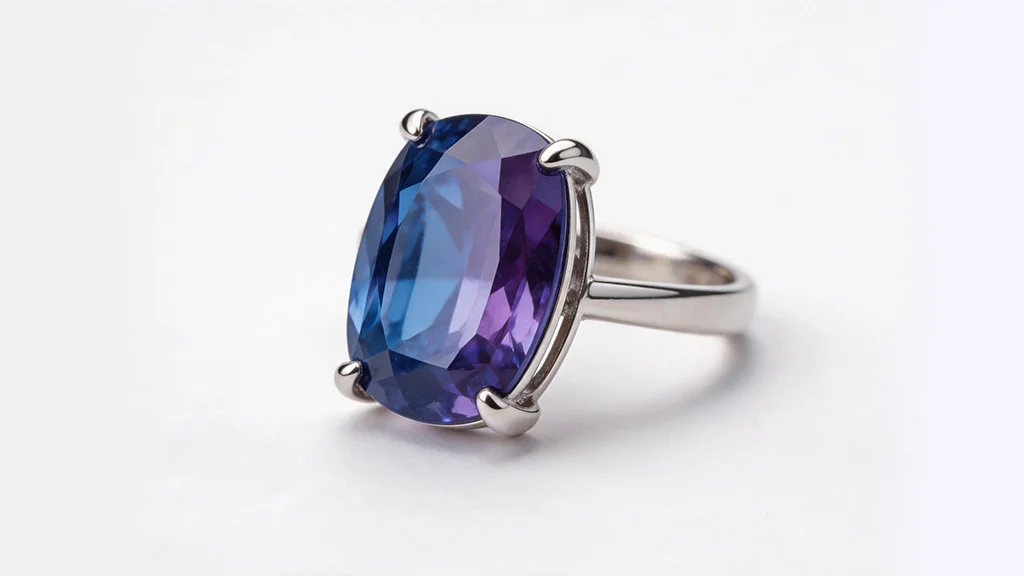
December has four associated birthstones — more than any other month. Blue topaz (modern) spans from pale sky blue to deep London Blue. Tanzanite (modern, added 2002) is found only in a small area of Tanzania and displays a trichroic quality — appearing blue, violet, or burgundy depending on the viewing angle. Turquoise (traditional) is the iconic sky-blue to blue-green opaque stone used in jewellery for thousands of years. Blue zircon (traditional) is a brilliant, high-dispersion stone that was the most popular blue gem in Europe before tanzanite and blue topaz became available.
Meaning & Symbolism
All four December birthstones share associations with calm, good fortune, and clarity as the year comes to an end. Turquoise is one of the oldest protective talismans in human history, worn by pharaohs, Aztec kings, and Native American peoples alike. Tanzanite is associated with wisdom, dignity, and spiritual insight. Blue topaz represents friendship, love, and good health. Blue zircon was historically believed to bring peaceful sleep and drive away evil spirits.
History & Lore
Tanzanite was discovered in 1967 by a Maasai tribesman in the Merelani Hills of northern Tanzania. Tiffany & Co. acquired marketing rights and gave the stone its name — a masterclass in gemstone branding. Tanzanite is now estimated to be 1,000 times rarer than diamond and, since its only source is a small mining area near Mount Kilimanjaro, is considered a finite resource. Turquoise has been mined in the Sinai Peninsula since at least 6,000 BC, making it one of the first gemstones ever used in jewellery.
How to Wear December Birthstones
All four December stones suit silver and white gold — the cool, icy palette that mirrors the winter month. Tanzanite is particularly stunning in platinum, which enhances its velvety blue-violet quality. Turquoise is magical in silver and yellow gold, both of which reflect its tribal, ancient heritage. Tanzanite has a Mohs hardness of 6.5 to 7 and is best reserved for pendants and earrings, or rings worn occasionally rather than daily. Blue topaz (Mohs 8) and blue zircon (Mohs 7.5) are more durable choices for rings.
Styling tip: Tanzanite's extraordinary colour shift means it looks different under every light source. Choose a setting that allows you to tilt and move the stone — an open-claw solitaire rather than a bezel will let you appreciate the full range of its colours.
How to Choose & Care for Birthstone Jewellery
Choosing a birthstone piece is about more than colour — it is about how and where you plan to wear it. A stone's hardness, typical treatments, and sensitivity to chemicals and heat all affect how well it will survive daily life. Here is our practical guide.
Mohs Hardness & Wearability at a Glance
|
Stone |
Hardness (Mohs) |
Ring wear |
Best jewellery type |
Ideal metal |
|---|---|---|---|---|
|
Garnet |
6.5–7.5 |
Moderate |
Ring, necklace |
Yellow / rose gold |
|
Amethyst |
7 |
Good |
All types |
Silver, white gold |
|
Aquamarine |
7.5–8 |
Very good |
All types |
White gold, platinum |
|
Diamond |
10 |
Excellent |
All types |
All metals |
|
Emerald |
7.5–8 |
Moderate |
Necklace, earrings |
Yellow gold |
|
Pearl |
2.5–4.5 |
Delicate |
Necklace, earrings |
Rose gold, silver |
|
Ruby |
9 |
Excellent |
All types |
Yellow / rose gold |
|
Peridot |
6.5–7 |
Moderate |
Earrings, necklace |
Yellow gold, silver |
|
Sapphire |
9 |
Excellent |
All types |
White gold, platinum |
|
Opal |
5.5–6.5 |
Delicate |
Earrings, pendant |
Rose gold, silver |
|
Topaz |
8 |
Good |
All types |
All metals |
|
Turquoise |
5–6 |
Delicate |
Earrings, bangle |
Silver, yellow gold |
* Most emeralds are treated with oil or resin; avoid ultrasonic cleaning.
General Care Guidelines
- Clean most birthstone jewellery with warm water, a small amount of mild dish soap, and a soft brush. Rinse thoroughly and dry with a lint-free cloth.
- Store each piece separately to prevent harder stones from scratching softer ones. Fabric-lined compartments or individual pouches are ideal.
- Remove birthstone rings before gardening, sport, or heavy housework. Even hard stones can chip under sharp impact.
- Pearls, opals, and turquoise should never be cleaned with ultrasonic cleaners or steamers. Pearls should also be restrung periodically if worn as a necklace.
- Take all fine birthstone jewellery to a professional jeweller for a clean and check at least once a year.
Metal Pairing Guide
The right metal transforms a birthstone piece. Here is our jeweller's shorthand:
- Yellow gold: Best with warm-toned stones — ruby, garnet, citrine, emerald, imperial topaz, peridot
- Rose gold: Best with soft, romantic stones — amethyst, morganite, pink tourmaline, pearl, opal, alexandrite
- White gold / platinum: Best with cool, clear stones — diamond, aquamarine, sapphire, blue topaz, tanzanite
- Silver: Best with bohemian or earthy stones — turquoise, moonstone, opal, amethyst (budget-friendly option)
Birthstone Jewellery Gift Ideas
A birthstone piece is one of the most personal and lasting gifts you can give. Here are our most popular options by occasion:
For a Birthday
A birthstone pendant is the most universally wearable gift — it suits all ages and styles. A simple solitaire in the recipient's metal of choice is elegant and enduring. For a milestone birthday (21st, 30th, 40th, 50th), consider a more significant piece: a birthstone ring, a diamond and birthstone eternity band, or a custom-designed piece.
For a New Baby
A mother's birthstone pendant or a charm featuring both mother's and baby's birthstones is a deeply meaningful gift for a new parent. A single small birthstone stud is a lovely first piece for a child.
For an Anniversary
Couples often choose a piece combining both partners' birthstones. A two-stone ring or pendant tells a love story in gems. Garnet, ruby, sapphire, and diamond are all traditional anniversary stones with deep romantic associations.
At Provence Jewellery, every birthstone piece is made to order. Explore our birthstone jewellery collection or speak to our team about creating a custom piece featuring the stone that matters most to you.
Frequently Asked Questions
Absolutely. There are no rules in jewellery — only personal preference. Many people wear the birthstone of a loved one as a tribute, or simply choose a stone they love regardless of birth month. The tradition of birthstones exists to add meaning, not to restrict.
Each month has at least two options — a modern and a traditional stone — and several months have three or more. If you dislike your primary birthstone, explore the alternatives. October's opal and tourmaline are very different stones; November's topaz and citrine suit completely different tastes. There is almost certainly a beautiful stone associated with your birth month.
Mostly, but not entirely. The modern list standardised in 1912 in the United States is the most widely used globally. Some countries and cultures have their own traditional lists that differ slightly. The Vedic tradition in India has a completely separate system of planetary gemstones. For the purposes of Western jewellery, the modern and traditional lists in this guide cover the vast majority of usage.
Alexandrite is considered one of the rarest birthstones — fine quality natural alexandrite with strong colour change is extraordinarily scarce and valuable. Tanzanite is rarer than diamond by some estimates and comes from a single mining location. Paraíba tourmaline (an October stone) is also among the rarest and most valuable gemstones per carat in the world.
Per carat, fine ruby, alexandrite, and padparadscha sapphire are among the most expensive birthstones. Diamond commands the largest overall market but is not necessarily the most expensive per carat at the finest quality levels. The most valuable gemstone in the world by sale price was a Burmese pigeon's blood ruby sold in 2015 for over $30 million.
Yes — and they are increasingly popular. Sapphire engagement rings became globally famous after Prince William's proposal to Catherine Middleton. Ruby, emerald, and aquamarine engagement rings are all beautiful choices. The key consideration is durability: stones with a Mohs hardness of 8 or above (sapphire, ruby, alexandrite, topaz, spinel) are best suited to everyday rings. Softer stones like opal and pearl are better in occasional-wear settings.
Purchase from a reputable jeweller who provides documentation of the stone's origin and, for significant purchases, a gemological certificate from a recognised laboratory such as GIA, AGL, or Gübelin. At Provence Jewellery, we are happy to discuss the provenance and quality of every stone in our collection.
Your Birthstone, Your Story
A birthstone is a thread connecting you to centuries of human history, belief, and beauty. Whether you choose a garnet for protection in the depths of January or a turquoise for good fortune at the close of December, you are participating in a tradition that stretches back to the ancient world — and forward into a piece of jewellery that is uniquely yours.
At Provence Jewellery, we believe every birthstone piece should be made with the same care and intention that makes the stone meaningful. If you would like to explore our birthstone jewellery collection, commission a custom piece, or simply ask a question about the stone that matters most to you, our team is always delighted to help.
Explore our birthstone jewellery collection at Provence Jewellery — or contact us to discuss a bespoke piece made especially for you.
 English