
What is 750 Gold? Everything You Need to Know About 18K Gold
- Written by Provence Team
- Updated on June 6, 2026
Table of Contents
You've found a beautiful piece of jewellery — a ring, a necklace, a bracelet — and tucked inside the band or along the clasp, you notice a tiny stamped number: 750. What does it mean? Is it a serial number? A code? A guarantee of quality?
It's all three, in a way.
The number 750 is a hallmark — an internationally recognised mark that tells you exactly what the gold in your jewellery is made of. In this guide, we'll explain what 750 gold is, how to identify it, how it compares to other gold types, and why it's the standard Provence Jewellery chooses for every piece we craft.
What Does 750 Mean on Jewelry?
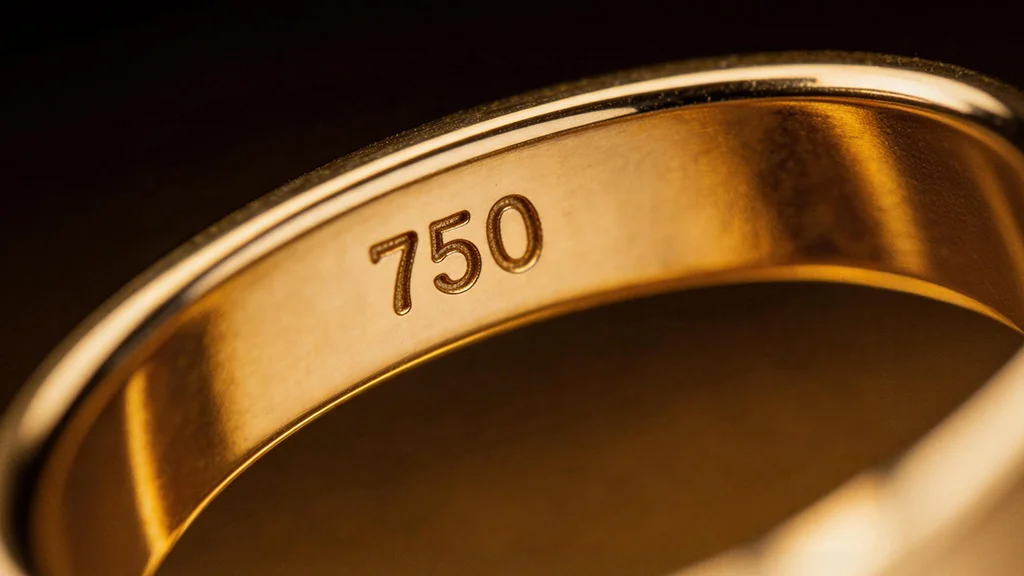
The number 750 stamped on gold jewellery means the piece contains 75.0% pure gold. It is the European millesimal fineness system — a way of expressing gold purity as parts per thousand. 750 parts out of 1,000 are pure gold; the remaining 250 parts are other metals added to give the gold its strength and colour.
In the karat system used widely in the UK and US, 750 gold is the same as 18-karat (18K) gold. Both marks refer to identical gold content — 18 parts gold out of 24.
Quick answer: 750 = 18K = 75% pure gold.
You may also see it written as AU 750 on some pieces. "AU" is the chemical symbol for gold (from the Latin aurum), so AU 750 simply confirms the metal is gold at 750 parts per thousand purity. It carries the same meaning as a plain 750 stamp.
The Karat System and Gold Purity Explained
Pure gold — 24 karat — is beautiful, but it's also extremely soft. Left unmixed, it bends, scratches, and deforms with very little force. That's why gold jewellery is almost always made from an alloy: a blend of gold and other metals that preserves the beauty while adding the durability needed for everyday wear.
Gold purity is measured in two parallel systems:
|
Karat |
Millesimal Mark |
Pure Gold Content |
Typical Use |
|---|---|---|---|
|
24K |
999 |
99.9% |
Bullion, investment bars |
|
22K |
916 |
91.6% |
Traditional Asian jewellery, coins |
|
18K |
750 |
75.0% |
Fine jewellery, engagement rings |
|
14K |
585 |
58.5% |
Popular everyday jewellery (US-market) |
|
10K |
417 |
41.7% |
Minimum legal "gold" in the US |
750 gold sits at the premium end of the wearable-jewellery spectrum. It is pure enough to hold exceptional value and rich colour, yet robust enough to withstand daily wear — a balance that has made it the global benchmark for luxury and fine jewellery.
What Metals Are Mixed with 750 Gold?
The 25% of non-gold metal in 750 jewellery is not accidental — it's a carefully engineered recipe that determines the colour, hardness, and character of the finished piece. Here's exactly what goes into each gold colour:
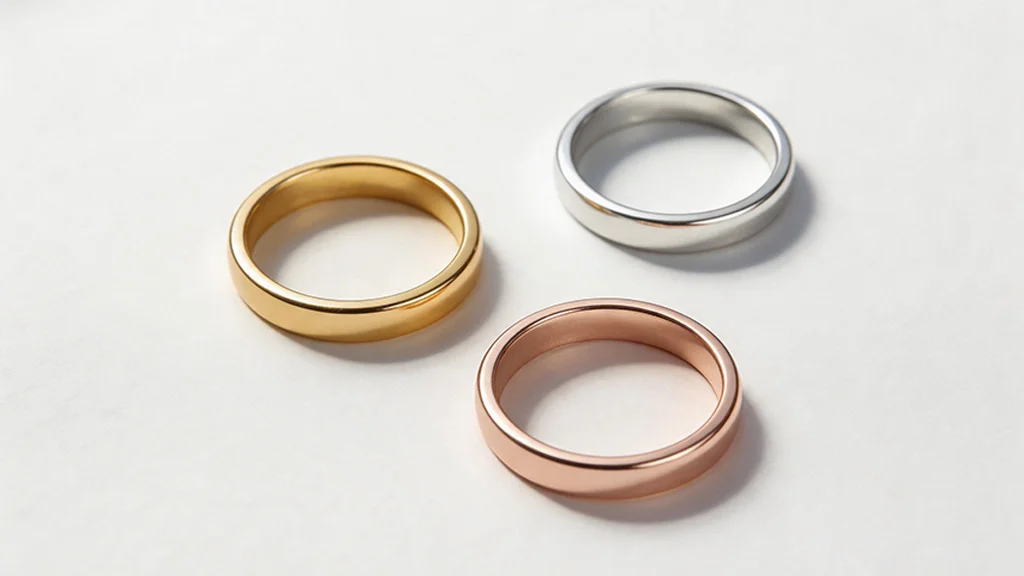
Yellow Gold (750)
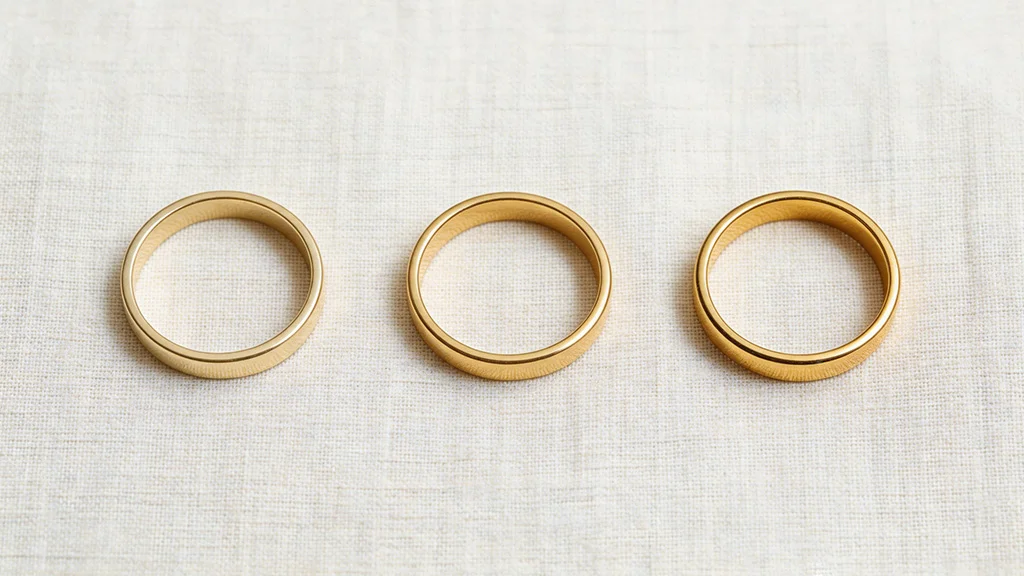
The classic. Yellow 18K gold typically blends:
- 75% pure gold
- ~12.5% fine silver — softens the colour and adds malleability
- ~12.5% copper — adds warmth and hardness
The result is the warm, rich yellow that most people picture when they think of gold jewellery. Compared to 9K or 14K yellow gold, 18K is noticeably deeper and more saturated in colour — because more of what you see is actual gold.
The World Gold Council — the global authority on gold — confirms that the alloy compositions above are the industry-standard formulations used by jewellers worldwide. Read the World Gold Council's full guide to gold jewellery colour and purity →
White Gold (750)
White gold achieves its cool, silvery tone by replacing the copper and silver with lighter metals:
- 75% pure gold
- ~10–15% palladium (or nickel in some formulations) — creates the white tone
- ~10–15% silver or zinc — adjusts hardness and workability
Most white gold jewellery is also rhodium-plated — given a thin coat of rhodium (a platinum-group metal) to enhance the bright white finish and protect the surface. Over time this plating can wear through on high-contact pieces like rings, revealing a slightly warmer tone beneath. Re-plating is a simple, inexpensive service.
A note on nickel sensitivity: Some white gold alloys use nickel rather than palladium. Nickel can cause skin reactions in people with sensitive skin or nickel allergies. If this concerns you, always confirm your jeweller uses palladium-based white gold — all Provence Jewellery white gold pieces are nickel-free.
Rose Gold (750)
Rose gold's warm, blush tone comes from a higher copper content:
- 75% pure gold
- ~20–22% copper — the primary driver of the pink hue
- ~3–5% fine silver — balances hardness and colour intensity
The more copper in the alloy, the deeper and redder the rose tone. Rose gold is naturally more resistant to scratching than yellow gold due to its higher copper content — a practical benefit as well as a beautiful one.
750 Gold vs Other Karats: Which Is Right for You?
Choosing the right gold purity is a personal decision that depends on how you wear jewellery, what you value most, and your budget. Here's how 750 gold compares to the most common alternatives:
750 (18K) vs 585 (14K)
|
18K / 750 Gold |
14K / 585 Gold |
|
|---|---|---|
|
Pure gold content |
75% |
58.5% |
|
Colour richness |
Deeper, warmer yellow |
Slightly paler |
|
Hardness |
Good |
Slightly harder |
|
Scratch resistance |
Very good |
Marginally better |
|
Price |
Higher |
More affordable |
|
Resale value |
Higher |
Lower |
|
Best for |
Fine jewellery, heirloom pieces, special occasions and daily wear |
Everyday jewellery, active lifestyles, tighter budgets |
Bottom line: If you're investing in a piece you intend to keep — an engagement ring, a wedding band, a meaningful gift — 18K gold's richer colour, higher value, and status as the global fine jewellery standard makes it the better choice. 14K suits buyers who prioritise affordability or need a piece that withstands very active daily use.
750 (18K) vs 375 (9K)
9K gold, common in the UK mass market, contains just 37.5% pure gold. While it is harder and cheaper, the colour is noticeably paler and it carries far less intrinsic value. 9K is suitable for fashion jewellery, but for anything intended to last generations or carry emotional significance, 18K is the appropriate standard.
750 (18K) vs 999 (24K)
Pure 24K gold is stunning but impractical for wearable jewellery — it is soft enough to be scratched by a fingernail. It is primarily used for bullion, investment coins, and certain traditional ceremonial pieces. For jewellery that is meant to be worn and enjoyed, 18K strikes the optimal balance between purity and durability.
How to Identify a 750 Gold Hallmark
The 750 hallmark is stamped directly onto the metal, usually in a location discreet enough not to affect appearance but accessible enough to verify. Here's where to look:
- Rings: Inside the band
- Necklaces and bracelets: On the clasp or on a small tag near the clasp
- Pendants: On the bail (the loop connecting the pendant to the chain) or on the back
- Earrings: On the post or along the backing
Use a jeweller's loupe (10x magnification) if the stamp is difficult to read with the naked eye. Genuine hallmarks are sharply struck and deeply incised into the metal — not printed or surface-applied. The UK's four official assay offices test and certify every piece before the mark can be applied — learn how the hallmarking process works at the Birmingham Assay Office
International Hallmark Variations
The same 750 gold piece may carry different accompanying marks depending on where it was made or assayed. Here's how the hallmarking system looks around the world:
|
Country |
750 Mark |
Additional Official Mark |
|---|---|---|
|
France |
750 (or a small owl symbol on imported pieces) |
Eagle's head — the French assay guarantee for 18K gold |
|
United Kingdom |
750 |
Lion passant (gold purity mark) + assay office symbol (anchor = Birmingham, leopard = London) |
|
Italy |
750 |
Star mark — the Italian state assay guarantee |
|
Germany / EU |
750 |
Maker's mark + sometimes a crescent and crown |
|
United States |
18K or 750 |
Maker's trademark (hallmarking is voluntary in the US) |
|
Switzerland |
750 |
Swiss control mark |
Hallmarking gold jewellery is one of the world's oldest forms of consumer protection, dating back to King Louis IX of France and Edward I of England in the 1200s. The World Gold Council's complete hallmarking guide covers how each country's system evolved.
The 750 number itself is consistent worldwide. The accompanying symbols tell you which independent body has verified and certified that purity.
What "AU 750" Means
As mentioned earlier, AU is simply the chemical symbol for gold. If you see AU 750, 750 AU, or GOLD 750 on a piece, they all mean the same thing: 18 karat gold at 75% purity. Some manufacturers include AU to distinguish gold from other metals that might also carry millesimal marks.
How to Test Whether Your 750 Gold Is Real
Even with a hallmark present, it's worth knowing how to verify authenticity — hallmarks can occasionally be faked, and unmarked vintage pieces do exist. Here are the main methods, from simplest to most accurate:
1. Visual Hallmark Inspection
Start here. Look for a clear, sharp 750 stamp. Genuine stamps are:
- Deeply pressed into the metal
- Consistent in depth and clarity
- Often accompanied by a maker's mark
Faint, uneven, or painted-looking stamps are a warning sign.
2. Magnet Test
Gold is not magnetic. Hold a strong magnet close to the piece. If it's strongly attracted, the item contains ferrous (iron-based) metals and is not solid 18K gold. However, this test has limits — some fake gold metals are also non-magnetic, so a negative result doesn't confirm authenticity on its own.
3. Scratch / Streak Test
Rub the piece against an unglazed ceramic testing stone. Genuine gold leaves a gold-coloured streak; base metals typically leave black or grey marks. This is more reliable than the magnet test but can still be fooled by gold-filled pieces.
4. Acid Test
A nitric acid testing kit, available from jewellery supply shops, can confirm 18K gold reliably. Rub the piece on a testing stone, apply 18K test acid to the streak, and observe: if the streak remains, the gold is genuine at 18K or above; if it dissolves or discolours, the gold content is lower or absent. This is the standard method used by pawnbrokers and second-hand jewellers.
5. XRF Testing (Professional)
For valuable pieces — heirlooms, antiques, or high-value purchases — X-ray fluorescence (XRF) scanning is the gold standard. It identifies exact metal composition without any damage to the piece. Any reputable jeweller or assay office can perform this test. At Provence Jewellery, every piece carries a full certificate of authenticity — so you never need to question what you've received.
How to Care for Your 750 Gold Jewellery
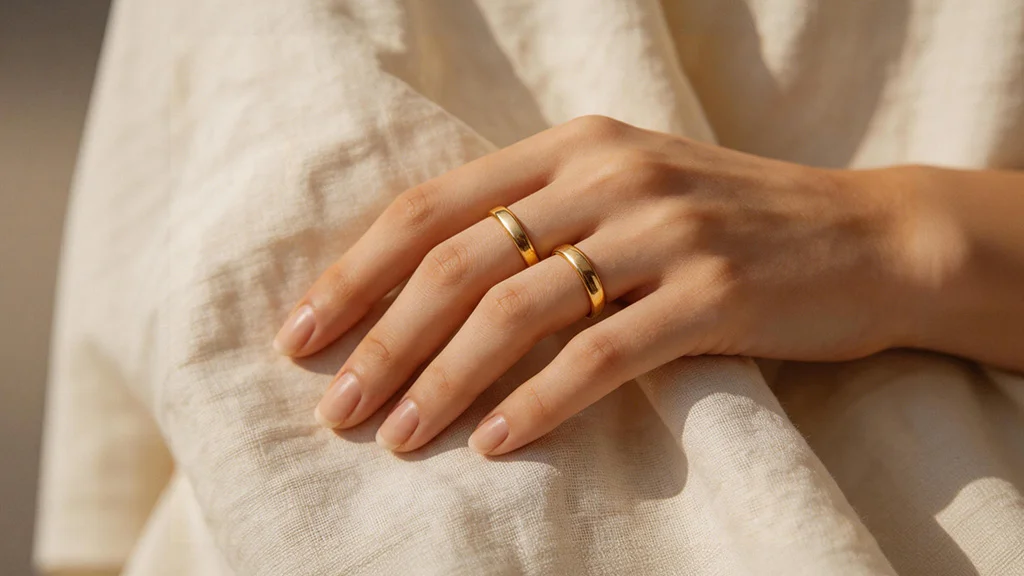
750 gold is durable, but it benefits from a little routine attention to stay at its best.
Daily Habits
- Remove jewellery before swimming, showering, or exercising — chlorine and sweat accelerate surface dulling
- Put jewellery on last when getting dressed — perfume, hairspray, and cosmetics can build up on metal over time
- Avoid contact with household cleaning products, bleach, and abrasive surfaces
Cleaning at Home
A gentle clean once a month keeps 750 gold looking its best:
- Fill a small bowl with warm (not hot) water and a few drops of mild dish soap
- Soak the piece for 10–15 minutes
- Gently brush with a soft toothbrush to reach any setting details
- Rinse thoroughly under clean running water
- Dry with a soft, lint-free microfibre cloth
Avoid ultrasonic cleaners for pieces with delicate stones or enamel details.
Storage
Store each piece separately in a soft pouch or a lined jewellery box to prevent scratching. Keep away from direct sunlight and humidity.
White Gold Specific
If your white gold piece develops a slightly warm or yellow tone, this is simply the rhodium plating wearing through — completely normal and easily remedied. A jeweller can re-plate the piece in an hour, restoring its bright white finish.
Rose Gold Specific
Rose gold's copper content makes it naturally hardy, but avoid abrasive polishing cloths — they can strip the surface finish over time. A damp soft cloth is sufficient for routine cleaning.
Frequently Asked Questions About 750 Gold
Yes, completely. 750 and 18K refer to identical gold content: 75% pure gold alloyed with 25% other metals. 750 is the European millesimal fineness mark; 18K is the karat designation. You will see both used interchangeably in international fine jewellery.
Yes — 750 (18K) gold is the international benchmark for luxury and fine jewellery. It offers a higher pure gold content than 14K or 9K, a richer colour, and greater intrinsic value, while still being durable enough for everyday wear. Most high-end jewellery houses worldwide use 18K as their standard.
The value of 750 gold per gram is calculated from the live gold spot price. Multiply the current gold price per gram by 0.75 to get the melt value of your piece's gold content. For example, if gold is trading at £65/gram, a 5-gram 750 gold piece contains approximately £243.75 worth of gold by weight. Note that jewellery retail price also reflects craftsmanship, design, and any gemstones.
No. Pure gold does not tarnish or corrode, and at 75% gold content, 750 gold is highly resistant to both. It will not turn your skin green. White gold may show a slightly warmer tint over time as rhodium plating wears — this is cosmetic, not a quality issue, and is easily corrected.
Yes. 18K gold is an excellent choice for daily wear. It is harder and more resistant to daily contact than 22K or 24K gold, while still being noticeably richer in colour and value than 9K or 14K options. With basic care — avoiding harsh chemicals and storing properly — your 750 gold pieces will look beautiful for decades.
AU is the chemical symbol for gold (from the Latin aurum). AU 750 simply combines the element symbol with the millesimal fineness mark, confirming the metal is gold at 75% purity — identical in meaning to a plain 750 stamp.
It depends on your priorities. 750 gold is higher in purity (75% vs 58.5%), richer in colour, and holds greater intrinsic value — making it the superior choice for fine jewellery, investment pieces, and heirloom-quality items. 585 (14K) gold is harder and more affordable, making it suitable for active everyday wear on a tighter budget. For special pieces meant to last, 750 gold is the better choice.
A Final Word
The 750 stamp on a piece of jewellery is more than a number. It is a promise — that the gold you're holding has been independently verified, that it meets an internationally recognised standard of quality, and that the craftspeople who made it cared enough to use the finest material.
At Provence Jewellery, every piece we create carries that mark. Because the jewellery you wear should be as real as the moments it's worn for.
 English