How to Start a Permanent Jewelry Business in 2026
- Written by Provence Team
- Updated on June 8, 2026
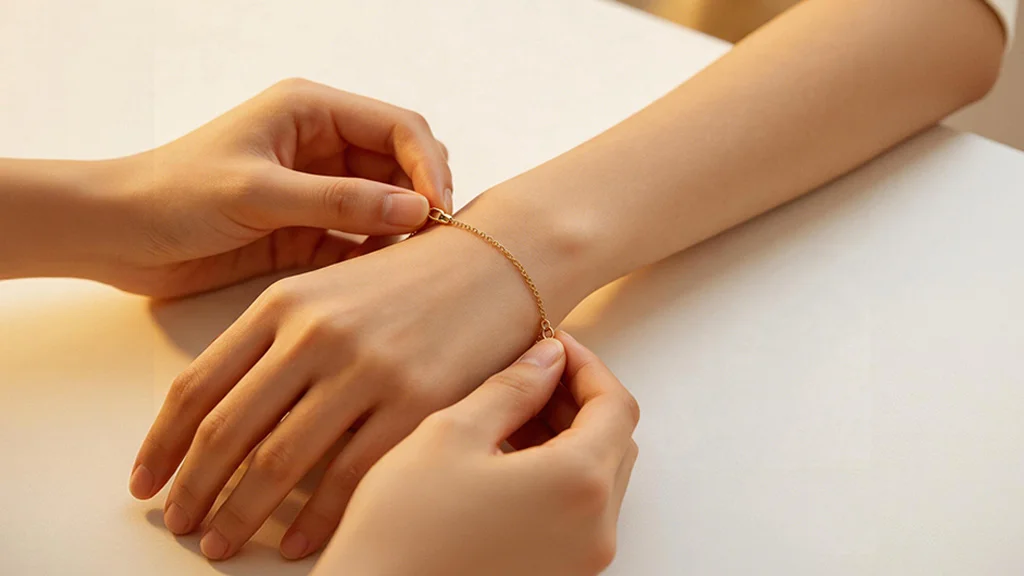
Table of Contents
Clasp-free. Custom-fit. Welded directly onto your wrist and meant to stay there. Permanent jewelry is one of the most compelling service businesses to enter right now — low overhead, high perceived value, and a customer experience that practically markets itself on social media.
This guide is different from what you'll find elsewhere. We're not a welder brand trying to sell you equipment. We're going to walk through the entire business, including the parts most guides skip: real pricing math, which business model actually works for your lifestyle, the legal details that catch new owners off guard, and the mistakes that quietly kill businesses in the first six months.
Whether you want to run pop-up events on weekends, build a full-time studio, or add permanent jewelry to an existing salon or boutique — this is your starting point.
What Is Permanent Jewelry — and Why Does It Work as a Business?
Permanent jewelry is custom-fit, clasp-free jewelry — bracelets, anklets, necklaces, and rings — that is sized directly on the client's body and then welded shut with a micro pulse arc welder. No latch. No removal mechanism. It stays on until the client chooses to cut it off.
The business model works because of three compounding effects:
1. The Experience Is the Product
Unlike buying a bracelet off a rack, permanent jewelry is a moment. A mother and daughter getting matching pieces. Best friends marking a trip. Partners bonding something symbolic onto themselves. People pay not just for the chain — they pay for the ritual. This is why customers post about it, tag businesses, and bring friends back. Word-of-mouth is built into the product.
2. Extremely High Perceived Value vs. Cost of Goods
A gold-filled bracelet that costs you $8–$15 in materials can be sold as a service experience for $55–$120. The labor, setup, and craftsmanship justify the gap — and customers happily pay because they're comparing it to traditional jewelry, not fast fashion.
3. Flexible Business Models
You can run this as a weekend pop-up, a studio appointment model, a mobile service at events and markets, or an add-on to an existing retail or beauty business. Unlike a restaurant or retail store, you don't need foot traffic to survive — you create your own audience.
Permanent jewelry isn't a jewelry business. It's an experience business that happens to use jewelry as the medium. The businesses that succeed longest treat the appointment like a hospitality event, not a transaction.
Is the Market Still Growing in 2025?
Yes — but it's maturing. The period of "nobody in my city does this" is largely over in major metro areas. That's actually good news for new entrants: it means customers already understand the concept and you don't have to educate the market before making a sale.
What the Competition Landscape Looks Like Now
Search "permanent jewelry near me" in any city over 100,000 people and you'll find at least 3–10 providers. In smaller towns and suburbs, you might still be one of the first. Your goal in market research is not to check whether anyone else does it — they likely do — but to identify how you'll be meaningfully different.
Before spending a dollar, do this research:
- Search Google Maps, Instagram, and TikTok for "permanent jewelry [your city]" and list every competitor
- Note their price range, chain styles, booking method (walk-in vs. appointment), and reviews
- Read their negative reviews — these are your positioning clues
- Check if they respond to DMs quickly (most small businesses don't — this is a gap)
Common positioning gaps in competitive markets: premium metals (solid gold vs. gold-filled), men's permanent jewelry, pop-up specialization (bachelorette parties, birthday events), or underserved suburbs where customers currently drive 30+ minutes for service.
Startup Costs & Equipment: What You Actually Need
The biggest mistake new owners make is either under-investing in the welder (and suffering unreliable performance) or over-buying inventory before they know what their customers want. Here's how to think through each category.
The Welder — Your Most Important Decision
Your welder is the heartbeat of the business. A failed weld on a client's wrist is a ruined experience, a refund, and a bad review. A welder that is awkward to transport kills your pop-up business. Don't cheap out here.
|
Welder Type |
Approx. Cost |
Best For |
Portability |
|---|---|---|---|
|
Entry-level pulse arc (e.g. Zapp Plus 2) |
$1,500–$2,200 |
Beginners, part-time, pop-ups |
Excellent |
|
Mid-range micro TIG (e.g. Orion mPulse) |
$2,500–$3,500 |
Full-time, studio operators |
Good |
|
Industrial/high-end TIG |
$4,000+ |
High-volume studios, scaling |
Limited |
|
Unbranded cheap welders |
$300–$800 |
Practice only — not for clients |
Not recommended |
Full Startup Budget Breakdown
|
Category |
Budget Option |
Quality Option |
Notes |
|---|---|---|---|
|
Welder |
$1,800 |
$3,200 |
Single most important purchase |
|
Argon gas + regulator |
$80 |
$160 |
Strongly recommended for clean welds |
|
Hand tools (pliers, cutters, mandrels) |
$100 |
$250 |
Often bundled in starter kits |
|
Initial chain inventory (3–5 styles) |
$400 |
$1,200 |
Start lean; restock based on demand |
|
Jump rings, charms, connectors |
$150 |
$400 |
Essential add-ons for upsells |
|
Safety glasses, leather patch, workspace |
$60 |
$120 |
Safety non-negotiable |
|
Display materials (pop-up table, signage) |
$200 |
$500 |
Critical for pop-up bookings |
|
Business registration, insurance |
$400 |
$900 |
See legal section below |
|
Total Estimate |
~$3,200 |
~$6,700 |
One of the most common (and brand-damaging) mistakes: sourcing cheap chains labeled "gold-filled" that are actually gold-plated. These tarnish within weeks on the client's skin. Learn the difference: true 14k gold-filled has 5% solid gold by weight bonded to a base metal. Always buy from reputable US-based suppliers and ask for certificates of authenticity.
Starter Kits — Worth It?
Most major welder brands offer starter kits that bundle the machine, basic tools, and sample chains. These are generally a good value for beginners because they ensure compatibility and reduce decision fatigue. The trade-off is less flexibility in chain selection. Consider a kit for your first purchase, then expand your chain inventory from wholesale suppliers as you learn what your customers prefer.
Legal Setup, Licensing & Insurance
This is the section most beginners skip until something goes wrong. Don't be that person. Setting up correctly costs a few hundred dollars upfront and saves you from catastrophic liability later.
Business Structure
For most new permanent jewelry operators, the choice is between a sole proprietorship and an LLC:
- Sole proprietorship: Zero setup cost, but your personal assets are exposed if a client claims injury or sues. Fine for testing the market over a few months.
- LLC (recommended): Separates personal and business liability. Costs $50–$500 to file depending on your state. Worth it as soon as you have paying clients.
Once your LLC is formed, apply for a free EIN directly through the IRS — you'll need it to open a business bank account. Keep business and personal finances completely separate from day one.
Permits & Tax Registration
- Seller's permit / sales tax license: Required in most US states to collect and remit sales tax. Register with your state's department of revenue — it's typically free or low cost.
- General business license: Check with your city or county clerk's office. Usually $50–$100/year.
- Health department classification: Some jurisdictions classify permanent jewelry under "body art" and apply additional rules. Call your local health department to ask specifically about "non-invasive permanent jewelry" before your first client.
Insurance — Don't Skip This
- General liability insurance ($400–$900/year):Covers property damage and client accidents at your location or pop-up events. Essential before your first event.
- Professional liability insurance ($300–$700/year):Covers claims related to the welding service itself — minor burns, allergic reactions to chain metals.
- Commercial property insurance:If you operate from a dedicated studio with significant equipment.
When requesting quotes, explicitly ask each provider: "Does this policy cover permanent jewelry application services, including the use of a pulse arc welder on clients?" Many generic small business policies exclude this. Providers familiar with specialty trades like Hiscox or Next Insurance tend to have more straightforward applications.
Choosing Your Location Model
This is one of the most consequential decisions you'll make — and one that most guides barely mention. There is no single "right" model. The best one depends on your goals, lifestyle, and starting budget.
|
Model |
Startup Cost |
Revenue Ceiling |
Flexibility |
Best For |
|---|---|---|---|---|
|
Pop-up events only |
Lowest |
Medium |
Highest |
Testing the market, side income |
|
Salon/boutique chair rental |
Low |
Medium–High |
High |
Leveraging existing foot traffic |
|
Studio appointments (home-based) |
Low–Medium |
Medium |
Medium |
Lifestyle flexibility, lower overhead |
|
Dedicated studio/retail space |
Highest |
Highest |
Low |
Full-time commitment, team building |
|
Mobile (traveling to clients) |
Low |
Medium |
Very High |
Corporate events, private parties |
The Pop-Up Model: Most Accessible Starting Point
For most new operators, starting with pop-up events is the smart move. You can test pricing, refine your process, build a social following, and generate revenue — all before committing to a lease. Farmers markets, bridal expos, boutique events, yoga studios, and bachelorette packages are all high-performing pop-up venues.
The key to pop-up profitability is throughput: how many clients can you serve per hour? Aim for 3–5 minutes per bracelet once you're practiced. At 8–12 clients per hour and a $65–$80 average ticket, a 4-hour event can generate $200–$400 gross.
The Salon/Boutique Chair Model: Hidden Gem
Renting a chair or corner in an established beauty salon, clothing boutique, or gift shop is one of the most underrated strategies. You get built-in foot traffic without a lease commitment, and the existing business gets an added service that draws customers. Approach boutique and salon owners directly — most will be excited because it differentiates them too.
How to Price Your Permanent Jewelry Services
Pricing is where new operators most often undercharge — out of fear of rejection, imposter syndrome, or confusion about what the market will bear. Let's build your pricing from the ground up, not from what feels comfortable.
The Pricing Formula
Your base price for any service should account for:
- Material cost (chain + jump ring for the closure)
- Time cost (your hourly rate × minutes per service)
- Overhead allocation (monthly fixed costs ÷ monthly clients)
- Profit margin (typically 20–40% on top of costs)
Pricing Psychology Tips
- Anchor with solid gold: Listing a premium solid gold option ($250+) makes your gold-filled option ($75) feel accessible and reasonable — even if most customers choose the mid-range.
- Bundle events: Private party packages (e.g., "up to 10 guests, $X flat fee + per-bracelet rate") are high-value and much easier to market than individual appointments.
- Don't race to the bottom: Research shows that in personal service businesses, the lowest-priced provider is rarely seen as the best — and often attracts the most difficult customers. Price confidently.
- Build in charm upsells: Many clients start with a chain and add charms. Train yourself to gently present charm options during fitting — a $20–$40 upsell is common and adds 25–50% to the ticket.
If you're charging $50 for a bracelet and your costs (materials + overhead allocation) are $25, you're keeping $25 — but at 12 bracelets per day, that's only $300/day gross profit. Run the math for your target monthly income and work backwards to your required volume and price point.
Marketing & Finding Your First Clients
Permanent jewelry is one of the most naturally viral businesses in the world. A welding process is visual, the moment of completion is emotional, and the finished piece is worn publicly every day. Your marketing strategy should be built around capturing and amplifying that organic virality — not replacing it with paid ads.
Your Core Marketing Assets (Build These First)
- Instagram and TikTok profiles: Film the welding process. Show before/after. Share client reactions. The spark of the weld and the client's face in that moment are content gold. Consistency beats volume — 3 posts per week beats 0 for most of the month and a burst.
- Google Business Profile: This is your #1 local SEO tool. Set it up immediately, add photos, gather reviews after every appointment. "Permanent jewelry near me" searches convert at extremely high rates — people searching that phrase want to book now.
- Booking system: Respond to DMs fast, or lose the booking. Most small permanent jewelry businesses lose clients simply because they took too long to reply. A simple booking link (Calendly, Square Appointments, or even a Google Form) reduces friction enormously.
Your First 30 Days of Marketing
- Offer free or deeply discounted bracelets to 5–10 friends and family. Film everything. This is your content library and your first reviews.
- Set up your Google Business Profile and ask those first clients to leave reviews mentioning your city name.
- Reach out to 10 local businesses (boutiques, salons, yoga studios, gyms) about pop-up partnerships. Offer them a commission per client or a flat event fee.
- Post welding content daily for 30 days. Don't wait to have "better" content — ship what you have.
- Join local Facebook groups and community boards. Announce your business and your first event. People searching "permanent jewelry [city]" are primed to convert.
Private Parties: Your Highest-Leverage Offering
Bachelorette parties, girls' trips, birthday groups, mother-daughter events — group bookings are the highest-margin, most enjoyable, and most viral part of this business. One happy bride-to-be sharing her experience to 200 followers is better than any ad spend. Build a simple private party package and lead with it in your marketing from day one.
Every client wearing your permanent jewelry is a walking advertisement. When someone compliments their bracelet and asks "where did you get that?", your client becomes your marketer. Encourage clients to tag you when they show it off. Consider a referral discount: "send a friend and you both get 10% off your next piece."
Creating a 5-Star Experience That Markets Itself
This is the most underrated section in every other guide. Most competitors focus on equipment and legal setup — and then wonder why their reviews are average. The businesses that build six-figure permanent jewelry income understand that the experience is the product.
The Appointment Arc
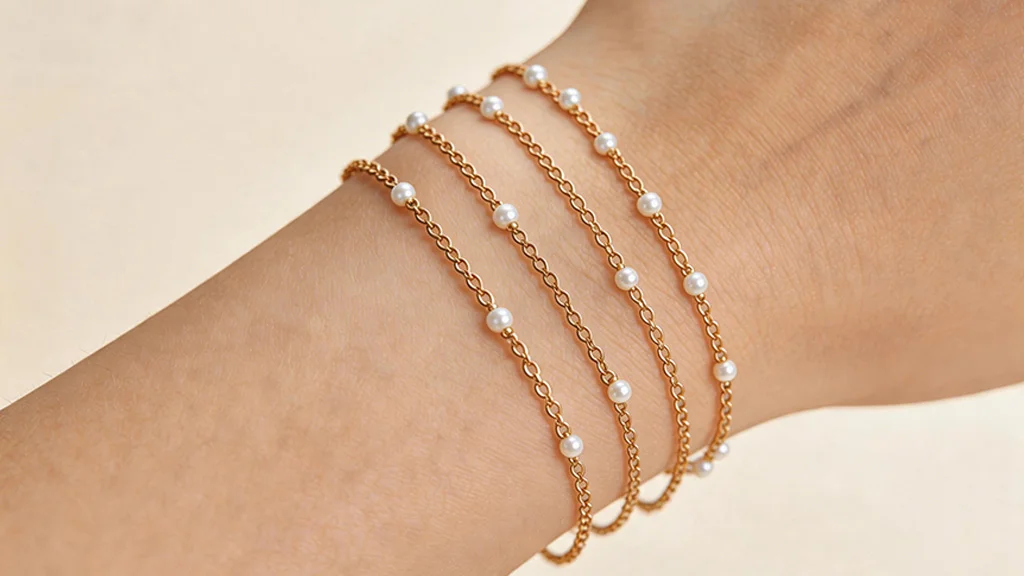
Think of each appointment as having three acts: arrival, application, and send-off. Each one is a chance to create delight or disappointment.
- Arrival: Warmth, cleanliness, professional presentation. A tidy display of chain options (not a tangled mess). Offer a drink if you're in a studio. If it's a pop-up, your table setup signals your brand quality before you say a word.
- The fitting and welding: Explain what you're doing. Show them the weld point. Let them hear the sound, see the spark. This is the moment — the one they'll tell people about. Slow down deliberately here.
- The send-off: Give them a care card. Tell them what to expect (it's waterproof, they can sleep in it, this is how to remove it if needed). Ask if you can photograph their wrist for your social media. Ask them to tag you when they show it off.
Care Cards — A Small Detail With Big Impact
Print or write a simple card that clients take home with instructions for caring for their permanent jewelry, the metal type (so they know what they're wearing), and your contact info and social handles. This creates a lasting brand impression and a point of re-contact when they want another piece.
Private Parties: Your Highest-Leverage Offering
Bachelorette parties, girls' trips, birthday groups, mother-daughter events — group bookings are the highest-margin, most enjoyable, and most viral part of this business. One happy bride-to-be sharing her experience to 200 followers is better than any ad spend. Build a simple private party package and lead with it in your marketing from day one.
Right after the welding is complete and the client sees it on their wrist for the first time is your best moment to photograph. Ask permission, frame the wrist beautifully, and share with their tag. Most clients will reshare — this is organic marketing happening in real time.
Scaling Your Business & Adding Revenue Streams
Once you have consistent bookings and a reliable process, there are several natural ways to grow revenue without proportionally increasing your time.
Hire a Technician
Training a part-time "permanent jewelry technician" to handle appointments allows you to take two clients simultaneously at events and frees you to manage the business side. Look for people with steady hands, customer service instincts, and a passion for the craft. Most training happens on the job — start them on practice chains before they ever touch a client.
Teaching Workshops
Workshops where you teach the craft to aspiring permanent jewelry artists are a premium revenue stream that leverages your expertise. Charge $200–$600 per attendee for a half-day session covering technique, business basics, and hands-on practice. This also positions you as an industry authority in your market.
Add a Charm Bar
A physical or virtual "charm bar" — a curated selection of meaningful charms clients can add to their permanent jewelry — consistently adds $20–$60 per ticket. The right charm selection also creates repeat visits as clients collect pieces over time.
Corporate & Brand Partnerships
Approaching local businesses to offer permanent jewelry as a branded client gift, employee milestone reward, or event activation is a high-ticket opportunity. A corporate booking of 20–50 people at a flat rate is enormously profitable and requires a single conversation to land.
Laser Engraving Upsell
A portable laser engraver ($500–$1,500) paired with your permanent jewelry service allows you to add custom initials, dates, or symbols to charms. This premium add-on adds $25–$75 per ticket and is almost universally loved by couples and milestone clients.
The 8 Mistakes That Kill Permanent Jewelry Businesses
Once you have consistent bookings and a reliable process, there ar
Most guides only tell you what to do. Here's what not to do — distilled from the pattern of businesses that start strong and stall.
e several natural ways to grow revenue without proportionally increasing your time.
- Buying a cheap welder to "start small":Unreliable welds damage your brand. The welder is the only place where skimping creates customer-facing problems. Buy quality here.
- Pricing too low out of insecurity:Undercharging doesn't attract more clients — it attracts clients who push back on price and undervalues your service in your own mind. Price based on value, not fear.
- Over-ordering inventory before knowing your market:Start with 3–5 chain styles. Learn what your specific customers love. Then expand your inventory based on actual demand, not assumption.
- Skipping business insurance:One client claiming a reaction or injury without coverage could cost more than your entire first year of revenue. This is not optional.
- No booking system / slow DM responses:If it takes you 24 hours to respond to a booking inquiry, you've already lost it to someone else. Set up a booking link and respond to inquiries within the hour.
- Not capturing social content:Every appointment is a content opportunity. If you're not filming the welding process and getting client permission to share, you're leaving your most powerful marketing tool unused.
- Mixing personal and business finances:This creates tax nightmares and makes it impossible to understand your actual profitability. Open a business bank account before you take your first payment.
- Waiting until everything is "perfect" to launch:The biggest risk in this business is not starting. Your first ten clients will teach you more than six months of planning. Start, iterate, improve.
Frequently Asked Questions
In the United States, there is currently no official certification required to offer permanent jewelry services. The process is non-invasive — no needles, no piercing, no breaking of skin. Some states may classify it under local business licensing or health department rules, so always check with your specific city and county. Outside the US, requirements vary — verify local regulations before operating.
Most new artists can achieve clean, confident welds with 4–8 hours of dedicated practice on scrap chains. The technique is accessible — it's about learning the correct distance, timing, and pressure for your specific machine. Online tutorials from reputable welder brands are genuinely helpful. We recommend practicing on 20–30 practice welds before working on your first client.
Start with 14k gold-filled and sterling silver — these are the most popular and most requested. Gold-filled is the bestseller in most markets because it offers the look of gold at an accessible price point and genuinely wears well on the skin. Add solid 14k gold as a premium option once you're established. Avoid gold-plated or unverified base metals — tarnishing creates the worst possible client outcome.
Permanent jewelry is safe for the vast majority of clients. The weld is on a small jump ring — not the skin — and the process takes a fraction of a second. The piece can be removed easily at any time with a small pair of scissors or wire cutters. Clients should be aware before surgery or MRI, as with any jewelry — advise them to remove it before those procedures. Screen clients with known metal allergies before the appointment.
Start by approaching local boutiques, yoga studios, salons, and coffee shops about hosting a pop-up. Farmers markets and craft fairs often have vendor applications open year-round. For premium events, approach event planners directly about bachelorette parties and corporate events. Local Facebook groups, community boards, and Instagram DMs to local business owners are all effective starting points.
Ready to Build Your Own Signature Collection?
Once your permanent jewelry business is up and running, the next level is having a collection that's truly yours — your own chain designs, custom charms, and branded findings that no competitor can replicate. That's where Provence Jewellery comes in.
Provence Jewellery is a custom fine jewelry manufacturer specializing in working with emerging brands and independent artists who are ready to move beyond off-the-shelf supplies. Whether you have a finished design ready for production or you're starting from a rough idea on a napkin, we have a path for you.
Get in touch with Provence Jewellery to request a sample, discuss your design, or ask about our OEM and ODM programs for startup jewelry brands.
 English