
What is February’s Birthstone? Amethyst Meaning & Guide
- Written by Provence Team
- Updated on July 7, 2026
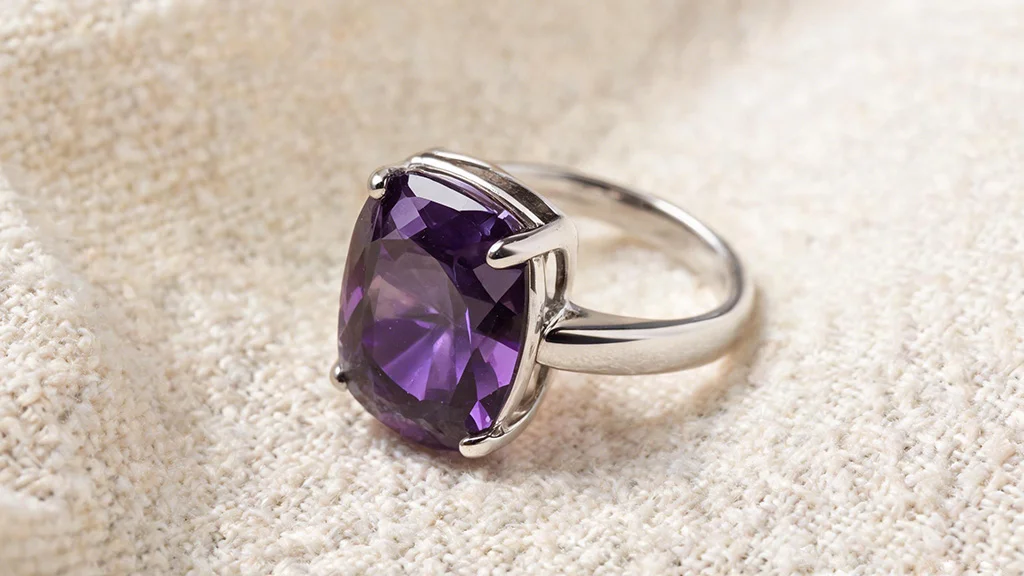
Table of Contents
February's birthstone is amethyst, a purple variety of quartz prized for centuries for its rich violet color and rumored powers of calm and clarity. It is the only birthstone assigned to February in both the modern (1912, Jewelers of America) and traditional birthstone lists, and it doubles as the gemstone for the 6th and 17th wedding anniversaries. Below, we cover everything a shopper, gift-giver, or retailer needs to know: how amethyst forms, what determines its value, how it compares to other purple gems, and what US and EU buyers should look for before purchasing.
What Is Amethyst?
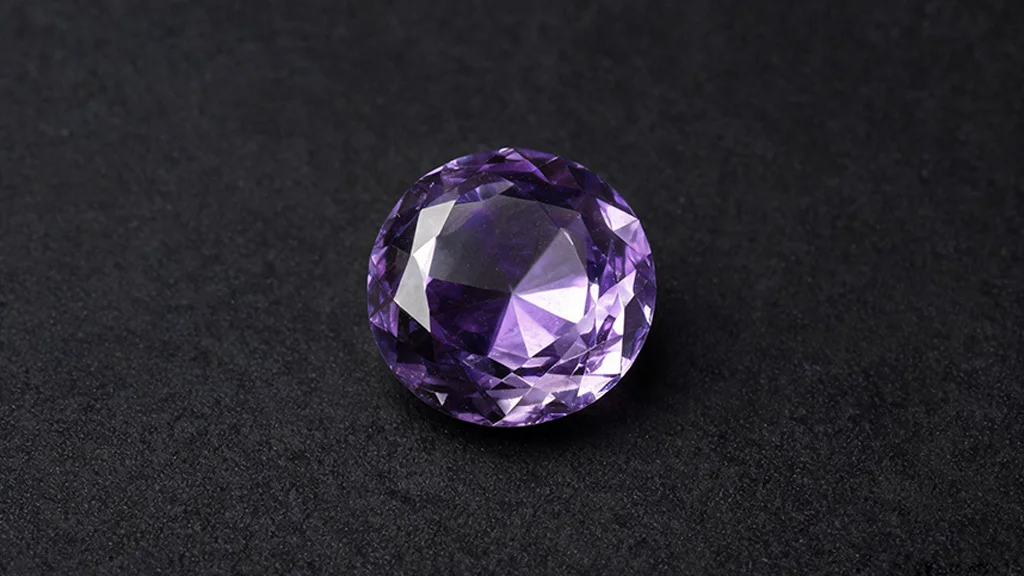
Amethyst is a form of macrocrystalline quartz (silicon dioxide) that owes its purple color to trace amounts of iron combined with natural irradiation deep within the earth. Its name comes from the Greek word amethystos, meaning "not intoxicated" — ancient Greeks believed the stone could protect its wearer from the effects of wine, and drinking vessels were sometimes carved from amethyst for that reason.
Amethyst sits at 7 on the Mohs hardness scale, making it durable enough for daily wear in rings, earrings, and bracelets, though like most gemstones it should still be protected from hard knocks and harsh chemicals.
How Amethyst Forms
Amethyst crystallizes inside gas cavities in volcanic rock, where silica-rich fluids slowly deposit quartz crystals over millions of years. Iron impurities and natural background radiation interact during this process to produce the purple hue. This is why amethyst is so often found lining the inside of geodes — hollow, crystal-studded rock formations that are sliced open to reveal clusters of pointed purple crystals.
Amethyst Meaning and Symbolism
Beyond the Greek wine mythology, amethyst carries a long list of cultural and spiritual associations:
- Sobriety and clarity of mind — the original Greek association
- Royalty and nobility — amethyst was historically reserved for bishops, royalty, and clergy, and remains part of the British Crown Jewels
- Peace and calm — widely associated with tranquility, balance, and stress relief in modern crystal healing traditions
- Spiritual protection — used in ancient talismans and rosaries
- One of the twelve stones representing the tribes of Israel in the biblical Hoshen (breastplate), giving it significance in Jewish tradition
Catherine the Great was known for her passion for Siberian amethyst, and Empress Josephine, wife of Napoleon Bonaparte, owned an amethyst and diamond necklace still referenced by jewelry historians today.
February Zodiac Connection: Aquarius and Pisces
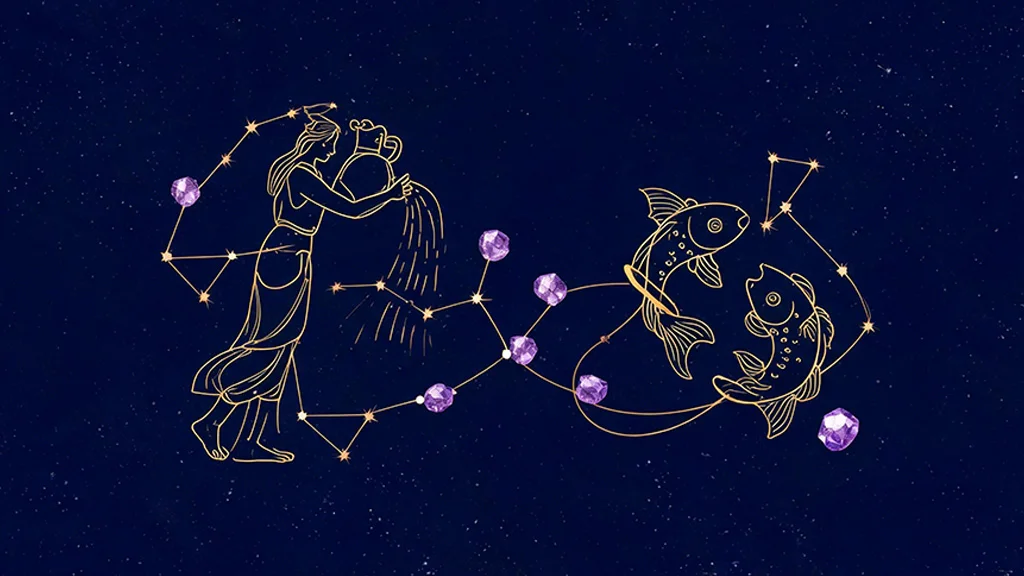
February spans two zodiac signs — Aquarius (January 20–February 18) and Pisces (February 19–March 20) — and amethyst is traditionally linked to both.
- Aquarius: amethyst is said to complement the sign's independent, forward-thinking nature, encouraging clear thinking and originality
- Pisces: amethyst's calming reputation is thought to support the sign's intuitive, empathetic temperament and ease emotional overwhelm
Whether or not one follows astrological traditions, the zodiac connection is a popular reason February-born buyers seek out amethyst jewelry specifically, rather than a substitute stone.
Amethyst Color Guide
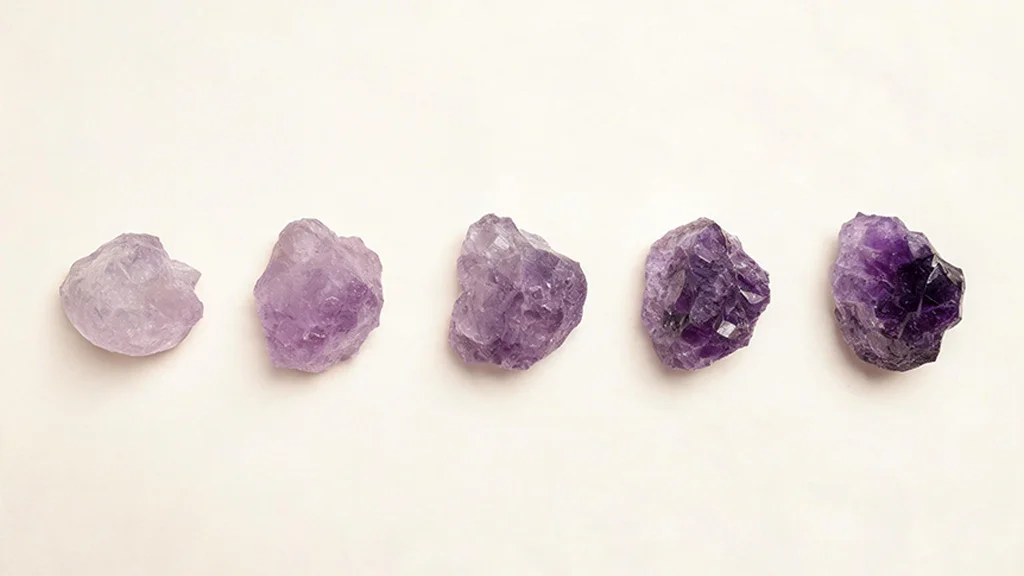
Not all amethyst looks the same, and color is the single biggest driver of value. The most desirable color is a deep, saturated purple with flashes of red and blue, historically called "Deep Siberian" after the Russian deposits that first produced it, even though most fine material today comes from Africa and South America.
|
Color Grade |
Description |
Typical Source |
|---|---|---|
|
Deep Siberian |
Intense purple with red/blue flashes; the finest and rarest grade |
Zambia, Brazil (fine pockets) |
|
Rose de France |
Pale lilac to soft lavender; delicate, affordable |
Brazil, Bolivia |
|
Uruguayan / Classic |
Medium-to-dark violet, the most common commercial grade |
Uruguay, Brazil |
|
Prasiolite |
Green quartz produced by heat-treating certain amethyst; sold as a distinct "green amethyst" |
Brazil (heat-treated) |
|
Ametrine |
Bi-color stone combining amethyst's purple with citrine's yellow in one crystal |
Bolivia (Anahí Mine) |
Where Amethyst Comes From
Amethyst is mined on nearly every continent, but a handful of sources dominate today's supply chain:
- Brazil — the world's largest producer by volume, particularly the states of Rio Grande do Sul and Bahia
- Zambia — source of some of the finest deep-purple material available today, prized by manufacturers for consistent saturation
- Uruguay — known for dark, richly saturated stones often sold alongside Brazilian material
- Bolivia — home to the Anahí Mine, the primary global source of ametrine
- United States — a notable deposit at Four Peaks, Arizona, though production is small compared to South America and Africa
As a manufacturer working directly with cutting and setting facilities, we source amethyst through vetted suppliers who provide documentation on origin and treatment status — a practice increasingly expected by retail partners and consumers alike, and one every reputable OEM/ODM partner should be able to speak to on request.
Natural vs. Lab-Created Amethyst
Lab-created (synthetic) amethyst has the same chemical composition and crystal structure as natural amethyst, grown in a controlled environment rather than the earth. It is visually near-identical and typically costs a fraction of natural material.
In the United States, the FTC's Guides for the Jewelry Industry (16 CFR Part 23) require clear disclosure when a gemstone is lab-created, synthetic, or treated, and prohibit describing lab-grown stones as "natural" or "genuine" without qualification. Reputable retailers disclose this status on every product listing and receipt.
Nearly all commercial amethyst, natural or lab-created, is heat-treated or irradiated at some point to improve color consistency — a widely accepted industry practice, but one that should still be disclosed under FTC guidance and comparable EU consumer-protection rules.
EU and UK Buyer Considerations
Shoppers and retailers in Europe and the UK should be aware of a few regional specifics that don't typically come up in US-focused guides:
- UK Hallmarking Act 1973: any amethyst jewelry set in gold, silver, platinum, or palladium above the exemption weight threshold must be hallmarked at an Assay Office if sold in the UK, verifying the precious metal content (this applies to the setting, not the gemstone itself)
- REACH Annex XVII, Entry 27 (Nickel Directive): EU regulation restricting nickel release from jewelry in direct, prolonged skin contact — relevant to the metal setting an amethyst is mounted in, particularly for costume and fashion jewelry
- EU consumer protection labeling: similar to the US FTC guides, EU member states require accurate disclosure of gemstone treatment, origin claims, and lab-created status in commercial listings
For B2B buyers and retailers sourcing amethyst jewelry for the UK or EU market, working with a manufacturer that can supply hallmarking-ready pieces and nickel-compliant alloys from the outset avoids costly compliance issues after production.
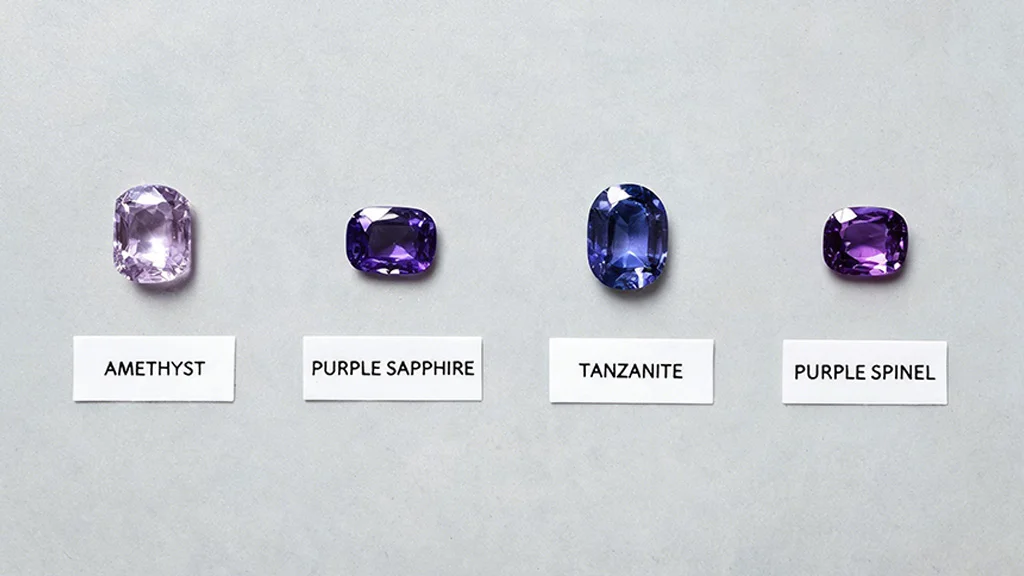
Amethyst vs. Other Purple Gemstones
Amethyst isn't the only purple gemstone on the market. Here's how it compares to the most common alternatives:
|
Gemstone |
Hardness (Mohs) |
Relative Price |
Notes |
|---|---|---|---|
|
Amethyst |
7 |
$ |
Most affordable; wide color and size availability |
|
Purple Sapphire |
9 |
$$$$ |
Much harder and rarer; significantly higher cost per carat |
|
Tanzanite |
6.5–7 |
$$$ |
Rarer, more fragile, exhibits color-change (blue/purple/burgundy) by angle |
|
Purple Spinel |
8 |
$$$ |
Underrated durability and brilliance; less widely available |
|
Iolite |
7–7.5 |
$$ |
Budget alternative with a softer, blue-violet tone |
For most buyers, amethyst remains the best combination of durability, affordability, and color saturation — which is why it has kept its place as February's official birthstone rather than being displaced by a rarer alternative.
Amethyst Buying Guide: What Affects Value
Unlike diamonds, amethyst value is driven overwhelmingly by color rather than carat weight or clarity. A well-saturated, evenly colored stone with no visible zoning (patchy light and dark bands) will command a premium over a larger but paler stone.
Beyond color, look for a well-executed cut with good symmetry and minimal window (a washed-out area where light passes straight through). Because amethyst is comparatively affordable, spending a little more for a well-cut stone in a strong color almost always produces a noticeably better-looking finished piece than prioritizing carat weight alone.
Caring for Amethyst Jewelry
- Clean with mild soap, warm water, and a soft-bristled brush
- Avoid prolonged exposure to direct sunlight, which can fade amethyst's color over time
- Remove before swimming, showering, or exercising to avoid chemical and impact exposure
- Store separately from harder gemstones and metals to prevent scratching
- Avoid ultrasonic and steam cleaners unless confirmed safe by a jeweler, particularly for treated or fracture-filled stones
Gift Ideas by Occasion
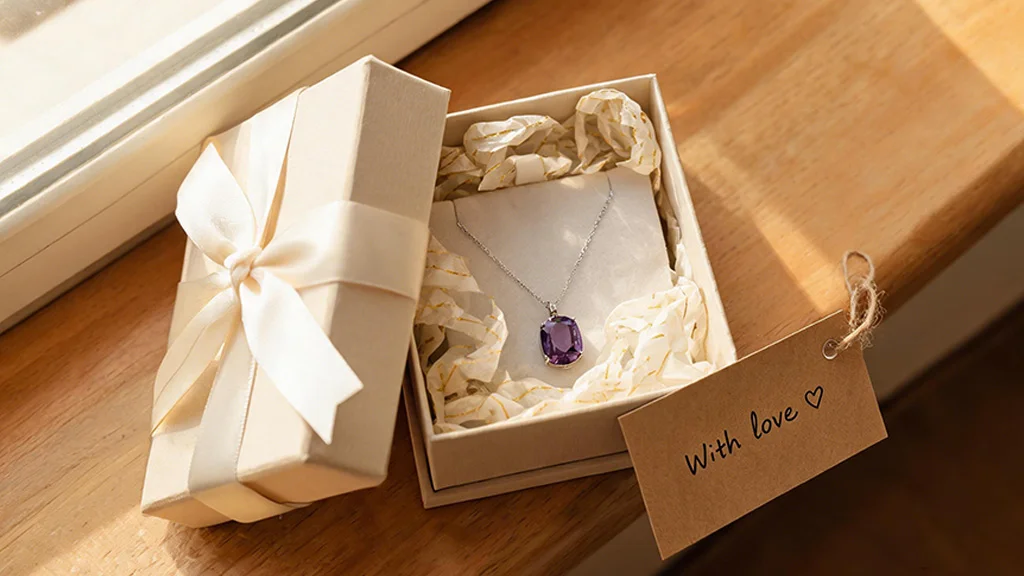
- Birthday gift for a February-born recipient — rings, stud earrings, or pendants in classic deep-purple amethyst
- 6th or 17th wedding anniversary — amethyst is the traditional gemstone for both milestones
- Valentine's Day — February timing makes amethyst a natural alternative to traditional red-stone gifts, especially in Rose de France's soft lilac tones
- Mother's Day or graduation — accessible price point makes amethyst a popular first fine-jewelry gift
Frequently Asked Questions
Yes. Amethyst is recognized as February's official birthstone by both the modern list established by Jewelers of America in 1912 and the traditional birthstone list used for centuries prior.
No. Unlike some months that have multiple modern and traditional options, February has only ever had amethyst on both lists, making it one of the least ambiguous birthstone assignments of the year.
Amethyst is one of the more affordable gemstones relative to its size and durability. Commercial-grade stones can cost just a few dollars per carat, while rare, deeply saturated Deep Siberian-grade material can command $20–$40+ per carat.
Brief contact with water is generally fine, but amethyst should be removed before swimming, showering, or prolonged water exposure to protect both the stone and its metal setting over time.
Amethyst can fade with prolonged exposure to strong, direct sunlight over time. Storing pieces away from direct light when not worn helps preserve color saturation.
 English