
The Most Popular Engagement Ring Trends of 2026
- Written by Provence Team
- Updated on June 18, 2026
Table of Contents
Average engagement ring spend in the US dropped for the third year running in 2025, landing at $4,600, according to The Knot's 2026 Real Weddings study of more than 10,000 couples. That isn't bad news for the industry; it's the headline of the year. Couples are getting more diamond for less money, and the reason is the same one driving almost every other shift on this list: lab-grown diamonds now account for a majority of engagement ring sales on both sides of the Atlantic.
That single shift is reshaping which settings, shapes, and metals are winning in 2026. When the diamond itself costs less, couples spend the difference on design, thicker bands, more elaborate settings, bigger stones, bolder color. This report draws on US survey data, UK retail sales figures, the trend signals we picked up on the show floor at JCK Las Vegas this year, and our own perspective as a fine jewellery house that designs and produces rings rather than simply reselling them, to map out the twelve styles actually defining 2026 proposals, and where American and European tastes are starting to pull apart.
2026 Engagement Ring Trends at a Glance
Twelve styles are doing most of the work this year. Jump to any of them below, or read straight through for the data and buying notes behind each.
- The Old Mine Cut Revival
- East-West Settings
- Bezel (Rubover) Settings
- Yellow Gold Overtakes White Metal
- Oval and Other Elongated Shapes
- Substantial, Sculptural Bands
- Sculptural and Architectural Settings
- Three-Stone and Two-Stone (Toi et Moi) Rings
- Colored Center Stones
- Cluster Settings
- Lab-Grown Diamonds Are No Longer “Alternative”
- Bespoke and Custom Design
The Old Mine Cut Revival
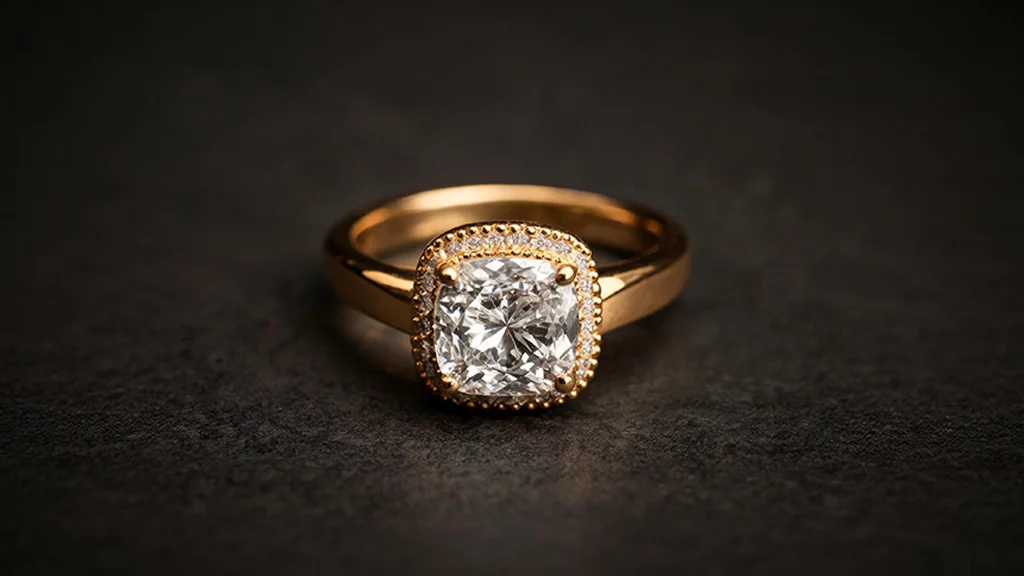
Old mine cut diamonds, an antique cushion-shaped cut from the 1700s and 1800s with a high crown, a small table, and a softer, candlelight-style sparkle rather than the sharp fire of a modern round brilliant, have gone from an estate-jewelry curiosity to one of the year's most requested center stones.
The shift traces largely to a single high-profile engagement. When Taylor Swift's ring surfaced in August 2025, an elongated cushion-shaped old mine cut diamond in a Georgian-style yellow gold setting, search interest in vintage-style engagement rings jumped by roughly 700% according to UK retail and search data, with searches for 1920s-style vintage rings up around 300%.
Pair with: Yellow gold, Georgian or Edwardian-inspired milgrain detailing, and bezel or cut-down accent stones all complement the antique character of the cut.
Price range: Roughly $3,500–$9,000 / £2,800–£7,500 for a mounting plus a 1.5–2 carat antique-cut stone; genuinely antique old mine diamonds command a premium over newly cut, antique-style stones.
From the bench: Old mine cuts are hand-faceted with larger, less symmetrical facets than a modern round brilliant, which is what produces that flickering light pattern. Reproducing the look in a new stone takes a cutter trained specifically in antique faceting rather than the standard automated round-brilliant process, which is part of why few mainstream manufacturers offer it at scale.
East-West Settings
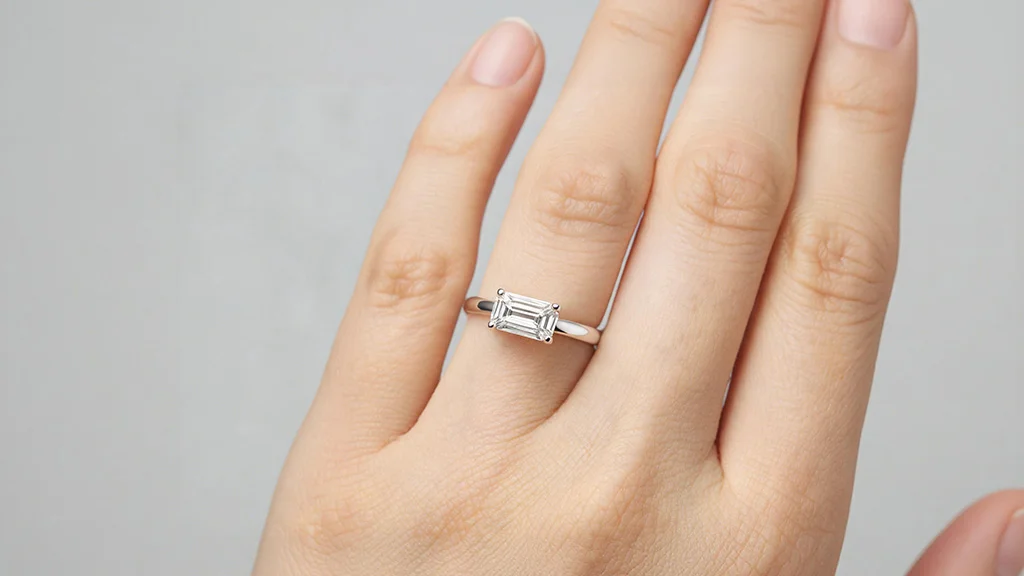
Rather than mount the diamond point-to-point from fingertip to wrist, east-west settings rotate the stone 90 degrees so it sits horizontally across the finger. The look has been building since 2024 but moved up a gear in 2025 after Zendaya's engagement ring, a cushion-cut diamond set east-west in a mixed-metal, antique-style setting, became public.
Pair with: Elongated shapes, oval, emerald, marquise, and radiant cuts, read particularly well rotated horizontally; a thin bezel or hidden halo adds security without competing with the silhouette.
Price range: $2,800–$7,500 / £2,200–£6,000.
From the bench: East-west mountings need custom-built prong or bezel structures rather than off-the-shelf settings, since the stone's girdle sits at a different angle than in a standard vertical mount. It's a small engineering difference with an outsized visual payoff.
Bezel (Rubover) Settings
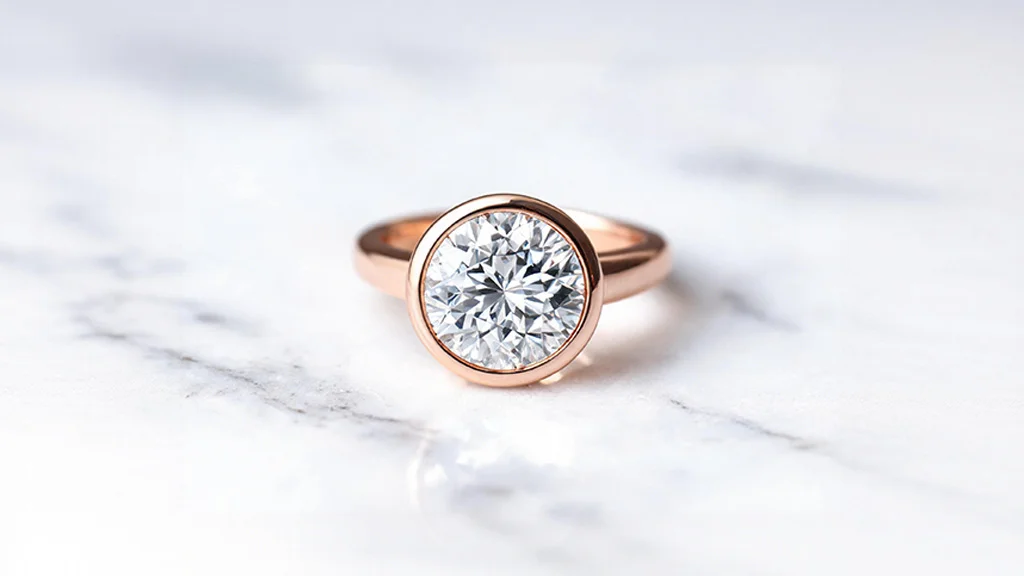
A bezel setting encircles the diamond completely, or nearly so, in a rim of metal rather than holding it with prongs. UK retail data shows interest in rubover-style settings up roughly 100% year over year, and US bridal designers report the same pull toward bezel- and burnish-set centers as a deliberate move away from delicate prong settings.
Pair with: Round, oval, and emerald cuts particularly suit a full bezel; a half- or three-quarter bezel works well with marquise and pear shapes, exposing more of the stone.
Price range: $2,200–$6,000 / £1,800–£4,800.
From the bench: A bezel is more metal-intensive to fabricate than a prong setting and demands precise hand-burnishing around the stone's edge, but it protects the diamond far better for daily wear, which is exactly why it's gaining ground.
Yellow Gold Overtakes White Metal
For the first time in years, yellow gold has pulled ahead of platinum and white gold combined in some markets. In the UK, yellow gold made up 57% of 2025 engagement ring sales versus 42% for platinum, a sharp reversal from a near-even split the year before. In the US, white metals still hold a slight overall edge, 48% versus 39% yellow gold, but the five-year trajectory is unmistakable: yellow gold's US share has more than doubled over that period.
Pair with: Vintage and antique-inspired settings, warm-toned colored stones like champagne diamonds or yellow sapphires, and thicker bands all lean into the warmth of yellow gold.
Price range: Comparable to white metal mountings, generally $1,200–$4,000 / £950–£3,200 depending on karat and band weight.
From the bench: 14k and 18k yellow gold behave differently under a setter's tools than platinum, softer and more forgiving to engrave, but more prone to scratching, which is one reason thicker, more substantial bands are rising alongside it.
Oval and Other Elongated Shapes
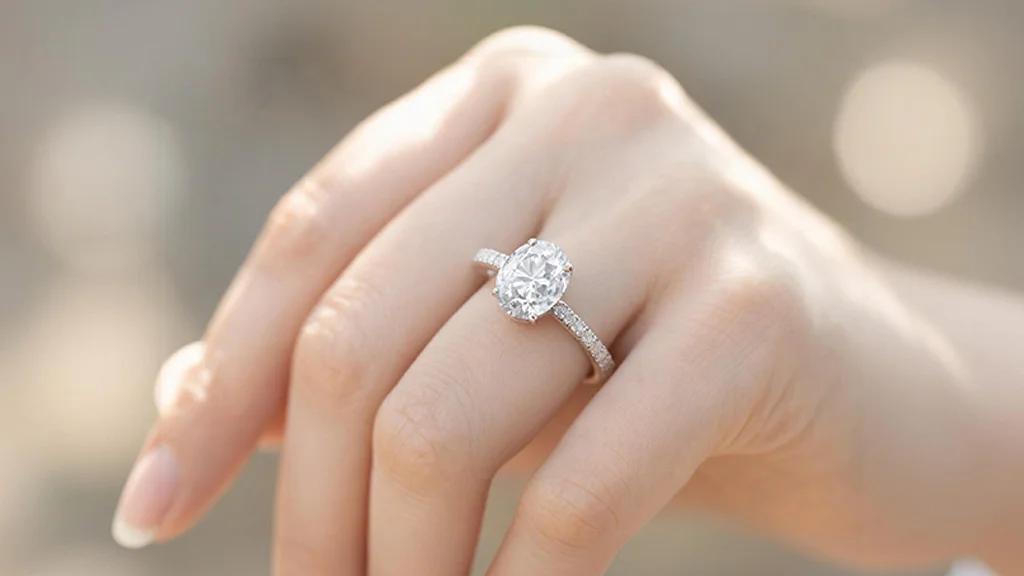
Round brilliants remain the single most popular diamond shape, but their lead is narrowing fast. UK data shows round cuts falling from 59% of sales in 2022 to 36% in 2025, with oval climbing from roughly 21% to 33% over the same period. In the US, oval and round are now nearly tied, at 25% and 26% respectively. Industry commentators have nicknamed the shift the “Hailey Bieber effect,” after her oval solitaire, though Kourtney Kardashian and Blake Lively have worn the shape too.
Pair with: A thin pavé band or hidden halo elongates the look further; a clean solitaire setting keeps the focus purely on the shape's natural length.
Price range: Ovals typically run 10–15% lower per carat than an equivalent round, since the cutting process retains more of the rough stone, making them genuinely better value at a given visual size.
From the bench: Elongated cuts (oval, marquise, elongated cushion) face the rough diamond differently during cutting, which is why a well-cut oval can appear noticeably larger than a round of identical carat weight, worth knowing if a couple wants the look without the size premium.
Substantial, Sculptural Bands
The whisper-thin pavé bands that defined the early 2020s have given way to bands with real visual weight: broad shanks, pronounced metalwork, and finishes like hammered or brushed texture that read as intentional design rather than a frame for the stone. Dua Lipa's 2025 engagement ring, a round diamond set in a chunky yellow gold band, captures the trend's everyday expression: bold but wearable.
Pair with: A cigar-band silhouette, where the band keeps its full width all the way around, works particularly well with bezel-set centers and bold yellow gold.
Price range: $1,800–$5,500 / £1,400–£4,400, with cost scaling directly with metal weight rather than stone size.
From the bench: A wider band uses meaningfully more metal, which is the most direct lever a couple has for managing cost on a substantial-band design without compromising the look, typically by choosing a lower karat gold or a lighter-weight platinum alloy.
Sculptural and Architectural Settings
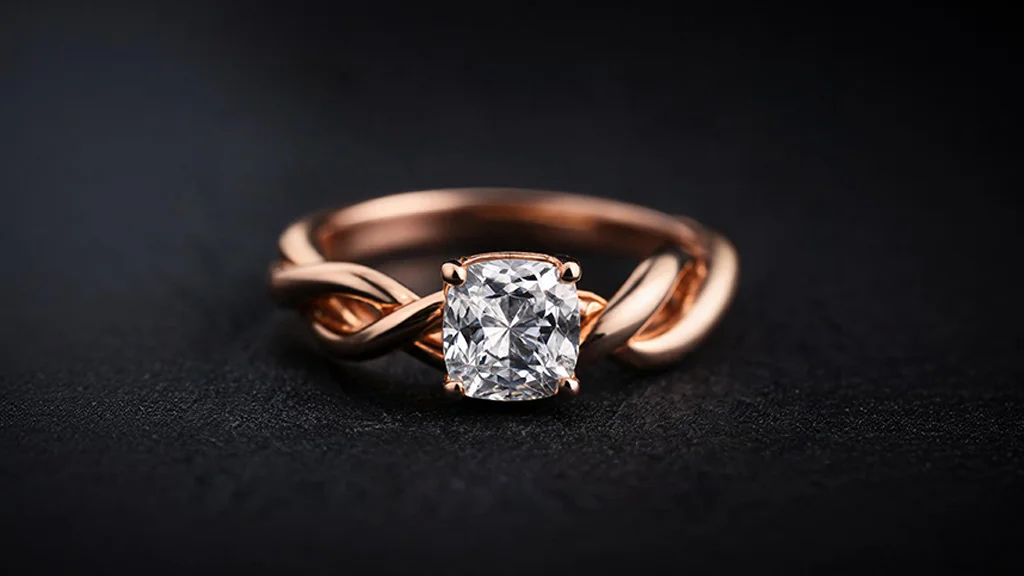
A step beyond substantial bands, sculptural settings treat the metalwork itself as the design: curved, twisted, or asymmetrical shanks where the band and the setting flow into one continuous form rather than a stone-plus-frame composition. Several US retailers have described the shift in similar terms this year, framing the center gem as part of a larger composition rather than the sole focus of the design.
Pair with: These settings tend to be most striking with a single clean stone, round, oval, or cushion, since the band's complexity is already doing the visual work.
Price range: $2,500–$7,000+ / £2,000–£5,600+, trending higher due to additional fabrication time.
From the bench: These designs are difficult to cast cleanly in one piece and often require hand-finishing or assembly of multiple soldered components, which is why sculptural settings show up more often through bespoke or made-to-order channels than in off-the-shelf collections.
Three-Stone and Two-Stone (Toi et Moi) Rings
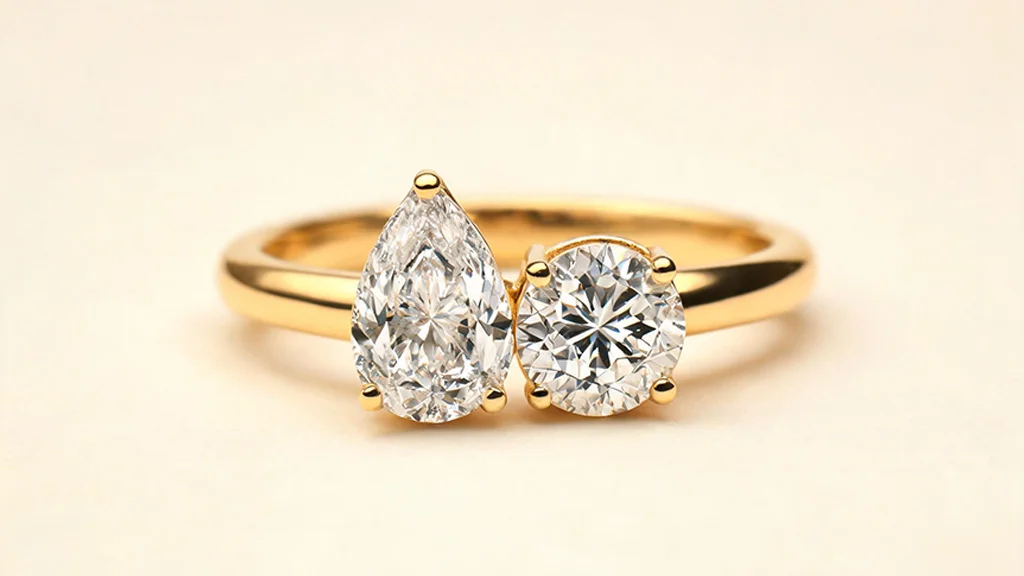
The three-stone ring, symbolizing a couple's past, present, and future, never really left, but it's being reinterpreted with mismatched shapes (an emerald-cut center flanked by trapezoid or kite-shaped side stones, for instance) rather than three uniform rounds. Its two-stone cousin, the toi et moi (French for “you and me”), sets two different gemstones side by side and has climbed roughly 40% in UK search interest over the past year, a style also associated with Emily Ratajkowski's well-known pear-and-round design.
Pair with: Contrasting cuts, oval next to emerald, round next to pear, read as more deliberate than matching stones; mixing a diamond with a colored gem leans further into the personalization angle.
Price range: Three-stone, $3,000–$8,000 / £2,400–£6,400; toi et moi, $2,500–$7,000 / £2,000–£5,600, depending heavily on the secondary stone's size.
From the bench: Asymmetrical multi-stone settings require more bench time than a symmetrical three-stone mount, since each stone's bezel or prong work is essentially custom-fitted rather than templated.
Colored Center Stones
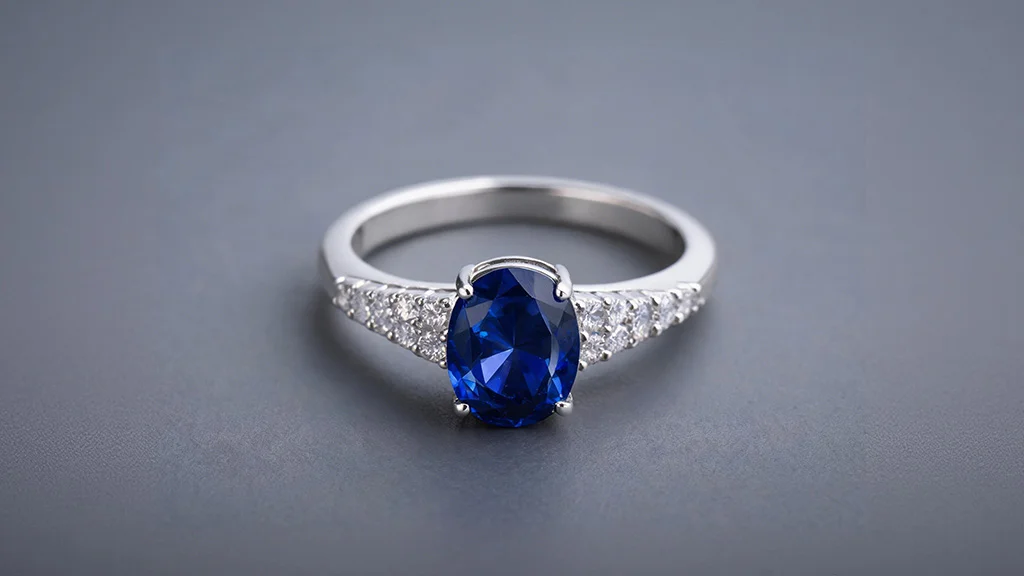
Sapphires, emeralds, and fancy-colored diamonds, soft pinks, champagne, and yellow tones especially, continue gaining ground as center stones rather than accents. The appeal is partly aesthetic and partly practical: a fancy-colored lab-grown diamond offers the durability of a diamond, a Mohs hardness of 10, with a look a sapphire or emerald can't match for everyday wear, since natural emerald sits at roughly 7.5–8 on the Mohs scale and is prone to chipping along its natural inclusions.
Pair with: Deep blue sapphires suit white metal for contrast; champagne and yellow diamonds pair naturally with warm yellow gold.
Price range: Highly variable, $2,000–$10,000+ / £1,600–£8,000+, since colored stone pricing depends heavily on saturation, origin, and treatment history.
From the bench: A colored center stone changes the metal recommendation for the setting itself; certain sapphire and emerald tones read differently against white gold versus yellow gold, worth testing with the actual stone in hand before committing to a mounting.
Cluster Settings
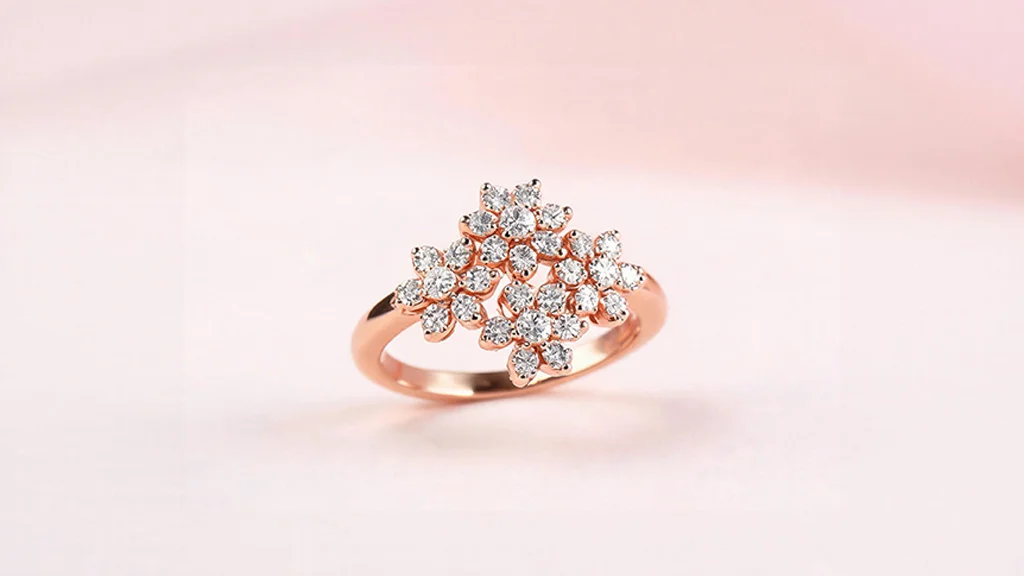
Cluster settings arrange multiple smaller diamonds or gemstones, often in floral or geometric patterns, rather than showcasing one dominant center stone. The appeal is partly value, since multiple smaller stones frequently create more visual surface area and sparkle than a single diamond of equivalent total carat weight, and partly aesthetic, since the arrangement itself becomes the design signature.
Pair with: Cluster settings work in both vintage-inspired and contemporary geometric styles, making this one of the more flexible categories on this list.
Price range: $1,800–$5,000 / £1,400–£4,000, generally more accessible than a single large center stone of comparable visual presence.
From the bench: Setting a cluster requires precise calibration of multiple stones to a consistent depth and angle, more time-intensive per piece than a single-stone mount, but it's one of the few ways to maximize apparent size on a fixed carat budget.
Lab-Grown Diamonds Are No Longer “Alternative”
This is the trend underpinning nearly everything else on this list. US data puts lab-grown diamonds at 61% of engagement ring sales, while separate industry estimates put the true figure already past the halfway mark and still climbing. In the UK, lab-grown sits at 70% of sales, down slightly from 80% the year before as natural diamonds see a modest resurgence in the prestige segment. Average lab-grown carat weight is climbing too, UK data shows the average rising from 1.53 to 1.57 carats year over year, with late-2025 purchases averaging 1.70 carats, as couples take advantage of lower per-carat pricing to size up.
Pair with: Any setting on this list; diamond type is now largely independent of style choice.
Price range: Lab-grown diamonds typically run 60–85% less per carat than a natural diamond of equivalent grade, the single biggest reason average engagement ring spend has fallen even as carat sizes rise.
From the bench: Grading standards are tightening as the category matures. As of October 1, 2025, GIA replaced its detailed color-and-clarity grading for lab-grown diamonds with a simplified two-tier Premium or Standard assessment, rather than the D-to-Z and clarity scale used for natural stones. Buyers should confirm which report format they're looking at rather than relying on older comparison charts still circulating online.
Bespoke and Custom Design
With diamond cost less of a constraint, more couples are directing budget toward a fully custom design rather than a pre-made setting, whether that means a hand-selected antique-cut stone, a one-of-a-kind sculptural band, or engraved details meaningful only to the couple. UK retail data shows bespoke commissions among the fastest-growing categories of 2025.
Pair with: Any style on this list; the differentiator is process rather than aesthetic, working directly with a designer or manufacturer from concept through final piece rather than selecting from an existing catalog.
Price range: Varies by complexity, but bespoke commissions typically run comparable to, or only modestly above, an equivalent pre-made design, since the premium is for design time rather than materials.
From the bench: This is the category where working with a brand that actually manufactures, rather than sources finished pieces from a catalog, makes the most practical difference. Changes to a prong height, a stone's exact orientation, or a band's taper can be made directly with the people cutting and setting the piece, rather than relayed through several layers of supplier.
US vs. Europe: How Engagement Ring Preferences Differ
Despite a shared shift toward lab-grown diamonds, American and European buyers, using UK data as the most complete European benchmark available, are diverging in some clear ways.
|
Metric |
United States (2026) |
United Kingdom (2026) |
|---|---|---|
|
Average engagement ring spend |
$4,600 |
£5,750 (approx. $7,300) |
|
Lab-grown diamond share |
61% |
70% |
|
Leading metal |
White metal, 48% (35% white gold + 13% platinum) |
Yellow gold, 57% |
|
Leading diamond shape |
Round, 26% (oval close behind at 25%) |
Round, 36% (oval at 33%) |
|
Most popular ring style |
Solitaire remains dominant; styles diversifying |
Solitaire at 40.3%, down from 47% the prior year |
Sources: The Knot's 2026 Real Weddings study (US figures); UK engagement ring retail and sales data (UK figures).
UK buyers have moved further and faster toward both yellow gold and lab-grown adoption than US buyers, while both markets show the same underlying move away from a single dominant style toward more diversified, personalized choices. A caveat worth noting: consolidated, country-by-country sales data across continental Europe is far thinner than what's available for the UK or US. Based on conversations with European wholesale partners and conversations on the floor at JCK Las Vegas, France and Germany appear to be following a similar trajectory toward warmer metals and lab-grown adoption, generally trailing the UK by roughly twelve to eighteen months, though this should be read as directional rather than as hard survey data.
Trends Worth a Second Thought Before You Commit
Not every trend wears equally well day to day. A few practical points are worth weighing before finalizing a design.
- Band width is a balance, not just a style choice. Very thin bands can bend or lose their shape over years of daily wear, while very thick bands add meaningful cost in metal weight without necessarily adding durability beyond a certain point.
- High-set stones catch more light, and more fabric. Raising a center stone improves brilliance but also raises the risk of snagging on clothing or knocking against hard surfaces, worth weighing against an active day-to-day routine.
- Colored stone alternatives need different care. Diamond sits at 10 on the Mohs hardness scale; emerald at roughly 7.5–8 and opal at 5.5–6.5 are both more prone to scratching or chipping with daily wear, and may need a protective setting or more careful handling.
How to Choose Your 2026 Style
Start from how the ring will actually be worn day to day, occupation, hobbies, hand use, before settling on aesthetics. Decide early whether the budget is going toward stone size or setting complexity, since 2026's trends increasingly let couples choose one or the other rather than stretching for both at once. And treat celebrity-driven references, an old mine cut, an east-west setting, as a starting point rather than a literal template; the versions that age well tend to be adapted to the wearer's actual proportions rather than copied exactly.
Frequently Asked Questions
The solitaire remains the single most common style on both sides of the Atlantic, though its share is shrinking. UK sales data puts it at about 40% in 2025, down from 47% the year before, as diamond-band, three-stone, and sculptural styles gain ground.
It depends on the market. UK buyers now favor yellow gold by a wide margin, 57% versus 42% platinum, while US buyers still lean slightly toward white metals overall, 48% versus 39% yellow gold, though yellow gold's US market share has more than doubled over the past five years.
Estimates vary by market and source. US figures from The Knot's 2026 study put lab-grown diamonds at 61% of sales, while UK retail data shows it closer to 70%, down slightly from 80% in 2024 as natural diamonds see a modest comeback in the prestige tier.
In the US, average spend sits at $4,600, the third consecutive year-over-year decline. In the UK, average spend is holding steady at roughly £5,750. In both markets, falling lab-grown diamond prices are letting couples get larger or higher-quality stones without spending more.
Click here to change this text. Ac non ac hac ullamcorper rhoncus velit maecenas convallis torquent elit accumsan eu est pulvinar pretium congue a vestibulum suspendisse scelerisque condimentum parturient quam.Aliquet faucibus condimentum amet nam a nascetur suspendisse habitant a mollis senectus suscipit a vestibulum primis molestie parturient aptent nisi aenean.A scelerisque quam consectetur condimentum risus lobortis cum dignissim mi fusce primis rhoncus a rhoncus bibendum parturient condimentum odio a justo a et mollis pulvinar venenatis metus sodales elementum.Parturient ullamcorper natoque mi sagittis a nibh nisi a suspendisse a.
Generally, yes, more so than a prong setting. A metal rim fully or partially encircling the stone protects it from knocks and snags, which is part of why interest in bezel and rubover settings has grown by roughly 100% over the past year in UK retail search data.
Often. Oval cuts typically cost 10 to 15% less per carat than an equivalent round diamond, because the cutting process wastes less of the rough stone, and a well-cut oval can appear larger than a round of the same carat weight thanks to its elongated outline.
Toi et moi, French for “you and me,” is a two-stone setting that places two different gemstones side by side rather than centering on a single stone, often a diamond paired with a colored gem. UK search interest in the style has risen roughly 40% over the past year.
It's worth treating celebrity styles as a reference point rather than a template. The proportions that suit one hand, finger length, and lifestyle don't always translate directly. A jeweller or designer can usually adapt the core idea, an old mine cut, an east-west setting, to better suit the actual wearer.
Yes. As of October 1, 2025, GIA replaced its detailed color-and-clarity grading for lab-grown diamonds with a simplified two-tier assessment, Premium or Standard, rather than the D-to-Z and clarity scale used for natural diamonds. Buyers comparing lab-grown stones should check whether a report predates or postdates that change.
The Throughline for 2026
2026's defining theme isn't really any single setting or shape, it's that lab-grown diamonds have freed up budget for couples to spend on design rather than diamond size alone, and the market is responding with more texture, more color, and more genuinely personal choices than it has in years. Whether that means an antique-inspired old mine cut, a sculptural band built from scratch, or a fully bespoke piece designed around a couple's own story, the throughline across both the US and European data is the same: couples want a ring that looks intentional, not default. For couples and retail partners exploring a custom direction, working with a team that designs and manufactures rather than simply curates a catalog tends to make that intentionality easier to achieve.