
Gold Filled vs Gold Plated Jewelry: The Complete Guide
- Written by Provence Team
- Updated on July 4, 2026
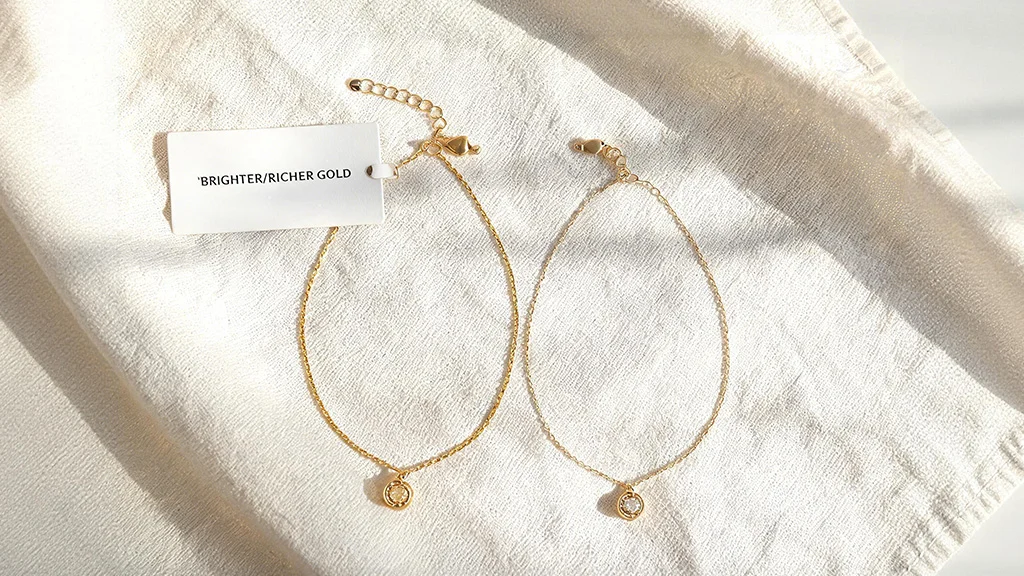
Table of Contents
Two pieces of jewelry can sit side by side in a display case, both glowing with the same warm gold finish, both priced within a few dollars of each other — and one will still look brand new in ten years while the other has worn through to bare brass in six months. The difference comes down to two words that are constantly confused: gold-filled and gold-plated.
If you're shopping for jewelry — or sourcing it for your brand — understanding this distinction protects you from paying gold-filled prices for gold-plated durability, or misjudging what your customers actually expect from each category. This guide breaks down the manufacturing differences, the legal standards that govern each term in the United States, the United Kingdom, and the European Union, and how to tell exactly what you're buying or selling.
Gold Filled vs Gold Plated at a Glance
Here's the short version, compared against gold vermeil and solid gold for context:
|
Feature |
Gold-Plated |
Gold-Filled |
Gold Vermeil |
Solid Gold |
|---|---|---|---|---|
|
Gold layer thickness |
0.175–2.5 microns |
40–100+ microns (min. 5% by weight) |
2.5+ microns |
Solid throughout |
|
Bonding method |
Electroplating |
Heat + pressure bonding |
Electroplating (silver base) |
N/A — solid metal |
|
Base metal |
Brass, copper, nickel |
Brass (jeweler's brass) |
Sterling silver (925) |
None |
|
Typical lifespan |
6 months–2 years |
10–30 years |
1–3 years |
Lifetime |
|
US stamp |
GP, GEP, HGE |
GF, RGP, 1/20 12K GF |
925 + vermeil / gilt |
10K, 14K, 18K only |
|
Skin sensitivity risk |
Higher (base metal exposure) |
Low (thick barrier layer) |
Low (silver base) |
Lowest |
|
Relative price |
$ |
$$ |
$$ |
$$$$ |
Comparison based on U.S. FTC guidelines (16 CFR Part 23) and industry-standard manufacturing specifications.
What Is Gold-Plated Jewelry?
Gold-plated jewelry is made by electroplating: a base metal — usually brass, copper, or nickel — is submerged in a gold-ion solution, and an electrical current deposits a thin layer of gold onto its surface. The process is fast, inexpensive, and produces the same visual shine as solid gold at a fraction of the cost.
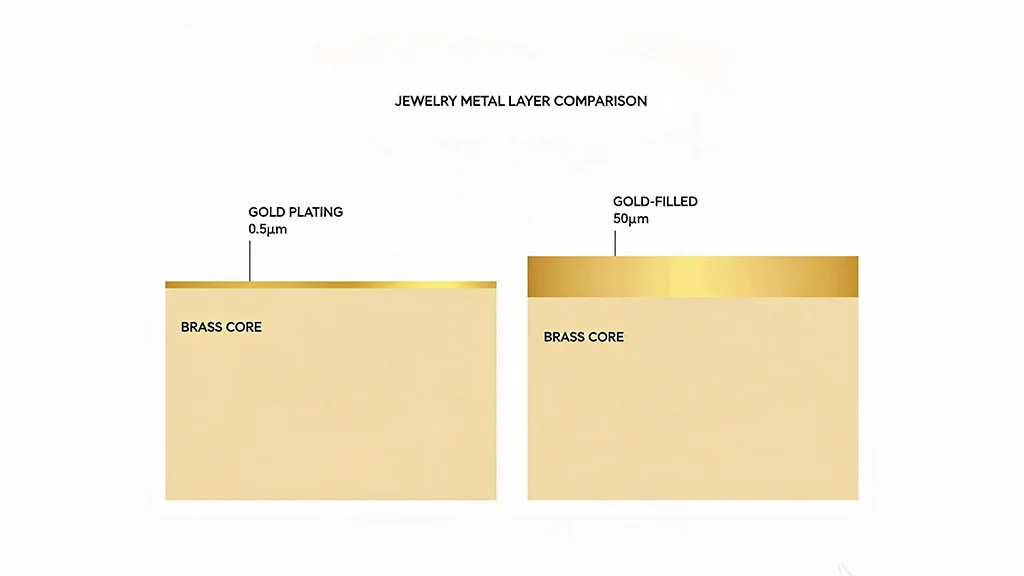
The catch is thickness. Under U.S. Federal Trade Commission guidelines, jewelry can be called "gold electroplate" (GEP) with a coating as thin as 0.175 microns — roughly 400 times thinner than a human hair. "Gold plate" (GP) requires a slightly thicker mechanical application, and "heavy gold electroplate" (HGE) requires a minimum of 2.5 microns. Most commercially available gold-plated jewelry falls between 0.5 and 2.5 microns, meaning it contains well under 0.1% actual gold by weight.
- Common base metals: brass, copper, nickel
- Bonding method: electrolytic (electroplating)
- Typical thickness: 0.175–2.5 microns
- Common US stamps: GP, GEP, HGE, HGP
Because the coating is so thin, gold-plated jewelry is best suited to occasional-wear pieces, statement jewelry you'
What Is Gold-Filled Jewelry?
Gold-filled jewelry uses a completely different manufacturing process. Instead of an electrical bath, a solid sheet of karat gold (10K or higher) is mechanically bonded to a base metal core — almost always brass — using heat and pressure. The two metals are then rolled or drawn into sheets or wire, creating a permanent metallurgical bond rather than a surface coating.
U.S. federal standards require that the gold layer make up at least 1/20th, or 5%, of the item's total metal weight. In practical terms, that means a gold-filled piece typically carries 40 to 100+ microns of solid gold — roughly 100 times more gold than a comparably sized gold-plated piece.
- Base metal: jeweler's brass
- Bonding method: heat and pressure (mechanical bond)
- Minimum gold content: 5% of total weight (10K or higher)
- Common US stamps: GF, 14K GF, 1/20 12K GF, RGP
Because the gold layer is so much thicker, gold-filled jewelry can be gently polished or lightly scratched without exposing the base metal underneath — a meaningful advantage for rings and bracelets that see daily friction.
Where Gold Vermeil Fits In
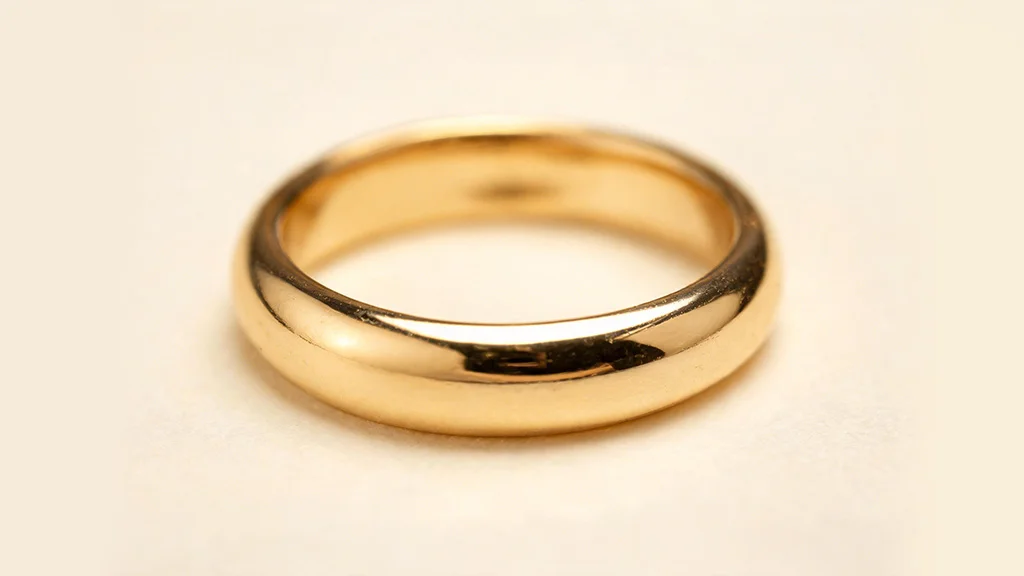
Gold vermeil (pronounced vur-may) often gets lumped in with gold-filled jewelry, but it's structurally closer to gold-plated. Vermeil is gold plating applied over a sterling silver base rather than brass or copper. U.S. standards require a minimum gold thickness of 2.5 microns and a base of at least 925 sterling silver.
The silver base makes vermeil more skin-friendly and gives it better resale and scrap value than brass-core plating, but the gold layer itself is still applied through electroplating — meaning it will eventually wear through, typically within one to three years of regular wear, well short of gold-filled's decade-plus lifespan.
Regulatory Standards: United States vs. UK and EU
This is where most guides fall short — the terminology that governs "gold-filled" and "gold-plated" jewelry is largely a U.S. legal framework, and it doesn't map directly onto UK or EU consumer protection law. If you're buying or selling across both markets, the distinction matters.
United States: FTC 16 CFR Part 23
In the U.S., the terms gold-filled, gold-plated, gold electroplate, and gold overlay are legally defined under the Federal Trade Commission's Guides for the Jewelry, Precious Metals, and Pewter Industries (16 CFR Part 23). These guides set the minimum karat fineness, thickness, and weight ratios a manufacturer must meet before using each term, and require accurate disclosure on labeling and marketing.
United Kingdom: The Hallmarking Act 1973
The UK does not use "gold-filled" as a regulated category. Instead, precious metal content is governed by the Hallmarking Act 1973, which requires that items above a minimum weight threshold be independently tested and stamped by one of the UK's assay offices before being described as gold, silver, or platinum. Gold-plated items sold in the UK typically carry no hallmark at all, since the gold layer itself doesn't meet solid-metal thresholds — sellers instead rely on descriptive terms like "gold vermeil" or "gold plated over sterling silver," which are held to general consumer protection and trading standards rather than the FTC's specific micron thresholds.
European Union: Hallmarking and REACH
EU member states don't share a single unified hallmarking system — several countries (France, Germany, and others) maintain their own national marks and assay requirements — but one regulation applies EU-wide regardless of gold content: REACH Annex XVII, Entry 27, which limits nickel release from items in prolonged skin contact. This is directly relevant to gold-plated jewelry, since many affordable base metals used underneath thin gold plating contain nickel. Once the plating wears through — which, as covered above, can happen within months — any nickel content in the base metal becomes a real skin-contact concern, particularly for earrings and rings.
The practical takeaway for European buyers: gold-filled jewelry's thicker barrier layer offers meaningfully better long-term protection against nickel exposure than gold-plated jewelry, simply because there's more gold standing between your skin and the base metal, for far longer.
Six Key Differences, Side by Side
1. Gold Layer Thickness
Gold-plated: 0.175–2.5 microns. Gold-filled: 40–100+ microns. This is the single biggest driver of every other difference on this list.
2. Durability and Lifespan
Gold-plated jewelry typically shows wear within 6 months to 2 years, with rings wearing fastest due to constant friction. Gold-filled jewelry commonly lasts 10 to 30 years with normal care.
3. Tarnish and Color Retention
Once gold plating wears through, the exposed base metal can oxidize, discolor, or take on a greenish tint. Gold-filled jewelry's thick gold layer keeps the base metal fully sealed for decades.
4. Skin Sensitivity and Nickel Exposure
Thinner plating means a shorter path to base-metal contact, which raises the risk of skin irritation — particularly relevant under REACH nickel-release rules in the EU. Gold-filled's thicker barrier significantly reduces this risk.
5. Water and Sweat Resistance
Moisture, lotion, and sweat accelerate plating wear. Gold-filled jewelry tolerates daily exposure — showering, swimming, workouts — far better than gold-plated pieces, which manufacturers typically recommend removing before water contact.
6. Cost Per Year of Wear
Gold-filled jewelry costs more upfront, but its extended lifespan often makes it the better value over time. Here's the math across three currencies, using average retail pricing and typical lifespan data:
|
Piece Type |
Gold-Plated (price / lifespan / $ per year) |
Gold-Filled (price / lifespan / $ per year) |
|---|---|---|
|
Necklace |
$45 / 1.5 yrs / $30/yr |
$120 / 20 yrs / $6/yr |
|
Ring |
$35 / 1 yr / $35/yr |
$95 / 15 yrs / $6.30/yr |
|
Earrings |
$40 / 2 yrs / $20/yr |
$110 / 20 yrs / $5.50/yr |
How Gold-Filled Jewelry Is Actually Made
As a manufacturer producing both gold-filled and gold-plated pieces for retail and wholesale partners, we see the difference on the factory floor before it ever reaches a display case. Gold-filled production starts with a solid sheet of karat gold and a brass core, which are heated and pressed together under controlled pressure until they form a single, fused sheet — not two layers glued together, but one metallurgically bonded material.
That fused sheet is then drawn or rolled down to the thickness needed for wire, sheet stock, or findings, with the gold-to-brass ratio maintained throughout the process. Because the bond happens at the sheet stage rather than after the piece is formed, the gold layer remains consistent across the entire surface of the finished jewelry — including edges and undersides that plating processes often leave thinner.
Gold-plated production, by contrast, happens after the piece is fully formed: the finished brass or copper component is cleaned, polished, and submerged in an electroplating bath, where a measured electrical current controls how many microns of gold bond to the surface. This is why plating thickness can vary between manufacturers, and even between batches — it depends entirely on bath chemistry, current, and dwell time, none of which is visible to the buyer without lab testing.
We exhibit our production capabilities annually at JCK Las Vegas, where retail and brand partners can see both processes firsthand and specify exact gold thickness, karat, and base metal composition for custom OEM/ODM orders.
How to Read the Stamp
The fastest way to identify what you're actually buying is the stamp, usually found on the clasp, inside a ring band, or on an earring post. Here's how to decode it across US, UK, and EU markets:
|
Stamp / Mark |
Meaning |
Market |
|---|---|---|
|
GF / 14K GF |
Gold-Filled, 14-karat gold layer |
US |
|
1/20 12K GF |
1/20th of total weight is 12-karat gold |
US |
|
RGP |
Rolled Gold Plate (mechanically bonded overlay) |
US |
|
GP |
Gold-Plated |
US |
|
GEP / GE |
Gold Electroplated (min. 0.175 microns) |
US |
|
HGE / HGP |
Heavy Gold Electroplate (min. 2.5 microns) |
US |
|
18K GP |
Plated with 18-karat gold — not solid 18K |
US / EU |
|
10K, 14K, 18K (no letters) |
Solid gold — no plating or filling involved |
US / EU |
If a listing or a physical piece shows no stamp at all, treat that as a red flag rather than an assumption of quality — reputable gold-filled and gold-plated manufacturers stamp their work because the law requires accurate disclosure, and the absence of a stamp usually means the seller is avoiding scrutiny of what's actually underneath.
Which Should You Choose?

Choose Gold-Plated If:
- You want a trend piece you'll wear for a season and replace
- The item is a statement piece worn occasionally rather than daily
- Budget is the primary concern and longevity is secondary
Choose Gold-Filled If:
- You want a piece for daily wear — rings and bracelets especially
- You have sensitive skin or nickel concerns
- You want better long-term value despite a higher upfront price
- You're layering pieces you'll wear for years, not months
Choose Solid Gold If:
- The piece is an heirloom, engagement ring, or long-term investment
- Resale and scrap value matter to you
- You want zero risk of the gold layer ever wearing through
For Retailers and Brands: Sourcing Considerations
If you're sourcing gold-filled or gold-plated jewelry for your own brand, the specification you give your manufacturer matters as much as the finished product. When briefing an OEM/ODM partner, specify:
- Exact gold karat (10K, 12K, 14K, or 18K) and whether plating or fill is required
- Minimum micron thickness for plated items, or minimum weight percentage for filled items
- Base metal composition, including nickel content if selling into the EU under REACH
- Required stamps and country-specific labeling compliance (FTC for US, hallmarking requirements for UK)
- Minimum order quantities and lead times for each metal type
As a manufacturer serving both B2C retail brands and B2B wholesale partners, we work with clients at every stage — from first sample to full production runs — to make sure the finished piece meets the labeling and durability standards of the market it's sold into.
Sourcing Gold Jewelry for Your Brand?
Provence Jewellery manufactures gold-filled, gold-plated, and solid gold jewelry for retail and wholesale partners worldwide. Get in touch to discuss OEM/ODM specifications, MOQs, and compliance requirements for your target market.
Frequently Asked Questions
Yes. Gold-filled jewelry contains a solid layer of real karat gold — typically 12K or 14K — mechanically bonded to a base metal core. It is not solid gold all the way through, but the gold layer itself is genuine, not a coating or gold-colored alloy.
Check the stamp first — look for GF, RGP, or a fraction like 1/20 12K GF for gold-filled, versus GP, GEP, or HGE for gold-plated. Beyond stamps, gold-filled pieces tend to feel slightly heavier for their size and hold their color for years rather than months.
Gold-filled jewelry resists tarnish far better than gold-plated because its thick gold layer fully seals the base metal underneath. It's not entirely immune to tarnish, but it holds its finish for years longer than plated pieces under normal wear.
Generally, yes. The thick gold barrier in gold-filled jewelry significantly reduces contact between skin and the base metal underneath, which lowers the risk of nickel-related irritation compared to thinner gold-plated pieces.
Not formally. "Gold-filled" is a U.S. legal term defined by the FTC. The UK and EU don't use an equivalent regulated category — UK sellers rely on hallmarking and descriptive terms, while EU rules focus more on nickel-release limits under REACH than on gold layer thickness specifically.
Yes, most gold-plated jewelry can be re-plated by a jeweler once the original layer wears through, though this adds an ongoing cost that gold-filled jewelry avoids for years or decades.
Gold-filled jewelry typically contains around 100 times more gold by volume than gold-plated jewelry of similar size, due to the thickness difference between mechanical bonding and electroplating.
No. Vermeil is gold-plated sterling silver — the gold layer is applied through electroplating and is thinner than gold-filled, though thicker than standard gold plating. Gold-filled uses a mechanically bonded gold layer that's significantly thicker and more durable than vermeil.
Gold-filled lasts longer. Its gold layer runs 40 to 100+ microns thick, compared to vermeil's 2.5-micron minimum, giving gold-filled roughly 10 to 30 years of wear versus vermeil's typical 1 to 3 years before the gold layer shows wear.