Lab Grown Diamond vs Moissanite: Complete Buying Guide 2026
- Written by Provence Team
- Updated on June 16, 2026
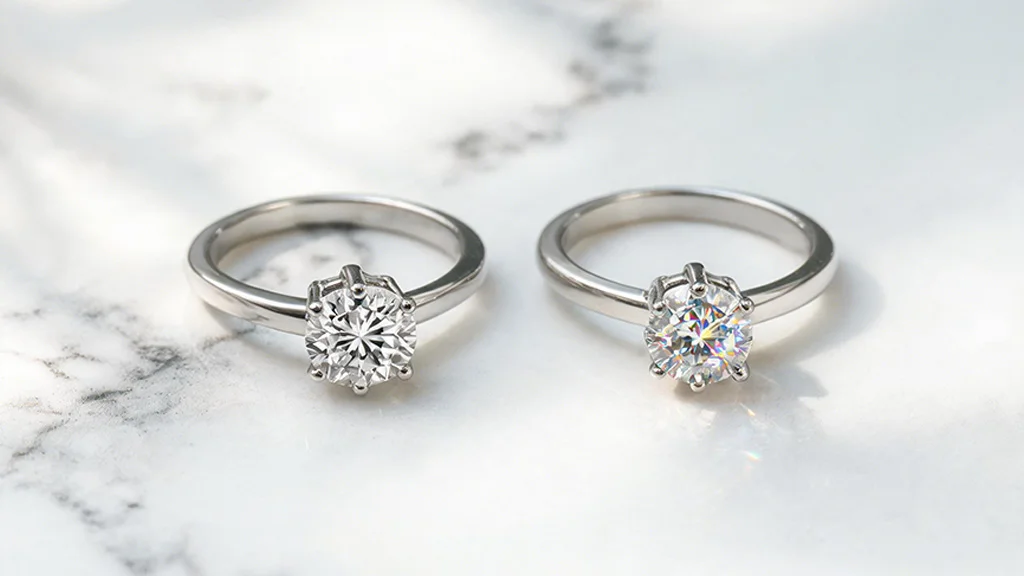
Table of Contents
Two stunning, ethical, lab-created gemstones. One significant choice. If you've landed here, you're probably trying to decide between a lab-grown diamond and moissanite — whether for an engagement ring, a special gift, or sourcing stones for your own jewellery collection. This guide covers everything you need to know: brilliance, hardness, price comparisons in USD and GBP, considerations for buyers in the United States and Europe, resale value, and a clear decision framework. Estimated read time: 17 minutes.
Lab Grown Diamond vs Moissanite: The Short Answer
Lab-grown diamonds are real diamonds — pure carbon, chemically and physically identical to mined diamonds, graded by GIA or IGI on the same 4C scale, and rated 10 on the Mohs hardness scale. Moissanite is a different mineral entirely — silicon carbide, not carbon — first discovered in a meteor crater and now lab-created; it scores 9.25–9.5 on Mohs and produces a distinctive rainbow-fire sparkle due to its higher refractive index. In the US, a quality 1-carat moissanite starts around $300–600 USD; a comparable lab-grown diamond starts around $800–2,000 USD. If you want GIA-certified diamond prestige at a lower cost than a mined stone, choose a lab-grown diamond. If you want maximum size and sparkle within a tight budget, choose moissanite.
Lab Grown Diamond vs Moissanite: Side-by-Side Comparison
The table below covers all the key factors — including USD and GBP/EUR pricing and OEM suitability — that you won't find in most comparison guides.
|
Factor |
Moissanite |
Lab Grown Diamond |
Verdict |
|---|---|---|---|
|
Composition |
Silicon carbide (SiC) |
Pure carbon — identical to mined diamond |
Different minerals entirely |
|
Mohs Hardness |
9.25–9.5 |
10 (highest possible) |
Lab diamond wins |
|
Refractive Index |
2.65–2.69 (rainbow fire) |
2.42 (classic white brilliance) |
Personal preference |
|
Sparkle Type |
High fire, colourful flashes |
Balanced brilliance, subtle fire |
Personal preference |
|
Price 1ct |
USD 300–600, £240–480, €280–560 |
USD 800–2,000, £640–1,600, €750–1,860 |
Moissanite wins |
|
GIA/IGI Certification |
Not eligible |
GIA or IGI certified (4Cs) |
Lab diamond wins |
|
Resale Value |
Near zero secondary market |
20–40% resale possible |
Lab diamond wins |
|
Heat Sensitivity |
Colour may shift above 65°C |
No heat sensitivity |
Lab diamond wins |
|
Ethical Sourcing |
Lab-created, no mining |
Lab-created, no mining |
Tie |
|
Detectability |
Fails advanced conductivity test |
Indistinguishable from mined diamond |
Lab diamond wins |
|
OEM Cost Efficiency |
Excellent — low unit cost |
Higher cost; ideal for premium lines |
Depends on budget |
Not sure which stone is right for you?
Our team at Provence Jewellery serves clients across the US and Europe, with production facilities in China. Whether you're buying a single ring or sourcing for a collection, we'll help you find the perfect stone and setting. Get in touch for a free consultation.
What Is Lab Grown Diamond?
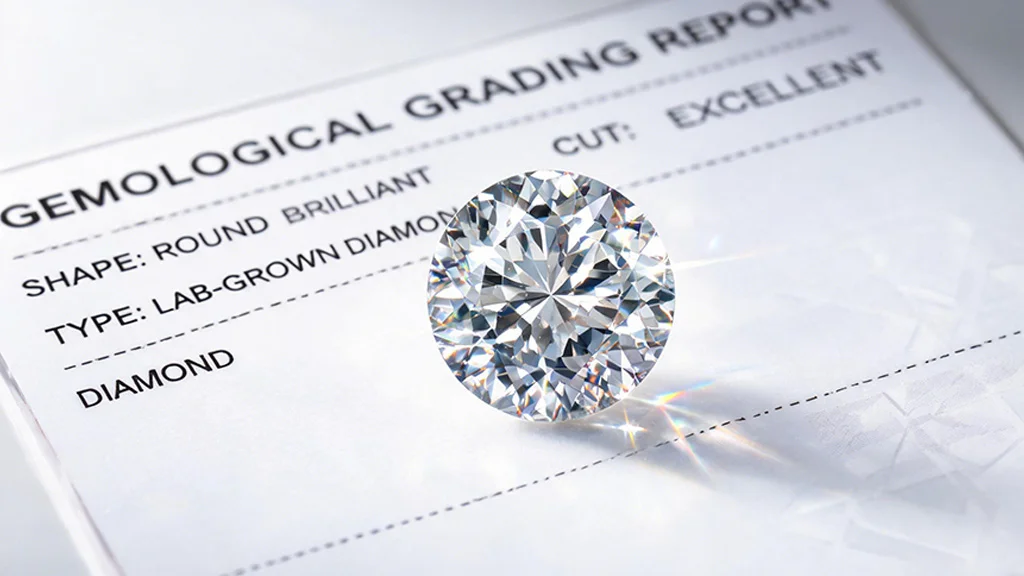
A lab-grown diamond is a real diamond. This is not a marketing claim — it is a scientific fact confirmed by the Gemological Institute of America (GIA), the International Gemological Institute (IGI), and essentially every major gemological body worldwide. Lab-grown diamonds are composed of pure carbon atoms arranged in the same cubic crystal structure as mined diamonds, possess the same optical properties, the same refractive index (2.42), the same hardness (10 Mohs), and the same chemical formula (C).
They are grown in two ways — High Pressure High Temperature (HPHT), which replicates the geological conditions deep underground, and Chemical Vapour Deposition (CVD), which deposits carbon atom by atom onto a diamond seed plate. Both methods produce stones that are certified by GIA and IGI on the same 4C system (cut, colour, clarity, carat) used for mined diamonds.
Want to understand exactly how lab diamonds are made, step by step? Read our detailed guide: How Are Lab-Grown Diamonds Made →
The only difference between a lab-grown diamond and a mined diamond is origin. One formed over billions of years underground; the other in weeks inside a controlled laboratory environment. To the naked eye, under magnification, and in standard gemological testing, they are indistinguishable.
What Is Moissanite?
Moissanite has a surprisingly cosmic origin story. In 1893, French chemist Henri Moissan was examining rock samples from a meteorite crater in Canyon Diablo, Arizona, when he stumbled upon tiny crystalline particles unlike anything found on Earth. He initially believed them to be diamonds. Further analysis revealed something far more unusual: silicon carbide (SiC) — a compound so rare in nature that it had never been documented in gemstone form before.
Natural moissanite deposits are extraordinarily scarce, found only in microscopic quantities in certain meteorites and a handful of rock formations. Every moissanite gemstone you see today — without exception — is lab-created, produced by growing silicon carbide crystals under controlled conditions. This makes moissanite one of the few gemstones that is inherently, entirely lab-grown by necessity rather than choice.
Key fact: Moissanite is NOT a diamond alternative in a chemical sense. It is a distinct mineral — silicon carbide — with its own unique optical and physical properties. That distinction matters when we discuss certification, detectability, and long-term value.
Moissanite vs Lab Diamond Sparkle: Fire, Brilliance, and the "Disco Ball" Effect
When most people compare these two stones, sparkle is the first thing they ask about — and the answer is more nuanced than most guides let on.
Understanding Refractive Index
Refractive index measures how dramatically a material bends light passing through it. A higher refractive index means more light bending, which produces more fire (the coloured flashes you see when light disperses into a spectrum). Here's how the two stones compare:
- Moissanite: Refractive index 2.65–2.69, dispersion value 0.104
- Lab-grown diamond: Refractive index 2.42, dispersion value 0.044
Moissanite bends light more dramatically than diamond. Significantly more. This is not a small difference — moissanite's dispersion value is more than double that of diamond.
What This Looks Like in Reality
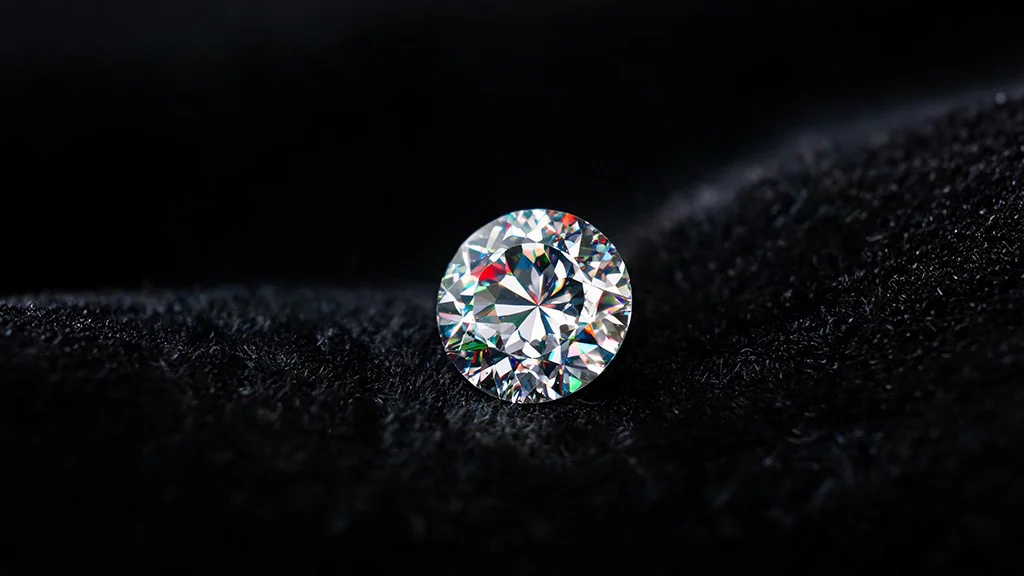
Under certain lighting conditions — bright daylight, direct sunlight, or strong overhead LED lighting — moissanite produces vivid, colourful flashes of red, orange, yellow, and green light. Some buyers find this dazzling and beautiful. Others find it distracting, particularly in larger stones, where the effect can become what jewellers sometimes call the "disco ball effect."
Lab-grown diamonds, by contrast, deliver the classic diamond sparkle most people picture: a balanced mix of white brilliance (light reflected back cleanly) and subtle fire (small coloured flashes). It reads as elegant and traditional rather than dramatic.
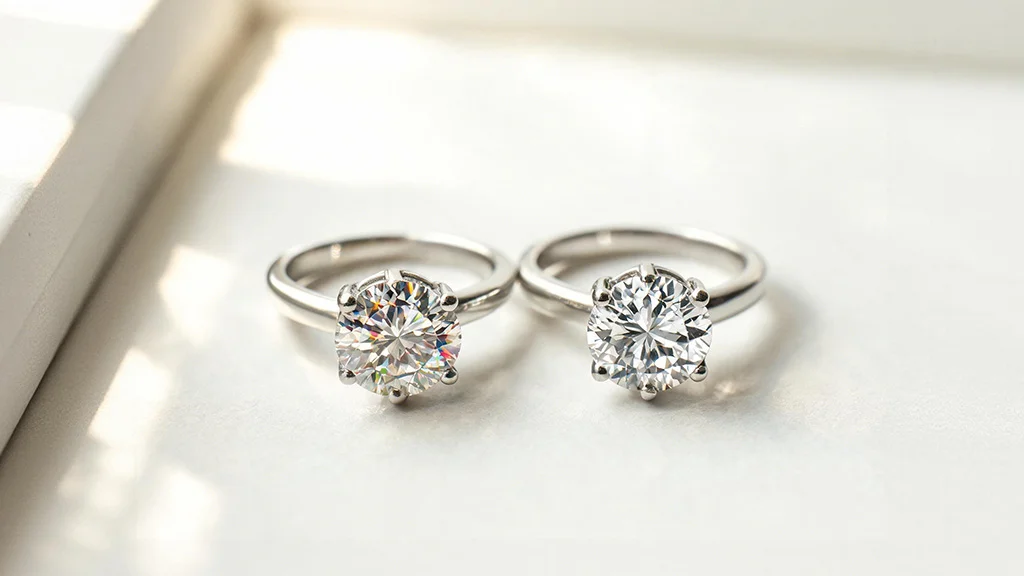
Important note The 'disco ball' criticism is most relevant in stones above 1 carat and under bright direct lighting. In softer indoor lighting — restaurants, candlelight, photographs — moissanite and lab diamonds can appear strikingly similar to the untrained eye.
Birefringence: The Hidden Technical Difference
There is one optical property of moissanite that most comparison guides gloss over: birefringence. Unlike lab diamonds (which are singly refractive, like all diamonds), moissanite is doubly refractive — meaning light passing through it splits into two rays rather than one. Under magnification, this can make the facets appear slightly doubled or fuzzy, a phenomenon gemologists can detect. In normal wear and viewing, most people will never notice birefringence, but it is worth understanding if you are buying for a discerning recipient.
When Each Stone Looks Best
- Moissanite at its best: Candlelit dinners, photography, soft indoor lighting, evening events — where its fire creates a dramatic, attention-grabbing effect
- Lab diamond at its best: Daylight, office environments, outdoor settings — where its classic white brilliance reads as refined and timeless
- Both stones: Either stone will turn heads in an engagement ring. The question is the aesthetic you prefer — vivid drama or classic elegance
Which Is More Durable: Moissanite or Lab Diamond?
Durability covers three properties in gemology: hardness (resistance to scratching), toughness (resistance to chipping and breaking), and stability (resistance to heat, chemicals, and light). Both stones are excellent for daily wear — but there are meaningful differences.
Hardness: Mohs Scale
The Mohs scale rates a material's ability to resist scratching on a scale of 1 to 10, where 10 is the hardest material known. Diamonds — including lab-grown diamonds — score a perfect 10. Moissanite scores 9.25–9.5.
In practical terms, this means moissanite can only be scratched by diamond (and a handful of laboratory abrasives that you will never encounter in daily life). Both stones will resist scratching from keys, metal, concrete, sand, and every common surface you'll encounter wearing a ring. The hardness difference becomes relevant only over decades of continuous wear, where a lab diamond will maintain its surface polish marginally better.
Toughness: Where Moissanite Has a Surprise Advantage
Here is something most guides do not mention: moissanite actually has a toughness advantage over diamonds in one respect. Diamonds have a cleavage plane — a structural weakness along which they can crack if struck at precisely the wrong angle with significant force. Moissanite does not have this cleavage vulnerability. In real-world jewellery wear, both stones are extremely safe, but moissanite's lack of cleavage means it is marginally less vulnerable to that specific type of impact damage.
Heat Sensitivity: A Disclosure Most Guides Skip
What does this mean practically? Moissanite rings should be removed before activities involving sustained heat — using an oven, spending time in a steam room or sauna, or during professional jewellery soldering. Lab-grown diamonds are completely stable under heat conditions encountered in normal wear and professional jewellery work.
Summary: Durability Verdict
- For lifetime daily wear: Both stones are excellent. The lab diamond has a marginal edge in hardness over decades.
- For impact resistance: Moissanite's lack of cleavage gives it a slight advantage against sharp impacts.
- For heat exposure: Lab diamond is preferable if the wearer frequently works in hot environments.
Lab-Grown Diamond vs Moissanite Price: 2026 Comparison
Price is where moissanite's competitive advantage is most dramatic — and where the lab-grown diamond market has undergone a significant and widely underreported shift since 2020.
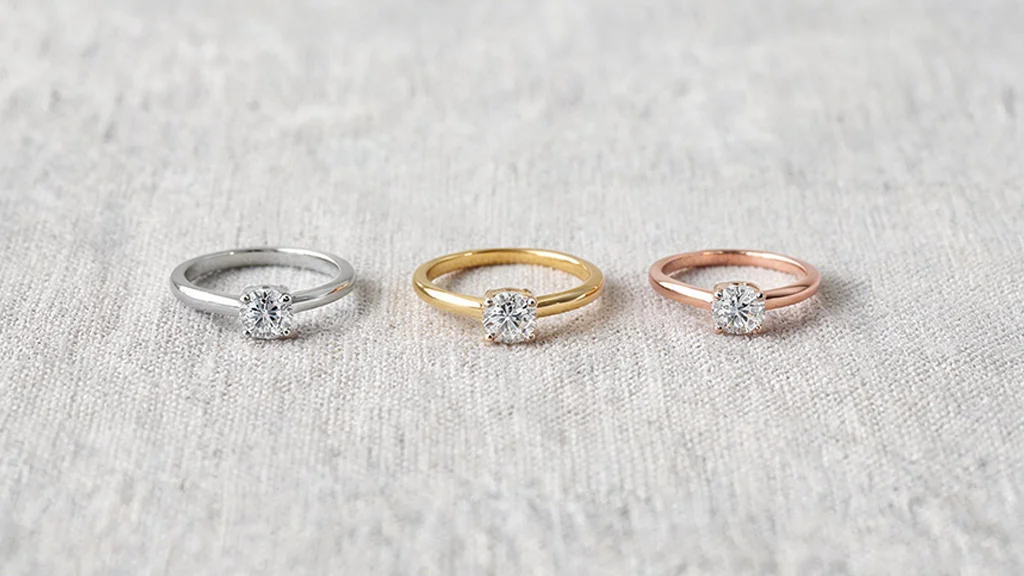
2026 Price Comparison Table (USD, GBP, EUR)
Prices below represent quality ranges for well-cut, near-colourless to colourless stones (moissanite DEF equivalent; lab diamonds G–H colour, VS clarity). Prices are indicative and vary by supplier, cut quality, and certification.
|
Carat |
Moissanite |
Lab Diamond |
|---|---|---|
|
0.5 ct |
$150–300 £120–240 €140–280 |
$400–900 £320–720 €370–840 |
|
1.0 ct |
$300–600 £240–480 €280–560 |
$800–2,000 £640–1,600 €750–1,860 |
|
1.5 ct |
$500–900 £400–720 €470–840 |
$1,500–3,500 £1,200–2,800 €1,400–3,260 |
Why Lab-Grown Diamond Prices Have Fallen So Dramatically
If you spoke to someone about lab-grown diamond prices in 2019 or 2020, you might have heard figures far higher than what you see in the table above. That's because lab-grown diamond prices have collapsed by 40–60% since 2020, and most comparison guides quietly ignore this context.
The reason is scale. CVD (Chemical Vapour Deposition) diamond manufacturing scaled rapidly between 2020 and 2025, particularly out of production facilities in India and China. As production volume increased, unit costs fell, and retail prices followed. A 1-carat lab-grown diamond that might have retailed for USD 3,000–4,000 in 2020 now retails for USD 800–2,000 for comparable quality.
This is broadly good news for buyers. But it has implications for resale value — a topic we address in the next section.
What Your Budget Unlocks
- $500–800 USD budget: A premium moissanite (1.5–2ct) in a quality setting, or a moissanite solitaire in 14k or 18k gold
- $1,000–1,500 USD budget: An excellent moissanite (2–3ct) with halo setting, OR a quality lab-grown diamond (0.5–0.7ct) IGI-certified solitaire
- $2,000–4,000 USD budget: A GIA/IGI certified lab-grown diamond (1.0–1.5ct) in a classic solitaire or pavé setting — the sweet spot for bridal jewelry in the US and UK
- $5,000+ USD budget: Premium lab-grown diamond (2ct+, D–F colour, VS clarity) or a fine diamond halo ring indistinguishable from a mined diamond piece
Certification & Identity: Does Moissanite Get GIA Certification?
One of the most common questions buyers ask is whether moissanite can be certified by GIA or IGI the same way lab-grown diamonds can. The short answer is no — and understanding why matters.
Lab-Grown Diamond Certification
Lab-grown diamonds are certified by GIA (Gemological Institute of America) and IGI (International Gemological Institute) using the same 4C grading system (cut, colour, clarity, carat) applied to mined diamonds. Each certified stone comes with a grading report and a laser-inscribed report number on the girdle of the stone. GIA's lab-grown diamond reports include all the same information as their mined diamond reports, confirming the stone's characteristics and origin.
Note: In late 2025, GIA updated its lab-grown diamond grading terminology, shifting from traditional colour and clarity descriptors to a simplified 'Premium/Standard' scale for newly submitted lab-grown stones. This makes some older lab-grown diamond grading reports — and many competitor articles still citing the old system — outdated. Provence Jewellery supplies stones graded under the current system.
Moissanite Certification
Moissanite does not receive GIA or IGI diamond grading reports because it is not a diamond. Some moissanite sellers provide their own grading certificates (Charles & Colvard, for instance, issues certificates for their Forever One moissanite line), but these are proprietary brand certifications, not independent gemological assessments. When shopping for moissanite, look for stones that specify 'DEF' (colourless) or 'GHI' (near-colourless) equivalents and confirm they are modern 4H polytype silicon carbide for the clearest appearance.
Can a Jeweller Tell Them Apart?
This is a question buyers sometimes ask with a hint of worry — and it deserves a straight answer. Standard thermal diamond testers measure heat conductivity. Moissanite conducts heat similarly enough to diamond that many basic testers will show moissanite as 'diamond.' However, advanced electrical conductivity testers (the type most professional jewellers now carry) can distinguish moissanite from diamond reliably. If your jeweller, insurer, or a potential resale buyer tests the stone with a professional-grade tester, moissanite will be identified.
Lab-grown diamonds, by contrast, are indistinguishable from mined diamonds by any standard gemological test. Only specialised equipment detecting trace growth characteristics (available in major gemological labs, not high street jewellers) can differentiate a lab diamond from a natural one.
Sourcing Moissanite vs Lab Diamond for Your Jewellery Brand
If you're a jewellery designer, boutique owner, or brand looking to build a collection rather than buy a single piece, the moissanite vs lab diamond decision looks quite different at OEM scale.
Moissanite for OEM Collections
Moissanite is the dominant choice for fashion jewellery, semi-fine jewellery, and entry-to-mid-level retail collections at OEM scale. Its advantages for brands are significant:
- Lower unit cost enables higher margins or more competitive retail pricing
- Consistent availability — no supply constraints or certification delays
- Wide range of sizes and shapes available from quality producers
- Excellent for fashion rings, pendants, earrings, stackable bands
- Appeals to the growing Gen Z and millennial consumer segment prioritising value and sustainability
Lab-Grown Diamonds for OEM Collections
Lab-grown diamonds are the preferred choice for bridal collections, premium fine jewellery lines, and pieces positioned as lasting heirlooms. For brands building at the higher end of the market:
- GIA/IGI certification adds verifiable value that supports premium retail pricing
- End customers understand and trust 'lab-grown diamond' terminology more than moissanite in most markets
- Stronger gifting narrative for engagement rings, anniversary pieces, and milestone jewellery
- Higher unit cost, but supported by premium positioning
What to Ask Your OEM Manufacturer
- What quality standard of moissanite (DEF colourless vs GHI near-colourless)?
- Can the manufacturer source IGI-certified lab-grown diamonds directly?
- What are minimum order quantities (MOQ) for each stone type?
- What lead times are typical for certified vs uncertified stones?
- Can stones be tested and verified before production begins?
Frequently Asked Questions
No. Moissanite is not a diamond. It is silicon carbide (SiC) — a different mineral with its own chemical composition, optical properties, and physical characteristics. Lab-grown diamonds, by contrast, are real diamonds: pure carbon, identical to mined diamonds, certified by GIA or IGI on the same 4C grading system. Calling moissanite a 'diamond alternative' is accurate; calling it a diamond is not.
Yes, with the right equipment. Basic thermal diamond testers may register moissanite as diamond, because moissanite conducts heat similarly to diamond. However, advanced electrical conductivity testers — now standard in most professional jewellery settings — distinguish moissanite from diamond reliably. Lab-grown diamonds, on the other hand, are indistinguishable from mined diamonds by any standard gemological test.
In normal conditions, no. Moissanite is chemically stable and will not discolour from light, air, or typical cleaning products. However, moissanite can temporarily change colour when exposed to temperatures above approximately 65°C — shifting toward a greenish or yellowish tint. This usually reverses once the stone cools. In rare cases, the colour change may be permanent. Moissanite rings should be removed before activities involving sustained heat exposure such as baking, sauna use, or professional jewellery repair involving a torch.
The main driver is scale of production. CVD (Chemical Vapour Deposition) diamond manufacturing capacity expanded rapidly between 2020 and 2025, particularly in India and China, driving down the cost of growing diamonds in laboratory conditions. As production scale increased and competition intensified, wholesale prices fell, and retail prices followed. A 1-carat lab-grown diamond that cost USD 3,000–4,000 in 2020 may now retail for USD 800–2,000 at comparable quality. This is good for buyers — and means lab-grown diamonds are now within reach of budgets that previously could only consider moissanite.
Yes — with caveats. Moissanite is extremely durable (9.25 Mohs), resistant to everyday scratching, and produces spectacular sparkle. It will last a lifetime with proper care. The caveats: it does not carry GIA/IGI diamond certification, it can be identified as non-diamond by professional testers, it has essentially no resale value, and for buyers in traditional or older-generation American and European family contexts, it may not carry the same prestige as a diamond. For a couple who understands these factors and values budget efficiency and ethical sourcing, moissanite makes an excellent engagement ring stone.
Both are significantly more eco-friendly than mined diamonds, which require extensive land disturbance, water use, and often problematic labour conditions. Between moissanite and lab-grown diamonds, moissanite requires somewhat less energy to produce — the silicon carbide growth process is less energy-intensive than CVD or HPHT diamond growth. That said, lab-grown diamond production is also rapidly improving its energy efficiency, with many producers now using renewable energy sources. Either choice is a responsible one compared to a mined stone.
A quality 1-carat DEF (colorless) moissanite center stone retails in the US for approximately $300–600 USD depending on the supplier, cut quality, and shape. A comparable 1-carat lab-grown diamond (G–H color, VS clarity, IGI-certified) retails for approximately $800–2,000 USD. Prices vary by jeweler; always ask for stone specifications and certification before comparing prices across suppliers.
Absolutely. Moissanite is widely used in fashion jewellery, semi-fine jewellery, and mid-range retail OEM collections. Its low unit cost, high visual impact, and consistent availability make it an excellent choice for volume production. For bridal collections or premium lines where the 'diamond' narrative and GIA/IGI certification are important selling points, lab-grown diamonds are the better OEM choice. Provence Jewellery manufactures both; contact our team to discuss specifications, MOQ, and pricing.
Final Thoughts
Lab-grown diamonds and moissanite are both excellent choices — but they serve different buyers. A lab-grown diamond is a real diamond at a fraction of the cost of a mined stone, certified by GIA or IGI, culturally recognised, and ideal for bridal and milestone jewellery. Moissanite is a distinct, brilliant, durable gemstone at a fraction of the cost of even a lab diamond, offering exceptional sparkle and extraordinary value for fashion jewellery and budget-conscious buyers.
At Provence Jewellery, we work with both stones across our OEM manufacturing and retail collections. If you're still not sure which is right for you — or for your brand — reach out. Our team is here to help — wherever you are in the US or Europe.