
What is January’s Birthstone? Garnet Meaning & Buying Guide
- Written by Provence Team
- Updated on July 1, 2026
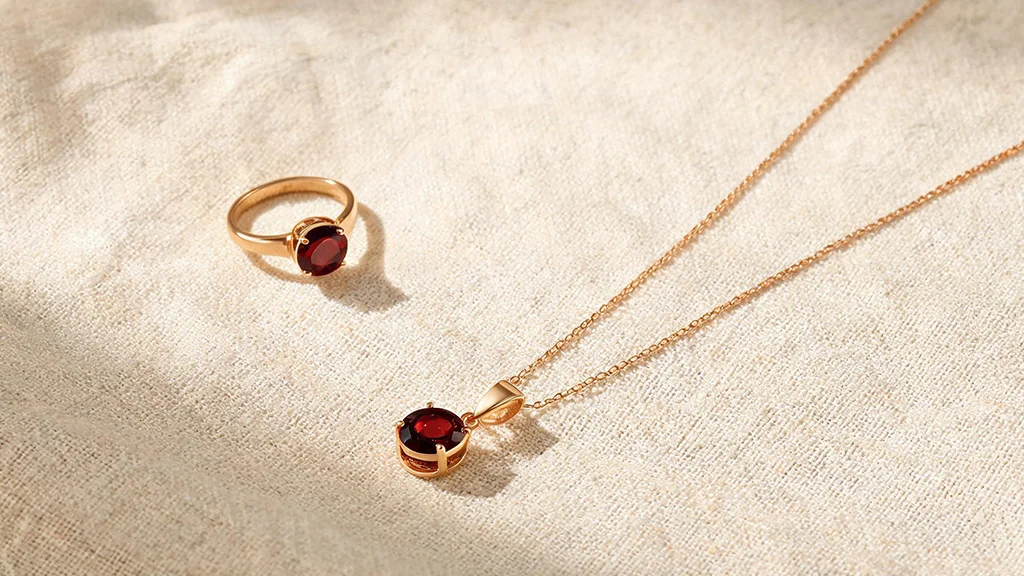
Table of Contents
January's birthstone is garnet — and unlike almost every other birthstone, it isn't really a single gem at all. Garnet is a family of closely related minerals that together produce the widest color range of any birthstone on the calendar, from the deep wine-red most people picture to vivid greens, fiery oranges, and soft raspberry pinks. That diversity, paired with a history that stretches back to ancient Egypt and Rome, makes garnet one of the most rewarding birthstones to shop for and to wear.
In this guide, we'll cover what garnet actually is, what it means, the full range of colors and varieties, its history, where it's found, how durable it is, what to look for when buying it, and how to care for it — plus a few details most birthstone guides leave out, including compliance notes for UK and EU shoppers and garnet's connection to the zodiac.
January‘s Birthstone Fast Facts
- Stone: Garnet
- Most common color: Deep red (almandine, pyrope); also available in orange, green, pink, and purple
- Mohs hardness: 5–7.5, depending on variety
- Meaning: Protection, strength, passion, prosperity, and enduring friendship
- Zodiac signs: Capricorn (Dec 22 – Jan 19) and Aquarius (Jan 20 – Feb 18)
- Wedding anniversary: 2nd anniversary gemstone
Best jewelry types: Rings, earrings, pendants, and necklaces; softer varieties suit lower-impact settings
What Is Garnet, Exactly?
Garnet isn't one mineral — it's a group of closely related silicate minerals that share a crystal structure but vary in chemical composition. Those chemical differences are what produce garnet's exceptional range of colors, from the classic deep red to greens, oranges, and pinks so vivid they're often mistaken for other gemstones entirely.
The name comes from the medieval Latin word granatus, meaning “seed-like,” a reference to the resemblance between deep red garnet crystals and pomegranate seeds. That association has stuck for centuries, and it's still the most common way the stone's name is explained today.
Because garnet is a mineral group rather than a single gem, jewelers and gemologists classify individual stones by species — pyrope, almandine, spessartine, grossular, andradite, and uvarovite are the six most significant to the gem trade. Several of these species also blend into hybrid varieties, like rhodolite, that fall between the primary categories.
Garnet Varieties and Colors
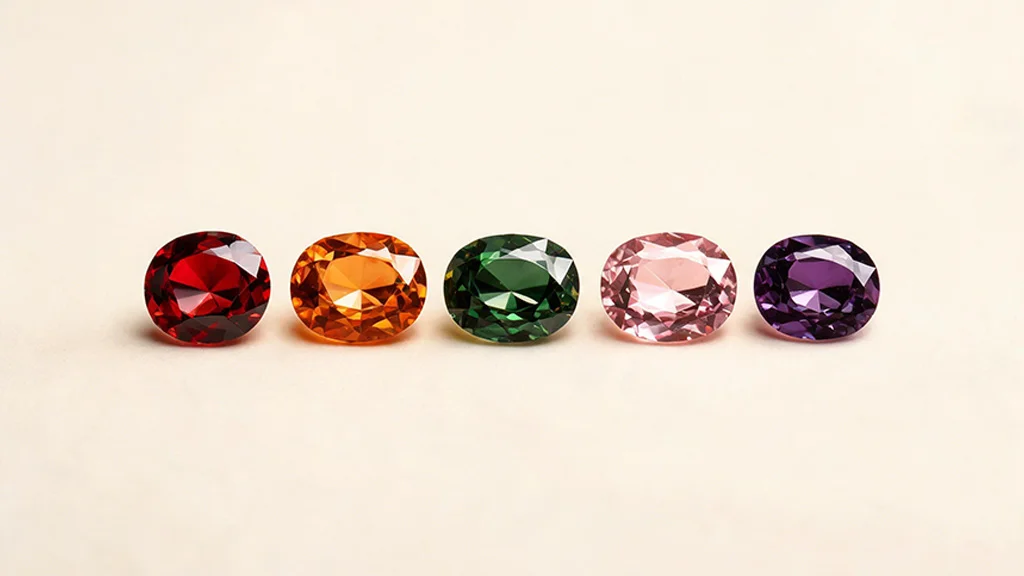
Most people think of garnet as exclusively red, but that's only part of the picture. Garnet spans nearly the entire color spectrum except true blue, and each variety carries its own character, durability profile, and price point. Here's how the major varieties compare:
|
Variety |
Typical Color |
Mohs Hardness |
Relative Rarity / Price |
|---|---|---|---|
|
Pyrope |
Deep red, purplish-red |
7.0–7.5 |
Common / affordable |
|
Almandine |
Dark red, brownish-red |
7.0–7.5 |
Common / affordable |
|
Rhodolite |
Raspberry, rose-red |
7.0–7.5 |
Common / mid-range |
|
Spessartine |
Orange, reddish-orange |
6.5–7.5 |
Moderate / mid-range |
|
Tsavorite |
Vivid green |
6.5–7.5 |
Rare / premium |
|
Demantoid |
Bright green, fiery |
6.5–7.0 |
Very rare / high premium |
|
Uvarovite |
Emerald green |
6.5–7.5 |
Rare, small crystals / collector |
Pyrope and almandine — often blended together in the trade — are the most widely available and budget-friendly garnets, which is why they dominate mainstream birthstone jewelry. Tsavorite and demantoid, both prized for their vivid green color and brilliance, command significantly higher prices due to their rarity. Rhodolite sits in a comfortable middle ground: widely available, richly colored, and more affordable than the rarer green varieties.
What Does Garnet Symbolize?
Garnet's symbolism has stayed remarkably consistent across cultures and centuries. The meanings that show up again and again include:
- Protection: Garnet was historically carried by travelers and soldiers as a talisman believed to guard against danger.
- Passion and love: The deep red variety in particular has long been associated with romantic devotion and emotional depth.
- Strength and resilience: Garnet is tied to inner fortitude, especially during periods of change — fitting for a birthstone that opens the calendar year.
- Prosperity: Many traditions link garnet to abundance, success, and good fortune.
- Friendship and trust: Garnet is often gifted as a symbol of loyalty and lasting connection.
Garnet and the Zodiac: Capricorn and Aquarius
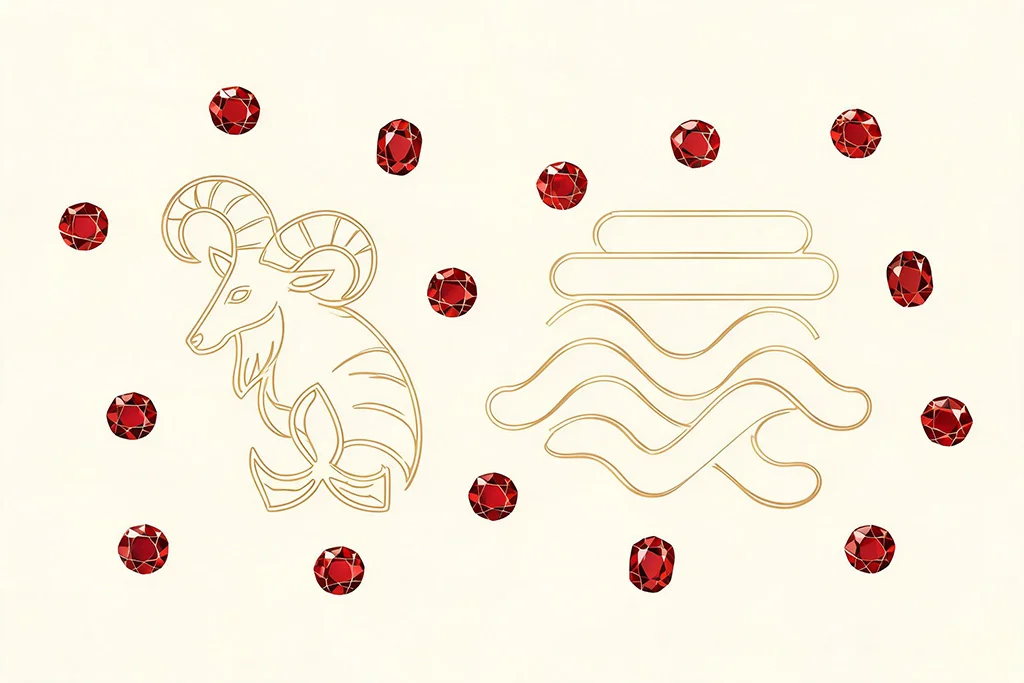
January spans two zodiac signs — Capricorn (December 22 to January 19) and Aquarius (January 20 to February 18) — and garnet's symbolism maps neatly onto both.
- Capricorn: Known for ambition, discipline, and steady persistence, Capricorns are often drawn to garnet's associations with strength and grounded resilience.
- Aquarius: Independent and forward-thinking, Aquarians tend to connect with garnet's protective symbolism and its reputation for encouraging confidence and clarity of purpose.
Whether or not someone follows astrology closely, the zodiac connection adds another layer of meaning for January-born gift recipients.
The History of Garnet
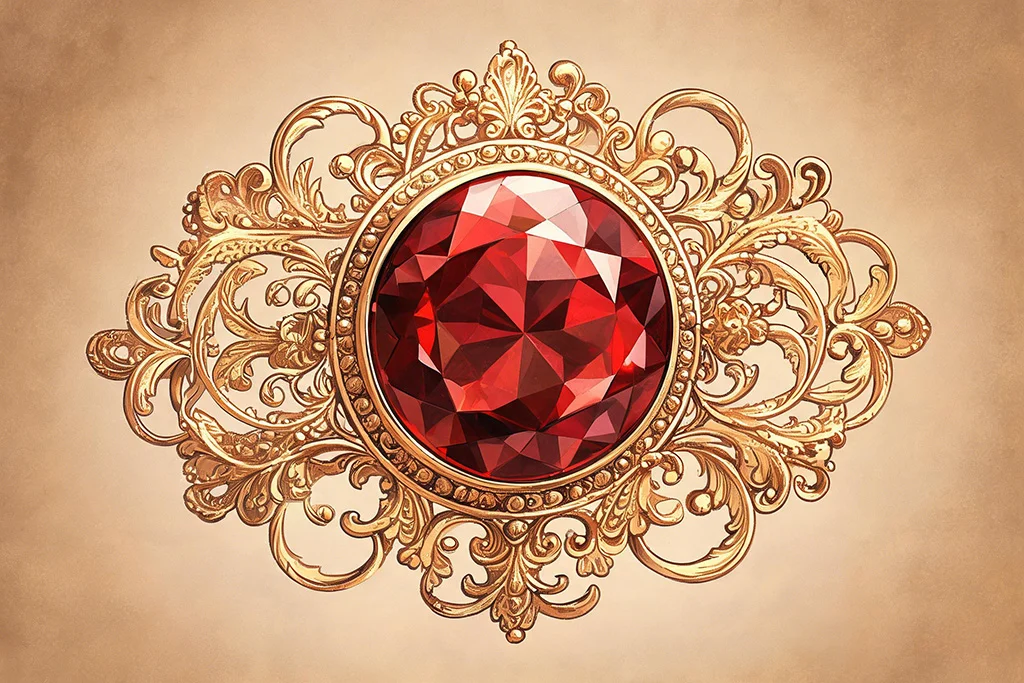
Garnet's story spans more than five thousand years, and its role has shifted across nearly every major civilization it touched.
Ancient Egypt and Rome
Garnet appeared in Egyptian jewelry and burial adornments as early as the Bronze Age, where it was believed to carry protective power into the afterlife. In ancient Rome, garnet took on a more functional role: signet rings set with carved garnet intaglios were used to stamp wax seals on official documents, while the stone was also worn as a talisman believed to protect travelers far from home.
The Middle Ages
Medieval legends described garnet as a kind of guiding light for travelers moving through darkness — a belief that reinforced its associations with safe passage and protection. The clergy and nobility of this period favored red garnets in particular, cementing the stone's status across social classes.
The Victorian Era
Garnet reached a design peak during the Victorian era (1837–1901), when Bohemian garnets — sourced from what is now the Czech Republic — became hugely fashionable across Europe. Victorian jewelers set garnets in dense clusters, often with rose or cabochon cuts that emphasized the stone's color and depth over brilliance. One of the most famous surviving examples is an antique pyrope garnet hair comb held in the Smithsonian's National Gem Collection, featuring a large rose-cut garnet at its crest surrounded by smaller stones.
Garnet Today
Modern garnet jewelry design has moved toward cleaner lines and unexpected metal pairings, with rarer varieties like rhodolite and tsavorite gaining attention for their distinctive color and versatility. Garnet remains a practical, richly symbolic choice for both traditional and contemporary jewelry.
Where Is Garnet Found?
Garnet deposits exist across nearly every continent, and different regions tend to produce different varieties:
- Africa: Tanzania, Mozambique, Kenya, Madagascar, and Namibia are major modern sources, particularly for tsavorite and demantoid garnets.
- The Indian subcontinent: India and Sri Lanka produce a wide range of garnet varieties and have been significant sources for centuries.
- South America: Brazil is known for garnets prized for their clarity and color range.
- Europe: The Czech Republic (historically Bohemia) was the primary source of the deep red pyrope garnets that defined Victorian-era jewelry.
- United States: Arizona is a notable domestic source of garnet.
Garnet is also found in Myanmar, Afghanistan, Pakistan, and Iran, among other locations. Because different regions produce subtly different colors and clarity profiles, the origin of a garnet can meaningfully affect both its appearance and its value.
How Durable Is Garnet?
Garnet ranks between 6.5 and 7.5 on the Mohs hardness scale, depending on the specific variety. That places it below sapphire, ruby, and diamond, but still solidly within the range considered suitable for regular wear.
That said, durability varies enough between garnet varieties that it's worth matching the stone to the setting. Denser, harder varieties like pyrope and almandine tend to hold up well in rings worn daily, while some of the more delicate or included varieties are better suited to earrings, pendants, or necklaces, where they're less exposed to knocks and abrasion. A thoughtful setting — protective bezels or slightly raised prongs, for example — goes a long way toward extending the life of any garnet piece.
Garnet Buying Guide: What to Look For
Garnet is one of the more approachable gemstones to shop for, but a few factors meaningfully affect quality, appearance, and price.
Natural vs. Treated Garnet
One of garnet's most attractive traits from a buyer's perspective is that the vast majority of garnet on the market is untreated. Unlike many gemstones that are routinely heated or filled to improve color and clarity, garnet's natural color is typically vivid enough that treatment isn't necessary. Rarely, some stones with surface-reaching fractures may be fracture-filled to improve apparent clarity — a detail worth asking about, since fracture-filled stones require gentler care.
Color and What Drives Price
Within any given variety, more saturated, evenly distributed color generally commands a higher price. For red garnets, this means rich, consistent tone without visible brown or gray undertones. For green varieties like tsavorite and demantoid, vividness and brilliance are the key value drivers — and because these varieties are rarer, price increases quickly with size and clarity.
Price by Variety
Pyrope, almandine, and rhodolite remain some of the most budget-friendly gemstones in fine jewelry, making them a practical choice for everyday pieces. Spessartine sits in a comparable mid-range. Tsavorite and demantoid, by contrast, are considered premium and rare, with prices per carat that can rival — and in exceptional cases exceed — mainstream colored gemstones.
Setting Recommendations
Match the setting to the wear pattern: rings worn daily benefit from protective settings and harder garnet varieties, while rarer or more delicate stones are well suited to earrings, pendants, and occasional-wear rings.
A Note From the Manufacturing Side
As an OEM/ODM jewelry manufacturer, we source garnet through vetted suppliers and can provide gemological documentation on request, including verification of treatment status. If you're a retailer or brand sourcing garnet jewelry at scale, sourcing transparency and consistent grading across a production run matter just as much as the stone itself — it's worth asking any manufacturer how they verify and document what they're selling.
A Note for UK and EU Shoppers: Compliance Basics
If you're buying or selling gold garnet jewelry in the UK or EU, two regulatory details are worth knowing. First, the EU's Nickel Directive (REACH Annex XVII, Entry 27) restricts the amount of nickel that can migrate from jewelry into skin, which affects the alloy composition of gold and white gold settings sold across the EU. Second, gold jewelry sold in the UK above certain weight thresholds is legally required to carry a UK hallmark verifying metal purity — a detail that applies to garnet rings, pendants, and other gold-set pieces alike.
For the full regulatory text, see the REACH Annex XVII regulation and the UK hallmarking requirements from the UK Assay Offices.
How to Care for Garnet Jewelry
Garnet is relatively low-maintenance, but a few habits will keep it looking its best for years:
- Clean with warm water, a mild non-detergent soap, and a soft-bristled brush.
- Avoid harsh chemicals, including those found in some household cleaners and cosmetics.
- Skip ultrasonic cleaners and steam cleaning for any fracture-filled stones; when in doubt, hand-clean.
- Store garnet separately from harder gemstones like diamonds, sapphires, and rubies, which can scratch it.
- Rinse and dry thoroughly after cleaning to prevent soap residue or clouding.
A professional cleaning and inspection once or twice a year is a good habit for any garnet piece worn regularly.
Garnet as a Gift
Beyond its role as the January birthstone, garnet is the traditional gemstone for 2nd wedding anniversaries, making it a meaningful gift for both birthdays and relationship milestones. Its wide color range means there's a garnet to suit nearly any taste — from a classic deep red pendant to a vivid green tsavorite ring for someone drawn to something rarer.
Frequently Asked Questions
January's birthstone is garnet, a gemstone known for its rich color range and its symbolic ties to protection, strength, and passion.
Yes. While garnet includes many varieties and colors, they all belong to the same mineral family and garnet is the sole traditional birthstone for January.
Garnet is most commonly deep red, but it also occurs naturally in orange, green, pink, purple, and yellow, depending on the specific variety.
Most garnet varieties rank between 6.5 and 7.5 on the Mohs hardness scale, which makes them suitable for regular wear in rings, earrings, and necklaces when set thoughtfully.
Pricing varies widely by variety. Pyrope, almandine, and rhodolite are among the most affordable colored gemstones, while rarer varieties like tsavorite and demantoid can command premium, per-carat prices comparable to other fine colored gemstones.
The majority of garnet on the market is untreated, since its natural color is typically vivid enough without enhancement. Fracture-filling occasionally occurs on included stones and should be disclosed by the seller.
Use warm water, mild soap, and a soft brush. Avoid ultrasonic and steam cleaning for fracture-filled stones, and store garnet separately from harder gemstones to prevent scratching.
Demantoid and uvarovite are generally considered the rarest garnet varieties, prized for their vivid green color and, in the case of demantoid, exceptional brilliance.