
Titanium vs Platinum: Which Metal is Right for You?
- Written by Provence Team
- Updated on July 17, 2026
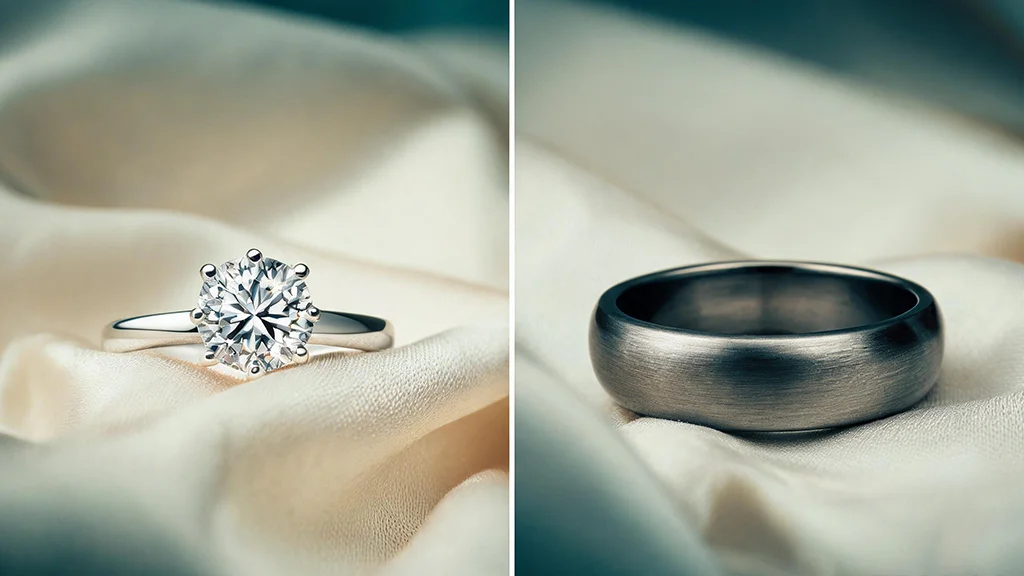
Table of Contents
Titanium and platinum sit at opposite ends of the fine jewelry spectrum, yet they're compared more often than almost any other metal pairing. Both are silver-white, both are hypoallergenic, and both are marketed as "built to last a lifetime." But the similarities end at the surface. One is among the rarest, densest precious metals on earth. The other is one of the most abundant elements in the Earth's crust, prized in jewelry not for scarcity but for strength.
If you're choosing between a titanium and a platinum ring — for an engagement ring, wedding band, or everyday piece — the decision comes down to five practical factors: hardness, weight, workability, price, and how the metal is regulated and hallmarked in your market. This guide breaks down each one with real figures, not just adjectives, so you can make a confident, informed choice wherever you're shopping from.
Quick Answer
Choose platinum if you want a dense, malleable precious metal that holds gemstones securely, resizes easily, and carries traditional bridal prestige.
Choose titanium if you want an exceptionally strong, lightweight, budget-friendly metal with a modern, matte aesthetic — best suited to plain bands rather than intricate stone settings.
Titanium vs Platinum at a Glance
|
Factor |
Titanium |
Platinum |
|---|---|---|
|
Composition |
Commercially pure Ti or Grade 5 alloy (Ti-6Al-4V) |
90–95% pure (950 or 900 platinum) |
|
Mohs hardness |
6 |
4 – 4.5 |
|
Density |
4.5 g/cm³ (very light) |
21.4 g/cm³ (very dense) |
|
Tensile strength |
~240 MPa (Grade 1) |
~120–125 MPa |
|
Hypoallergenic |
Yes (pure grades) |
Yes |
|
Resizable |
Very difficult / usually not |
Yes, relatively easily |
|
Best for |
Plain bands, men's rings, active lifestyles |
Engagement rings, halo/pavé settings, gemstones |
|
Typical price (per gram, metal only) |
US$0.02 – 0.05 |
US$30 – 34 |
What Is Platinum?
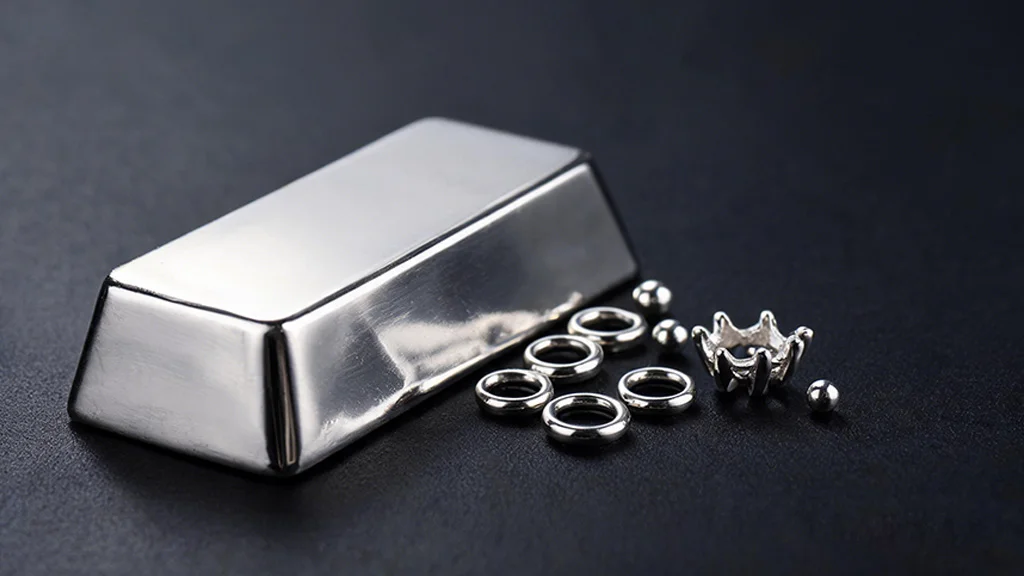
Platinum is one of the four recognized precious metals, alongside gold, silver, and palladium. It occurs naturally as a silvery-white element and is significantly rarer than gold — global annual platinum mining output is a fraction of gold's. Because pure platinum is soft, jewelry-grade platinum is alloyed with a small percentage of iridium, ruthenium, cobalt, or copper for workability, while still retaining a high purity level.
Most fine jewelry uses 950 platinum (95% pure) or, less commonly, 900 platinum (90% pure). This high purity is what gives platinum its dense, substantial feel and its naturally white color that never requires rhodium plating to stay bright — unlike white gold.
- Naturally white — no plating required to maintain color
- Dense and heavy, giving a "solid" feel on the hand
- Malleable enough for intricate prong, pavé, and halo settings
- Hypoallergenic and biocompatible, well suited to sensitive skin
- Develops a soft patina over time rather than losing structural integrity
What Is Titanium?
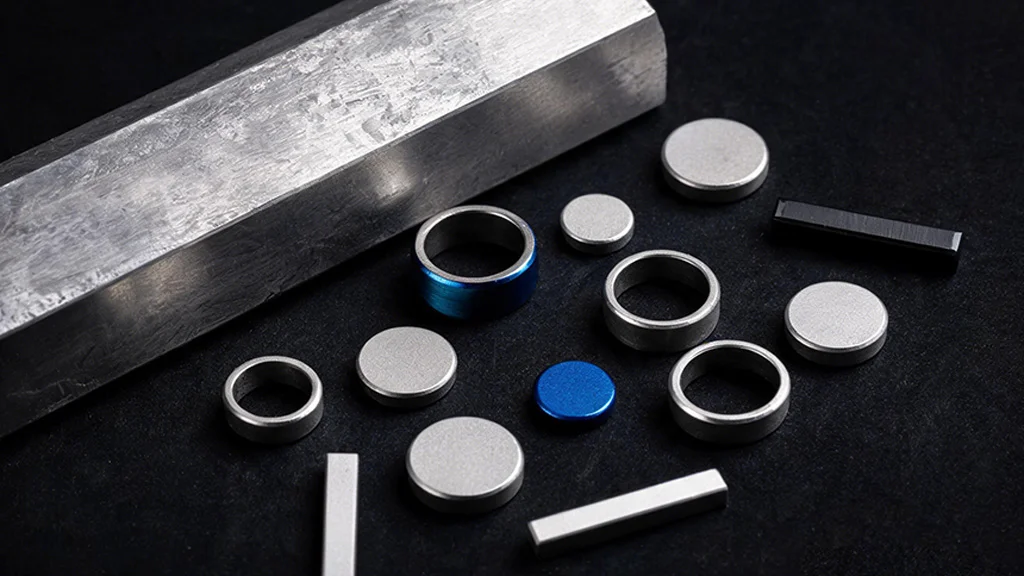
Titanium is not a precious metal — it's a structural metal first used in aerospace and industrial engineering, prized for having the highest strength-to-weight ratio of any metal in common use. It entered fine jewelry relatively recently, primarily as a men's wedding band material, before expanding into unisex and fashion pieces.
Jewelry-grade titanium generally falls into two categories: commercially pure (CP) titanium, graded 1 through 4 by increasing hardness and decreasing flexibility, and titanium alloys, most commonly Grade 5 (Ti-6Al-4V — roughly 90% titanium, 6% aluminum, 4% vanadium), which is stronger but more difficult and costly to machine. A related "aircraft grade" titanium, alloyed with aluminum, vanadium, and sometimes tin, is common in body jewelry and offers roughly three times the strength of CP grades.
- One of the most abundant structural metals on Earth, though it requires energy-intensive extraction and processing
- Extremely lightweight — roughly one-third the density of platinum
- Hard and scratch-resistant, but brittle-adjacent alloys are less forgiving of hard impact than platinum
- Can be anodized to a range of colors (black, blue, gunmetal) — a option unavailable to platinum
- Cannot be resized in the conventional sense due to its hardness
Titanium vs. Platinum: Factor-by-Factor Comparison
1. Appearance & Color
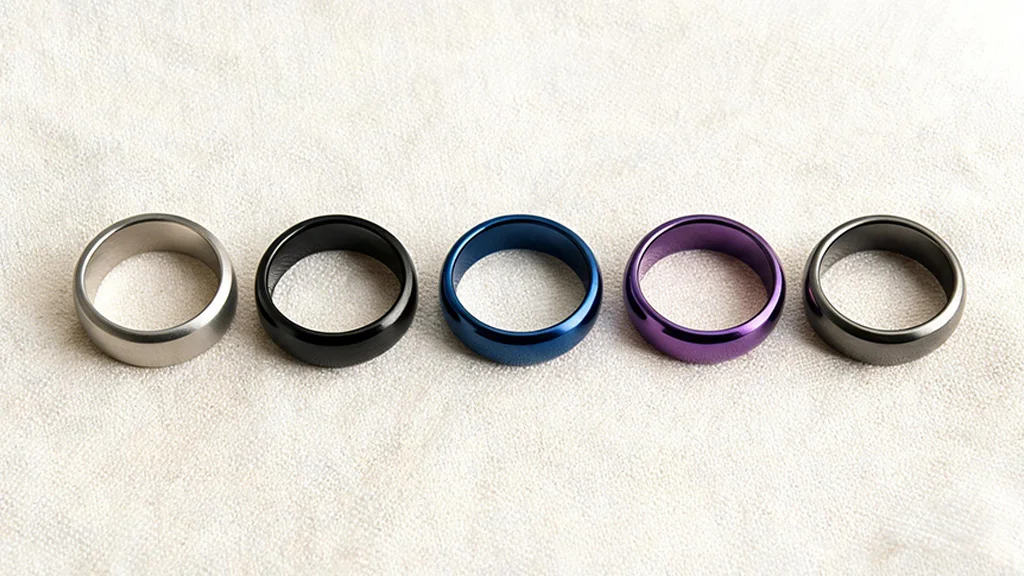
Platinum has a bright, cool white-silver tone that stays consistent for decades — it's the reason white gold was originally developed to imitate platinum's look at a lower cost. Titanium's natural tone is a darker, slightly gray-silver with a more industrial, matte character. Where titanium pulls ahead aesthetically is customization: because it's electrically conductive, titanium can be anodized to produce black, blue, purple, or gunmetal finishes — an option that simply doesn't exist for platinum, which cannot be anodized and is limited to polished, brushed, or matte treatments in its natural white tone.
2. Weight & Comfort
This is often the most immediately noticeable difference when trying on both metals. Platinum is roughly 21.4 g/cm³ in density, making it one of the heaviest metals used in jewelry — about 40% denser than 18K gold. Titanium, at approximately 4.5 g/cm³, is close to one-fifth the weight of platinum for the same volume. A platinum band feels substantial and deliberate on the hand; a titanium band of the same dimensions is barely noticeable, which is why titanium has become popular for men who don't typically wear jewelry or work with their hands throughout the day.
3. Hardness & Durability
On the Mohs hardness scale, platinum ranks 4 to 4.5, while titanium ranks around 6 — meaningfully harder. Tensile strength tells a similar story: Grade 1 commercially pure titanium tests at roughly 240 megapascals (MPa), about double platinum's approximately 120–125 MPa. In practice, this means titanium resists surface scratching far better than platinum.
However, "harder" doesn't automatically mean "more durable" in every sense that matters for jewelry. Platinum's relative softness makes it malleable — when struck or scratched, platinum tends to displace (the metal shifts rather than chips away), which is why old platinum jewelry often shows a soft, worn patina rather than pitting. Titanium resists scratching but, depending on grade and alloy, can be more prone to cracking under a sharp, concentrated impact rather than bending. Both metals are considered excellent for daily wear; they simply fail differently under stress, which matters more for industrial tolerances than for typical ring-wearing.
4. Hypoallergenic Properties
Both metals are broadly considered hypoallergenic and are common recommendations for people with nickel sensitivities. Pure or near-pure platinum (950/900) contains no nickel and is one of the safest options for sensitive skin. Commercially pure titanium is similarly nickel-free and biocompatible enough for surgical implants.
Regulatory Note — EU & UK Buyers
Under EU REACH Annex XVII (the nickel directive), items in direct and prolonged contact with skin must release less than 0.5 micrograms of nickel per cm² per week. Reputable 950 platinum and commercially pure titanium alloys comply well within this limit, but titanium alloys blended with lower-grade fillers should carry supplier documentation confirming nickel content.
In the UK, articles described as "platinum" above 500 parts per thousand must, by law, be assayed and hallmarked under the Hallmarking Act 1973 before sale — always confirm a UK assay office mark (e.g., London, Birmingham, Sheffield, or Edinburgh) on platinum jewelry. Titanium is not currently a hallmarkable metal under UK law, so buyers should rely on supplier certification instead.
5. Workability & Setting Compatibility
This is where the two metals diverge most for engagement ring shoppers specifically. Platinum's malleability is precisely why it has been the bridal industry's benchmark setting metal for over a century: it can be drawn into fine prongs, pavé beds, and intricate filigree without cracking, and it grips diamonds and gemstones securely even in delicate settings like hidden halos.
Titanium's hardness works against it here. It is difficult to cut, solder, and shape into fine detail work, and traditional prong-setting techniques don't translate well to titanium's rigidity — most titanium jewelry with stones uses tension settings, bezel settings, or channel-set accents rather than raised prongs. This is a manufacturing reality worth knowing before committing to a titanium engagement ring with a center stone: for anything beyond a simple accent or flush-set diamond, platinum remains the more reliable choice from a bench jeweler's standpoint.
6. Resizing
Platinum can be resized by most jewelers using standard techniques — cutting, stretching, or adding metal — making it a practical choice for rings that may need adjustment over time (weight fluctuation, joint changes, or passing a ring down to family). Titanium's hardness makes conventional resizing extremely difficult and, in many cases, not possible at all; some jewelers can adjust a titanium ring by half a size using specialized equipment, but most retailers recommend ordering the correct size from the outset or accepting the piece as non-resizable.
7. Price
Price is usually the deciding factor once the aesthetic and durability trade-offs are understood. Platinum is priced alongside gold as a precious metal commodity, and because 950 platinum jewelry uses a high percentage of pure metal by weight, the metal cost alone is substantial before labor and finishing. Titanium's raw material cost is negligible by comparison — its price in finished jewelry reflects machining and labor far more than material value.
8. Maintenance & Aging
Titanium is close to maintenance-free: it resists tarnish, corrosion, and oxidation indefinitely, and cleaning generally requires nothing more than mild soap and water. Platinum requires marginally more care — while it never tarnishes or corrodes, its surface develops a soft patina from years of light surface scratching. Many wearers consider this patina a desirable sign of a well-loved heirloom piece; those who prefer platinum's original bright polish can have it professionally re-polished, a routine and inexpensive service most jewelers offer.
Which One Should You Choose?
There's no universally "better" metal — only the better metal for a specific ring, wearer, and budget. Use the framework below.
Choose Platinum If You...
- Want a traditional, high-prestige metal for an engagement ring
- Are setting a diamond or gemstone in a prong, pavé, or halo design
- Prefer a dense, substantial feel on the hand
- Want the option to resize the ring in the future
- Are comfortable with a higher investment for long-term value retention
Choose Titanium If You...
- Want a lightweight ring that's barely noticeable during wear
- Lead an active lifestyle or work with your hands regularly
- Prefer a modern, matte, or anodized aesthetic over traditional bright white
- Are shopping on a tighter budget without compromising on scratch resistance
- Are buying a plain band or a design with flush/bezel-set stones rather than raised prongs
If neither metal feels like a perfect fit, it's worth considering palladium (platinum's lighter, more affordable cousin) or tungsten carbide (even harder than titanium, but similarly difficult to resize) as alternatives worth exploring before finalizing your decision.
Titanium vs Platinum: FAQs
Yes, in terms of hardness and tensile strength. Titanium ranks around 6 on the Mohs scale versus platinum's 4–4.5, and its tensile strength is roughly double platinum's. Platinum, however, is more malleable and absorbs impact differently, which is why it remains the preferred metal for securing gemstones.
Considerably. Titanium's raw material cost is a small fraction of platinum's, and finished titanium jewelry is typically priced well below comparable platinum pieces, with the difference driven almost entirely by platinum's status as a rare precious metal.
Rarely, and only to a limited degree. Titanium's hardness makes conventional resizing techniques largely ineffective, so most jewelers recommend ordering the precise size needed rather than planning to resize later. Platinum, by contrast, resizes easily using standard jewelry tools.
Both are considered hypoallergenic. Commercially pure titanium and 950/900 platinum contain no nickel and are well tolerated by most people with metal sensitivities, though it's worth confirming alloy composition with your jeweler if you have a diagnosed allergy.
Both are considered lifetime metals when properly cared for. Titanium resists scratching and tarnish almost entirely, while platinum develops a gradual patina that can be polished away. Neither corrodes, oxidizes, or fades in color over time.
Primarily because of workability. Platinum's malleability allows jewelers to create fine prongs and detailed settings that hold gemstones securely, while titanium's hardness makes intricate stone-setting work significantly more difficult and limits most titanium engagement rings to simpler bezel or flush-set designs.
 English