
How to Tell If Silver is Real: 8 Tests & Hallmark Guide
- Written by Provence Team
- Updated on July 23, 2026
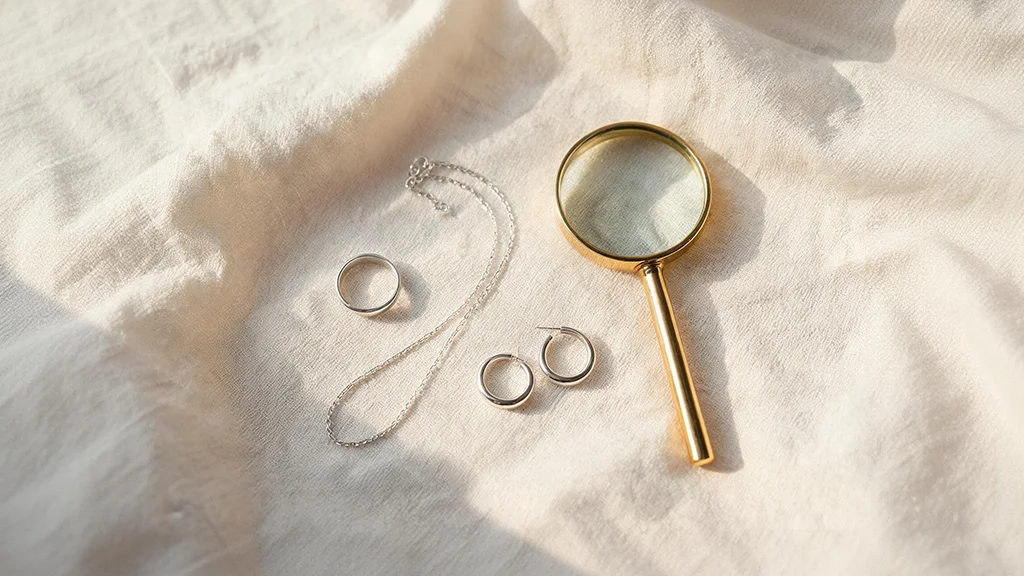
Table of Contents
Silver jewelry is one of the most counterfeited categories in fine jewelry retail. A piece can look flawless in a photo, feel substantial in the hand, and still be nothing more than a thin layer of silver plated over brass or nickel. Whether you're inspecting an inherited bracelet, evaluating an online listing, or sourcing pieces for resale, knowing how to tell if silver is real protects both your money and, in the case of nickel-based fakes, your skin.
This guide covers the full picture: what "real silver" actually means across different countries, how to read a hallmark correctly, eight physical tests ranked from most to least reliable, when to stop testing and call a professional, and how manufacturers verify purity before a piece ever reaches a store shelf.
What "Real Silver" Actually Means, Worldwide
Pure silver (999) is soft — too soft to hold its shape in a ring or clasp. That's why nearly all silver jewelry is an alloy: mostly silver, blended with a small amount of another metal (usually copper) for strength. The exact ratio is what purity marks describe, and the naming conventions differ slightly by region.
|
Purity |
Silver Content |
Common Name |
Typical Region |
|---|---|---|---|
|
999 |
99.9% |
Fine Silver |
Bullion bars, coins — rarely used in wearable jewelry |
|
958 |
95.8% |
Britannia Silver |
UK — historic and premium silverware standard |
|
925 |
92.5% |
Sterling Silver |
Global standard for jewelry (US, UK, EU, most of world) |
|
900 |
90.0% |
Coin Silver |
Older US coinage, some antique pieces |
|
800 |
80.0% |
Continental / European Silver |
Common in older German, Austrian, Italian pieces |
If a piece is marked below 800, or not marked at all, it's either a very old regional standard, a decorative alloy with minimal silver content, or not silver at all. Sterling (925) is the benchmark to look for on modern jewelry regardless of what country you're buying in.
Reading Hallmarks and Purity Marks Correctly
A hallmark is the fastest authenticity check available, but it isn't a guarantee on its own — counterfeit stamps exist. Use it as your first filter, not your final answer.
What genuine marks look like, by region
- United States: No mandatory hallmarking system, but the FTC requires that any quality mark (like "925") accurately reflect the metal content — stamping a fake as 925 is a federal violation, not just bad practice.
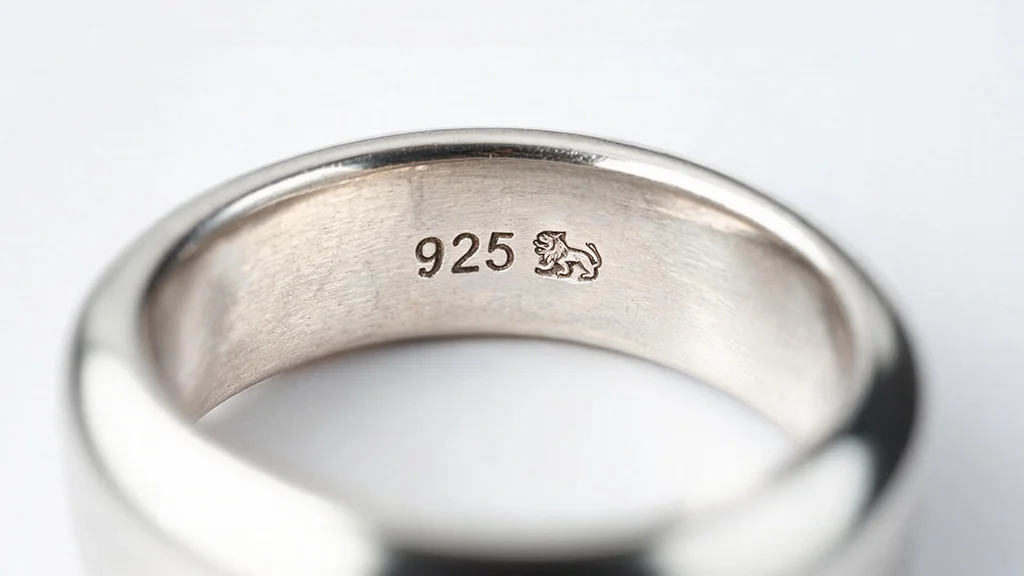
- United Kingdom: Legally required hallmarking for silver items over 7.78g, applied by one of the UK's assay offices (London, Birmingham, Sheffield, Edinburgh). Look for the sponsor's mark, fineness mark (a number in an oval), assay office mark, and — the giveaway most fakes miss — the lion passant, which denotes sterling standard.
- European Union: Marks vary by member state; France uses the "minerva head" poinçon system, Italy stamps a numeric fineness plus a maker/province code. There's no single EU-wide hallmark, so country-specific verification matters more here than elsewhere.
- General purity stamps to trust: 925, .925, 958, 999, STERLING, STER
- Marks that mean it is NOT solid silver: EPNS (electroplated nickel silver), "silver tone," "silver finish," nickel silver (contains no actual silver despite the name), plate or plated
Hallmarks are typically stamped somewhere inconspicuous — inside a ring band, behind a pendant, near a clasp, or on an earring post. A magnifying glass or phone camera zoom helps here. If the mark looks shallow, inconsistent in font, or oddly placed compared to the rest of the piece, treat it as a reason to test further rather than a disqualifier on its own.
8 Tests to Check If Silver Is Real — Ranked by Reliability
Not all home tests carry equal weight. Some (hallmark, magnet) are fast first-pass filters. Others (weight, sound) work better as confirmation once you already suspect the piece is genuine. Here they are, ordered from most to least conclusive for a non-professional.
1. Hallmark Inspection — Highest Value, Not Foolproof
Covered in detail above. Start here every time — it takes seconds and rules out most obviously fake pieces immediately. Pair it with at least one physical test before trusting it fully, since counterfeit stamps do circulate.
2. Magnet Test
Silver is not magnetic. Run a strong magnet — ideally neodymium, not a weak fridge magnet — slowly across the largest flat surface of the piece.
- Sticks firmly: not solid silver.
- No reaction: consistent with silver, but not proof on its own (many non-silver alloys are also non-magnetic).
- Advanced variant: on a flat piece like a bar or bangle, tilt it at 45° and slide the magnet down. Genuine silver is weakly paramagnetic and creates resistance, so the magnet descends slightly slower than expected — on fakes it either sticks or slides freely.
Caveat: small components like spring clasps are sometimes steel even on genuine sterling pieces. Test the main body of the item, not just the fittings.
3. Ice / Thermal Conductivity Test
Silver has the highest thermal conductivity of any metal, so it pulls heat away from an ice cube faster than almost anything else.
- Place the piece at room temperature (not fridge-cold).
- Set a fresh ice cube directly on the largest flat surface.
- Watch the melt rate — genuine silver noticeably accelerates melting compared to stainless steel or brass of the same size.
This is a strong supporting test but not conclusive alone, since a few other metals also conduct heat well. Use it alongside the hallmark and magnet checks.
4. Tarnish and Polish (Cloth) Test
Tarnish is normal and, counterintuitively, a good sign — it's silver reacting naturally with sulfur compounds in the air, not a defect. Fake or plated pieces tend to behave differently: they may fade, discolor unevenly, or reveal a different metal underneath instead of forming a uniform dark patina.
- Rub the piece gently with a clean, soft white cloth.
- A gray or black residue on the cloth is a good sign — that's tarnish lifting off, consistent with genuine silver.
- No residue doesn't automatically mean fake — the piece may simply be clean or freshly polished.
5. Sound (Ping) Test
Works best on solid, thicker items — rings, bangles, bars, heavier chain links. Tap the piece gently with a coin or another metal object and listen.
- Genuine silver: a bright, clear, sustained ring.
- Base metals or hollow plated pieces: a flatter, shorter, duller thud.
This test takes some practice to calibrate by ear, so treat it as a supporting signal rather than a standalone verdict.
6. Visual Wear and Plating Inspection
A large share of "fake" silver isn't actually a different metal claiming to be silver — it's genuinely silver-plated, meaning a thin layer of real silver sits over a cheaper base metal. Plating wears unevenly, and the tell is visible if you know where to look.
- Check high-friction areas first: the underside of rings, bracelet clasps, chain links near the clasp, earring posts, pendant bails.
- Look for a warm, yellowish, or coppery tone showing through — a strong sign of plating wear.
- Greenish discoloration at contact points is a classic plating giveaway, especially over brass or copper bases.
7. Weight and Density Comparison
Silver is notably denser than most metals used to imitate it (aluminum, most steels, many base-metal alloys). A genuine piece will feel heavier than expected for its size, though this test requires a comparison reference — a known-genuine piece of similar size, or a kitchen scale plus the item's stated dimensions — to be useful. On its own, without something to compare to, "it feels heavy" is a weak signal.
8. Acid or Chemical Testing — Leave This to Professionals
Nitric acid and related chemical tests can identify silver purity through color-change reactions, and jewelry testing kits are commercially available. We're intentionally not walking through the DIY procedure here: these tests use corrosive chemicals, can permanently mark or damage a valuable piece if done incorrectly, and carry real safety risks without proper ventilation, gloves, and eye protection. If a piece is valuable enough to warrant chemical testing, it's valuable enough to have a professional do it safely — which brings us to the next section.
When to Stop Testing and Call a Professional
Home tests are good for a fast gut check, not for a final verdict on anything valuable, sentimental, or being resold at a meaningful price. Reach for professional verification when:
- The piece is an heirloom, vintage, or unmarked but suspected to be valuable
- You're about to buy or sell based on the silver content
- Home tests gave you mixed or inconclusive signals
Professional options, in order of what most jewelers and refiners actually use:
- XRF (X-ray Fluorescence) analysis — non-destructive, gives an exact elemental composition in seconds; the current industry standard for verification without damaging the piece
- Electronic precious metal testers — measure electrical conductivity to estimate purity; fast and commonly used at point-of-sale by jewelers and dealers
- Density (Archimedes) testing — weight-and-displacement measurement compared against known silver density
- Certified appraisal — combines visual, mechanical, and testing methods for a documented valuation, useful for insurance or resale
Why Fake Silver Exists — and Where It Shows Up
Silver plating and silver-alloy imitation aren't inherently deceptive when disclosed correctly — plenty of legitimate jewelry is sold openly as silver-plated at a lower price point. The problem is mislabeling: items stamped or marketed as "925" or "sterling" that are actually base metal with a thin silver coating, or no silver at all.
This is most common in three places: marketplace listings with vague or stock photography and no verifiable seller history, very steep discounts relative to current silver spot price, and vintage or estate pieces where the original hallmark has worn away and been re-stamped by a reseller. None of these guarantee a fake — but each is a reason to test before you buy, not after.
How Manufacturers Verify Silver Before It Reaches You
At Provence Jewellery, silver purity isn't confirmed by a single stamp at the end of production — it's checked at multiple points before a piece is ever finished. Incoming raw silver alloy is tested against its supplier certification. Cast and finished pieces go through spot-check verification during quality control, well before hallmarking or shipment. This is the same category of testing described above — density and electronic conductivity checks — applied at scale, so that by the time a piece reaches a retail partner or consumer, its purity has already been confirmed rather than assumed.
This is also why OEM and private-label partners working with an established manufacturer can rely on consistent, documented purity across an entire production run, rather than testing samples after the fact.
What Genuine vs. Fake Silver Costs, Globally
Price is a useful sanity check alongside the physical tests above — not a replacement for them. Genuine sterling silver tracks the silver spot price plus manufacturing markup, so it moves with the market rather than staying fixed.
|
Item type |
USD |
|---|---|
|
Simple sterling silver ring |
$25–60 |
|
Sterling silver chain necklace |
$40–120 |
|
Silver-plated equivalent (disclosed) |
$8–20 |
A listing priced well below the silver-plated range for a claimed sterling piece is a stronger red flag than any single physical test — it's usually the first sign something in the description doesn't match the product.
Frequently Asked Questions
Usually not. Greenish staining is more often a sign of plating wear (exposing a copper or brass base) or a reaction with skin chemistry than a property of genuine sterling silver itself.
Not automatically — counterfeit stamps do exist, particularly stamped onto stainless steel. A hallmark should be treated as a strong first clue, confirmed with at least one physical test.
Yes, and it's one of the more common counterfeit tactics. If a "925"-stamped piece sticks firmly to a strong magnet, that's a clear contradiction — stainless steel with a fake stamp is the likely explanation.
Genuine silver tarnishes over time through normal exposure to air, but some silver is rhodium- or ruthenium-plated to resist tarnish and stay bright longer. That's still real silver underneath — the absence of tarnish isn't itself a red flag.
It can be, for cost-conscious everyday pieces, as long as it's sold and priced as plated rather than misrepresented as solid sterling. Plated pieces wear faster, are harder to repair, and hold far less resale value.
Hallmark inspection plus the magnet test. Together they take under a minute and rule out the large majority of obviously fake pieces.
Yes — some handmade, older, or regionally produced pieces were never stamped. In that case, lean more heavily on the physical tests and, for anything valuable, a professional check.
Whenever the piece is valuable, sentimental, or the home tests give you conflicting signals. Professional XRF or electronic testing gives a definitive answer in minutes without damaging the item.
Sourcing Verified Sterling Silver
Shopping for yourself: Explore Provence Jewellery's sterling silver, lab-grown diamond, and gemstone collections — every piece is purity-verified during manufacturing, not just hallmarked at the end.
Sourcing as a retailer or brand: Provence Jewellery is an OEM/ODM manufacturer supplying solid gold and sterling silver jewelry to US, UK, and EU partners, with documented purity control across full production runs. Contact our team to discuss private-label or wholesale partnership.
 English
  Español
  Deutsch
  Português do Brasil
  Français
  Italiano
  العربية
  Nederlands