
What is May’s Birthstone? Emerald Meaning & Buying Guide
- Written by Provence Team
- Updated on July 27, 2026
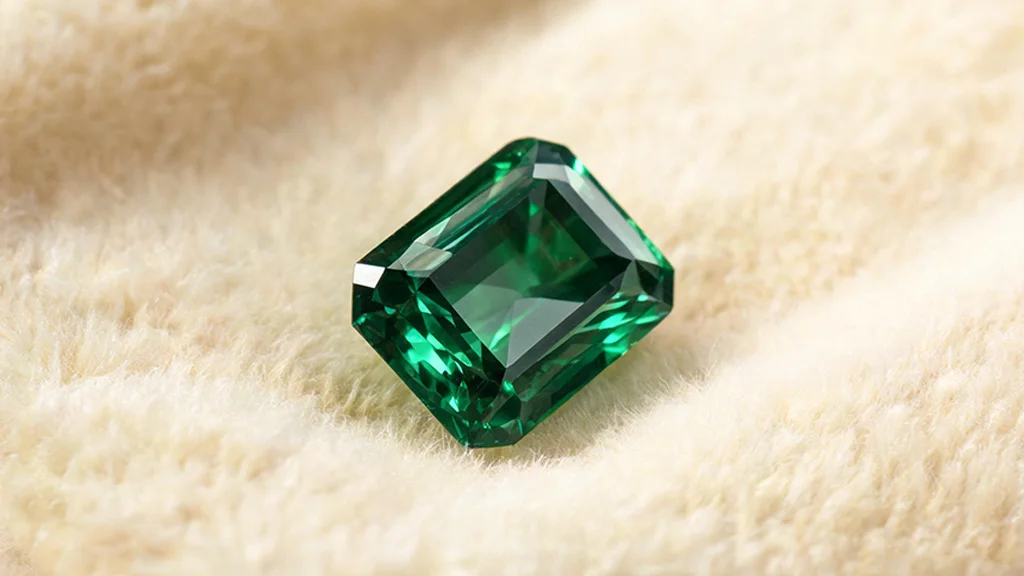
Table of Contents
Emerald is the birthstone for May — a rich green gem that has symbolized rebirth, growth, and renewal since antiquity. If you're shopping for a May birthday, planning an anniversary gift, or simply curious what makes this stone one of the “big four” precious gems alongside diamond, ruby, and sapphire, this guide covers everything from its ancient history to how to evaluate quality before you buy.
What Is May's Birthstone?
May's birthstone is the emerald, a vivid green variety of the mineral beryl. Alongside diamond, ruby, and sapphire, emerald is considered one of the four traditional precious gemstones, prized for millennia for its saturated color and rarity. Its green hue is created by trace amounts of chromium and vanadium during formation deep within the Earth's crust, and no two emeralds look quite alike.
|
Birthstone |
Emerald |
|---|---|
|
Mineral family |
Beryl |
|
Color range |
Yellowish-green to deep bluish-green |
|
Hardness (Mohs) |
7.5 – 8 |
|
Historical alternate stone |
Agate (pre-1912 tradition) |
|
Official adoption |
1912, National Association of Jewelers (USA) |
|
Symbolism |
Rebirth, growth, love, wisdom |
|
Anniversary association |
20th and 35th wedding anniversary gemstone |
The History of Emerald as May's Birthstone
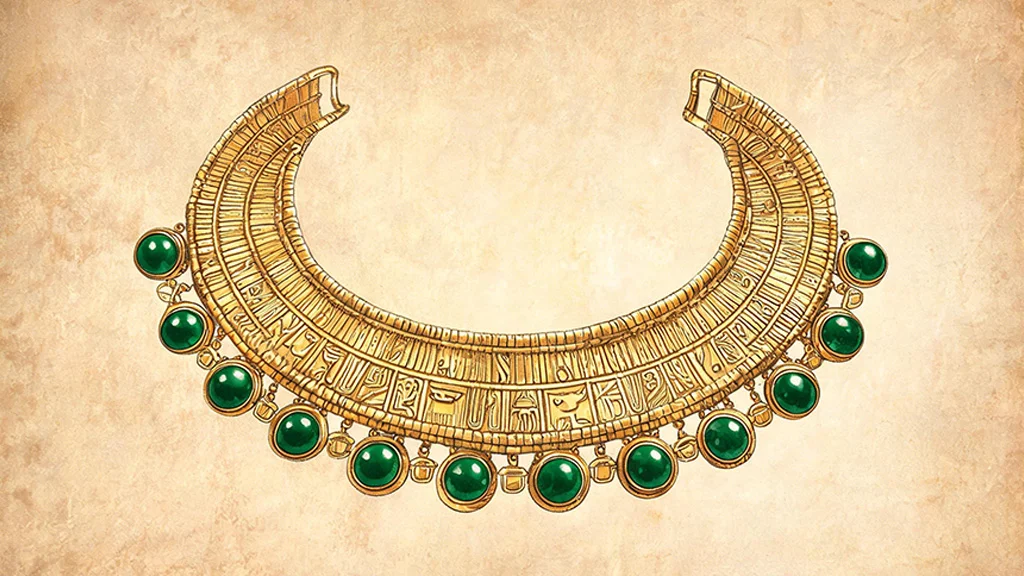
Long before emerald was formally recognized as May's birthstone, it was already one of the most coveted gems in the ancient world.
Ancient Egypt and the First Emerald Mines
Emerald mining dates back to at least 330 BC in Egypt, where the stone adorned pharaohs and was believed to offer protection in the afterlife. Cleopatra was famously devoted to emeralds, incorporating them into her jewelry as a symbol of both status and divine favor.
Rome, the Incas, and the New World
Roman naturalist Pliny the Elder wrote that “nothing greens greener” than emerald, and believed the color had a restorative effect on tired eyes — a claim modern research on the calming effect of green tones doesn't entirely dismiss. Centuries later, Inca emperors in South America prized emerald just as highly; conquistadors later shipped emeralds and gold back to Spain, some of which still survive today in pieces like the Crown of the Andes.
How Emerald Became the Official May Birthstone
For centuries, birthstone traditions varied by region and era, and both emerald and agate were loosely associated with May. That changed in 1912, when the National Association of Jewelers (now Jewelers of America) published the modern birthstone list still used today, cementing emerald as May's sole official birthstone.
What Does Emerald Symbolize?
Emerald's meaning is tied closely to the season it represents. As spring reaches its peak in May, emerald's green echoes new growth, and the stone has picked up a consistent set of symbolic associations across cultures and centuries:
- Growth and renewal — mirroring the lush greenery of spring
- Love and devotion — associated with Venus in Roman tradition
- Wisdom and clarity of mind — prized by scholars and royalty alike
- Hope and rebirth — a stone often gifted to mark new beginnings
Emerald is also the traditional gift for 20th and 35th wedding anniversaries, making it a meaningful choice well beyond May birthdays.
Where Do Emeralds Come From?
Emerald forms under very specific geological conditions, which is why only a handful of regions worldwide produce gem-quality stones.
Colombia
Colombia has produced the world's finest emeralds for more than 500 years and remains the benchmark by which all others are judged. Three mining regions stand out: Muzo (darker, pure green tones), Chivor (lighter, slightly bluish-green), and Coscuez (slightly yellowish-green).
Zambia
Zambia is a major modern source, particularly the Ndola Rural Restricted Area, known for emeralds with darker tones and distinct bluish-green undertones.
Brazil, Afghanistan, and Pakistan
Brazil's Minas Gerais state — including the Belmont mine and the independently worked Capoeirana region — produces a lighter, more widely available range of emeralds. Afghanistan and Pakistan are also established producers, contributing to the global supply.
Origin can meaningfully affect both appearance and price, which is why reputable sellers and manufacturers disclose it alongside a stone's grading report.
How to Evaluate Emerald Quality: A Buying Guide
Unlike diamonds, emerald quality isn't graded primarily on clarity. Here's what actually matters when comparing stones.
Color
Color is the single most important value factor for emerald. The most desirable stones show a vivid, evenly saturated green with a slightly bluish undertone and no visible brown or gray masking the color. Tone matters too — too light and the stone looks washed out; too dark and it can look almost black in low light.
Clarity and the “Jardin”
Emeralds almost always contain natural inclusions, poetically known as “jardin” (French for garden) because they can resemble tiny gardens of moss or foliage within the stone. Unlike diamonds, where flawless clarity is the goal, inclusions are an accepted and expected part of an emerald's character — what matters is that they don't compromise durability or overwhelm the stone's face-up beauty.
Cut
The rectangular “emerald cut,” with its stepped facets and trimmed corners, was developed specifically to showcase emerald's color while reducing stress on the stone during cutting — emerald is more brittle than diamond and prone to chipping under pressure. Oval and cushion cuts are also common.
Carat Weight
Large, high-clarity emeralds are exceptionally rare, so price tends to increase sharply with size once a stone passes the one-carat mark. A well-cut, well-colored emerald under a carat can still be a striking centerpiece stone.
Emerald Treatments — What Buyers Should Know
Most emeralds on the market today are treated, and understanding this is essential before you buy.
- Oiling and fracture-filling: Natural oils, waxes, or resins are commonly used to fill surface-reaching fractures, improving the stone's apparent clarity. This is a long-accepted industry practice, not a defect — but it should always be disclosed to the buyer.
- Dyeing: Less common, but paler stones with multiple fractures are occasionally dyed to intensify color.
- Why disclosure matters: In the United States, gemstone treatment disclosure falls under FTC guidance (16 CFR Part 23), which requires sellers to inform buyers of any treatment that affects a stone's value. In the UK, the Hallmarking Act 1973 governs precious metal marking, while gemstone claims fall under general consumer protection law. Reputable manufacturers and retailers disclose treatments as standard practice, and buyers should always ask for this information in writing.
- Care implications: Because filled emeralds can “sweat” out their filler under heat or ultrasonic vibration, treated stones require gentler cleaning than untreated gems — covered in detail below.
Emerald Price Guide
Emerald pricing varies enormously based on color, clarity, origin, and treatment. The table below offers a general reference point across the three major currency markets.
|
Quality Tier |
Typical Description |
USD (per ct) |
|---|---|---|
|
Commercial |
Included stones, visible inclusions, moderate oiling |
$50 – $300 |
|
Fine |
Good color saturation, minor inclusions, standard oiling |
$300 – $1,200 |
|
Extra Fine |
Vivid, well-saturated green, eye-clean or near |
$1,200 – $5,000 |
|
Rare / Colombian-grade |
Exceptional saturation and clarity, minor treatment |
$5,000+ |
Caring for Emerald Jewelry
Emerald ranks 7.5–8 on the Mohs hardness scale — durable enough for regular wear, but softer and more fracture-prone than diamond or sapphire. A few care rules will keep emerald jewelry looking its best for generations:
- Clean with warm, soapy water and a soft brush — never an ultrasonic or steam cleaner, which can cause fillers to sweat out of fractures
- Remove emerald jewelry before household cleaning, swimming, or exercising
- Avoid sudden temperature changes and prolonged sun exposure
- Store separately from harder gemstones that could scratch the emerald's surface
- Have emeralds professionally inspected and re-oiled periodically if the stone is a fracture-filled variety
Emerald Jewelry Ideas for May Birthdays
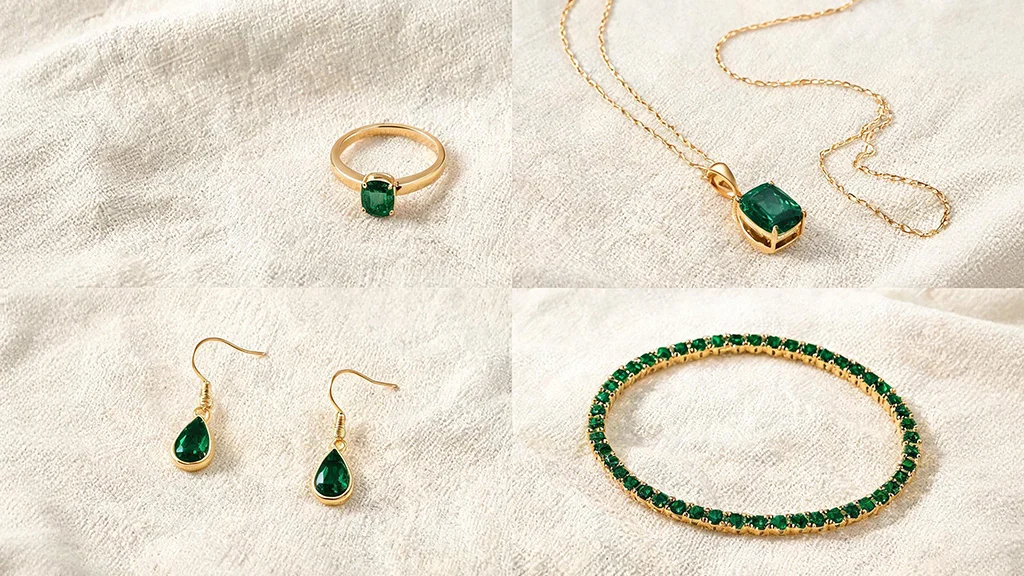
Emerald's versatility makes it a natural fit across every jewelry category:
- Rings — solitaire and halo styles that let the color take center stage, or emerald-cut center stones flanked by diamonds
- Necklaces and pendants — a single emerald solitaire for everyday wear, or a graduated emerald and diamond design for special occasions
- Earrings — studs for understated elegance, or drop and hoop styles that catch the light
- Bracelets — tennis-style lines of emeralds or emerald-and-diamond accent pieces
Beyond birthdays, emerald also suits engagement rings for those seeking a colored-stone alternative to diamond, milestone anniversary gifts (especially the 20th and 35th), and Mother's Day gifting.
Why Sourcing and Manufacturing Transparency Matter
Emerald's value is shaped as much by its journey from mine to market as by the stone itself. At Provence Jewellery, our OEM and ODM manufacturing process gives brands full visibility into gemstone origin, treatment disclosure, and craftsmanship at every stage — whether working with natural emerald, lab-grown alternatives, or emerald-inspired designs using moissanite and cubic zirconia.
For brands and retailers building a May birthstone collection, that transparency isn't just good practice; it's what builds lasting customer trust in a category where treatment and origin claims vary widely across suppliers.
Frequently Asked Questions
It can be. High-quality, well-saturated emeralds — particularly fine Colombian stones — can command prices per carat that exceed comparable diamonds, depending on rarity, color, and clarity.
Yes, with care. Emerald's 7.5–8 Mohs hardness makes it suitable for regular wear, but its natural inclusions and common oil treatments mean it needs gentler handling than diamond or sapphire — avoid rough activities and harsh chemicals.
Agate was historically associated with May before the modern birthstone list was standardized in 1912, when emerald became the sole official May birthstone.
Yes. Oiling and fracture-filling are long-standing, widely accepted treatments applied to natural emeralds to improve clarity — they don't change the fact that the stone is a genuine, natural emerald. What matters is that the treatment is disclosed to the buyer.
Lab-grown (or synthetic) emeralds share the same chemical composition and crystal structure as natural emeralds but are created in controlled laboratory conditions rather than mined from the earth. They typically have fewer inclusions and cost significantly less than natural stones of comparable size and color.
 English