
Wedding Ring Styles Guide: Find Your Perfect Band
- Written by Provence Team
- Updated on August 12, 2026
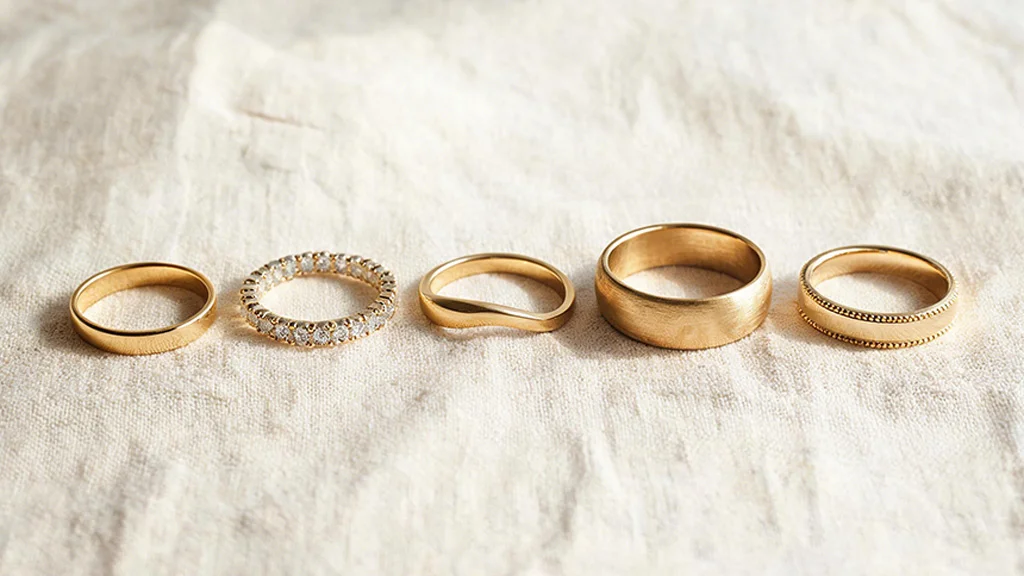
Table of Contents
A wedding ring is one of the few pieces of jewelry you will wear every single day for the rest of your life. Unlike an engagement ring, which is chosen in a single, often surprise, moment, your wedding ring is usually chosen deliberately — with time to consider metal, shape, comfort, and how it will look on your hand decades from now. And the range of options is bigger than most couples expect.
This guide brings together every major wedding ring style, organized the way you actually shop: by construction (how the ring is built), by aesthetic (how it feels), by gender-specific fit considerations, and by the practical details — metal, sizing, budget, and care — that determine whether you will love wearing it in year one and year thirty. Whether you are shopping in the United States, the United Kingdom, or the European Union, you will find sizing, pricing, and compliance information relevant to you.
How to Choose Your Wedding Ring Style
Before diving into individual styles, it helps to narrow the field using five practical filters. Most couples find their shortlist within minutes once they've answered these:
- Lifestyle: if you work with your hands, exercise daily, or live actively, favor durable metals and low-profile settings that won't snag or chip.
- Budget: metal type, width, and gemstone content are the three biggest cost drivers — decide early which of the three matters most to you.
- Pairing: if you're wearing the ring alongside an engagement ring, decide whether you want them flush (contour/curved), stacked, or independent (classic/plain).
- Width & finish: width affects both comfort and presence on the hand; finish (polished, matte, brushed, hammered) affects how visible daily wear will be.
- Longevity: a wedding ring should still feel right in twenty years — favor styles and metals you won't tire of, and account for resizing over a lifetime of changing seasons and circumstances.
Wedding Ring Styles by Construction
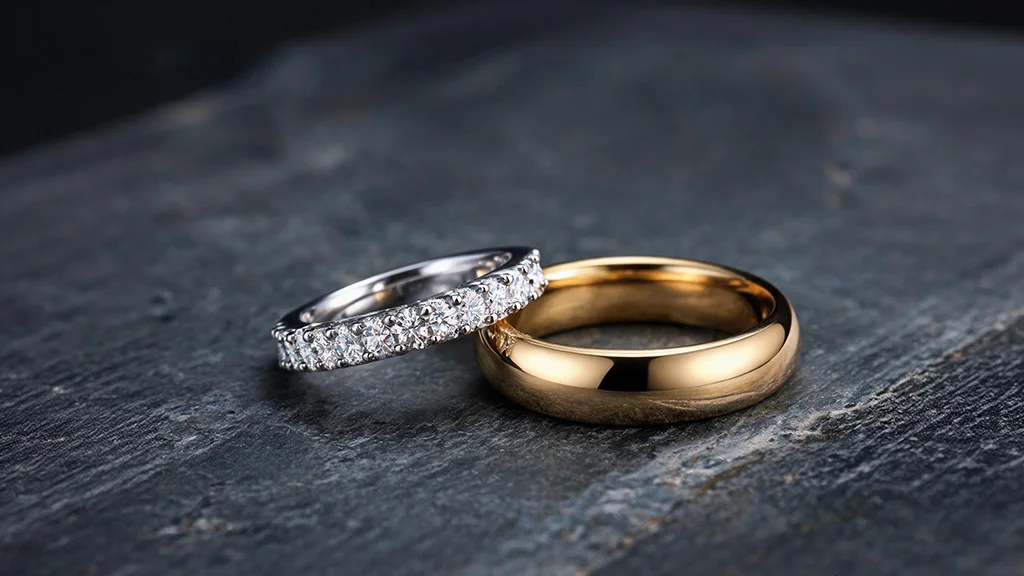
Construction refers to how the ring is physically built — this is the most useful way to compare styles side by side, because it determines price, comfort, and how the ring pairs with other rings.
Classic (Plain) Bands
The polished, unadorned metal band is the original wedding ring style and remains the most popular choice worldwide. Available in any metal or width, a classic band sits flush against an engagement ring and lets a center stone remain the visual focus. Because there's no stone-setting labor involved, classic bands are also typically the most affordable wedding ring option.
Eternity Bands
An eternity band features a continuous row of identical diamonds or gemstones running fully around the band, symbolizing unbroken, everlasting love. Stones can be prong-set (more sparkle, less durable for daily wear) or channel-set (more protected, smoother profile). Half-eternity and three-quarter-eternity versions place stones only on the top and sides, which keeps cost down and prevents stone-to-stone wear where the ring meets the palm.
Pavé Bands
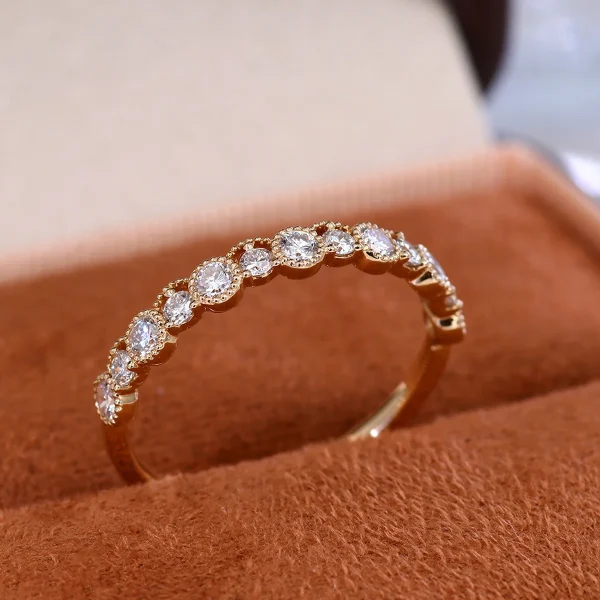
Pavé (French for "paved") bands feature small diamonds set closely together along the band's surface, held in place by tiny beads or prongs so the metal seems to disappear beneath continuous sparkle. Micropavé uses even smaller stones for a more delicate look; French pavé uses a distinctive V-shaped prong cut for extra light return.
Curved and Contour Bands
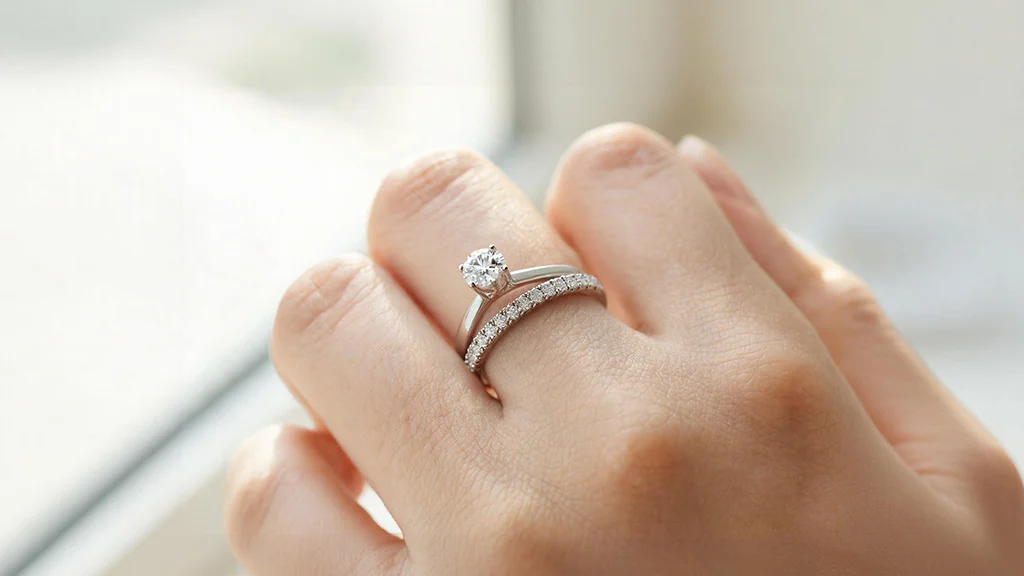
Also called guard, crown, chevron, or tracer bands, these are shaped with a notch or curve designed to nest around an engagement ring's center stone, closing the gap a straight band would leave. Contour bands are essential for pear, marquise, and oval engagement rings, where a straight edge would otherwise leave a visible triangle of space.
Guard Bands
A guard (or ring jacket) works in pairs — one worn on each side of the engagement ring to frame it, creating a three-ring stacked look. Guards are popular for couples who want the flexibility to wear the engagement ring alone on occasion, then reintroduce the guards for the full stacked effect.
Open Bands
Open bands leave a deliberate gap rather than forming a full circle, creating a light, architectural look. The negative space can serve as a resting place for an engagement ring's elongated center stone (useful for emerald, oval, and marquise cuts) or function purely as a modern design statement.
Vintage-Inspired Bands
Drawing on Art Deco geometry, Victorian engraving, or Edwardian filigree, vintage-inspired bands use milgrain edging (tiny beaded detailing), hand engraving, and antique-style stone settings to evoke heirloom character in a newly made ring.
Stackable Bands
Slim, low-profile bands designed to be layered — combined with an engagement ring and additional thin bands over time to mark anniversaries or milestones. Stacking has become one of the most searched bridal jewelry trends globally because it lets a ring collection grow gradually rather than requiring one large upfront purchase.
Infinity and Nature-Inspired Bands
Infinity bands use an intertwining figure-eight motif to symbolize an unending relationship, often accented with pavé diamonds along the twist. Nature-inspired bands use leaf, vine, or floral motifs, usually via engraving or organic bezel shapes, appealing to couples who want symbolism drawn from something other than geometry.
|
Style |
Best For |
Typical Width |
Relative Price Tier |
|---|---|---|---|
|
Classic band |
Minimalists, everyday wear, budget-conscious |
1.5–4 mm |
$ |
|
Eternity band |
Maximum sparkle, anniversary stacking |
1.5–3 mm |
$$$ |
|
Pavé band |
Delicate sparkle without full eternity cost |
1.5–2.5 mm |
$$ |
|
Curved / contour band |
Pairing with pear, marquise, oval rings |
2–3 mm |
$$ |
|
Guard band |
Flexible stacked looks |
1.5–2 mm (pair) |
$$ |
|
Open band |
Modern, architectural pairing |
2–3 mm |
$$ |
|
Vintage-inspired band |
Heirloom aesthetic, milgrain detail lovers |
2–4 mm |
$ |
Wedding Ring Styles by Aesthetic
Beyond construction, most couples also think in terms of overall feel. Here's how the major style personalities break down — useful shorthand once you already know your preferred construction type:
- Timeless: clean lines, polished metal, round or oval stones. Never dates, easiest to pair with future purchases.
- Minimalist: thin unembellished bands, bezel settings, matte or subtly polished finishes. Prioritizes quiet sophistication over sparkle.
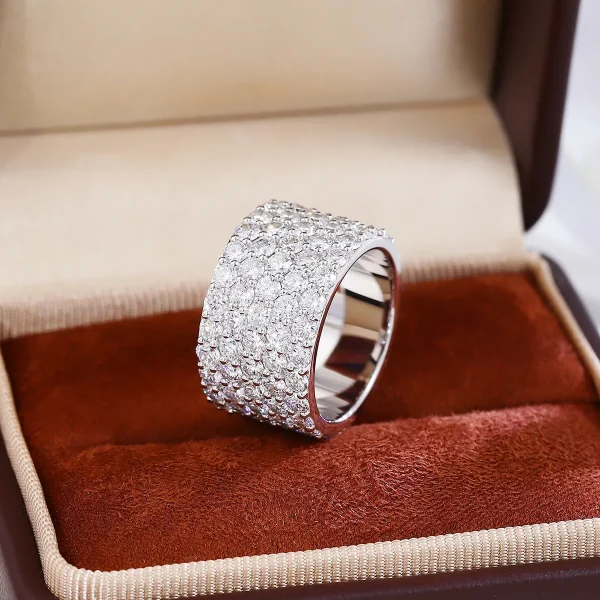
- Maximalist: multiple stacked rows, large or multiple stones, halo settings. Built to be noticed.
- Romantic: floral motifs, milgrain and filigree detailing, soft curving silhouettes. Often pairs with pear or marquise shapes.
- Practical: low-profile comfort-fit settings in durable metals like platinum or tungsten — built for hands-on daily life.
- Fashion-forward: asymmetric shapes, mixed metals, east-west orientations, unconventional diamond shapes.
- Alternative: colored diamonds, hammered or textured metal, unconventional shapes like kite, hexagon, or trillion cuts.
Women's Wedding Ring Styles
Women's wedding rings span the widest style range of any bridal jewelry category. Popular options include:
- Thin, delicate bands (1.5–3 mm): refined and minimalist; ideal for smaller hands or stacking alongside an engagement ring.
- Curved or contoured bands: shaped to nest against the engagement ring for a flush, gap-free fit.
- Diamond and gemstone bands: including pavé, channel-set, and full eternity styles for added sparkle.
- Engraved bands: hand or machine engraving on the interior (initials, dates) or exterior (vintage-style patterns) for personalization.
- Chunky or wide bands: bolder 4 mm+ widths that can stand alone or balance a larger engagement ring.
- Gemstone bands: sapphire, ruby, emerald, or other colored stones for individuality and symbolic meaning.
Men's Wedding Band Styles
Men's wedding bands have expanded well beyond the plain gold ring, with modern options built around lifestyle, durability, and finish.
|
Band Style |
Key Features |
Best For |
|---|---|---|
|
Thin band |
2–4 mm width, lightweight |
Minimalist aesthetics |
|
Wide band |
6 mm+ width, bold presence |
Statement-makers |
|
Textured / hammered |
Handcrafted, rugged finish |
Active lifestyles |
|
Diamond accents |
Subtle gemstone detailing |
Refined sparkle seekers |
|
Mixed metal |
Combination of gold tones |
Contrast and individuality |
|
High polish |
Sleek, reflective surface |
Classic, formal appearance |
|
Matte finish |
Subdued, contemporary |
Modern style preference |
|
Alternative metal |
Tungsten, titanium, cobalt |
Durability, budget, active jobs |
|
Comfort fit |
Rounded interior edges |
Maximum daily wearability |
Alternative metals deserve a special note for men's bands: tungsten and titanium are prized for scratch resistance and affordability, but neither can be resized — a meaningful consideration if weight or finger size may change over time. Platinum and palladium remain the most durable precious-metal options and are naturally hypoallergenic.
Wedding Ring Metal Guide
Gold: 14k vs. 18k
14k gold contains 58.3% pure gold alloyed with other metals for strength, making it the more scratch-resistant, budget-friendly choice for daily wear. 18k gold contains 75% pure gold, offering a richer, slightly deeper color at a higher price point but with somewhat lower everyday durability. Pure 24k gold is too soft for a ring that will be worn daily and is rarely used for wedding bands.
- White gold: reflects light beautifully and makes diamonds appear brighter; requires rhodium replating roughly every 3–5 years to maintain its bright white finish.
- Yellow gold: the traditional choice, needs the least maintenance, and creates warm contrast against diamonds.
- Rose gold: a copper alloy gives it a romantic pink hue and slightly greater durability than yellow gold, though the copper content can cause sensitivity in some wearers.
- Platinum: naturally white, hypoallergenic, and the most durable precious metal choice; develops a soft patina over time that can be polished back to a high shine.
Moissanite, Lab-Grown Diamond, and Cubic Zirconia Bands
For couples prioritizing brilliance per dollar, or an ethically transparent supply chain, moissanite, lab-grown diamonds, and cubic zirconia (CZ) have become mainstream wedding band choices rather than niche alternatives.
- Moissanite: rates 9.25 on the Mohs hardness scale (versus 10 for diamond), making it highly durable for daily wear, with more fire (rainbow flash) than diamond at a fraction of the price.
- Lab-grown diamonds: chemically, physically, and optically identical to natural diamonds, typically priced 60–85% lower than natural stones of comparable size and grade — ideal for eternity and pavé bands where many stones are needed.
Cubic zirconia: the most budget-friendly option, softer than moissanite or diamond (8–8.5 Mohs) and best suited to occasional-wear or fashion bands rather than a primary daily-wear ring.
Diamond & Gemstone Cuts Used in Wedding Bands
The cut of the stones in an eternity or pavé band affects both sparkle and how well the band sits flush on the finger, and is graded using the same Diamond Cut Grading System developed by the Gemological Institute of America (GIA) used across the diamond trade.
- Round brilliant: 58 facets deliver maximum light return; the most common and versatile choice for bands of any style.
- Princess and Asscher: geometric step or brilliant cuts that create a vintage or architectural look; pair well with classic and channel-set bands.
- Emerald: long step-cut facets with clipped corners, producing an elongated, elegant look often used in statement eternity bands.
- Cushion: square or rectangular with softened, rounded corners — a versatile middle ground between round and princess.
Pairing Your Wedding Band with Your Engagement Ring Shape
Choosing a wedding band that sits flush with your engagement ring — without visible gaps — depends heavily on your center stone's shape.
|
Engagement Ring Shape |
Recommended Band Styles |
|---|---|
|
Round |
Classic, eternity, or pavé — works with nearly any band |
|
Oval |
Contour band, stacked thin bands, or classic straight band |
|
Pear |
Contour or V-shaped band to close the point-side gap; open bands also work well |
|
Marquise |
Curved or V-shaped contour band to close gaps at both points |
|
Emerald |
Open or spacer band to bridge the elongated shape; step-cut eternity for a matching architectural look |
|
Princess / Square |
Straight classic, channel-set, or eternity bands echo the geometric lines |
|
Halo |
Slim classic or delicate pavé band — avoid wide or ornate bands that compete with the halo |
|
Three-Stone / Toi et Moi |
Simple classic or thin pavé band that won't compete with multiple focal stones |
How Wedding Rings Are Made: A Manufacturer's Perspective
As a fine jewelry manufacturer producing solid gold, moissanite, lab-grown diamond, and natural gemstone wedding rings for brands across the US, UK, and EU, Provence Jewellery approaches every wedding band the same way: as a piece that must perform flawlessly for decades of daily wear, not just look good in a product photo.
- Casting: molten gold or platinum alloy is cast into the band's base shape using lost-wax casting, then hand-finished to remove porosity and ensure even wall thickness — critical for a band that will be resized over its lifetime.
- Comfort-fit milling: the interior of the band is milled with a rounded profile (rather than flat), which is what allows a comfort-fit ring to slide on and off more easily and sit gently against the finger during long-term wear.
- Stone setting: pavé, channel, and eternity settings are set by hand under magnification to ensure each stone is secure and level — loose or uneven stones are the most common cause of wedding band repairs.
- Rhodium plating: white gold bands are plated with rhodium for a bright white finish; OEM partners can specify plating thickness to balance cost and longevity between replating cycles.
- Hallmarking and quality stamping: finished rings are stamped with metal purity marks (e.g., 14K, 585, 750) in compliance with destination-market requirements before shipment.
For brand partners, this manufacturing depth means wedding ring collections can be developed to precise specifications — metal purity, stone sourcing (natural, lab-grown, or moissanite), width tolerances, and finish — at OEM/ODM scale.
Frequently Asked Questions
The terms are used interchangeably in most English-speaking markets. "Wedding band" more precisely refers to the simple ring exchanged at the ceremony, while "wedding ring" is sometimes used more broadly to include the full bridal set.
No. Many couples choose matching bands for symbolism, but complementary designs in different metals, widths, or styles are equally common and equally meaningful.
Narrower bands (1.5–3 mm) suit smaller hands or minimalist preferences; wider bands (6 mm+) make a bolder statement and suit larger hands or those who prefer not to wear an engagement ring alongside it.
Yes. At 9.25 on the Mohs hardness scale, moissanite is highly resistant to scratching and chipping, making it suitable for daily wear at a significantly lower cost than diamond.
Sizing systems differ by country — the US uses a numeric scale, the UK uses letters, and the EU measures inner circumference in millimeters. Use a conversion chart as a starting point, but confirm with an in-person or professional at-home sizing tool before ordering.
A comfort-fit band has a rounded (rather than flat) interior profile, which allows it to slide on and off more easily and feel less noticeable during long-term daily wear.
Once a year is typical, with more frequent prong checks (every 12–24 months) recommended for pavé and eternity bands, where stone security matters most.
Precious metal bands (gold, platinum, palladium) can typically be resized. Alternative metal bands made of tungsten or titanium generally cannot be resized due to their hardness, so accurate sizing before purchase is essential.
 English