
July’s Birthstone: The Complete Guide to Ruby
- Written by Provence Team
- Updated on August 10, 2026
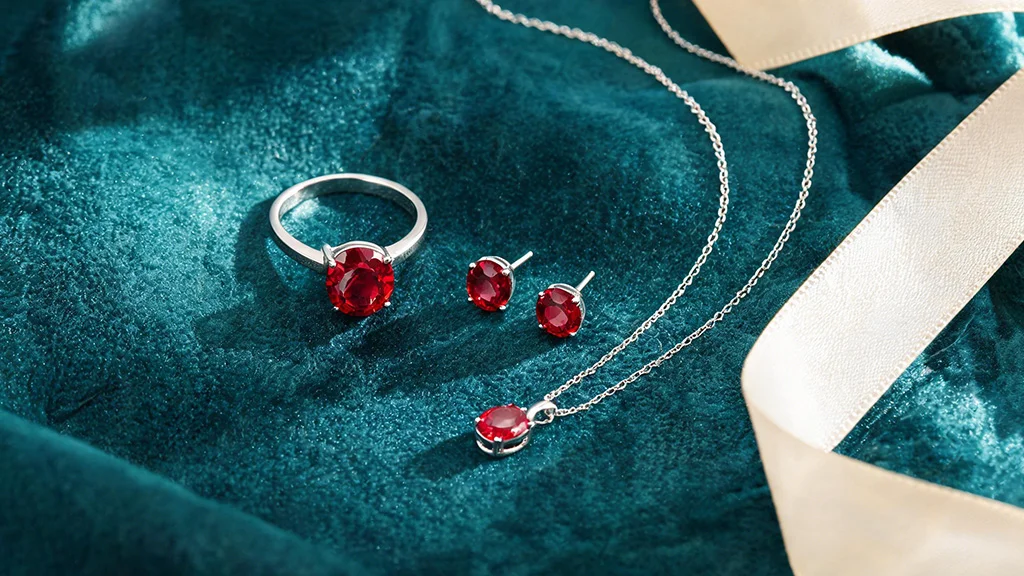
Table of Contents
Quick Answer: What Is July's Birthstone?
July's birthstone is ruby — a deep red variety of the mineral corundum, prized for over two thousand years as a symbol of passion, courage, and vitality. Ranking 9 on the Mohs hardness scale (second only to diamond), ruby is one of the most durable gemstones in fine jewelry, making it as suited to everyday wear as it is to heirloom pieces. Its alternate, less common birthstone is onyx.
|
Mineral |
Corundum (red variety) |
|---|---|
|
Color range |
Pinkish-red to deep crimson; finest grade called "pigeon's blood" |
|
Hardness (Mohs) |
9 |
|
Symbolism |
Passion, courage, protection, vitality |
|
Also the gem for |
15th and 40th wedding anniversaries |
|
Alternate birthstone |
Onyx |
What Is Ruby, Exactly?
Ruby belongs to the corundum mineral family — the same family as sapphire. What separates the two is color: while corundum containing traces of iron and titanium turns blue (sapphire), corundum colored by trace amounts of chromium turns red, and that red variety is what we call ruby. The more chromium present, the more intense the red — and in some stones, chromium is also responsible for a faint fluorescent glow that gives fine rubies extra life in daylight.
The name itself comes from the Latin ruber, meaning "red." In Sanskrit, ruby was called ratnaraj — "king of gems" — a title that has followed the stone across cultures for millennia.
Ruby Meaning and Symbolism
Ruby's meaning has stayed remarkably consistent across centuries and continents:
- Passion and love — its fiery red has long symbolized deep affection, making it a natural choice for romantic and anniversary gifts.
- Courage and protection — warriors in several ancient cultures wore or embedded rubies believing the stone offered strength in battle.
- Prosperity and power — rubies were historically associated with royalty, wealth, and good fortune.
- Vitality — because of its resemblance to blood, ruby has long been tied to life force and health.
These associations aren't confined to one region. In ancient India, ruby was considered the most precious of all gemstones, believed to bring protection and prosperity to its wearer, and was often offered to Hindu deities as a symbol of devotion. In Chinese tradition, red is the color of luck, joy, and celebration, and ruby has historically been worn and gifted to invite good fortune — a meaning still very much alive in red-gold jewelry design across East Asia today. In Burmese culture, warriors were said to insert rubies into their skin, believing the stone made them invincible in combat. Medieval Europeans wore ruby as a talisman for health, wisdom, and success in love, and it frequently appeared set into royal crowns and religious objects across the Middle East and Europe alike.
This cross-cultural thread — red as protection, passion, and prosperity — is part of why ruby remains one of the most universally recognized birthstones in the world, not tied to any single region's traditions.
Ruby Color: Understanding "Pigeon's Blood"
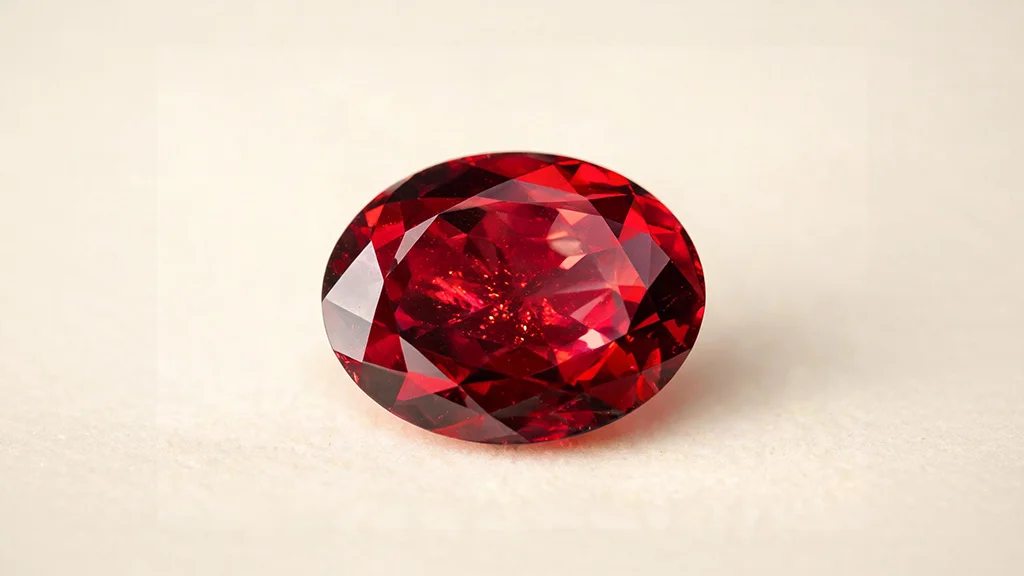
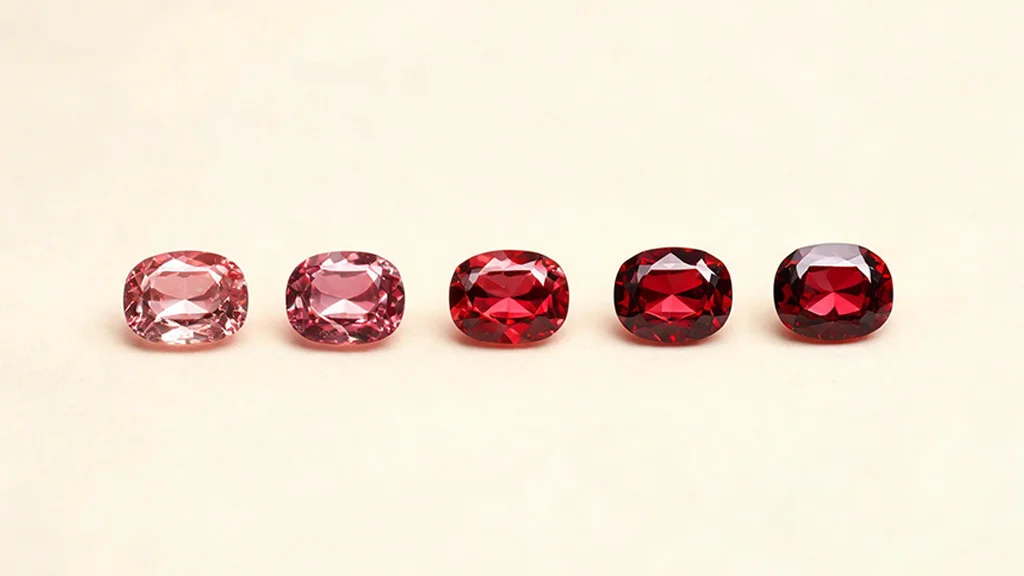
Not all rubies look alike. The color spans from soft pinkish-red to deep, saturated crimson, and color is the single most important factor in determining a ruby's value.
The most prized shade in the trade is known as "pigeon's blood" — a pure, vivid red with a faint blue undertone and even saturation throughout the stone. The term reportedly comes from the color of blood in the eye of a live pigeon, the exact hue gemologists look for when grading top-color ruby.
Pigeon's blood rubies have historically been most associated with Myanmar's Mogok Valley, where geological conditions consistently produce this rare combination of hue, tone, and saturation. Today, major gemological labs grade pigeon's blood as a color standard rather than an origin claim — meaning a ruby from Mozambique or another source can earn the designation if it meets the same criteria. Because true pigeon's blood color is so rare, stones that qualify command a significant price premium over rubies of similar size and clarity.
Most rubies also contain fine, needle-like mineral inclusions known as "silk." In small amounts, silk can soften a stone's brilliance in a flattering way. In rare cases, dense silk creates a six-rayed star effect called asterism — most visible in cabochon-cut "star rubies."
Where Rubies Come From
Ruby has been mined across several regions, each producing stones with distinct character:
- Myanmar (Mogok Valley) — the historic benchmark source, prized for over five centuries for producing vivid red stones with strong fluorescence.
- Mozambique — a major modern source; rubies from the Montepuez region are increasingly compared to fine Mogok material.
- Vietnam (Luc Yen and Quy Chau) — known since the late 20th century for rubies with a purplish-red hue.
- Thailand and Cambodia border region — a major historical source through much of the 20th century, though production has declined.
- Sri Lanka, Tanzania, Madagascar, Kenya, Afghanistan, and Tajikistan — smaller but notable producing regions, each contributing to the global ruby supply.
Origin can influence both a ruby's appearance and its market value, which is why reputable sellers should be able to speak to where a stone was sourced.
Natural Ruby vs. Lab-Grown Ruby vs. Simulants
One of the most common points of confusion for shoppers is the difference between a natural ruby, a lab-grown (lab-created) ruby, and a ruby simulant.
- Natural ruby is mined from the earth. Nearly all natural rubies on the market today are heat-treated — a widely accepted, stable enhancement that improves color and clarity by removing purplish tones and reducing silk. This treatment must be disclosed to buyers.
- Lab-grown ruby has the same chemical composition, crystal structure, and optical properties as natural ruby — it's chemically identical corundum, just grown in a controlled laboratory environment rather than the earth. This makes it a durable, more affordable, and traceable alternative for buyers who want the real gemstone without the sourcing uncertainty or price premium of natural material.
- Simulants — such as red glass, dyed quartz, or synthetic red spinel sold as "ruby" — only imitate the look of ruby without sharing its mineral identity. These should always be clearly disclosed as imitation stones, not sold as ruby.
For shoppers who want authenticity at a more accessible price point, lab-grown ruby has become an increasingly popular choice, particularly when paired with lab-grown diamonds, moissanite, or cubic zirconia accents in a single design.
Ruby vs. Similar Red Gemstones
Ruby is not the only red gemstone on the market, and it's easy to confuse it with a few close look-alikes.
|
Property |
Ruby (Natural) |
Ruby (Lab-Grown) |
Red Spinel |
Garnet |
|---|---|---|---|---|
|
Natural color |
Pinkish-red to deep crimson |
Identical to natural |
Red, pink-red, orange-red |
Deep red to brownish-red |
|
Origin |
Mined |
Grown in lab |
Mined |
Mined |
|
Treatment |
Heat treatment common |
Rarely needed |
Usually untreated |
Usually untreated |
|
Mohs hardness |
9 |
9 |
8 |
6.5–7.5 |
|
Best for |
Daily wear, all jewelry types |
Daily wear, all jewelry types |
Rings, earrings, pendants |
Rings, earrings, pendants |
|
Relative value |
Highest among red gems |
More accessible than natural |
Mid-range |
Most affordable |
July's Alternate Birthstone: Onyx
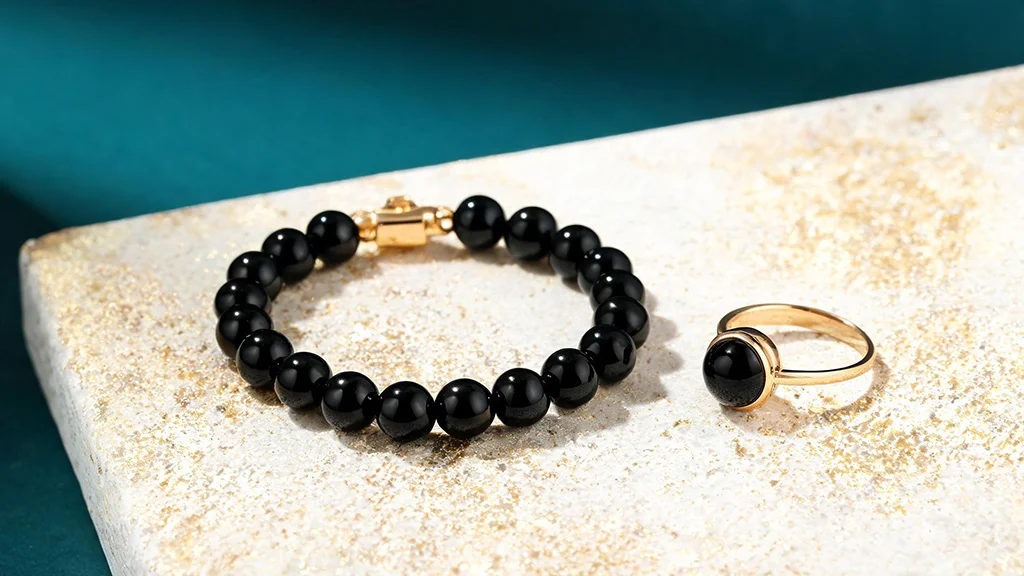
While ruby is July's primary and most recognized birthstone, onyx is sometimes cited as an alternate. Where ruby is fiery and bold, onyx — a black variety of chalcedony — offers a grounding, understated presence, traditionally associated with strength, protection, and focus. It ranks 6.5–7 on the Mohs scale, making it durable enough for everyday rings, bracelets, and pendants, and it pairs well with both warm and cool metal tones. Onyx is far less commonly referenced than ruby, so most July birthstone jewelry — and most buyer searches — center on ruby.
How to Choose Ruby Jewelry: A Buying Guide
When evaluating a ruby, the same broad value framework used for diamonds applies, adapted for colored gemstones:
- Color — the most important factor. Look for vivid, evenly saturated red with minimal brown or overly dark tones.
- Clarity — nearly all rubies contain natural inclusions. A completely "eye-clean" ruby is rare and commands a premium; don't expect diamond-level clarity.
- Cut — a well-proportioned cut enhances brilliance and deepens color. Oval, cushion, and round cuts are the most popular for maximizing a ruby's natural beauty.
- Carat weight — large, fine-quality rubies are exceptionally rare, so price rises sharply with size once quality is held constant.
- Treatment disclosure — always confirm whether a stone is heat-treated (standard and accepted), lattice diffusion-treated, or glass-filled (which affects durability and should be priced accordingly), or natural and untreated (rare, and priced at a premium).
- Certification — for higher-value purchases, an independent gemological report helps confirm authenticity, treatment status, and origin.
Because value can vary enormously between a modestly saturated commercial-grade ruby and a fine "pigeon's blood" stone, working with a supplier who can clearly explain grading and treatment — whether natural or lab-grown — matters more with ruby than with many other gemstones.
Caring for Ruby Jewelry
Thanks to its Mohs hardness of 9, ruby is one of the most wear-resistant gemstones available, but a few care basics keep it looking its best:
- Clean with warm, soapy water and a soft brush for routine care.
- Ultrasonic and steam cleaners are generally safe for untreated and heat-treated rubies, but should be avoided for glass-filled or dyed stones — use a soft, damp cloth instead.
- Store ruby jewelry separately from other pieces to prevent scratching, especially softer gemstones like pearl or opal.
- When in doubt about a specific piece's treatment, check with your jeweler before using any cleaning method beyond mild soap and water.
Frequently Asked Questions
July's birthstone is ruby, the red variety of the mineral corundum, prized for its color, durability, and long history of symbolism tied to passion and protection.
Ruby ranges from soft pinkish-red to deep, saturated crimson. The most prized shade, "pigeon's blood," is a pure red with a faint blue undertone.
Yes. With a Mohs hardness of 9, ruby is highly resistant to scratching, making it well suited to rings, bracelets, and other pieces worn daily.
They share the same chemical composition and physical properties — lab-grown ruby is simply grown in a controlled environment rather than mined, typically offering a more affordable and traceable alternative to natural stone.
Fine natural rubies with strong, even color and good clarity are among the most valuable colored gemstones — sometimes exceeding diamond prices per carat at the top end. Lab-grown and commercial-grade natural rubies offer far more accessible price points.
Onyx is sometimes cited as July's alternate birthstone, offering a darker, more understated option alongside ruby.
Warm soapy water and a soft brush work for most rubies. Glass-filled or dyed stones should only be cleaned with a damp cloth — avoid ultrasonic and steam cleaners for those.
Yes. Ruby's durability and rich symbolism of passion make it a distinctive, meaningful alternative to a traditional diamond center stone.
Final Thoughts
Ruby's place as July's birthstone rests on more than tradition — it's one of the few gemstones whose meaning has stayed consistent across cultures and centuries, from ancient India to medieval Europe to modern jewelry design worldwide. Whether you're drawn to a fine natural stone with true "pigeon's blood" color, a more accessible lab-grown ruby, or the quieter alternative of onyx, July's birthstone offers something rare: a gem with both universal appeal and real durability for a lifetime of wear.