
Gold Karat Meaning: The Complete Guide to 10K, 14K, 18K & 24K
- Written by Provence Team
- Updated on May 26, 2026
Table of Contents
If you've ever turned a gold ring over and noticed a tiny number stamped inside — 585, 750, 18K — and wondered what it actually means, you're not alone. Gold karat is one of the most misunderstood terms in jewellery, and getting it wrong can cost you.
Here's the short answer: karat (K) measures how much pure gold is in a piece of jewellery, expressed out of 24 parts. So 18K gold contains 18 parts pure gold and 6 parts other metals. 24K is 100% pure gold. The higher the karat, the more gold — but as you'll see, more gold doesn't always mean better jewellery.
At Provence, we work primarily with 14K and 18K gold because we believe these two karats offer the best combination of beauty, durability, and lasting value for everyday fine jewellery. Here's everything you need to know to shop with confidence.
What Does Karat Mean in Gold? The Basics
The word karat (abbreviated K or kt) is a unit of purity measurement used specifically for gold. It describes the ratio of pure gold to other metals in an alloy, measured on a scale from 0 to 24.
Pure gold — 24K — is 99.9% gold. It's deep orange-yellow in colour, heavy, and extraordinarily soft. In its pure form, it bends and scratches with almost no effort, which is why jewellers rarely use it for wearable pieces. Instead, they mix it with metals like copper, silver, palladium, or zinc to add strength and, depending on the alloy, change the colour.
A quick note on spelling: karat (K) refers to gold purity. Carat (ct) refers to the weight of gemstones. They sound the same, but they measure entirely different things. A diamond can be 1 carat; a ring can be 18 karat. The two terms should never be swapped.
The Gold Karat Chart: Purity, Fineness & Appearance at a Glance
|
Karat |
Pure Gold Content |
Millesimal Fineness |
Colour Tone |
Typical Use |
|---|---|---|---|---|
|
24K |
99.9% |
999 |
Deep orange-yellow |
Bullion, investment, ceremonial |
|
22K |
91.7% |
916 |
Rich warm yellow |
Traditional Asian & Middle Eastern jewellery |
|
18K |
75.0% |
750 |
Warm yellow |
Fine jewellery, engagement rings, heirlooms |
|
14K |
58.3% |
585 |
Bright yellow (less saturated) |
Everyday fine jewellery, rings, pendants |
|
10K |
41.7% |
417 |
Pale yellow |
Entry-level gold jewellery |
The alloying metals used — and their proportions — are what give each karat its characteristic colour and hardness, as documented by the World Gold Council's gold jewellery standards.
Millesimal fineness is the three-digit number you'll find stamped on most gold jewellery in Europe and the UK — more on that below.
How to Read Gold Hallmarks & Stamps
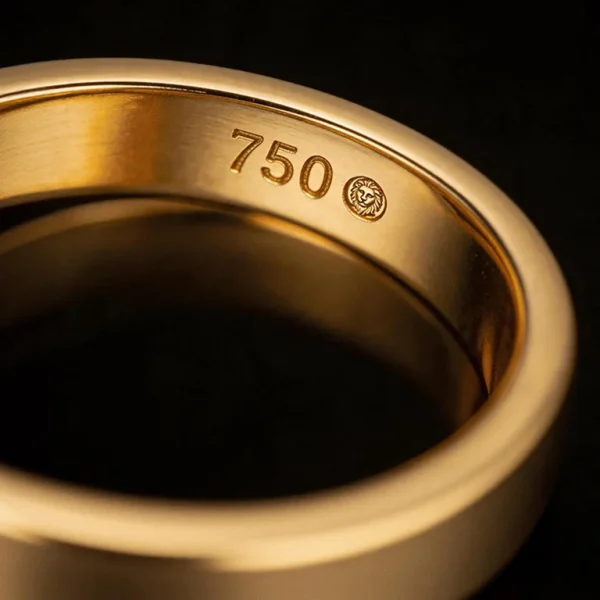
This is the section most jewellery guides skip — but it's one of the most practical things you can know before buying or selling gold.
When you look inside a ring or on the clasp of a necklace, you'll typically see a small stamped number. That number is the millesimal fineness mark, and it tells you exactly how many parts per thousand are pure gold.
|
Stamp |
Karat Equivalent |
Pure Gold |
|---|---|---|
|
375 |
9K |
37.5% |
|
417 |
10K |
41.7% |
|
585 |
14K |
58.5% |
|
750 |
18K |
75.0% |
|
916 |
22K |
91.6% |
|
999 |
24K |
99.9% |
Gold hallmarking is actually one of the world's oldest forms of consumer protection — according to the World Gold Council's hallmarking guide, the practice traces back to King Edward I of England and King Louis IX of France in the 1200s.
In the United Kingdom, hallmarking is a legal requirement. Any gold article over 1 gram sold on the home market must be hallmarked by one of the four official UK Assay Offices — London, Birmingham, Sheffield, or Edinburgh.
In the United States, the FTC's Jewelry Industry Guide requires that any karat mark on a piece must be accompanied by a registered maker's trademark — but unlike the UK, hallmarking is not independently verified by a government assay office.
In Europe, the millesimal system (585, 750, etc.) is standard across most countries.
If you find a stamp you don't recognise — or no stamp at all — it's always worth having the piece tested by a reputable jeweller before assuming its purity.
Gold Colour × Karat: Yellow, White & Rose Gold Explained
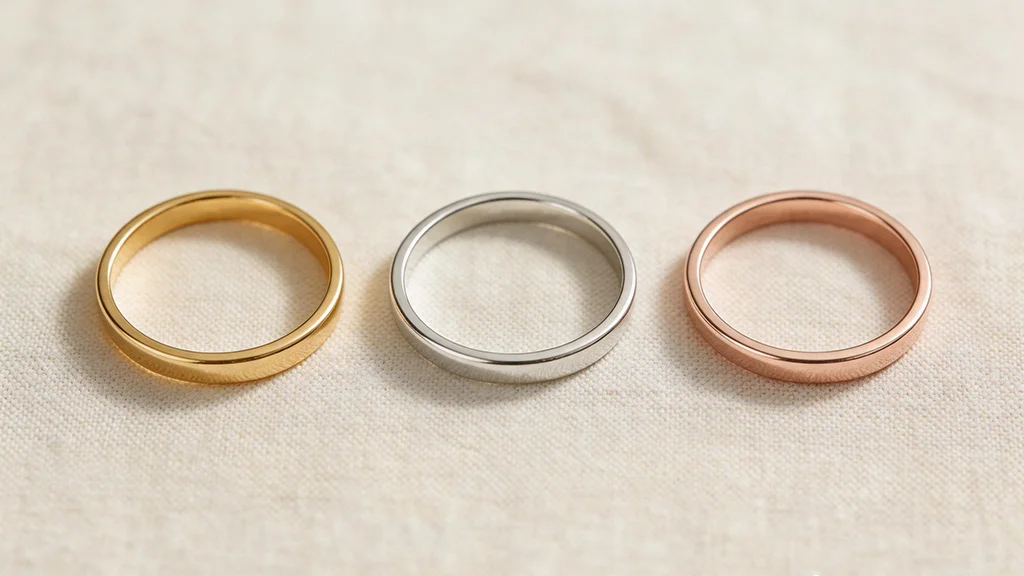
Here's something that surprises many buyers: the colour of your gold depends not just on karat, but on which metals are mixed with the gold. The same karat — say, 18K — can look completely different depending on the alloy composition.
Yellow gold is the closest to gold's natural colour. In 18K yellow gold, the remaining 25% is typically a blend of silver and copper. The higher the karat, the richer and more orange-yellow the tone.
Rose gold gets its warm pink blush from a higher proportion of copper in the alloy. An 18K rose gold piece typically contains 75% gold, around 20–22% copper, and a small amount of silver. Lower karat rose golds (14K) have even more copper, producing a deeper, more vivid pink.
White gold achieves its silvery tone through alloys containing nickel, palladium, or silver. Most white gold jewellery is also rhodium-plated — a thin coating that enhances the bright, reflective finish and provides an extra barrier against scratching. Over time, rhodium plating can wear down and may need re-plating, which is a routine and inexpensive service.
This means that if you're choosing between 14K and 18K in a colour other than yellow, the karat affects more than just purity — it changes the depth and tone of the colour itself.
The GIA explains that beyond karat, it's the specific alloy composition — the ratio of copper, silver, and palladium — that determines a piece's final colour and workability.
Purity vs. Durability: The Real Trade-Off
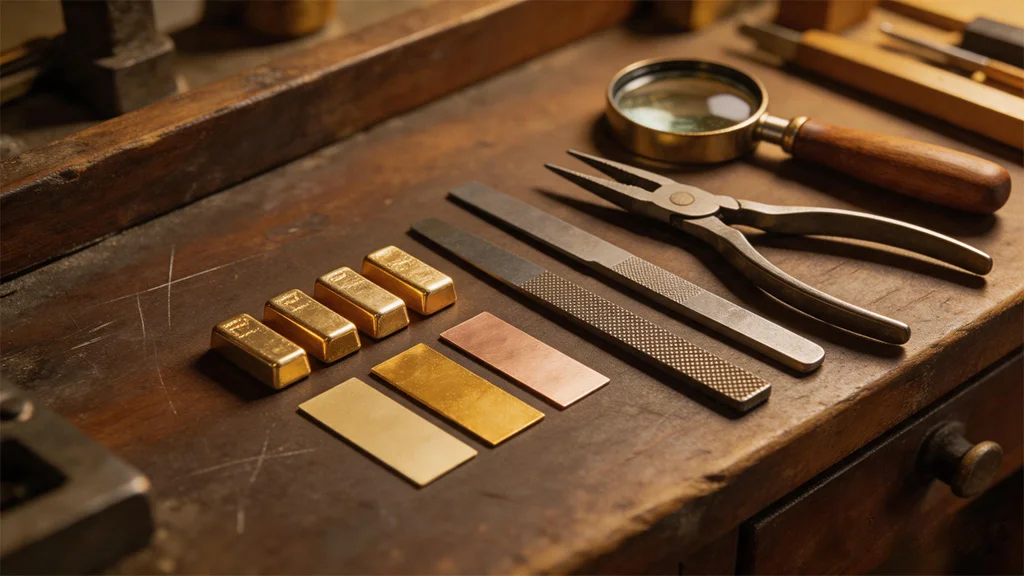
The relationship between karat and durability is the opposite of what many people expect. Higher karat = softer gold.
Pure gold (24K) is beautiful, but it dents, bends, and scratches easily. As you lower the karat and increase the alloy proportion, the metal becomes harder and more resistant to daily wear.
Here's how it plays out practically:
- 24K: Too soft for most jewellery. Best reserved for investment bars, coins, or decorative ceremonial pieces.
- 22K: Still quite soft — common in traditional South Asian wedding jewellery, where pieces are worn occasionally rather than daily.
- 18K: The sweet spot for fine jewellery. Durable enough for everyday rings and bracelets, while retaining 75% pure gold content. This is the standard used by most luxury jewellery houses worldwide.
- 14K: The most durable option among fine gold karats. Preferred across the US and UK for engagement rings and pieces that endure heavy use. Slightly paler in colour than 18K, but the difference is subtle.
- 10K: The minimum karat legally sold as gold in the US. Very durable and affordable, but with notably less richness in colour and less intrinsic gold value.
Which Karat Should You Choose? A Practical Framework
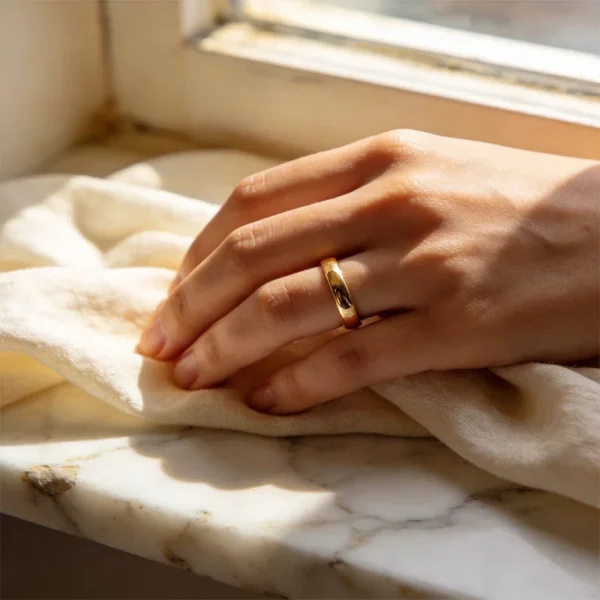
The right karat depends on three things: how you'll wear it, how sensitive your skin is, and what gold means to you personally.
Choose 18K if:
- You want the richest colour and the highest gold content in a wearable, everyday piece
- You have sensitive skin — higher karat gold contains fewer alloy metals, reducing the risk of irritation
- You're buying an heirloom or a special occasion piece — engagement rings, anniversary jewellery, or anything meant to last a lifetime
- You care about the intrinsic gold value of your jewellery
Choose 14K if:
- You lead an active lifestyle and want jewellery that handles daily wear without worry
- You frequently use your hands — 14K is significantly more scratch-resistant than 18K
- Budget matters — 14K offers genuine fine jewellery quality at a more accessible price
- You want a subtle, slightly lighter colour tone in yellow gold
Choose 22K–24K if:
- You're purchasing for investment, gifting, or cultural ceremonies rather than everyday wear
- You specifically want pure or near-pure gold as a store of value
If you have sensitive skin: Always opt for 18K or higher. The alloy metals in lower-karat golds — particularly nickel, which is used in some white golds — are the most common triggers for jewellery-related skin reactions. At Provence, our white gold pieces are nickel-free, but if you're shopping elsewhere, always ask.
Caring for Gold Jewellery by Karat
Higher karat gold is softer and needs a little more care to stay looking its best.
18K gold care:
- Remove before intense physical activity, gardening, or heavy cleaning
- Store in a soft pouch or lined jewellery box, separately from harder gemstone-set pieces
- Clean gently with warm water, mild soap, and a soft-bristle brush
- Avoid ultrasonic cleaners if your piece has delicate settings
14K gold care:
- Considerably more resistant to scratching — suitable for everyday wear with fewer precautions
- Still benefits from regular cleaning and proper storage
- Rhodium plating on white gold pieces (all karats) should be refreshed every 1–3 years depending on wear
General rule: The higher the karat, the more often you'll want to check for any signs of bending or distortion in settings, since the metal is more malleable over time.
How Provence Uses Gold Karats
At Provence, we craft our pieces in 14K and 18K gold — both in yellow, white, and rose. These are our chosen karats because they represent the best balance of pure gold content, day-to-day resilience, and long-term value.
Every Provence piece is stamped with its millesimal fineness mark, so you'll always know exactly what you're wearing. Our 18K pieces are stamped 750; our 14K pieces are stamped 585.
If you'd like help choosing the right karat for a specific piece — or if you have a question about a piece you've found elsewhere — our team is always happy to help. Browse our gold jewellery collections → or get in touch with us directly →.
Frequently Asked Questions
Neither is objectively better — it depends on your priorities. 18K has more gold and richer colour; 14K is harder and more scratch-resistant. For everyday rings, 14K is often the more practical choice. For special occasion jewellery, 18K is the classic fine jewellery standard.
585 is the millesimal fineness stamp for 14K gold. It means the piece contains 585 parts pure gold per 1,000 — or 58.5% gold.
750 is the fineness stamp for 18K gold, indicating the piece is 75% pure gold.
Yes, for most practical purposes. 24K gold is extremely soft and will scratch, dent, and bend with regular wear. It's better suited to investment pieces, coins, or bars than to everyday jewellery.
Pure gold (24K) does not tarnish. Lower karat golds may develop a slight patina over time because the non-gold alloy metals can oxidise — but this is easily cleaned and is more common with 10K gold than with 14K or 18K.
Karat (K) measures gold purity. Carat (ct) measures the weight of gemstones. They are two completely separate units and should not be confused.
 English