How to Find Reliable Jewelry Manufacturers for Small Business
- Written by Provence Team
- Updated on June 12, 2026
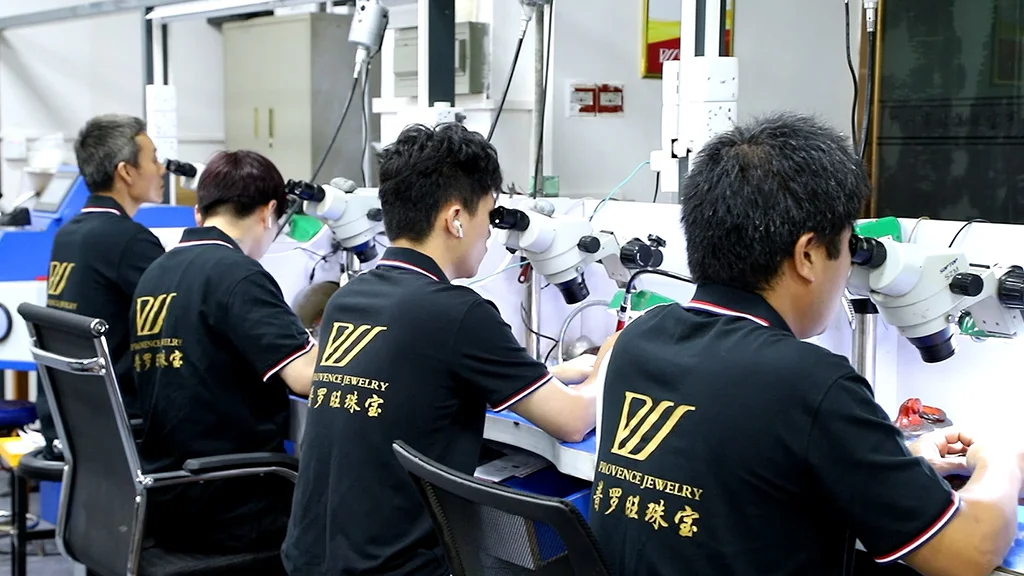
Table of Contents
You have a design. You have a brand vision. Maybe you have a first collection sketched out on paper or modelled in CAD software. What you do not have — yet — is a manufacturing partner you can trust.
Finding jewelry manufacturers for small businesses is harder than it looks. The right manufacturer needs to accept small orders without charging you premium unit prices, deliver consistent quality across every batch, protect your designs with a proper NDA, and communicate clearly across time zones and currencies. The wrong one will ghost you after the sample stage, substitute cheaper materials without telling you, or hold your moulds hostage when you want to move on.
This guide cuts through the noise. We cover exactly what to look for in a manufacturing partner, explain the difference between OEM, ODM, and private label production so you choose the right model for your business, profile the top manufacturers across Asia and the USA, and give you a pricing framework and a red-flag checklist so you can negotiate from a position of knowledge.
Whether you are launching a sterling silver fashion line from Singapore, building a fine gold collection for the US market, or scaling an Etsy shop into a wholesale brand, this guide will help you find the right partner — and avoid expensive mistakes. Let's get into it.
What small jewelry businesses actually need from a manufacturer
Not every manufacturer is built for small business. Many factories in China, India, and Thailand set minimum order quantities (MOQs) at 500 or 1,000 pieces per design — perfectly reasonable for a fast-fashion retailer placing seasonal orders, but completely impractical for a boutique brand launching its first collection with ten SKUs.
Before you contact a single supplier, get clear on what your business actually requires. Here is the checklist that matters:
Low MOQ with flexible scaling
For most small brands, a workable MOQ is 1–50 pieces per design, depending on the complexity. At this quantity you can test designs in the market without overcommitting cash to inventory. A good manufacturer will offer low MOQs on initial orders and scale with you as your volume grows — not force you to order 500 units of a design before you know whether it sells.
CAD design and 3D prototyping support
Unless you are a trained jewellery designer, you will need help translating a concept sketch or a reference image into a production-ready 3D model. Look for manufacturers who offer in-house CAD/CAM services. This matters for two reasons: it speeds up the sampling process dramatically, and it means your design files stay within one trusted partner rather than being shared across multiple vendors.
Sampling policy that is clear and fair
A reputable manufacturer will produce a pre-production sample — either a wax prototype, a 3D-printed model, or a first-run metal piece — before committing to a full production run. Confirm the sample cost upfront, whether it is refundable against your first order, and how many revision rounds are included. Manufacturers who skip sampling or make it unusually difficult are a red flag.
Private label packaging capability
If you are building a brand rather than just reselling generic pieces, your packaging matters as much as the jewellery itself. Look for manufacturers who can handle custom pouches, boxes, tags, and certificates of authenticity with your branding. Many small businesses underestimate the lead time and cost of packaging — it should be discussed at the quoting stage, not as an afterthought.
Certifications and ethical sourcing
Depending on your target market, you may need to verify your manufacturer's ethical credentials. The Responsible Jewellery Council (RJC) certification is the global standard for responsible business practices in the jewellery supply chain. ISO 9001 certification covers quality management systems. For stones, ask specifically about conflict-mineral compliance and whether the manufacturer can trace gemstone origins.
Consistent communication and response times
This is the most underrated factor and the one that causes the most problems. A manufacturer who takes a week to respond to a sample feedback email will cause cascading delays across your entire production schedule. During your vetting process, time their responses. Ask a detailed question by email and see how long it takes to receive a substantive answer — not a holding reply, but an actual answer.
Plating and finishing specifications in writing
"Gold plated" means nothing without a specification. Gold plating can be 0.3 microns (cheap fashion jewellery that fades in weeks) or 2.5 microns or more (durable, professional quality). Ask for plating thickness specifications in your contract. The same principle applies to rhodium plating on silver, and to any surface treatment on brass or stainless steel.
Provence Jewellery tip: When evaluating a manufacturer, ask to see their quality control documentation for a current client order — not a sample they prepared for a trade show. How a factory handles real production runs is very different from how it presents itself at JCK Las Vegas.
OEM vs ODM vs private label — which model fits your business?
These three terms are used interchangeably across the industry, which causes enormous confusion for brands sourcing jewellery for the first time. They are not the same thing, and choosing the wrong model can cost you significantly in both money and time.
OEM — Original Equipment Manufacturing
In OEM manufacturing, you provide the design and the manufacturer produces it to your specifications. You own the design files, the moulds (after amortisation), and the resulting intellectual property. OEM is the right model if you have invested in original designs — whether created in-house or by a designer you have commissioned — and want precise, repeatable production to your exact standards.
Best for: brands with existing designs, bespoke jewellery lines, collections created with a specific aesthetic identity.
ODM — Original Design Manufacturing
In ODM, the manufacturer designs the product and you purchase it under your own brand. You work with the factory's design team to create pieces — often adapting existing templates or developing new styles from a brief — and the resulting products carry your label. ODM gives you access to professional design capability without the upfront investment of hiring a designer. The trade-off is that the manufacturer may sell similar designs to other clients unless you negotiate exclusivity.
Best for: brands at the early stage who want a curated collection without a dedicated designer, or businesses expanding into a new category quickly.
Private label
Private label means you purchase existing, pre-designed inventory from the manufacturer and sell it under your own brand. The designs are not exclusive to you — other brands may sell identical or near-identical pieces. Private label is the fastest and lowest-risk way to get product to market because there is no design or sampling process, but it limits your ability to differentiate.
Best for: brands testing a new market or product category, pop-up shops, or businesses that compete primarily on curation, marketing, and customer experience rather than design exclusivity.
Here is a quick comparison to help you decide:
|
Model |
You provide |
Manufacturer provides |
Design ownership |
Exclusivity |
Lead time |
|---|---|---|---|---|---|
|
OEM |
Designs + specs |
Production only |
You own it |
Full |
Longer (samples needed) |
|
ODM |
Brief + direction |
Design + production |
Shared or licensed |
Negotiable |
Medium |
|
Private label |
Branding only |
Design + production |
Manufacturer owns |
None |
Short (stock available) |
Top jewelry manufacturers for small businesses — 2026 picks
The following manufacturers cover the full spectrum of what small jewelry businesses need: domestic US manufacturers for fast turnaround and Made-in-USA credentials, and one international OEM partner — Provence Jewellery — for brands that need volume production, custom design capability, and competitive pricing. Each entry includes the key data points you need to evaluate fit quickly.
Location: Lafayette, Louisiana, USA
Specialty: Bridal, fine jewelry, wholesale, findings, gemstones
MOQ: 1 piece (wholesale account required)
Lead time: 1–2 weeks
Price tier: Mid to high ($$–$$$)
Best for: Retail jewelers and brands needing broad catalog access and fast domestic replenishment
Stuller is the largest jewelry manufacturer and supplier in the United States, serving over 35,000 retail jewelers. Founded in 1970 in Lafayette, Louisiana, the company operates a massive in-house manufacturing and distribution network that makes it capable of shipping finished jewelry, findings, and gemstones within days. Their bridal and engagement ring catalog is one of the deepest in the industry, and they offer CAD design services and custom manufacturing for wholesale accounts.
For small jewelry businesses that need a reliable domestic replenishment partner with a vast ready-to-ship inventory, Stuller is the default first call. The trade-off is that their pricing reflects domestic production costs — expect higher per-unit costs than overseas alternatives.
2. Casting House — Best for custom casting and bridal (Chicago, Illinois)
Location: Chicago, Illinois, USA
Specialty: Custom casting, CAD/CAM design, bridal jewelry, fine finishing
MOQ: 1 piece
Lead time: 2–4 weeks
Price tier: High ($$$)
Best for: Independent jewelers needing a reliable custom casting and finishing partner
Casting House is a Chicago-based custom jewelry manufacturer specializing in fine casting, CAD/CAM design, and bridal work. They produce in platinum, gold, and silver using lost-wax casting, and their services include gemstone setting, finishing, and a private label collection for wholesale accounts. Their dedicated job coordinator system keeps clients informed throughout production — a differentiator that independent jewelers consistently cite as a reason for loyalty.
An MOQ of one piece makes them genuinely accessible for small businesses and independent designers who need one-off custom work or small-batch production with consistent quality.
3. MKM Jewelry — Best for small-batch fashion and custom (Los Angeles, California)
Location: Los Angeles Jewelry District, California, USA
Specialty: Custom jewelry, fashion and fine metals, small batch production
MOQ: 1 piece (custom); 100+ for production runs
Lead time: 1–2 weeks
Price tier: Mid to high ($$–$$$)
Best for: LA-based and independent designers wanting full in-house US manufacturing
MKM Jewelry has operated in the heart of the Los Angeles Jewelry District for over 15 years. Everything is handled in-house — CAD design, 3D wax printing, lost-wax casting, mold making, diamond setting, laser engraving, and finishing — which gives them fast turnaround and direct quality accountability. They work in both precious metals and non-precious fashion metals, and maintain full project confidentiality.
Their willingness to take on complex, unconventional designs makes them a popular partner for independent creatives building statement pieces or one-of-a-kind collections. For brands that want the ability to visit their manufacturer in person, MKM's LA location is a practical advantage.
4. Quality Gold — Best for wholesale gold and silver inventory (Fairfield, Ohio)
Location: Fairfield, Ohio, USA
Specialty: Wholesale gold, silver, and diamond jewelry; high-volume replenishment
MOQ: Low (varies by product)
Lead time: 1–2 weeks
Price tier: Mid ($$)
Best for: Established retail jewelers needing broad inventory access and fast replenishment
Quality Gold is one of the largest wholesale jewelry suppliers in the United States, with tens of thousands of SKUs spanning gold, silver, and diamond jewelry. They offer fast shipping to retail jewelers nationwide and also provide custom manufacturing and karat gold findings. For small businesses that stock a retail floor and need reliable, cost-competitive replenishment, Quality Gold offers a domestic option that is difficult to match on catalog depth.
5. Rio Grande — Best for independent makers and studio jewelers (Albuquerque, New Mexico)
Location: Albuquerque, New Mexico, USA
Specialty: Jewelry-making tools, findings, metals, custom casting services
MOQ: 1 piece
Lead time: 1–2 weeks
Price tier: Mid ($$)
Best for: Studio artists, emerging designers, and makers who handcraft or semi-handcraft their pieces
Rio Grande, founded in 1944, is the premier supply house for independent jewelers and studio artists in the United States. While primarily a supplier of tools, findings, metals, and components, they also offer custom casting services and a broad range of semi-finished elements that designers use as the foundation of their collections. Their educational resources, technical support team, and RioPro program for professional jewelers make them an indispensable partner for makers building collections by hand.
6. Ostbye — Best for bridal and diamonds with domestic roots (Minneapolis, Minnesota)
Location: Minneapolis, Minnesota, USA
Specialty: Diamond and gemstone jewelry, wedding bands, fashion collections
MOQ: Wholesale account required
Lead time: 2–4 weeks
Price tier: Mid to high ($$–$$$)
Best for: Independent retail jewelers wanting a long-established domestic manufacturer with category depth
Ostbye has over 100 years of history in the US jewelry market and manufactures entirely domestically. They offer a strong catalog of diamond and gemstone jewelry, wedding bands, and fashion collections, and hold Plumb Club membership — the industry association for top-tier US jewelry manufacturers. Their reputation is built on consistency and relationship-based service, with long-standing retail jeweler clients who value dependable quality and US-based communication.
7. Rembrandt Charms — Best for charm jewelry and gift retail (Embarrass, Minnesota)
Location: Embarrass, Minnesota, USA
Specialty: Charms in gold and sterling silver; gift jewelry
MOQ: Low wholesale minimum
Lead time: 1–2 weeks
Price tier: Mid ($$)
Best for: Retailers building charm collections or gift-focused jewelry offerings
Rembrandt Charms is the definitive US manufacturer for the charm jewelry category, with over 5,000 charm designs produced in gold and sterling silver in Minnesota. Their American-made credentials resonate strongly with consumers, and their charitable giving programs add a brand story dimension that resonates with ethically-conscious retail buyers. If charm jewelry is part of your product mix, Rembrandt has no meaningful domestic competitor in this specialization.
8. Custom Fashion Jewels — Best for no-minimum fashion jewelry (Los Angeles, California)
Location: Los Angeles, California, USA
Specialty: Fashion and fine jewelry; alloy, brass, sterling silver, solid gold (10K–24K)
MOQ: No minimum for fashion jewelry wholesale
Lead time: 2–4 weeks
Price tier: Mid ($$)
Best for: New brands and startups wanting US manufacturing with no order minimum to get started
Custom Fashion Jewels offers the full custom manufacturing stack — CAD design, 3D wax printing, mold making, casting, plating, and assembly — entirely within the United States. Their "no minimum" policy for fashion jewelry wholesale is genuinely rare domestically, and makes them one of the most accessible entry points for new brands that are not yet ready to commit to a minimum production run. Their LA location means no import duties, the shortest possible domestic lead times, and the option to visit the facility in person.
9. Frederick Goldman — Best for bridal and wedding bands (New York, New York)
Location: New York, New York, USA
Specialty: Wedding bands, bridal sets, retail chain supply
MOQ: Wholesale (contact for details)
Lead time: 2–3 weeks
Price tier: Mid to high ($$–$$$)
Best for: Bridal brands and retailers with established wholesale relationships
Frederick Goldman is one of the most recognized names in US bridal jewelry manufacturing. Based in New York, they specialize in wedding bands and bridal sets, with deep retail relationships including major chains. They are a Plumb Club member and offer both catalog and custom manufacturing. For brands targeting the bridal market specifically, Frederick Goldman's track record and retail-chain experience make them a credible and well-connected domestic partner.
10. Provence Jewellery — Best for OEM/ODM and volume production (serving US brands)
Location: China-based manufacturing, serving clients worldwide
Specialty: Fine gold, sterling silver, stainless steel — OEM & ODM for US and global brands
MOQ: 1 piece; flexible for small businesses and growing brands
Lead time: 1–2 weeks production; add freight time
Price tier: Most Competitive ($–$$)
Credentials: Annual exhibitor at JCK Las Vegas; 10+ years serving US jewelry brands
Best for: US brands needing volume production, original design development, private label, or competitive COGS
Provence Jewellery is included here with full transparency: we are a China-based OEM and ODM manufacturer that has been serving US and worldwide jewelry brands for over a decade. We exhibit at JCK Las Vegas every year because we believe manufacturing partnerships are built on trust, and trust is built in person.
Our manufacturing facility produces sterling silver, stainless steel, brass, and fine gold jewelry across all major categories. We offer full OEM service — producing to your exact design specifications — and ODM capability, where our design team develops original collections for your brand from a brief or concept. Private label packaging, CAD design, 3D prototyping, and sampling are all in-house.
The honest comparison with domestic US options: US manufacturers offer faster turnaround, no import duties, and easier in-person quality control. Provence offers significantly lower per-unit cost, full original design capability, and flexible MOQs that scale with your brand — with the trade-off of a longer supply chain and tariff planning requirements. Many successful US brands run both: a domestic partner for fast-turn custom and bridal work, and Provence for core collection production runs where pricing and volume flexibility matter most.
Sourcing from Asia vs manufacturing domestically — a frank comparison
One of the most consequential decisions you will make as a jewellery brand is where to manufacture. There is no universally correct answer, but there are clear trade-offs that most sourcing guides avoid acknowledging honestly.
|
Factor |
Asia-based manufacturing |
US/Europe-based manufacturing |
|---|---|---|
|
Unit cost |
Typically 40–70% lower for comparable quality |
Higher — labour costs reflect local wages |
|
MOQ |
Generally flexible; 1–100 pieces common |
Often higher minimums due to setup cost |
|
Lead time |
4–10 weeks including shipping |
2–5 weeks domestic |
|
Quality control |
Requires clear specs and audit process |
Easier to monitor in person |
|
IP protection |
Requires NDA; enforce carefully |
Stronger legal framework |
|
Shipping cost |
Air freight adds cost but still cost competitive; sea freight adds time |
Domestic shipping only |
|
Communication |
Time zone differences; important to manage |
Same timezone, easier real-time contact |
|
Certifications |
RJC, ISO available from reputable manufacturers |
Standard for most US manufacturers |
|
Sustainability claims |
Requires verification; some factories are exemplary |
Generally easier to verify |
The pricing difference between Asian and domestic manufacturing is the most significant factor for most small businesses. A sterling silver ring that costs USD $18 to produce in the United States might cost USD $6–9 from a reputable manufacturer in China or India — a difference that, at a retail price of USD $90, can mean the difference between a 5x margin and a 10x margin. That delta, compounded across a full collection, is often what determines whether a jewellery brand is financially viable in its early years.
Where Asia-based manufacturing requires more discipline is in quality control and communication. The most successful small brands sourcing from Asia treat quality specs as a formal document — not a conversation — and build in a pre-shipment inspection process for every production run.
Provence Jewellery operates at the intersection of both worlds: China-based production efficiency with client management operations in the United States and global. For brands that want the cost structure of Asian manufacturing without sacrificing communication quality or trade-market credibility, this hybrid model is worth understanding.
How to vet a jewelry manufacturer: a 7-point checklist
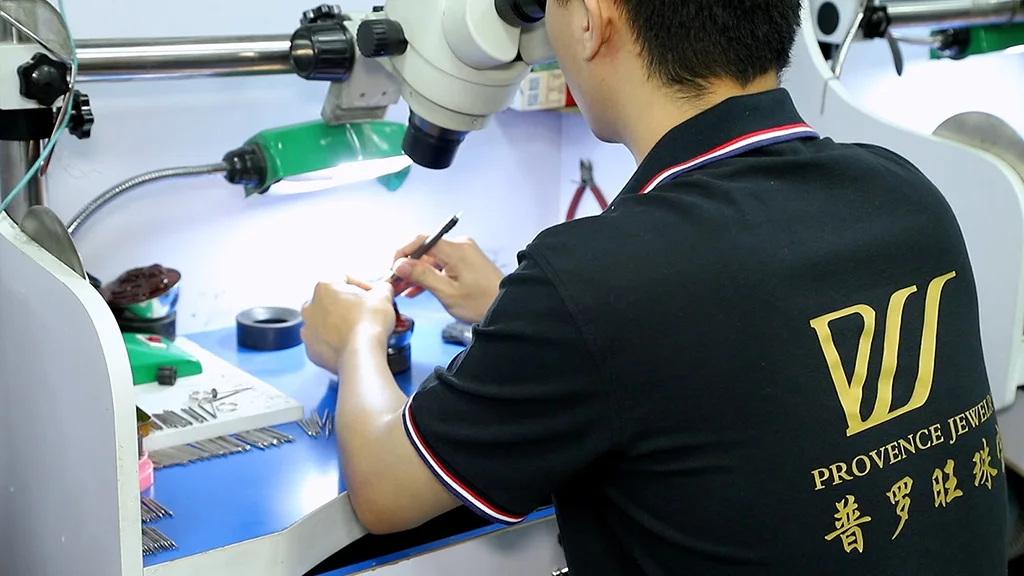
Most sourcing guides tell you to "check reviews and ask for samples." That is table stakes. Here is a more rigorous framework for evaluating a manufacturing partner before you commit:
- Request a production sample — not a showroom sample
Ask the manufacturer to produce a sample from your actual production run setup, using the same materials and processes they would use for your order. Showroom samples are made by their best craftspeople under ideal conditions. Production samples reveal what you will actually receive. If they resist or charge disproportionately for this, note it.
- Ask for current client references in your product category
Not references from three years ago — current ones. A manufacturer's capabilities can change as their client mix, equipment, and workforce evolve. Ask specifically for a brand that produces similar jewellery to yours and, ideally, ships to your target market. Then contact that brand directly.
- Verify hallmarking and assay capability
If you are selling fine jewellery (gold, platinum, or silver above a certain purity in many markets), you may have legal hallmarking requirements. Confirm whether the manufacturer can produce hallmarked goods, or whether you will need to arrange separate assaying and stamping. In the UK and several other markets, hallmarking is a legal requirement for gold and silver above specified weights.
- Get plating thickness in writing — in microns
As noted earlier, "gold plated" is not a specification. Ask specifically: "What is the minimum plating thickness in microns for this product?" A professional manufacturer will give you a number. For everyday jewellery, 0.5–1.0 microns is the minimum for reasonable durability; 2.0–2.5 microns or more is the standard for quality pieces. If they cannot answer this question, do not proceed.
- Review their NDA and IP protection policy before sharing designs
A reputable manufacturer will have a standard Non-Disclosure Agreement they use with new clients. If they do not, draft one before sharing any original designs. The NDA should cover: prohibition on sharing designs with third parties, ownership of CAD files and moulds, and restrictions on producing your designs for other clients. This is not unusual to ask for — it is standard professional practice.
- Ask directly whether they sub-contract any production stages
Some manufacturers handle all production in-house; others sub-contract stone setting, electroplating, or finishing to external workshops. Sub-contracting is not inherently a problem, but it introduces additional quality control variables and potential IP risks. You need to know before you commit so you can factor it into your QC approach.
- Test communication before you need it to matter
Send a detailed, multi-part technical question and measure the response time and quality. Then send a follow-up that requires them to push back or problem-solve. The goal is not just responsiveness — it is to see how they handle complexity and ambiguity before you are mid-production and urgently need answers.
Red flags when choosing a jewelry manufacturer
The jewellery manufacturing industry has more than its share of unreliable operators. Here are the warning signs to watch for during your vetting process:
- They will not sign an NDA before seeing your designs.A professional manufacturer signs NDAs as routine practice. Resistance to this suggests either inexperience or a casual attitude toward your IP.
- They cannot or will not produce a pre-production sample.Skipping sampling is how quality problems end up in your first order. There is no legitimate reason for a proper manufacturer to refuse this step.
- Pricing is vague until after production begins.You should receive a written quote with itemised costs — materials, labour, mould charges, plating — before you approve production. Pricing that only becomes clear later is a setup for unwelcome surprises.
- They use only stock images or trade show photography.Ask to see photos of actual production pieces from recent client orders. A manufacturer doing real, regular production will have plenty of these. Relying exclusively on polished marketing images is a warning sign.
- They cannot specify plating thickness.As covered above, this is a basic technical question. Inability to answer it precisely suggests inadequate quality documentation.
- No hallmarking capability for fine jewellery.If you are selling gold or silver jewellery to markets with hallmarking requirements, your manufacturer needs to support this. Discovering mid-production that they cannot is an expensive problem.
- Pressure to place a large first order immediately.A manufacturer confident in their quality will encourage you to sample first and scale second. Pressure to skip sampling and place a large order upfront is a commercial red flag.
- Vague answers about sub-contracting.If they cannot tell you clearly which stages are in-house and which are outsourced, your quality control process is blind.
- No physical address or verifiable trade credentials.Reputable manufacturers have verifiable physical locations, and many participate in trade events such as JCK Las Vegas, Vicenzaoro, or the Hong Kong Jewellery & Gem Fair. Untraceable suppliers are a significant risk.
Frequently asked questions
It varies significantly. Budget manufacturers often require 300–1,000 pieces per design. However, many small-business-focused manufacturers are far more flexible. Domestic US options like Casting House, MKM Jewelry, Rio Grande, and Custom Fashion Jewels accept single-piece or very low minimum orders. Provence Jewellery, for international OEM production, also starts from 1 piece with flexible scaling. MOQ is always negotiable, particularly on repeat orders once you have an established relationship.
OEM (Original Equipment Manufacturing) means the manufacturer produces jewellery to your design specifications. You own the designs and the resulting intellectual property. Private label means you purchase existing designs from the manufacturer and sell them under your own brand — you do not own the design, but you get to market much faster. See the full comparison in the OEM vs ODM vs private label section above.
A typical timeline from design approval to finished goods is 4–8 weeks for a standard custom order. This includes: CAD design and approval (1–2 weeks), sample production (1–2 weeks), sample approval and revisions (1 week), and production run plus quality control (2–4 weeks). Add 1–2 weeks for sea freight from Asia, or 3–5 days for air freight. Allow more time for highly complex designs or if you are new to working with a manufacturer.
Yes. Most professional manufacturers work from client-supplied design files. Acceptable formats typically include CAD files (e.g., Rhino .3dm, Matrix, JewelCAD), STL files for 3D printing, detailed sketches with measurements and material specifications, or reference imagery with clear written specs. Always sign an NDA before sharing original design files.
The most effective routes are trade shows — JCK Las Vegas is the most important in North America — and industry associations like the Plumb Club, which represents top-tier US jewelry manufacturers. The Los Angeles Jewelry District is the most concentrated hub of US manufacturers and suppliers, with dozens of casting houses, finishing shops, and custom manufacturers within a few blocks. Rio Grande's supplier network and Maker's Row are useful online directories. Referrals from other designers remain the highest-trust sourcing method at any scale.
The most important certification for ethical and quality standards is the Responsible Jewellery Council (RJC) certification, which covers responsible business practices across the supply chain. ISO 9001 covers quality management systems. For gold jewellery, look for manufacturers who can support hallmarking to the standards of your target market (e.g., the UK Assay Office standards, or the Malaysian Customs certification for locally sold gold). Conflict minerals compliance (aligned with the Dodd-Frank Act for US market sales) is also important.
It depends on your priorities. Local manufacturing (US, UK, or within your own country) offers shorter lead times, easier quality control, no import duties, and stronger IP protection frameworks. Overseas manufacturing — particularly in China, India, or Thailand — typically offers significantly lower unit costs (often 40–70% lower) and access to specialist craft skills in specific jewellery categories. Most professional small jewellery brands source from Asia and invest the margin difference into marketing, packaging, and brand building.
Manufacturing costs depend on material, complexity, and order volume. As a rough guide for Asian manufacturing: plated brass fashion pieces start from around USD 3–8 per unit; sterling silver pieces typically range from USD 8–35; solid 14K gold pieces begin around USD 80–160 and rise significantly with design complexity and stone setting. See the full pricing table in the Pricing Guide section above for MYR and SGD equivalents.
Absolutely. Several manufacturers on this list are purpose-built for small businesses. Casting House and MKM Jewelry in the US accept single-piece orders; Custom Fashion Jewels has no minimum for fashion wholesale; Rio Grande supports independent studio makers. Provence Jewellery serves small and growing brands with flexible international OEM production. The key is finding a manufacturer whose minimum order policy and pricing align with your current stage, with the ability to scale as your volume grows.
Ready to manufacture your jewellery collection?
Finding the right jewellery manufacturer for your small business is one of the most important decisions you will make as a brand. The right partner does not just make your products — they make your margins work, protect your designs, and grow alongside you.
Provence Jewellery offers OEM and ODM manufacturing services for fine jewellery brands operating in the United States and other countries. With China-based production expertise, a presence at JCK Las Vegas, and a genuine commitment to working with small and growing brands, we are built for the kind of partnership that scales.
Whether you are launching your first collection, expanding into fine jewellery from fashion, or looking to replace an underperforming manufacturing partner, we would love to hear about your project.
 English