
14K vs 18K Gold: Which One Should You Choose?
- Written by Provence Team
- Updated on June 15, 2026
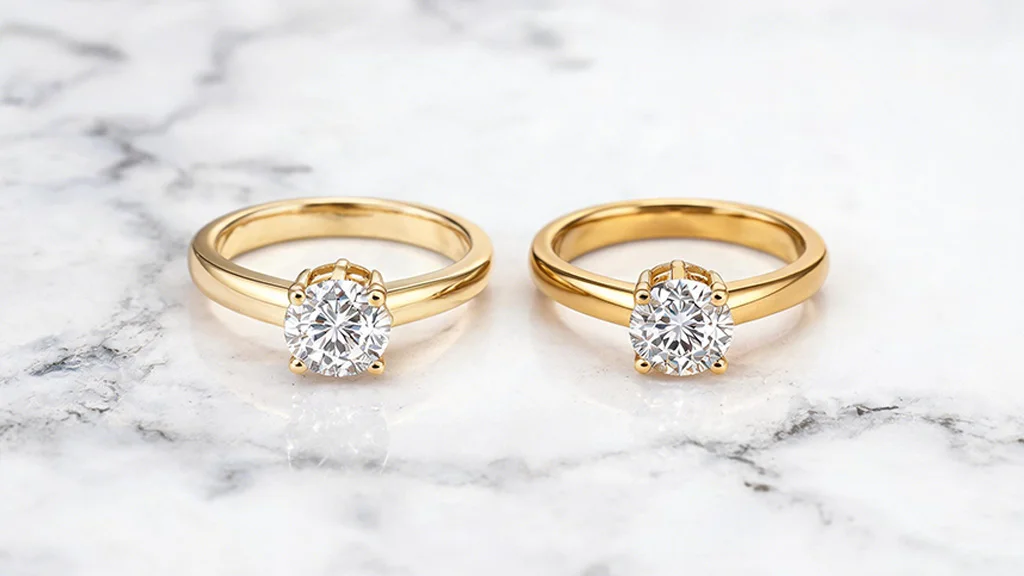
Table of Contents
Choosing between 14K and 18K gold is one of the most common decisions shoppers make when buying an engagement ring or fine jewelry piece. Both are beautiful, both are durable, and both can be excellent choices depending on how the jewelry will be worn.
At Provence Jewelry, we often help customers compare these two options when selecting a ring, necklace, or everyday piece. The short answer is simple: 14K gold is usually the better choice for durability and value, while 18K gold is the better choice for richer color and higher gold content.
In this guide, we will break down the differences in a clear, practical way so you can choose the metal that fits your style, budget, and lifestyle.
What Is the Difference Between 14K and 18K Gold?
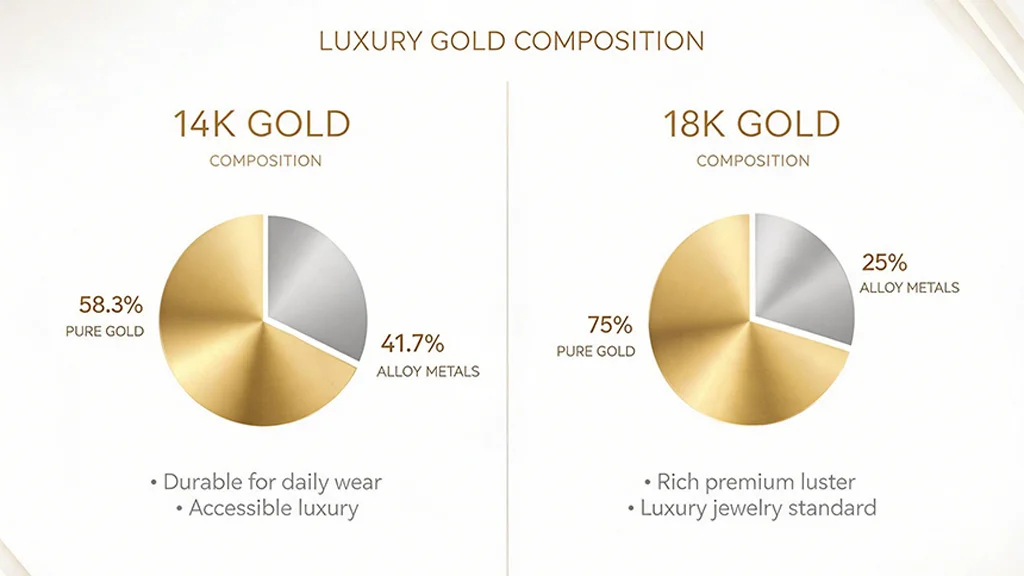
Gold purity is measured in karats. The higher the karat number, the more pure gold the metal contains.
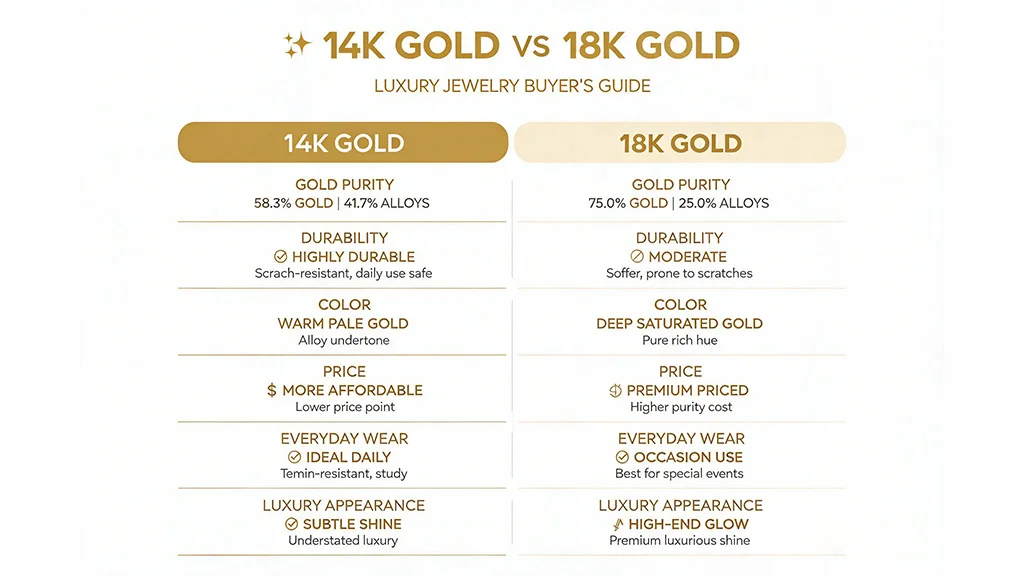
- 14K gold contains 58.3% pure gold and 41.7% alloy metals
- 18K gold contains 75% pure gold and 25% alloy metals
Because pure gold is naturally soft, alloy metals such as silver, copper, nickel, or palladium are added to improve strength, hardness, and color.
That means 14K gold is generally harder and more resistant to daily wear, while 18K gold has a richer, deeper gold color because it contains more pure gold.
14K vs 18K Gold at a Glance
|
Factor |
14K Gold |
18K Gold |
|---|---|---|
|
Gold content |
58.3% |
75% |
|
Durability |
Higher |
Lower |
|
Scratch resistance |
Better |
Good |
|
Color |
Slightly lighter |
Richer and warmer |
|
Price |
More affordable |
More expensive |
|
Daily wear |
Excellent |
Very good |
|
Luxury look |
Subtle |
More pronounced |
|
Sensitive skin |
Good |
Often better |
This table is a helpful starting point, but the best choice depends on how the piece will be worn and what matters most to the wearer.
14K vs 18K Gold Color Comparison
The color difference between 14K and 18K gold is one of the biggest reasons customers choose one over the other.
Yellow Gold
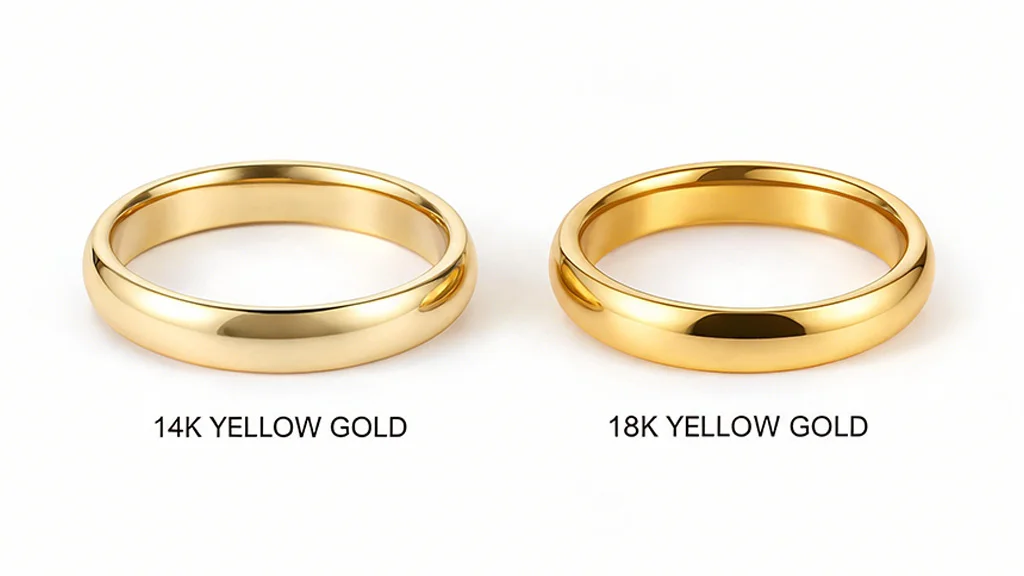
18K yellow gold has a deeper, more buttery tone because it contains more gold. It often looks more luxurious and traditional.
14K yellow gold has a slightly lighter yellow tone. Many people like it because it still feels warm and rich, but is a little more understated.
White Gold
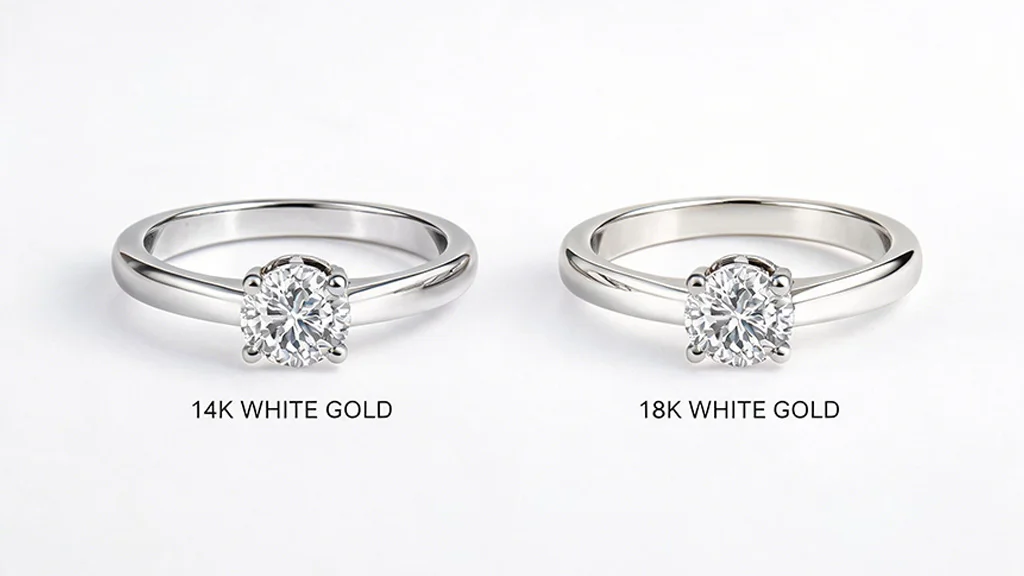
White gold is usually alloyed and finished with rhodium plating to create a bright white appearance. In white gold, the difference between 14K and 18K is usually less dramatic than in yellow gold, but 18K white gold may still feel slightly warmer underneath the plating.
Rose Gold
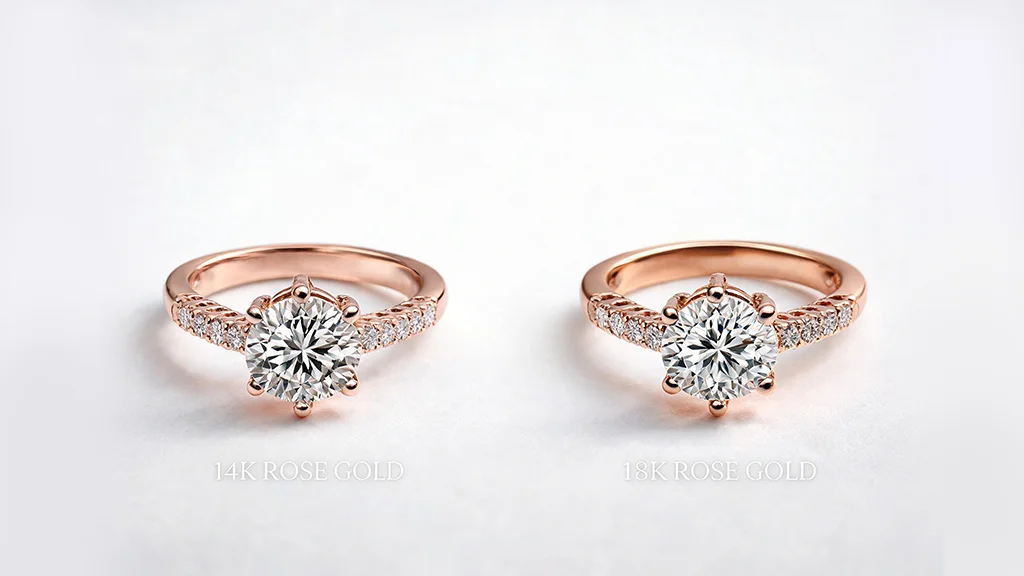
Rose gold gets its pink tone from copper. 18K rose gold tends to have a softer, richer blush color, while 14K rose gold can look a little more copper-forward and slightly less saturated.
If color is important to you, the best way to compare is to view the metals side by side in the same lighting.
Which Gold Is Better for Engagement Rings?
For engagement rings, the best choice often comes down to wearability.
If the ring will be worn every day, 14K gold is usually the more practical option because it is harder and more resistant to scratches and bending. This is especially helpful for rings with prongs, pavé settings, halos, or other delicate details.
18K gold is still a beautiful and popular choice for engagement rings, especially for buyers who prefer a richer yellow gold look or want a higher gold content. It is often chosen for its luxurious appearance and classic feel.
A simple way to decide:
- Choose 14K gold if you want a stronger, more durable ring for daily wear
- Choose 18K gold if you want a deeper gold color and a more premium look
For many buyers, especially those purchasing a lab grown diamond ring, 14K gold offers the best balance of beauty, strength, and value.
14K vs 18K Gold Durability
Gold purity affects durability.
Because 18K gold contains more pure gold, it is softer than 14K gold. That does not mean 18K gold is fragile, but it can show wear more quickly over time, especially on rings that face daily contact with desks, gym equipment, bags, or other hard surfaces.
14K gold is generally better for:
- active lifestyles
- everyday rings
- prong-heavy settings
- pavé and halo designs
- customers who want a lower-maintenance option
18K gold is generally better for:
- special occasion jewelry
- people who prefer a richer gold look
- buyers who prioritize gold content over hardness
If you want a ring that will be worn constantly, especially in a design with small details, 14K gold is usually the safer and more practical choice.
14K vs 18K Gold Price
The price difference is easy to understand: 18K gold costs more because it contains more pure gold.
That higher gold content usually increases the final price of the piece. Depending on the design, the difference may be modest or significant.
For shoppers working within a budget, 14K gold often allows more room to invest in what matters most, such as:
- a larger center stone
- a higher-quality diamond
- a more intricate setting
- a custom design
This is one reason 14K gold is so common in engagement rings and fine jewelry collections.
14K vs 18K Gold for Lab Grown Diamond Rings
If you are choosing a lab grown diamond ring, the metal decision matters just as much as the stone.
Many lab diamond buyers prefer 14K gold because it offers:
- better everyday durability
- strong value for money
- room to invest more budget into the diamond itself
- reliable support for practical, wear-all-day settings
18K gold is still a great choice if the goal is a more luxurious gold tone or a richer finish that complements the diamond.
A good rule of thumb:
- Choose 14K gold when durability and value are the priority
- Choose 18K gold when color depth and premium appearance are the priority
For many customers, 14K gold is the most balanced choice for a lab grown diamond engagement ring.
Which Gold Is Better for Sensitive Skin?
If skin sensitivity is a concern, 18K gold may be a better option because it contains a higher percentage of pure gold and fewer alloy metals.
That said, sensitivity can depend on the exact alloy mix. Some people react to nickel or other metals used in certain gold formulas, so the final result can vary.
If you have very sensitive skin, it is worth asking about the exact metal composition before choosing a piece.
14K vs 18K Gold Around the World
Gold preferences vary by region.
In many markets, especially in North America, 14K gold is very common for engagement rings and everyday fine jewelry. In other regions, including parts of Europe, Asia, and the Middle East, 18K gold is often preferred because customers value the higher gold content and richer color.
That does not mean one is better than the other. It simply reflects different style preferences and jewelry traditions.
Who Should Choose 14K Gold?
14K gold is a strong choice if you:
- wear your jewelry every day
- want better scratch resistance
- prefer a more affordable option
- want to prioritize the diamond or design budget
- live an active lifestyle
- want a classic choice for engagement rings
Who Should Choose 18K Gold?
18K gold is a strong choice if you:
- love the richer color of gold
- want a more luxurious feel
- prefer higher gold content
- are buying a piece for special occasions or lighter wear
- have sensitive skin and want fewer alloy metals
Which One Should You Buy?
If you are still deciding, here is the simplest way to think about it:
- Choose 14K gold if you want a stronger, more practical, more budget-friendly metal for everyday wear
- Choose 18K gold if you want a warmer, richer, more premium gold appearance
For many engagement rings, 14K gold is the smartest all-around choice. For customers who want a more traditional fine-jewelry feel, 18K gold can be worth the upgrade.
When purchasing fine jewelry, consumers should look for accurate karat markings and product disclosures, as recommended by the Federal Trade Commission's Jewelry Guides.
Frequently Asked Questions
It can be, especially if you value a richer color and higher gold content. If durability and budget matter more, 14K gold is often the better value.
Yes, 18K gold is softer than 14K gold, so it can show wear more quickly over time.
Gold itself does not tarnish, but the alloy metals in gold can change appearance over time depending on wear, skin chemistry, and exposure to chemicals.
Often yes, because it contains more pure gold and fewer alloy metals. However, the exact metal mix still matters.
For everyday engagement rings, 14K is usually the more practical option. For richer color and a more luxurious feel, 18K is a beautiful choice.
Both work well, but 14K gold is often chosen for its strength, value, and everyday durability.
Final Verdict: 14K vs 18K Gold
There is no single best choice for everyone.
Choose 14K gold if you want durability, everyday practicality, and better value. Choose 18K gold if you want richer color, higher gold content, and a more premium appearance.
For most engagement rings and everyday fine jewelry, 14K gold is the most versatile option. For buyers who want a more luxurious gold tone, 18K gold is absolutely worth considering.
At Provence Jewelry, we believe the best metal is the one that fits your lifestyle, your design, and your budget.
Still deciding between 14K and 18K gold? Explore Provence Jewelry’s ring collection and find the perfect metal, setting, and diamond combination for your style.
 English