
All Types of Gemstones for Engagement Rings: The 2026 Guide
- Written by Provence Team
- Updated on June 17, 2026
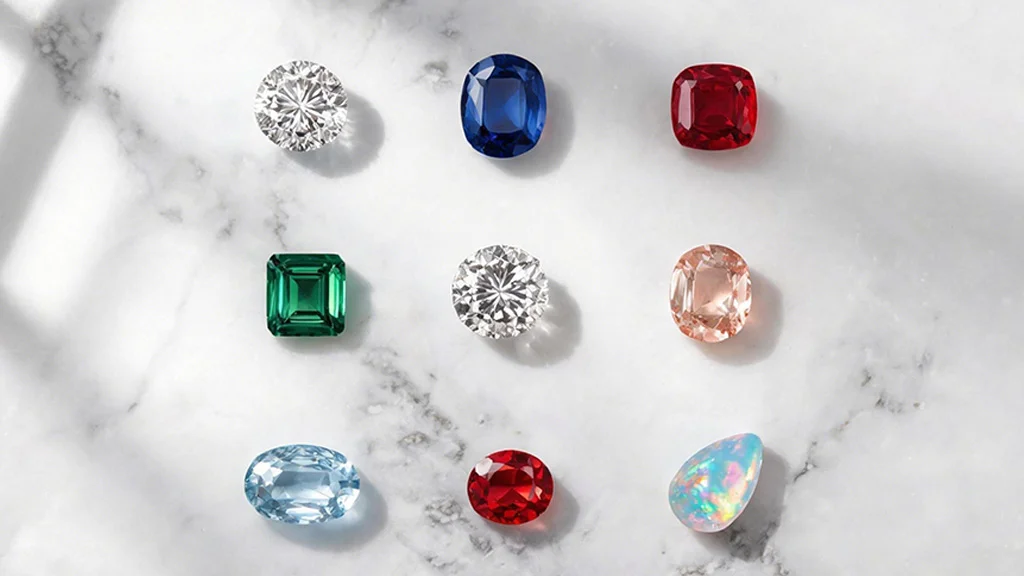
Table of Contents
Diamonds are timeless — but they are no longer the only choice.
Over the past decade, coloured gemstone engagement rings have grown from a niche preference to a mainstream movement. Sapphires, emeralds, rubies, and moissanite now account for a significant portion of engagement ring sales in the US and Europe. Princess Diana's iconic sapphire ring — now worn by the Princess of Wales — sparked a wave of interest that has never really faded. Today's couples want rings that reflect their personality, values, and story, not just tradition.
But choosing a gemstone beyond diamond requires more knowledge than most guides provide. Which stones survive daily wear? Which look beautiful in photos but chip within a year? How much should you actually pay? And if you're a jewellery designer or brand sourcing stones for custom orders, what options are available to you at scale?
This guide answers all of it. We cover 12 gemstone types with full durability data — including hardness AND toughness, the two metrics most guides confuse — plus real USD price ranges, lab-grown availability, setting compatibility, and care requirements. We also include an honest section on which gemstones to avoid for daily-wear rings, and a guide for jewellery brands looking to source gemstones through OEM manufacturing.
At Provence Jewellery, we have manufactured fine gemstone jewellery for wholesale clients across the US, UK, and Europe, and have exhibited at JCK Las Vegas. The guidance in this post comes from direct experience in the trade, not just research.
Whether you are choosing a stone for your own ring or sourcing for a collection, this is the most complete gemstone engagement ring guide published in 2026.
What Makes a Gemstone Suitable for an Engagement Ring?
Not all gemstones are created equal when it comes to daily wear. Before you fall in love with a particular colour or stone, it helps to understand the three properties that determine how a gemstone performs over time.
1. Hardness — Resistance to Scratching
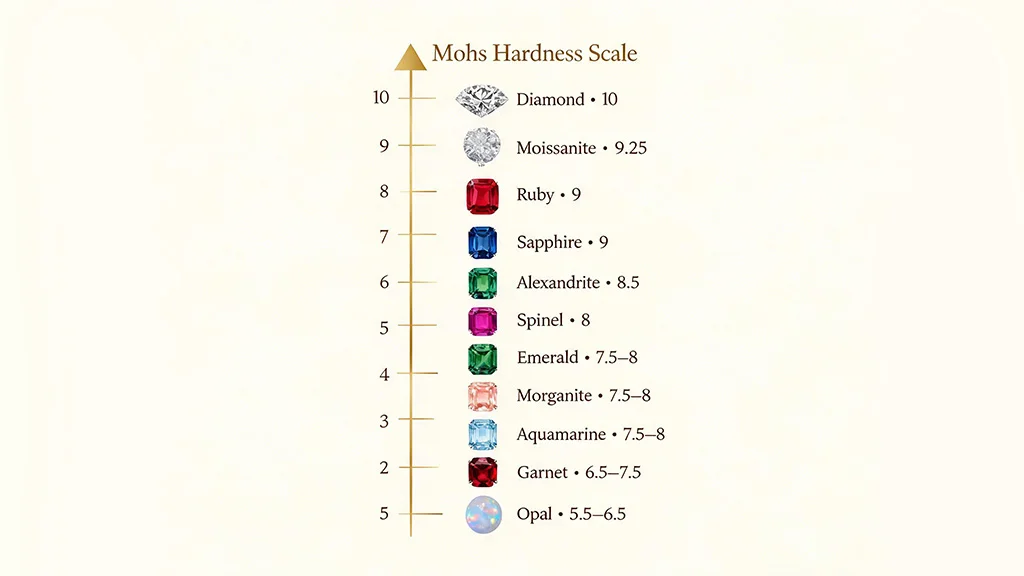
Hardness is measured on the Mohs scale, which runs from 1 (talc, the softest mineral) to 10 (diamond, the hardest). The scale measures how resistant a stone is to surface scratching from everyday materials — dust, sand, and fabric all contain particles that can abrade a soft stone over time.
For an engagement ring worn daily, a minimum Mohs rating of 7 is generally recommended. Below that, the stone will show surface wear relatively quickly. Sapphires and rubies sit at 9, diamonds at 10, and moissanite at 9.25 — all excellent for daily wear.
2. Toughness — Resistance to Breaking and Chipping
This is the metric most guides skip — and it is arguably more important than hardness for a ring worn on your hand every day.
Toughness refers to a stone's ability to resist breaking, chipping, or cracking under impact. A stone can be hard (resistant to scratching) but brittle (likely to chip). Emerald is a perfect example: it sits at 7.5 to 8 on the Mohs scale, which sounds respectable, but almost all emeralds contain natural internal fractures called inclusions (known in the trade as 'jardin', French for garden). These inclusions compromise the stone's structural integrity, making it prone to chipping if knocked firmly against a hard surface.
Conversely, jade ranks only 6 to 7 on the Mohs scale — below the recommended threshold — but has exceptional toughness due to its interlocking crystal structure, making it extremely resistant to breaking.
3. Stability — Resistance to Light, Heat, and Chemicals
Stability refers to how a gemstone holds up against environmental factors: UV light, household chemicals, heat, and moisture.
- Opal absorbs water and can crack with sudden temperature changes (thermal shock).
- Amethyst and kunzite fade in prolonged direct sunlight.
- Emerald requires periodic re-oiling to maintain its appearance, as the oil used to fill inclusions during treatment can dry out over time.
- Pearl degrades with contact to perfume, hairspray, and skin acids.
Understanding all three properties — hardness, toughness, and stability — will help you choose a stone that matches your lifestyle, not just your aesthetic.
Types of Gemstones for Engagement Rings: Full Comparison
The table below summarises the 12 most popular engagement ring gemstones across every dimension that matters for daily wear. This is the most comprehensive comparison available — it is the only publicly available guide to include USD price-per-carat ranges alongside durability data.
|
Gemstone |
Mohs |
Toughness |
USD Price / Carat |
Ideal Lifestyle |
Best Setting |
Lab-Grown Available? |
|---|---|---|---|---|---|---|
|
Diamond (natural) |
10 |
Excellent |
$3,000–$15,000+ |
Very active, daily |
Any |
No |
|
Diamond (lab-grown) |
10 |
Excellent |
$800–$3,000 |
Very active, daily |
Any |
Yes |
|
Moissanite |
9.25 |
Excellent |
$300–$800 |
Active, budget-savvy |
Any |
Always lab-grown |
|
Sapphire (natural) |
9 |
Excellent |
$500–$5,000+ |
Active, daily wear |
Prong, bezel, halo |
No |
|
Sapphire (lab-grown) |
9 |
Excellent |
$100–$600 |
Active, value-focused |
Any |
Yes |
|
Ruby |
9 |
Excellent |
$500–$10,000+ |
Active, bold statement |
Bezel or prong |
Yes |
|
Emerald |
7.5–8 |
Good |
$150–$600 |
Light to moderate |
Bezel or halo |
Yes |
|
Morganite |
7.5–8 |
Good |
$150–$600 |
Light to moderate |
Bezel or halo |
Yes |
|
Aquamarine |
7.5–8 |
Good |
$100–$500 |
Light to moderate |
Bezel or halo |
No |
|
Alexandrite |
8.5 |
Good |
$100–$500 |
Light to moderate |
Bezel or halo |
No |
|
Spinel |
8 |
Good |
$300–$3,000 |
Active, daily wear |
Any |
No |
|
Opal |
5.5–6.5 |
Poor |
$50–$500 |
Occasional only |
Bezel (protective) |
No |
Individual Gemstone Profiles
Each profile below covers the key facts you need to make an informed decision: physical properties, pricing, symbolic meaning, lab-grown availability, care requirements, and which ring settings work best.
1. Diamond (Natural) — The Enduring Classic
Mohs Hardness: 10 — the hardest natural material on Earth
Toughness: Excellent (can cleave along crystal planes under sharp impact, but extremely resistant in normal wear)
Price Per Carat (USD): $3,000–$15,000+ depending on cut, colour, clarity, and carat weight
Symbolic Meaning: Eternal love, strength, clarity, commitment
Lab-Grown Available? No — natural diamonds are mined; see lab-grown diamond profile below
Best Setting: Any — prong, bezel, halo, tension, flush
Ideal For: All lifestyles, especially active daily wear
The natural diamond has held its position at the centre of engagement ring culture for over a century — and for good reason. With a Mohs hardness of 10, it is the hardest material found in nature, making it uniquely resistant to the scratches and abrasion that will dull a softer stone over years of wear. Its combination of hardness, high refractive index, and optical dispersion (the 'fire' that creates rainbow flashes) makes it genuinely difficult to replicate.
Natural diamonds are graded by the four Cs — cut, colour, clarity, and carat weight — and a GIA or IGI certificate provides independent verification of quality. The most popular engagement ring cuts are round brilliant, oval, cushion, and emerald cut.
Pricing varies enormously. A 1-carat round diamond of good quality (G colour, VS2 clarity) typically retails in the US between $5,000 and $8,000. Going up in carat or quality grade pushes prices significantly higher. Lab-grown diamonds offer the same physical properties at a considerably lower price point — see the next profile.
- Care: Clean with warm water, mild dish soap, and a soft brush. Diamonds attract grease and oil from daily handling, so monthly cleaning keeps them looking their best. Although diamonds are extremely hard, they can chip if struck at the right angle against a very hard surface — avoid storing loose diamonds together, as they can scratch each other.
- Ethical note: Ask your jeweller for Kimberley Process certification or choose a supplier with traceable origin documentation. Some buyers prefer Canadian, Botswanan, or Namibian origins for their stronger ethical supply chain standards.
2. Diamond (Lab-Grown) — The Sustainable Alternative
Mohs Hardness: 10 — chemically and physically identical to natural diamond
Toughness: Excellent - same as natural diamond
Price Per Carat (USD): $800–$3,000 (60–75% less than natural equivalent quality)
Symbolic Meaning: Same as natural diamond; increasingly associated with sustainability and modernity
Lab-Grown Available? This is a lab-grown stone by definitiony
Best Setting: Any
Ideal For: All lifestyles; couples who prioritise value and sustainability
A lab-grown diamond is a real diamond. It has the same chemical composition (pure carbon, crystal lattice structure), the same hardness, the same optical properties, and the same range of cuts and grades as a natural diamond. The only difference is origin: lab-grown diamonds are created in controlled environments using either High Pressure High Temperature (HPHT) or Chemical Vapour Deposition (CVD) processes.
The price difference has widened significantly in recent years. A lab-grown diamond of equivalent quality to a $6,000 natural diamond might retail for $1,500 to $2,500 — allowing couples to purchase a larger or higher-quality stone for the same budget. GIA now grades lab-grown diamonds on the same 4C scale as natural stones, making quality comparison straightforward.
One consideration for buyers: lab-grown diamond prices have fallen substantially as production has scaled, which means their resale value is lower than natural diamonds. For most couples, who do not intend to sell their engagement ring, this is irrelevant — but it is worth noting if long-term value matters to you.
- Certification: Look for a GIA or IGI grading report, which will clearly state 'laboratory-grown' on the certificate.
3. Moissanite — Maximum Sparkle, Exceptional Value
Mohs Hardness: 9.25 — the second hardest gemstone used in jewellery
Toughness: Excellent — highly resistant to chipping and breaking
Price Per Carat (USD): $300–$800 (always lab-grown; no natural commercial supply)
Symbolic Meaning: Modern, ethical, brilliant — increasingly associated with conscious luxury
Lab-Grown Available? Always — moissanite is lab-grown by nature for commercial purposes
Best Setting: Any — performs brilliantly in prong, bezel, halo, tension
Ideal For: Active lifestyles, budget-conscious buyers, those wanting maximum brilliance
Moissanite was originally discovered in a meteorite crater in Arizona in 1893 by Nobel Prize-winning chemist Henri Moissan. Natural moissanite is extraordinarily rare — essentially all moissanite used in jewellery is lab-grown silicon carbide, made commercially available since the late 1990s.
Its most notable quality is fire — the dispersion of light into rainbow spectral colours — which actually exceeds that of diamond. Under certain lighting, moissanite produces more dramatic rainbow flashes than an equivalent diamond. To trained eyes, this characteristic sparkle distinguishes moissanite from diamond; for most wearers, it is simply an exceptionally beautiful stone.
At Mohs 9.25, moissanite is harder than sapphire and ruby, and its toughness is excellent, making it genuinely suitable for a lifetime of daily wear. It is also one of the most affordable options for a large, brilliant centre stone — a 2-carat moissanite might cost $600–$1,200, compared with $12,000–$20,000 for a natural diamond of similar size.
- Care: Clean with warm soapy water and a soft brush. Moissanite is stable and resistant to heat, chemicals, and UV light — one of the lowest-maintenance gemstones available.
- Note: Some moissanite shows a slight greyish or yellowish tint under certain lighting conditions, particularly in larger stones. Opt for 'colourless' or 'near-colourless' grades (equivalent to D–H diamond colour) to minimise this effect.
4. Sapphire — Royal, Versatile, Built to Last
Mohs Hardness: 9 — excellent for daily wear
Toughness: Excellent — no cleavage, very resistant to impact
Price Per Carat (USD): $500–$5,000+ (natural); $100–$600 (lab-grown)
Symbolic Meaning: Loyalty, wisdom, nobility, fidelity
Lab-Grown Available? Yes — lab sapphires are physically identical, 60–80% cheaper
Best Setting: Prong, bezel, halo, tension — versatile across all settings
Ideal For: All lifestyles, especially those wanting colour without compromising durability
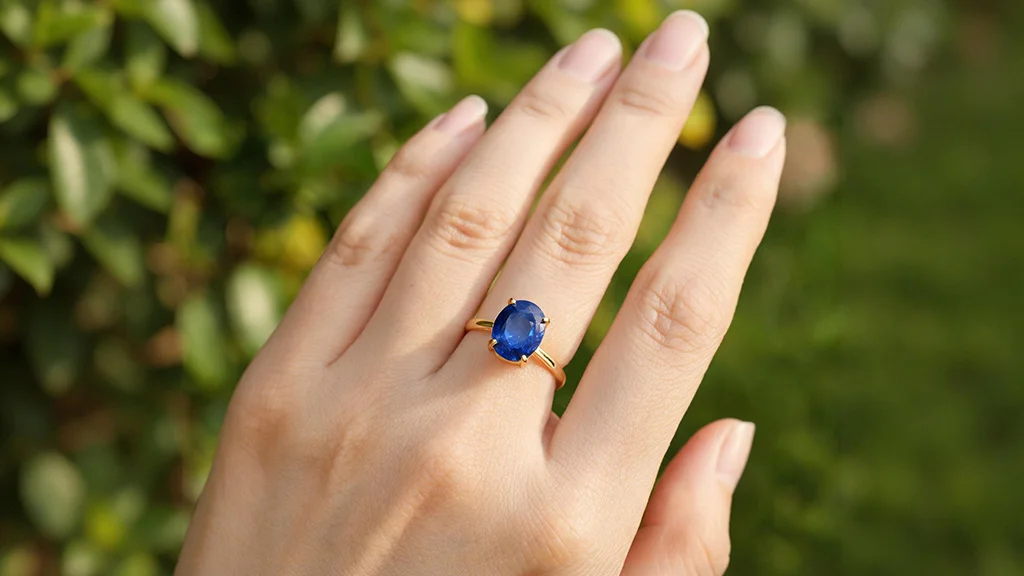
Sapphire is the most popular coloured gemstone for engagement rings, and for good reason. At Mohs 9 and with excellent toughness, it is second only to diamond and moissanite in suitability for daily wear. It also comes in a remarkable range of colours — blue (the classic), pink, yellow, green, teal, purple, orange (padparadscha), and white — making it one of the most versatile gemstones available.
The association between sapphire and royalty is long-standing. In the UK, the blue sapphire is inextricably linked to the royal family — Princess Diana's 12-carat oval Ceylon sapphire ring, now worn by the Princess of Wales, sparked global demand that endures to this day. In the US, sapphires have become the go-to choice for couples who want colour and symbolism alongside serious durability.
Ceylon (Sri Lankan), Kashmiri, and Burmese sapphires are the most prized origins for natural stones. Heated sapphires (heat treatment improves colour and clarity in most stones) are widely accepted and should be disclosed by your jeweller. Unheated sapphires of fine quality command a significant premium.
Lab-grown sapphires offer an excellent value proposition: chemically identical to natural, the same hardness and toughness, at 60–80% of the price. For couples who prioritise durability and colour over natural origin, lab sapphire is one of the smartest choices available.
- Care: Clean with warm soapy water and a soft brush. Sapphires are stable, heat-resistant, and unaffected by most household chemicals. They are among the lowest-maintenance coloured stones.
- B2B note: Provence Jewellery supplies both natural and lab-grown sapphires in custom settings for wholesale clients. Contact us for specifications and minimum order details.
5. Ruby — Passion, Rarity, and Exceptional Durability
Mohs Hardness: 9 — the same mineral family as sapphire (corundum)
Toughness: Excellent
Price Per Carat (USD): $500–$10,000+ (natural, quality-dependent); lab-grown available from ~$200
Symbolic Meaning: Passion, protection, vitality, love — one of the most symbolically powerful gemstones
Lab-Grown Available? Yes — lab rubies are widely available and significantly more affordable
Best Setting: Bezel or prong; yellow gold enhances the warm red tones
Ideal For: Active lifestyles, those who want a bold and deeply meaningful stone
Ruby is one of the 'Big Three' precious coloured gemstones alongside sapphire and emerald, and it shares sapphire's excellent durability — both are varieties of the mineral corundum, sitting at Mohs 9 with excellent toughness. A quality ruby set in a well-designed engagement ring will perform beautifully with daily wear for a lifetime.
What sets ruby apart is its rarity at the high end. Fine quality rubies — vivid red with minimal inclusions and no visible treatment — are among the most valuable gemstones in the world per carat, regularly exceeding diamonds of similar size in price. The most prized rubies come from Myanmar (Burma), with Madagascar, Mozambique, and Sri Lanka also producing highly regarded stones.
Treatment is nearly universal in rubies: heat treatment improves colour and clarity and is widely accepted; fracture-filling (injecting glass or resin into cracks) is more controversial and significantly reduces value. Always ask for treatment disclosure and ideally a GIA or Gübelin certificate for higher-value stones.
Lab-grown rubies offer an ethical, affordable alternative with identical physical properties. For buyers who want the passionate red of ruby without the cost and supply chain concerns of natural stones, lab ruby is an excellent choice.
- Care: Clean with warm soapy water. Avoid ultrasonic cleaners for fracture-filled rubies (the treatment can be damaged). Heat-treated rubies are stable and can generally be cleaned by most methods.
6. Emerald — Unrivalled Green, Requires Careful Handling
Mohs Hardness: 7.5–8
Toughness: Good — most emeralds contain jardin (natural inclusions) that create brittleness
Price Per Carat (USD): $500–$8,000+ (natural); lab-grown from ~$150
Symbolic Meaning: Growth, renewal, loyalty, rebirth; the gemstone of Venus in classical tradition
Lab-Grown Available? Yes Yes — lab emeralds have fewer inclusions and are considerably more affordable
Best Setting: Bezel or halo — edge protection is important for this stone
Ideal For: Occasional wear, or active wear with a protective bezel setting and careful handling
Emerald is one of the most visually striking gemstones ever used in jewellery. Its saturated green — the result of chromium and vanadium trace elements — has no close rival in the gemstone world. Cleopatra famously favoured emeralds; Colombian emeralds remain among the most coveted gemstones on earth.
The caveat with emerald is structural. Almost every natural emerald contains inclusions — the French trade term 'jardin' (garden) is used affectionately to describe the internal landscape of fractures and mineral inclusions that are visible under magnification. These inclusions are not merely cosmetic: they create internal weak points that make the stone susceptible to chipping and cracking under impact. A finger that knocks against a doorframe or countertop with a force that a diamond or sapphire would shrug off can chip an emerald.
This does not make emerald unsuitable for an engagement ring — it makes it unsuitable for a carelessly worn engagement ring. In a protective bezel setting, worn with awareness, an emerald can last beautifully. Many European royal families and celebrities have worn emerald engagement rings with great success.
Lab-grown emeralds are an excellent alternative: they have fewer inclusions than natural stones (improving toughness), are chemically identical, and cost significantly less. For buyers who love the colour but want a more resilient stone, lab emerald in a bezel setting is a practical and beautiful choice.
- Oiling disclosure: Most natural emeralds are treated with cedar oil or synthetic resins to fill surface-reaching fractures and improve clarity. This is industry-standard and accepted, but the oil can dry out over time, requiring re-oiling by a jeweller every few years. Always ask your jeweller whether and how a natural emerald has been treated.
- Care: Warm soapy water only. Never use ultrasonic or steam cleaners — both can damage the oil treatment and worsen existing fractures. Avoid contact with harsh chemicals and extreme heat.
7. Morganite — Romantic Pink, Rose Gold's Perfect Partner
Mohs Hardness: 7.5–8 (beryl family, same as emerald and aquamarine)
Toughness: Good — better than emerald as morganite typically has fewer inclusions
Price Per Carat (USD): $150–$600
Symbolic Meaning: Compassion, love, healing, emotional connection
Lab-Grown Available? Yes, though natural morganite is relatively affordable
Best Setting: Bezel or halo; pairs exceptionally well with rose gold
Ideal For: Light to moderate activity; wearers who love soft, warm colour palettes
Morganite has had one of the fastest rises in engagement ring popularity over the past decade. Its soft peachy-pink hue — the result of trace manganese — and its flattering appearance in rose gold settings have made it the stone of choice for romantics who want something distinctive but approachable.
Named after the American financier and gem collector J.P. Morgan, morganite is a variety of beryl — the same mineral family as emerald and aquamarine — and typically comes from Brazil, Afghanistan, and Madagascar. It is generally more internally clean than emerald, giving it better practical toughness despite the same hardness rating.
At 7.5 to 8 on the Mohs scale, morganite is suitable for daily wear with a degree of care. Surface scratches can accumulate over years if the stone is worn without awareness. A bezel or halo setting provides meaningful edge protection and enhances the stone's appearance by visually enlarging it.
One practical note: morganite's light colour means it shows dirt, oils, and smudges more readily than darker stones. Weekly cleaning with warm soapy water keeps it looking its best.
Care: Warm soapy water and a soft brush. Avoid ultrasonic cleaners. Store separately from harder stones (diamond, sapphire) that can scratch the surface.
8. Aquamarine — Calm, Cool, Coastal
Mohs Hardness: 7.5–8 (beryl family)
Toughness: Good — generally clean inclusions, better toughness than emerald
Price Per Carat (USD): $100–$500
Symbolic Meaning: Calm, clarity, courage, serenity; historically associated with the sea and safe voyages
Lab-Grown Available? Rarely commercially available as lab-grown; natural aquamarine is affordable
Best Setting: Bezel or halo; white gold and platinum enhance the cool blue tones
Ideal For: Light to moderate activity; lovers of cool blue-green palettes; often popular in the UK and Northern Europe
Aquamarine's serene blue-green colour — ranging from pale sky blue to deeper teal — makes it immediately recognisable. It has been associated with the ocean for millennia: ancient sailors believed aquamarine was the treasure of mermaids and carried it for protection at sea. Today it carries a quiet, confident elegance that appeals particularly to buyers in the UK and Northern Europe, where its cool tones complement the light and landscape.
As a beryl variety, aquamarine shares its hardness range with morganite and emerald but is typically more internally clean, lending it good practical toughness. Its affordability means buyers can often obtain a larger, more visually impactful stone within their budget — a 2-carat aquamarine is considerably less expensive than a 2-carat sapphire or ruby.
The most prized aquamarines are deeply saturated blue-green, found primarily in Brazil (particularly the Santa Maria region) and Mozambique. Lighter, paler stones are the most common and the most affordable.
- Care: Warm soapy water. Aquamarine is stable and resistant to light and heat, but avoid harsh chemicals and prolonged steam cleaning.
9. Alexandrite — The Colour-Change Marvel
Mohs Hardness: 8.5 — excellent for daily wear
Toughness: Good — chrysoberyl is one of the toughest gemstones
Price Per Carat (USD): $3,000–$15,000+ (natural fine quality); lab-grown from ~$300
Symbolic Meaning: Duality, transformation, balance between the seen and the unseen
Lab-Grown Available? Yes — lab alexandrite offers the same colour-change at a fraction of the natural price
Best Setting: Bezel or prong; the colour-change effect is best showcased in settings that allow maximum light exposure
Ideal For: Active wearers who want something extraordinary; buyers with a higher budget or who choose lab-grown
Alexandrite is one of the most remarkable gemstones in existence. Discovered in the Ural Mountains of Russia in the 1830s — allegedly on the birthday of Tsar Alexander II, for whom it was named — it exhibits a dramatic colour change: green to blue-green in daylight, shifting to red or purplish-red under incandescent light. This 'emerald by day, ruby by night' quality is unique to alexandrite among major gemstones.
Fine natural alexandrite with a strong, clean colour change is extraordinarily rare and commands prices that rival or exceed top diamonds. Russian alexandrite is particularly prized; other sources include Sri Lanka, Brazil, and East Africa.
Lab-grown alexandrite offers the same optical phenomenon at dramatically lower cost. For couples who want something genuinely unlike anything else — a gemstone that literally changes colour depending on the light — lab alexandrite in a well-designed setting is one of the most distinctive engagement ring choices available.
- Care: Chrysoberyl is stable, heat-resistant, and chemically inert. Clean with warm soapy water or mild ultrasonic. One of the most maintenance-free coloured gemstones.
10. Spinel — The Underrated Gem Beloved by Collectors
Mohs Hardness: 8 — excellent for daily wear
Toughness: Good — no cleavage, highly impact-resistant
Price Per Carat (USD): $300–$3,000+ depending on colour and clarity
Symbolic Meaning: Revitalisation, energy, protection — historically confused with rubies in royal collections
Lab-Grown Available? Rarely — most commercial spinel is natural
Best Setting: Any — its durability suits prong, bezel, and tension settings equally
Ideal For: Active wearers; buyers who want ruby or sapphire aesthetics with a unique story
Spinel is one of the jewellery world's best-kept secrets — and one of its most historically significant gemstones. Many of the famous 'rubies' in royal collections across Europe and Asia have turned out, on modern analysis, to be spinels. The 'Black Prince's Ruby' in the British Imperial State Crown? Spinel. The 'Timur Ruby' in the British Royal Collection? Also spinel. The confusion is understandable: fine red spinel and ruby are visually nearly identical.
What makes spinel particularly interesting for contemporary engagement rings is its durability profile. At Mohs 8 with no cleavage and excellent toughness, it outperforms morganite, aquamarine, and emerald for daily wear resistance. It is available in a remarkable range of colours: vivid red (closest to ruby), hot pink, deep blue (rivalling sapphire), lavender, orange, and black.
Spinel remains relatively affordable compared to ruby and sapphire of equivalent quality, making it an excellent choice for buyers who want vibrant colour, excellent durability, and a gemstone with a fascinating history — without the premium pricing of the 'Big Three'.
Care: Warm soapy water. Stable, heat-resistant, and chemically robust. Very low maintenance.
Gemstones to Avoid (or Wear With Caution)
The following gemstones appear frequently in engagement ring inspiration content — on Pinterest, Instagram, and bridal blogs — but come with significant durability or stability limitations for rings worn daily. They are beautiful stones. They simply need to be worn with clear expectations.
Tanzanite — Mohs 6–7, Brittle
Tanzanite is visually stunning: its vivid violet-blue colour, found only in a small mining area near Mount Kilimanjaro in Tanzania, is unlike anything else. But at Mohs 6 to 7 with low toughness (it has two distinct cleavage directions, making it prone to chipping along crystal planes), it is genuinely ill-suited for daily wear on a finger. If you must have tanzanite in an engagement ring, a full protective bezel in yellow gold and a commitment to removing the ring before any physical activity are essential.
Pearl — Mohs 2.5–4.5, Very Soft
Pearl has appeared on engagement rings in editorial shoots and is experiencing a revival in bridal jewellery. But at Mohs 2.5 to 4.5, pearl is one of the softest materials used in fine jewellery and will scratch from dust, fabric, and almost any surface contact within weeks of daily wear. Additionally, pearl is sensitive to acidic environments — perspiration, perfume, and cosmetics gradually degrade the nacre. Pearl earrings, pendants, and bracelets are excellent. Pearl engagement rings are sentimental choices that demand very careful handling or occasional wear only.
Kunzite — Fades in UV, Prone to Cleaving
Kunzite's delicate lilac-pink colour is genuinely enchanting, but it has two significant weaknesses: its colour fades in prolonged sunlight (it is sometimes called an 'evening stone' for this reason), and it has perfect cleavage in two directions, making it prone to splitting under impact. A ring worn outdoors in sunlight on a daily basis will lose its colour over time.
Turquoise — Porous, Fades, Reacts to Chemicals
Turquoise is culturally significant and visually striking — it has been used in jewellery for over 7,000 years across Native American, Persian, Egyptian, and Chinese traditions. But at Mohs 5 to 6, it is too soft for daily ring wear and its porous surface absorbs oils, cosmetics, and cleaning products, causing discolouration over time. Reserve turquoise for pendants, earrings, and bracelets where wear conditions are gentler.
Ring Setting Compatibility Guide
The setting you choose affects not just the look of your ring — it directly determines how much protection your gemstone receives from daily wear. Softer or more brittle stones need settings that protect their edges; harder stones can be shown off in more open, light-maximising settings.
|
Setting Type |
Best For |
Avoid For |
Key Benefit |
|---|---|---|---|
|
Prong / Claw |
Diamond, sapphire, ruby, moissanite |
Emerald, opal, tanzanite |
Maximum light, maximum sparkle |
|
Bezel |
All stones, especially softer ones |
Nothing — universal |
Full edge protection |
|
Halo |
Emerald, morganite, aquamarine |
Very delicate/porous stones |
Adds visual size, some protection |
|
Tension |
Diamond, sapphire, moissanite (9+) |
Any stone below Mohs 9 |
Modern look, high drama |
|
Flush / Gypsy |
Any stone, active lifestyles |
Very large centre stones |
Most protective setting available |
Setting Recommendations by Stone
- Diamond, moissanite, sapphire, ruby (Mohs 9+): Any setting. These stones can handle the exposure of an open prong setting and still survive decades of wear. Tension settings — which hold the stone by compression rather than prongs or a bezel — should only be used for stones above Mohs 9.
- Alexandrite, spinel (Mohs 8–8.5): Prong, bezel, or halo. All three settings work well. For maximum colour-change visibility in alexandrite, settings that allow light from multiple angles are preferable.
- Emerald, morganite, aquamarine (Mohs 7.5–8, lower toughness or active lifestyle): Bezel or halo recommended. The bezel's full metal surround protects the stone's girdle (its widest point, most vulnerable to chipping). A halo of smaller diamonds adds visual protection and makes the centre stone appear larger.
- Opal, turquoise, pearl (Mohs below 7): Bezel only — a full, protective bezel setting in a substantial metal gauge. Even then, the recommendation is occasional wear only.
Lab-Grown Gemstones: What You Need to Know
Lab-grown gemstones have moved from a niche market to a mainstream option over the past decade — and in many stone categories, they represent the best combination of quality, ethics, and value available.
What 'Lab-Grown' Actually Means
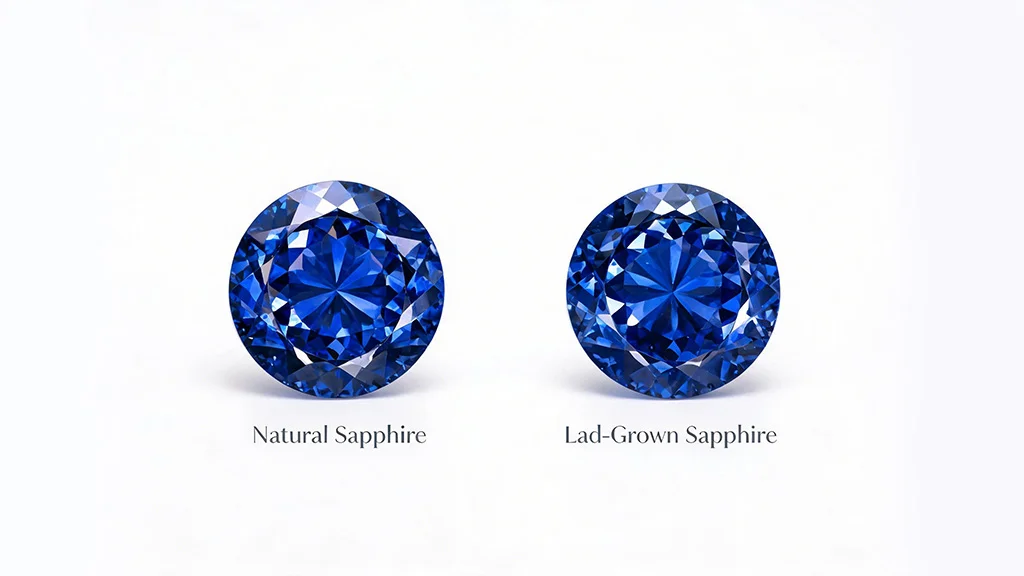
A lab-grown gemstone is created in a controlled laboratory environment using processes that replicate the conditions under which natural gemstones form in the earth. The resulting stones have the same chemical composition, crystal structure, hardness, and optical properties as their natural counterparts. They are real gemstones — not simulants, not fakes. The difference is origin, not quality.
Simulants (such as cubic zirconia, white sapphire, or glass) are different: they resemble a target gemstone visually but do not share its properties. A lab-grown sapphire is a real sapphire. A CZ is not.
Lab-Grown Options by Stone
- Lab diamond: Widely available. GIA and IGI certified. 60–75% less expensive than equivalent natural quality. Recommended for buyers who want diamond properties without the natural diamond premium.
- Lab sapphire: Widely available in all colours. 60–80% less expensive than natural. Excellent choice — same Mohs 9, same toughness, essentially indistinguishable without specialist equipment.
- Lab ruby: Widely available. Same corundum properties as natural ruby. Significantly more affordable than fine natural ruby.
- Lab emerald: Typically has fewer inclusions than natural emerald, which actually improves toughness. A meaningful advantage over natural emerald for a daily-wear ring.
- Lab alexandrite: Offers the full colour-change phenomenon at a fraction of natural alexandrite pricing — a genuinely accessible option for this extraordinary stone.
- Moissanite: Always lab-grown for commercial purposes. Not a lab version of another stone — moissanite is its own mineral, silicon carbide.
Ethical and Sustainability Considerations
Lab-grown gemstones avoid the environmental and social impacts of mining — no land disturbance, no communities displaced, no conflict mineral concerns. However, energy consumption during production is significant: HPHT and CVD processes are energy-intensive, and the sustainability profile depends largely on whether the production facility uses renewable energy.
For buyers with strong ethical priorities, lab-grown is the cleanest choice. For those who want natural but ethically sourced, look for Fairtrade certified gold settings, Kimberley Process diamond certification, and suppliers with transparent, traceable gemstone sourcing.
Sourcing Gemstones for Your Jewelry
This section is written for jewellery designers, brand founders, and wholesale buyers who are sourcing gemstones for their own collections or client orders. If you are an individual buyer choosing a personal engagement ring, you are welcome to read on — but the sections above are specifically written for you.
Why Gemstone Choice Matters at Scale
For jewellery brands, gemstone selection is not just an aesthetic decision — it is a commercial, operational, and brand positioning decision. The gemstones you specify affect production lead times, quality control requirements, pricing structures, and the customer service burden that comes with stones that wear poorly.
Our experience across years of OEM manufacturing for US, UK, and European clients has taught us the following:
- Sapphire (lab or natural) is the most versatile commercial coloured gemstone. Its hardness and toughness minimise post-sale issues, its colour range satisfies almost any brief, and lab-grown supply is consistent and well-priced.
- Moissanite has the lowest complaint rate of any diamond alternative we work with. Its durability essentially eliminates wear-related issues.
- Emerald requires detailed care disclosure at point of sale. Brands that sell emerald engagement rings without communicating the fragility and care requirements generate disproportionate post-purchase customer service.
- Morganite benefits from protective settings (bezel/halo) specified in the design brief. An open prong morganite in a high-wear market generates more returns than a bezel-set morganite.
Provence Jewellery OEM/ODM Gemstone Capabilities
- Natural gemstones: Sapphire, ruby, emerald, aquamarine, morganite, spinel, garnet, alexandrite — sourced with full origin documentation.
- Lab-grown gemstones: Lab diamond, lab sapphire, lab ruby, lab emerald, moissanite — with certification from GIA, IGI, or GFCO.
- Custom settings: Any stone can be specified with setting type, metal, and finish tailored to your brand's design language.
- Minimum orders: Flexible MOQ available for emerging brands and independent designers. Contact our team for specifics.
Market expertise: We have exhibited at JCK Las Vegas and work with clients across the US, UK, and Europe. We understand market expectations in each region.
Frequently Asked Questions
Diamond is the most durable at Mohs 10. For daily wear, diamond, moissanite (Mohs 9.25), and sapphire or ruby (Mohs 9) are the top three choices. All three combine excellent hardness with good to excellent toughness, making them genuinely suited to a lifetime of daily wear.
Hardness (measured on the Mohs scale) is resistance to scratching. Toughness is resistance to breaking or chipping under impact. A stone can be hard but brittle — emerald is a perfect example. For a ring worn daily, you need both: high hardness to resist surface wear, and good toughness to survive knocks and impacts.
Yes — sapphire is one of the best coloured gemstone choices for an engagement ring. At Mohs 9 with excellent toughness, it is second only to diamond and moissanite in daily wear suitability. It is available in blue, pink, yellow, green, and many other colours, and lab-grown sapphires offer the same properties at 60–80% lower cost.
Yes. Lab-grown gemstones are chemically and physically identical to natural stones. A lab-grown sapphire is a real sapphire — the same Mohs 9 hardness, the same crystal structure, the same optical properties. The only difference is origin: lab-grown in a controlled environment rather than mined from the earth. They are not the same as simulants such as cubic zirconia, which merely resemble another stone without sharing its properties.
Moissanite offers extraordinary brilliance (actually more fire than diamond) at $300–$800 per carat, making it the best value option for a large, brilliant centre stone. For colour, lab-grown sapphire ($100–$600 per carat), garnet ($50–$500 per carat), and aquamarine ($100–$500 per carat) offer genuine beauty at accessible price points. Lab-grown gemstones across all categories typically cost 60–80% less than their natural equivalents.
For daily-wear rings, avoid opal (Mohs 5.5–6.5, porous, sensitive to temperature change), pearl (Mohs 2.5–4.5, extremely soft), tanzanite (Mohs 6–7, brittle with two cleavage directions), and kunzite (fades in sunlight, prone to cleavage). These stones are beautiful but require either very careful handling or occasional-only wear. For any stone below Mohs 7, a protective full-bezel setting is strongly recommended.
The Mohs hardness scale ranks minerals from 1 (softest) to 10 (hardest) based on their resistance to scratching. For engagement rings worn daily, a minimum score of 7 is generally recommended — below that, dust and everyday materials will scratch the stone's surface over time. Common household dust contains quartz (Mohs 7), which means any stone below 7 will show surface abrasion from environmental dust alone.
Yes. Provence Jewellery offers fully custom OEM/ODM engagement rings with any of the gemstones covered in this guide — natural or lab-grown, in any setting style and metal. For individual buyers, contact our team for a custom consultation. For jewellery brands and wholesale buyers, request our B2B catalogue for minimum order information and capabilities.
Final Thoughts
The right gemstone for an engagement ring is not a universal answer — it is the intersection of your lifestyle, your values, your budget, and what you find genuinely beautiful.
If you wear your ring every day through an active life, choose diamond, moissanite, or sapphire. If you love colour and want excellent durability, sapphire and ruby are hard to beat. If you prioritise ethics and value, lab-grown stones — from lab sapphire to moissanite to lab emerald — deliver every aesthetic quality at a fraction of natural pricing. If you want something unlike anything else, alexandrite or spinel will reward you with a stone that very few people have chosen.
And if you fall in love with an emerald or an opal despite their fragility — choose them anyway, with a protective setting and a willingness to care for what you love. The most meaningful rings are the ones chosen with real knowledge, not just convention.
Provence Jewellery manufactures fine gemstone engagement rings for both individual clients and wholesale jewellery brands across the US, UK, and Europe. We work with natural and lab-grown gemstones, offer full material transparency, and have exhibited at JCK Las Vegas as a trusted OEM/ODM partner.
 English