
White Gold vs Silver: Which Metal is Worth It in 2026?
- Written by Provence Team
- Updated on June 29, 2026
Table of Contents
Most "white gold vs silver" guides treat the price gap between these two metals as fixed. White gold is the expensive one. Silver is the budget pick. That’s been true for so long nobody bothers to check it anymore.
In 2026, it stopped being true — at least temporarily, and in a way that matters if you’re buying jewelry right now. Silver hit an all-time high of $121.62 an ounce in January 2026, more than double what it cost a year earlier. It’s since corrected, trading in the high $50s to low $60s through June, but it’s still running over $20 an ounce above last year’s price. Gold, by comparison, has held comparatively steady near $4,000–$4,300 an ounce over the same stretch.
That doesn’t flip silver into the "expensive" metal — gold’s price per gram still dwarfs silver’s. But the gap has narrowed more than most shoppers realize, and the usual "silver is cheap, white gold is an investment" framing deserves a second look before you decide. The rest of this guide covers the comparison the way every other one does — composition, durability, care, allergies — but starts from the one section nobody else has: what 2026’s metals market actually means for your decision.
What Is White Gold?
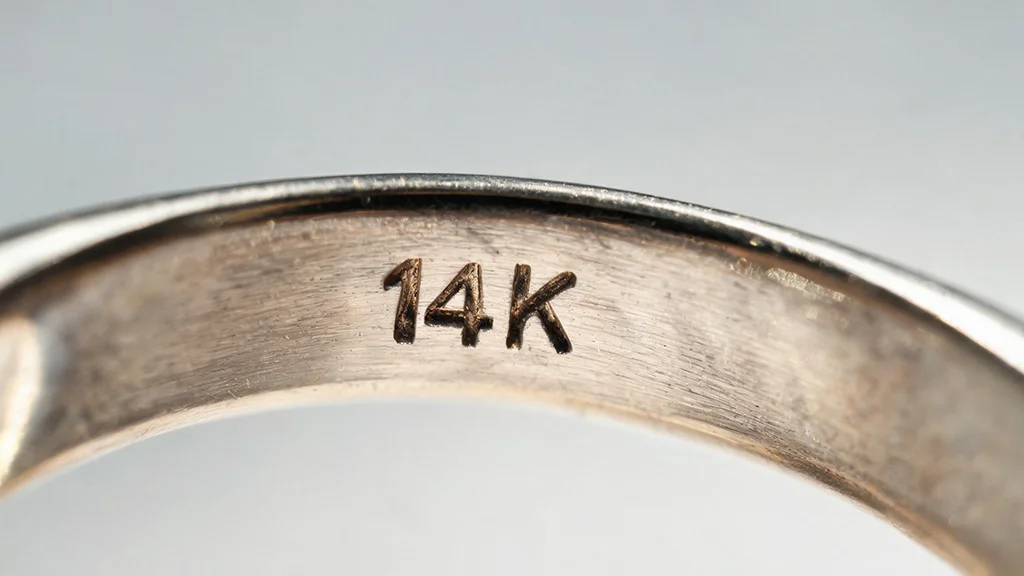
White gold isn’t a metal that occurs naturally — it’s yellow gold alloyed with white metals to shift its color. The two most common alloying metals are palladium and nickel, sometimes with a small amount of silver or zinc mixed in. Most white gold jewelry then gets a final layer of rhodium plating, a rare platinum-group metal that gives the piece its bright, mirror-like white finish and adds a measure of scratch resistance.
Purity is measured in karats:
14K white gold contains 58.3% pure gold, alloyed with 41.7% other metals. It’s harder and more practical for daily wear.
18K white gold contains 75% pure gold. It’s softer and, without rhodium plating, shows a faint warm tint — but it’s prized for higher-end settings.
Without the rhodium top coat, white gold on its own is closer to pale champagne than true white. The rhodium is doing more visual work than most buyers assume.
What Is Sterling Silver?
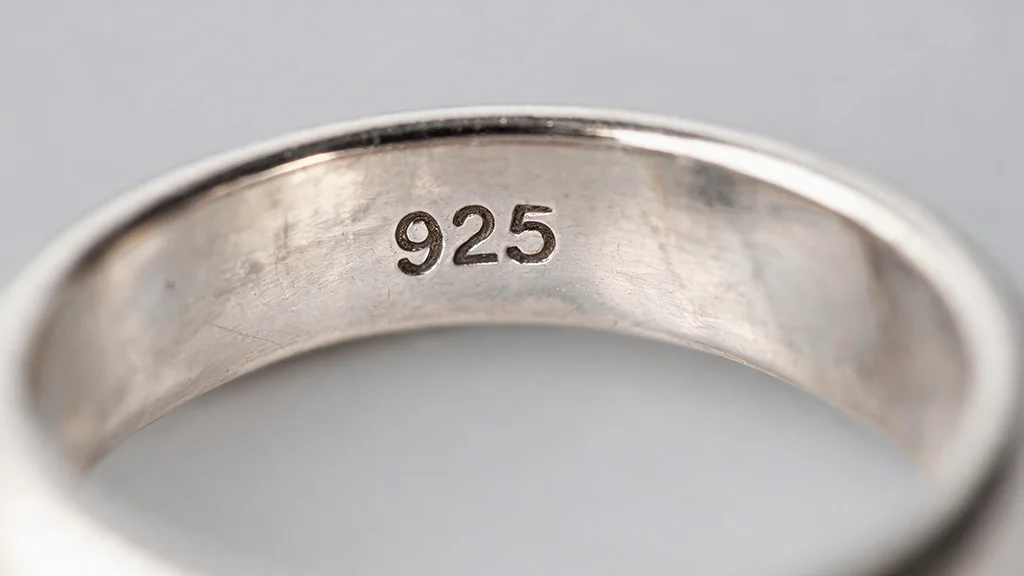
Sterling silver is an alloy of 92.5% pure silver and 7.5% other metal — almost always copper. The "925" stamp on silver jewelry isn’t decorative; it’s a purity hallmark, and a piece needs to meet that threshold to legally carry the sterling designation.
Pure silver (sometimes called fine silver, marked 999) is too soft to hold its shape in rings, clasps, or chain links that see daily movement. Copper gives sterling silver the structure it needs while keeping the silver content high enough to retain real, tradeable value — silver is a precious metal in its own right, not a filler.
Quick Comparison: White Gold vs Silver
|
Feature |
White Gold |
Sterling Silver |
|---|---|---|
|
Composition |
Gold alloyed with palladium or nickel, rhodium plated |
92.5% silver, 7.5% copper |
|
Color |
Bright, mirror-white (from rhodium) |
Cooler, slightly grayish-white |
|
Hallmarks |
10K, 14K, 18K, or 750 / 585 / 417 |
925, Sterling, or 999 |
|
Durability |
Harder, more scratch-resistant |
Softer, more prone to scratching and bending |
|
Tarnish |
Doesn't tarnish; rhodium wears instead |
Tarnishes with air/moisture exposure |
|
Maintenance |
Rhodium replating every 1–3 years |
Regular polishing |
|
Price (2026) |
Higher — priced on gold content |
Lower per gram, but the gap has narrowed in 2026 |
|
Best for |
Engagement rings, daily-wear fine jewelry |
Fashion jewelry, statement pieces, larger or experimental designs |
The 2026 Price Reality Check
This is the section every other "white gold vs silver" guide skips, and it’s the most useful one if you’re buying this year.
What actually happened to silver in 2026. Silver entered a sixth consecutive year of global supply deficit, with the Silver Institute projecting a shortfall of more than 46 million ounces against total demand running past a billion ounces. That structural shortage, combined with a wave of investment buying, pushed silver to a record $121.62 an ounce in late January 2026. It’s since pulled back sharply — trading in the high $50s through most of June — but even after that correction, it remains roughly 60% higher than it was a year prior.
What this means in practice. Silver is still the more affordable metal by a wide margin — gold trades at well over 60 times the price of silver per ounce even after the correction. A sterling silver chain or pair of earrings is still dramatically cheaper than the equivalent piece in 14K or 18K white gold. But the cushion has shrunk. If you bought a silver piece in 2024 expecting a certain price point, the same design today costs meaningfully more in raw material terms, even though it’s still the cheaper of the two metals on the table.
Why this matters for your buying decision. If your reason for choosing silver was purely "it’s the cheap option," it’s worth re-running that math in 2026 rather than assuming the old price gap still holds. If your reason for choosing white gold was "it holds value," 2026 has been a stronger argument for that than usual — both metals have appreciated, but gold’s climb has been steadier than silver’s spike-and-correction pattern.
Neither point changes the fundamental case for either metal — durability, allergies, and maintenance still matter more than a single year’s commodity cycle for a piece you’ll wear for a decade. But going into a purchase with current numbers, rather than the assumption that silver is always "the budget metal," is the difference between an informed decision and an outdated one.
Durability & Everyday Wear
White gold is the harder of the two metals, and it holds up better under daily friction. The gold-and-palladium or gold-and-nickel alloy is denser and more scratch-resistant than sterling silver, and the rhodium plating adds a further layer of protection — at least until that plating wears thin.
Sterling silver is naturally softer. It scratches more easily and can bend slightly under pressure in thinner designs. This isn’t a flaw so much as a tradeoff: softer metal also means silver is easier and cheaper to repair, resize, and rework than gold alloys.
Where this matters most: a ring worn 24/7 — an engagement ring, a wedding band — sees more cumulative wear than almost any other piece of jewelry. White gold’s added hardness earns its keep there. For pieces worn occasionally, like statement earrings or an evening necklace, the durability gap matters much less, and sterling silver holds up just fine.
Color, Shine & How to Tell Them Apart
Side by side, white gold and silver can look nearly identical to an untrained eye — which is exactly why this comparison keeps coming up. A few reliable ways to tell them apart:
Hallmarks. This is the most reliable method. White gold is stamped 10K, 14K, 18K, or with the European equivalents 417, 585, or 750. Sterling silver is stamped 925, "Sterling," or sometimes 999 for fine silver. There’s no such thing as "925 white gold" — if a piece is stamped 925, it’s silver, full stop, regardless of what the listing calls it.
Color and shine. Freshly rhodium-plated white gold has a brighter, more mirror-like shine than silver. But here’s the twist most guides don’t mention: sterling silver is often the shinier metal in person, especially compared to white gold whose rhodium plating has started to wear. If you’re picturing an ultra-bright, high-contrast white shine, there’s a real chance the image in your head is closer to silver than to white gold.
Weight. White gold is denser and noticeably heavier than silver in a piece of the same size, thanks to gold’s higher atomic weight.
Patina over time. Silver develops a natural patina with age — some people like the character it adds, others prefer to polish it away. White gold doesn’t develop a patina, but it’ll show a warmer, more golden cast as rhodium plating wears down, before eventually needing replating.
Care & Maintenance
White Gold Care
- Avoid harsh chemicals, chlorine, and bleach, which degrade rhodium plating faster
- Clean with mild soap, warm water, and a soft brush
- Plan for professional rhodium replating roughly every 1 to 3 years, depending on wear
- Store separately from other jewelry to avoid surface scratching
Sterling Silver Care
- Polish regularly with a silver cloth to remove tarnish
- Store in an anti-tarnish pouch or airtight container when not worn
- Avoid prolonged contact with perfume, lotion, and chlorinated water
- Counterintuitively, frequent wear can slow tarnishing — the natural oils in skin create a light protective barrier
Neither metal is maintenance-free. White gold trades more frequent at-home care for occasional professional upkeep; silver trades occasional professional upkeep for more frequent at-home care.
Allergies & Skin Sensitivity
This is where geography genuinely changes the answer, and it’s a section most jewelry guides gloss over.
In the United States, white gold alloys can legally use nickel as the primary bleaching agent, and many budget and mid-range pieces still do. Nickel is one of the most common causes of contact dermatitis, and the U.S. has no federal restriction on nickel content in jewelry comparable to Europe’s.
In the European Union, this is regulated directly. The EU’s Nickel Directive — now folded into the REACH Regulation as Annex XVII, Entry 27 — restricts how much nickel can be released from any item in prolonged contact with skin, including rings, earrings, bracelets, and necklaces. The limit is 0.5 micrograms per square centimeter per week for general jewelry, and a stricter 0.2 micrograms per square centimeter per week for items inserted into piercings. Compliance is tested using the EN 1811 standard, which simulates a week of skin contact using an artificial sweat solution.
The practical result: nickel-bleached white gold has been almost entirely phased out of new jewelry production for the European market, replaced by palladium-bleached white gold, which achieves the same bright white tone without the same allergic response. Palladium costs more than nickel, which is part of why EU-compliant white gold can carry a slightly higher production cost than its U.S. counterpart — but it removes one of white gold’s most common drawbacks entirely.
Sterling silver, by contrast, is generally well tolerated even by people with sensitive skin, since the alloying metal is typically copper rather than nickel. Reactions are possible but considerably less common than with nickel-bleached white gold.
If you have a known nickel allergy and are buying outside the EU, ask specifically whether the white gold piece is palladium-alloyed rather than nickel-alloyed — it’s a one-sentence question that can prevent months of irritation.
From the Bench: How Manufacturing Affects Quality
Everything covered so far assumes the white gold or silver in question is made well. That assumption does a lot of quiet work, and it’s worth pulling apart.
Alloy consistency. Both metals are defined by ratios — 75% gold to 25% alloy at 18K, 92.5% silver to 7.5% copper at sterling — but ratios on paper and ratios in the melt aren’t automatically the same thing. Inconsistent alloying produces pieces that are technically within spec on a hallmark but inconsistent in hardness, color, and how evenly they take rhodium plating from batch to batch. Working directly with a manufacturer, rather than further down a multi-layer supply chain, gives more control over input quality, not just the finished look.
Rhodium plating thickness and adhesion. A thin or unevenly applied rhodium layer wears through in months instead of years, regardless of how good the underlying alloy is. Plating thickness is a manufacturing decision, not a metal-composition one — two pieces stamped identically as 14K white gold can have very different real-world lifespans based on this alone.
Nickel-free verification. For brands selling into the EU or UK, confirming palladium-alloyed white gold isn’t a matter of trusting a label — it requires documentation from the alloy supplier or independent EN 1811 testing. This is a sourcing and quality-control question as much as a design one, and it’s a meaningfully different conversation with a manufacturer who controls the alloying process directly than with one further removed from it.
None of this is visible in a finished photo of a ring. It shows up six months or two years into ownership, in how the piece wears, scratches, and ages — which is exactly why "who actually made this and how" is a fair question for any buyer to ask.
Which Should You Choose?
There’s no universal right answer — only a better fit for what you’re buying and how you’ll wear it.
Choose White Gold If:
- You’re buying an engagement ring, wedding band, or anything worn daily for years
- You want the brightest possible white finish and don’t mind occasional professional replating
- You have a nickel allergy and are buying EU-compliant, palladium-alloyed white gold
- You want a metal with durable resale and intrinsic material value
Choose Sterling Silver If:
- Budget is the deciding factor, even accounting for 2026’s tighter price gap
- You’re buying fashion jewelry, statement pieces, or something worn occasionally rather than daily
- You want to build a varied collection without a large per-piece investment
- You like the idea of a natural patina rather than a finish that needs maintaining
Choose neither, consider platinum if: durability and hypoallergenic properties matter most and budget isn’t the primary constraint — platinum solves the rhodium-wear problem entirely, at a higher price point than either option here.
Frequently Asked Questions
Neither is objectively better — they suit different needs. White gold is more durable and holds up better for daily wear like engagement rings; silver is more affordable and better suited to fashion pieces or jewelry worn less frequently.
Neither is objectively better — they suit different needs. White gold is more durable and holds up better for daily wear like engagement rings; silver is more affordable and better suited to fashion pieces or jewelry worn less frequently.
Yes, white gold remains more expensive, since it’s priced on gold content. 2026’s silver price increase has narrowed the gap somewhat compared to recent years, even though gold still trades at a significant multiple of silver’s price.
No. White gold doesn’t tarnish or oxidize. Its rhodium plating wears down gradually instead, eventually revealing a warmer tone underneath that can be restored with replating. Silver tarnishes through oxidation but can be polished back to its original shine.
Not always, and not reliably. Hallmarks are the definitive method — look for 10K/14K/18K or 750/585/417 on white gold, and 925, Sterling, or 999 on silver.
It depends on the alloy. Sterling silver is generally well tolerated since it’s typically alloyed with copper. White gold can trigger nickel allergies if nickel-alloyed. EU-sold white gold is overwhelmingly palladium-alloyed due to the Nickel Directive, making it a safer choice than nickel-alloyed white gold sold elsewhere.
A sustained global supply deficit — silver’s sixth consecutive shortfall year — combined with strong investment demand pushed prices to a record high of $121.62 an ounce in January 2026. Prices have since corrected to the high $50s and low $60s range, but remain well above 2025 levels.
No. There’s no such thing as "925 white gold" — 925 is a purity hallmark exclusive to sterling silver. White gold is hallmarked by karat. If a listing describes something as 925 white gold, it’s sterling silver, likely with a finish meant to resemble white gold.
 English