
Promise Ring Meaning: The Complete Guide
- Written by Provence Team
- Updated on July 2, 2026
Table of Contents
A promise ring is one of the most personal pieces of jewelry you can give — but it's also one of the most misunderstood. Is it an engagement ring's little sibling? A friendship token? A statement of self-love? The truth is, it can be all three, depending on who's wearing it and why.
Quick answer: A promise ring is a piece of jewelry given to symbolize a commitment between two people — most often exclusivity, devotion, or a promise of future engagement — though it can also mark milestones, friendships, or personal goals like sobriety or faith. Unlike an engagement ring, it carries no formal rules about design, cost, or which finger it's worn on.
In this guide, we'll walk through the history, symbolism, styles, and etiquette of promise rings — plus pricing across the US, UK, and EU, and a few practical notes (like hallmarking and nickel compliance) that most guides skip entirely.
What Is a Promise Ring?
A promise ring is exactly what it sounds like: a ring given as a symbol of a promise. That promise can mean different things depending on the relationship. For couples, it typically signals exclusivity or devotion, and often (though not always) hints at a future engagement. For individuals, it can represent a personal commitment — to sobriety, faith, or a goal.
As a jewelry manufacturer that produces commitment jewelry across the full spectrum — from promise rings to engagement rings to eternity bands — we see promise rings as part of a broader category of "meaningful milestone" jewelry. They tend to sit at an accessible price point and use simpler designs than engagement rings, which makes them a popular first step in a couple's jewelry journey, or a standalone gift with no strings attached.
The History of Promise Rings
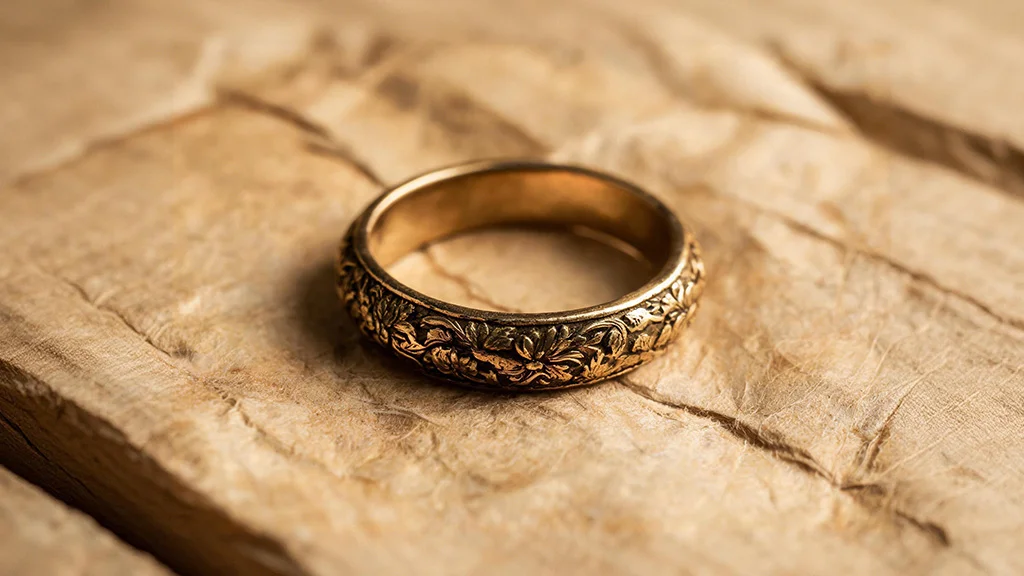
Promise rings have a longer history than most people realize, stretching back nearly 2,000 years.
Ancient Rome: The tradition of a ring symbolizing commitment dates back to Roman times, when rings were worn on the fourth finger of the left hand — believed to contain the vena amoris, or "vein of love," thought to run directly to the heart.
15th–17th century England: Posy rings became popular among couples and friends. These were simple bands engraved with short romantic verses or mottos on the inside — an early, literal version of "words that matter" jewelry.
Victorian era: Acrostic rings emerged, where the first letters of a sequence of gemstones spelled out a word — most famously "REGARD" (Ruby, Emerald, Garnet, Amethyst, Ruby, Diamond) or "DEAREST." These were often given as tokens of affection that didn't necessarily signal engagement.
20th century: Promise rings took on a more youth-oriented meaning in the US, particularly through the 1990s and 2000s "purity ring" movement, where rings symbolized a promise of abstinence until marriage — a tradition still practiced in some communities today.
Modern day: Celebrity culture has helped popularize promise rings as a pre-engagement gesture — a way for couples to signal serious commitment without the formality (or cost) of an engagement ring. Today, the meaning has broadened well beyond romance to include friendship rings, sobriety rings, and self-promise rings.
What Does a Promise Ring Symbolize?
Because there's no formal rulebook, a promise ring's meaning depends entirely on the people involved. The most common meanings include:
- Pre-engagement commitment — a signal that engagement is likely in the future, without making it official yet
- Exclusivity and devotion — a way of saying "I'm serious about us" in a long-term relationship
- Milestone marker — commemorating an anniversary, a big move, or a relationship milestone
- Friendship — exchanged between close friends as a symbol of loyalty
- Self-promise — worn as a personal reminder of a goal, such as sobriety, self-love, or independence
- Faith or abstinence — a commitment tied to religious or personal values
This flexibility is actually the appeal. A promise ring can be as serious or as lighthearted as the people exchanging it want it to be.
Promise Ring vs. Engagement Ring vs. Commitment Ring
These three terms get used interchangeably, but they're not the same thing. Here's how they compare:
|
Promise Ring |
Engagement Ring |
Commitment Ring |
|
|---|---|---|---|
|
Symbolizes |
A promise (exclusivity, future engagement, personal goal) |
A formal proposal of marriage |
A committed relationship, without marriage implications |
|
Typical Cost |
$50–$500 |
$1,500–$8,000+ |
$100–$800 |
|
Timing |
Often before engagement |
Marks the proposal moment |
Any point in a relationship |
|
Common Materials |
Sterling silver, 10K gold, cubic zirconia, small gemstones |
14K/18K gold, platinum, diamonds |
Sterling silver, gold-filled, gemstones |
|
Finger/Hand |
No fixed rule; often left ring finger |
Left ring finger (US/UK); varies in parts of EU |
No fixed rule |
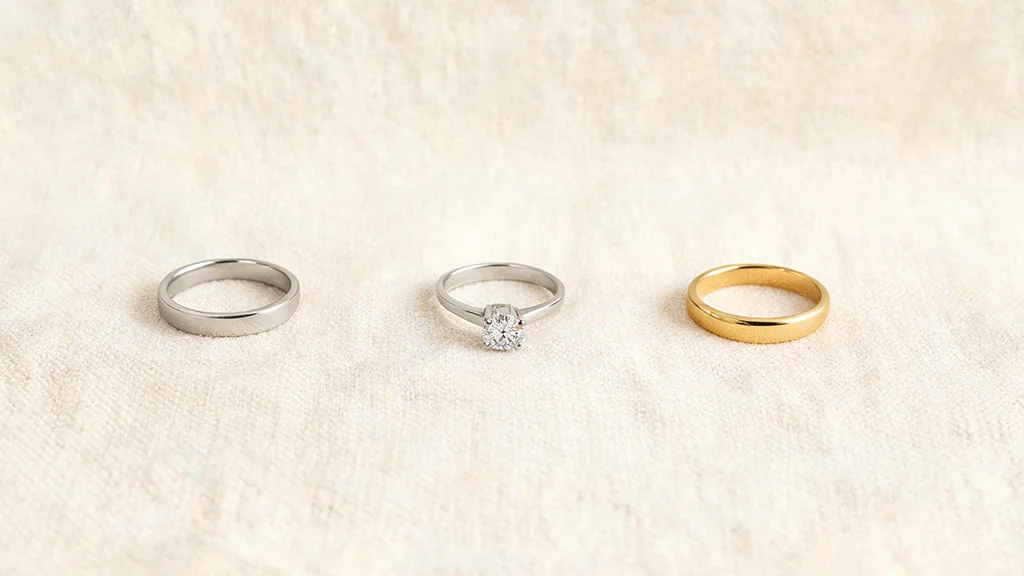
The short version: an engagement ring has one specific meaning and a fairly formal set of expectations. Promise rings and commitment rings are more flexible — and that flexibility is exactly why they've become popular for people who want to mark a relationship milestone without the formality (or price tag) of a proposal.
How Much Does a Promise Ring Cost?
One of the most appealing things about promise rings is accessibility. Because they're not bound by the "two months' salary" convention that (unfairly) still lingers around engagement rings, promise rings are typically priced for everyday budgets.
|
Tier |
Cost |
Typical Materials |
|---|---|---|
|
Entry |
$30–$100 |
Sterling silver, cubic zirconia, gold vermeil |
|
Mid-range |
$100–$300 |
10K/14K gold, moissanite, small natural gemstones |
|
Premium |
$300–$600+ |
14K/18K gold, lab-grown diamonds, designer settings |
From a manufacturing standpoint, the price difference mostly comes down to metal purity and stone type. Sterling silver and 10K gold keep costs down while still holding up well to daily wear, which is why they dominate the promise ring category. If you want something with more longevity and a closer resemblance to fine jewelry, 14K gold with a lab-grown diamond or moissanite centerpiece offers a meaningful step up without engagement-ring pricing.
Popular Promise Ring Styles
Promise rings come in far more variety than engagement rings, since they're not bound by "solitaire" convention. Here are the most popular styles:
1. Simple Bands — Clean, minimalist metal bands with no stone. A timeless choice that works for any gender and doubles easily as a stacking piece later.
2. Infinity Rings — Featuring the infinity symbol, these represent everlasting love and are one of the most searched promise ring styles.
3. Heart Rings — Direct and romantic, often featuring a heart-shaped stone, cutout, or motif.
4. Knot Rings — Symbolizing two lives "tied together," knot designs are a popular middle ground between simple and sentimental.
5. Two-Stone (Toi et Moi) Rings — Featuring two gemstones side by side to represent "you and me." A rising trend that's crossed over from engagement rings into promise ring territory.
6. Gemstone or Birthstone Rings — Personalized with a birthstone or meaningful colored gemstone, offering a more individual take than a plain band.
7. Claddagh Rings — A traditional Irish design featuring a heart (love), hands (friendship), and crown (loyalty) — one of the few promise ring styles with built-in symbolism.
8. Engraved Rings — A modern take on the historic posy ring, with a name, date, or short phrase engraved on the inside or outside band.
9. Vintage-Inspired Rings — Art Deco or Victorian-style settings, milgrain detailing, and antique-finish metals for a more heirloom feel.
10. Stackable Rings — Slim bands designed to be worn alone or layered with other rings over time — a practical choice if the promise ring may later be paired with an engagement or wedding band.
A manufacturing note on durability: if you plan to wear your promise ring daily, sterling silver will tarnish faster than gold and requires more upkeep. 10K or 14K gold offers a better balance of affordability and long-term wear, especially for bands with more intricate detailing like knots or engravings, which can wear down faster in softer metals.
What Finger Does a Promise Ring Go On?
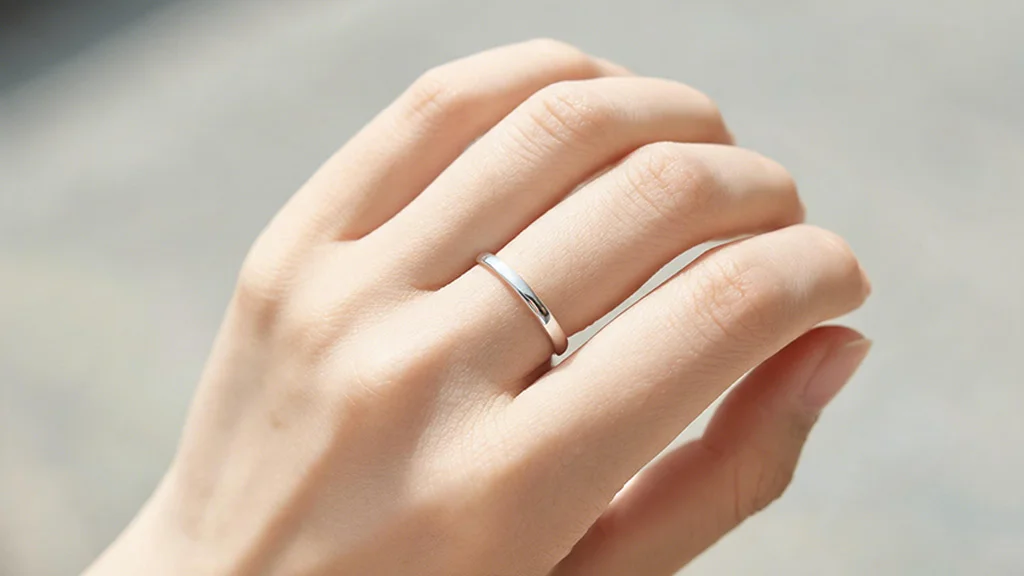
There's no universal rule — that's actually one of the defining features of a promise ring compared to an engagement ring.
In the US and UK, promise rings are most commonly worn on the left ring finger, especially when given between romantic partners, since it mirrors the "reserved" spot for an eventual engagement ring. Some couples choose the right ring finger instead, specifically to avoid confusion with engagement or wedding rings.
In parts of continental Europe, finger conventions shift. In countries like Germany, Austria, Russia, and several Nordic and Eastern European nations, wedding and engagement rings are traditionally worn on the right hand rather than the left. If you're gifting or wearing a promise ring in these regions, it's worth considering the right ring finger to align with local convention — or simply choosing whichever hand feels most comfortable, since promise rings carry no legal or formal requirement either way.
Non-romantic promise rings (friendship, sobriety, self-promise) are typically worn on whichever finger feels right to the wearer — there's no convention to follow at all.
When and How to Give a Promise Ring
Promise rings don't come with a script, which is part of what makes them special. Common moments to give one include:
- Anniversaries — a first, third, or fifth anniversary is a popular milestone
- Before a long separation — such as military deployment, studying abroad, or long-distance work assignments
- As a pre-engagement gesture — signaling serious intent before a formal proposal
- Valentine's Day or a birthday — lower-pressure occasions that still carry sentimental weight
- A personal milestone — sobriety anniversaries, graduations, or moments of self-growth
Unlike a proposal, there's no expectation of a grand gesture. Many people choose a quiet, private moment — a handwritten note, a quiet dinner, or simply handing over the ring with an honest conversation about what it means. The sentiment carries far more weight than the setting.
A Note on Compliance: EU Nickel Directive & UK Hallmarking
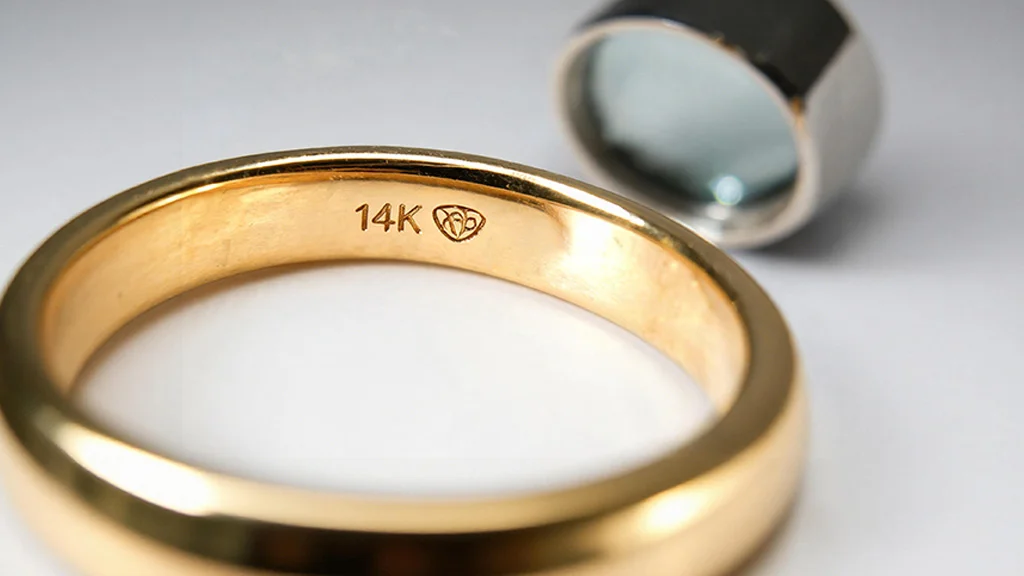
Because promise rings are often made from sterling silver or lower-karat gold, there are a couple of regulatory details worth knowing if you're buying (or manufacturing) for the UK or EU market.
EU Nickel Directive (REACH Annex XVII, Entry 27): Jewelry sold within the EU is restricted in how much nickel it can release with prolonged skin contact, since nickel is a common cause of contact allergies. This particularly matters for promise rings, which are frequently made in affordable base-metal or silver-plated alloys. Reputable manufacturers test nickel release rates to ensure compliance before EU distribution.
UK Hallmarking Law: In the UK, gold, silver, palladium, and platinum items above a certain weight threshold are legally required to carry a hallmark from an assay office, verifying metal purity. Sterling silver promise rings above 7.78 grams, for example, must be hallmarked to be legally sold as "sterling silver" in the UK. It's a small detail, but one worth checking if you're buying a promise ring from a smaller or overseas seller.
Frequently Asked Questions
No. A promise ring symbolizes a commitment — often but not always leading to engagement — while an engagement ring specifically marks a formal proposal of marriage.
No, this is a myth. There's no cultural or historical basis for promise rings being unlucky; the idea likely spread through word-of-mouth rather than any real tradition.
Yes. Self-promise rings are increasingly common as a symbol of self-love, independence, or a personal goal like sobriety or a fresh start.
It varies by couple. Many exchange matching promise rings, while others choose for just one partner to wear one — there's no fixed convention.
After engagement, some people continue wearing the promise ring on the opposite hand or restyle it into another piece, while others retire it once an engagement ring takes its place. After a breakup, there's no obligation to keep or return it, though some couples choose to as a personal preference.
Yes. While the US and UK commonly use the left ring finger, several European countries traditionally wear commitment rings on the right hand instead.
Yes. Friendship promise rings are a growing category, symbolizing loyalty and closeness rather than romantic commitment.
It can be as serious as the people involved want it to be. Unlike an engagement ring, there's no formal expectation attached — the meaning is defined entirely by the giver and receiver.
Find Your Promise Ring
Whether you're searching for a simple sterling silver band or a lab-grown diamond two-stone design, [Provence Jewellery's promise ring collection] offers styles to match every budget and meaning — with sizing and shipping support across the US, UK, and EU.
Looking to source promise rings for your own brand? As a direct OEM/ODM manufacturer, Provence Jewellery produces promise rings at scale across gold, moissanite, and lab-grown diamond options, with full compliance support for EU and UK markets. get in touch with our team to discuss custom designs.
 English