
Jewelry Aesthetic Guide: Find & Build Your Personal Style
- Written by Provence Team
- Updated on August 26, 2026
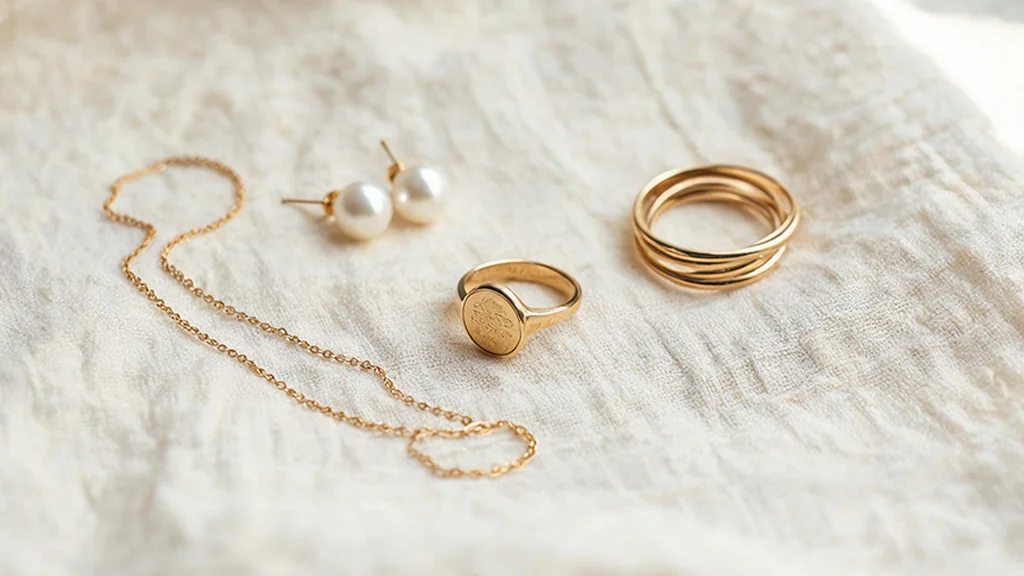
Table of Contents
Search for “jewelry aesthetic” and you’ll get two very different answers. Some guides use it to mean a single, specific look — the pearls-and-signet-rings world of old money style. Others use it to describe internet-born “cores” such as cottagecore or Barbiecore. Both are correct, and both are incomplete on their own.
A jewelry aesthetic is really two things at once: a personal framework — the shapes, metals, and proportions that feel like you — and a set of named, recognizable styles that help you communicate that framework to yourself, a jeweler, or a search engine. This guide covers both, adds the global and cultural aesthetics that most English-language guides skip entirely, and — because we manufacture the jewelry behind many of these looks — explains how metal purity, setting technique, and sourcing determine whether an aesthetic holds up after five years of wear or falls apart after five months.
Finding Your Personal Jewelry Aesthetic
Before you can shop for “your aesthetic,” you need a working definition of it. That definition comes from three inputs: what you already wear and reach for, your skin's undertone, and your body's natural proportions. None of these are rigid laws — they're a starting vocabulary that makes deliberate choices easier than guessing.
Step 1: Audit What You Already Wear
Lay out the jewelry you actually reach for — not what's expensive, not what was a gift you feel obligated to wear, but what you put on without thinking. Do the same with your five most-worn outfits. Patterns usually appear within minutes:
- Delicate vs. bold: are your favorite pieces thin and quiet, or do they have visual weight?
- Warm vs. cool palette: does your wardrobe lean camel, rust, and olive, or charcoal, navy, and black?
- Structured vs. fluid: do you favor tailored silhouettes or soft, draped fabrics?
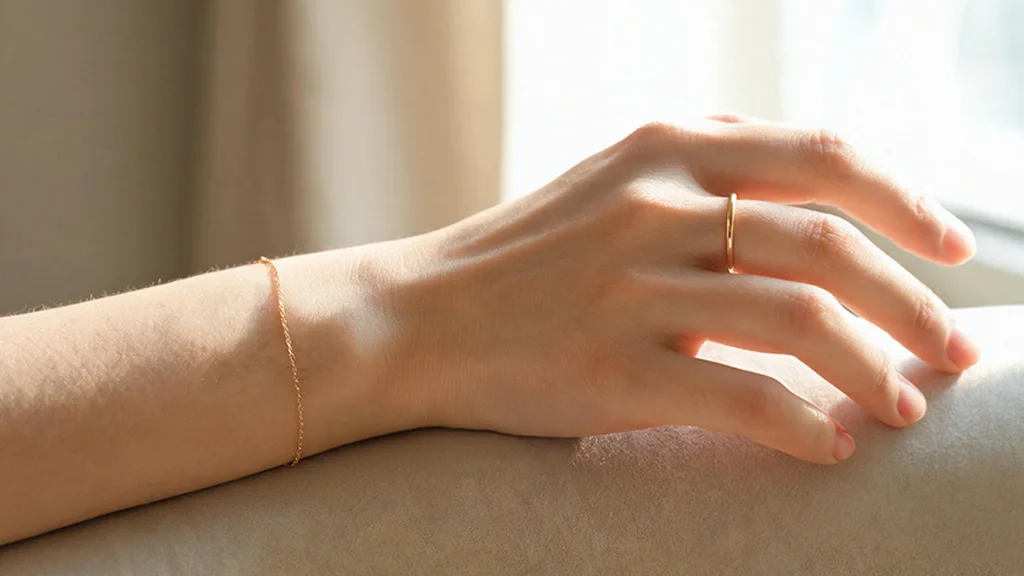
These three axes map surprisingly well onto jewelry choices — minimalist wardrobes tend to pair with fine chains and small studs, while textured, bohemian wardrobes tend to pull toward stacked, natural-stone pieces.
Step 2: Match Metal to Undertone
Undertone is the cast beneath your skin's surface tone, and it's the single biggest factor in whether a metal makes you look luminous or slightly washed out. Two quick tests: check the veins on the inside of your wrist in daylight (blue/purple reads cool, green reads warm), and notice whether bright white or creamy off-white looks fresher against your skin.
|
Undertone |
Flattering metals & stones |
Visual effect |
|---|---|---|
|
Cool |
Platinum, white gold, silver; sapphire, amethyst, aquamarine |
Brightens skin, softens redness, makes eyes pop |
|
Warm |
Yellow gold, rose gold, copper tones; citrine, amber, turquoise |
Adds golden radiance and warmth |
|
Neutral |
Any metal; diamonds, pearls, mixed-metal pieces |
Highly flexible — nearly everything works |
Step 3: Consider Proportion
Scale matters as much as color. Petite frames are often overwhelmed by very large, chunky pieces, while taller wearers can carry bold cuffs and oversized earrings with ease. Long pendant necklaces create a vertical line that elongates the torso; studs and medium hoops are close to universally flattering across face shapes, while long drop earrings tend to elongate rounder faces. None of this is a rule you must obey — it's a lens for noticing why a piece does or doesn't feel right.
Step 4: Name Your Style Persona
Once you've gathered these observations, it helps to put a name to the mood you're drawn to. Most people are a primary persona with a secondary accent — for example, mostly Minimalist with occasional Romantic pieces for evenings.
|
Persona |
Signature pieces |
Visual effect |
|---|---|---|
|
Classic / Timeless |
Pearl studs, diamond solitaires, slim chains |
Can feel too safe without one modern accent |
|
Effortless Minimalist |
Delicate chains, thin bands, small hoops |
Pieces can disappear if scaled too small |
|
Romantic / Vintage |
Lockets, filigree, antique-inspired pendants |
Too many fussy details can look costume-like |
|
Bohemian |
Natural stones, tassels, mixed textures, stacks |
Over-layering can blur your silhouette |
|
Bold / Modern |
Chunky chains, geometric cuffs, sculptural studs |
Can overpower a simple outfit if unbalanced |
|
Luxe Modernist |
Sleek cuffs, clean lines, mixed metals |
Can feel cold without one warm or sentimental piece |
Named Jewelry Aesthetics — A Global Tour
Beyond personal style personas, “aesthetic” is also used to describe recognizable, named looks — some born on social media, others rooted centuries deep in specific cultures. Most English-language guides stop at Western, internet-native cores. Because jewelry aesthetics are a genuinely global language, here is a wider map.
Social-Media-Era Cores
- Cottagecore — nature-inspired motifs: flowers, mushrooms, leaves; soft, antique-finish metals
- Barbiecore — pink and pastel gemstones, hearts, playful and maximalist
- Dark Academia — Victorian-inspired signet rings, dark stones, aged gold
- Y2K Revival — chunky hoops, bubble letters, statement chains
- Normcore — plain yellow gold bands, simple chain necklaces, deliberately understated
Quiet Luxury / Old Money
This aesthetic prizes substantial solid-gold pieces, well-matched pearl strands, high-clarity diamond studs, signet rings, and tennis jewelry with settings that all but disappear. The defining trait isn't price — it's restraint: pieces chosen for quality and longevity rather than logo visibility or trend timing.
Global & Cultural Aesthetics
These traditions have shaped jewelry design for centuries and remain some of the most searched, most purchased aesthetics worldwide — yet they're largely absent from Western style guides.
|
Tradition |
Signature elements |
Typical materials |
|---|---|---|
|
Mediterranean / Gulf gold |
High-karat, high-shine layered gold, coin motifs, bold chains |
22k–24k yellow gold |
|
South Asian bridal |
Layered necklace sets (haar), jhumka earrings, maang tikka, kundan/polki work |
22k gold, uncut diamonds, enamel |
|
East Asian jade & pearl |
Jade bangles and pendants, Akoya pearl strands, symbolic motifs (dragons, phoenixes) |
Jade, pearl, 18k–24k gold |
|
Scandinavian minimalism |
Sculptural, unadorned forms; function-forward design |
Sterling silver, brushed white gold |
|
West African gold traditions |
Sculptural, sizeable gold forms; symbolic and status-linked designs |
High-karat yellow gold |
|
Latin American statement gold |
Bold hoops (criollas), layered chains, personalized pendants |
14k–18k yellow gold |
If you're shopping — or designing — for a global audience, this is the section most competitor guides miss entirely. Recognizing that “jewelry aesthetic” means something different in Manila, Lagos, Milan, and Mumbai isn't just more inclusive; it's more accurate to how the phrase is actually searched and used worldwide.
Styling Mechanics — Layering, Stacking, and Occasion
Three Questions Before You Get Dressed
What is the occasion? A gala calls for more drama and refinement than running errands.
What colors are you wearing? Cool, monochrome outfits pair naturally with cool metals; warm-toned outfits pull toward yellow gold.
What should lead — the outfit or the jewelry? Pick one. An intricate neckline usually means skipping the necklace; a simple outfit can carry a bold cuff or layered stack.
Layering With a Unifying Thread
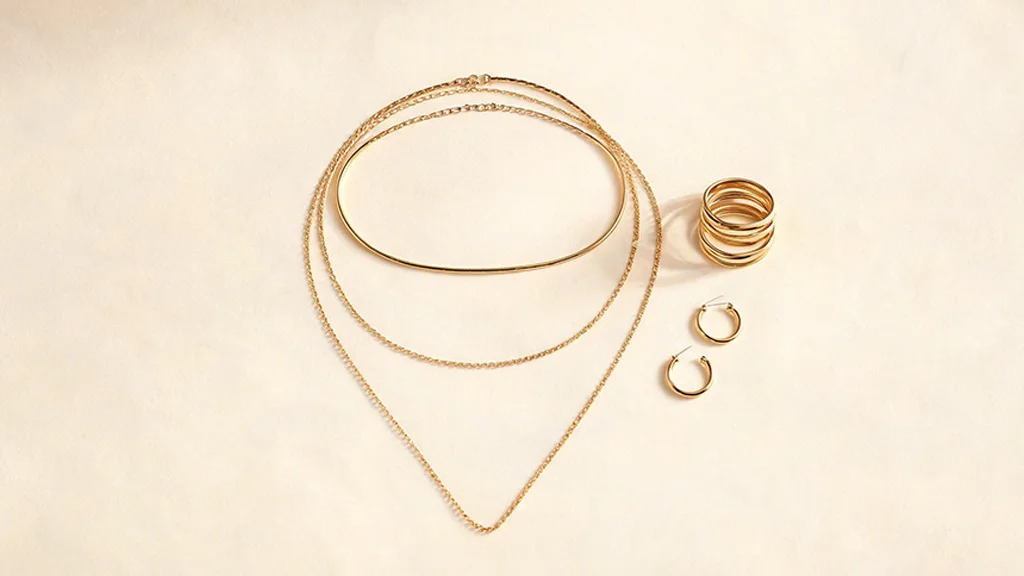
Layering multiple necklaces, stacking rings, or mixing bracelets creates depth — but only stays elegant with one unifying element: a shared metal tone, a repeated motif, or a consistent color family. Without that thread, layered pieces read as clutter rather than a composed look. A useful test: if you forget you're wearing a combination all day, it's aligned with your aesthetic. If you're fidgeting with it, it's pushing past your comfort zone.
How Material Choice Determines Whether an Aesthetic Lasts
An aesthetic only holds up if the materials behind it do. This is the section most style guides skip, because most aren't written by the people who actually manufacture the jewelry. A few material realities change how any of the aesthetics above will age:
Solid Gold vs. Gold-Plated vs. Gold-Filled
Old money and quiet luxury pieces depend on substantial, solid-gold weight — a thin plated piece cannot deliver the “heft” the aesthetic is built on, and plating wears through within months of daily contact. Gold-filled offers a genuine middle tier: a much thicker bonded layer than plating, at a fraction of solid gold's cost, and a reasonable choice for younger or trend-driven aesthetics like Y2K or Barbiecore that may be revisited only occasionally.
Lab-Grown vs. Natural Stones
Chemically and optically identical to natural stones, lab-grown diamonds and moissanite let quiet-luxury and old-money looks — traditionally the most expensive aesthetics to build — become accessible without changing the visual language of the style. For heirloom-oriented or South Asian bridal-style pieces, natural stones retain stronger resale and sentimental value, which matters if the piece is intended to be passed down.
Setting Technique
The setting is what makes an aesthetic photograph and wear well. Tennis jewelry associated with old-money style depends on a setting precise enough to let the stone line sit flush and nearly invisible; South Asian kundan and polki work depends on foil-backed, hand-set stones; Scandinavian minimalism depends on clean, seamless metal finishing with no visible solder marks. Aesthetic and craftsmanship are inseparable — a beautiful design in a poorly executed setting will not read as the aesthetic it's imitating.
Frequently Asked Questions
It's the recognizable style — in shapes, metals, and proportions — that a piece of jewelry or a personal collection expresses. It can refer to a personal style framework (“minimalist with a romantic accent”) or a named, shared trend (“cottagecore,” “old money”).
Most people aren't a single persona. Identify a primary mood from your most-worn pieces, then allow one secondary accent for occasions that call for it — a Minimalist base with a Romantic evening accent is common and coherent.
No — mixing metals is now a hallmark of confident, contemporary style. The key is intention: repeat both metals across a few pieces, or choose one mixed-metal anchor piece, so your eye reads it as a deliberate choice rather than mismatched leftovers.
The craftsmanship standards differ by technique — kundan and polki work is judged on foil and enamel security, while Scandinavian minimalism is judged on seamless metal finishing — but the underlying principles of verified karat, secure settings, and documented sourcing apply universally.
Behind the Aesthetic: How Provence Jewellery Builds It
Every aesthetic in this guide depends on decisions made long before a piece reaches a retail shelf: alloy composition, stone sourcing, and setting technique. As a fine jewelry manufacturer producing solid gold, lab-grown diamond, moissanite, and natural gemstone pieces for brands across the US, UK, and EU, Provence Jewellery works directly with brand partners to translate a target aesthetic — whether quiet luxury, bridal maximalism, or minimalist gold — into a manufacturing specification that holds up to hallmarking standards, nickel-release regulations, and years of daily wear.
Our factory teams document alloy purity, stone certification, and quality-control checkpoints at every stage, so brands building a specific jewelry aesthetic for their customers can back that aesthetic with verifiable craftsmanship rather than surface-level styling alone.