
Jewelry Sourcing: The Complete Guide for Buyers (2026)
- Written by Provence Team
- Updated on September 12, 2026
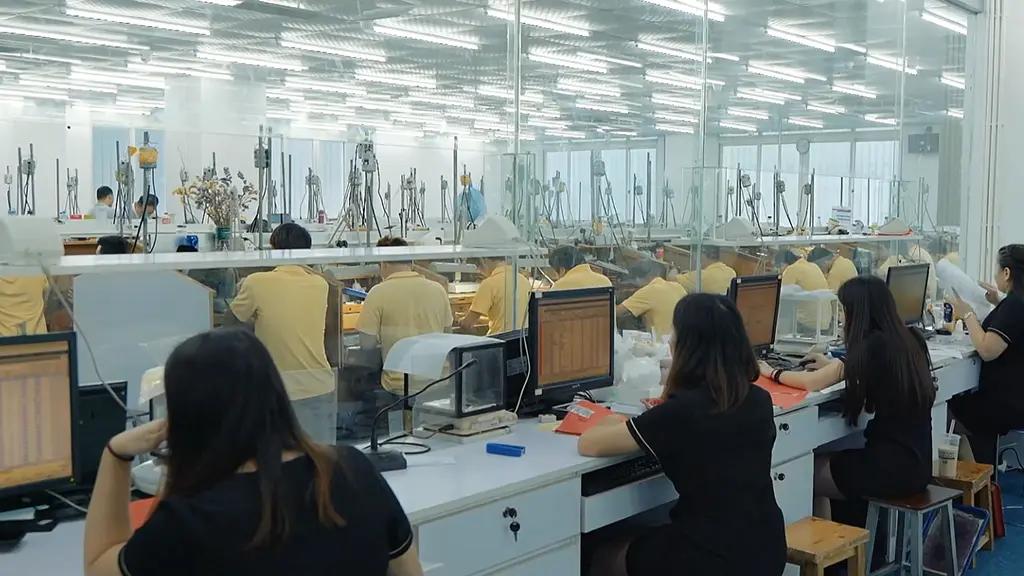
Table of Contents
Every jewelry brand, retailer, and importer eventually faces the same question: where should this inventory actually come from? The answer shapes far more than a purchase order — it determines product quality, profit margin, compliance risk, and how quickly a business can scale. Yet “jewelry sourcing” is treated online as either a vague concept or a sales pitch, rarely as the structured decision it should be.
This guide breaks jewelry sourcing down into its real components: the channels available, how OEM and ODM production actually works, how to vet a supplier before committing capital, what sourcing genuinely costs, the mistakes that cost buyers the most, and the compliance requirements that apply across major global markets. It is written for brand owners, retailers, and importers evaluating any sourcing path — not just one.
What Is Jewelry Sourcing?
Jewelry sourcing is the process of identifying, vetting, and securing a supply of jewelry inventory — whether finished stock pieces or custom OEM/ODM production — that meets a business's quality standards, price point, and brand identity. It covers everything from selecting a material and a production partner to negotiating trade terms and managing ongoing quality control.
Sourcing decisions compound over time. A supplier chosen for convenience rather than fit tends to surface problems only after volume increases: inconsistent plating, missed lead times, or non-compliant materials that trigger a customs hold. Treating sourcing as a one-time transaction, rather than an ongoing partnership to be actively managed, is the single most common reason jewelry businesses outgrow their suppliers faster than they'd like.
The Main Jewelry Sourcing Channels
Buyers typically choose from six broad channels. Each trades off differently across cost, control, and speed:
Channel | Typical MOQ | Cost Level | Quality Control | Customization | Lead Time | Best Fit |
OEM/ODM Manufacturer | Low–Medium (12–500+ pcs) | Low–Medium | Highest (direct factory QC) | Full (materials, design, packaging) | 3–8 weeks | Brands, importers, private label |
Wholesaler/Distributor | Low (often single units) | Medium–High | Variable (depends on source) | None–Minimal | Days (from stock) | Small retailers needing fast restock |
Trade Shows | Varies by exhibitor | Medium | In-person inspection possible | Limited | Weeks–months | Buyers building direct relationships |
B2B Marketplaces | Very Low ($50–500) | Low–Medium | Inconsistent; self-verify | Moderate | 1–4 weeks | Startups testing designs |
Sourcing Agents | Depends on factory | Medium (service fee added) | Agent-dependent | Full (via factory) | Varies | Buyers unfamiliar with a region |
Local Artisans | Very Low (1+ pcs) | High (labor-intensive) | High but not standardized | Full, bespoke | Weeks (handmade) | Boutique, one-of-a-kind lines |
No single channel is universally “best.” A startup testing a new design concept may start on a B2B marketplace with a low MOQ, then migrate to a direct OEM manufacturer once a style proves itself in the market. A retailer needing same-week restock may lean on a wholesaler for staple items while sourcing signature or private-label pieces directly from a manufacturer.
OEM vs. ODM vs. Private Label: What's the Difference?
These three terms are often used interchangeably, but they describe distinct manufacturing relationships:
OEM (Original Equipment Manufacturing)
The buyer supplies the design, and the manufacturer produces it to specification. This is the standard route for brands with an in-house design team who need production capacity and material expertise, not creative input.
ODM (Original Design Manufacturing)
The manufacturer supplies both the design and the production. Buyers select from an existing catalog or ask the manufacturer's design team to develop new styles, then apply their own branding. This route suits businesses that want speed to market without building a design function.
Private Label
A broader commercial arrangement where a manufacturer's product — OEM or ODM — is sold under the buyer's own brand name and packaging, with no visible connection to the manufacturer.
A typical OEM/ODM production cycle runs through a consistent sequence: initial sketch or reference → CAD rendering → sample or 3D-printed prototype → buyer approval → mass production → quality inspection → shipment. Buyers should expect to review and approve a physical or rendered sample at each stage before committing to a full production run — skipping this step is one of the most common causes of costly reworks.
Material scope matters here more than most sourcing guides acknowledge. Fashion jewelry (plated copper or brass, cubic zirconia, glass beads) sits on a very different production line, cost structure, and compliance profile than fine jewelry produced in solid gold with lab-grown diamonds, moissanite, or natural gemstones. A manufacturer capable of both offers buyers flexibility to build a tiered product line without switching suppliers as the brand moves upmarket.
How to Evaluate a Jewelry Supplier: The Vetting Framework
Product photos and a price list are not enough to judge a supplier. The following framework covers the areas experienced buyers check before placing a first order — and continue monitoring afterward:
Evaluation Area | What to Ask or Verify |
Material verification | Request assay/hallmark certificates, karat stamps, or lab reports (e.g., IGI/GIA for stones). Ask how base metals and plating are tested. |
Compliance documentation | Confirm the supplier can meet your destination market's regulations (see the compliance section below) and provide test reports on request. |
Quality control process | Ask what percentage of shipments are inspected, whether QC is in-house or third-party, and what defect rate triggers a re-run. |
MOQ & sampling policy | Get the exact per-style MOQ, not a vague range, and confirm whether single-piece or small-batch samples are available before committing to volume. |
Production capacity | Ask for current lead times on stock vs. custom OEM orders separately, and whether capacity holds during seasonal peaks. |
Trade & payment terms | Confirm Incoterms offered (EXW vs. FOB affects your landed cost and customs responsibility) and which payment methods are supported. |
Communication | Check whether the supplier can quote, sample, and troubleshoot in your working language, and how quickly they respond to inquiries. |
Two additional habits separate experienced buyers from first-timers: requesting a small paid sample run before any bulk commitment, and working with more than one supplier once volume justifies it. A second source mitigates the risk of a single factory's delay or quality lapse disrupting an entire product line
Understanding Cost Structure in Jewelry Sourcing
Jewelry pricing can look opaque from the outside, but it is built from a consistent set of variables that buyers can learn to evaluate rather than simply compare quoted totals:
What Actually Drives Jewelry Production Cost
- Material grade and type — base metal vs. solid gold; cubic zirconia vs. moissanite vs. natural or lab-grown diamonds
- Labor and craftsmanship complexity — hand-set stones and intricate designs cost more than stamped or cast pieces
- Plating and finishing method — thickness and technique (e.g., multi-layer ion plating) affect both cost and durability
- Order volume — per-unit cost typically drops as MOQ increases, but tooling or mold costs may apply to new designs
- Customization level — bespoke packaging, engraving, or fully custom molds add non-recurring setup costs
Trade terms and logistics — EXW pricing excludes shipping and duties; FOB and other Incoterms shift more cost and responsibility to the supplier
The most useful comparison a buyer can make is not “which quote is lowest,” but “which quote is built on the same specification.” Two quotes for the same style at different prices often reflect different plating thickness, base metal purity, or stone quality — differences that only surface after the order arrives if they aren't clarified up front.
Common Sourcing Mistakes and Red Flags
Even experienced buyers fall into predictable traps when entering or scaling within the jewelry category:
- Misleading material descriptions — labels like “18K gold-plated” or “S925” used loosely, without material verification, that later fail compliance testing or fade prematurely.
- Inconsistent craftsmanship across a batch — variation in polishing, stone setting, or plating thickness within a single production run, often invisible in factory photos.
- Overestimating supply stability — a supplier who handles small sample orders well but cannot maintain consistency at seasonal peak volume.
- Skipping third-party or independent verification — relying solely on a supplier's own claims about certifications, business licenses, or export history.
- Treating marketplace listings as vetted suppliers — resellers sometimes list on B2B platforms as if they were the factory itself, adding a hidden markup and an extra point of failure.
- Committing to full volume before sampling — skipping a paid sample run to save time, then discovering a specification mismatch at bulk scale.
Most of these mistakes share a root cause: moving from quote to purchase order without independently verifying a claim the supplier made about itself. Every item in the vetting framework above exists specifically to close that gap.
Regulatory & Compliance Considerations for Global Buyers
Jewelry sold into major consumer markets is subject to specific material and labeling regulations. Buyers sourcing internationally are responsible for compliance regardless of where production occurs, which makes supplier transparency on this point non-negotiable:
- United States — FTC 16 CFR Part 23 (Jewelry, Precious Metals, and Pewter Guides) governs how karat gold, plating, and metal content can be marketed and labeled.
- United Kingdom — The Hallmarking Act 1973 requires precious metal items above defined weight thresholds to carry an approved UK hallmark before sale.
- European Union — REACH Annex XVII sets strict limits on nickel release from items in prolonged skin contact, directly affecting base-metal and plated fashion jewelry.
A supplier that proactively raises these requirements — rather than waiting to be asked — is generally a stronger long-term partner than one who treats compliance as the buyer's problem alone. Request current test reports or certificates of compliance relevant to your destination market before the first shipment, not after a customs issue arises.
Why Work Directly With a Manufacturer: The Provence Jewellery Approach
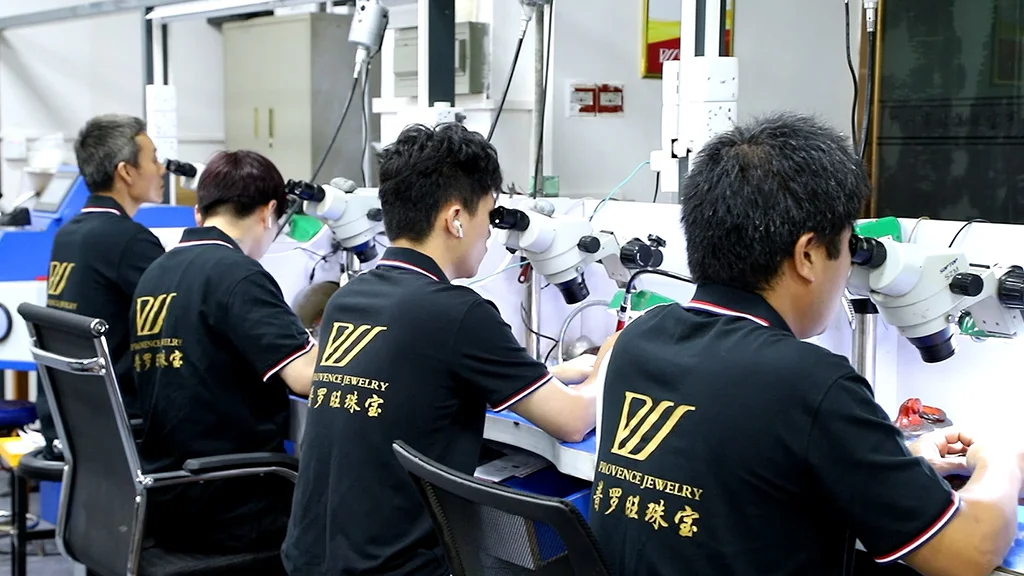
Provence Jewellery is a fine jewelry OEM/ODM manufacturer producing solid gold jewelry alongside lab-grown diamonds, moissanite, cubic zirconia, and natural gemstones — giving brands a single production partner across both fashion-adjacent and fine jewelry tiers, rather than needing to split sourcing across multiple factories as a product line matures.
Working directly with a manufacturer, rather than through an intermediary layer, gives buyers control over the variables that most affect brand identity and margin: alloy and material composition, plating type and thickness, stone selection, and packaging design. It also shortens the feedback loop when a specification needs adjusting mid-production — a buyer working directly with the factory that holds the mold and material stock resolves issues in a single conversation rather than relaying through a reseller.
For buyers evaluating Provence Jewellery against the vetting framework above: request material certification and compliance documentation for your specific destination market, ask for current lead times on stock versus custom OEM separately, and consider a small paid sample run before committing to a full production order — the same standard this guide recommends applying to any supplier.
Frequently Asked Questions
Most jewelry businesses source from one or a combination of six channels: direct OEM/ODM manufacturers, wholesalers or distributors, trade shows, B2B marketplaces, sourcing agents, and local artisans. The right mix depends on order volume, customization needs, and how quickly inventory needs to turn around.
A manufacturer produces jewelry — either to a buyer's custom specification (OEM) or from its own designs (ODM) — and can adjust materials, finishes, and packaging. A wholesaler purchases finished inventory in bulk and resells it, typically with limited or no ability to customize the product itself.
Cost varies primarily by material grade (base metal vs. solid gold; cubic zirconia vs. natural or lab-grown diamonds), craftsmanship complexity, order volume, and trade terms. Rather than comparing headline prices, buyers should confirm that quotes being compared reflect identical specifications.
They can be a reasonable entry point for testing new designs at low MOQ, but listings are not automatically vetted. Buyers should independently verify a seller's business license, export history, and, where possible, request third-party audit or inspection reports before placing a bulk order.
MOQs vary widely by channel and supplier — from single-piece sampling at some manufacturers to bulk minimums in the thousands at others. New brands are generally better served by suppliers offering low MOQ per style with the option to scale, since this allows a design to be market-tested before a larger commitment is made.