
March Birthstone: Aquamarine Meaning and Buying Guide
- Written by Provence Team
- Updated on July 14, 2026
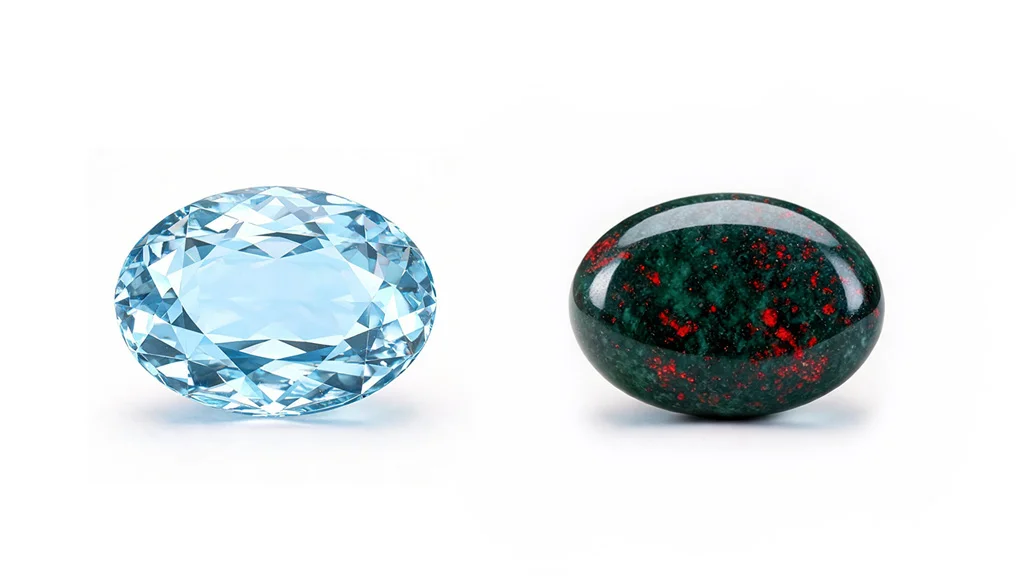
Table of Contents
Most people born in March know their birthstone has something to do with the sea — but few realize March is one of only a handful of months with two official birthstones. Aquamarine, the pale blue-green gem named for seawater, is the modern birthstone. Bloodstone, a dark green gem flecked with red, is the older, traditional choice. Together they give March babies a rare gift: a genuine choice between two gemstones that could not look more different, yet share a 2,000-year reputation for protecting the people who wear them.
In this guide, we cover the meaning and history of both March birthstones, how to tell good quality from average, what they cost in USD, GBP, and EUR, and the regulatory details that matter if you're buying or sourcing March birthstone jewelry for retail or resale.
What Is the March Birthstone?
March has two official birthstones: aquamarine (modern) and bloodstone (traditional). Aquamarine is a blue to blue-green variety of beryl, prized for its clarity and calm coloring. Bloodstone is a dark green chalcedony speckled with red iron oxide inclusions, valued since antiquity for its striking, almost lifelike pattern. Both stones are linked to the zodiac signs Pisces (February 19 – March 20) and Aries (March 21 onward), and both carry long-standing associations with courage, protection, and vitality.
Aquamarine: The Modern March Birthstone
Meaning and History
Aquamarine takes its name from the Latin aqua (water) and marina (of the sea) — a fitting name for a stone that has been tied to the ocean since antiquity. Roman sailors carried aquamarine as a talisman, believing it calmed rough waters and protected them on long voyages; some accounts describe Roman fishermen throwing the stones overboard during storms to appease Neptune, the god of the sea. Ancient Greeks made a similar connection to Poseidon. Beyond seafaring, aquamarine was believed to sharpen intellect, encourage clear communication, and offer protection in both battle and legal disputes — associations that persist today in the stone's modern reputation for courage and calm clarity.
Aquamarine is also the traditional gift for a 19th wedding anniversary, and it has a following among royalty: Queen Elizabeth II wore aquamarine earrings at her 1953 coronation and later received a full aquamarine parure, while Princess Diana was known for a striking aquamarine ring and bracelet set.
Famous Aquamarines
- The Dom Pedro Aquamarine — at roughly 10,363 carats, believed to be the largest faceted aquamarine in the world, carved into an obelisk by lapidary Bernd Munsteiner and now on display at the Smithsonian Institution.
- The Roosevelt Aquamarine — a 1,298-carat rectangular step-cut stone gifted to First Lady Eleanor Roosevelt by the Brazilian government in 1936, now housed at the Franklin D. Roosevelt Presidential Library.
- The royal aquamarine parure — a coronation gift to Queen Elizabeth II from the President of Brazil, later expanded into a full tiara, necklace, earring, and bracelet set.
Color and Quality
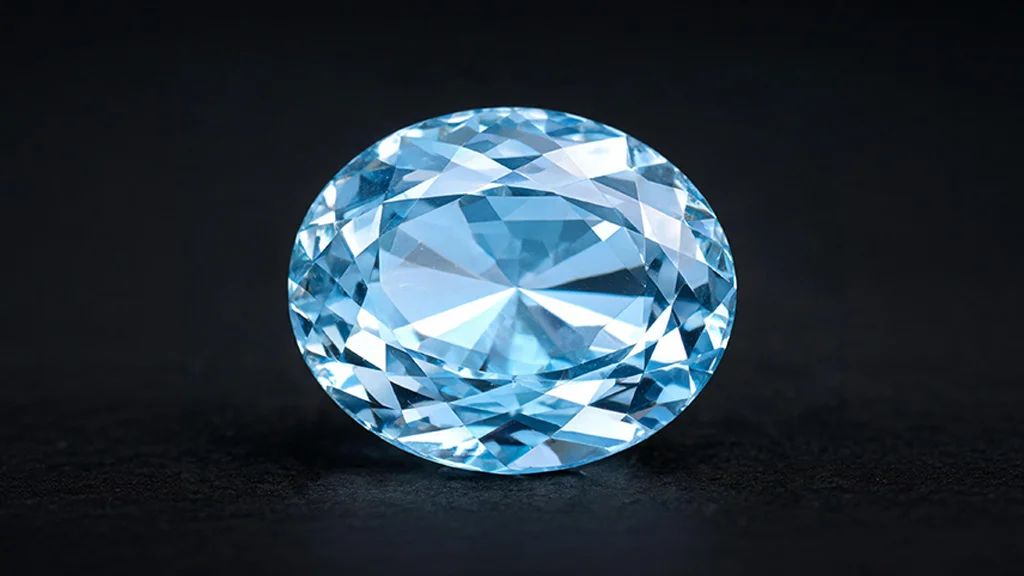
Color is the single biggest driver of aquamarine value. Stones range from a nearly colorless pale blue to a deep, saturated blue-green, and — all else being equal — the darker and more saturated the color, the more valuable the stone. Because aquamarine can appear almost colorless in small sizes, cut quality matters more here than in many other gemstones: a well-proportioned cut concentrates and evens out the color across the face of the stone. Clarity is typically excellent in commercial-grade aquamarine, and eye-clean stones (no inclusions visible to the naked eye) are the market standard rather than the exception.
Most aquamarine on the market today has been heat-treated to remove secondary green or yellow tones and produce a purer blue. This is a standard, stable, and permanent treatment throughout the trade — but it is also a disclosable treatment under gemstone grading and consumer-protection standards, which we cover below.
Where Aquamarine Comes From
Brazil's Minas Gerais region — particularly around the mining town of Teófilo Otoni — has been the world's most important aquamarine source for roughly two centuries. Aquamarine is also mined at high altitude in Pakistan's Karakoram range, prized for exceptional clarity, as well as in Nigeria, Madagascar, Zambia, Mozambique, China, Myanmar, and Russia.
Durability and Care
- Mohs hardness: 7.5–8, durable enough for daily wear in rings, earrings, and bracelets.
- Clean with warm water, mild soap, and a soft toothbrush; ultrasonic and steam cleaners are generally safe unless the stone has visible fractures or is fracture-filled.
- Store separately from harder gems such as diamond to prevent surface scratching.
- Remove aquamarine jewelry before swimming, showering, or applying lotion to protect the setting and prevent residue buildup.
Bloodstone: The Traditional March Birthstone
Bloodstone is the birthstone most retail guides skip — but it has arguably the older claim to March. Also known as heliotrope (from the ancient Greek for "to turn the sun"), bloodstone is a variety of chalcedony: a dark, opaque green base scattered with red or brown flecks of iron oxide, most often hematite. Ancient wearers believed the red inclusions represented blood, and the stone was carried by warriors for protection and to stem bleeding from wounds. In Christian tradition, the red spotting was interpreted as a symbol of Christ's blood, which cemented bloodstone's use in religious carvings and cameos through the Renaissance.
Today, bloodstone is associated with strength, courage, and vitality, and is considered a grounding, protective stone rather than a decorative one — a meaningful alternative for March-born buyers who want something with more gravity than a pale blue gem.
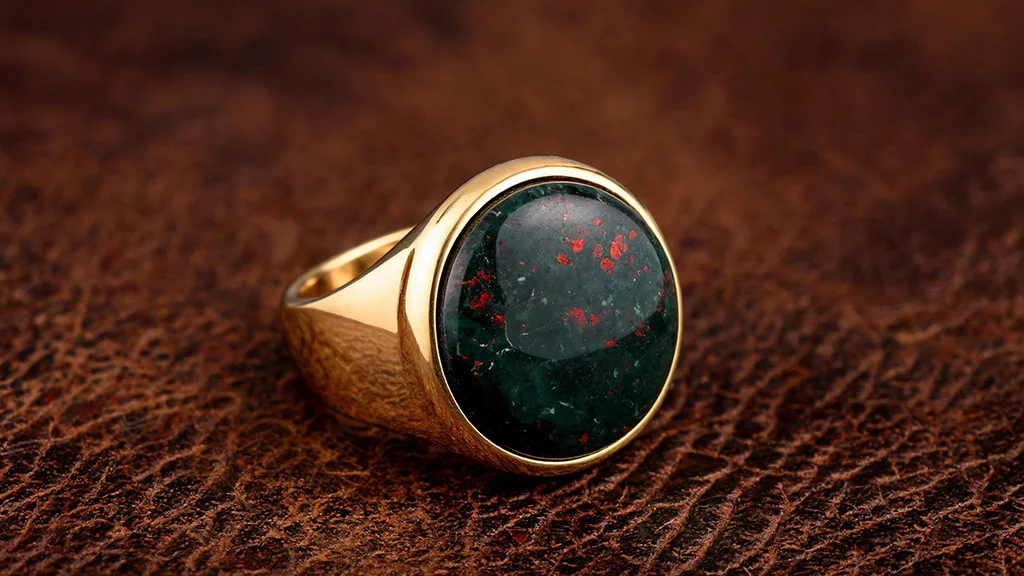
- Color: opaque dark green base with red or brown iron-oxide spotting; the finest material shows an even green with clearly defined, well-distributed red flecks.
- Hardness: 6.5–7 on the Mohs scale — durable, but softer and more prone to surface wear than aquamarine, so it suits pendants and earrings especially well.
- Sourcing: India is the dominant source today; also found in Brazil, Australia, China, Germany, and the United States.
- Cut: almost always cabochon or bead-cut to showcase the pattern, rather than faceted like aquamarine.
- Care: clean with warm soapy water and a soft cloth; avoid harsh chemicals, high heat, and ultrasonic cleaners; store separately to prevent scratching.
Aquamarine vs. Bloodstone: Which Should You Choose?
Both stones are authentic March birthstones, so the choice comes down to look, budget, and what the wearer wants the stone to represent.
|
Aquamarine |
Bloodstone |
|
|---|---|---|
|
Color |
Pale sky-blue to deep blue-green |
Dark green with red/brown flecks |
|
Mohs hardness |
7.5 – 8 |
6.5 – 7 |
|
Typical cut |
Faceted (oval, emerald, pear, cushion) |
Cabochon or bead |
|
Symbolism |
Calm, clarity, protection at sea |
Strength, courage, vitality |
|
Primary source |
Brazil, Pakistan, Zambia, Mozambique |
India, Brazil, Australia |
|
Best for |
Rings, earrings, everyday wear, engagement rings |
Pendants, men's jewelry, cameos, statement pieces |
Regulatory and Compliance Notes for Buyers and Retailers
March birthstone jewelry is straightforward to buy responsibly, but a few disclosure and compliance points are worth knowing — especially for retailers and B2B buyers sourcing at volume.
- US — FTC 16 CFR Part 23: gemstone treatments, including the heat treatment used on the vast majority of commercial aquamarine, must be disclosed to consumers under the FTC's Guides for the Jewelry, Precious Metals, and Pewter Industries. A stone described simply as "aquamarine" without a treatment disclosure can expose a retailer to compliance risk if the stone has, in fact, been heat-treated.
- UK — Hallmarking Act 1973: any gold, silver, platinum, or palladium setting above the legal weight threshold sold in the UK must carry a UK-recognized hallmark. This applies to the metal setting of March birthstone jewelry, not the gemstone itself, but it's essential for any UK-facing retail listing.
- EU — REACH Annex XVII, Entry 27 (nickel directive): white gold and other alloy settings used with aquamarine or bloodstone must meet nickel release limits for any jewelry with prolonged skin contact sold into the EU market.
For OEM/ODM buyers, we recommend requesting written treatment disclosures and mill certificates for every aquamarine and bloodstone lot at the point of sourcing, rather than at the point of retail listing — it's the only way to guarantee compliance documentation travels with the stone through the supply chain.
March Birthstone Price Guide
Aquamarine pricing is driven primarily by color saturation and carat weight; bloodstone pricing is driven by pattern quality and is far less carat-sensitive since it is almost always cabochon-cut. Approximate per-carat retail ranges below are for guidance only and will vary by supplier, treatment, and market conditions.
|
Quality Tier |
USD / ct |
|---|---|
|
Aquamarine — commercial |
$20 – $60 |
|
Aquamarine — fine (Santa Maria-type blue) |
$100 – $400 |
|
Aquamarine — museum / large fine |
$500+ |
|
Bloodstone — standard cabochon |
$2 – $10 |
|
Bloodstone — fine pattern |
$15 – $30 |
Popular March Birthstone Jewelry Styles
Aquamarine Rings
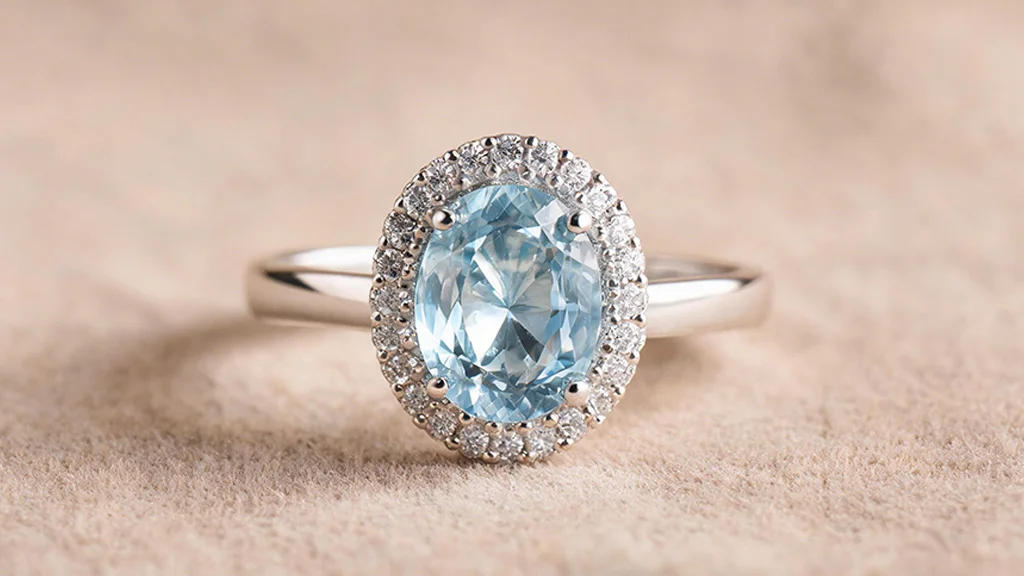
Oval and cushion cuts are the most popular shapes for aquamarine, chosen to maximize color and light return. Aquamarine pairs beautifully with white diamonds in halo settings, and its durability makes it a genuine option for engagement rings for buyers who want a colored-stone alternative to a traditional diamond solitaire.
Aquamarine Earrings and Necklaces
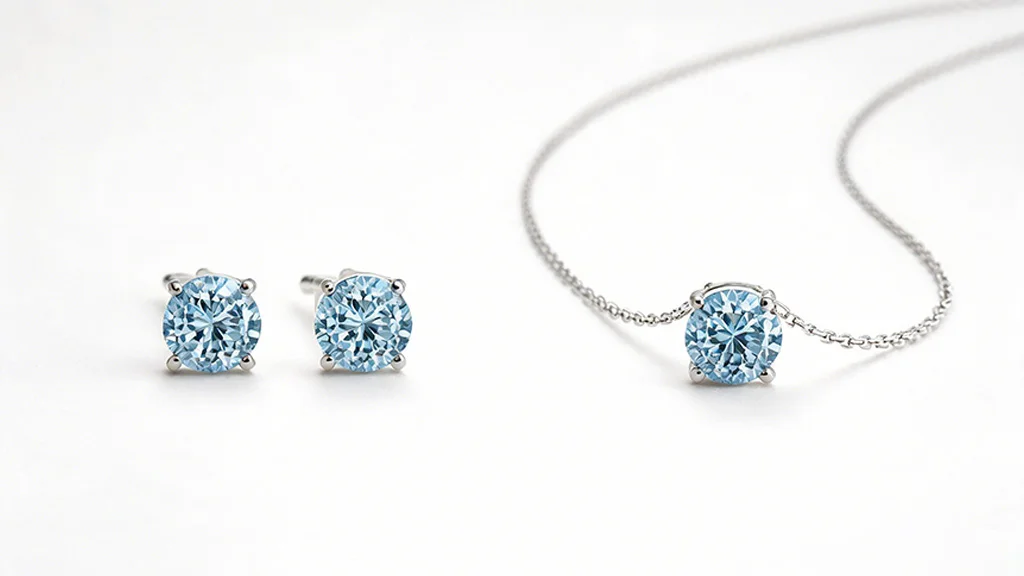
Stud earrings in round or oval cuts are consistently among the best-selling aquamarine styles, prized for everyday wearability. Pendant necklaces featuring a solitaire aquamarine or a diamond halo setting are a popular gifting choice for March birthdays and Mother's Day.
Bloodstone Jewelry
Bloodstone is most often seen in men's jewelry — signet rings, cufflinks, and cabochon pendants — as well as in engraved seals and cameos, a carryover from its long history in Renaissance carving. Its opaque, patterned surface also makes it a distinctive choice for statement pendants and bracelets.
March Birthstone FAQs
Several months, including March, were assigned more than one birthstone as gem-trade and jewelers' associations updated official birthstone lists over the 20th century, adding modern alternatives alongside older, traditional stones. Bloodstone is March's traditional birthstone; aquamarine is the modern designation adopted more widely by the jewelry trade.
Aquamarine is classified as a semi-precious gemstone. It is generally more affordable than precious gems like emerald, ruby, sapphire, or diamond, though exceptional color and size can command significant prices.
Yes. With a Mohs hardness of 7.5–8, aquamarine is durable enough for daily wear in rings, earrings, and bracelets, provided it is cleaned and stored properly.
Aquamarine ranges from pale sky-blue to deep blue-green; bloodstone is a dark, opaque green with red iron-oxide flecking. Between the two, March covers a wider color range than almost any other birthstone month.
Aquamarine is the traditional gemstone associated with the 19th wedding anniversary, in addition to being March's modern birthstone.
Shop or Source March Birthstone Jewelry
Whether you're shopping for a March birthday, a 19th anniversary gift, or building out a birthstone collection for your own store, aquamarine and bloodstone both offer something a plain diamond can't: a genuine story and a color unlike anything else on the birthstone calendar.