
Types of Bracelet Clasps: Complete Guide to 14 Clasp Styles
- Written by Provence Team
- Updated on July 15, 2026
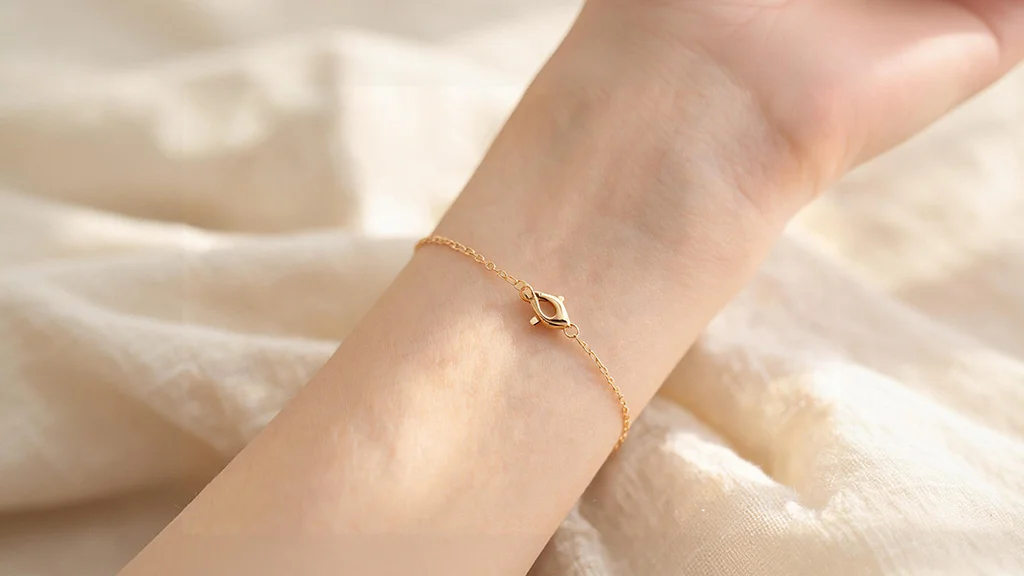
Table of Contents
Most people choose a bracelet by its metal, its stones, or the way it catches the light. The clasp is an afterthought — until the moment it slips open on a crowded train, snags on a sweater sleeve, or takes two hands and a mirror to fasten every single morning. In fine jewelry, the clasp is not a footnote to the design; it is a load-bearing part of it. It determines whether a bracelet becomes an everyday piece or a special-occasion piece that spends most of its life in a drawer.
As a manufacturer producing bracelets across gold, platinum, and gemstone lines for retail and wholesale partners in the US, UK, and EU, we get asked about clasp choice more than almost any other design detail. This guide covers the 14 clasp types you are most likely to encounter, how they actually work, which bracelet styles they suit, and the regulatory and sourcing details that matter if you are buying — or manufacturing — at scale.
How Bracelet Clasps Work: The Three Mechanical Families
Nearly every clasp on the market falls into one of three mechanical categories. Understanding these families makes it much easier to predict how a clasp will behave in daily wear, even before you know its name.
- Spring-loaded clasps (lobster claw, spring ring, push-button catches) use an internal coiled spring and a lever or button to open and close. They are fast to use but the spring is the eventual point of failure — it fatigues and weakens after years of repeated opening.
- Friction and slide clasps (bolo sliders, tube/slide-locks, fold-over clasps) rely on tension between two surfaces rather than a spring. They are usually easier on the hands but can loosen gradually as the friction surfaces wear.
- Mechanical lock clasps (box clasps, barrel/screw clasps, toggle clasps, padlocks) use a rigid geometric lock — a tongue in a box, threads on a screw, a bar through a ring. These tend to be the most secure over the long term because there is no spring to weaken, only metal that must physically bend or break to fail.
The 14 Most Common Types of Bracelet Clasps
Lobster Claw Clasp
How it works: A spring-loaded lever pulls back a hinged metal jaw shaped like a lobster's pincer. Releasing the lever snaps the jaw shut around a jump ring, locking it closed automatically.
Best for: Chain bracelets, charm bracelets, and everyday fine jewelry that gets worn daily.
Security: High Comfort/Ease: Moderate — one-handed with practice Cost impact: Low–Medium
Sourcing tip: The most universally available clasp for OEM production; ask your manufacturer whether the spring housing is soldered or cast, as soldered lobster clasps hold up better under repeated daily use.
Spring Ring Clasp
How it works: A small hollow ring contains a coiled spring and trigger lever. Pulling the lever back opens a gap in the ring; releasing it closes the ring around a jump ring or chain end.
Best for: Lightweight, delicate chain bracelets where a bulky clasp would unbalance the design.
Security: Medium Comfort/Ease: Difficult for small sizes Cost impact: Low
Sourcing tip: The smallest spring ring clasps are notoriously hard for end customers to operate one-handed — if targeting a mature demographic, size up or specify a lobster claw instead.
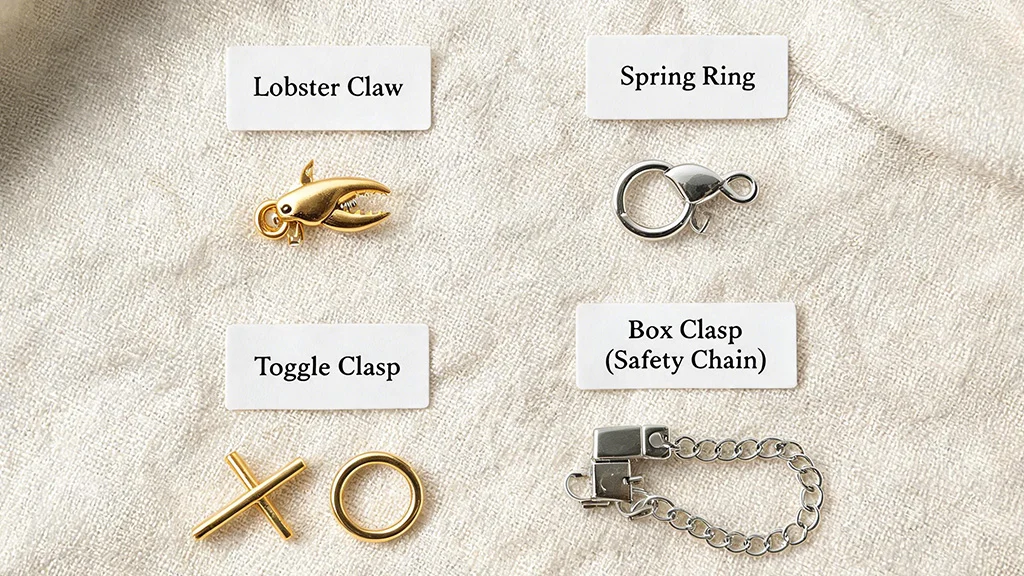
Toggle Clasp
How it works: A T-shaped bar is passed through an open ring and rotated horizontally, where its own length holds it in place against the ring's edge.
Best for: Statement and chunkier bracelets, including men's designs, where the clasp doubles as a visible design element.
Security: Medium Comfort/Ease: Easy — no springs or levers Cost impact: Low–Medium
Sourcing tip: Toggles rely on bracelet weight to stay seated; specify a bar at least 1.5x the ring's inner diameter to prevent slippage on lighter-weight pieces.
Box Clasp with Figure-Eight Safety
How it works: A folded metal tongue compresses as it slides into a rectangular box housing, then springs open inside to lock against the interior walls. A secondary figure-eight wire latch folds over an external knob as a backup.
Best for: Diamond tennis bracelets and other designs built around a continuous, uninterrupted line of stones.
Security: High Comfort/Ease: Moderate Cost impact: Medium–High
Sourcing tip: The safety latch is not optional on tennis bracelets — insist on it in your production spec, as the box mechanism alone can lose tension over years of wear.
Hidden (Invisible) Clasp
How it works: The locking mechanism sits underneath the final links or stones of the bracelet, concealed from view so the piece reads as one continuous, unbroken line when worn.
Best for: High-end eternity and diamond-line bracelets where visual continuity is the entire point of the design.
Security: High Comfort/Ease: Moderate — release trigger can be hard to locate Cost impact: High
Sourcing tip: Hidden clasps require precision tooling and add meaningful assembly time; factor this into MOQ and per-unit cost discussions with your OEM partner.
Magnetic Clasp
How it works: Two halves, each containing a rare-earth magnet of opposite polarity, snap together on contact and separate with a sideways slide or firm pull.
Best for: Lightweight fashion pieces and adaptive jewelry for customers with limited hand dexterity or arthritis.
Security: Low–Medium Comfort/Ease: Very Easy Cost impact: Low
Sourcing tip: Never pair a magnetic clasp with a bracelet over roughly 20 grams — the magnetic bond shears apart under load, and this is one of the most common warranty complaints in the category.
Barrel (Screw) Clasp
How it works: Two threaded metal barrels twist together like a bolt and nut until they sit flush, forming what looks like a single bead.
Best for: Beaded and pearl strand bracelets where a seamless, screw-secure closure is worth the slower fastening process.
Security: Very High Comfort/Ease: Difficult — needs two hands Cost impact: Low–Medium
Sourcing tip: Because it cannot open accidentally, this is a strong option for shipping bracelets internationally where a clasp popping open in transit is a real return risk.
Fishhook (Pinch-Box) Clasp
How it works: A flattened, hook-shaped tongue slides into an oval box and catches on an internal bar. Squeezing the sides of the hook releases it.
Best for: Pearl bracelets and vintage-style pieces, where a decorative filigree box is often part of the design.
Security: High Comfort/Ease: Moderate Cost impact: Medium
Sourcing tip: Popular with EU heritage and vintage-inspired collections — the pinch-and-slide release doubles as a natural safety feature worth highlighting in product copy.
Bolo (Slider) Clasp
How it works: A central bead with a silicone or rubber lining slides freely along two cords or chains, gripping by friction wherever it is positioned.
Best for: Adjustable bracelets sold as gifts, where the recipient's exact wrist size is unknown.
Security: Medium Comfort/Ease: Very Easy Cost impact: Low–Medium
Sourcing tip: Adjustable bolo styles reduce return rates for gifted jewelry since sizing uncertainty is removed — a strong merchandising point for holiday and gifting campaigns.
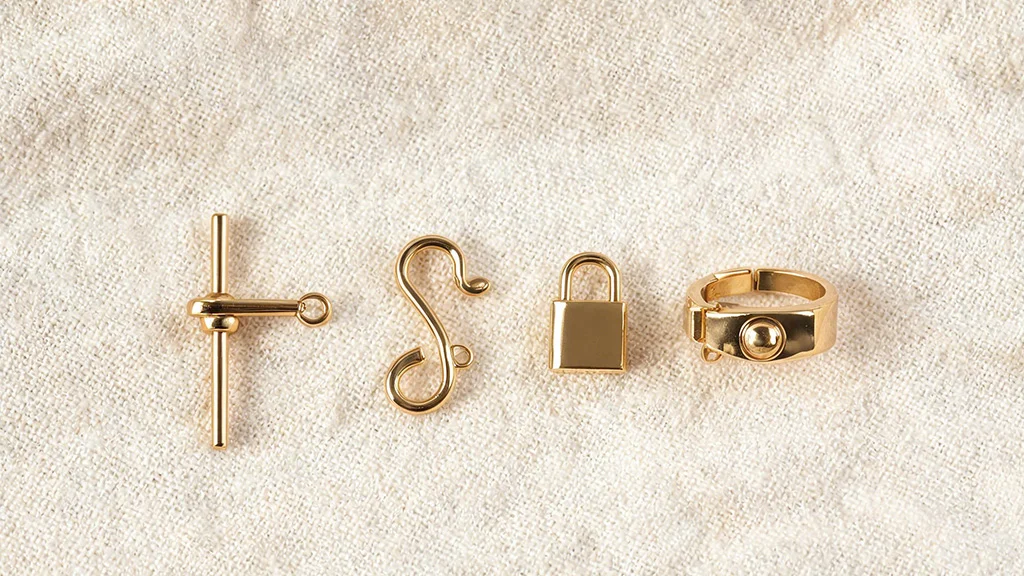
S-Hook Clasp
How it works: A solid piece of metal bent into an S or shepherd's-hook shape loops onto a ring at the opposite end, held closed purely by the rigidity of the metal.
Best for: Rustic, artisan, and leather-cord bracelets where a visible, hand-forged-looking clasp fits the aesthetic.
Security: Medium Comfort/Ease: Easy Cost impact: Low
Sourcing tip: Specify the gauge (thickness) of the hook carefully — a hook gap that is too wide is the single most common cause of an S-hook working itself loose.
Padlock Clasp
How it works: A hinged hasp, shaped like a working padlock, threads through loops on each end of the bracelet and clicks into a snap-fit or key mechanism.
Best for: Charm bracelets and curb-link chains, especially in the current trend toward lock-and-key motifs.
Security: High Comfort/Ease: Moderate — two loops to align Cost impact: Medium–High
Sourcing tip: Padlock clasps are trending across the US and EU markets; the added weight often causes the bracelet to sit lower and more visibly, which is worth calling out in product photography.
Push-Button Catch
How it works: Built into the body of a hinged bangle, a side button or lever releases an internal catch so the two halves swing open; closing the bangle re-engages the catch automatically.
Best for: Bangles and rigid cuff-style bracelets, including tennis-bracelet variants built on a hinge rather than a flexible chain.
Security: Medium Comfort/Ease: Very Easy Cost impact: Medium
Sourcing tip: This is the only clasp type built into the bracelet's structure rather than attached at the ends — tooling costs are higher, but it eliminates a visible external clasp entirely.
Fold-Over Clasp
How it works: A hinged flap folds over a base plate and snaps onto a small lip, creating a flat profile once closed.
Best for: Watch-style bracelets and flat link chains where comfort against the wrist matters more than decorative flair.
Security: Medium Comfort/Ease: Easy Cost impact: Low–Medium
Sourcing tip: The flattest clasp profile in this list — a good option for men's bracelets and watch-adjacent pieces where the clasp needs to sit flush under a cuff.
Multi-Strand Slide-Lock (Tube Clasp)
How it works: Two cylindrical tubes, each attached to multiple strand ends, slide together and lock via friction or a secondary latch, holding all strands parallel.
Best for: Multi-strand pearl and gemstone bracelets where several strands need to stay aligned and untangled.
Security: Medium–High Comfort/Ease: Moderate Cost impact: Medium
Sourcing tip: Bent tubes are the top failure mode — specify reinforced tube walls if the design will be shipped flat-packed rather than boxed upright.
Bracelet Clasp Comparison at a Glance
Use this table as a quick-reference guide when briefing a designer, comparing supplier quotes, or explaining clasp options to a customer.
|
Clasp Type |
Security |
Ease of One-Hand Use |
Best For |
Mfg. Cost Impact |
Common Metals |
|---|---|---|---|---|---|
|
Lobster Claw |
High |
Moderate |
Chain & charm bracelets |
Low–Medium |
Brass, sterling, gold-filled, solid gold |
|
Spring Ring |
Medium |
Difficult |
Fine delicate chains |
Low |
Sterling, gold-filled |
|
Toggle |
Medium |
Easy |
Statement & chunky bracelets |
Low–Medium |
Sterling, brass, solid gold |
|
Box Clasp + Safety-8 |
High |
Moderate |
Tennis bracelets, bangles |
Medium–High |
Solid gold, platinum |
|
Hidden/Invisible |
High |
Moderate |
Continuous gemstone lines |
High |
Solid gold, platinum |
|
Magnetic |
Low–Medium |
Very Easy |
Casual, lightweight pieces |
Low |
Stainless, plated brass |
|
Barrel/Screw |
Very High |
Difficult |
Beaded & pearl strands |
Low–Medium |
Sterling, gold-filled |
|
Fishhook (Pinch-Box) |
High |
Moderate |
Pearl & vintage bracelets |
Medium |
Solid gold, sterling |
|
Bolo/Slider |
Medium |
Very Easy |
Adjustable friendship bracelets |
Low–Medium |
Sterling, gold-filled |
|
S-Hook |
Medium |
Easy |
Rustic, artisan, leather |
Low |
Sterling, brass |
|
Padlock |
High |
Moderate |
Charm & curb-link bracelets |
Medium–High |
Solid gold, sterling |
|
Push-Button Catch |
Medium |
Very Easy |
Hinged bangles |
Medium |
Solid gold, platinum |
|
Fold-Over |
Medium |
Easy |
Watch-style, flat-link bracelets |
Low–Medium |
Gold-filled, sterling |
|
Multi-Strand Slide-Lock |
Medium–High |
Moderate |
Multi-strand pearl/gemstone |
Medium |
Sterling, gold-filled |
How to Choose the Right Clasp
By Bracelet Weight and Style
- Lightweight, delicate chains → spring ring or lobster claw
- Statement or chunky designs → toggle or padlock
- Continuous gemstone lines (tennis bracelets) → box clasp with safety latch, or hidden clasp
- Multi-strand beaded or pearl pieces → barrel clasp or multi-strand slide-lock
By Lifestyle
- Active, worn daily without removal → lobster claw or box clasp with safety
- Formal or occasion-only pieces → toggle, padlock, or hidden clasp
- Gifting when wrist size is unknown → bolo/slider for adjustability
By Dexterity Needs
Magnetic and bolo clasps require the least hand strength and dexterity, making them well suited to older customers or anyone with arthritis. Spring ring clasps require the most fine motor control and are the hardest to recommend for this group.
By Budget and Manufacturing Tier
Spring rings, S-hooks, and basic lobster claws sit at the lower end of production cost. Hidden clasps, push-button bangle catches, and box clasps with figure-eight safety latches require more precise tooling and assembly time, which shows up in per-unit OEM pricing.
Regulatory & Quality Considerations for Fine Jewelry Clasps
Clasps are small, but they are subject to the same metal-quality and safety regulations as the rest of the bracelet — and because a clasp sits in prolonged contact with skin, it is sometimes scrutinized more closely than the chain or gemstones it holds.
- EU nickel release limits (REACH Annex XVII): Clasps intended for direct and prolonged skin contact are subject to the EU's nickel release limit of 0.5 μg/cm²/week. This applies to base-metal and plated clasps used on gold-filled or vermeil bracelets, not just solid gold pieces.
- UK Hallmarking Act 1973: In the UK, a clasp made from precious metal above the exemption weight threshold may require its own hallmark if it is sold or represented as solid gold, silver, or platinum, separate from the hallmark on the main body of the bracelet.
- US FTC Jewelry Guides (16 CFR Part 23): US guidance requires that metal quality markings (e.g., "14K") accurately reflect every soldered component, including the clasp — a solid gold chain fitted with a base-metal clasp cannot be marketed as solid gold throughout without disclosure.
- Solid gold vs. gold-filled clasps: Gold-filled clasps are more resistant to base-metal exposure through plating wear than gold-plated clasps, but neither matches the spring-fatigue resistance of a solid gold or solid sterling silver mechanism over years of daily use.
For Brands and Retailers: Sourcing Clasps at Scale
Clasp choice is a manufacturing decision as much as a design one. A few considerations that matter disproportionately once you move from single pieces to production runs:
- Tooling and branding: custom clasps stamped with a house logo require dedicated tooling, which typically only makes sense above a certain MOQ — ask your manufacturer for the break-even quantity before committing.
- Common failure points in mass production: spring fatigue in lobster claws and spring rings, plating wear on magnetic clasp housings, and tension loss in box-clasp tongues are the three most frequent post-sale complaints across production runs.
- Quality control checkpoints: request that your QC process specifically tests clasp open/close cycles (not just visual inspection), particularly for spring-loaded mechanisms, since a clasp can look correct and still fail functionally.
- Component sourcing flexibility: many OEM partners can swap clasp type on an existing chain or bracelet design at low tooling cost, which is a fast way to create tiered price points from the same base design.
Frequently Asked Questions
Barrel (screw) clasps and box clasps with a figure-eight safety latch are generally considered the most secure, since both require deliberate action to open rather than a spring or magnet that can release under pressure.
Magnetic and bolo/slider clasps require the least dexterity. Toggle clasps are also relatively easy since they involve no spring or lever.
Not recommended. Magnetic clasps are best suited to lighter pieces — heavier bracelets, including most diamond tennis bracelets, are better matched with a box clasp and safety latch.
Yes, though more slowly than base-metal clasps. Spring-loaded mechanisms — even in solid gold — experience metal fatigue over years of daily opening and closing, which is why periodic inspection is recommended regardless of metal quality.
A bolo or slider clasp is the safest choice, since it allows the wearer to adjust the fit themselves without professional resizing.
Find the Right Clasp for Your Next Collection
Whether you are a retail customer choosing a bracelet that will genuinely get worn every day, or a brand sourcing production at scale, clasp selection is worth the same attention as metal purity or stone quality. Explore Provence Jewellery's bracelet collections to see these clasp types in finished pieces, or reach out to our wholesale team to discuss custom clasp specifications, MOQs, and OEM production for your next line.