
15 Types of Purple Gemstones: The Complete Guide & Pricing
- Written by Provence Team
- Updated on June 24, 2026
Table of Contents
Purple has been the color of power for as long as humans have been mining the earth for beauty. Long before synthetic dye, a single gram of Tyrian purple took thousands of crushed sea snails to produce — which is why, for centuries, only royalty wore it. Purple gemstones inherited that same exclusivity. Even today, true purple is one of the rarest colors found in nature, which is exactly why these stones command such attention in fine jewelry.
This guide covers 15 purple gemstones, organized the way a jeweler actually thinks about them: by durability, by price, and by what they're realistically good for. You'll find a quick-reference pricing table, a breakdown of which stones can survive daily wear versus which belong in earrings and pendants, a look at lab-grown purple gemstone options, and buying guidance drawn from the manufacturing side of the industry — not just the marketing side.
As a fine jewelry manufacturer that exhibits annually at JCK Las Vegas and produces gemstone jewelry for both retail and wholesale clients across the US and Europe, we see these stones move through grading, cutting, and setting every day. That's the perspective behind this guide.
Types of Purple Gemstones at a Glance
Before diving into each stone individually, here's how the major purple gemstones compare on hardness, price, and use case. Bookmark this table — you'll want to reference it while reading the full profiles below.
|
Gemstone |
Mohs Hardness |
Avg. Price/Carat (USD) |
Best For |
Birthstone Month |
|---|---|---|---|---|
|
Amethyst |
7 |
$2 – $30 |
Everyday rings, earrings, pendants |
February |
|
Purple Sapphire |
9 |
$300 – $1,500+ |
Engagement & daily-wear rings |
— |
|
Purple Spinel |
7.5 – 8 |
$100 – $600 |
Sapphire alternative, daily wear |
August (modern) |
|
Purple Tourmaline |
7 – 7.5 |
$100 – $500 |
Rings, bracelets, daily wear |
October |
|
Purple Topaz |
8 |
$20 – $100 |
Budget daily-wear pieces |
November |
|
Purple Zircon |
6 – 7.5 |
$50 – $300 |
Statement rings, earrings |
— |
|
Tanzanite |
6 – 7 |
$300 – $1,200+ |
Statement & special-occasion pieces |
December |
|
Purple Garnet (Rhodolite) |
7 – 7.5 |
$50 – $400 |
Daily-wear rings & pendants |
January |
|
Kunzite |
6 – 7 |
$20 – $150 |
Occasional-wear statement pieces |
— |
|
Iolite |
7 – 7.5 |
$20 – $80 |
Faceted rings, earrings, pendants |
— |
|
Lavender Jade |
6 – 7 |
$50 – $500+ |
Cabochon pendants, bangles |
— |
|
Sugilite |
5.5 – 6 |
$10 – $100 |
Pendants, brooches, cabochons |
— |
|
Purple Fluorite |
4 |
$5 – $40 |
Pendants & earrings only |
— |
|
Charoite |
5 – 6 |
$10 – $80 |
Cabochon pendants, display pieces |
— |
Note: Pricing reflects typical retail ranges for natural, commercial-to-fine quality stones as of 2026 and varies significantly with carat weight, clarity, and treatment status.
Purple Gemstones for Everyday Wear (Mohs 7+)
If you're buying a ring you intend to wear daily — especially an engagement ring — hardness matters more than almost any other factor. The Mohs scale measures scratch resistance, and anything below a 7 will show wear over years of daily contact with countertops, dishes, and doorknobs. These six purple gemstones can realistically handle that.
1. Amethyst
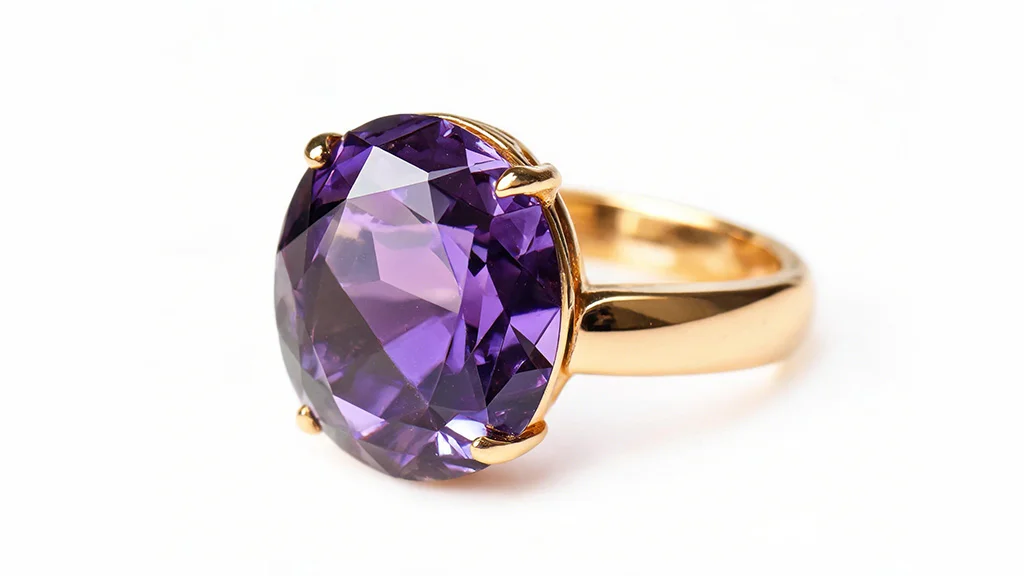
Amethyst is the gemstone most people picture when they hear “purple gemstone,” and for good reason. It's a variety of quartz, one of the most abundant minerals on Earth, which keeps prices low even at larger carat weights. Color ranges from pale lilac to a deep, almost grape-skin purple, with the most prized material showing strong, even saturation without visible color zoning.
Amethyst forms in geode pockets, often in volcanic rock, with major deposits in Brazil, Uruguay, and Zambia. At a 7 on the Mohs scale, it holds up well in rings, earrings, and necklaces. It's the official February birthstone, and at $2–$30 per carat for most commercial-to-fine quality material, it remains one of the best-value colored stones in the entire market.
Best for: Engagement rings on a budget, statement cocktail rings, everyday earrings.
2. Purple Sapphire
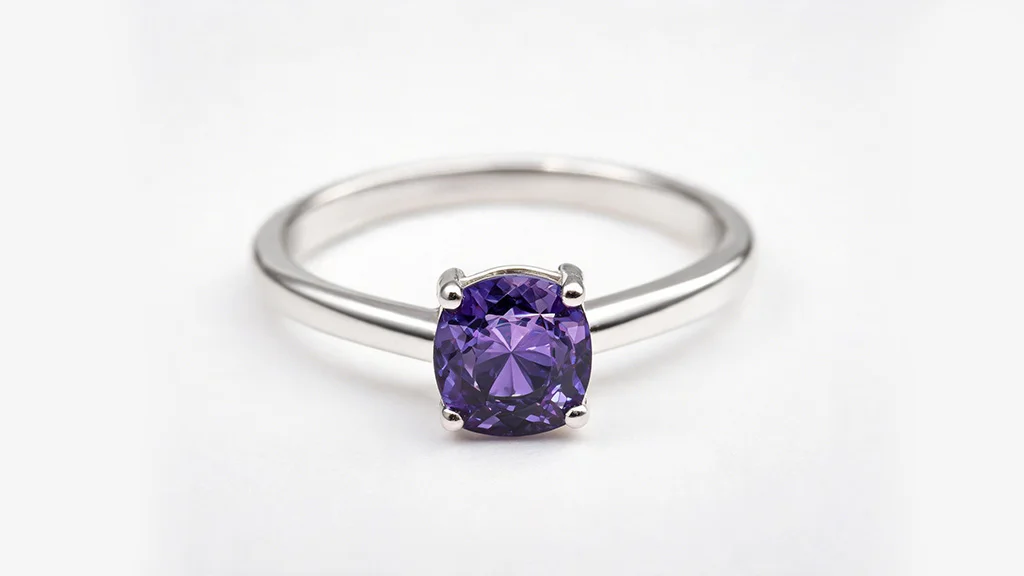
Purple sapphire is corundum — the same mineral family as ruby and blue sapphire — colored by trace amounts of iron, titanium, and chromium. At a 9 on the Mohs scale, it's exceeded in hardness only by diamond, which makes it one of the most durable colored stones available for a daily-wear ring.
Purple sapphires are genuinely rare. Many would-be purple sapphires get heat-treated into pink sapphire instead, since pink commands a higher price per carat in the current market, which thins out the supply of untreated purple material. Sources include Sri Lanka, Madagascar, and Myanmar. Expect to pay $300–$1,500+ per carat depending on saturation and clarity. In the trade, you may also hear these called “rose sapphires” or “plum sapphires.”
Best for: Engagement rings, heirloom pieces, anyone who wants sapphire's durability in an unconventional color.
3. Purple Spinel
For most of history, spinel was mistaken for ruby and sapphire — several stones in European crown jewels labeled as “ruby” for centuries later turned out to be spinel. Purple spinel gets its color from trace chromium and iron, and it now stands on its own as a respected gemstone rather than a stand-in for something else.
With a hardness of 7.5–8, purple spinel is reliably durable, almost always untreated, and notably affordable for what it offers: comparable brilliance to sapphire at a fraction of the price. Sri Lanka, Myanmar, and Tanzania are the primary sources. At $100–$600 per carat, it's a smart sapphire alternative for buyers who want rarity and an interesting backstory.
Best for: Buyers seeking an untreated, durable alternative to sapphire at a lower price point.
4. Purple Tourmaline
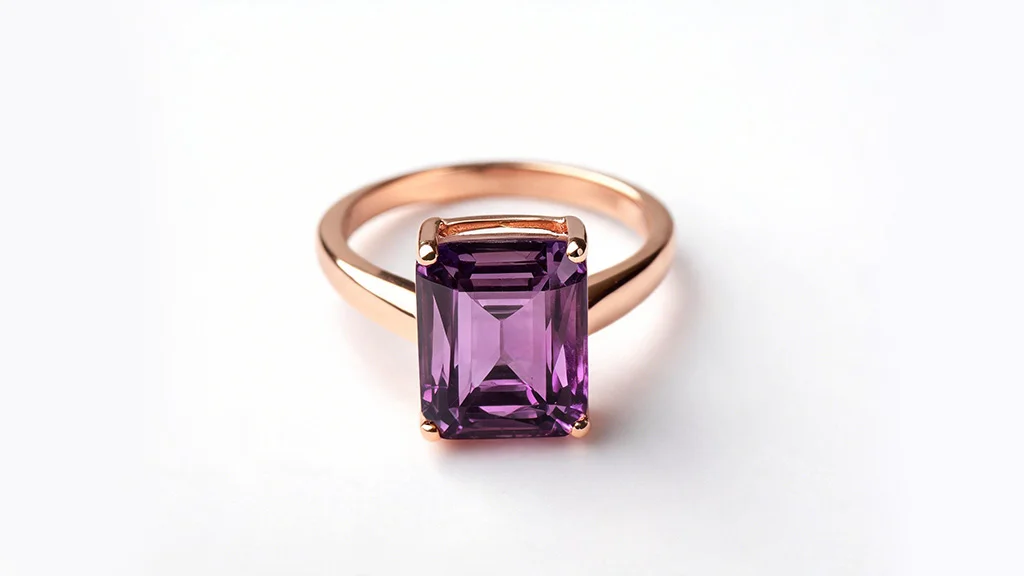
Tourmaline is famous for its color range, and purple is one of its more affordable expressions — especially compared to tourmaline's red and pink varieties. Trace manganese produces tones from soft lilac to a rich, saturated violet, occasionally marketed under the historic name “siberite.”
At 7–7.5 on the Mohs scale, purple tourmaline is genuinely suited to daily wear, including rings. It's the official October birthstone and often shows excellent clarity. Brazil, Afghanistan, and several African nations supply most of the market's purple material. Expect $100–$500 per carat for good-quality stones.
Best for: October birthstone jewelry, daily-wear rings and bracelets, buyers who want durability without sapphire pricing.
5. Purple Topaz
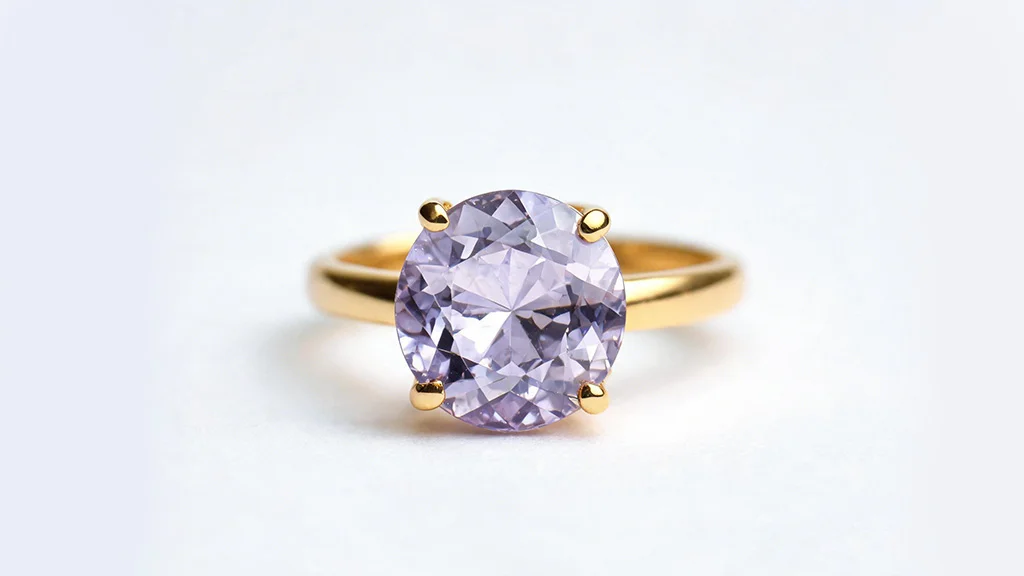
Topaz is best known in blue and Imperial orange, but it occurs naturally in purple tones as well, generally on the softer, more pastel end of the purple spectrum. With a hardness of 8, it takes an exceptional polish — gemologists sometimes describe well-cut topaz as feeling almost “slippery” to the touch.
As the November birthstone, purple topaz is a practical, durable option for buyers who want a purple stone without spending sapphire money. At $20–$100 per carat, it's one of the most accessible hard gemstones on this list.
Best for: Budget-conscious daily-wear pieces, November birthstone gifts.
6. Purple Zircon
Not to be confused with cubic zirconia, natural zircon is a distinct mineral known for exceptional brilliance and fire — its high refractive index means well-cut zircon can rival diamond for sparkle. Purple zircon ranges from soft lavender to deep violet and is typically the result of trace elements or heat treatment.
At 6–7.5 on the Mohs scale, purple zircon sits at the lower edge of daily-wear durability, so it's better suited to rings worn with some care, or to earrings and pendants that see less impact. Cambodia, Sri Lanka, and Myanmar are the main sources. Pricing runs $50–$300 per carat for stones with good clarity and color.
Best for: Statement earrings and pendants, rings for buyers comfortable with moderate care requirements.
Purple Gemstones for Occasional Wear (Mohs 5–7)
This tier covers gemstones with moderate hardness — beautiful, often rarer and more expensive than Tier 1, but better suited to earrings, pendants, and rings that won't see daily knocks. With proper settings and reasonable care, they make stunning special-occasion and statement pieces.
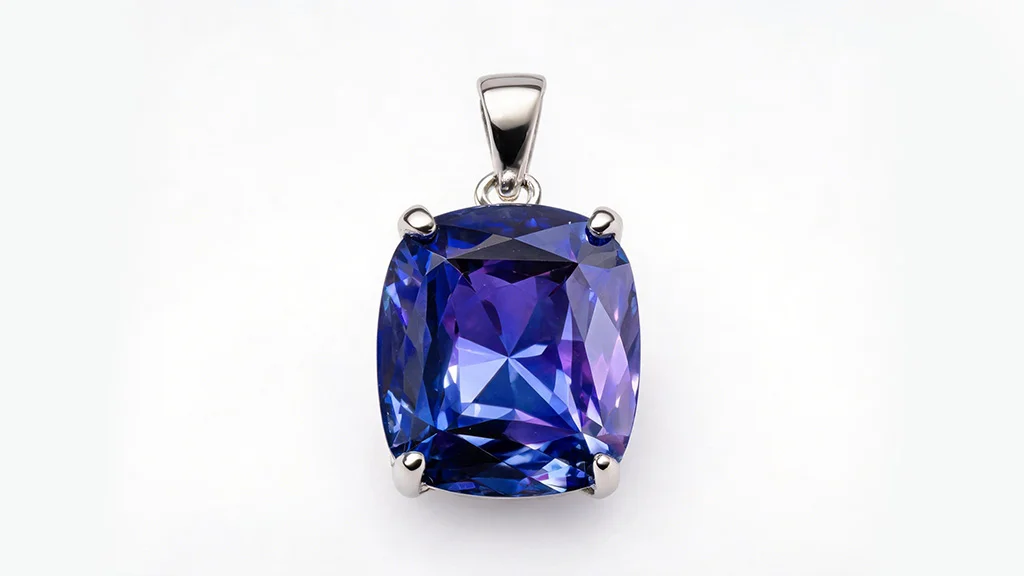
Tanzanite is found in exactly one place on Earth: a roughly 8-square-mile area near Mount Kilimanjaro in Tanzania. Trace vanadium produces its signature blue-violet color, and the stone displays strong pleochroism — meaning it shows different colors (blue, violet, or burgundy) depending on the viewing angle. Most tanzanite on the market is cut to emphasize blue, since blue-dominant stones command higher prices; purple-forward tanzanite is comparatively rare and worth seeking out for buyers who specifically want that color.
At 6–7 on the Mohs scale, tanzanite needs a protective setting and shouldn't be worn for rough activity, but it holds up well in pendants, earrings, and rings designed for occasional wear. It's a modern December birthstone. Because the deposit is finite and geologists estimate it could be depleted within a couple of decades, tanzanite carries genuine investment appeal alongside its beauty. Expect $300–$1,200+ per carat depending on color and clarity.
Best for: December birthstone pieces, collector-grade statement jewelry, pendants and earrings.
8. Purple Garnet (Rhodolite)
Garnet covers a wide family of related minerals, and the purple-to-purplish-red varieties — most often sold as rhodolite — come from blends of the almandine and pyrope species. The color tends toward a rich raspberry or wine tone rather than true violet, with excellent brilliance thanks to garnet's high refractive index.
At 7–7.5 on the Mohs scale, purple garnet is actually durable enough for regular wear, sitting at the upper end of this tier. It's the January birthstone, sourced largely from Madagascar, Tanzania, and Mozambique, and rarely treated. At $50–$400 per carat, it's an underrated alternative to amethyst for buyers who want more saturation and sparkle.
Best for: January birthstone jewelry, an upgrade alternative to amethyst with more fire.
9. Kunzite
Kunzite is a relatively young discovery in gemstone terms — first described in 1902 by gemologist George Frederick Kunz, who lends the stone its name. It's a variety of spodumene, with trace manganese producing soft pink-to-violet hues. Kunzite often forms in very large, clean crystals, which is why it's available in large carat sizes at surprisingly low cost.
At 6–7 on the Mohs scale, kunzite is moderately durable, but it has one important quirk: prolonged exposure to strong light or heat can fade its color over time. It's best kept for evening wear and stored away from direct sunlight. Significant deposits come from Afghanistan, Brazil, Madagascar, and the United States. At $20–$150 per carat, it's an accessible way to get a large, romantic-looking stone.
Best for: Large statement pieces on a budget, pendants and earrings kept out of direct sun.
10. Iolite
Iolite carries one of the better stories in gemology: Viking navigators are believed to have used thin slices of iolite as a polarizing filter to locate the sun's position on overcast days, earning it the nickname “Viking's Compass.” It's gem-quality cordierite, and its hallmark trait is strong pleochroism — violet-blue from one angle, nearly colorless or yellowish-gray from another.
At 7–7.5 on the Mohs scale, iolite is harder than its “occasional wear” placement might suggest, but its pleochroism means cutting it well requires real skill, and poorly oriented stones can look washed out. India, Sri Lanka, Madagascar, and Tanzania are the main sources. At $20–$80 per carat, it's one of the most affordable transparent purple-blue stones available.
Best for: Faceted rings and earrings for buyers who appreciate pleochroism and a strong origin story.
11. Lavender Jade
Most people picture jade as green, but jadeite — one of the two minerals classified as jade — also occurs naturally in a soft purple known as lavender jade. It's the second most valuable jade color after green, prized in Chinese and broader Asian jewelry traditions for thousands of years, with the finest pieces showing even, consistent color rather than the mottled tone more commonly seen.
At 6–7 on the Mohs scale, jade's interlocking crystal structure makes it tougher than its hardness number suggests — it resists chipping better than many harder stones, which is why it has historically been carved into intricate pieces. Pricing varies enormously by translucency and evenness of color, generally running $50–$500+ per carat.
Best for: Cabochon pendants, bangles, and jewelry drawing on Asian design traditions.
12. Sugilite
Sugilite is an opaque stone in vivid purple-to-violet tones, sometimes streaked with pink, red, or black. First identified in Japan in the 1940s, the gem-quality material that supplies most of today's market comes from South Africa. It's occasionally sold under trade names like “Royal Lavulite” or “Royal Azel.”
At 5.5–6 on the Mohs scale, sugilite is best reserved for pendants, brooches, and earrings rather than rings. It's almost always cut as cabochons rather than faceted. At $10–$100 per carat, it offers a bold, saturated purple at an accessible price.
Best for: Cabochon pendants and earrings, buyers who want opaque, highly saturated color.
Purple Gemstones for Collectors & Display (Below Mohs 5)
These stones are genuinely beautiful but too soft for regular jewelry wear. They belong in protective settings worn occasionally, or as display and collector pieces rather than everyday adornment.
13. Purple Fluorite
Fluorite occurs in nearly every color, and purple is among its most popular. The mineral is colorless in its pure form; irradiation or heat during formation displaces ions within its crystal lattice to produce color. Fluorite has perfect cleavage in four directions, which is the technical way of saying it splits easily — a defining trait of its softness.
At a 4 on the Mohs scale, fluorite is genuinely fragile and unsuited to rings or bracelets. It works best in pendants and earrings that avoid impact, ideally in protective bezel settings. China, Mexico, and Namibia are major sources. At $5–$40 per carat, it's one of the most affordable purple gems on the market — a favorite with collectors and mineral specimen buyers.
Best for: Protected pendant and earring settings, mineral collectors, display pieces.
14. Charoite
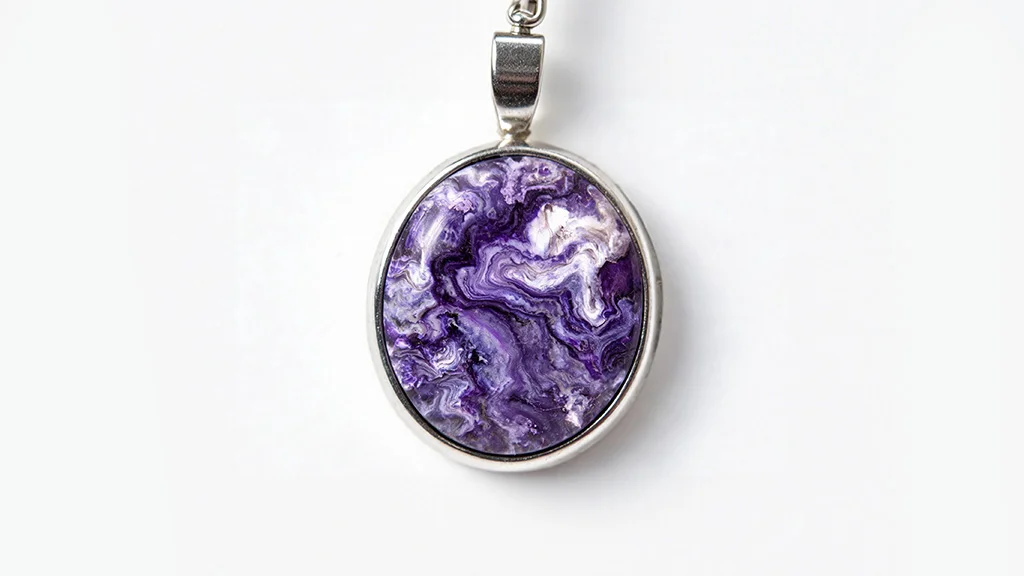
Charoite is found in exactly one place on Earth — a remote region of Siberia, Russia — and it isn't a single mineral but a “gem rock” composed of several minerals, including feldspar and quartz. Its signature look is swirling, almost marbled purple patterns, often threaded with distinctive white, string-like inclusions nicknamed “granny hair” in the trade.
At 5–6 on the Mohs scale, charoite needs protective settings and gentle handling. It's almost always cut into cabochons to showcase its swirling pattern, since each piece is genuinely one-of-a-kind. At $10–$80 per carat, it's an affordable way to own a stone with real geological rarity.
Best for: Cabochon pendants and earrings, collectors drawn to one-of-a-kind patterning.
Lab-Grown Purple Gemstones
Lab-grown colored gemstones have matured significantly as a category, and purple is well represented. Lab-created amethyst, lab sapphire, and lab spinel are now widely available, produced with the same chemical composition and crystal structure as their natural counterparts — the difference is origin, not authenticity.
- Lab-grown amethyst is chemically identical to natural amethyst and typically costs less per carat, though natural amethyst is already so affordable that the price gap is smaller here than with rarer stones.
- Lab sapphire in purple tones offers the same 9-hardness durability as natural purple sapphire at a fraction of the price, making it a popular choice for buyers who want sapphire's daily-wear performance without the rarity premium.
- Lab spinel is grown in a wide range of purple tones with excellent clarity, since lab growth avoids the inclusions common in natural material.
For buyers weighing natural versus lab-grown more broadly — including how this plays out with diamonds and moissanite — we cover the tradeoffs in detail in our guide to lab-grown diamonds versus moissanite.
Light vs. Dark Purple: Choosing Your Shade
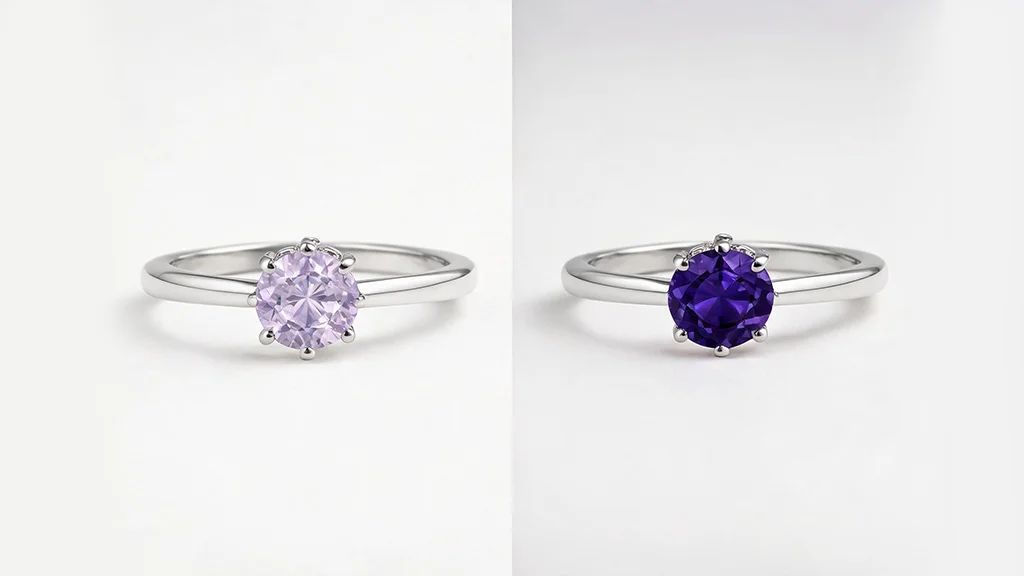
Purple gemstones span a wide tonal range, and the shade you choose changes the entire feel of a piece.
- Light purple gems — lavender, lilac, soft mauve — read as romantic, modern, and versatile. Kunzite, lavender jade, light amethyst, and pale fluorite all fall into this category.
- Dark purple gems — royal purple, deep violet, plum — read as bold and formal. Deep amethyst, purple sapphire, tanzanite, and charoite anchor this end of the spectrum.
Metal choice changes the effect further. White gold and platinum sharpen a stone's cool, violet-blue undertones, making them a strong pairing for tanzanite and purple sapphire. Yellow gold adds warmth and contrast, which flatters deep amethyst and purple garnet particularly well. Rose gold softens purple tones into something more romantic, a popular pairing for kunzite and lighter amethyst.
Purple Gemstones for Engagement Rings: What Actually Holds Up
Engagement rings face a different durability standard than occasional-wear jewelry, since they're typically worn every day, including during manual tasks, exercise, and sleep. If you're considering a purple stone for an engagement ring specifically, narrow your options to Tier 1:
- Purple sapphire (Mohs 9) is the strongest choice, on par with the durability standards used for traditional diamond engagement rings.
- Amethyst (Mohs 7), purple spinel (7.5–8), and purple tourmaline (7–7.5) are all viable with a protective setting — a bezel or low-profile prong setting reduces the risk of chipping at the edges.
- Softer, rarer stones like tanzanite, kunzite, and garnet can work as engagement ring centerstones if the wearer is comfortable with occasional re-polishing and more cautious daily wear, but they're better suited to anniversary rings or right-hand rings than a stone worn through manual labor or sports.
A protective setting matters more than people expect. A bezel setting that wraps metal around the stone's edge meaningfully reduces chip risk on anything below a 7.5, which opens up several beautiful purple stones that would otherwise be too risky for daily wear in an exposed prong setting.
How Purple Gemstones Are Sourced & Graded
Most buying guides stop at “where it's mined” and “what it symbolizes.” From the manufacturing side, sourcing and grading purple gemstones at scale involves a few additional layers worth understanding if you're buying — or commissioning — fine jewelry.
Origin & Treatment Disclosure
Reputable suppliers disclose treatment status as standard practice: whether a stone is heat-treated (common and accepted for sapphire, tanzanite, and several others), irradiated (common for some fluorite and topaz), or untreated. Treatment isn't inherently a red flag — it's industry-standard for many stones — but it should always be disclosed, and it affects price per carat.
Certification
For higher-value purple stones — sapphire, tanzanite, spinel above a few carats — a grading report from a recognized gemological laboratory (such as GIA or AIGS) verifies species, treatment, and sometimes origin. This matters most for stones where natural and lab-grown or treated material can look identical to the naked eye.
Color & Cut Grading
Unlike diamonds, colored stones don't follow one universal grading system, but the same underlying factors apply across the board: hue (how purple versus how blue or red the stone leans), saturation (intensity of color), tone (lightness or darkness), and clarity (visible inclusions). A well-cut purple stone maximizes color return through the face-up view, which is why two stones with identical chemistry can look dramatically different depending on cutting quality.
For brands and retailers sourcing purple gemstone jewelry at volume, working directly with a manufacturer that handles grading, cutting, and setting in-house — rather than through multiple middlemen — generally means tighter quality control and more consistency across a production run, which matters when you're filling wholesale orders or building a private-label collection.
Caring for Purple Gemstone Jewelry
Care requirements track closely with the durability tiers above, so we'll keep this section practical rather than repeating the hardness ratings already covered.
- Clean gently. Warm water, mild soap, and a soft cloth or brush handle nearly all purple gemstones safely. Skip ultrasonic and steam cleaners for anything in Tier 2 or Tier 3 — the vibration and heat can crack softer or included stones.
- Watch light and heat exposure. Kunzite and amethyst can fade with prolonged sun exposure. Store pieces in a cool, dark space when not being worn.
- Remove jewelry before chemical exposure. Perfume, lotion, and household cleaners can dull luster or damage surface polish, especially on Tier 2 and 3 stones.
- Store separately. Soft pouches or lined compartments prevent stones from scratching each other — particularly important since several purple gemstones can scratch one another despite both being “moderately hard.”
- Schedule periodic check-ups. For rings worn daily, an annual prong and setting check from a jeweler catches loose stones before they're lost.
Frequently Asked Questions
Tanzanite and natural, untreated purple sapphire are generally considered the rarest widely available purple gemstones. Tanzanite comes from a single, finite deposit in Tanzania, while untreated purple sapphire is rare partly because much of the supply gets heat-treated into more profitable pink sapphire instead.
Purple sapphire is the strongest choice at a 9 on the Mohs scale — durable enough for daily wear with no special precautions. Amethyst, purple spinel, and purple tourmaline are all solid alternatives in the 7–8 range, especially set in a protective bezel.
No. Amethyst is the modern February birthstone, but several other months have purple or purple-adjacent options: tanzanite for December, purple tourmaline for October, purple garnet for January, and purple topaz for November.
Amethyst is a variety of quartz with a Mohs hardness of 7, widely available and affordable. Purple sapphire is corundum with a Mohs hardness of 9, considerably rarer, more durable, and more expensive per carat. Visually, sapphire tends to show more brilliance and a different light dispersion than amethyst's softer sparkle.
It depends entirely on which one. Amethyst, purple fluorite, and purple topaz are budget-friendly, often under $40 per carat for good commercial quality. Tanzanite and untreated purple sapphire sit at the other end, regularly exceeding $1,000 per carat for fine color and clarity.
Yes. Lab-grown amethyst, sapphire, and spinel are all available, sharing the same chemical composition and crystal structure as their natural counterparts, typically at a lower price point and with more consistent clarity.
Finding Your Purple Gemstone
Purple gemstones offer something genuinely rare in the jewelry world: real range. You can buy an amethyst ring for the price of dinner out, or invest in a tanzanite that will likely become more valuable as its single source depletes. The right choice comes down to how the piece will actually be worn — daily versus occasionally — and the shade and story that feels most like you.