
Gold Alloys Explained: Types, Composition & Chart
- Written by Provence Team
- Updated on September 29, 2026
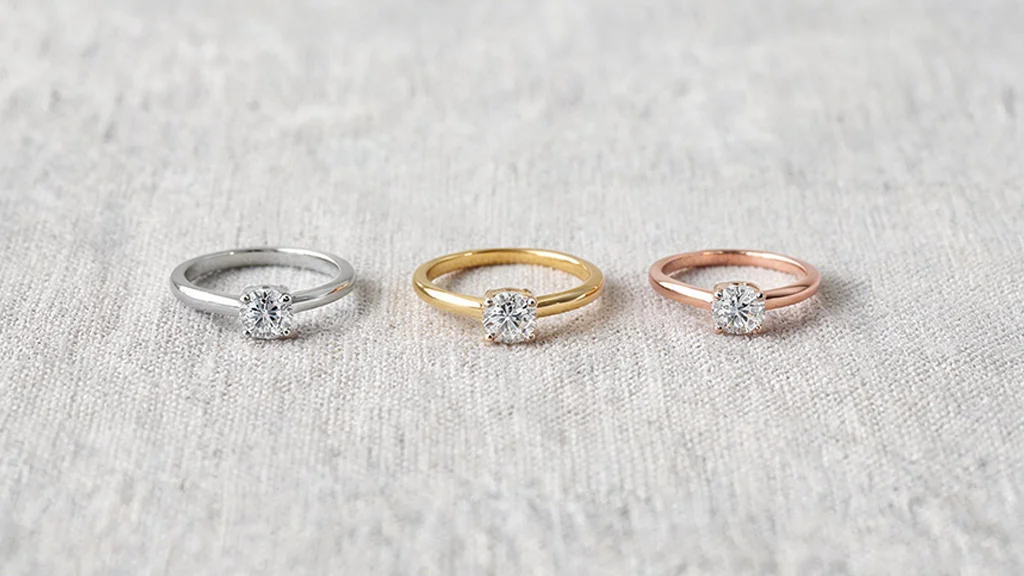
Table of Contents
A gold alloy is a mixture of pure gold and one or more other metals, usually copper, silver, zinc, nickel or palladium, blended to make gold harder, more durable and available in different colors. Almost all gold jewelry is an alloy, and the karat stamp tells you how much of it is pure gold.
Pure gold is beautiful, but it is very soft. It scratches, dents and bends under everyday wear, which is why a 24K ring would not hold its shape for long. Alloying solves that problem, and it also gives us yellow, white, rose and green gold from the same base metal.
In this guide we explain what gold alloys are, how karat and fineness work, which metals do what, and how to pick the right alloy for the way a piece will be worn. As a solid gold jewelry manufacturer, we also share some of what we see at the bench, because the alloy inside a piece affects far more than its color.
What Is a Gold Alloy?
An alloy is a material made by combining two or more metals. In a gold alloy, the gold is mixed through the entire piece, not just applied on the surface. That is the key difference between an alloy and plating, and it is why solid gold jewelry can be polished, resized and repaired for decades.
Mixing other metals into gold changes several properties at once:
- Hardness and strength:alloying metals stop the gold from bending, denting and scratching as easily.
- Color:copper pushes gold toward red, silver and palladium toward pale yellow or white, and each metal shifts the tone in its own way.
- Casting and working behavior:melting range, fluidity in the mold, and how well the metal can be rolled, drawn or soldered all depend on the mix.
- Cost:the more gold in the alloy, the higher the material value.
- Tarnish and corrosion resistance:gold itself never tarnishes, but some alloy metals, copper especially, can darken over time. Good alloy design is always a balance.
That balance is why jewelers choose an alloy for a piece rather than simply choosing a karat.
Karat, Fineness and Purity Explained
Gold purity is measured in karat (written carat in the UK and some other countries) or fineness. This karat is unrelated to the carat weight of a diamond.
- Karatdivides the metal into 24 parts. 24K is pure gold, 18K is 18 parts gold and 6 parts other metals, and so on.
- Finenessstates the gold content in parts per thousand. 750 means 75% gold, which is the same as 18K.
Fine gold bars are typically 999 or 9999 fineness, meaning 99.9% or 99.99% pure. Jewelry alloys sit well below that.
Karat | Gold content | Fineness stamp | Typical character |
24K | 99.9% | 999 | Pure gold, deep yellow, very soft |
22K | 91.7% | 916 | Rich color, soft, used in traditional jewelry and some coins |
20K | 83.3% | 833 | Rich color, softer than 18K |
18K | 75% | 750 | Premium fine jewelry standard, rich color, good balance |
14K | 58.5% | 585 | Very popular for daily wear, harder, slightly paler |
10K | 41.7% | 417 | Hard and affordable, paler color |
9K | 37.5% | 375 | Hardest of the common gold alloys, lightest gold color |
One important limit: karat and fineness only tell you how much gold is present. Two 18K pieces can contain very different mixes of copper, silver, palladium or nickel, and they will differ in color, hardness and skin comfort as a result.
What Metals Are Mixed With Gold?
The most common alloying metals are copper, silver, zinc, nickel, palladium and platinum, with iron, manganese and a few others used in specialty alloys. Each one has a job.
Metal | Effect on color | Effect on properties | Notes |
Copper | Warms gold toward pink and red | Adds hardness and strength | Can oxidize and darken; high-copper alloys are harder to work |
Silver | Lightens gold; a strong dose gives a pale green-yellow | Softens the mix and improves workability | Common in yellow, green and many white alloys |
Zinc | Slight lightening | Helps casting by reducing oxidation in the melt | Used in small percentages |
Nickel | Strongly whitens gold | Makes the alloy hard and springy | A well-known skin allergen; can cause casting defects if not controlled |
Palladium | Whitens gold with a natural grey tone | Softer and more malleable than nickel white gold | Nickel-free option; higher material cost |
Platinum | Whitens gold | Adds density and durability | Rare in jewelry alloys due to cost |
Iron, aluminium and others | Create grey, blue or purple golds | Often brittle | Mostly used for specialty or decorative pieces |
Cadmium was once used to create green gold, but it is toxic and modern manufacturers avoid it.
Types of Gold Alloys by Color
Most gold jewelry falls into four color families: yellow, white, rose and green. Each is created by changing which metals sit alongside the gold.
Yellow gold
Yellow gold is the traditional look. It is an alloy of gold with silver and copper, often with a little zinc. The silver keeps the tone bright, while the copper adds strength. Higher karat yellow gold (22K and 18K) shows a deeper, richer yellow, while 14K and 10K look paler because there is less gold in the mix.
Yellow gold is the most forgiving alloy to make and to wear. It has been researched and refined for longer than any other color, which is why it tends to have the best working properties.
White gold
White gold is made by alloying gold with white metals such as nickel, palladium, platinum or silver. Because gold is naturally yellow, white gold alloys usually keep a faint warm tint, so most pieces are finished with rhodium plating for a bright, silvery-white surface. Rhodium wears over time, and pieces are usually re-plated every few years depending on how they are worn.
There are two main routes:
- Nickel white goldis hard, stiff and bright, but nickel is a common allergen and the alloy needs careful control to avoid brittleness and porosity.
- Palladium white goldis softer and more malleable, has a natural grey-white tone, and is nickel-free, which makes it a good choice for sensitive skin.
Rose and red gold
Rose gold gets its warm color from copper. The more copper in the alloy, the deeper the red, and red gold uses even more. Copper also adds strength, and rose gold does not need plating, so its color lasts. The trade-off is in production: high-copper alloys can be more brittle, and they oxidize easily when overheated, so they take more skill to cast, solder and finish.
Green gold
Green gold is gold alloyed mainly with silver. The result is a subtle pale yellow-green tone. It occurs naturally as an alloy called electrum, which was used by ancient civilizations, and today it is mostly used as an accent metal by designers.
Rare and specialty colors
- Purple gold:about 80% gold and 20% aluminium. Striking but brittle.
- Blue gold:gold with iron or similar metals for a steely blue tone. Fragile and rarely used.
- Grey gold:gold with palladium, a white gold alternative that does not need rhodium.
- Black gold:usually created with surface treatments, black plating or controlled oxidation rather than a natural alloy color.
These alloys are interesting for one-off designs, but for everyday jewelry, the four main families are far more practical.
Gold Alloy Composition Chart
The table below shows commonly cited compositions. Exact formulas vary between refiners and manufacturers, and each one tunes its alloys for color, hardness and casting behavior, so treat these as typical examples rather than a fixed standard.
Alloy | Karat / fineness | Gold | Silver | Copper | Other metals |
Yellow gold | 22K / 916 | 91.7% | 5% | 2% | Zinc 1.3% |
Yellow gold | 18K / 750 | 75% | 10-15% | 10-15% | - |
Yellow gold | 14K / 585 | 58.3% | 30% | 11.7% | - |
Rose gold | 18K / 750 | 75% | 2.75% | 22.25% | - |
Red gold | 18K / 750 | 75% | - | 25% | - |
White gold (nickel) | 18K / 750 | 75% | - | - | Nickel 10%, palladium 10%, zinc 5% |
White gold (palladium) | 18K / 750 | 75% | - | - | Palladium 25% |
White gold | 14K / 585 | 58.3% | 32.2% | - | Palladium 9.5% |
Green gold | 18K / 750 | 75% | 20-25% | 0-5% | - |
Purple gold | 19K / 800 | 80% | - | - | Aluminium 20% |
Blue gold | 18K / 750 | 75% | - | - | Iron 25% |
Notice how every 18K row contains exactly 75% gold, yet the color runs from white to red to green. All of that difference comes from the remaining 25%.
Casting vs. Rolling (Wrought) Gold Alloys
Jewelers and manufacturers do not use one universal alloy for every job. Gold alloys are usually developed for one of two production routes.
- Casting alloysare designed to melt, flow into a mold and solidify cleanly. They are engineered to fill fine detail evenly and finish smoothly, which cuts down on defects such as porosity and rough surfaces.
- Rolling (wrought) alloysare designed to be rolled, drawn and hammered into sheet, wire and tube without cracking. Their strength comes largely from the mechanical working, which compresses and densifies the metal.
Many workshops buy pre-alloyed casting grain or start from pure gold and add a master alloy, a concentrated blend of the other metals, to reach the target karat and color. Good master alloys often include a grain refiner, which controls how the crystals form as the metal cools. This matters most in copper-rich alloys, where poor crystal structure can cause cracking, pitting or a burnt surface.
Recycled gold is another factor. Scrap gold can be reused, but it has to be cleaned of solder and contaminants and topped up with fresh gold and alloy so that karat and quality stay predictable. Mixed or unknown scrap is difficult to control, which is why quality-focused producers manage their metal carefully.
How Karat and Alloy Affect Durability, Tarnish and Skin Comfort
Durability
As a general rule, lower karat gold is harder because it contains more strengthening metals, while higher karat gold is softer but has a richer color. The exact result still depends on the specific alloy and on how the piece was made. A well-made 18K ring in a good alloy can outperform a poorly made 14K one. Design matters too: thin prongs, fine settings and delicate chains are more vulnerable than heavy, solid shapes at any karat.
Tarnish and color change
Gold itself does not tarnish, but the metals mixed into it can. Higher karat alloys are the most resistant. Lower karat alloys with a lot of copper or silver may darken slowly, especially with exposure to sweat, chlorine and some cosmetics. On white gold, the main long-term change is rhodium wearing away and revealing the slightly warm alloy underneath.
Skin sensitivity
Reactions to gold jewelry are rarely caused by the gold itself. They are usually caused by one of the alloy metals, most often nickel. If you have sensitive skin, look for nickel-free alloys such as palladium white gold, or yellow and rose gold that do not contain nickel, and ask the seller for the alloy composition. Some regions also regulate nickel release from jewelry that touches the skin, so responsible manufacturers control it deliberately.
14K vs 18K vs 9K: Which Gold Alloy Should You Choose?
There is no single best karat. The right choice depends on what the piece needs to do.
If you want... | Consider | Why |
A ring or bracelet worn every day | 14K (10K for maximum toughness) | Harder alloy resists scratches and bending better; good balance of color and price |
The richest, warmest gold color | 18K or 22K | Higher gold content gives deeper color, but the metal is softer and needs gentler wear |
Delicate pendants and earrings | 18K | Low-impact pieces suit softer, richer gold and feel more premium |
A lower price point | 9K or 10K | Less gold content means lower material cost and a very hard alloy |
Sensitive skin | Nickel-free 14K or 18K, palladium white gold | Avoids the most common allergen |
A long-term keepsake or gift | 18K | Widely regarded as the premium fine jewelry standard |
Gold Alloy vs. Gold-Plated, Gold-Filled and Vermeil
A gold alloy is gold all the way through. Gold plating is a thin gold layer over a different base metal, gold filled bonds a thicker gold layer to a base metal, and vermeil is gold over sterling silver. These are legitimate product categories, but they are not solid gold, and the gold layer can wear through. For a detailed comparison, read gold filled vs gold plated.
How to Check What Your Gold Is Made Of
- Hallmark or stamp:look for a fineness or karat stamp such as 750, 18K, 585 or 14K. A stamp is a claim by the maker, so it is a starting point rather than proof.
- Acid or scratch test:a testing kit gives an approximate karat reading. It is inexpensive but slightly destructive and only tests the spot you touch.
- XRF analysis:an X-ray fluorescence analyzer reads the metal composition without damaging the piece. It measures the surface, so plating can fool it.
- Fire assay:the most accurate method, used by refiners and assay offices. It is destructive, so it is used on samples or scrap rather than finished jewelry.
Gold Alloys in Coins and Bullion
Gold alloys are not only used for jewelry. Before the 1930s, gold was common in circulating coins, and those coins were alloyed so they could survive daily handling. Today some investment coins are 24K, such as the Canadian Maple Leaf and the British Britannia, while others, such as the Krugerrand and the American Gold Eagle, are 22K alloys with copper (and silver in the Eagle). These alloyed coins still hold exactly one troy ounce of gold, but they weigh slightly more because of the added metals. Their value comes from the gold content, not from the alloy.
Gold Alloy FAQ
A gold alloy is a mixture of pure gold and one or more other metals, such as copper, silver, zinc, nickel or palladium. The added metals increase strength and durability and create different colors.
Pure 24K gold is very soft and scratches, bends and dents easily. Alloying it makes jewelry strong enough for everyday wear while keeping the look of gold.
The most common are copper, silver, zinc, nickel and palladium. Platinum, iron, aluminium and others are used in specialty alloys.
For daily-wear rings and bracelets, 14K is a popular choice because it balances durability, color and price. 18K offers richer color but is slightly softer.
Both are usually harder than yellow gold of the same karat. Rose gold gets strength from copper, and nickel white gold is very hard, while palladium white gold is softer. The exact alloy and the piece's design matter as much as the color.
Yes, though the reaction is usually to an alloy metal, most commonly nickel, not to the gold. Nickel-free alloys, including palladium white gold, are the safest choice for sensitive skin.
In a gold alloy, gold is mixed through the whole piece. In gold-plated jewelry, only a thin surface layer is gold over a different base metal, and it can wear away.