
Necklace Layering Guide: Stack Necklaces Like a Pro in 2026
- Written by Provence Team
- Updated on September 2, 2026
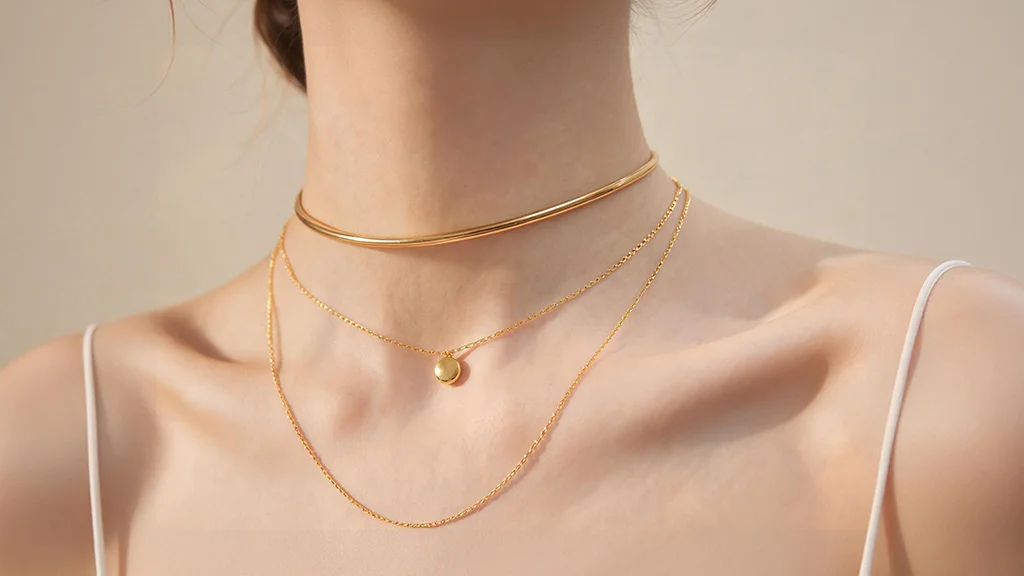
Table of Contents
There's a reason layered necklaces have stayed at the center of jewelry trends for over a decade: a well-built stack does more for an outfit than any single piece could on its own. It adds movement, tells a story, and turns "just wearing jewelry" into a personal styling statement.
But there's a difference between a necklace stack that looks curated and one that looks cluttered — and that difference comes down to a handful of principles: length, texture, metal, and proportion.
As a fine jewelry manufacturer that produces solid gold chains, pendants, and gemstone pieces for brands around the world, we see necklace layering from a slightly different angle than most style guides — we know how chains are actually made, why certain constructions hold up better in a stack, and why the metal you choose matters just as much as the length. This guide combines that manufacturing insight with the styling fundamentals every great layered look is built on.
Necklace Length Chart: Inches and Centimeters
Length is the single most important factor in layering. Every necklace has a "home" on the body, and knowing where each length falls lets you combine pieces without guesswork.
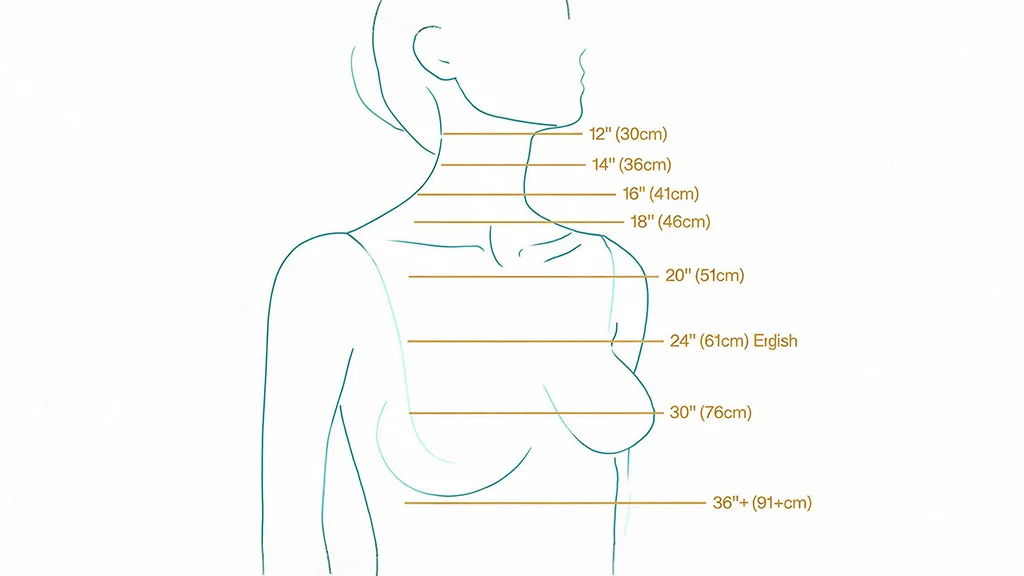
|
Length (inches) |
Length (cm) |
Common Name |
Where It Falls |
|---|---|---|---|
|
12–13" |
30–33 cm |
Collar |
Sits tightly at the base of the neck |
|
14–16" |
35–41 cm |
Choker |
Rests at the throat/collarbone |
|
17–19" |
43–48 cm |
Princess |
Sits at or just below the collarbone (most common length) |
|
20–24" |
51–61 cm |
Matinee |
Falls at the top of the bust/upper chest |
|
28–34" |
71–86 cm |
Opera |
Rests at or below the bust |
|
36"+ |
91+ cm |
Rope / Lariat |
Falls past the waist, often doubled or knotted |
Why this matters globally: most guides only list inches, which works for US shoppers but leaves international buyers doing the conversion themselves. If you're shopping or measuring from the UK, EU, Australia, or Asia, use the cm column directly — no math required.
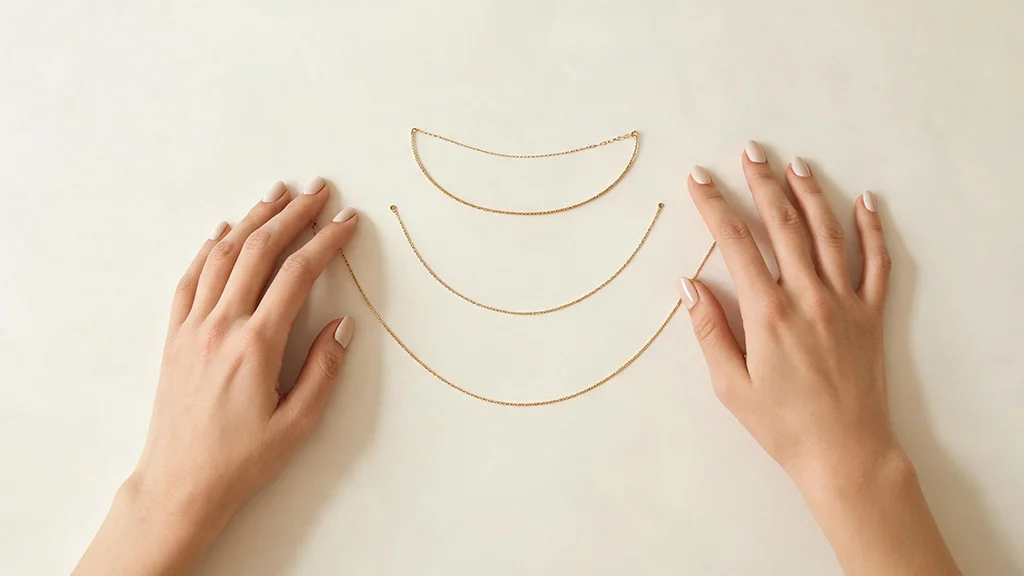
Rule of thumb for layering: leave at least 5 cm (about 2 inches) of separation between each necklace length. This spacing keeps every piece visible and reduces tangling.
The 5-Step Necklace Layering Method
Step 1: Choose Your Foundation Piece
Start with the necklace you'd be happy wearing alone — a chain, pendant, or gemstone piece that sets the tone for the whole stack. This is usually your shortest or most substantial piece, worn closest to the neck.
Step 2: Add Length in Increments
Build outward from your foundation, adding necklaces at increasing lengths. Stick to the 2-inch (5 cm) rule between each piece so they don't compete for the same space on your neckline.
Step 3: Mix Textures and Chain Styles
Uniform chains can look flat when stacked. Combine different link types — a fine cable chain with a bold curb chain, or a flat herringbone with a rounded rope chain — for visual depth.
Step 4: Choose a Focal Point
Pick one piece — a pendant, charm, or gemstone drop — to be the star. Everything else in the stack should support it, not compete with it. A good rule: one focal point per stack.
Step 5: Decide on Metal Strategy
Choose whether you're going monochrome (all gold or all silver) for a streamlined look, or mixed metal for a more eclectic, modern one. Either works — the key is intention (more on this in Section 4).
Layering by Necklace Type
Chain Necklaces
The backbone of most stacks. Mix weights and link styles — a delicate cable chain, a paperclip chain, and a heavier curb chain — for contrast that doesn't feel matchy.
Pendant Necklaces
Graduate pendant sizes from smallest (shortest chain) to largest (longest chain), or center one statement pendant as your focal point with simpler chains around it.
Pearl Necklaces
Pearls pair beautifully with metal chains but are softer and more prone to surface scratching. Position pearl strands as your shortest or middle layer, away from harder metal edges, and avoid letting clasps rub directly against the pearls.
Gemstone and Tennis Necklaces
A gemstone line or diamond tennis necklace works best as a middle layer, flanked by simpler chains above and below so it stays the visual highlight rather than competing with other sparkle.
Metal & Material Guide for Layering (What Most Guides Skip)
Most styling guides tell you how to mix metals but not what happens to the metal itself when pieces rub together all day. As manufacturers, this is where we can add real value:
- Solid gold (10k/14k/18k): The most layering-friendly option. Solid gold resists surface wear at contact points, doesn't flake or discolor with friction, and tarnishes minimally over time.
- Gold vermeil / gold-plated: Looks identical to solid gold at first, but constant contact between layered pieces accelerates wear at friction points — the plating can thin or wear through at the exact spots where necklaces cross each other.
- Base metal / costume chains: Higher risk of skin reactions with prolonged, layered wear because more metal surface touches the skin at once. This is especially relevant for anyone with nickel sensitivity.
Styling takeaway: if you plan to layer daily, solid gold or high-karat gold pieces are a better long-term investment than plated alternatives — the look holds up exactly where layering puts the most stress on the metal.
Styling by Neckline and Occasion
| Neckline | Best Layering Approach |
|---|---|
| V-neck | Y-shaped pendant or graduated lengths that mirror the V |
| Crew neck | Shorter chokers and princess-length pieces that sit above the fabric |
| Button-down / open collar | Choker plus mid-length stack sitting neatly in the open space |
| Turtleneck | Longer, bolder pieces worn over the fabric |
By occasion:
- Everyday: A princess-length chain + a delicate pendant
- Work / office: Two refined pieces max — a fine chain and a small pendant
- Evening / event: Add a statement or gemstone piece as the focal layer, paired with simpler supporting chains
How Many Necklaces Should You Layer?
There's no fixed rule, but here's a practical breakdown:
- Two necklaces — the easiest entry point. A choker + a slightly longer pendant chain.
- Three necklaces — the most popular combination. Three distinct lengths, ideally with varied textures.
- Four or more — a fully personalized, collected-over-time stack. Works best when pieces vary meaningfully in weight and length so they don't compete.
Start with two or three and build from there as you add pieces to your collection.
How to Avoid Tangling
- Space lengths at least 2 inches (5 cm) apart — this is the single most effective fix.
- Vary chain construction — box and snake chains resist tangling better than fine flexible link chains.
- Use a necklace layering clasp or spacer bar to keep multiple chains anchored at set points on the back.
- Put necklaces on shortest to longest, letting each settle before adding the next.
- Store stacks separately on multi-hook organizers so pre-planned combinations don't tangle before you even put them on.
FAQs
At least 2 inches (5 cm) between each length to keep pieces visible and reduce tangling.
Yes. Mixed metal layering is a modern, accepted styling choice — just keep one metal dominant (roughly 60–70% of the stack) for cohesion.
A princess-length chain (17–19"/43–48 cm) is the most versatile starting point, since it works alone or as a base for adding shorter and longer pieces.
Remove layered necklaces before bed and exercise, and store them on a multi-hook organizer to keep your combinations pre-separated.
Solid gold holds up better for everyday layering because plated pieces wear thin faster at the friction points where necklaces cross.
Position pendant necklaces so the pendant sits at a length where it doesn't overlap with other pieces — usually as the longest or most central layer.
Two pieces: a choker or collar-length chain (14–16"/35–41 cm) plus a princess-length pendant necklace (17–19"/43–48 cm).