
Platinum vs Gold: Price, Durability & Purity Guide
- Written by Provence Team
- Updated on September 3, 2026
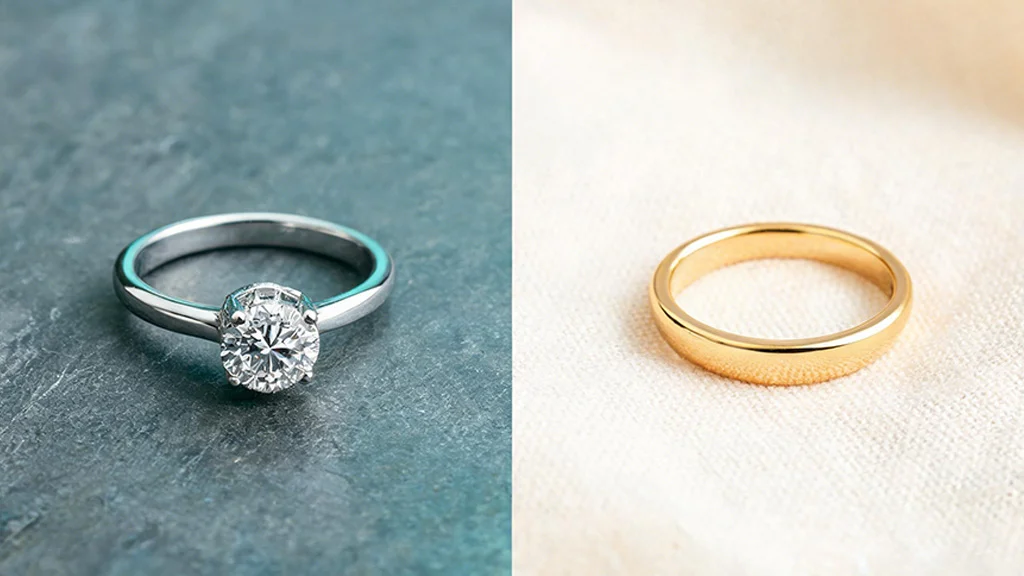
Table of Contents
Choosing between platinum and gold is one of the oldest decisions in fine jewelry — and one of the most misunderstood. Most guides answer it with a single country's assumptions baked in: a US buyer thinking in karats, a UK buyer thinking in hallmarks, a European buyer thinking in fineness numbers. But platinum and gold are sold, marked, and valued differently depending on where you live, and a genuinely useful comparison has to work for a shopper in New York, London, Dubai, or Sydney alike.
This guide breaks down platinum vs gold across composition, durability, price, and global purity standards — with real density figures, current per-gram pricing in USD, GBP, and EUR, and manufacturing insight from the bench, not just the showroom.
Quick Answer: Platinum vs Gold at a Glance
| Factor | Platinum | Gold |
|---|---|---|
| Purity in jewelry | 90–95% pure (marked 900 or 950) | 41.7%–75% pure depending on karat (10K–18K) |
| Natural color | Silvery-white, permanent | Yellow (alloyed for white/rose) |
| Density | 21.45 g/cm³ | 19.3 g/cm³ (pure); lower in alloys |
| Durability | High: doesn't wear away, patinas instead of thinning | Good: harder alloys (14K) resist scratches better, but wear thinner over decades |
| Hypoallergenic | Yes, naturally | Higher karats yes; lower karats and white gold (nickel) may irritate |
| Maintenance | Occasional polishing; no replating | White gold needs rhodium replating every 1–3 years |
| Relative price | Historically higher, though the ratio fluctuates | Generally lower, more budget flexibility across karats |
| US marking | "PLAT" or "950 Pt" (FTC 16 CFR Part 23) | "14K," "18K" stamps |
| UK marking | Platinum hallmark (orb symbol), assay office required by law | Crown symbol, millesimal fineness (750, 585, 375) |
| EU marking | Fineness mark per national assay systems | Fineness mark (750 = 18K, 585 = 14K) |
(Prices fluctuate daily — see the pricing table further down for a snapshot.)
What Is Platinum?
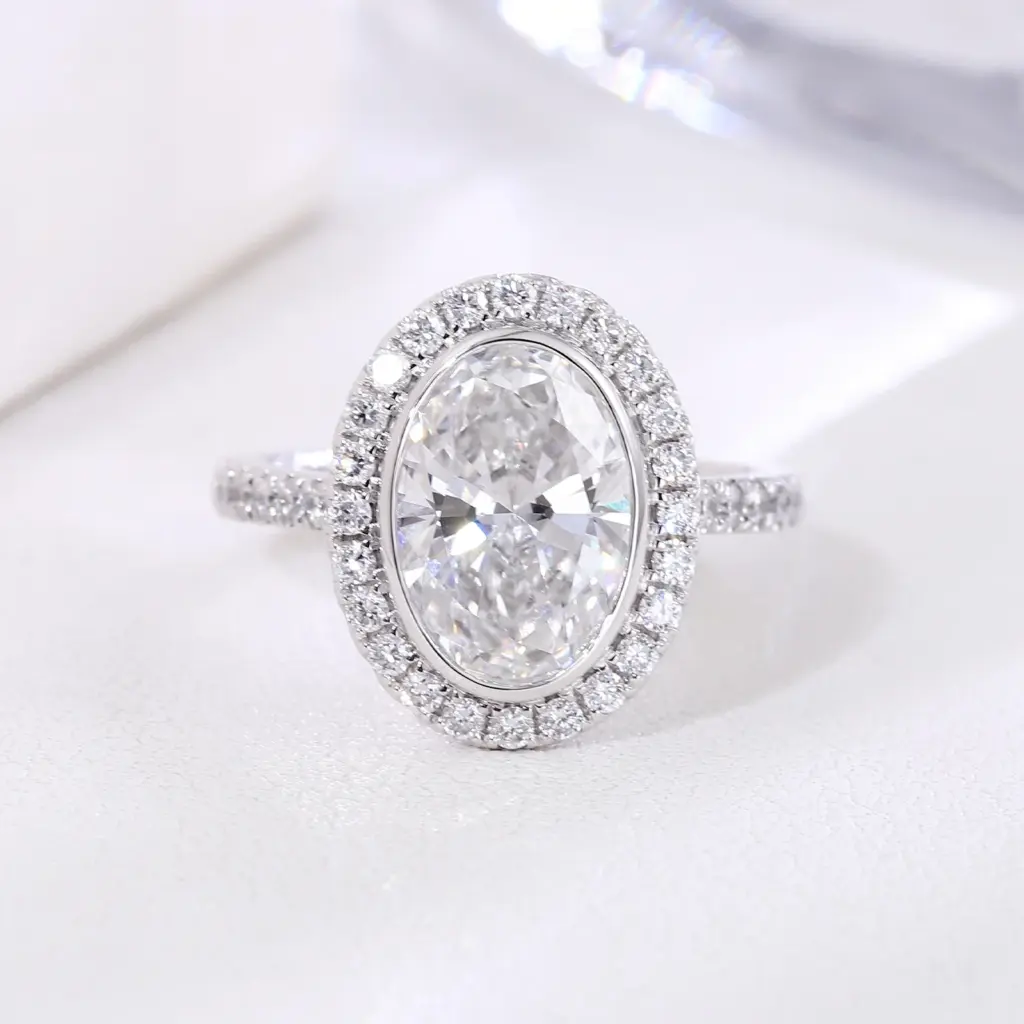
Platinum is one of the rarest metals used in jewelry — roughly 30 times scarcer than gold, with about 190 metric tons mined globally each year compared to gold's 3,300+ tons. In its pure state platinum is too soft for jewelry, so it's alloyed with a small amount of other metals (commonly ruthenium, iridium, or cobalt) to reach the industry-standard purity of 900 or 950 parts per 1,000 — meaning platinum jewelry is 90–95% pure metal, a far higher purity than almost any gold alloy sold.
Platinum is naturally white and never needs plating to stay that color. Over years of wear it develops a soft, dull sheen called a patina, caused by micro-displacement of the metal rather than metal loss — a distinction that matters for durability (more on that below).
What Is Gold?
Gold's purity is measured in karats, with pure gold rated 24K. Because 24K gold is too soft for everyday jewelry, it's alloyed with metals like copper, silver, zinc, or palladium to create:
- 24K (99.9% gold) — rarely used in jewelry; too soft
- 18K (75% gold) — the international standard for fine jewelry; strong color, good durability
- 14K (58.3% gold) — the most common choice in the US; harder, more affordable
- 10K/9K (41.7%/37.5% gold) — lowest karat sold as "gold" in most markets; most durable, least valuable
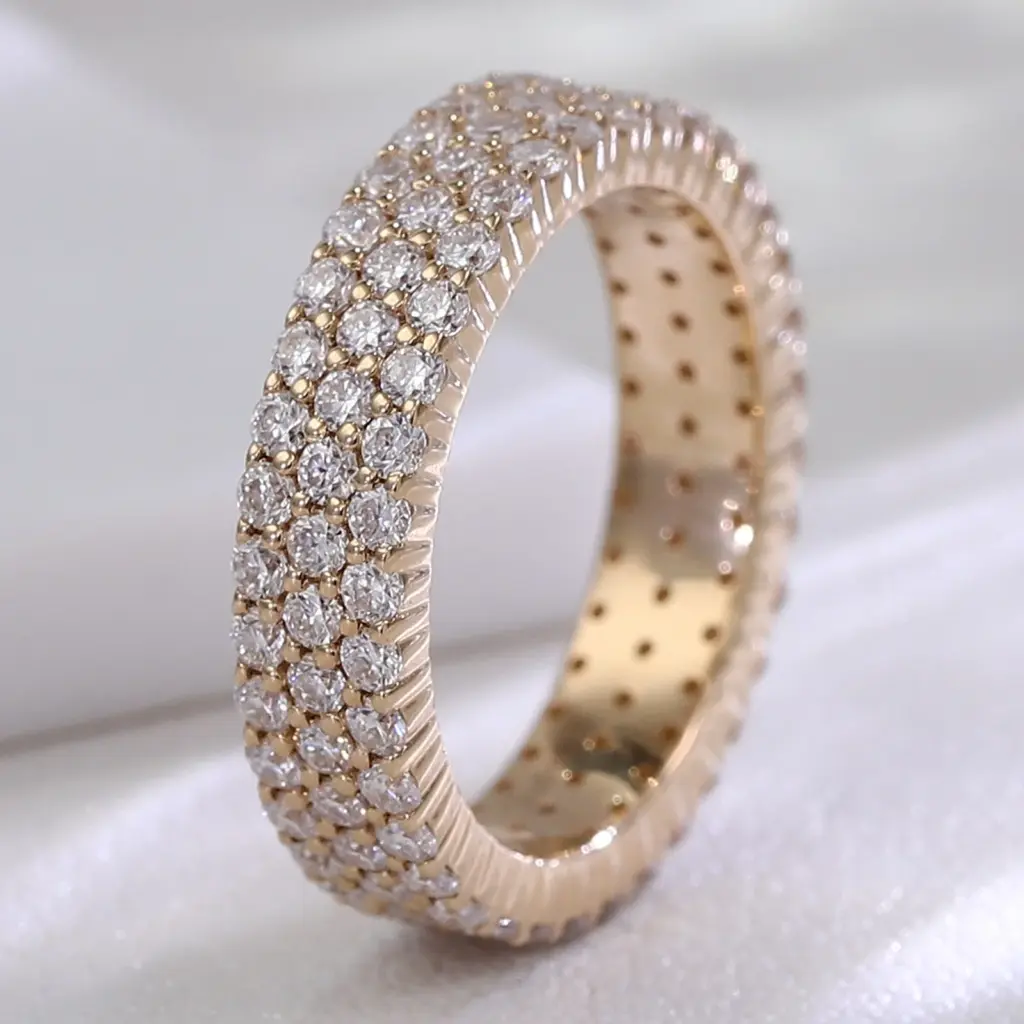
Alloying also produces gold's three colors: yellow gold (traditional copper/silver mix), white gold (gold alloyed with palladium or nickel, then rhodium-plated), and rose gold (higher copper content for a pink hue).
Platinum vs Gold: Full Comparison
Composition & Purity Systems Around the World
Purity marking is where global buyers get tripped up, because the same ring is described completely differently depending on the market:
| Region | Platinum Marking | Gold Marking |
|---|---|---|
| United States | "PLAT," "950 Plat," or "IRIDPLAT" per FTC 16 CFR Part 23 | Karat stamp (10K/14K/18K) plus maker's mark |
| United Kingdom | Mandatory hallmark: platinum symbol (orb), assay office mark, fineness number — required by the Hallmarking Act 1973 for items over 0.5g | Crown or fineness number (375/585/750/916/990), assay office mark |
| European Union | National fineness marks; commonly 950 | Fineness numbers: 333 (8K), 375 (9K), 585 (14K), 750 (18K) |
| Asia (common practice) | 950 or "Pt950" stamps widely used | Often sold by karat and by weight, with 999 (24K) popular as a savings/investment format alongside 18K jewelry |
Manufacturer's note: At the production level, this isn't just paperwork — different markets expect different finished purities, so a single design run destined for US, UK, and EU retail partners is often cast in separate alloy batches to hit each region's marking requirements exactly. This is a routine part of OEM/private-label production and one reason working with a manufacturer familiar with multiple hallmarking regimes matters for brands selling cross-border.
Weight and Density
This is where numbers matter more than most guides bother to include. Platinum's density is 21.45 g/cm³, compared to pure gold's 19.3 g/cm³ — and gold alloys used in jewelry are lighter still, often in the 12–15 g/cm³ range depending on karat and alloy metals. In practice, an identical ring design will weigh roughly 40–60% more in platinum than in 14K gold, which is why platinum jewelry feels noticeably more substantial on the hand and why it costs more per piece even when spot prices are close — more material mass goes into the same design.
Durability: Scratch Resistance vs. Structural Durability
A common misconception is that platinum is "harder" than gold — it isn't, and 14K gold alloys can actually resist surface scratches better. The real difference is what happens when each metal is scratched:
- Platinum displaces — a scratch moves metal around rather than removing it. Over decades, platinum keeps almost all of its original mass, which is why platinum settings are prized for securing valuable gemstones long-term.
- Gold wears — scratches remove tiny amounts of metal. Over many years and multiple polishings, a gold ring can measurably thin, especially at lower karats.
So: gold resists the first scratch better; platinum resists a lifetime of wear better. This nuance matters most for engagement rings and heirloom pieces intended to last generations.
Hypoallergenic Properties
Platinum is naturally hypoallergenic and the safest option for sensitive skin. Gold's hypoallergenic performance depends heavily on karat and alloy: higher-karat gold (18K+) is generally safe, but lower-karat gold and white gold alloyed with nickel can trigger reactions in nickel-sensitive wearers — a genuine concern in markets like the EU, where nickel release in jewelry is restricted under REACH Annex XVII.
Maintenance
Platinum needs only occasional cleaning and polishing to remove patina, if a mirror finish is preferred. White gold requires rhodium replating roughly every 1–3 years as the plating wears and the naturally faint-yellow gold underneath shows through. Yellow and rose gold require minimal upkeep beyond routine cleaning.
Price: Why Platinum Usually Costs More (and When It Doesn't)
Platinum's higher typical price comes down to three compounding factors: greater rarity, higher purity requirements in jewelry (90–95% vs. gold's 41.7–75%), and higher density (more grams of metal per piece).
As a snapshot, recent spot prices put gold at roughly $4,110/oz (~$132/g) and platinum at roughly $1,640/oz (~$53/g) — meaning gold has actually been trading at a premium to platinum recently, a reversal of the historical norm. This "platinum-to-gold ratio" moves constantly: when it's below 1, platinum is cheaper than gold by weight; historically it has often traded above 1.
Approximate spot price snapshot (per gram, pure metal basis):
| Metal | USD | GBP | EUR |
|---|---|---|---|
| Gold | ~$132/g | ~£104/g | ~€121/g |
| Platinum | ~$53/g | ~£42/g | ~€49/g |
Prices fluctuate daily and vary by currency exchange rate; figures above are illustrative snapshots, not real-time quotes. Finished jewelry prices also reflect labor, design complexity, and retail markup — not spot price alone.
Because platinum jewelry requires more grams of a purer, denser metal, a platinum ring in an identical design to an 18K gold ring will typically cost noticeably more at retail, even in periods like the present where the raw spot price of gold exceeds platinum's.
Jewelry should rarely be bought purely as an investment — resale value is affected heavily by craftsmanship, brand, and retail markup, not just metal weight. But it's worth understanding how the two metals behave as commodities, since it explains some of their price dynamics:
- Gold behaves as a safe-haven asset, historically holding value during economic uncertainty. Demand comes largely from investors, central banks, and jewelry buyers.
- Platinum is more industrially driven — used heavily in automotive catalytic converters and other manufacturing — so its price is more sensitive to industrial demand cycles and tends to be more volatile than gold's.
For jewelry buyers, the practical takeaway isn't which metal appreciates faster, but which one holds its physical value better over decades of wear — and there, platinum's resistance to metal loss gives it a real edge for heirloom pieces.
Which Should You Choose? A Decision Framework
- Engagement ring, want it to last generations: Platinum — its structural durability protects both the metal and the gemstones it holds over a lifetime.
- Engagement ring, budget-conscious: 14K or 18K white or yellow gold — strong durability at a meaningfully lower cost.
- Sensitive or nickel-allergic skin: Platinum, or nickel-free white gold alloys, or higher-karat yellow/rose gold.
- Want variety in color: Gold — only gold naturally comes in yellow, white, and rose tones.
- Want a low-maintenance white metal: Platinum — no replating required, unlike white gold.
- Hot, humid, or high-activity daily wear: Either works well; platinum's weight is more noticeable during exercise, which some active wearers prefer to avoid.
- Wedding bands worn alongside an engagement ring: Match the metal to your engagement ring — mixing hardness levels causes the harder metal to wear down the softer one over years of daily contact.
From the Factory: How Platinum and Gold Behave in Production
(Manufacturer authority section)
At the manufacturing level, platinum and gold require different casting and setting techniques. Platinum's higher melting point (~1,768°C vs. gold's ~1,064°C) demands specialized casting equipment and more experienced bench work, which is part of why platinum jewelry carries higher labor costs in addition to higher material costs. Platinum's malleability under heat also makes it especially well-suited to hand-fabricated prong settings that grip gemstones securely without a high risk of metal fatigue.
Gold's lower melting point and wider alloy range give jewelers more flexibility for intricate filigree, mixed-metal designs, and rapid production runs — one reason gold remains the more common choice for fashion jewelry and larger production volumes, while platinum is typically reserved for bridal and fine jewelry lines.
For brands and retailers sourcing at scale, this difference affects everything from minimum order quantities to lead times — platinum runs generally require more planning and tighter quality control at the casting stage.
FAQs
Neither is universally "better" — platinum offers superior long-term durability, natural white color, and hypoallergenic properties, while gold offers more color choice, lighter weight, and greater price flexibility across karats.
Usually yes, due to rarity, higher purity requirements, and greater density — though spot prices fluctuate, and there have been periods (including recently) where gold has traded at a premium to platinum by weight.
Yes. Platinum is about 11% denser than pure gold and considerably denser than most gold alloys, so identical designs weigh noticeably more in platinum.
Not in scratch resistance — some gold alloys actually resist surface scratches better. Platinum's advantage is that it displaces rather than wears away, so it retains its mass and structural integrity better over decades.
No. Platinum keeps its white color permanently; it may develop a grey patina, which can be polished away, but it never yellows the way rhodium-plated white gold can as the plating wears.
Platinum is naturally and consistently hypoallergenic. Gold's hypoallergenic quality depends on karat and alloy — higher-karat gold is safer, while nickel-containing white gold can cause reactions in sensitive individuals.
Check the hallmark or stamp inside the band — "PLAT" or "950" for platinum, a karat number (10K–24K) for gold — and match it against your country's marking standards.
No. White gold is yellow gold alloyed with white metals and rhodium-plated to look white; platinum is naturally white with no plating. White gold typically costs less but requires periodic replating.